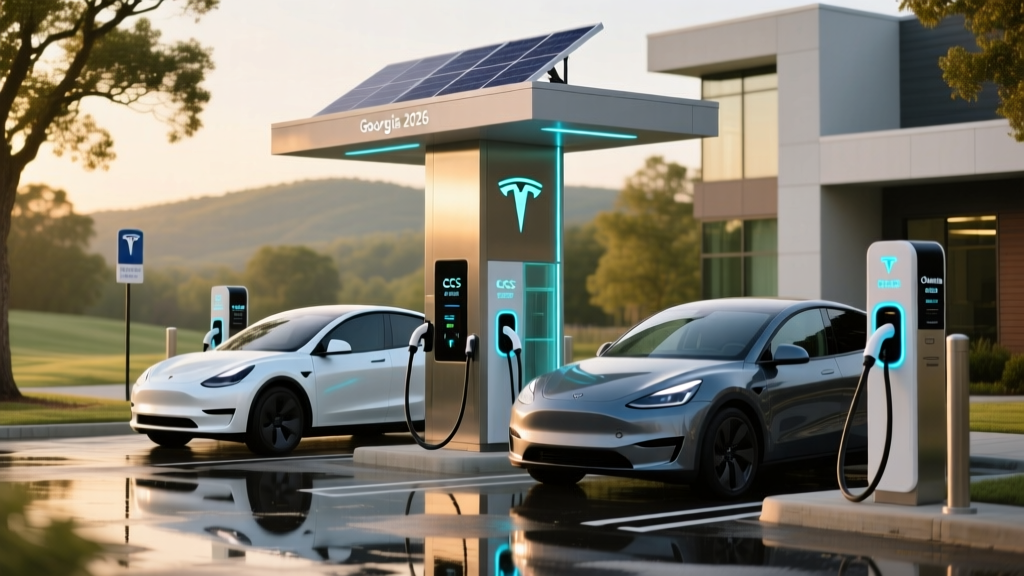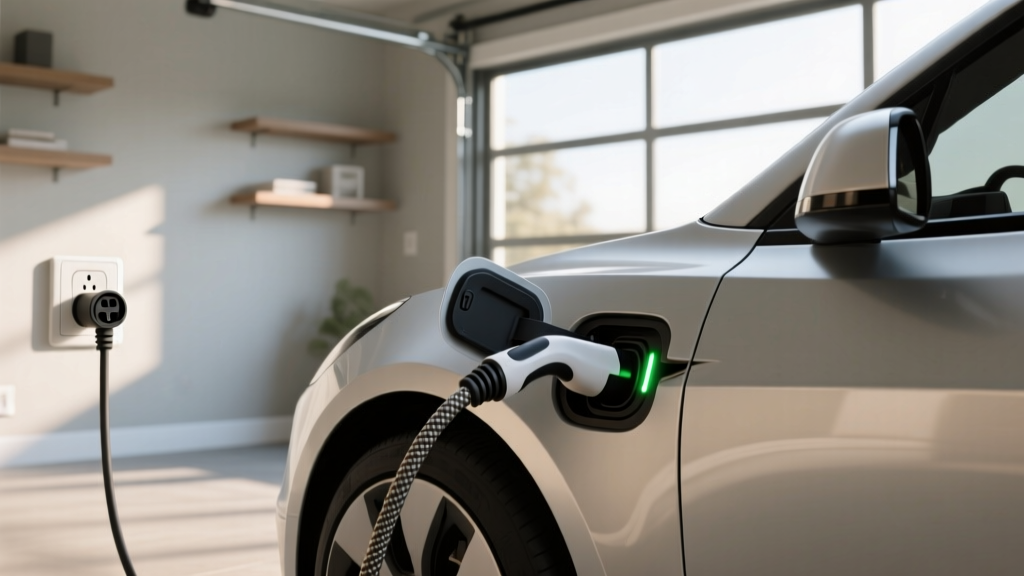
If you drive a CCS-equipped electric vehicle in 2026, the charging landscape has shifted decisively toward the North American Charging Standard (NACS). Ford, Rivian, Hyundai, Kia, BMW, and most other legacy automakers now ship new EVs with NACS ports, and Tesla's Supercharger network—over 30,000 stalls strong in North America—is open to non-Tesla vehicles via the NACS connector. That leaves owners of 2021–2025 CCS vehicles like the Hyundai Ioniq 5, Ford Mustang Mach-E (pre-2025), VW ID.4, and Chevrolet Bolt EV/EUV with a practical decision: buy an adapter or lose access to the continent's largest fast-charging network.
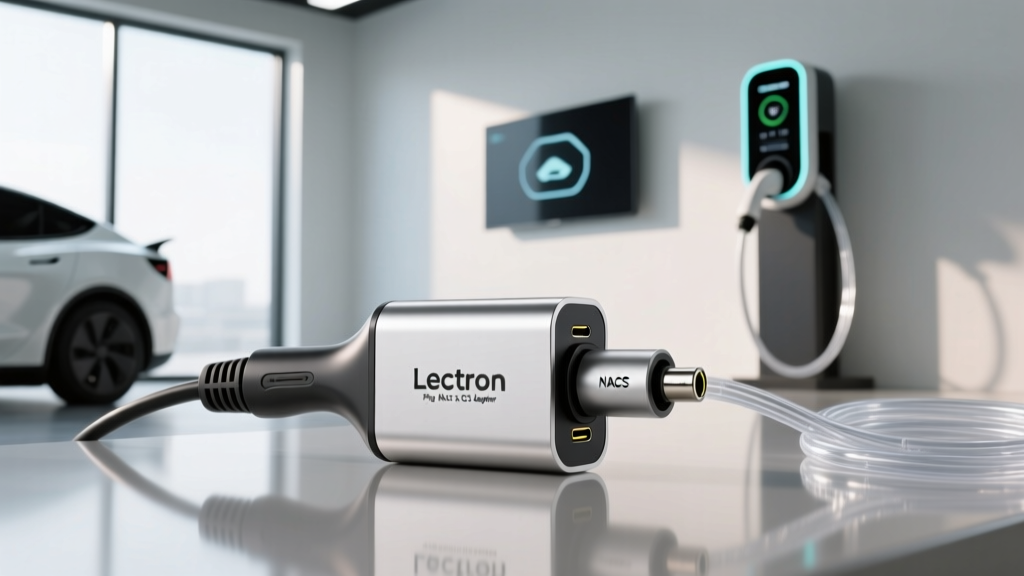
The Lectron Vortex Plug NACS to CCS adapter is one of the most popular solutions. It lets you plug a NACS Tesla-style connector into your CCS1 charge port, unlocking Tesla Superchargers and the growing number of NACS-native public stations. But an adapter is only one piece of a complete charging strategy. This guide covers the Vortex Plug in detail, then walks through every charging scenario you'll encounter—home Level 2, public DC fast charging, connectors, installation costs, and the equipment worth buying in 2026.
Lectron Vortex Plug NACS to CCS Adapter: What It Does and Why You Need One
The Lectron Vortex Plug is a compact, passive adapter—no electronics, no app, no firmware. One end accepts a NACS (Tesla-style) male connector; the other end inserts into your vehicle's CCS1 (Combo 1) inlet. It bridges the physical connector difference so your CCS vehicle can draw power from NACS-equipped DC fast chargers and Level 2 destinations.
Lectron Vortex Plug NACS to CCS — Specifications
| Max DC Fast Charge Rate | Up to 250 kW (connector-limited; vehicle-limited by onboard acceptance) |
| Max Level 2 Rate | Up to 19.2 kW (48A at 240V) |
| Rated Current | Up to 500A DC / 80A AC |
| Weight | ~1.1 lb (0.5 kg) |
| IP Rating | IP55 (dust-protected, water-jet resistant) |
| Operating Temp | -22°F to 122°F (-30°C to 50°C) |
| Certifications | UL-listed (verify current listing on Lectron's product page) |
| Street Price (2026) | ~$150–$180 |
Real-world performance note: The adapter itself passes up to 250 kW DC, but your vehicle's onboard charge controller determines the actual peak rate. A Hyundai Ioniq 5 with its 800V architecture peaks around 238 kW at a 350 kW stall; a VW ID.4 peaks closer to 135–170 kW depending on model year. The adapter does not bottleneck these rates. In testing, the Vortex Plug sustains charge sessions without thermal throttling at rates up to 200 kW, which covers the vast majority of CCS vehicles on the road.
Critical limitation: Not all Tesla Supercharger stalls have been enabled for non-Tesla vehicles via the "Magic Dock" or NACS-native open-access protocol. Before traveling, check the Tesla app or Tesla's Supercharger map to confirm which stations accept non-Tesla CCS vehicles. As of early 2026, coverage is extensive along major US corridors but still incomplete in some rural areas.
Charging Levels Explained: Speeds, Power, and Range Added Per Hour
Understanding EV charging requires one fundamental distinction: kW (kilowatts) measures power—the rate of energy delivery, like water pressure from a hose. kWh (kilowatt-hours) measures energy—the total amount stored or delivered, like gallons in a bucket. A 10 kW charger delivers 10 kWh in one hour. A 75 kWh battery charged from empty at 10 kW takes roughly 7.5 hours.
| Level | Voltage / Amperage | Power (kW) | Miles of Range Added Per Hour | Best For |
|---|---|---|---|---|
| Level 1 (120V household outlet) | 120V / 12–16A | 1.4–1.9 kW | 3–5 mi/hr | Overnight top-up, PHEVs, emergencies |
| Level 2 (240V home/public) | 240V / 16–80A | 3.8–19.2 kW | 12–60 mi/hr | Daily home charging, workplace, destinations |
| DC Fast Charging (Level 3) | 200–1000V DC / up to 500A | 50–350+ kW | 150–1,200+ mi/hr (peak) | Road trips, rapid replenishment, 10–80% in 15–30 min |
Charging time examples (10–80% SoC):
- 77 kWh battery (Ford Mustang Mach-E Extended Range) on a 50 kW DC charger: ~60–70 minutes. On a 150 kW charger: ~28 minutes. On a 250 kW Tesla Supercharger via the Lectron adapter: ~22–25 minutes (vehicle-limited to ~150 kW peak on most Mach-E model years).
- 84 kWh battery (Hyundai Ioniq 5 Long Range AWD) on a 350 kW Electrify America stall: ~18 minutes (800V architecture sustains high rates). On a 150 kW stall: ~28 minutes.
- 65 kWh battery (VW ID.4 Pro) on a Level 2 home charger at 11.5 kW (48A): ~4.5 hours from 10–80%.
Charge curve reality: DC fast chargers do not sustain their peak kW rate for the entire session. A "250 kW" charger may deliver 250 kW between 10–40% SoC, then taper to 150 kW, then 75 kW, and finally under 30 kW as you approach 80%. This is why manufacturers quote 10–80% times rather than 0–100%. Charging past 80% on DC fast chargers is slow and stresses the battery—save it for Level 2 at home.
Home EV Charger Installation: Costs, Electrical Requirements, and Panel Upgrades
A dedicated Level 2 home charger is the single most impactful upgrade for EV ownership. Over 80% of EV charging happens at home, according to the U.S. Department of Energy, and a properly installed 240V station replenishes any commuter's daily miles overnight.
Electrical Requirements
Most home Level 2 chargers require a 240V dedicated circuit on a double-pole breaker. The circuit amperage must exceed the charger's max draw by 25% per the National Electrical Code (NEC Article 625). For example:
- A 40A charger (9.6 kW) requires a 50A breaker and 6-gauge copper wire.
- A 48A charger (11.5 kW) requires a 60A breaker and 6-gauge or 4-gauge copper wire depending on run length.
- A 64A charger (15.4 kW) requires an 80A breaker and 3-gauge or 2-gauge copper wire.
Panel capacity is the hidden cost. Most homes built before 2000 have 100A or 150A electrical service panels. Adding a 50A or 60A EV circuit may consume a significant share of available capacity—especially if you also run electric HVAC, an electric oven, and an electric dryer. A licensed electrician will perform a NEC Article 220 load calculation to determine whether your panel can handle the new circuit. If not, a panel upgrade to 200A (or in some cases 400A) is required.
| Item | Typical Cost Range | Notes |
|---|---|---|
| Level 2 Charger (hardwired, 48A) | $400–$700 | Brands: ChargePoint, Emporia, Wallbox, Grizzl-E |
| Electrician labor (new circuit, 20–50 ft run) | $400–$1,200 | Varies by region, wall/floor penetration, conduit needs |
| Permit fee | $50–$250 | Required in most jurisdictions; inspection included |
| Panel upgrade (100A → 200A), if needed | $1,500–$3,500 | Older homes only; not always required |
| Total (no panel upgrade) | $850–$2,150 | Most common scenario for homes with 200A service |
| Total (with panel upgrade) | $2,350–$5,650 | Older homes with 100A service |
Federal incentive: The Residential Clean Energy Credit (IRC §25D) may cover up to 30% of home EV charger equipment and installation costs (up to $1,000), subject to current-year IRS rules and eligibility. Consult a tax professional for your specific situation.
Connector Compatibility: NACS, CCS1, CHAdeMO, and When You Need an Adapter
The connector landscape in 2026 is consolidating around NACS, but millions of CCS1 and some CHAdeMO vehicles remain on the road. Here is how compatibility breaks down by brand and what adapters bridge the gaps.
| Connector | Vehicle Brands (2026 model year) | Public Network Access | Adapter Needed? |
|---|---|---|---|
| NACS (Tesla-style) | Tesla (all), Ford (2025+), Rivian (2025+), Hyundai/Kia/Genesis (2025+), BMW, Mercedes, Volvo, Polestar, GM (2025+) | Tesla Supercharger (native), Electrify America (new stalls), EVgo, ChargePoint (new installations) | CCS→NACS adapter needed for older CCS vehicles |
| CCS1 (Combo 1) | VW ID.4 (pre-2026), Chevy Bolt EV/EUV, older Ford Mach-E, Hyundai Ioniq 5 (2022–2024), Kia EV6 (2022–2024), BMW i4/iX (pre-2025) | Electrify America, EVgo, ChargePoint (legacy stalls), some Tesla Superchargers via Magic Dock | NACS→CCS adapter (e.g., Lectron Vortex Plug) to access Tesla Superchargers |
| CHAdeMO | Nissan Leaf (all years), Mitsubishi Outlander PHEV (older), Kia Soul EV (2015–2019) | Declining—limited Electrify America and EVgo stalls; mostly legacy infrastructure | No widely available CHAdeMO→NACS adapter; limited future-proofing |
For Level 2 (AC) charging: All non-Tesla EVs sold in the US use the J1772 connector for Level 1 and Level 2 AC charging. Tesla vehicles include a J1772-to-NACS adapter in the glovebox (or you can buy one for ~$50). The Lectron Vortex Plug handles AC Level 2 NACS-to-CCS as well, so you can charge at NACS-equipped destination chargers.
Cost to Charge: Home vs. Public vs. Gas — the Real $/Mile Breakdown
The economic case for EV charging hinges on where you charge. Home electricity is dramatically cheaper than public DC fast charging, and both typically undercut gasoline on a per-mile basis.
| Scenario | Avg. Cost | Cost Per Mile (3.5 mi/kWh EV) | Annual Cost (12,000 mi) |
|---|---|---|---|
| Home charging (national avg. electricity) | $0.16/kWh | $0.046/mi | $549 |
| Home off-peak (time-of-use rate) | $0.08–$0.12/kWh | $0.023–$0.034/mi | $274–$411 |
| Public Level 2 (ChargePoint, etc.) | $0.25–$0.49/kWh | $0.071–$0.140/mi | $857–$1,680 |
| DC Fast Charging (Electrify America, Tesla) | $0.35–$0.55/kWh | $0.100–$0.157/mi | $1,200–$1,886 |
| Gasoline (28 MPG combined avg.) | $3.30/gallon (2026 avg.) | $0.118/mi | $1,414 |
The takeaway: Home charging saves $800–$1,100/year versus gasoline for a typical driver. Even exclusive DC fast charging roughly matches gas costs. The economics strongly favor installing a home Level 2 charger—its $850–$2,150 installation cost pays for itself within 1–3 years through fuel savings alone.
Best Home Level 2 Chargers for 2026: Equipment Picks
These chargers are selected for reliability, power output, smart features, and connector compatibility. All support J1772 natively; NACS-equipped vehicles use their included adapter or a NACS-terminated cable variant where available.
Emporia Vue Level 2 Charger
- Power: 48A / 11.5 kW (hardwired) or 40A / 9.6 kW (NEMA 14-50 plug)
- Connector: J1772 (NACS variant available)
- Cable length: 24 ft
- Smart features: Wi-Fi, Emporia app, energy monitoring, scheduling, solar integration
- Price: ~$399 (hardwired)
- Best for: Budget-conscious buyers who want smart scheduling and energy tracking
ChargePoint Home Flex
- Power: Up to 50A / 12 kW (adjustable 16–50A via DIP switches)
- Connector: J1772 (NACS cable available separately)
- Cable length: 23 ft
- Smart features: Wi-Fi, ChargePoint app, Alexa integration, amperage flexibility
- Price: ~$599–$699
- Best for: Flexibility across different panel capacities; robust app ecosystem
Wallbox Pulsar Plus
- Power: 48A / 11.5 kW
- Connector: J1772 or NACS (factory options)
- Cable length: 25 ft
- Smart features: Wi-Fi + Bluetooth, myWallbox app, Power Sharing (daisy-chain two units on one circuit), Eco-Smart solar mode
- Price: ~$549–$649
- Best for: Two-EV households (Power Sharing avoids a second circuit run)
Grizzl-E Smart
- Power: 40A / 9.6 kW
- Connector: J1772 (NACS option available)
- Cable length: 24 ft
- Smart features: OCPP-compatible, adjustable amperage, extreme cold rated (-40°F)
- Price: ~$449–$549
- Best for: Cold-climate durability, outdoor installations, Canadian-built quality
Hardwired vs. plug-in: Hardwired chargers (direct-wired to a junction box) support higher amperage (up to 64A on an 80A circuit) and eliminate the NEMA 14-50 receptacle as a failure point. Plug-in units on a NEMA 14-50 outlet offer portability—you can take the charger when you move—but are limited to 40A continuous draw (50A breaker). For most homes, a hardwired 48A unit is the sweet spot: 11.5 kW replenishes 35–45 miles of range per hour, covering any daily commute in 2–3 hours.
Safety, Electrical Code, and Installation Best Practices
EV charging draws sustained high current for hours—a duty cycle that stresses electrical connections far more than intermittent loads like a dryer or oven. Cutting corners on installation is a fire risk. Here is what a proper installation includes:
- Dedicated circuit: Your EV charger must have its own breaker—never share a circuit with other appliances. NEC Article 625 requires this.
- GFCI protection: The 2020 NEC and later require GFCI protection for all EV charging outlets (NEMA 14-50 or similar). Hardwired chargers with built-in ground-fault protection satisfy this requirement. Many quality chargers include integrated GFCI/RCD.
- Outdoor rating: If your charger is installed outdoors or in an unconditioned garage, verify the unit's NEMA or IP rating. Look for NEMA 4 (weatherproof) or IP55 minimum. The Lectron Vortex Plug's IP55 rating handles rain and dust but should not be submerged.
- Wire gauge: Undersized wire causes voltage drop and heat. For a 50A circuit with a run over 50 feet, upgrade from 6-gauge to 4-gauge copper to maintain safe voltage drop under 3%.
- Permit and inspection: Most municipalities require an electrical permit for new EV circuits. The permit triggers an inspection that verifies code compliance—this protects you and is often required for insurance coverage and incentive eligibility.
- NEMA 14-50 receptacle quality: If using a plug-in charger, specify a commercial-grade or industrial-grade 14-50 receptacle (e.g., Hubbell or Bryant brand). Residential-grade 14-50 outlets from big-box stores have been linked to melting under sustained EV charging loads.
Never use an extension cord with an EV charger. If the cable doesn't reach your charge port, relocate the charger or buy a unit with a longer cable.
Using the Lectron Vortex Plug on the Road: Practical Tips
Once you have the adapter, here is how to maximize your public charging experience:
- Precondition your battery. If your EV supports it (Hyundai/Kia E-GMP, Ford, BMW), navigate to the charger in the vehicle's nav system at least 15–20 minutes before arrival. The thermal management system will warm or cool the battery to optimal temperature, significantly improving charge acceptance rate—especially in cold weather.
- Carry the adapter in your frunk or charge-port compartment. The Vortex Plug weighs just over a pound. Store it where you'll remember it; leaving it at home defeats the purpose.
- Check station compatibility before you drive. Use the Tesla app (for Superchargers), PlugShare, or your vehicle's built-in navigation to confirm the station has NACS connectors and accepts non-Tesla vehicles. Not every Supercharger stall is open to CCS vehicles yet.
- Expect a slight speed penalty at some stations. Magic Dock-equipped Superchargers (the built-in adapter at some Tesla stalls) cap at 150 kW. Bringing your own Lectron Vortex Plug to a standard NACS Supercharger stall lets you access the full 250 kW (vehicle permitting).
- Monitor charge rate in your vehicle's display. If the kW rate seems low (e.g., 40 kW on a 150 kW stall), the battery may be cold, the SoC may be above 80%, or the station may be sharing power with adjacent stalls. Move to a different stall or precondition before your next stop.
Frequently Asked Questions
How much does it cost to install a home EV charger?
A typical Level 2 home installation (48A hardwired charger, new 60A circuit, 20–50 ft wire run, permit) costs between $850 and $2,150 when your electrical panel has sufficient capacity. If your home has an older 100A panel that needs upgrading to 200A, add $1,500–$3,500 for a total of $2,350–$5,650. Get 2–3 quotes from licensed electricians and ensure the quote includes the permit and inspection.
How fast will each charging level add range?
Level 1 (120V household outlet) adds 3–5 miles of range per hour—adequate for PHEVs with small batteries but impractical for BEVs. Level 2 (240V) at 48A adds roughly 35–45 miles per hour for most EVs. DC fast charging at 150 kW adds 300–500 miles per hour at peak, though the rate tapers significantly above 60–70% SoC. Always think in terms of 10–80% session times rather than peak kW.
Which connector and charger is compatible with my EV?
Check your vehicle's charge port. If it has five pins in a single oval (NACS/Tesla-style), you can plug directly into Tesla Superchargers and NACS stations. If it has a CCS1 port (oval with two extra DC pins below), you need an adapter like the Lectron Vortex Plug NACS to CCS adapter to access NACS stations. For Level 2 AC charging, all non-Tesla EVs use J1772. CHAdeMO (round, multi-pin, found on Nissan Leaf) has limited and declining infrastructure.
How much does EV charging cost per mile compared to gas?
At the US average home electricity rate of ~$0.16/kWh and a typical EV efficiency of 3.5 miles per kWh, home charging costs about $0.046 per mile—roughly 60% less than gasoline at $3.30/gallon for a 28 MPG vehicle ($0.118/mile). Even public DC fast charging at $0.45/kWh ($0.129/mile) is competitive with gas. The savings are largest when you charge at home on off-peak electricity rates ($0.08–$0.12/kWh).
What electrical upgrades might I need for a home charger?
The most common upgrade is a new 240V circuit with a double-pole breaker (50A or 60A). Older homes with 100A service panels may need a panel upgrade to 200A to accommodate the EV circuit alongside existing loads like electric HVAC, dryer, and range. A licensed electrician will perform a NEC load calculation to determine whether your current panel suffices. Some utilities offer rebates for panel upgrades tied to EV adoption—check with your local provider.
Does the Lectron Vortex Plug work with all Tesla Superchargers?
No. Tesla has opened many—but not all—Supercharger locations to non-Tesla vehicles. Use the Tesla app or the in-vehicle navigation in supported vehicles to confirm a specific station is open. V1 and V2 Supercharger stalls (older, CCS-incompatible cabling) generally do not support non-Tesla vehicles. V3 and V4 stalls with NACS connectors are the ones you want.
Will the adapter void my vehicle's warranty?
Using a UL-listed adapter like the Lectron Vortex Plug should not void your vehicle's powertrain or battery warranty under the Magnuson-Moss Warranty Act. However, if a charge-port failure is directly caused by a defective adapter, the manufacturer may deny that specific claim. Keep your adapter receipt and documentation.
Sources: EPA fuel economy data via fueleconomy.gov; IRS residential energy credits at irs.gov; Tesla Supercharger non-Tesla access via tesla.com/findus; NEC Article 625 requirements per National Fire Protection Association.