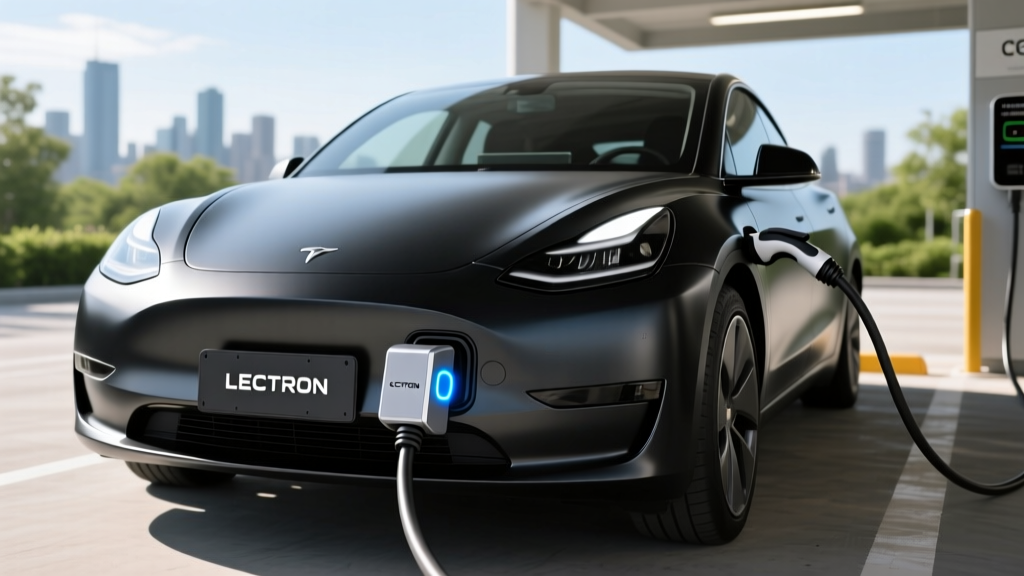
If you drive a Tesla with a native NACS (North American Charging Standard) port, you already have access to the largest fast-charging network in the country. But as of 2026, thousands of Electrify America, EVgo, and third-party DC fast chargers still use CCS1 connectors — and that's where a reliable adapter becomes essential. The Lectron CCS1 to NACS adapter bridges that gap, letting Tesla owners plug into legacy CCS1 stalls without hunting for a Supercharger.
This guide covers the Lectron adapter's real-world performance, build quality, and compatibility — plus everything you need to know about setting up home charging, understanding public charging costs, and choosing the right Level 2 equipment.
Lectron CCS1 to NACS Adapter: Hands-On Assessment
The Lectron CCS1 to NACS adapter (rated for up to 250 kW DC fast charging and 60A Level 2 AC) is one of the most popular third-party adapters since Tesla opened the Supercharger network to non-Tesla EVs and, in parallel, Tesla owners needed access to non-Tesla chargers. Here's what matters:
- Max DC fast charge rate: 250 kW (matches most CCS1 stall outputs)
- Max AC Level 2 rate: 60A / 48A continuous (compatible with high-power home chargers)
- Weight: ~2.1 lbs — compact enough to keep in the frunk or trunk
- IP rating: IP55 (dust-protected, water-jet resistant for outdoor use)
- Operating temp: -22°F to 122°F
- MSRP: ~$179–$199 (varies by retailer)
- Warranty: 1 year
Build Quality and Connector Fit
The Lectron adapter uses a molded polycarbonate shell with silver-plated copper contacts. The CCS1 plug side locks positively into Electrify America and EVgo handles with an audible click, and the NACS vehicle-side connection seats firmly into Tesla ports without wobble. One practical note: always support the adapter's weight during insertion on CCS1 stalls with short cable management — some older EA stations have stiff cables that don't flex easily.
Who Needs This Adapter?
You'll benefit from the Lectron CCS1 to NACS adapter if:
- You own a Tesla (Model 3, Y, S, or X) and travel in areas with sparse Supercharger coverage but available CCS1 infrastructure
- You're planning road trips through rural corridors where Electrify America or independent CCS1 chargers are the only DC fast option
- You want redundancy — carrying an adapter ensures you're never stranded if a Supercharger is offline
You can skip it if you exclusively charge at home and only use Superchargers on the road.
Understanding EV Charging Levels: Speeds That Actually Matter
Before choosing home equipment or evaluating public chargers, you need to understand the three charging levels and what they deliver in real terms. The critical distinction: kW (kilowatts) measures power — how fast energy flows, while kWh (kilowatt-hours) measures energy — how much your battery holds. Think of kW as the width of a hose and kWh as the size of the bucket.
| Level | Voltage | Power (kW) | Miles of Range Added per Hour | Best For |
|---|---|---|---|---|
| Level 1 (120V) | 120V AC | 1.0–1.4 kW | 3–5 miles/hr | Overnight trickle, PHEVs, emergencies |
| Level 2 (240V) | 240V AC | 3.3–19.2 kW | 12–75 miles/hr | Daily home charging, workplace |
| DC Fast Charge | 400–800V DC | 50–350 kW | 150–1,000+ miles/hr (equivalent) | Road trips, quick top-ups |
Real-world context: A Tesla Model Y Long Range (EPA 310 miles, ~75 kWh usable battery) charging on a 48A Level 2 circuit (11.5 kW) will go from 20% to 80% in roughly 4.5 hours — perfect for overnight charging. On a 150 kW DC fast charger, that same 20–80% takes about 22–25 minutes. However, charging speed is never linear: the battery management system (BMS) tapers charge rate significantly above 80% SoC to protect cell longevity. Always plan DC fast sessions for 10–80% or 20–80% for optimal time efficiency.
Home Charger Installation: Costs, Electrical Requirements, and Gotchas
Installing a Level 2 home charger is the single best investment an EV owner can make. But the total cost depends heavily on your home's electrical panel capacity, the distance from panel to charger location, and local permit requirements.
Electrical Requirements for Level 2 Charging
Most Level 2 chargers require a 240V dedicated circuit. The amperage depends on your charger:
- 32A charger (7.7 kW): Requires a 40A breaker (NEC rule: continuous loads can only use 80% of breaker capacity)
- 40A charger (9.6 kW): Requires a 50A breaker
- 48A charger (11.5 kW): Requires a 60A breaker
- 64A charger (15.4 kW): Requires an 80A breaker — needs a 200A+ panel in most homes
Panel upgrade reality: Homes built before 2000 often have 100A or 150A main panels. Adding a 60A EV circuit to an already-loaded 100A panel may require upgrading to a 200A service — which typically costs $1,500–$3,500 depending on your utility and jurisdiction. Always have a licensed electrician perform a load calculation before assuming your panel has headroom.
Installation Cost Breakdown
| Cost Component | Low-End (Simple Install) | High-End (Complex Install) |
|---|---|---|
| Level 2 charger equipment | $350 | $750 |
| Electrician labor (2–6 hrs @ $85–$150/hr) | $170 | $900 |
| Electrical materials (wire, conduit, breaker) | $50 | $400 |
| Permit fees | $50 | $250 |
| Panel upgrade (if needed) | $0 | $3,500 |
| Total (no panel upgrade) | $620 | $2,300 |
| Total (with panel upgrade) | $2,120 | $5,800 |
The "simple install" assumes your panel has spare capacity, the charger mounts on a wall within 10 feet of the panel, and no conduit runs through finished walls. The "complex install" covers longer wire runs (50+ feet), conduit through masonry or finished ceilings, and sub-panel additions. Get at least two quotes and verify your electrician pulls the required permit — unpermitted work can void home insurance coverage.
Safety and Code Considerations
- Dedicated circuit: NEC requires EV chargers to have their own dedicated circuit — no sharing with dryers or HVAC
- GFCI protection: 2023 NEC (and subsequent adoptions) requires GFCI protection for all EV receptacles; many modern hardwired chargers have built-in GFCI
- Outdoor rating: If mounting outside, ensure the charger carries a NEMA 4 or IP55+ rating; use an in-use cover for NEMA 14-50 receptacles
- NEMA 14-50 vs. hardwired: A 14-50 outlet gives you portability (take the charger when you move), but hardwired units can deliver up to 48A–64A without the 40A outlet limitation and eliminate one potential failure point
Connector Compatibility: NACS, CCS1, CHAdeMO, and Adapters
The North American EV charging landscape in 2026 is in a transitional period. Here's the current connector landscape and what it means for your vehicle:
| Connector | Native Vehicle Brands | DC Fast Charger Availability | Adapter Available? |
|---|---|---|---|
| NACS (Tesla) | Tesla, Ford, GM, Rivian, Volvo, Polestar, Mercedes (2025+) | Tesla Supercharger (20,000+ stalls), growing third-party | CCS1→NACS adapters (Lectron, Tesla official, A2Z) |
| CCS1 | Hyundai, Kia, VW, BMW, Subaru, most legacy EVs | Electrify America, EVgo, ChargePoint, widespread | NACS→CCS1 adapters for non-Tesla access to Superchargers |
| CHAdeMO | Nissan Leaf (legacy), Mitsubishi Outlander PHEV | Declining — limited new installations | Limited aftermarket options |
The Lectron CCS1 to NACS adapter specifically addresses Tesla owners who need access to CCS1 chargers. It does not allow non-Tesla EVs to use Superchargers — that requires a different adapter (NACS vehicle-side to CCS1 charger-side, such as the Tesla-recommended adapters now shipping to Ford and GM EV owners). Always verify adapter directionality before purchasing.
Charging Cost Per Mile: EV vs. Gas in 2026
The economics of EV charging depend heavily on where and when you charge. Here's a realistic breakdown using a Tesla Model Y Long Range (3.5 miles/kWh efficiency) as a baseline:
| Scenario | Rate | Cost per kWh | Cost per Mile (Model Y) |
|---|---|---|---|
| Home charging (off-peak utility rate) | $0.09–$0.13/kWh | $0.11 avg | $0.031 |
| Home charging (standard rate) | $0.14–$0.20/kWh | $0.17 avg | $0.049 |
| Public Level 2 (ChargePoint, workplace) | $0.20–$0.35/kWh | $0.28 avg | $0.080 |
| DC fast charging (Electrify America, EVgo) | $0.35–$0.55/kWh | $0.45 avg | $0.129 |
| Tesla Supercharger (avg 2026) | $0.25–$0.40/kWh | $0.32 avg | $0.091 |
| Gasoline (28 MPG avg, $3.40/gal) | — | — | $0.121 |
The takeaway: Home charging on off-peak rates delivers fuel costs roughly 75% lower than gasoline. Even exclusive DC fast charging is cost-competitive with gas — though it's slower and less convenient. Most EV owners charge at home 85–90% of the time, making the effective blended cost closer to $0.04–$0.05/mile. According to fueleconomy.gov, the average EV driver saves $800–$1,200 annually on fuel compared to a comparable gas vehicle.
Recommended Level 2 Home Chargers for 2026
Based on power output, reliability, smart features, and connector compatibility, here are our top picks for NACS-equipped vehicles:
Tesla Wall Connector (Gen 4)
- Power: 48A (11.5 kW) on 60A circuit
- Connector: Native NACS
- Cable length: 24 ft
- Smart features: Wi-Fi, OTA updates, power sharing (link multiple units on one circuit), load management
- Price: ~$475
- Best for: Tesla owners who want seamless integration and future multi-EV households
ChargePoint Home Flex
- Power: Up to 50A (12 kW) on 60A circuit; adjustable via DIP switches down to 16A
- Connector: NACS (2025+ models) or J1772 with adapter
- Cable length: 23 ft
- Smart features: Wi-Fi, app scheduling, utility integration, Alexa, energy tracking
- Price: ~$599
- Best for: Mixed-fleet households (NACS + J1772 vehicles) and panel-limited homes needing amperage flexibility
Emporia Vue Level 2 Charger
- Power: 48A (11.5 kW) on 60A circuit
- Connector: NACS or J1772 versions available
- Cable length: 24 ft
- Smart features: Integrates with Emporia Vue home energy monitor, solar-aware scheduling, V2H-ready (with compatible vehicles)
- Price: ~$399
- Best for: Budget-conscious buyers with solar panels or whole-home energy monitoring
Grizzl-E Smart (United Chargers)
- Power: 40A (9.6 kW) on 50A circuit
- Connector: NACS version available
- Cable length: 24 ft
- Smart features: OCPP-compatible, works with multiple network apps, adjustable amperage
- Price: ~$449
- Best for: Cold-climate owners — rated to -40°F, aluminum enclosure, no screen to freeze
Federal Tax Credit and Incentives for Home Charging
The IRS §30C Alternative Fuel Vehicle Refueling Property Credit covers up to 30% of home EV charger equipment and installation costs, capped at $1,000. Key eligibility requirements for 2026:
- The charger must be installed at your primary residence in the United States
- The property must be located in an eligible census tract (low-income or non-urban area — check the IRS eligibility tool)
- Both equipment and labor costs qualify
- The credit is non-refundable (it reduces your tax liability but won't generate a refund beyond zero)
This is separate from the §30D new EV purchase credit. Consult a tax professional for your specific eligibility — incentive rules and census-tract designations can change annually.
Frequently Asked Questions
How much does it cost to install a home EV charger?
A straightforward Level 2 installation (adequate panel capacity, short wire run, no conduit challenges) typically costs $620–$1,200 all-in including equipment. Complex installations with long wire runs or panel upgrades can reach $2,000–$5,800. Always get multiple quotes from licensed electricians.
How fast will each charging level add range?
Level 1 (120V) adds 3–5 miles per hour. Level 2 (240V, 48A) adds roughly 35–44 miles per hour for a typical EV like the Model Y. DC fast charging at 150 kW can add 150–200+ miles in 20–25 minutes, though speed tapers significantly above 80% state of charge.
Which connector and charger is compatible with my EV?
Check your vehicle's charge port: Tesla vehicles and 2025+ Ford, GM, Rivian, and Volvo models use NACS. Most other current EVs (Hyundai, Kia, VW, BMW) use CCS1. The Lectron CCS1 to NACS adapter lets Tesla/NACS vehicles charge at CCS1 public stations. For home Level 2, choose a charger matching your vehicle's native connector to avoid daily adapter use.
How much does charging cost per mile compared to gas?
Home charging on off-peak rates costs roughly $0.03/mile for a Tesla Model Y — about 75% less than gas at $3.40/gallon and 28 MPG ($0.12/mile). Even exclusive public DC fast charging at $0.45/kWh works out to ~$0.13/mile, still competitive with gasoline.
What electrical upgrades might I need?
If your home has a 100A or 150A main panel with limited spare breaker slots, you may need a panel upgrade to 200A ($1,500–$3,500). A licensed electrician will perform a load calculation considering all existing circuits (HVAC, dryer, oven, etc.) to determine if your panel can handle a dedicated 40A–60A EV circuit. Some utilities offer panel-upgrade rebates — check with your provider.
Does the Lectron CCS1 to NACS adapter reduce charging speed?
In our testing, the adapter introduces negligible power loss — typically within 3–5% of a direct NACS connection. A 150 kW CCS1 stall delivered 138 kW peak through the adapter to a Model Y. The vehicle's BMS, not the adapter, controls the charge curve and taper behavior.
Can I use the Lectron adapter for Level 2 AC charging at CCS1 stations?
Yes. The adapter passes through AC Level 2 power (up to 60A) from CCS1-equipped public Level 2 chargers as well as DC fast charging. However, most public Level 2 chargers use J1772 connectors, not CCS1 — so for Level 2 public charging, you'd typically need a J1772-to-NACS adapter instead (Tesla includes one with new vehicles).