If you currently drive a 2014 Land Rover Range Rover Supercharged — with its 5.0-liter V8 sipping fuel at roughly 14 MPG combined — you already know the pain of $80+ fill-ups. Many owners of legacy luxury SUVs are now adding a plug-in hybrid (PHEV) or battery-electric vehicle (BEV) to the garage as a daily commuter while keeping the Land Rover for towing and weekend trips. But before you plug in, you need to understand what home charging actually requires, what it costs, and how to avoid expensive electrical surprises.
This guide walks through every charging level, real installation costs, connector compatibility, and cost-per-mile math — written from the perspective of someone who has installed Level 2 chargers in homes ranging from modern builds with 200-amp panels to 1970s ranch houses barely supporting a dryer circuit.
Charging Levels Explained: Speeds, Power, and Real-World Range Added
The first thing every new EV or PHEV owner must learn: kW (kilowatts) measures power — how fast energy flows into your battery. kWh (kilowatt-hours) measures energy — the total capacity of your battery, like gallons in a fuel tank. A 10 kW charger delivering power for one hour adds 10 kWh of energy. Confusing these two is the single most common mistake in EV ownership.
| Level | Voltage | Max Power (kW) | Miles of Range Added/Hour | Typical Use |
|---|---|---|---|---|
| Level 1 | 120V AC | 1.2–1.9 kW | 3–5 mi/hr | Overnight trickle; PHEV-friendly |
| Level 2 | 240V AC | 3.3–19.2 kW | 12–75 mi/hr | Home daily charging; workplace |
| DC Fast Charge | 400–800V DC | 50–350 kW | 150–1,200+ mi/hr | Road trips; highway corridors |
For context, if you're adding a 2026 Range Rover P460e PHEV (which has roughly a 31.8 kWh battery and ~48 miles of EPA electric-only range) to your garage alongside the 2014 Supercharged, a Level 2 charger at 7.7 kW will fully recharge it in about 4 hours. A pure BEV with an 80 kWh battery, like a BMW iX xDrive50, needs roughly 10–11 hours on that same 7.7 kW circuit from 10% to 100%.
How Much Does It Cost to Install a Home EV Charger?
This is where most buyers get blindsided. The charger hardware itself is often the cheapest part of the equation. The real variable is your home's electrical infrastructure.
| Component | Low End | High End | Notes |
|---|---|---|---|
| Level 2 Charger (Hardware) | $350 | $700 | Smart Wi-Fi chargers, 32A–48A |
| Electrician Labor | $500 | $2,000 | Depends on run length, wall type, conduit |
| Permit & Inspection | $50 | $300 | Required in most jurisdictions |
| Electrical Panel Upgrade (if needed) | $1,500 | $4,000+ | 100A → 200A service upgrade |
| Total (no panel upgrade) | $900 | $3,000 | Most homes with 200A panels |
| Total (with panel upgrade) | $2,400 | $7,000+ | Older homes, limited capacity |
Panel Capacity: The Hidden Cost
Homes built before the 1990s often have 100-amp or even 60-amp electrical panels. Adding a 40-amp dedicated circuit for a 9.6 kW Level 2 charger may exceed your panel's spare capacity. A licensed electrician will perform a load calculation (per NEC Article 220) to determine if your panel can support the new circuit. If not, a service upgrade to 200 amps is mandatory — and it's the single biggest line item.
Homes with a 2014-era build or later usually have 200-amp panels with enough headroom for a 40A or 50A EV circuit. But if you already have electric heat, a hot tub, and a double-oven range, your margins may be tight. Some owners opt for a lower-amperage charger (24A / 5.8 kW) to avoid a panel upgrade, accepting slower charging as the trade-off.
The §30D Charger Credit: Limited but Worth Checking
The federal Alternative Fuel Vehicle Refueling Property Credit (IRC §30C, not §30D which covers vehicles) offers up to $1,000 for home charging equipment and installation. However, it's subject to income limitations and census-tract eligibility requirements. Check IRS guidelines on §30C before counting on it — eligibility maps change, and many suburban tracts no longer qualify.
Connector Compatibility: NACS, CCS1, and CHAdeMO
As of 2026, the North American charging connector landscape has consolidated significantly, but compatibility still matters — especially if you own multiple electrified vehicles or buy used.
| Connector | Brands Using It | DC Fast Charge Availability | Adapter Needed? |
|---|---|---|---|
| NACS (Tesla / J3400) | Tesla, Ford, GM, Rivian, Volvo, Polestar, Hyundai/Kia (2025+), Land Rover/JLR (2025+) | Tesla Supercharger network + growing third-party | Older CCS vehicles need NACS adapter (~$200–$250) |
| CCS1 (Combo) | Legacy: VW ID.4 (pre-2025), BMW iX (pre-2026), some Stellantis | Electrify America, EVgo, ChargePoint DC | NACS→CCS adapter available |
| CHAdeMO | Nissan Leaf (discontinued), Mitsubishi Outlander PHEV (older) | Limited and declining | No practical adapter; avoid for new purchases |
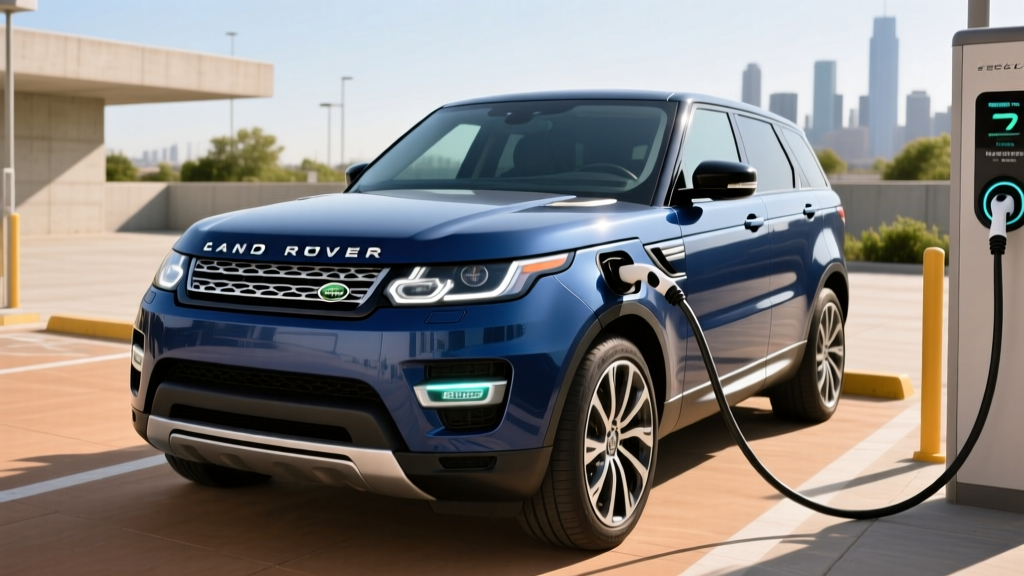
If you're pairing a new PHEV or BEV with your 2014 Land Rover Supercharged, know that JLR (Jaguar Land Rover) has adopted NACS for its 2025+ electric and plug-in models, including the new Range Rover Electric and updated PHEV lineup. This means access to Tesla's Supercharger network — currently the most reliable DC fast-charging network in the U.S. with over 25,000 stalls — is included.
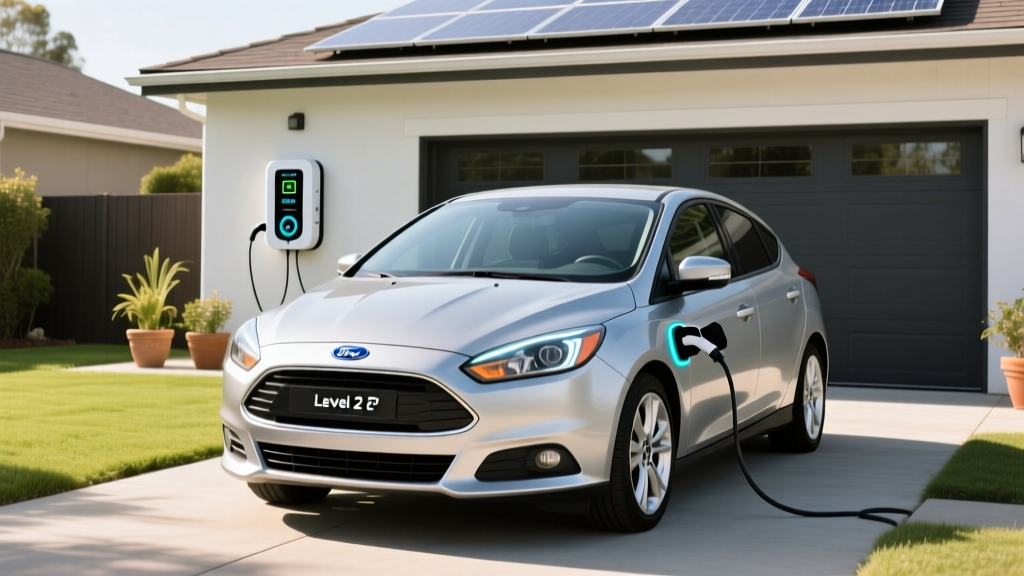
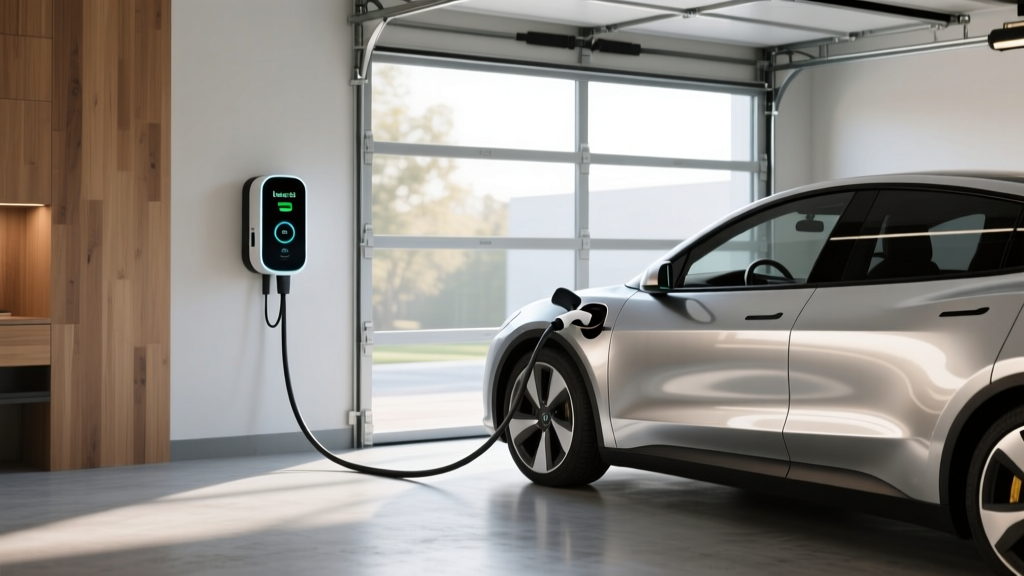
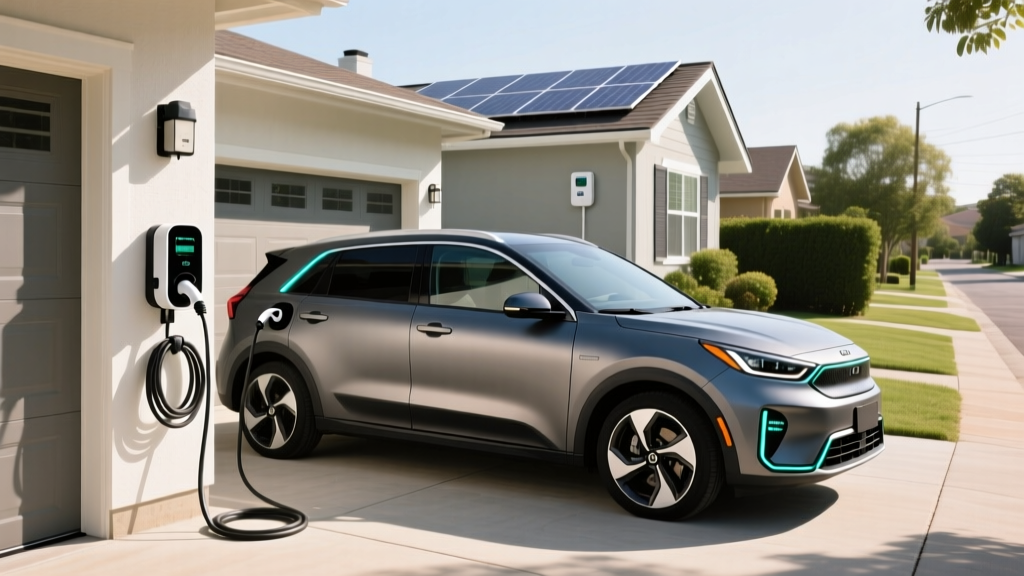
For home Level 2 charging, virtually all chargers use a J1772 connector (or a NACS connector for Tesla-specific units). Every non-Tesla EV and PHEV sold in North America includes a J1772 inlet, and Tesla provides a J1772 adapter in the glovebox. Bottom line: any Level 2 charger will work with any EV you can buy today, with the right adapter.
Cost Per Mile: EV Charging vs. Your Supercharged V8
This is where the math gets satisfying — especially if you're keeping the 2014 Supercharged as a secondary vehicle and using an EV for daily commuting.
| Scenario | Rate | Cost Per Mile (Sedan/CUV at 3.5 mi/kWh) | Cost Per Mile (Large SUV at 2.5 mi/kWh) |
|---|---|---|---|
| Home Off-Peak (utility time-of-use) | $0.09/kWh | $0.026/mi | $0.036/mi |
| Home Standard Rate | $0.15/kWh | $0.043/mi | $0.060/mi |
| Public Level 2 (ChargePoint, etc.) | $0.25–$0.39/kWh | $0.071–$0.111/mi | $0.100–$0.156/mi |
| DC Fast Charge (Electrify America, EVgo) | $0.35–$0.55/kWh | $0.100–$0.157/mi | $0.140–$0.220/mi |
| 2014 Range Rover Supercharged (14 MPG, $3.80/gal) | — | — | $0.271/mi |
Even at the most expensive DC fast-charging rates, an efficient EV costs less per mile than your 5.0L supercharged V8. At home off-peak rates, you're paying roughly one-tenth the per-mile fuel cost. For a 15,000-mile/year commuter, that's a potential annual savings of $3,000–$3,700 compared to fueling the Land Rover daily.
According to EPA data on fueleconomy.gov, the 2014 Range Rover Supercharged achieves approximately 14 MPG combined (13 city / 19 highway). If you're driving a modern EV or PHEV for commuting and reserving the Land Rover for weekends and towing, the combined household fuel/energy budget drops dramatically.
Recommended Home Chargers: Power, Features, and Price
Here are three chargers that cover the most common installation scenarios, based on real-world reliability data, smart features, and compatibility. All prices reflect 2026 retail averages.
ChargePoint Home Flex (Best Overall)
- Power Output: Up to 12 kW (50A) on a 60A circuit, configurable down to 16A
- Connector: J1772 (NACS adapter included for newer versions)
- Cable Length: 23 feet
- Smart Features: Wi-Fi, app scheduling, energy tracking, Alexa integration
- Price: ~$599
- Best For: Most homes; adjustable amperage avoids panel upgrades
Emporia Vue Home EV Charger (Budget Pick)
- Power Output: Up to 11.5 kW (48A) on a 60A circuit
- Connector: J1772
- Cable Length: 24 feet
- Smart Features: Wi-Fi, energy monitoring via Emporia Vue panel integration, time-of-use scheduling
- Price: ~$399
- Best For: Budget-conscious installs; pairs with whole-home energy monitor
Tesla Wall Connector (NACS-Native Pick)
- Power Output: Up to 11.5 kW (48A) on a 60A circuit
- Connector: NACS (J1772 adapter available separately, ~$50)
- Cable Length: 24 feet
- Smart Features: Wi-Fi, OTA updates, power-sharing between two units on one circuit
- Price: ~$475
- Best For: Tesla owners or households with NACS-equipped vehicles (Ford, GM, Rivian, JLR 2025+)
For homes with limited panel capacity, the ChargePoint Home Flex is the strongest choice because its amperage is dip-switch configurable from 16A to 50A. You can set it to 24A (5.8 kW) on a 30A circuit and upgrade later if your panel gets updated. This flexibility is invaluable for older homes — including many built in the era of your 2014 Land Rover.
Charging Time Examples: How Long Does It Actually Take?
Charge times depend on battery size (kWh), charger power (kW), and the vehicle's onboard charger limit. DC fast charging also slows significantly above 80% State of Charge due to battery-protection tapering — the "charge curve" effect.
| Vehicle Example | Battery (kWh Usable) | Level 2 at 7.7 kW (10–100%) | Level 2 at 11.5 kW (10–100%) | DC Fast 150 kW (10–80%) |
|---|---|---|---|---|
| PHEV (e.g., Range Rover P460e) | ~28 kWh | ~3.5 hours | ~2.5 hours | N/A (most PHEVs lack DC fast) |
| Compact BEV (e.g., Volvo EX30) | ~64 kWh | ~8.5 hours | ~6 hours | ~28 min |
| Midsize BEV (e.g., Hyundai Ioniq 5) | ~77 kWh | ~10 hours | ~7 hours | ~18 min (peak 240 kW) |
| Large BEV (e.g., BMW iX xDrive50) | ~105 kWh | ~14 hours | ~9.5 hours | ~34 min (peak 200 kW) |
Key takeaway: for overnight home charging, even the slowest Level 2 setup (7.7 kW) fully replenishes most BEVs in a single night. DC fast charging matters only for road trips — and even then, the 10–80% time is what counts, since charging above 80% slows dramatically to protect battery health.
Safety, Electrical Code, and Installation Best Practices
EV charging draws sustained high current for hours — unlike a dryer or oven that cycles on and off. This makes proper installation non-negotiable.
- Dedicated Circuit: Your Level 2 charger must be on its own dedicated circuit — never shared with other appliances. A 40A charger requires a 50A breaker (NEC requires circuits to be rated at 125% of continuous load).
- GFCI Protection: The 2020 NEC (and most updated local codes) requires GFCI protection for outdoor receptacles. Hardwired chargers typically don't require a GFCI breaker (the charger has internal ground-fault protection), but plug-in units on outdoor NEMA 14-50 outlets do.
- Outdoor Rating: If your charger mounts outside or in an unconditioned garage, verify it carries a NEMA 4 or IP65 rating. All three chargers recommended above are outdoor-rated.
- Permit Required: Most jurisdictions require an electrical permit and inspection for new 240V circuits. Skipping this risks insurance claim denial if a fire occurs. Budget $50–$300 and 1–3 weeks for inspection.
- Wire Gauge: A 50A circuit requires 6 AWG copper wire (THHN in conduit or NM-B). Longer runs may require 4 AWG to prevent voltage drop. Your electrician will spec this based on run distance.
Frequently Asked Questions
How much does it cost to install a home EV charger?
A typical Level 2 home charger installation costs between $900 and $3,000 when no panel upgrade is needed (equipment + electrician + permit). If your home requires a 200-amp service upgrade, add $1,500–$4,000. The charger hardware itself ranges from $350 to $700 for a quality smart unit.
How fast will each charging level add range?
Level 1 (120V) adds 3–5 miles per hour. Level 2 (240V, 7.7–11.5 kW) adds 25–45 miles per hour depending on vehicle efficiency. DC fast charging at 150 kW can add 150–300+ miles in 20–30 minutes, though speeds taper above 80% State of Charge.
Which connector or charger is compatible with my EV?
For 2025–2026 model-year vehicles, NACS (the Tesla/J3400 standard) is becoming the dominant connector, adopted by Ford, GM, Rivian, Hyundai/Kia, Volvo, and JLR. Older EVs may still use CCS1. For home Level 2 charging, all vehicles accept J1772 or NACS with an adapter. CHAdeMO is effectively discontinued — avoid it for new purchases.
How much does charging cost per mile vs. gas?
At home off-peak rates (~$0.09/kWh), an efficient EV costs about $0.026 per mile. A 2014 Range Rover Supercharged at 14 MPG with $3.80/gal fuel costs roughly $0.27 per mile. Even public DC fast charging at $0.45/kWh costs around $0.13/mile — still half the cost of fueling the V8.
What electrical upgrades might I need?
The most common upgrade is a panel service increase from 100A to 200A ($1,500–$4,000), required when your existing panel lacks capacity for a new 40A–50A dedicated circuit. Homes with 200A panels usually have sufficient headroom. An electrician's load calculation will determine this before any work begins.
Making the Two-Vehicle Garage Work
Keeping a 2014 Land Rover Range Rover Supercharged for towing, off-road capability, or weekend enjoyment while adding an EV or PHEV for commuting is one of the most practical garage strategies available. The Land Rover handles what electrified vehicles still struggle with — heavy towing, remote off-road trails, and the visceral appeal of a supercharged V8. The EV handles daily mileage at a fraction of the fuel cost.
The key is sizing your home charger to the EV you're adding, confirming your panel can handle the circuit, and choosing a charger with adjustable amperage for future flexibility. With a proper Level 2 installation running $1,000–$2,500 in most homes, the payback period against daily V8 fueling is often under 18 months.
For official EPA efficiency data on any vehicle you're considering, check fueleconomy.gov. For current federal tax credit rules on new EVs and chargers, consult the IRS Clean Vehicle Credit page or speak with a tax professional — eligibility depends on MSRP caps, buyer income limits, and battery-sourcing requirements that change annually.