Why Cold Weather Destroys Your Tesla's Charging Speed (And What to Do About It)
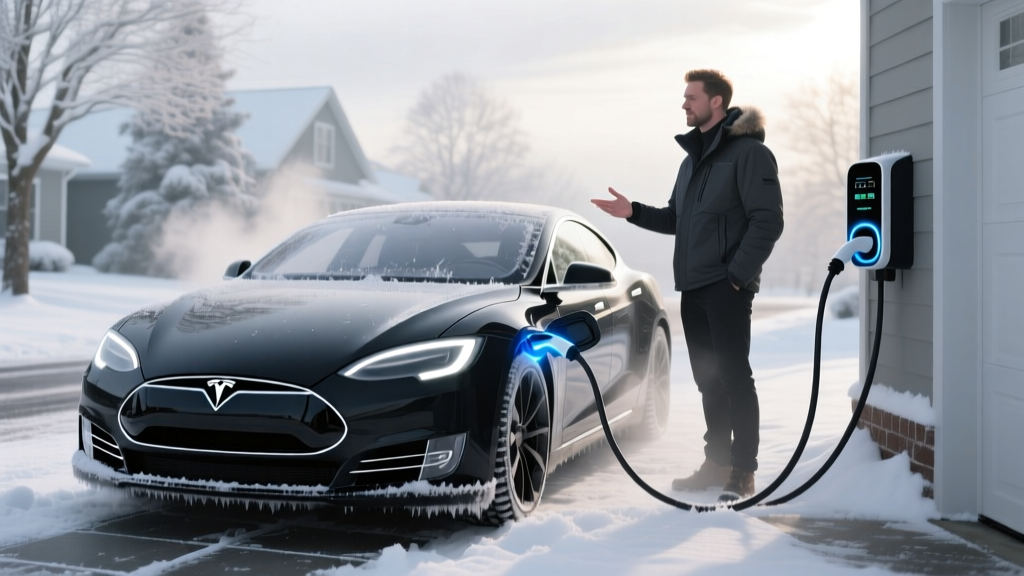
When EV educator and YouTuber Kyle Conner documented his real-world Tesla cold charging tests in sub-freezing temperatures, the results surprised many newer EV owners: a Supercharger session that adds 200 miles in 20 minutes during summer can stretch to 40+ minutes or more when the battery is cold-soaked. This isn't a Tesla defect — it's lithium-ion chemistry. Below freezing, lithium ions move sluggishly through the electrolyte, and the battery management system (BMS) deliberately restricts charge current to prevent lithium plating, a condition that permanently damages cells.
Understanding this physics, combined with the right charging strategy, is the difference between a frustrating winter road trip and a seamless one. This guide breaks down exactly how cold affects your charging speed at every level, what Kyle Conner's testing reveals about Tesla preconditioning, and how to set up your home charging to minimize winter headaches — including exact install costs, equipment picks, and electrical requirements.
Throughout this guide, kW (kilowatts) refers to charging power — how fast energy flows into your car. kWh (kilowatt-hours) refers to energy capacity — how much your battery holds. A 75 kWh battery charged at 11 kW (Level 2) takes roughly 7 hours from empty. Cold weather reduces the effective kW rate your car will accept.
Charging Levels Explained: Speeds, Range Added, and Cold-Weather Impact
Every EV owner needs fluency in the three charging levels. Cold weather affects each differently, and the impact scales with how fast you're trying to push energy into the pack.
| Level | Voltage / Amps | Power (kW) | Miles of Range per Hour | Cold-Weather Impact |
|---|---|---|---|---|
| Level 1 (120V household) | 120V / 12A | ~1.4 kW | 3–5 mi/hr | Minimal — slow rate means battery self-heats slightly during charge |
| Level 2 (240V home/public) | 240V / 32–48A | 7.7–11.5 kW | 25–44 mi/hr | Moderate — BMS may divert 1–3 kW to battery heating before accepting full rate |
| DC Fast Charging | 400–800V DC | 50–250+ kW | 150–1,000+ mi/hr (peak) | Severe — cold-soaked battery may accept only 20–40 kW until warmed above ~50°F |
The critical insight from Kyle Conner's Tesla cold charging tests: DC fast charging suffers disproportionately in the cold. At a 250 kW V3 Supercharger, a cold Model Y Long Range (75 kWh usable, NMC chemistry) might initially accept only 30–50 kW. That's Level 2 speed at a DC fast charger. The BMS must warm the battery to roughly 50–60°F before ramping up, and even then, the sustained rate may peak around 150–180 kW instead of the full 250 kW.
Real-World 10–80% Charging Times by Temperature
| Battery Starting Temp | Peak kW Accepted | 10–80% Time | Notes |
|---|---|---|---|
| 70°F+ (warm) | ~250 kW | ~25–28 minutes | Full charge curve available; taper begins ~55% SoC |
| 40–50°F (cool) | ~180 kW | ~35–40 minutes | Preconditioning helps; slight initial ramp delay |
| 20–30°F (cold) | ~90–120 kW | ~45–55 minutes | Significant BMS throttling; preconditioning critical |
| Below 10°F (cold-soaked) | ~30–60 kW initially | ~60–80+ minutes | Battery heating dominates first 15–20 min of session |
Preconditioning: The Kyle Conner Tesla Cold Charging Secret
The single most impactful thing you can do for winter DC fast charging is precondition your battery. Tesla's navigation system does this automatically when you route to a Supercharger — it activates the heat pump and motor stator heating to raise battery temperature en route. But there are nuances that Conner's testing highlights:
- Route to the charger, even if you know where it is. If you don't navigate to the Supercharger in the Tesla's native nav (or use the Tesla app to initiate preconditioning), the car won't begin warming the pack. Driving to a charger "by memory" wastes the first 15–20 minutes of your charging session on battery heating.
- Preconditioning begins 10–25 miles out depending on ambient temperature and battery SoC. In extreme cold (below 10°F), the car may need the full 25+ miles of highway driving to bring the pack up to optimal charging temperature.
- Charge curve taper still applies. Even with a warm battery, Tesla's NMC cells taper significantly above 80% SoC. Charging from 80–100% can take as long as 10–80%. Plan to charge to 80% and drive.
- LFP chemistry (Standard Range/RWD models) behaves differently. LFP cells tolerate cold slightly better during charging but have lower energy density overall. Tesla recommends charging LFP packs to 100% at least weekly for BMS calibration.
Home Level 2 Charging Setup: Electrical Requirements and Install Costs
Home Level 2 charging is the foundation of practical EV ownership, especially in winter when you want to precondition while plugged in (drawing power from the grid, not the battery). Here's what a proper installation requires.
Electrical Requirements
A Level 2 home charger requires a 240V dedicated circuit, similar to what powers an electric dryer or oven. The most common configurations:
- NEMA 14-50 outlet (50A circuit, 40A continuous): Most popular for portable chargers like the Tesla Mobile Connector or Gen 3 Wall Connector with a plug. Supports up to 9.6 kW (40A × 240V).
- Hardwired 60A circuit (48A continuous): Required for the Tesla Wall Connector at full 11.5 kW output. Hardwired connections are more reliable and don't require GFCI breakers (which can nuisance-trip with EV chargers).
- Hardwired 40A circuit (32A continuous): Adequate for overnight charging most EVs. Delivers 7.7 kW — enough to fully replenish a 75 kWh Tesla battery in about 10 hours.
Panel Upgrade Reality
Homes with 100A electrical service (common in pre-1990 construction) often cannot support a 50A or 60A EV circuit without a panel upgrade. An electrician will perform a load calculation per NEC Article 220 to determine available capacity. If your panel is maxed out, a 200A service upgrade typically costs $2,000–$5,000 depending on your utility and local permitting. Some homeowners opt for smart load-management devices like the Sense energy monitor paired with a smart charger that throttles amperage when household demand is high.
| Component | Simple Install (Panel Nearby) | Complex Install (Long Run / Panel Upgrade) |
|---|---|---|
| EV Charger Equipment | $350–$650 | $350–$650 |
| Electrical Permit | $50–$200 | $50–$200 |
| Electrician Labor (2–4 hrs simple; 6–12 hrs complex) | $300–$800 | $1,200–$3,000 |
| Wiring / Conduit (50 ft run) | $100–$300 | $400–$1,200 |
| Panel Upgrade (if needed) | $0 | $2,000–$5,000 |
| Total Estimated Cost | $800–$1,950 | $4,000–$10,050 |
Always hire a licensed electrician familiar with NEC Article 625 (EV charging equipment). Permits are required in most jurisdictions, and unpermitted work can void homeowner's insurance claims related to electrical fires.
Connector Compatibility: NACS, CCS1, and CHAdeMO in 2026
The connector landscape has shifted dramatically. As of 2025, Tesla's North American Charging Standard (NACS) has been adopted by Ford, GM, Rivian, Volvo, Hyundai/Kia, and most major automakers. By 2026, nearly all new EVs sold in North America ship with a native NACS port, and Tesla Superchargers are accessible to non-Tesla vehicles via the built-in "Magic Dock" CCS adapter or the vehicle's own NACS port.
| Connector | Brands Using It (2026) | Max DC Fast Charge Power | Adapter Needed? |
|---|---|---|---|
| NACS (Tesla) | Tesla, Ford, GM, Rivian, Hyundai, Kia, Volvo, BMW, Mercedes | Up to 350 kW (V4 Supercharger) | None for native NACS vehicles; CCS-to-NACS adapter for older CCS cars |
| CCS1 | Legacy 2022–2024 models (VW ID.4, older Bolt, early Ioniq 5) | Up to 350 kW (Electrify America, Ionity) | NACS-to-CCS adapter ($200–$300) for Supercharger access |
| CHAdeMO | Nissan Leaf (discontinued), Mitsubishi Outlander PHEV | Up to 100 kW | Increasingly rare; no adapter to NACS |
For Tesla owners, your NACS port works natively at Superchargers and at most third-party networks via adapters. The Tesla CCS Adapter (~$250) unlocks Electrify America and other CCS networks — valuable for road trips through areas with limited Supercharger coverage.
Charging Cost per Mile: Home vs Public vs Gas
One of the strongest EV ownership arguments is lower fuel cost per mile, but the savings depend heavily on where and when you charge. Here's a realistic breakdown using a Tesla Model Y Long Range (averaging 3.5 miles per kWh, or roughly 115 MPGe combined per fueleconomy.gov):
| Charging Scenario | Cost per kWh | Cost per Mile (3.5 mi/kWh) | Annual Cost (12,000 mi) |
|---|---|---|---|
| Home Level 2 — Off-Peak TOU Rate | $0.08–$0.12 | $0.023–$0.034 | $275–$410 |
| Home Level 2 — Standard Rate | $0.14–$0.18 | $0.040–$0.051 | $480–$615 |
| Public Level 2 (ChargePoint, etc.) | $0.25–$0.40 | $0.071–$0.114 | $855–$1,370 |
| DC Fast Charging (Supercharger/EA) | $0.30–$0.55 | $0.086–$0.157 | $1,030–$1,885 |
| Gasoline Vehicle (28 MPG avg, $3.50/gal) | — | $0.125 | $1,500 |
Home off-peak charging delivers the clearest savings — often 70–80% less per mile than gasoline. But if you rely exclusively on DC fast charging (apartment dwellers, frequent road-trippers), costs can approach or exceed gasoline. This is why home Level 2 installation pays for itself within 1–3 years for most drivers.
Recommended Home Level 2 Chargers for 2026
Based on reliability, smart features, and cold-weather performance, these are the top home chargers for Tesla and NACS-equipped EVs:
Tesla Wall Connector (Gen 4)
- Power: Up to 11.5 kW (48A hardwired)
- Connector: Native NACS, 24 ft cable
- Smart Features: Wi-Fi, OTA updates, Power Sharing (link up to 6 units on one circuit), Tesla app integration
- Outdoor Rating: NEMA 4 (suitable for outdoor install)
- Price: ~$450
- Best For: Tesla owners who want seamless integration and maximum speed on a 60A circuit
ChargePoint Home Flex (NACS)
- Power: Up to 12 kW (50A, configurable down to 16A)
- Connector: NACS or CCS1 (choose at purchase), 23 ft cable
- Smart Features: Wi-Fi, Alexa/Google Home, scheduling, detailed app analytics, flexible amperage
- Outdoor Rating: NEMA 4
- Price: ~$550–$650
- Best For: Multi-EV households (NACS + CCS) and those wanting granular energy tracking
Emporia Vue Level 2 Charger
- Power: Up to 11.5 kW (48A hardwired) or 9.6 kW (40A NEMA 14-50)
- Connector: NACS or J1772 (with adapter), 24 ft cable
- Smart Features: Integrates with Emporia Vue energy monitor for solar-aware charging, load management
- Outdoor Rating: NEMA 4
- Price: ~$399–$499
- Best For: Solar-panel owners and budget-conscious buyers wanting smart features
Grizzl-E Smart (NACS)
- Power: Up to 10 kW (40A) — configurable via DIP switches
- Connector: NACS, 24 ft cable
- Smart Features: Wi-Fi, OCPP protocol (works with utility demand-response programs), adjustable amperage
- Outdoor Rating: NEMA 4, rated to -40°F — built for extreme cold
- Price: ~$450–$550
- Best For: Cold-climate owners (Canadian-tested) and utility-program participants
Safety, Code, and Cold-Weather Installation Tips
EV charger installation involves high-amperage 240V circuits that demand strict code compliance. Key safety considerations:
- Dedicated circuit required: NEC Article 625 mandates a dedicated circuit for EV charging. You cannot share the circuit with a dryer, oven, or other appliance.
- GFCI considerations: The 2020 NEC added GFCI requirements for receptacles (NEMA 14-50 outlets) in garages. However, many EV charger manufacturers recommend hardwired installations to avoid nuisance GFCI trips — the charger has its own internal ground-fault protection. Discuss this with your electrician.
- Outdoor installations: Use only NEMA 4-rated (or higher) chargers and weatherproof conduit entries. In cold climates, ensure the cable remains flexible below freezing — premium chargers use cold-rated cable jackets that stay pliable to -40°F.
- Cable management: In snowy climates, mount the charger and holster high enough to avoid snow burial. A retractable cable management system prevents the cord from dragging through ice and road salt.
- Ventilation: While Level 2 chargers produce minimal heat, enclosed garages should have basic ventilation. The charger's internal thermal management will throttle output if ambient temperature in the enclosure exceeds safe limits.
Maximizing Winter Charging Efficiency: A Practical Checklist
Pulling together Kyle Conner's cold-weather charging insights and real-world EV ownership experience, here's your winter charging playbook:
- Always navigate to the Supercharger in your Tesla's nav to trigger preconditioning — even for chargers you've visited dozens of times.
- Charge at home overnight while plugged into Level 2. Schedule departure preconditioning so the car warms the battery and cabin using grid power, not battery energy.
- Avoid charging above 80% at DC fast chargers unless you specifically need the range. The taper above 80% is severe, and in cold weather, that taper starts even earlier.
- Keep your battery between 20–80% daily for NMC chemistry. For LFP (Standard Range/RWD), charge to 100% at least once per week.
- Plan road-trip charging stops with A Better Routeplanner or Tesla's trip planner, which accounts for temperature, elevation, and speed. Add a 15–20% buffer in sub-freezing weather.
- Use seat heaters and steering wheel heaters instead of cranking cabin heat. Tesla's heat pump is efficient, but resistive heating elements for seats use far less energy than heating the entire cabin air volume.
Frequently Asked Questions
How much does it cost to install a home EV charger?
A straightforward Level 2 installation (short wire run, adequate panel capacity) costs $800–$1,950 including equipment, electrician labor, and permits. Complex installs requiring long conduit runs or a 200A panel upgrade can reach $4,000–$10,000. Get at least three quotes from licensed electricians and confirm they hold a permit for the work.
How fast will each charging level add range to my Tesla?
Level 1 (120V) adds 3–5 miles per hour — suitable only for overnight top-ups on low-mileage days. Level 2 (240V, 48A) adds 35–44 miles per hour, fully replenishing a Model Y Long Range overnight. DC fast charging at a V3 Supercharger (250 kW) can add up to 200 miles in 15 minutes in warm weather, but cold-soaked batteries may add only 50–80 miles in that same window.
Which connector and charger is compatible with my EV?
All 2025+ Tesla vehicles use the native NACS connector. Most non-Tesla EVs from 2025 onward (Ford, GM, Hyundai, Kia, Rivian) also ship with NACS. Older CCS1-equipped vehicles (2022–2024 VW ID.4, Chevy Bolt) need a NACS-to-CCS adapter (~$200–$300) to access Superchargers. CHAdeMO (Nissan Leaf) is effectively discontinued and has no NACS adapter path.
How much does EV charging cost per mile compared to gas?
Home off-peak charging costs $0.02–$0.03 per mile — roughly 75–80% less than a 28 MPG gas car at $3.50/gallon ($0.125/mile). Standard-rate home charging runs $0.04–$0.05/mile. Exclusive DC fast charging at $0.30–$0.55/kWh costs $0.09–$0.16/mile, approaching gasoline costs. The economic case for EVs is strongest with reliable home charging access.
What electrical upgrades might I need for a home charger?
Homes with 100A service or panels near capacity may need a 200A service upgrade ($2,000–$5,000). Your electrician will perform an NEC Article 220 load calculation. Alternatives include installing a lower-amperage circuit (32A/7.7 kW instead of 48A/11.5 kW) or using a smart load-management system that dynamically reduces charger draw when other appliances are running.
Does cold weather permanently damage my Tesla's battery?
No. Cold weather temporarily reduces range and charging speed, but the BMS protects the cells from damage by restricting charge rates when the battery is cold. Permanent degradation comes from consistently charging to 100% and storing at high SoC in hot weather, not from cold exposure. Tesla's battery warranty covers degradation below 70% capacity for 8 years or 120,000 miles (100,000 miles for Standard Range), per Tesla's warranty documentation.