If you're shopping for a Tesla—or already own one—one question dominates your planning: how many kWh to charge a Tesla from empty to full, and what does that actually cost? The answer depends on your specific model's battery capacity, the charging level you use, and your local electricity rates. This guide gives you the exact numbers for every current Tesla model, plus a realistic breakdown of home charger installation costs, public charging prices, and the electrical upgrades your house might need.
Tesla Battery Capacities: How Many kWh You're Actually Storing
Before calculating cost, you need to know the energy capacity of your Tesla's battery pack. Tesla doesn't publish exact usable kWh figures for every trim, but independent testing and EPA filing data give us reliable numbers for the 2025–2026 lineup:
- Model 3 Standard Range (RWD): ~57 kWh usable (LFP chemistry)
- Model 3 Long Range AWD: ~75 kWh usable (NMC chemistry)
- Model 3 Performance: ~75 kWh usable (NMC)
- Model Y Long Range AWD: ~75 kWh usable (NMC)
- Model Y Performance: ~75 kWh usable (NMC)
- Model S Dual Motor: ~95 kWh usable (NMC)
- Model X Dual Motor: ~95 kWh usable (NMC)
A critical distinction: kWh (kilowatt-hours) measures energy stored—think of it as the size of your "fuel tank." kW (kilowatts) measures power—the rate at which energy flows into that tank. A 75 kWh battery charged at 11.5 kW (a typical Level 2 home charger) takes roughly 6.5 hours from 0% to 100%. That same battery on a 250 kW DC fast charger can go from 10% to 80% in about 25–30 minutes, though the charge rate tapers significantly above 80% to protect battery health.
Charging Levels Explained: Speed, Power, and Miles Per Hour
Every Tesla owner uses a mix of three charging levels depending on the situation. Here's what each delivers in real-world terms:
| Level | Voltage | Max Power (kW) | Miles of Range Per Hour | Typical Use Case |
|---|---|---|---|---|
| Level 1 (120V) | 120V / 12A | ~1.4 kW | 3–5 mi/hr | Emergency / overnight trickle |
| Level 2 (240V) | 240V / 32–48A | 7.7–11.5 kW | 25–44 mi/hr | Daily home charging |
| DC Fast (Supercharger) | 400V+ DC | 170–250 kW | ~1,000+ mi/hr (peak) | Road trips, rapid top-ups |
Level 1 uses a standard household outlet. It's painfully slow—adding roughly 4 miles of range per hour—but it works for plug-in hybrids or EVs with short commutes. For a Model Y Long Range, a full 0–100% charge on Level 1 would take over 50 hours. It's a backup, not a strategy.
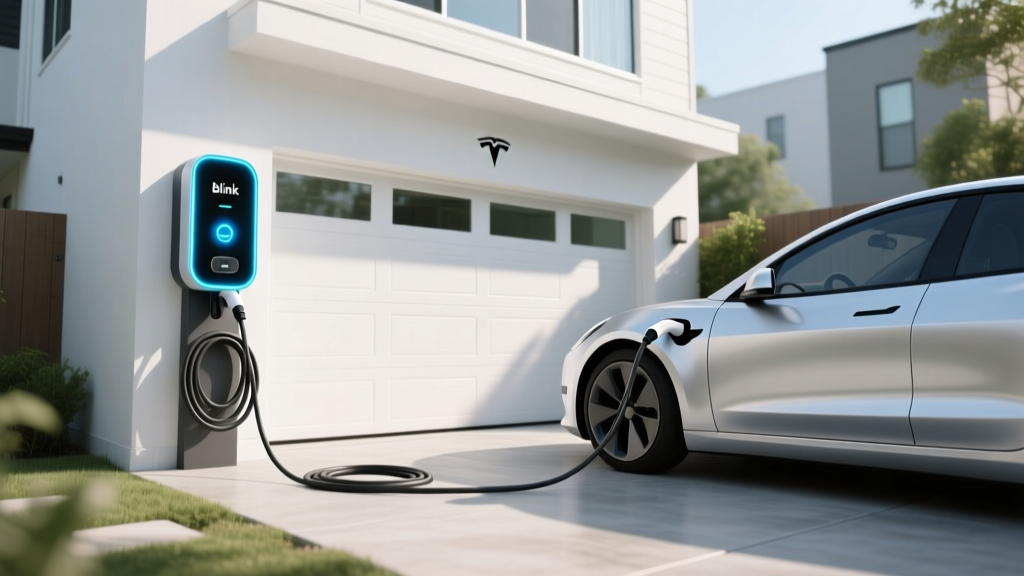
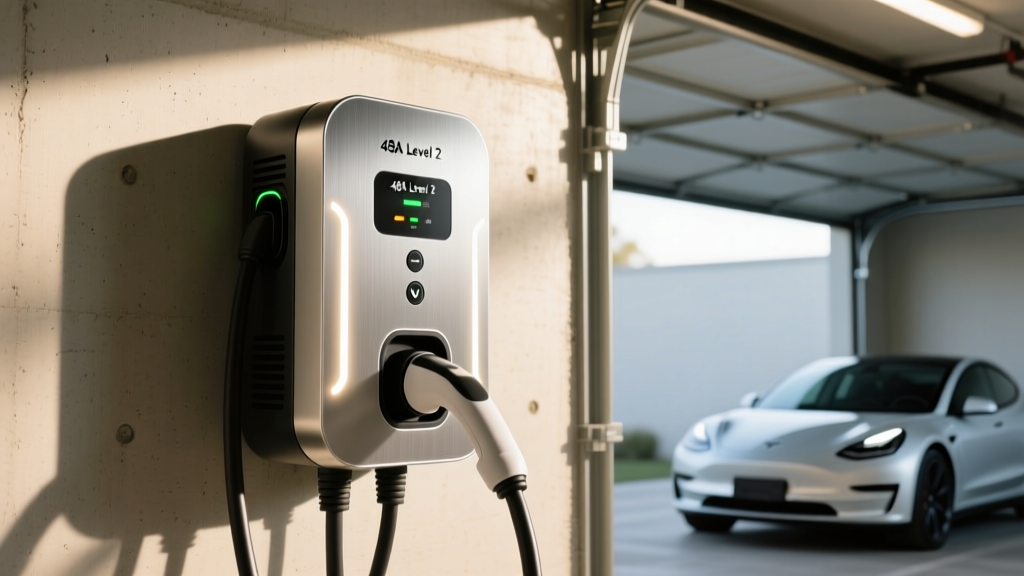
Level 2 is the backbone of home EV ownership. A 240V circuit (the same type your dryer uses) delivering 48 amps provides 11.5 kW, enough to fully recharge a Model 3 Long Range overnight in about 6–7 hours. Most Tesla owners install a Level 2 charger and wake up to a full battery every morning.
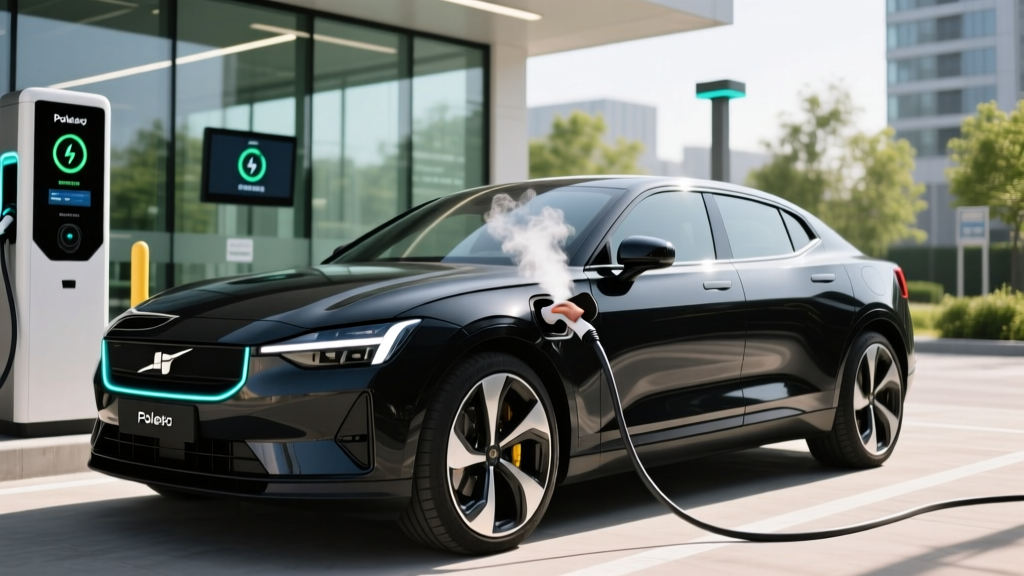
DC Fast Charging at Tesla Superchargers delivers up to 250 kW on V3 stalls. A Model 3 Long Range can add up to 175 miles of range in 15 minutes under ideal conditions. However, peak speed only holds between roughly 10–45% State of Charge (SoC). Above 60%, the charge curve tapers sharply—a reality that makes the advertised "10–80% in 25–30 minutes" figure realistic, while 10–100% would take considerably longer.
How Much Does It Cost to Charge a Tesla? kWh Pricing vs. Gas
The cost to charge a Tesla depends entirely on your electricity rate, measured in dollars per kWh. Here are realistic 2026 scenarios for a Model 3 Long Range (75 kWh battery, ~340 miles EPA range):
| Scenario | Rate ($/kWh) | Cost for Full Charge (75 kWh) | Cost Per Mile | Equiv. Gas MPG at $3.50/gal |
|---|---|---|---|---|
| Home off-peak (utility TOU rate) | $0.10 | $7.50 | $0.022 | 159 MPG |
| Home standard rate (national avg.) | $0.17 | $12.75 | $0.037 | 93 MPG |
| Public Level 2 (ChargePoint, etc.) | $0.25–$0.35 | $18.75–$26.25 | $0.055–$0.077 | 45–64 MPG |
| Tesla Supercharger (avg. 2026) | $0.30–$0.45 | $22.50–$33.75 | $0.066–$0.099 | 35–53 MPG |
| Electrify America / third-party DC | $0.40–$0.55 | $30.00–$41.25 | $0.088–$0.121 | 29–40 MPG |
For comparison, a 30 MPG gasoline sedan at $3.50/gallon costs about $0.117 per mile. Home charging on an off-peak rate is roughly one-fifth the cost of gasoline per mile. Even public DC fast charging is typically cheaper per mile than gas—though the gap narrows considerably on expensive third-party networks.
Pro tip: Many utilities offer Time-of-Use (TOU) plans that drop rates to $0.08–$0.12/kWh overnight (typically 9 PM–6 AM). Scheduling your Tesla to charge during these windows—easily done through the car's built-in charge scheduler or the Tesla app—can cut your annual charging cost by 40% or more compared to standard rates.
Home Charger Installation: Electrical Requirements and Real Costs
This is where many new EV owners encounter surprises. The charger hardware itself is only part of the equation. The electrical work, permits, and potential panel upgrades determine your true out-of-pocket cost.
Electrical Requirements for a Level 2 Tesla Charger
- Voltage: 240V (split-phase, same as a clothes dryer or electric range)
- Amperage: 40A or 50A dedicated circuit for a 32A or 40A charger (NEC code requires circuits rated at 125% of continuous load)
- Wire gauge: 6 AWG copper for 50A circuits; 8 AWG for 40A circuits
- Breaker: 50A double-pole breaker for a 40A continuous charger
- Connector: NACS (North American Charging Standard) for all Tesla vehicles
If you want the full 48A / 11.5 kW charge rate that Tesla's Wall Connector supports, you'll need a 60A dedicated circuit with 4 AWG copper wire and a 60A breaker. Not every home's electrical panel has this capacity available.
Installation Cost Breakdown
| Component | Low Estimate | High Estimate | Notes |
|---|---|---|---|
| Tesla Wall Connector (hardware) | $420 | $475 | 24' cable, Wi-Fi, NACS native |
| Electrician labor (standard install) | $500 | $1,500 | Depends on run length from panel |
| Electrical permit | $50 | $250 | Varies by municipality |
| Conduit, wire, breaker | $150 | $500 | Longer runs = more material |
| Subtotal — Standard Install | $1,120 | $2,725 | |
| Panel upgrade (100A → 200A) | $1,500 | $3,500 | Required if panel is maxed out |
| Trenching (underground runs) | $500 | $2,000 | For detached garages or long outdoor runs |
| Subtotal — Complex Install | $3,120 | $8,225 |
Most homeowners with a modern 200A panel and a garage or driveway close to the panel spend between $1,200 and $2,500 total for a professional Level 2 installation. Homes with older 100A panels, long wire runs, or detached garages should budget $3,000–$5,000+ once panel upgrades and trenching are factored in.
Federal incentive note: The residential clean energy credit (IRS §25D) may cover 30% of the cost of home EV charging equipment and installation, up to $1,000, through 2032. This is separate from the §30D vehicle purchase credit. Check irs.gov for current eligibility rules, as income and location-based restrictions may apply.
Charging Times: 10–80% for Every Current Tesla Model
Here's what to expect for real-world charging sessions—the 10–80% window that covers most daily and road-trip needs:
| Model | Usable kWh | Level 2 at 11.5 kW (0–100%) | DC Fast 10–80% | Peak DC kW |
|---|---|---|---|---|
| Model 3 Standard Range | ~57 kWh | ~5 hours | ~25 min | 170 kW |
| Model 3 Long Range | ~75 kWh | ~6.5 hours | ~28 min | 250 kW |
| Model 3 Performance | ~75 kWh | ~6.5 hours | ~28 min | 250 kW |
| Model Y Long Range | ~75 kWh | ~6.5 hours | ~30 min | 250 kW |
| Model Y Performance | ~75 kWh | ~6.5 hours | ~30 min | 250 kW |
| Model S | ~95 kWh | ~8.5 hours | ~35 min | 250 kW |
| Model X | ~95 kWh | ~8.5 hours | ~35 min | 250 kW |
Connector Compatibility: NACS, CCS, and What Adapters You Need
Tesla's proprietary connector became the NACS (North American Charging Standard) after Tesla open-sourced the design in late 2022. As of 2025–2026, nearly every major automaker has adopted NACS for new vehicles. Here's where compatibility stands:
| Connector | Native Vehicles | Tesla Compatibility | Adapter Needed? |
|---|---|---|---|
| NACS (Tesla) | All Tesla models; 2025+ Ford, GM, Rivian, Hyundai, others | Native on all Teslas | None for Teslas |
| CCS1 | 2024 and older non-Tesla EVs (VW, BMW, older Ford/GM) | Tesla Superchargers with Magic Dock; CCS→NACS adapter for non-Tesla chargers | Tesla CCS adapter (~$175) for non-Tesla DC networks |
| CHAdeMO | Nissan Leaf (legacy) | Not supported at Superchargers | No reliable adapter available |
For Tesla owners: Your car charges natively at every Tesla Supercharger and Destination Charger without adapters. If you want to use non-Tesla DC fast-charging networks (Electrify America, EVgo), you'll need Tesla's CCS1 adapter, available through the Tesla shop. For Level 2 public chargers with J1772 connectors, Tesla includes a J1772-to-NACS adapter with every vehicle.
For non-Tesla EV owners: If your 2025+ vehicle has a native NACS port, you can access Tesla Superchargers directly. If your vehicle has CCS1, you may still access select Supercharger stations equipped with Tesla's Magic Dock (a built-in adapter), or use third-party networks. The Alternative Fuels Data Center maintains a searchable map of all public charging stations by connector type.
Best Home Chargers for Tesla in 2026: Equipment Picks
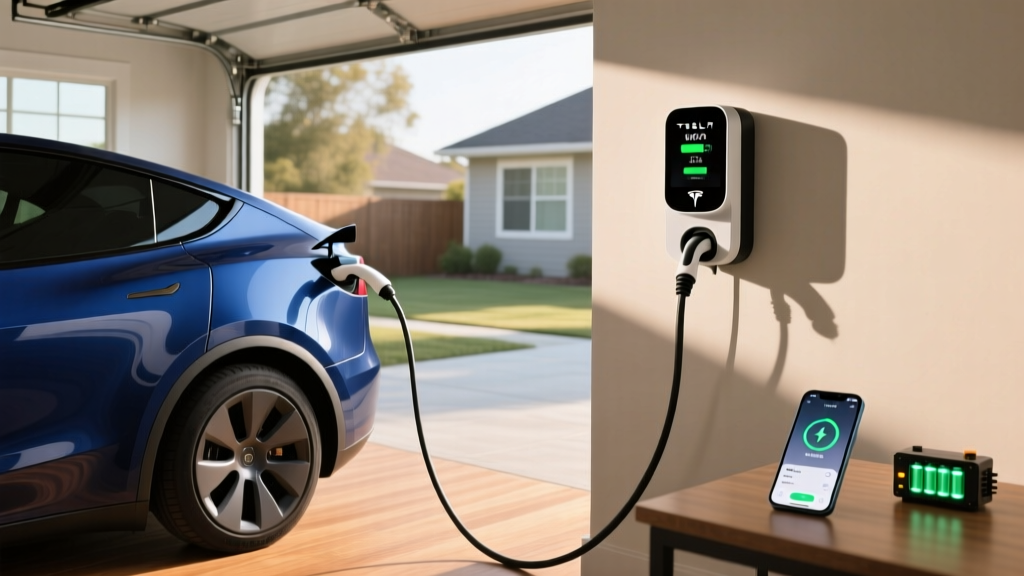
Tesla Wall Connector (Gen 4)
- Power Output: Up to 48A / 11.5 kW (on a 60A circuit)
- Connector: NACS native
- Cable Length: 24 feet
- Smart Features: Wi-Fi, OTA updates, Tesla app integration, Power Sharing (link up to 6 units on one circuit), load management
- Price: ~$420–$475
- Best For: Tesla-only households wanting seamless app integration and maximum charge rate
ChargePoint Home Flex
- Power Output: Up to 50A / 12 kW (on a 60A circuit); configurable down to 16A
- Connector: NACS (2025+ models) or J1772 with adapter
- Cable Length: 23 feet
- Smart Features: Wi-Fi, ChargePoint app scheduling, Alexa integration, energy reporting, flexible amperage dial
- Price: ~$550–$650
- Best For: Multi-EV households (Tesla + non-Tesla) or users wanting detailed energy analytics
Emporia Vue Level 2 Charger
- Power Output: Up to 48A / 11.5 kW (on a 60A circuit)
- Connector: NACS or J1772 (model-dependent)
- Cable Length: 24 feet
- Smart Features: Wi-Fi, Emporia app, solar-integration scheduling, real-time cost tracking, load balancing with Emporia energy monitor
- Price: ~$350–$400
- Best For: Budget-conscious buyers and solar-panel owners who want charging tied to excess solar production
Our pick: For a Tesla-only garage, the Tesla Wall Connector is the obvious choice—native NACS, competitive pricing, and Power Sharing for multi-car setups. If you own a non-Tesla EV alongside your Tesla, the ChargePoint Home Flex with its configurable amperage and available NACS cable gives you flexibility without an adapter dongle on every charge session.
Safety, Electrical Code, and Installation Must-Knows
EV charging is a continuous high-draw load—your charger will pull maximum current for hours at a time. This isn't like running a microwave for 90 seconds. Proper installation isn't optional; it's a fire-safety necessity.
- Dedicated circuit: Your Level 2 charger must be on its own dedicated breaker. No sharing with other appliances.
- GFCI protection: The 2023 NEC (National Electrical Code) requires GFCI protection for all EV receptacles. Hardwired chargers (like the Wall Connector) bypass this requirement and are generally preferred by electricians for reliability—GFCI breakers on 50–60A circuits are expensive and prone to nuisance tripping.
- Outdoor rating: If your charger is mounted outside, ensure it carries a NEMA 4 or NEMA 4X rating for weather resistance. The Tesla Wall Connector and ChargePoint Home Flex are both rated for outdoor use.
- Permit and inspection: Most jurisdictions require an electrical permit for a new 240V circuit. Your electrician should pull this permit; a post-install inspection verifies code compliance. Skip this step and you risk insurance claim denials if an electrical fire occurs.
- Panel capacity: A licensed electrician will perform a load calculation on your panel. If your existing service is 100A and you're already running central AC, an electric range, and a dryer, adding a 60A EV circuit will likely require a panel upgrade to 200A—a $1,500–$3,500 expense that should be quoted upfront.
Never use an extension cord for EV charging. Never plug a Level 1 charger into a multi-outlet power strip. And while portable "EVSE" chargers with NEMA 14-50 plugs exist, a hardwired installation is safer, more reliable, and supports higher amperage.
Frequently Asked Questions
How much does it cost to install a home EV charger for my Tesla?
A standard Tesla Wall Connector installation with a 60A circuit runs $1,200–$2,500 total (hardware + electrician + permit) in most homes with a modern 200A panel. Older homes needing a panel upgrade should budget $3,000–$5,000+. Get at least two quotes from licensed electricians and confirm they pull a permit.
How fast will each charging level add range to my Tesla?
Level 1 (120V) adds 3–5 miles per hour. Level 2 (240V, 48A) adds 35–44 miles per hour depending on the model. A V3 Tesla Supercharger (250 kW DC) can add up to 175 miles in 15 minutes under ideal conditions, though real-world sessions average 10–80% in 25–35 minutes due to charge-curve taper.
Which connector is compatible with my Tesla?
All Tesla vehicles use the NACS connector natively. This works at every Tesla Supercharger and Destination Charger. For public Level 2 stations with J1772 connectors, use the J1772 adapter included with your Tesla. For non-Tesla DC fast chargers (Electrify America, EVgo), you'll need Tesla's optional CCS1 adapter.
How much does charging a Tesla cost per mile vs. gasoline?
Home charging on a national-average rate of $0.17/kWh costs roughly $0.037 per mile in a Model 3 Long Range—about one-third the cost of a 30 MPG gas car at $3.50/gallon ($0.117/mile). Off-peak utility rates can push EV costs below $0.025/mile. Public DC fast charging at $0.35–$0.45/kWh narrows the gap but usually remains cheaper than gas.
What electrical upgrades might I need for a Tesla home charger?
If your home has a 100A electrical panel, you'll likely need an upgrade to 200A ($1,500–$3,500) to support a 60A dedicated EV circuit alongside existing appliances. Homes with 200A panels and available breaker slots typically need no upgrade. A licensed electrician's load calculation determines your exact requirement.
Can I charge my Tesla on a regular 120V outlet?
Yes, but it's extremely slow—roughly 3–5 miles of range per hour, or about 40–50 miles overnight. This works only as a backup or for very low-mileage drivers. For daily use, a 240V Level 2 installation is strongly recommended.
Does charging to 100% damage my Tesla's battery?
For NMC batteries (Model 3 Long Range, Model Y, Model S/X), frequent 100% charges accelerate degradation. Tesla recommends setting your daily charge limit to 80% and reserving 100% for road trips. For LFP batteries (Model 3 Standard Range), Tesla recommends charging to 100% at least once per week to maintain accurate SoC calibration—LFP chemistry tolerates full charges better.