The Kia Supercharger Question: Where Kia EVs Actually Charge in 2026
If you own or are shopping for a Kia EV6, EV9, or the newer EV5, you have likely typed "Kia Supercharger" into a search bar wondering whether Kia electric vehicles can tap into Tesla's Supercharger network. The short answer: yes — but the path to the plug depends on your model year, your connector, and whether you are using an adapter or a factory-native NACS port.
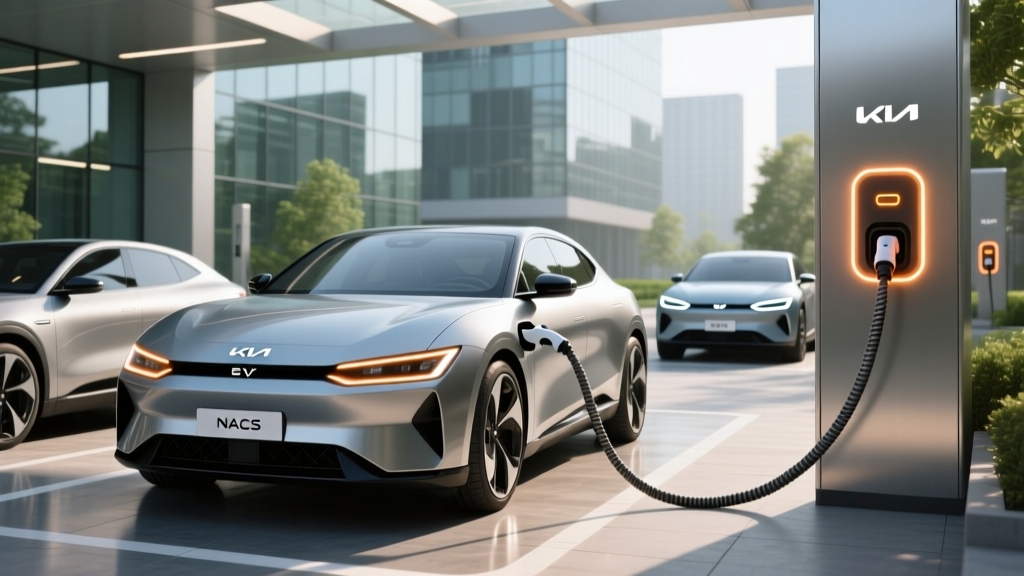
As of the 2026 model year, Kia has transitioned its North American EV lineup to the North American Charging Standard (NACS), the connector Tesla developed and opened to competitors starting in 2024. Newer Kias roll off the line with a native NACS charge port, while 2022–2024 models equipped with CCS1 require a manufacturer-approved adapter. This guide covers exactly how Kia owners access Superchargers, what it costs, and how to set up faster, cheaper charging at home.
Charging Levels Explained: Speeds, Power, and Range Added Per Hour
Before mapping out public Supercharger access, it helps to understand the three charging tiers available to Kia EV owners. Power is measured in kilowatts (kW) — the rate of energy flow — while battery capacity is measured in kilowatt-hours (kWh), the total energy stored. Confusing the two is the single most common EV literacy gap.
| Level | Voltage / Power | Miles of Range Added Per Hour | Best Use Case |
|---|---|---|---|
| Level 1 (120V AC) | 1.4 kW | 3–5 mi/hr | Overnight top-off, PHEV daily use |
| Level 2 (240V AC) | 7.2–11.5 kW | 20–40 mi/hr | Daily home charging |
| DC Fast (CCS/NACS) | 50–350 kW | 150–700+ mi/hr (peak) | Road trips, rapid top-ups |
The Kia EV6 (77.4 kWh usable battery, NMC chemistry) accepts up to 10.9 kW on Level 2 and peaks at 240 kW on DC fast charging via its 800V E-GMP architecture. The three-row EV9, with a larger 99.8 kWh pack, shares the same 800V platform and also peaks at roughly 240 kW, though its larger battery means slightly longer charge sessions.
Real-World 10–80% Charge Times
Manufacturer-stated DC fast-charge times assume ideal conditions: a battery preconditioned to optimal temperature, a charger capable of sustaining peak output, and a state of charge (SoC) starting at 10%. Here is what Kia owners should expect:
- Kia EV6 (77.4 kWh): 10–80% in approximately 18 minutes on a 350 kW charger; ~25 minutes on a 150 kW unit.
- Kia EV9 (99.8 kWh): 10–80% in approximately 24 minutes on a 350 kW charger; ~33 minutes on a 150 kW unit.
- Charge curve taper: Like all lithium-ion packs, Kia's NMC batteries reduce charge rate significantly above 80% SoC to protect cell longevity. Charging from 80–100% can add another 20–30 minutes — plan accordingly on road trips and charge to 80% unless you need the full range.
Kia Supercharger Access: NACS, CCS1, and Adapter Requirements
Here is where the "Kia Supercharger" search intent gets answered directly. Kia's Supercharger compatibility breaks into two groups based on model year:
| Model / Year | Native Port | Tesla Supercharger Access | Adapter Needed? |
|---|---|---|---|
| 2025–2026 EV6 | NACS | Native — plug in directly | No |
| 2025–2026 EV9 | NACS | Native — plug in directly | No |
| 2022–2024 EV6 | CCS1 | Yes, via NACS-to-CCS adapter | Yes — Kia-approved adapter (~$200–$300) |
| 2024 EV9 (early production) | CCS1 | Yes, via NACS-to-CCS adapter | Yes — Kia-approved adapter (~$200–$300) |
For 2022–2024 EV6 owners, Kia provides a NACS adapter (sometimes complimentary for the first year, sometimes at cost — check with your dealer). This adapter allows CCS1-equipped Kias to physically connect to Tesla Supercharger stalls. Billing is handled through the Kia Access app, which integrates Supercharger network access, or by creating a Tesla account and adding your Kia's VIN.
Beyond Superchargers, CCS1-equipped Kias retain access to Electrify America, EVgo, and other CCS networks. NACS-native 2025–2026 models can still use CCS stations with a reverse adapter (NACS-to-CCS), which Kia includes or offers as an accessory.
Home Level 2 Charger Installation: Costs, Electrical Requirements, and Upgrades
Public DC fast charging is essential for road trips, but the vast majority of Kia EV charging — roughly 80–90% for most owners — happens at home on a Level 2 circuit. Here is what a home installation actually requires and costs.
Electrical Requirements for Kia Level 2 Charging
The EV6 and EV9 both feature an 10.9 kW onboard charger, meaning they can accept up to 48 amps on a 240V circuit (a 60-amp breaker is standard for a 48A continuous load, per National Electrical Code derating rules). To unlock the full 10.9 kW charge rate, you need:
- A dedicated 240V / 60A circuit (NEMA 14-60 outlet or hardwired connection)
- A Level 2 EVSE (Electric Vehicle Supply Equipment) rated at 48A output
- Sufficient panel capacity — typically 2–4 open breaker slots and 60A of available amperage on your main service panel
If your home has a 100-amp main panel (common in homes built before the 1990s), adding a 60A EV circuit may require a panel upgrade to 200A, which is a significant added cost. Homes with 200A service usually accommodate a Level 2 charger without issue, though a load calculation by a licensed electrician is required by code.
| Component | Cost Range | Notes |
|---|---|---|
| Level 2 EVSE (40–48A) | $350–$700 | Varies by brand, smart features, cable length |
| Electrician labor (standard install) | $400–$1,200 | Depends on run length from panel to garage |
| Permit & inspection | $50–$250 | Required by most local jurisdictions |
| Electrical panel upgrade (if needed) | $1,500–$3,500 | 100A → 200A service; not needed in most newer homes |
| Total (no panel upgrade) | $800–$2,150 | Typical range for most homes |
| Total (with panel upgrade) | $2,300–$5,650 | Older homes or high-load panels |
The IRS Residential Clean Energy Credit covers 30% of home EV charger equipment and installation costs, up to $1,000, for qualifying installations. Check irs.gov for current eligibility rules, as the credit has specific placement and tax-year requirements.
Level 2 Charger Equipment Recommendations for Kia EVs
Not all Level 2 chargers are equal. Below are three chargers that pair well with the EV6 and EV9's 10.9 kW onboard charger, with specific output ratings, connector types, and features.
ChargePoint Home Flex
- Power: Up to 12 kW (50A) — adjustable down to match your circuit
- Connector: NACS (2025+ models) or J1772 with NACS adapter
- Cable: 23 feet
- Smart features: Wi-Fi, scheduled charging, energy tracking, Alexa
- Price: ~$550–$650
- Best for: Kia owners wanting app-based scheduling and utility rate optimization
Tesla Wall Connector (Gen 4)
- Power: Up to 11.5 kW (48A)
- Connector: Native NACS
- Cable: 24 feet
- Smart features: Wi-Fi, OTA updates, power sharing (multiple units on one circuit)
- Price: ~$450–$500
- Best for: NACS-native 2025–2026 Kia owners who also want Supercharger-network familiarity
Emporia Vue Level 2 Charger
- Power: Up to 11.5 kW (48A)
- Connector: J1772 (NACS adapter included)
- Cable: 24 feet
- Smart features: Whole-home energy monitoring integration, solar-aware charging, load management
- Price: ~$400–$500
- Best for: Homes with solar panels or those wanting detailed energy analytics
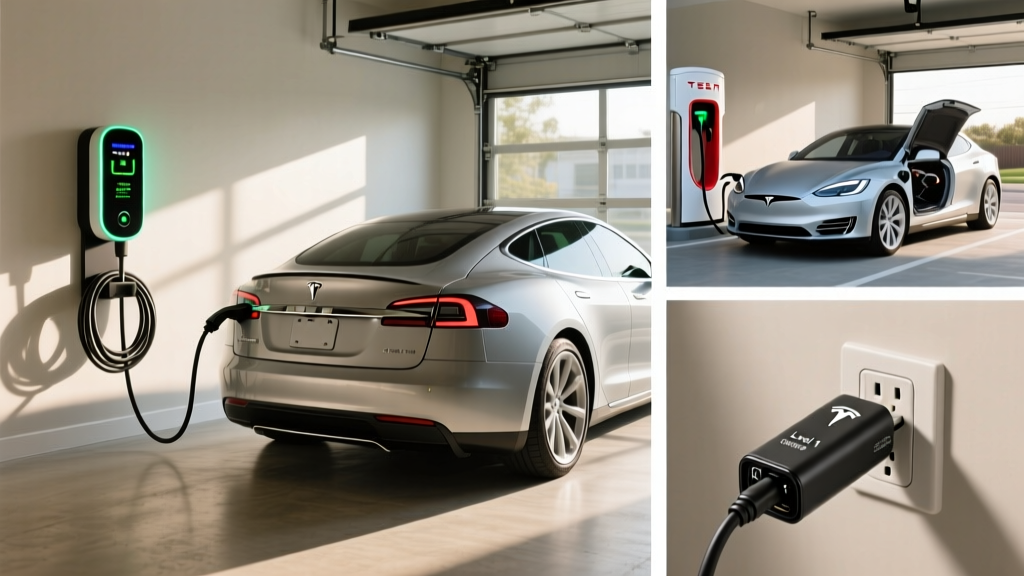
For 2022–2024 EV6 owners with CCS1 ports, any J1772-equipped Level 2 charger works natively (CCS1 incorporates the J1772 connector for AC charging). For 2025–2026 NACS-native models, choose a NACS-equipped charger or use the included J1772-to-NACS adapter.
Charging Cost Per Mile: Home vs. Public DC Fast vs. Gas
The economics of charging a Kia EV6 or EV9 vary dramatically depending on where you plug in. Below is a cost-per-mile comparison based on the EV6's EPA efficiency of 3.6 miles per kWh (combined, per fueleconomy.gov) and an average gas SUV at 25 MPG combined.
| Charging / Fuel Scenario | Rate | Cost Per Mile | Annual Cost (12,000 mi) |
|---|---|---|---|
| Home Level 2 (off-peak utility rate) | $0.09/kWh | $0.025 | $300 |
| Home Level 2 (national avg. rate) | $0.16/kWh | $0.044 | $533 |
| Public DC Fast (Electrify America / Supercharger avg.) | $0.38/kWh | $0.106 | $1,267 |
| Gas SUV (25 MPG combined) | $3.30/gallon | $0.132 | $1,584 |
Key takeaway: home charging on an off-peak rate makes the EV6 roughly 5× cheaper per mile than a 25 MPG gas SUV. Even at average utility rates, home-charged EVs cost about one-third what gas costs per mile. However, exclusive reliance on public DC fast charging narrows the gap significantly — which is why a home Level 2 installation is the single highest-ROI investment a Kia EV owner can make.
Safety, Electrical Code, and Installation Best Practices
A Level 2 charger draws sustained high current for hours — this is not the same as plugging in a dryer. Proper installation protects your home, your vehicle, and your insurance coverage.
- Dedicated circuit: NEC requires a dedicated breaker for EVSE — no shared circuits with other appliances. A 48A charger needs a 60A breaker (continuous loads must be derated to 80% of breaker capacity).
- GFCI protection: The 2023 NEC revision requires GFCI protection for indoor and outdoor receptacles used for EV charging. Hardwired EVSE installations may have different GFCI requirements depending on local code amendments — your electrician will confirm.
- Outdoor rating: If your charger is installed outdoors (carport, driveway), the EVSE must carry a NEMA 4 or NEMA 4X weather-resistance rating. All three chargers recommended above meet this standard.
- Wire gauge: A 60A circuit typically requires 6 AWG copper wire (or 4 AWG aluminum) for runs up to 50 feet. Longer runs may need upsized wire to prevent voltage drop.
- Permit and inspection: Most jurisdictions require an electrical permit and post-installation inspection. Skipping the permit can void home insurance claims related to electrical fires and may cause issues at resale.
Frequently Asked Questions
Can I use a Tesla Supercharger with my 2023 Kia EV6?
Yes. Your 2023 EV6 has a CCS1 port, so you will need a Kia-approved NACS-to-CCS adapter to physically connect to a Tesla Supercharger stall. Once connected, billing works through the Kia Access app or a Tesla account. Charge speeds may be slightly lower than native NACS vehicles depending on the adapter's rated throughput — confirm the adapter supports at least 150 kW to take advantage of the EV6's fast-charge capability.
How much does it cost to install a home EV charger for my Kia?
A typical Level 2 home installation with a 48A charger on a 60A circuit costs $800–$2,150 including equipment, electrician labor, and permits — assuming your electrical panel has sufficient capacity. If a panel upgrade from 100A to 200A is needed, add $1,500–$3,500. The IRS Residential Clean Energy Credit may offset 30% of the cost, up to $1,000.
How fast will a Level 2 home charger add range to my EV9?
The EV9's 10.9 kW onboard charger, paired with a 48A Level 2 EVSE, adds approximately 35–40 miles of range per hour of charging. A full charge from 10–100% on the EV9's 99.8 kWh battery takes roughly 9–10 hours — ideal for overnight charging.
Is it cheaper to charge at home or use public Superchargers?
Home charging is substantially cheaper. At the national average residential rate of ~$0.16/kWh, the EV6 costs about $0.044 per mile to drive. Public DC fast chargers average $0.35–$0.45/kWh, pushing cost per mile to $0.10–$0.13 — competitive with gas but 2–3× more expensive than home charging. Reserve DC fast charging for road trips.
Do I need a Tesla account to charge my Kia at a Supercharger?
Not necessarily. Kia's Access app integrates Supercharger network billing for compatible vehicles, so you can initiate and pay for sessions without a separate Tesla account. However, creating a Tesla account and registering your Kia's VIN is an alternative that some owners prefer for its broader station-finder features and real-time stall availability data.
What happens if my Kia's battery degrades from frequent DC fast charging?
DC fast charging generates more heat than Level 2, which can accelerate long-term battery degradation. Kia's EV battery warranty covers 10 years / 100,000 miles with a capacity retention threshold of 70%. Real-world data from E-GMP platform vehicles (EV6, Ioniq 5) shows approximately 5–8% degradation over the first 100,000 miles with mixed charging habits. To maximize longevity, favor Level 2 home charging for daily use and limit DC fast charging to road trips. Avoid routinely charging to 100% — set your charge limit to 80% for daily driving.