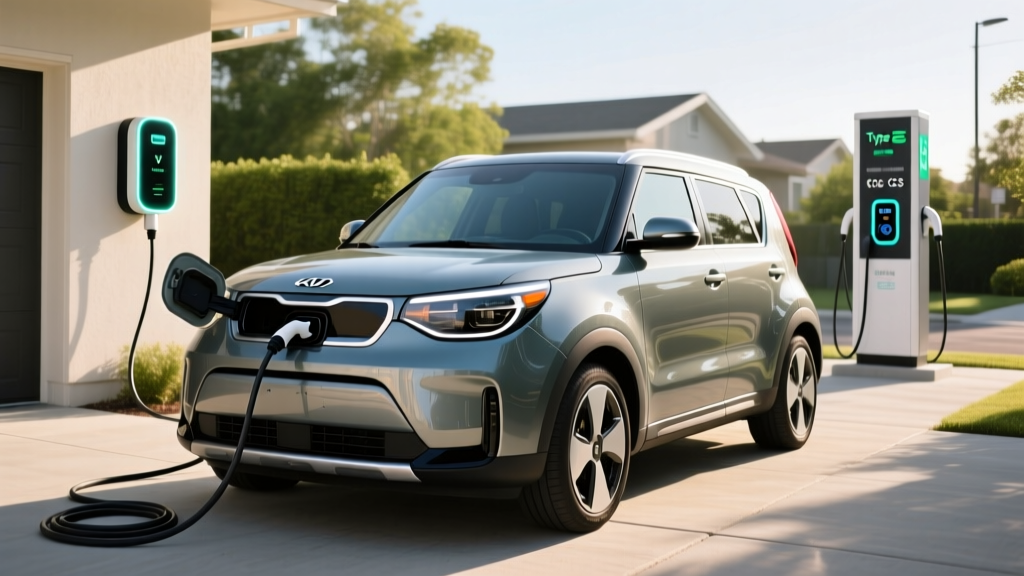
The Kia Soul EV (sold as the e-Soul in some markets) remains a distinctive boxy crossover that prioritizes interior space and efficiency over sporty pretensions. For 2026, the long-range 64 kWh battery version delivers an EPA-estimated 243 miles of range, making it a practical commuter and light road-tripper. However, understanding the real-world Kia Soul electric range—and how to recharge it efficiently at home or on the road—is crucial for ownership satisfaction.
This guide covers everything from the physics of its charging curve to the specific electrical work required for a Level 2 home install, connector compatibility in the NACS era, and the true cost-per-mile versus a gas car.
Understanding the Kia Soul Electric Range and Battery Specs
Before plugging in, it is essential to understand the energy storage system you are working with. The 2026 Kia Soul EV (Long Range) utilizes a 64 kWh usable lithium-ion polymer battery pack (NMC chemistry). This pack powers a front-mounted permanent-magnet synchronous motor producing 201 horsepower and 291 lb-ft of torque.
| Metric | Value |
|---|---|
| Battery Capacity (Usable) | 64 kWh (NMC) |
| EPA Range | 243 miles |
| Efficiency | 120 MPGe (Combined) |
| Max DC Fast Charge Rate | ~77 kW (Peak) |
| Level 2 AC Onboard Charger | 7.2 kW |
| 10–80% DC Fast Charge Time | ~54 minutes |
| 0–60 mph | 7.2 seconds |
Charging Speeds: How Each Level Adds Range
Charging speed is measured in kilowatts (kW), which represents power, while your battery capacity is measured in kilowatt-hours (kWh), representing energy. Think of kW as the speed of the water flowing from a hose, and kWh as the size of the bucket you are trying to fill.
| Charging Level | Voltage / Amperage | Power (kW) | Miles of Range Added per Hour |
|---|---|---|---|
| Level 1 (Standard Outlet) | 120V / 12A | ~1.4 kW | ~4–5 miles |
| Level 2 (Home/Public AC) | 240V / 32A | 7.2 kW | ~25–28 miles |
| DC Fast Charging (Level 3) | 400V+ Architecture | Peak 77 kW | ~150+ miles (in first 30 mins) |
The Kia Soul EV's DC fast-charging architecture is its primary limitation compared to modern competitors like the Hyundai Ioniq 5. Because it is limited to a peak of ~77 kW, a 10–80% session takes nearly an hour, whereas 800V architectures can achieve the same in 18 minutes. For daily use, however, Level 2 home charging is more than sufficient.
Home Charging Installation: Requirements and Costs
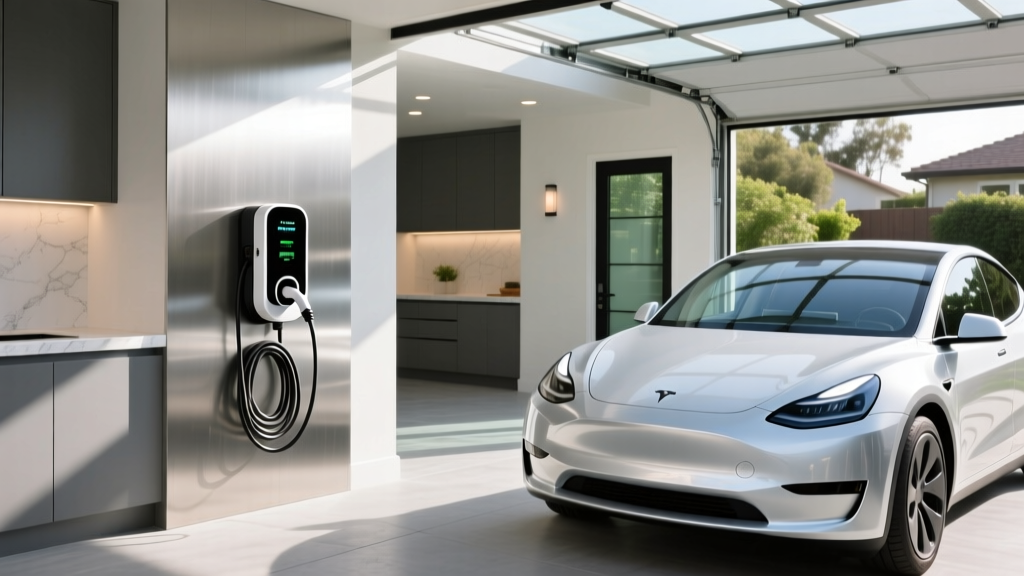
To maximize the Soul EV's 7.2 kW onboard charger, you need a Level 2 station capable of delivering at least 32 amps (7.68 kW) on a 240V circuit. Most modern homes with a 200-amp electrical panel can accommodate this, but older homes with 100-amp service may require a panel upgrade.
Electrical Requirements and Safety
- Circuit Size: A dedicated 40-amp breaker is required to safely deliver 32 amps of continuous power (EV charging is considered a continuous load by the NEC, requiring the breaker to be rated 125% higher than the load).
- Wire Gauge: Typically 8 AWG copper wire (THHN/THWN) for runs up to 50 feet; thicker wire may be needed for longer distances to prevent voltage drop.
- GFCI Protection: The 2020 and 2023 National Electrical Code (NEC) require GFCI protection for EV outlets, though many hardwired chargers have internal ground-fault protection.
- Outdoor Rating: If installing outside, ensure the charger is NEMA 4-rated for weather resistance.
| Component | Low Estimate | High Estimate |
|---|---|---|
| Level 2 Charger Equipment (Smart) | $400 | $750 |
| Electrician Labor (Standard Install) | $500 | $1,500 |
| Permit & Inspection Fees | $100 | $300 |
| Electrical Panel Upgrade (If needed) | $2,000 | $4,500 |
| Total (No Panel Upgrade) | $1,000 | $2,550 |
Connector Compatibility: NACS vs. CCS vs. CHAdeMO
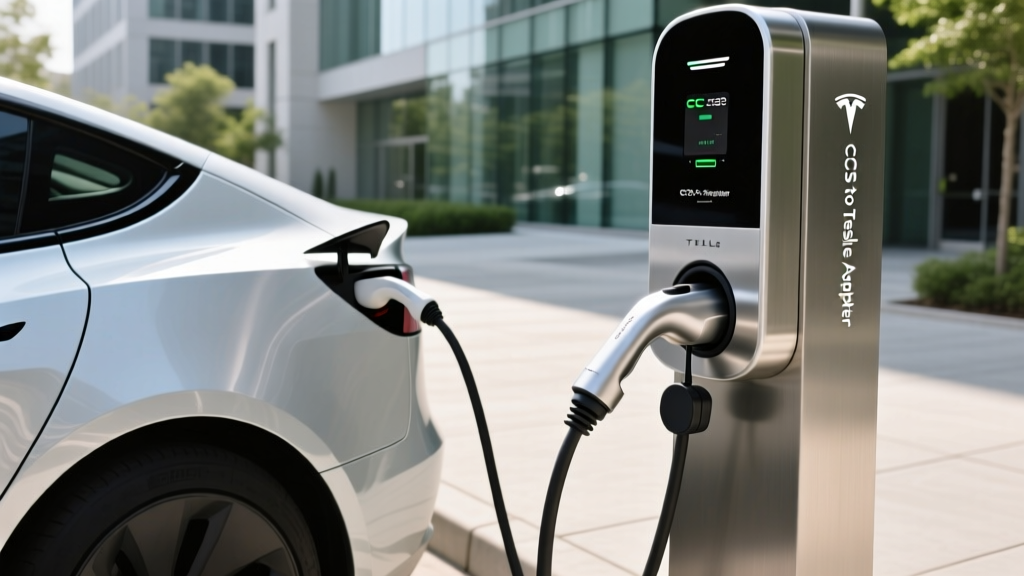
The Kia Soul EV was originally launched with the CHAdeMO DC fast-charging standard. However, as the industry shifts toward the North American Charging Standard (NACS), Kia has begun transitioning its lineup. For the 2026 model year, some regions may see NACS ports or CCS1 ports depending on the production batch and market. Always verify the port on your specific vehicle.
| Connector | Common Networks | Kia Soul Compatibility |
|---|---|---|
| NACS (Tesla) | Tesla Supercharger | Native on newer trims or via adapter (Magic Dock) |
| CCS1 | Electrify America, EVgo | Standard on most non-Tesla EVs post-2020 |
| CHAdeMO | Legacy stations | Native on early Soul EVs (2015–2019) |
| J1772 | Public Level 2 AC | Universal (AC charging standard) |
Cost to Charge: Electricity vs. Gasoline
The Soul EV achieves an efficiency of approximately 3.0 miles per kWh. To calculate the cost per mile, we compare this against a gas car getting 30 MPG at $3.50 per gallon.
| Scenario | Rate / Price | Cost per Mile |
|---|---|---|
| Home Charging (Off-Peak) | $0.14 / kWh | $0.047 |
| Home Charging (Peak) | $0.28 / kWh | $0.093 |
| Public DC Fast Charging | $0.48 / kWh | $0.160 |
| Gasoline (30 MPG Avg) | $3.50 / gallon | $0.117 |
As shown, home charging is significantly cheaper than gasoline. However, exclusive reliance on public DC fast charging can actually exceed the cost of gasoline, highlighting the financial importance of home or workplace charging access.
Recommended Level 2 Equipment for the Kia Soul EV
Since the Soul EV has a 7.2 kW onboard charger, purchasing a 48-amp charger is future-proofing for your next EV, but a 32-amp or 40-amp charger will fully utilize the Soul's capabilities.
Emporia Vue Smart Charger
Power: 48A (11.5 kW)
Price: ~$400
Features: Excellent energy monitoring, works with solar integration, 24-foot cable. Ideal for budget-conscious buyers who want data.
ChargePoint Home Flex
Power: Up to 50A (12 kW)
Price: ~$699
Features: NEMA 14-50 plug or hardwired, highly reliable app, 23-foot cable. A premium, flexible choice for any garage.
Tesla Universal Wall Connector
Power: 48A (11.5 kW)
Price: ~$599
Features: Built-in NACS and J1772 adapter magic, sleek design, 24-foot cable. Best for mixed-fleet households.
Frequently Asked Questions
How much does it cost to install a home EV charger?
A standard Level 2 installation without a panel upgrade typically ranges from $1,000 to $2,500. This includes the charger ($400–$750), electrician labor, and permits. If your home requires an electrical service upgrade from 100A to 200A, expect to add $2,000 to $4,500.
How fast will each charging level add range?
Level 1 (120V) adds about 4 miles per hour. Level 2 (240V) adds approximately 25–28 miles per hour on the Soul EV. DC Fast Charging can add roughly 100 miles in about 30–40 minutes, depending on the station's power output and the battery's state of charge.
Which connector/charger is compatible with my EV?
For Level 2 AC charging, all EVs use the J1772 standard (or NACS on newer models). For DC fast charging, verify if your Soul EV has a CHAdeMO, CCS1, or NACS port. Most 2020+ models are CCS1, but early models are CHAdeMO. You can use a Tesla Supercharger via an adapter if your vehicle has the NACS port or if the station offers a Magic Dock.
How much does charging cost per mile vs gas?
At home, charging the Soul EV costs between $0.05 and $0.09 per mile, compared to $0.12 per mile for a 30 MPG gas car at $3.50/gallon. Public fast charging can cost $0.16 per mile, which is more expensive than gas.
What electrical upgrades might I need?
You may need a 200-amp panel upgrade if your home currently has 100-amp service or if you already have high-draw appliances like electric heat and an electric range. A licensed electrician can perform a load calculation to determine if your existing panel has enough headroom for a 40-amp EV circuit.