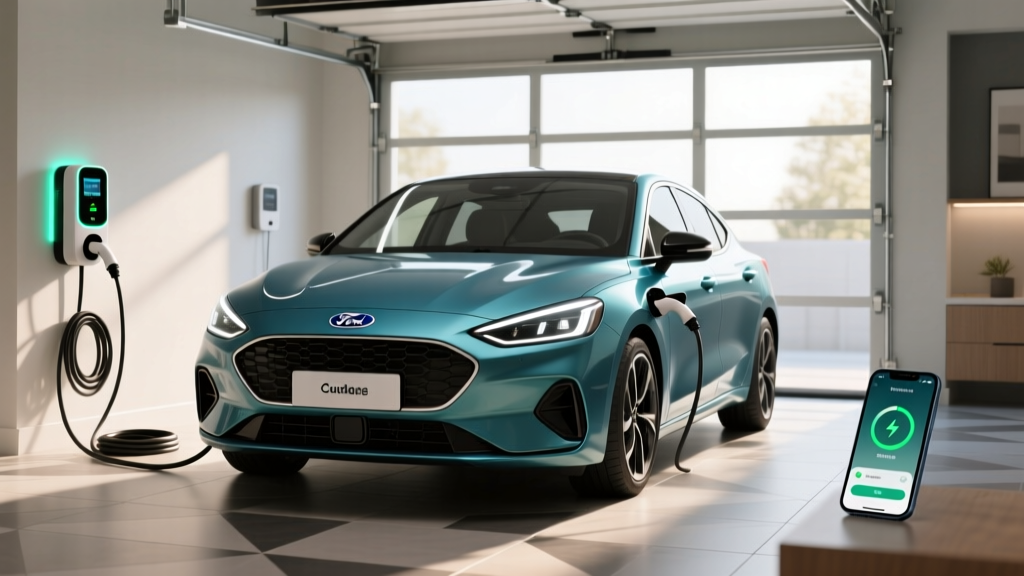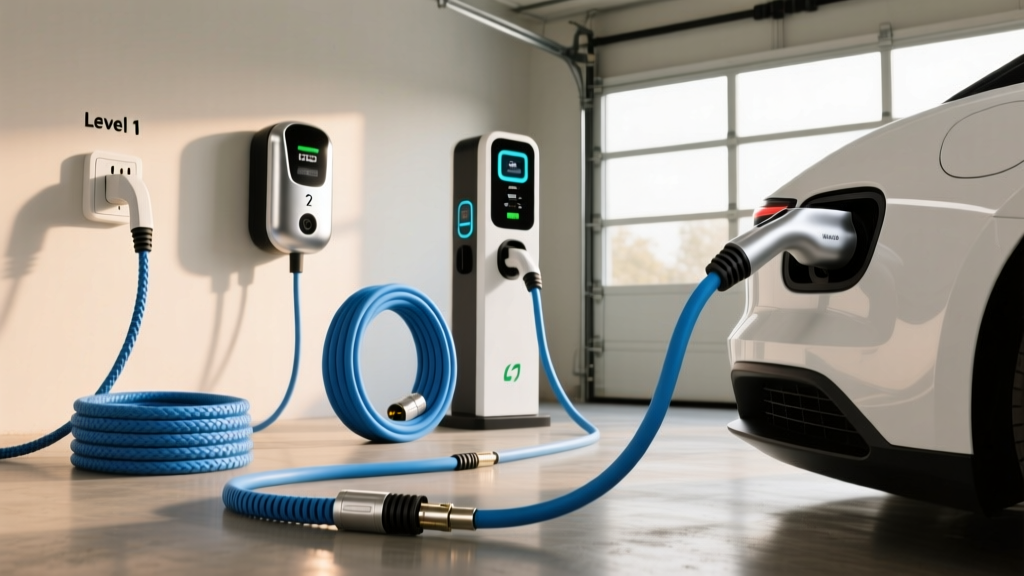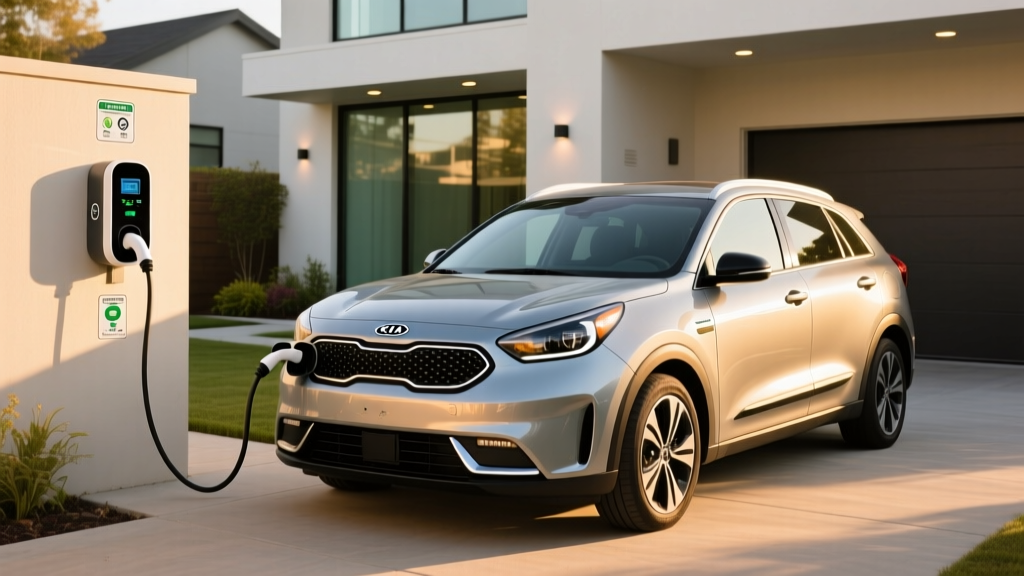
The Kia Niro Plug-In Hybrid (PHEV) occupies a practical middle ground: enough electric-only range to handle most daily commutes, plus a gas engine that eliminates range anxiety on road trips. But extracting maximum value from that battery means understanding exactly how charging works, what equipment you need, and what it will cost. This guide covers the 2026 Kia Niro PHEV's real-world electric range, charging speeds at every level, home installation requirements, and the economics of plugging in versus filling up.
2026 Kia Niro PHEV: Battery, Range, and Efficiency at a Glance
The current-generation Kia Niro PHEV pairs a 1.6-liter four-cylinder engine with an electric motor and an 11.1 kWh lithium-ion polymer battery pack. Of that total capacity, roughly 9.0 kWh is usable — the rest serves as a buffer to protect long-term battery health. Here are the headline numbers:
| Specification | 2026 Kia Niro PHEV |
|---|---|
| Usable Battery Capacity | ~9.0 kWh (11.1 kWh gross) |
| EPA Electric-Only Range | 33 miles |
| Real-World Electric Range (mixed driving) | 26–31 miles |
| Real-World Electric Range (cold weather, <32°F) | 20–25 miles |
| EPA Combined MPGe (electric mode) | 105 MPGe |
| EPA Combined MPG (gas-only mode) | 48 MPG |
| Total Combined Range (gas + electric) | ~510 miles |
| Electric Motor Output | 83 hp (combined system: 180 hp) |
| Max Level 2 AC Charge Rate | 3.3 kW |
| DC Fast Charging | Not available |
| Charge Port Connector | J1772 (AC only) |
| Battery Warranty | 10 years / 100,000 miles |
| Base MSRP (LX trim) | ~$35,390 |
Charging Levels Explained: How Fast Can You Add Range?
A critical distinction for any PHEV owner: kW (kilowatts) measures power — the rate at which energy flows into your battery. kWh (kilowatt-hours) measures energy — the total amount stored. Think of kW as how fast water flows through a hose, and kWh as the size of the bucket. The Niro PHEV's bucket holds about 9.0 usable kWh.
Here's how each charging level translates to real-world speed for the Niro PHEV and EVs generally:
| Charging Level | Voltage / Amperage | Power (kW) | Niro PHEV: Miles per Hour | Full EV (typical): Miles per Hour | Time to Full (Niro PHEV 9 kWh) |
|---|---|---|---|---|---|
| Level 1 (standard outlet) | 120V / 12A | 1.4 kW | ~4–5 mi/hr | ~3–5 mi/hr | ~2–2.5 hours (0–100%) |
| Level 2 (home/public AC) | 240V / 16–48A | 3.3–11.5 kW | ~10–12 mi/hr (at 3.3 kW max) | ~12–44 mi/hr | ~2.5–3 hours (0–100%) |
| DC Fast Charging | 400–800V DC | 50–350 kW | N/A — Niro PHEV not compatible | ~150–300+ mi/hr | Not applicable |
Which Connector and Charger Is Compatible with the Kia Niro PHEV?
The Kia Niro PHEV uses the J1772 connector for all AC charging. It does not support DC fast charging, so connectors like CCS1, CHAdeMO, and NACS (Tesla's North American Charging Standard) are irrelevant for this vehicle. Here's a compatibility overview for common connector types:
| Connector Type | Charging Type | Kia Niro PHEV Compatible? | Used By |
|---|---|---|---|
| J1772 | AC Level 1 & Level 2 | ✅ Yes — native port | All non-Tesla EVs/PHEVs (standard) |
| NACS (Tesla) | AC & DC | ❌ No (AC adapter available for some EVs, not needed for PHEV) | Tesla vehicles; Ford, GM, Rivian (2025+) |
| CCS1 | DC Fast Charging | ❌ No — Niro PHEV has no DC port | Most non-Tesla BEVs |
| CHAdeMO | DC Fast Charging | ❌ No | Nissan Leaf (legacy) |
For Niro PHEV owners, the charging ecosystem is straightforward: any J1772-equipped Level 2 home charger or public AC station will work. Tesla Destination Chargers with J1772 adapters are also compatible. The simplicity here is an advantage — no adapter hunting, no connector confusion.
Home Charger Installation: Electrical Requirements and Costs
Installing a Level 2 home charger is the single best upgrade for PHEV ownership. It ensures a full battery every morning and eliminates reliance on slow Level 1 trickle charging. Here's what's involved:
Electrical Requirements
- Circuit: A dedicated 240V circuit. For a 32-amp charger (7.7 kW output), you need a 40-amp breaker (NEC requires circuits rated at 125% of continuous load). For a 48-amp charger, a 60-amp breaker.
- Wiring: Typically 6 AWG copper wire for 40A circuits; 4 AWG for 60A. Run length affects gauge requirements and cost.
- Outlet vs. hardwired: A NEMA 14-50 outlet offers portability (unplug and take your charger when you move). Hardwired units allow higher amperage (48A+) and avoid the cost of an industrial-grade receptacle ($80–$150).
- GFCI protection: NEC 2020+ requires GFCI breakers for outlet-installed EV chargers in garages. GFCI breakers cost $50–$120 more than standard breakers and can be finicky with some chargers — hardwired installations typically avoid this requirement.
Panel Upgrade Considerations
Many homes built before 2000 have 100-amp electrical panels. Adding a 40A or 60A EV circuit may push total load beyond the panel's capacity, especially if you already run electric dryers, ovens, or HVAC on the same panel. A licensed electrician will perform a load calculation to determine if your panel can handle the additional circuit. If not, a panel upgrade to 200A typically costs $1,500–$3,500 depending on your region and utility requirements.
Some newer homes or those with 200A panels can usually accommodate a Level 2 charger without upgrades. If you're close to capacity, a smart load-management device (like the Emporia Smart Load Center or Span panel) can dynamically share amperage between circuits, avoiding a full panel upgrade.
Installation Cost Breakdown
| Cost Component | Low Estimate | High Estimate | Notes |
|---|---|---|---|
| Level 2 Charger Equipment | $200 | $700 | Depends on brand, power, smart features |
| Electrician Labor | $300 | $1,200 | Varies by run length, wall type, region |
| Electrical Permit | $50 | $200 | Required in most jurisdictions |
| GFCI Breaker (if outlet) | $50 | $120 | Required by NEC for NEMA outlets |
| Panel Upgrade (if needed) | $1,500 | $3,500 | 100A → 200A service upgrade |
| Total (no panel upgrade) | $600 | $2,220 | Most common scenario |
| Total (with panel upgrade) | $2,100 | $5,720 | Older homes with 100A panels |
Recommended Home Chargers for the Kia Niro PHEV
Since the Niro PHEV caps AC charging at 3.3 kW, you don't need a high-power unit. But buying a 32A or 48A charger makes sense for future-proofing. Here are three well-regarded options:
Emporia Level 2 EV Charger
- Power Output: 48A / 11.5 kW (240V)
- Connector: J1772
- Cable Length: 24 ft
- Smart Features: Wi-Fi, app scheduling, energy monitoring, solar integration
- Installation: Hardwired (recommended) or NEMA 14-50
- Price: ~$399
- Best For: Budget-conscious buyers who want smart features and solar-load management
ChargePoint Home Flex
- Power Output: Up to 50A / 12 kW (configurable 16A–50A)
- Connector: J1772
- Cable Length: 23 ft
- Smart Features: Wi-Fi, app scheduling, Alexa integration, flexible amperage
- Installation: NEMA 14-50 or hardwired
- Price: ~$699
- Best For: Flexibility — set amperage to match your circuit, upgrade later
Tesla Universal Wall Connector
- Power Output: 48A / 11.5 kW (240V)
- Connector: Built-in J1772 adapter + native NACS
- Cable Length: 24 ft
- Smart Features: Wi-Fi, OTA updates, power sharing (multiple units on one circuit)
- Installation: Hardwired only
- Price: ~$599
- Best For: Households with both a Niro PHEV and a Tesla — charges both natively
For the Niro PHEV specifically, even a 16-amp Level 2 charger (3.8 kW) will saturate the car's 3.3 kW onboard charger. But the price difference between 16A and 48A units has narrowed enough that most buyers should opt for the higher-power unit for resale value and future vehicle compatibility.
Cost to Charge: Electricity vs. Gas per Mile
One of the strongest arguments for plugging in your Niro PHEV nightly is the cost savings. Here's a breakdown based on the Niro PHEV's efficiency of approximately 3.0 miles per kWh in electric mode and 48 MPG in gas mode:
| Charging Scenario | Cost per kWh | Cost for Full Charge (~9 kWh) | Cost per Mile (electric) | Equivalent Gas Cost per Mile ($3.50/gal, 48 MPG) |
|---|---|---|---|---|
| Home (off-peak utility rate) | $0.09 | $0.81 | $0.03 | $0.073 |
| Home (average US residential) | $0.17 | $1.53 | $0.057 | $0.073 |
| Public Level 2 (network charging) | $0.25–$0.49 | $2.25–$4.41 | $0.083–$0.163 | $0.073 |
At off-peak home rates, charging the Niro PHEV costs less than half of what you'd spend on gas for the same distance. Even at average residential rates, electricity wins. However, public Level 2 charging at premium rates can actually exceed the cost of gas — a strong incentive to install a home charger and charge overnight.
According to the EPA's fueleconomy.gov, the Niro PHEV achieves 105 MPGe in electric mode. That efficiency figure translates directly into lower per-mile costs when you're plugging in rather than fueling up.
Safety and Code Considerations for Home Charging
EV charging involves sustained high-current draw over many hours — more demanding than most household appliances. Proper installation isn't optional:
- Dedicated circuit: Your EV charger must have its own dedicated breaker. Sharing a circuit with other appliances risks tripping or overheating.
- Permit and inspection: Most municipalities require an electrical permit for EV charger installation. The inspection ensures code compliance and protects your home insurance coverage. Skipping this step can void claims in the event of an electrical fire.
- Outdoor-rated equipment: If installing outside, the charger must carry a NEMA 4 (weatherproof) rating. All recommended chargers above meet this standard.
- Cable management: A 24-foot cable on a garage floor is a trip hazard. Wall-mounted cable organizers ($20–$40) keep things tidy and prevent connector damage.
- Smoke/CO detectors: While EVs produce no carbon monoxide, charging in an attached garage means your existing CO and smoke detectors should be current and functional — a good practice regardless.
Always hire a licensed electrician familiar with EV charger installations. Ask for their experience with EV-specific circuits and whether they'll pull a permit — a qualified installer will handle this routinely.
Kia Niro PHEV Charging FAQ
Can I charge the Kia Niro PHEV at a Tesla Supercharger?
No. Tesla Superchargers deliver DC fast charging via the NACS connector. The Niro PHEV has no DC fast-charge port and cannot use any DC charger, Tesla or otherwise. You can, however, use Tesla's J1772-equipped Destination Chargers (Level 2 AC) found at hotels and restaurants.
How long does it take to fully charge the Niro PHEV from empty?
On a standard 120V household outlet (Level 1, ~1.4 kW), expect roughly 6.5 hours from 0–100%. On a 240V Level 2 charger, the car's 3.3 kW onboard charger limits speed to approximately 2.5–3 hours for a full charge. In practice, most owners plug in nightly and rarely deplete the battery fully, so a typical top-up takes 1–2 hours on Level 2.
Does the Niro PHEV qualify for the $7,500 federal tax credit?
PHEVs can qualify for the IRS §30D Clean Vehicle Credit, but eligibility depends on several factors: the vehicle's MSRP must not exceed $80,000 (SUVs/vans) or $55,000 (sedans), your modified adjusted gross income must fall below threshold limits ($150K single / $300K joint), and the battery must meet critical-mineral and component sourcing requirements that tighten annually. The Niro PHEV has historically qualified for a partial credit, but sourcing rules change yearly. Verify current eligibility on the IRS qualified vehicles list before purchasing, and consider the point-of-sale transfer option available at participating dealers.
Will charging every night degrade the battery?
No — PHEV batteries are designed for daily cycling. The Niro PHEV's battery management system maintains a buffer at both the top and bottom of the charge range, preventing the cells from reaching true 100% or 0%. Kia's 10-year/100,000-mile battery warranty reflects this engineering confidence. Unlike full BEVs with larger NMC packs, PHEV batteries experience less stress from nightly charging due to their smaller size and conservative charge windows.
Is Level 1 charging enough for the Niro PHEV?
It can be. If you drive fewer than 25 miles per day and can plug in for 8+ hours overnight, Level 1 at ~1.4 kW will replenish roughly 11–14 miles of range — enough for many commutes. However, Level 1 adds range slowly and is less efficient (more energy lost as heat during conversion). For anyone driving close to the full 33-mile electric range daily, Level 2 is strongly recommended.
What happens when the battery runs out while driving?
The gas engine seamlessly engages and the Niro PHEV operates as a conventional hybrid, achieving an EPA-rated 48 MPG combined. There's no performance cliff, no warning-light panic — the transition is nearly imperceptible. The car will also use regenerative braking to capture small amounts of energy, maintaining a minimal buffer for electric assist during acceleration.