Can the Kia EV9 Charge at a Tesla Supercharger in 2026?
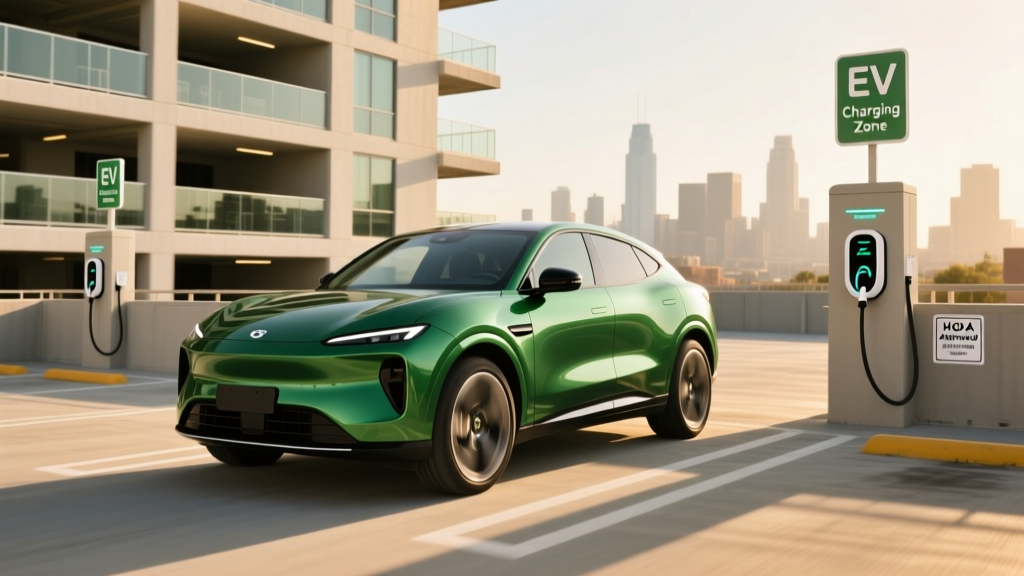
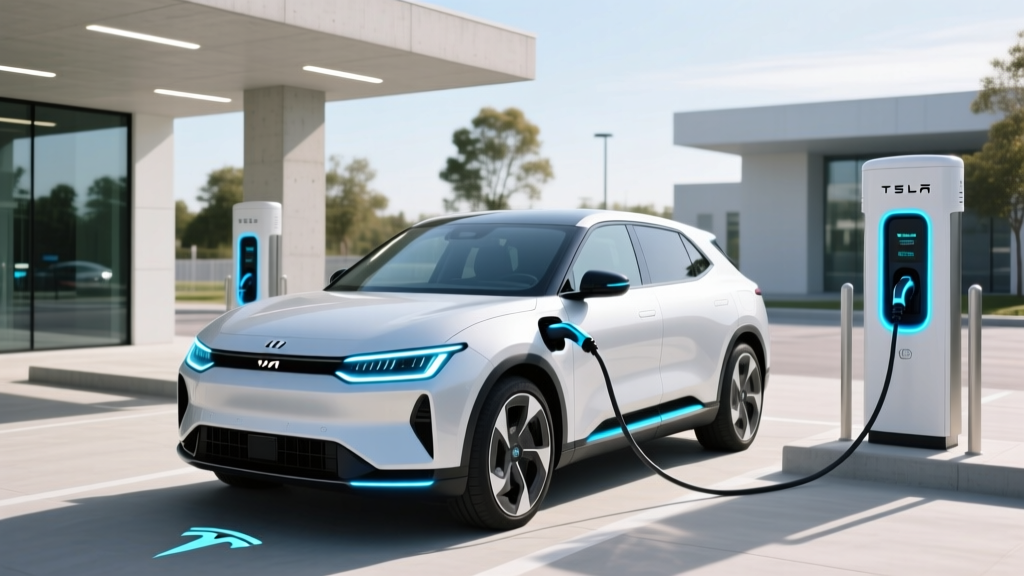
The short answer: yes, but you will likely need a NACS-to-CCS adapter or must rely on Kia's native NACS port if your EV9 was built after the transition. Kia officially adopted the North American Charging Standard (NACS) for new vehicles starting with the 2025 model year, meaning 2026 Kia EV9 models ship with a native NACS charge port and can plug directly into Tesla Superchargers (V3 and V4) without an adapter.
For owners of 2024–2025 Kia EV9 models that still carry the CCS1 port, Kia provides an approved NACS adapter that enables access to the Supercharger network. This adapter is typically included with new vehicle purchases or available through Kia dealerships for approximately $200–$300 for retrofit purchases.
The EV9's 800V battery architecture is the real story here. While Superchargers max out at 250 kW on V3 stalls (and up to 350 kW on newer V4 posts where available), the EV9 can accept peak DC rates up to 210–240 kW depending on trim and battery state. On a V3 Supercharger, expect a 10–80% charge in approximately 24–28 minutes under ideal thermal conditions. That figure stretches in cold weather or at high state of charge, which we will cover below.
Charging Levels Explained: Speeds, kW, and What to Expect
Understanding EV charging requires distinguishing kW (kilowatts), which measures the rate of power delivery, from kWh (kilowatt-hours), which measures the total energy stored in the battery. Think of kW as how fast water flows through a hose and kWh as the size of the bucket. The Kia EV9's battery holds roughly 96 kWh of usable energy; how quickly you fill that bucket depends entirely on the charging level.
| Level | Voltage / Amperage | Power (kW) | Miles of Range Added per Hour | Use Case |
|---|---|---|---|---|
| Level 1 (120V) | 120V / 12A | ~1.4 kW | ~3–4 mi/hr | Emergency top-up only |
| Level 2 (240V) | 240V / 40–48A | 9.6–11.5 kW | ~25–32 mi/hr | Daily home charging |
| DC Fast (CCS/NACS) | 400–800V DC | Up to 240 kW peak | ~150–200 mi in 15 min | Road trips, rapid fill |
At Level 1, a full charge on the EV9 would take roughly 65–70 hours — essentially impractical for anything beyond maintaining charge overnight. Level 2 is the home-charging sweet spot: plugging in at 11.5 kW from a depleted state to full takes about 8.5–9 hours, which aligns perfectly with overnight charging. DC fast charging is where the EV9's 800V platform shines, accepting significantly higher sustained power than 400V competitors.
Connector Compatibility: NACS, CCS1, and Adapter Requirements
The charging connector landscape has consolidated significantly since 2024, but your exact EV9 model year determines what plugs in natively:
| Connector | 2024 EV9 | 2025 EV9 | 2026 EV9 | Notes |
|---|---|---|---|---|
| CCS1 | Native | Transitional* | Via adapter | *Some 2025s ship CCS1 |
| NACS (Tesla) | Via adapter | Via adapter or native | Native | Direct Supercharger access |
| CHAdeMO | Not compatible | Not compatible | Not compatible | Legacy standard, avoid |
| J1772 (Level 2) | Native (AC port) | Native or via adapter | Via J1772-to-NACS adapter | Home/public L2 charging |
If you own a 2024 EV9 with CCS1, you need Kia's official NACS adapter for Supercharger access. The adapter supports up to 250 kW DC and is safety-certified. Avoid third-party adapters that lack UL or equivalent certification — a high-current DC connection is not where you cut corners. For 2026 EV9 owners with native NACS, you will need a NACS-to-J1772 adapter (roughly $100–$180) to use older public Level 2 chargers that still carry J1772 connectors.
Home Level 2 Charger Installation: Costs, Electrical Requirements, and Upgrades
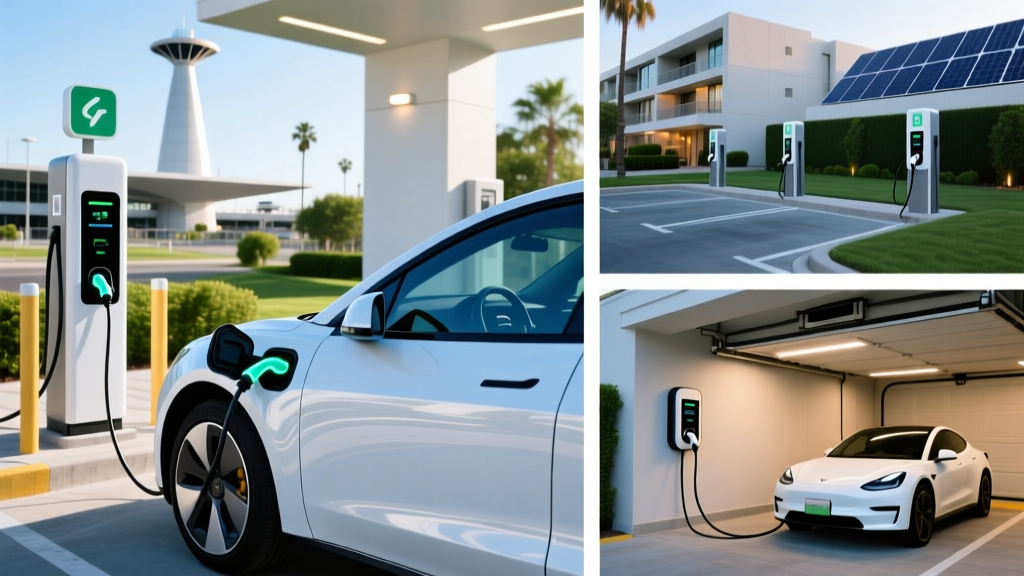
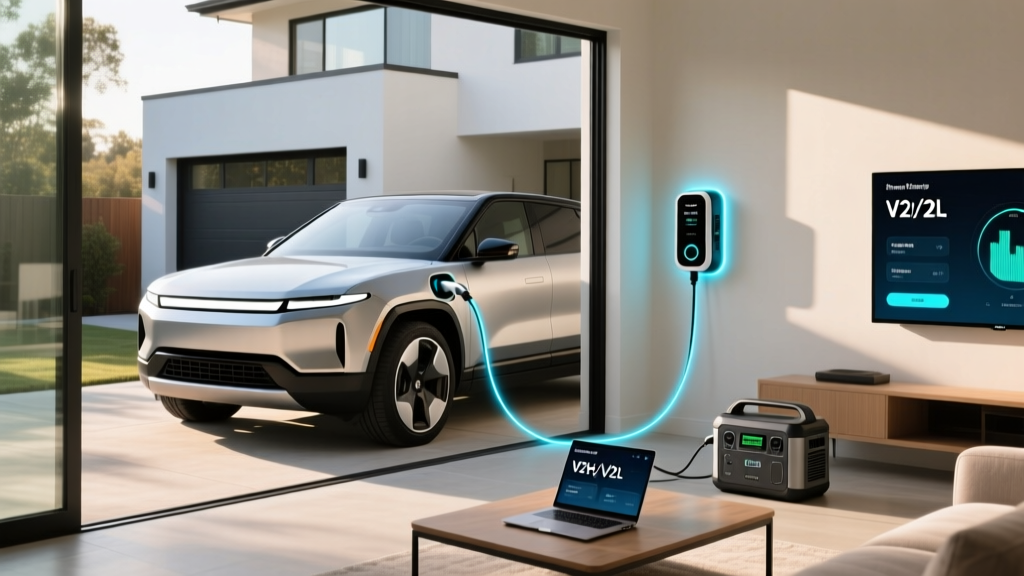
Installing a Level 2 home charger is the single highest-impact upgrade for EV ownership. For the Kia EV9, a 48-amp (11.5 kW) Level 2 station is ideal — it fully replenishes the ~96 kWh usable battery overnight and matches the vehicle's onboard charger capacity.
Electrical Requirements
A 48A Level 2 charger requires a 240V / 60A dedicated circuit (the National Electrical Code requires circuits to be rated at 125% of continuous load, so 48A continuous draw needs a 60A breaker). If you opt for a 40A charger, a 50A circuit suffices. The circuit runs from your electrical panel to a NEMA 14-60 outlet (or hardwired junction) near your parking spot.
Panel Upgrade Reality
Many homes built before 2000 have 100A or 150A main service panels. Adding a 60A EV circuit to an already-loaded 100A panel may require a panel upgrade to 200A, which is the single largest cost variable in a home charging installation. Homes with 200A panels and available breaker slots typically need no upgrade. Your electrician will perform a load calculation per NEC Article 220 to determine if your panel can handle the additional circuit.
| Component | Low End | High End | Details |
|---|---|---|---|
| Level 2 Charger Unit | $400 | $750 | 48A smart charger (ChargePoint, Emporia, Wallbox) |
| Electrician Labor | $500 | $2,000 | Depends on run length, wall type, conduit needs |
| Electrical Materials | $100 | $400 | Wire (6 AWG copper), conduit, breaker, outlet |
| Permit & Inspection | $50 | $300 | Varies by municipality |
| Panel Upgrade (if needed) | $1,500 | $4,000 | 100A → 200A service upgrade |
| Total (no panel upgrade) | $1,050 | $3,450 | Most homes with 200A panels |
| Total (with panel upgrade) | $2,550 | $7,450 | Older homes with 100A service |
Get at least three quotes from licensed electricians. Ask specifically whether the quote includes a load calculation, permit, and post-installation inspection. Some utilities offer rebates of $200–$500 for Level 2 installations, and the federal Alternative Fuel Vehicle Refueling Property Credit (§30C) covers up to 30% of home charging equipment and installation costs (capped at $1,000), subject to census-tract eligibility. Check your specific address on the IRS tool, as eligibility depends on whether your home is in a qualifying non-urban census tract.
Safety and Code Considerations
- Dedicated circuit: Your EV charger must have its own dedicated breaker — never share a circuit with other large appliances.
- GFCI protection: NEC 2020 and later require GFCI protection for outdoor receptacles used for EV charging. Hardwired installations may bypass this requirement depending on local code.
- Outdoor rating: If your charger is mounted outdoors, ensure the unit carries a NEMA 4 or IP65 rating for weather resistance. All major chargers listed below meet this standard.
- Cable management: A 25-foot cable is the minimum practical length for most garages; 30 feet provides flexibility for driveway parking.
Charging Cost Per Mile: Home Electricity vs. Public DC vs. Gas
The economics of EV charging depend heavily on where and when you plug in. The Kia EV9's efficiency averages approximately 2.8–3.2 kWh per mile (roughly 84 MPGe combined for the Long Range RWD per fueleconomy.gov). Here is what that translates to in real dollars:
| Charging/Fuel Scenario | Rate | Cost Per Mile | Annual Cost (12,000 mi) |
|---|---|---|---|
| Home (off-peak utility rate) | $0.10/kWh | $0.030 | $360 |
| Home (national avg residential) | $0.16/kWh | $0.048 | $576 |
| Public Level 2 (network avg) | $0.25/kWh | $0.075 | $900 |
| DC Fast Charging (avg) | $0.40/kWh | $0.120 | $1,440 |
| Tesla Supercharger (avg 2026) | $0.32/kWh | $0.096 | $1,152 |
| Gas SUV (25 MPG, $3.40/gal) | $3.40/gallon | $0.136 | $1,632 |
Home charging at off-peak rates is roughly 4.5× cheaper per mile than a comparable three-row gas SUV. Even exclusive DC fast charging at public rates undercuts gasoline on a per-mile basis, though the margin narrows considerably. The practical takeaway: if you can charge at home most nights, the EV9 costs pennies per mile to fuel. If you rely entirely on public DC fast charging, savings shrink but remain positive in most markets.
DC Fast Charging Times: What to Expect on the Road
The Kia EV9's 800V architecture delivers a tangible charging advantage over 400V competitors. Here is what real-world DC fast charging looks like at various stations:
Peak rate accepted: ~210 kW
10–80% time: ~24–28 minutes
Miles added in 15 min: ~150–170
Requires NACS port or adapter
Peak rate accepted: ~235 kW
10–80% time: ~22–26 minutes
Miles added in 15 min: ~160–185
Native CCS1 (2024) or NACS (2026)
Peak rate accepted: ~150 kW (station-limited)
10–80% time: ~35–40 minutes
Miles added in 15 min: ~100–115
Common at older public sites
Peak rate accepted: ~50 kW (station-limited)
10–80% time: ~90–100 minutes
Miles added in 15 min: ~35–40
Avoid for road trips if possible
Charge curve reality check: The EV9 does not sustain peak kW for the entire session. Like all EVs, charge rate tapers significantly above 80% state of charge to protect the battery. Charging from 80–100% on DC fast can take nearly as long as the 10–80% portion. For road trips, the optimal strategy is to charge to 80% and go — only charge beyond that if your next destination requires the full battery.
Cold weather impact: Below 32°F, expect 10–80% DC times to increase by 20–40% unless you precondition the battery. The EV9 supports navigation-based preconditioning: enter a Supercharger or DC fast station as your destination in the navigation system, and the thermal management system will warm the battery en route, enabling faster charge acceptance on arrival.
Recommended Home Level 2 Chargers for the Kia EV9
These chargers are selected for compatibility with the EV9's 11.5 kW onboard charger, reliability, and smart features:
Power: 48A / 11.5 kW (240V) | Connector: J1772 (NACS adapter included) | Cable: 24 ft
Smart features: Wi-Fi, app scheduling, energy monitoring, solar integration
Price: ~$399 | Best value — includes energy monitoring that pairs with the Emporia Vue home panel monitor.
Power: Up to 50A / 12 kW (240V, adjustable) | Connector: NACS or J1772 | Cable: 23 ft
Smart features: Wi-Fi, Alexa, app scheduling, flexible amperage settings
Price: ~$599 | Best all-rounder — adjustable amperage lets you match your circuit without buying a different unit.
Power: 48A / 11.5 kW (240V) | Connector: J1772 (NACS version available) | Cable: 25 ft
Smart features: Wi-Fi + Bluetooth, app control, Eco-Smart solar mode, Power Sharing
Price: ~$549 | Best for solar homes — Eco-Smart mode charges only from excess solar production.
Power: 48A / 11.5 kW (240V) | Connector: NACS native | Cable: 24 ft
Smart features: Wi-Fi, OTA updates, Tesla app integration, load sharing with 2nd unit
Price: ~$475 | Best for NACS-native EVs — if your 2026 EV9 has NACS, this is a clean, no-adapter solution.
For 2026 Kia EV9 owners with a native NACS port, the Tesla Wall Connector or a NACS-equipped ChargePoint Home Flex eliminates the need for any adapter at home. For 2024–2025 CCS1-equipped EV9s, any J1772 charger works natively and you save the NACS adapter for Supercharger road trips.
2026 Kia EV9 Charging Specs at a Glance
| Specification | Long Range RWD | Long Range AWD | GT-Line AWD |
|---|---|---|---|
| Battery (usable) | ~96 kWh (NMC) | ~96 kWh (NMC) | ~96 kWh (NMC) |
| EPA Range | 304 mi | 280 mi | 270 mi |
| Max DC Fast Charge | ~240 kW peak | ~240 kW peak | ~240 kW peak |
| 10–80% DC Time (ideal) | ~24 min | ~24 min | ~24 min |
| Onboard Charger (L2) | 11.5 kW | 11.5 kW | 11.5 kW |
| Charge Port (2026) | NACS native | NACS native | NACS native |
| MPGe (combined) | 84 MPGe | 79 MPGe | 77 MPGe |
| Battery Warranty | 10 years / 100,000 miles (70% capacity retention) | ||
| Base MSRP (2026) | ~$56,395 | ~$60,395 | ~$66,395 |
Regarding federal incentives: the EV9's eligibility for the §30D New Clean Vehicle Credit depends on current-year battery sourcing, critical minerals requirements, MSRP caps ($80,000 for SUVs), and buyer income limits ($300K joint / $150K single). As of 2026, the EV9 is assembled in Georgia (Kia's Metaplant America), which improves domestic content compliance, but exact credit amounts ($3,750 or $7,500) depend on the specific battery cell sourcing for your production batch. Consult a tax professional and check the IRS eligible vehicle list before purchasing.
Frequently Asked Questions
How much does it cost to install a home EV charger for the Kia EV9?
A typical Level 2 home installation runs $1,050–$3,450 if your electrical panel has sufficient capacity (200A service with available breaker slots). If your home needs a panel upgrade from 100A to 200A, add $1,500–$4,000, bringing the total to $2,550–$7,450. The charger unit itself costs $400–$750. Federal tax credit §30C may offset up to $1,000 of the total if your address qualifies.
How fast will each charging level add range to the EV9?
Level 1 (120V) adds roughly 3–4 miles per hour — essentially unusable for daily needs on a 96 kWh battery. Level 2 (240V, 48A) adds approximately 25–32 miles per hour, fully recharging overnight. DC fast charging at a 250 kW Supercharger or Electrify America station adds roughly 150–170 miles in 15 minutes under ideal conditions.
Which connector and charger is compatible with my Kia EV9?
The 2026 EV9 uses a native NACS port, meaning it plugs directly into Tesla Superchargers and any NACS-equipped public or home charger. The 2024 EV9 uses CCS1 and requires a Kia-approved NACS adapter for Supercharger access. For home Level 2, 2026 models need a NACS-equipped charger (or J1772 charger with a J1772-to-NACS adapter), while 2024 models use J1772 natively.
How much does charging the EV9 cost per mile vs. a gas SUV?
At the national average residential electricity rate of ~$0.16/kWh, the EV9 costs approximately $0.048 per mile to fuel at home. A comparable three-row gas SUV getting 25 MPG at $3.40/gallon costs $0.136 per mile. That is roughly $576/year for the EV9 vs. $1,632/year for the gas SUV over 12,000 miles — a $1,056 annual fuel savings with home charging.
What electrical upgrades might I need for a home charger?
The most common upgrade is a 200A service panel if your home currently has 100A or 150A service. The EV9's Level 2 charger requires a dedicated 60A breaker (for a 48A charger), and older panels may not have the capacity or physical breaker slots. Your electrician will perform a NEC Article 220 load calculation. Other potential upgrades include running new conduit from the panel to the garage, upgrading the meter base, or installing a sub-panel if the main panel is far from the charging location.
Does using Tesla Superchargers void the Kia EV9 battery warranty?
No. Kia's battery warranty (10 years / 100,000 miles, guaranteeing 70% capacity retention) is not voided by using any certified DC fast charging network, including Tesla Superchargers. Using Kia's official NACS adapter on a CCS1-equipped EV9 is fully sanctioned. However, Kia could theoretically deny a warranty claim if damage were traced to a non-certified adapter or improper charging equipment — stick to OEM or UL-listed adapters.
Should I charge to 100% at home every night?
For the EV9's NMC battery, daily charging to 80% is recommended for long-term battery health. Charge to 100% only before long road trips where you need maximum range. Set your EV9's charge limit to 80% in the vehicle settings and use scheduled charging during off-peak utility hours (typically 10 PM – 6 AM) for the lowest electricity cost. LFP batteries tolerate 100% daily charging better, but the EV9 uses NMC chemistry across all trims.