If you own or are shopping for a Kia EV6, you already know its 800-voltage architecture is one of the best in the business for fast charging. But extracting the most from your EV6 range—and keeping charging costs low—depends entirely on your home and public charging strategy. This guide walks through every charging level, real installation costs, connector compatibility, and the exact equipment that will keep your EV6 topped up efficiently in 2026.
Understanding Charging Levels: How Fast Will Each Add EV6 Range?
The single most common confusion for new EV owners is the difference between kW (kilowatts, the rate of power delivery—like water pressure from a hose) and kWh (kilowatt-hours, the total energy stored in your battery—like the size of the tank). Your EV6's battery holds roughly 58 to 84 kWh of usable energy depending on trim. Charging speed is measured in kW; the higher the kW, the faster you fill that kWh capacity.
| Level | Voltage / Amps | Power (kW) | Miles of Range Added Per Hour | Best Use Case |
|---|---|---|---|---|
| Level 1 | 120V / 12–16A | 1.4–1.9 kW | 3–5 miles | Overnight emergency / PHEV top-ups |
| Level 2 (Home) | 240V / 32–48A | 7.7–11.5 kW | 25–40 miles | Daily home charging (primary method) |
| Level 2 (Public) | 208–240V / 30–80A | 6.6–19.2 kW | 22–65 miles | Workplace, shopping centers, hotels |
| DC Fast (CCS/NACS) | 400–900V DC | 50–350 kW | 150–1,200+ miles (peak rate) | Road trips, rapid top-ups |
For the Kia EV6, a full Level 2 session at 11.5 kW adds roughly 35–40 miles of range per hour. That means an overnight session of 8 hours can replenish approximately 280–320 miles—more than enough to refill the entire battery on most trims. According to fueleconomy.gov, the 2025 EV6 Long Range RWD achieves an EPA-estimated 310 miles of range; expect roughly 260–280 miles in real-world highway driving and 220–240 in sub-freezing temperatures due to increased battery resistance and cabin heating loads.
Home Charger Installation: Electrical Requirements, Costs & Panel Upgrades
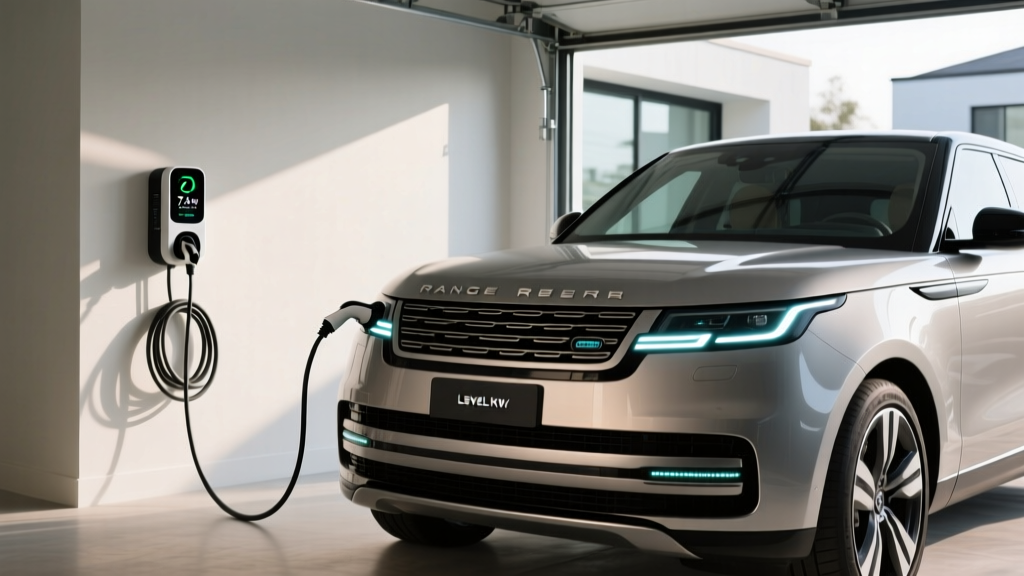
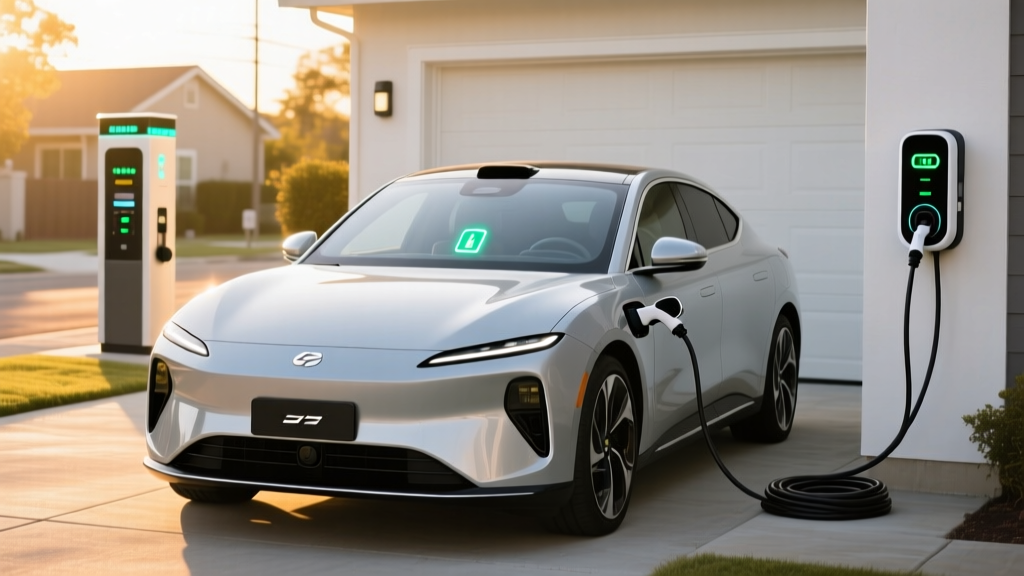
A Level 2 home charger is the backbone of convenient EV ownership. Here is what you need to know before calling an electrician.
Electrical Requirements for the EV6
The EV6's onboard charger accepts up to 10.9 kW on Level 2 (48 amps at 240V). To deliver that, you need a dedicated 60-amp circuit (electrical code requires circuits to be rated at 125% of continuous load, so 48A continuous requires a 60A breaker). If your charger maxes at 40A/9.6 kW, a 50-amp circuit suffices.
Panel Upgrade Reality Check
Most modern homes with a 200-amp electrical panel can accommodate a 60-amp EV circuit without an upgrade. However, older homes with 100-amp service, or homes already running heavy loads (electric range, dryer, HVAC, hot tub), may need a panel upgrade to 200A—or even 300A in larger homes. This is the single biggest variable in installation cost and the one most online guides gloss over.
| Component | Low Estimate | High Estimate | Notes |
|---|---|---|---|
| Level 2 Charger Equipment | $400 | $750 | Smart Wi-Fi chargers, 24–48A, hardwired or NEMA 14-50 plug |
| Electrician Labor (standard install) | $600 | $1,500 | Running conduit, wiring, breaker; varies by distance from panel |
| Permit & Inspection | $50 | $250 | Required in most jurisdictions; varies by municipality |
| Panel Upgrade (if needed) | $1,500 | $4,500 | 100A → 200A upgrade; not always required |
| Total (no panel upgrade) | $1,050 | $2,500 | Most common scenario |
| Total (with panel upgrade) | $2,550 | $7,000 | Older homes or high-load households |
Always get at least two quotes from licensed electricians and confirm they pull a permit. Unpermitted work can void home insurance and cause issues at resale. Some utilities offer rebates of $250–$500 for Level 2 installations—check with your local provider.
DC Fast Charging the EV6: Real-World Speeds & Charge Curve Reality
The Kia EV6's 800V architecture allows it to accept DC fast charging at up to 240 kW (on Long Range trims with the 77.4 kWh battery) or approximately 180 kW on the base 58 kWh battery. At a 350 kW-capable station (like Electrify America's latest stalls), here is what to expect:
- 10–80% charge (77.4 kWh battery): approximately 18 minutes under ideal conditions (battery preconditioned, ambient temp 65–85°F)
- 10–80% charge (58 kWh battery): approximately 20–22 minutes
- Miles added in 15 minutes: roughly 180–210 miles (Long Range)
The charge curve taper is real. The EV6 will sustain peak speeds (200–240 kW) roughly from 10% to 55% state of charge. From 55–80%, the rate gradually drops to 100–130 kW. Above 80%, it falls sharply to under 50 kW to protect battery longevity. This is why the industry standard is "10–80% time"—charging beyond 80% on a road trip is rarely worth the wait unless you absolutely need those final miles to reach your destination.
In cold weather (below 32°F), expect DC fast charging to take 30–50% longer unless you use the EV6's built-in battery preconditioning feature (activated by setting the charger as a navigation destination). Always precondition before a fast-charge stop.
Connector Compatibility: NACS, CCS1 & What the EV6 Uses
The EV charging connector landscape has shifted dramatically. Here is where the Kia EV6 stands in 2026:
| Connector | Use | EV6 Native Support? | Adapter Required? |
|---|---|---|---|
| CCS1 (Combo) | DC Fast Charging | Yes (2022–2024 models) | No |
| NACS (Tesla-style) | DC Fast + Level 2 | Yes (2025+ models built with NACS port) | CCS-to-NACS adapter for older EV6s |
| J1772 | Level 2 Public Charging | Yes (via built-in inlet or adapter) | Varies by model year |
| CHAdeMO | Legacy DC Fast | No | Not available; network is sunsetting |
Kia began equipping the EV6 with the native NACS port starting with the 2025 model year, granting direct access to Tesla's Supercharger network (now open to non-Tesla EVs via the NACS standard). If you own a 2022–2024 EV6 with a CCS1 port, Kia and third-party manufacturers (such as Lectron and A2Z) sell CCS-to-NACS adapters for approximately $150–$250 that enable Supercharger access. Confirm adapter compatibility with your specific model year before purchasing.
Cost to Charge the EV6: Home vs. Public vs. Gas
One of the strongest arguments for the EV6 is fuel cost savings. Here is a breakdown using the EV6 Long Range AWD (EPA combined 295 miles, ~3.5 miles/kWh efficiency):
| Charging Scenario | Cost per kWh | Cost for Full Charge (77.4 kWh) | Cost Per Mile |
|---|---|---|---|
| Home (off-peak utility rate) | $0.10–$0.14 | $7.74–$10.84 | $0.03–$0.04 |
| Home (standard residential rate) | $0.15–$0.20 | $11.61–$15.48 | $0.04–$0.05 |
| Public Level 2 (ChargePoint, etc.) | $0.25–$0.40 | $19.35–$30.96 | $0.07–$0.11 |
| DC Fast Charging (Electrify America, EVgo) | $0.35–$0.55 | $27.09–$42.57 | $0.09–$0.14 |
| Gasoline equivalent (25 MPG combined, $3.40/gal) | — | $40.02 | $0.14 |
At home off-peak rates, the EV6 costs roughly 70–75% less per mile than a comparable gasoline crossover. Even at public DC fast-charging prices, the EV6 often matches or slightly undercuts gasoline on a per-mile basis. The savings compound significantly for high-mileage drivers: at 15,000 miles per year, home-charging the EV6 saves approximately $1,200–$1,600 annually versus a 25 MPG gas vehicle.
Recommended Home Chargers for the Kia EV6
Based on power delivery, reliability, smart features, and value, these are our top Level 2 charger picks for the EV6 in 2026:
ChargePoint Home Flex (Best Overall)
- Power Output: Up to 12 kW (50A) — configurable down to 16A
- Connector: J1772 (CCS combo adapter included for some packages)
- Cable Length: 23 feet
- Smart Features: Wi-Fi, app scheduling, utility demand-response integration, Alexa
- Price: ~$550–$650
- Why for EV6: Flexible amperage lets you match your circuit; excellent app and reliability track record
Emporia Level 2 EV Charger (Best Budget)
- Power Output: Up to 11.5 kW (48A)
- Connector: J1772 (NACS version available for 2025+ EV6)
- Cable Length: 24 feet
- Smart Features: Wi-Fi, solar integration, energy monitoring, load management
- Price: ~$400–$450
- Why for EV6: Best price-to-power ratio; great for homes with solar panels
Wallbox Pulsar Plus (Best Compact)
- Power Output: Up to 11.5 kW (48A)
- Connector: J1772 or NACS (select at purchase)
- Cable Length: 25 feet
- Smart Features: Wi-Fi + Bluetooth, app control, Power Sharing for dual-charger setups
- Price: ~$500–$600
- Why for EV6: Compact form factor, NACS-native option available for 2025+ models
Safety, Code & Installation Best Practices
EV charging involves sustained high-current draw—more similar to running an electric furnace than plugging in a phone. Follow these non-negotiable safety guidelines:
- Dedicated circuit: Your Level 2 charger must have its own dedicated breaker. Never share a circuit with other heavy appliances.
- GFCI protection: The 2023 NEC (National Electrical Code) and most local codes now require GFCI protection for outdoor EV receptacles. Hardwired chargers may or may not require GFCI depending on jurisdiction—your electrician will know.
- Outdoor rating: If mounting outside, ensure the charger is NEMA 4-rated (weatherproof). All recommended chargers above carry outdoor ratings.
- NEMA 14-50 vs. hardwired: A NEMA 14-50 outlet gives you portability (take the charger when you move), but a hardwired connection is more reliable for sustained 48A+ loads and eliminates the GFCI breaker requirement in many jurisdictions. For 48A charging, hardwired is generally preferred.
- Never use extension cords: Standard household extension cords cannot handle EV charging loads and present a fire hazard.
Frequently Asked Questions
How much does it cost to install a home EV charger for the EV6?
Most homeowners pay between $1,050 and $2,500 for a complete Level 2 installation (charger + electrician labor + permit) when no panel upgrade is needed. If your home requires an electrical panel upgrade from 100A to 200A service, add $1,500–$4,500. Always get itemized quotes from licensed electricians.
How fast will each charging level add range to my EV6?
Level 1 (120V) adds 3–5 miles per hour—impractical for daily EV6 use. Level 2 (240V, 48A) adds approximately 35–40 miles per hour, fully recharging the EV6 overnight. DC fast charging at 240 kW can add up to 210 miles in 15 minutes under ideal conditions, though real-world speeds vary with battery temperature and state of charge.
Which connector and charger is compatible with my EV6?
The 2022–2024 Kia EV6 uses a CCS1 connector for DC fast charging and J1772 for Level 2. The 2025+ EV6 ships with a native NACS port, granting direct Tesla Supercharger access. For home Level 2 charging, any J1772 or NACS-compatible charger (depending on your model year) will work. CCS-to-NACS adapters are available for older models.
How much does charging the EV6 cost per mile vs. gas?
Charging at home on off-peak rates costs approximately $0.03–$0.04 per mile in the EV6. A comparable 25 MPG gas crossover at $3.40/gallon costs about $0.14 per mile. Even public DC fast charging ($0.09–$0.14/mile) typically matches or undercuts gasoline. Annual savings for a 15,000-mile driver range from $1,200 to $1,600.
What electrical upgrades might I need for a Level 2 charger?
You need a dedicated 50A or 60A, 240V circuit. Homes with 200A panels usually accommodate this without upgrades. Homes with 100A service, or those with multiple heavy electric loads, may need a panel upgrade to 200A or 300A. Your electrician will perform a load calculation to determine this. Some utilities offer load-management devices that allow EV charging without a panel upgrade by temporarily reducing charger power when other appliances are running.