The Kia EV6 remains one of the most capable electric crossovers on the market thanks to its 800-volt architecture, which enables some of the fastest DC charging in its class. But knowing what plugs into the Kia EV6 charging port, how fast each level adds range, and what it takes to set up reliable home charging is essential for getting the most out of the vehicle. This guide covers every connector, charging speed, cost scenario, and home-installation detail an EV6 owner (or prospective buyer) needs in 2026.
Kia EV6 Charging Port Location and Connector Types
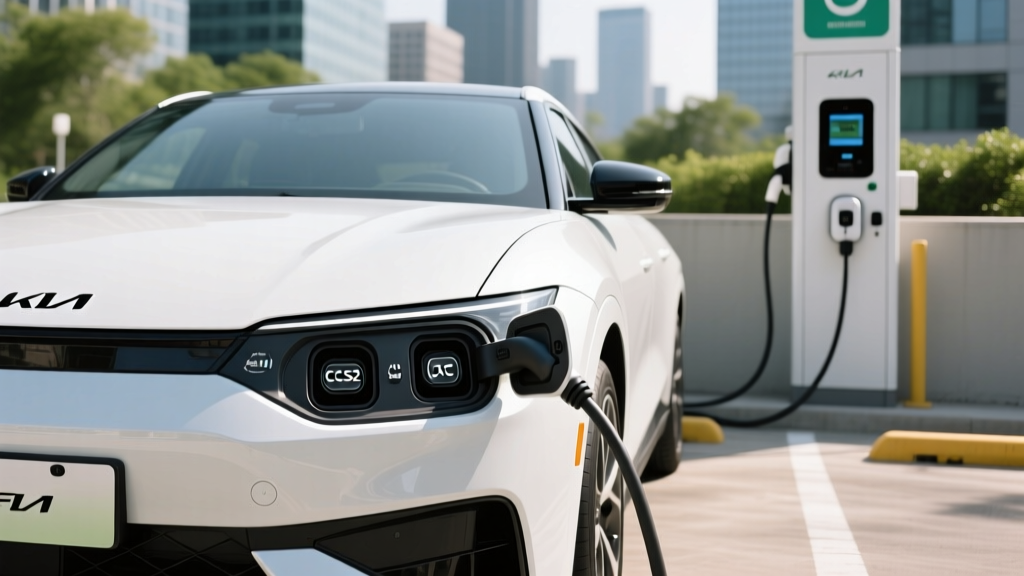
The Kia EV6 charging port is located on the driver-side rear quarter panel, just behind the left rear wheel. Depending on model year and market, the EV6 ships with one of two DC fast-charging connector standards:
- CCS1 (Combined Charging System) — Standard on 2022–2024 U.S.-market EV6 models. This is the legacy DC connector with a J1772 AC portion on top and two large DC pins below.
- NACS (North American Charging Standard / Tesla connector) — Kia began transitioning to NACS on new U.S.-market vehicles starting with the 2025 model year. The 2026 EV6 ships with a native NACS port.
For AC Level 1 and Level 2 charging, CCS1-equipped EV6s use the J1772 connector, while NACS-equipped models accept the Tesla-style AC plug directly. If you own a 2022–2024 CCS1 EV6, you can access the Tesla Supercharger network using a CCS1-to-NACS adapter (Kia provides or sells one; aftermarket options from brands like Lectron are also available, typically $150–$250).
| Model Year | AC Connector | DC Connector | Tesla Supercharger Access |
|---|---|---|---|
| 2022–2024 | J1772 | CCS1 | Yes, with CCS1-to-NACS adapter |
| 2025–2026 | NACS | NACS | Yes, native (no adapter needed) |
Charging Levels Explained: Speeds in kW and Miles Per Hour
Understanding the three charging levels is the foundation of EV ownership. A critical distinction: kW (kilowatts) measures power — the rate at which energy flows — while kWh (kilowatt-hours) measures energy capacity, like gallons in a tank. The EV6's battery stores energy in kWh; chargers deliver it in kW.
| Level | Voltage / Amperage | Power (kW) | Miles of Range Added Per Hour | Typical Use Case |
|---|---|---|---|---|
| Level 1 | 120V / 12A | ~1.4 kW | ~3–4 mi/hr | Emergency / overnight trickle |
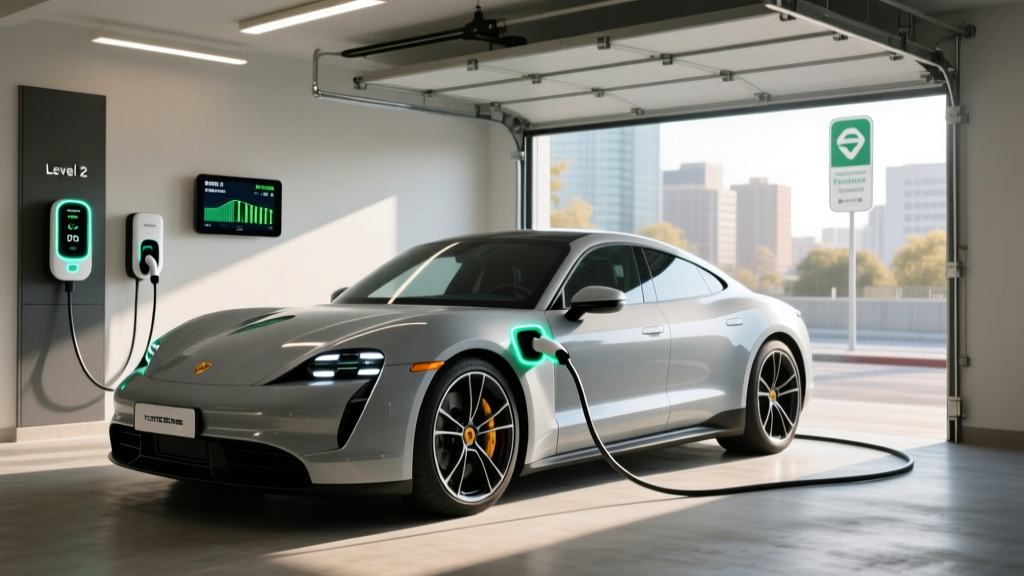
| Level 2 | 240V / 32–48A | 7.7–11.5 kW | ~22–33 mi/hr | Home / workplace daily charging |
| DC Fast | 400–800V DC | Up to 240 kW (peak) | ~650–800 mi/hr (at peak) | Road trips, rapid top-ups |
The EV6's onboard charger maxes out at 10.9 kW for AC Level 2 charging. That means even if you install a 48-amp (11.5 kW) wallbox, the car will only accept ~10.9 kW. You won't damage anything — the car simply draws what it can use — but pairing a 48A charger with the EV6 yields only marginally faster charging than a 40A unit.
DC Fast Charging: The 800V Advantage
The EV6's 800-volt electrical architecture is its standout charging feature. On a 350 kW-capable DC fast charger, the EV6 (GT-Line RWD with the 77.4 kWh usable battery) can peak at approximately 240 kW, charging from 10% to 80% in roughly 18 minutes under ideal conditions. The smaller 58 kWh (Standard Range) battery peaks around 180 kW.
Real-world caveat: that 240 kW is a peak, not a sustained rate. The charging curve tapers significantly above 60–70% state of charge. Expect roughly 15–20 minutes for 10–60%, then a slower pull from 60–80%. Cold battery temperatures also reduce peak speed — preconditioning via the EV6's navigation-linked battery prep feature is essential for achieving rated speeds in winter.
Home Charger Installation: Costs, Electrical Requirements, and Upgrades
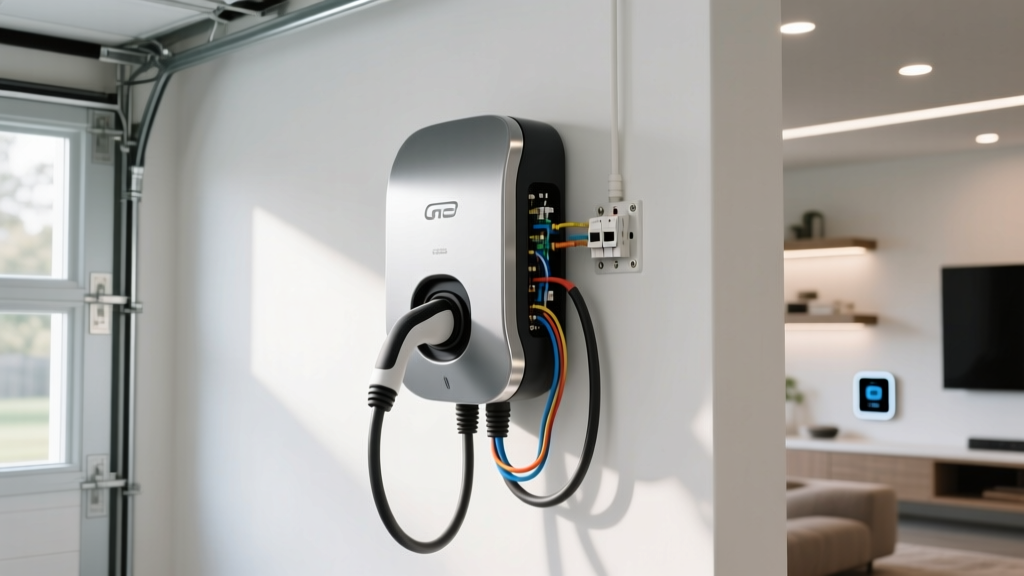
Most EV6 owners will want a Level 2 home wallbox. Here's what the installation involves and what it costs.
Electrical Requirements
A Level 2 charger for the EV6 requires a 240-volt dedicated circuit. The two most common configurations:
- 40-amp circuit (delivers 32A continuous / 7.7 kW) — requires a 50A breaker. Sufficient for overnight charging; adds ~22 miles of range per hour.
- 60-amp circuit (delivers 48A continuous / 11.5 kW) — requires a 70A breaker. Maximizes the EV6's 10.9 kW onboard charger. Adds ~30+ miles per hour.
Your electrical panel must have enough spare capacity (measured in amps) to support the new circuit. Most modern 200-amp panels can accommodate a 50A or 60A breaker. Older homes with 100-amp service often need a panel upgrade to 200A, which is the single largest variable in installation cost.
Permit and Code Requirements
Virtually all jurisdictions require an electrical permit for EV charger installation. The work must comply with NEC Article 625 (Electric Vehicle Charging System Equipment). Key code items:
- Dedicated circuit (no sharing with other appliances)
- GFCI protection (built into most modern EVSE units; some jurisdictions require an additional GFCI breaker)
- Outdoor-rated enclosure and NEMA 4 or NEMA 4X rating for exterior installations
- Proper wire gauge (6 AWG copper for 50A circuits, 4 AWG for 60A)
| Item | Low End | High End | Notes |
|---|---|---|---|
| Level 2 Wallbox (hardware) | $350 | $750 | 32A–48A smart chargers |
| Electrician labor | $500 | $1,500 | Depends on run length, conduit, panel distance |
| Electrical permit | $50 | $200 | Varies by municipality |
| Panel upgrade (if needed) | $1,500 | $3,500 | 100A → 200A service upgrade |
| Total (no panel upgrade) | $900 | $2,450 | Typical scenario for modern homes |
| Total (with panel upgrade) | $2,400 | $5,950 | Older homes with 100A service |
Some utilities and states offer rebates of $250–$1,000 for home charger installation. Check with your local utility and consult IRS guidelines on the Residential Clean Energy Credit, which may cover a portion of the equipment and installation cost.
Charging Cost Per Mile: EV6 vs. Gasoline
One of the strongest ownership arguments for the EV6 is fuel cost. Here's how charging costs compare across scenarios, benchmarked against a comparable gasoline crossover averaging 28 MPG combined.
| Scenario | Rate | EV6 Cost/Mile | Gas (at $3.40/gal) | Annual Savings (12,000 mi) |
|---|---|---|---|---|
| Home, off-peak utility rate | $0.11/kWh | $0.031 | $0.121 | ~$1,080 |
| Home, average U.S. rate | $0.17/kWh | $0.049 | $0.121 | ~$864 |
| Public Level 2 (ChargePoint, etc.) | $0.30/kWh | $0.086 | $0.121 | ~$420 |
| DC fast charging (Electrify America) | $0.48/kWh | $0.137 | $0.121 | −$192 (EV more expensive) |
The takeaway: home charging is dramatically cheaper than gas. Public DC fast charging at premium rates can actually exceed gasoline cost per mile. The economics strongly favor owners who can charge at home most nights. For the EV6 Long Range RWD (EPA-estimated 310 miles range, ~77.4 kWh usable battery, ~3.5 mi/kWh efficiency per fueleconomy.gov), a full 0–100% home charge at $0.17/kWh costs roughly $13.16 — versus $37.70 to fill a 14-gallon gas tank.
Charging Time Examples: What to Expect With Each Battery Pack
The EV6 is offered with two battery sizes. Here are realistic charging times for each across common scenarios:
| Battery | Level 1 (120V, 1.4 kW) | Level 2 (240V, 10.9 kW) | DC Fast (10–80%, 250+ kW station) |
|---|---|---|---|
| 58 kWh (Standard Range) | ~41 hours (0–100%) | ~5.5 hours (0–100%) | ~18 minutes (10–80%) |
| 77.4 kWh (Long Range) | ~55 hours (0–100%) | ~7.5 hours (0–100%) | ~18 minutes (10–80%) |
DC fast charging times are similar between the two packs because the larger pack can sustain higher wattage for longer, offsetting its greater capacity. However, both times assume a warm battery, a 350 kW-capable station, and a state of charge starting at 10%. In cold weather (below 40°F), expect 10–80% times to stretch to 25–35 minutes without preconditioning.
Recommended Home Chargers for the Kia EV6
Below are three Level 2 wallboxes well-suited to the EV6's 10.9 kW onboard charger, with specific specs and current pricing:
ChargePoint Home Flex (NACS or J1772)
- Power output: Up to 12 kW (50A, adjustable down to 16A)
- Connector options: NACS or J1772 (choose at purchase)
- Cable length: 18 ft or 23 ft
- Smart features: Wi-Fi, app scheduling, Alexa integration, energy tracking
- Price: ~$599 (32A config) to $699 (50A)
- Best for: EV6 owners wanting flexible amperage and robust app control
Emporia Vue Level 2 Charger
- Power output: Up to 11.5 kW (48A)
- Connector: J1772 (NACS version available 2025+)
- Cable length: 24 ft
- Smart features: Wi-Fi, load management with Emporia energy monitor, solar integration
- Price: ~$399
- Best for: Budget-conscious buyers who want energy monitoring and solar pairing
Tesla Wall Connector (Gen 4, NACS)
- Power output: Up to 11.5 kW (48A)
- Connector: NACS native
- Cable length: 24 ft
- Smart features: Wi-Fi, OTA updates, Powerwall integration, access control
- Price: ~$420
- Best for: 2025–2026 NACS EV6 owners, especially those with Tesla solar/storage ecosystem
For 2022–2024 CCS1/J1772 EV6 owners, the ChargePoint Home Flex in J1772 configuration or the Emporia Vue are the top picks. For 2025–2026 NACS models, the Tesla Wall Connector offers excellent value and native compatibility — no adapter needed at home or on the Supercharger network.
Safety, Code, and Installation Best Practices
Beyond meeting NEC code, follow these practical safety guidelines:
- Use a licensed electrician. DIY 240V work carries serious arc-flash and fire risk. Always hire a licensed professional and pull a permit.
- Hardwire vs. plug. Hardwired installations (no NEMA 14-50 outlet) eliminate a common failure point and are required by some jurisdictions for circuits above 40A. If you use a NEMA 14-50 receptacle, ensure it's an industrial-grade unit (Hubbell, Bryant) — residential-grade outlets have been linked to overheating in EV charging applications.
- Outdoor rating. If your charger is mounted outside, ensure the unit carries a NEMA 4 (weather-resistant) rating and that the connector holster shields the plug from rain and debris.
- Cable management. A 24-foot cable is usually sufficient, but measure from your planned mount point to the EV6's rear-left port. Avoid running cables across driveways or walkways.
- Load management. If your panel is near capacity but you don't want a full upgrade, consider a smart panel-level load management device (like the Emporia Smart Panel or Span Drive) that dynamically limits charger draw to prevent tripping the main breaker.
Frequently Asked Questions
Can I charge a Kia EV6 at a Tesla Supercharger?
Yes. If your EV6 is a 2025–2026 model with a native NACS port, you can plug directly into any Tesla Supercharger. If you have a 2022–2024 model with a CCS1 port, you'll need a CCS1-to-NACS adapter. Kia has provided these adapters to some owners; aftermarket adapters are also available. Confirm your vehicle's adapter compatibility with Kia before purchasing a third-party unit.
How much does it cost to install a home EV charger for the Kia EV6?
Expect $900–$2,450 total for a standard installation (wallbox + electrician + permit) if your electrical panel has sufficient capacity. If a panel upgrade from 100A to 200A is needed, add $1,500–$3,500, bringing the total to $2,400–$5,950. Utility rebates and the federal Residential Clean Energy Credit may offset some of this cost.
Is a 40-amp or 60-amp circuit better for the EV6?
The EV6's onboard charger caps at 10.9 kW, which corresponds to roughly 45.5 amps at 240V. A 60-amp circuit (48A continuous) will deliver the car's maximum AC charge rate. A 40-amp circuit (32A continuous / 7.7 kW) is slightly slower but still adds ~22 miles per hour — enough to fully replenish a Long Range battery overnight in about 7.5 hours. Choose 60A if your panel supports it and the cost difference is modest.
How fast does the EV6 charge on DC fast chargers?
On a 350 kW-capable station with a preconditioned battery, the EV6 Long Range peaks at approximately 240 kW and reaches 10–80% in about 18 minutes. On a 150 kW station, expect 10–80% in roughly 25–30 minutes. Cold weather, high state of charge, and lower-power stations all increase charge time. The EV6's 800V architecture gives it a meaningful advantage on high-power chargers compared to 400V competitors.
Does the Kia EV6 come with a portable charger?
Kia includes a portable ICCB (In-Cable Control Box) charger with the EV6 that supports 120V Level 1 charging via a standard household outlet. Some model years also include a 240V adapter for the portable unit, enabling Level 2 speeds from a NEMA 14-50 outlet without a wallbox. Check your specific trim and model year for included accessories.
What's the real-world range of the Kia EV6?
The EPA rates the 2026 EV6 Long Range RWD at 310 miles and the AWD version at approximately 282 miles (check fueleconomy.gov for exact trim figures). In real-world highway driving at 70–75 mph, expect roughly 260–280 miles. In cold weather (below 30°F), range can drop 15–25%, yielding 230–260 miles for the Long Range RWD. The Standard Range 58 kWh pack is EPA-rated around 232 miles.
For the latest EV6 specifications, consult Kia's official EV6 page. For federal tax credit eligibility related to EV purchases and home charging equipment, review current IRS Residential Clean Energy Credit guidelines or consult a tax professional, as income limits, sourcing requirements, and credit amounts are subject to change.