Understanding Kia EV3 Range and Why Charging Setup Matters
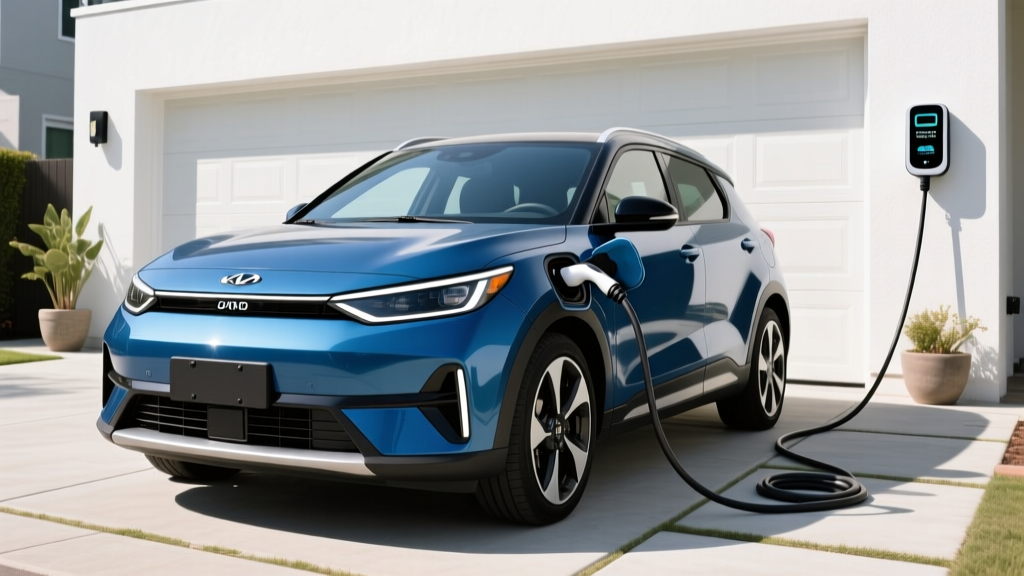
The Kia EV3 is a compact electric crossover that has generated significant interest since its announcement, with buyers closely tracking its Kia EV3 range figures and charging capabilities. Whether you're evaluating the standard-range or long-range variant, knowing how to charge efficiently at home and on the road is essential to making the EV3 work in daily life.
This guide covers everything you need to know about charging the Kia EV3 — from Level 1 trickle charging to DC fast charging, home installation costs, connector compatibility, and the best Level 2 equipment to buy. We'll also break down cost-per-mile vs. gas so you can see the real economics.
The long-range Kia EV3 (81.4 kWh battery, NMC chemistry) targets approximately 300+ miles WLTP (~260–280 miles EPA-estimated when US figures are finalized). In real-world highway driving at 70 mph, expect roughly 230–250 miles. In cold weather (below 32°F), range can drop 15–30%, bringing effective range to ~190–220 miles without preconditioning. The standard-range variant (~58.3 kWh) targets roughly 200–220 miles EPA-estimated.
Note: As of early 2026, US-spec EPA range figures for the Kia EV3 are preliminary. WLTP figures from the European and Korean markets are published; US EPA testing may yield slightly lower numbers. Always check fueleconomy.gov for finalized EPA data.
Charging Levels Explained: How Fast Will Each Add Range?
Before buying equipment or scheduling an electrician, you need to understand the three charging levels. The distinction between kW (power, or charge rate) and kWh (energy, or battery capacity) is critical — kW tells you how fast energy flows in; kWh tells you how much the battery holds.
| Level | Voltage / Amps | Power (kW) | Miles of Range Added per Hour | Typical Use Case |
|---|---|---|---|---|
| Level 1 | 120V / 12A | ~1.4 kW | ~3–5 miles/hr | Overnight trickle; emergency backup |
| Level 2 | 240V / 32–48A | 7.7–11.5 kW | ~25–40 miles/hr | Primary home and workplace charging |
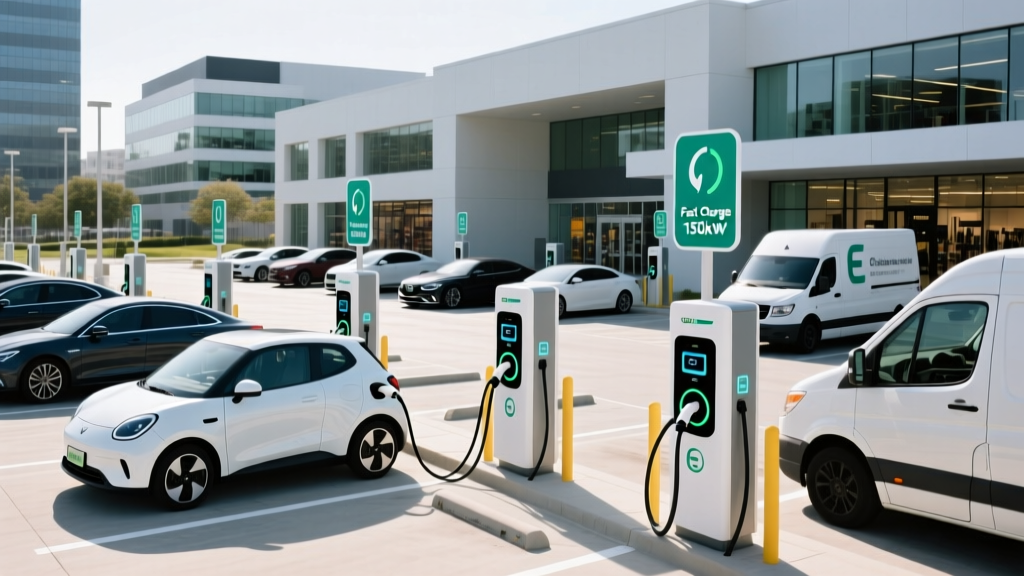
| DC Fast Charging | 400–800V DC | 50–150+ kW | ~150–400+ miles/hr (peak) | Road trips, quick top-ups |
For the Kia EV3's long-range 81.4 kWh battery, a Level 1 charger would take roughly 58+ hours for a full charge — impractical for daily use. A Level 2 home charger at 11.5 kW can replenish the battery from 10–100% in approximately 7–8 hours, making it the practical standard for overnight charging.
Kia EV3 Charging Time Examples (10–80% SoC)
Most EV owners charge between 10% and 80% state of charge (SoC) to preserve battery longevity and avoid the steep charge-curve taper above 80%. Here's what to expect:
- Level 2 (11.5 kW): 10–80% in approximately 5 hours (long-range battery)
- DC Fast Charging (~130 kW peak): 10–80% in approximately 30–35 minutes (preliminary estimate for the EV3's 400V architecture, pending US validation)
- DC Fast Charging (50 kW): 10–80% in approximately 70–80 minutes
DC fast charging speeds are not linear. The Kia EV3 will accept peak power only at lower SoC levels (typically 10–40%), then taper progressively. At 80% SoC, charge speed may drop to under 40 kW. This is normal battery-management behavior to protect cell health — plan road-trip stops accordingly.
Home Charger Installation: Electrical Requirements and Costs
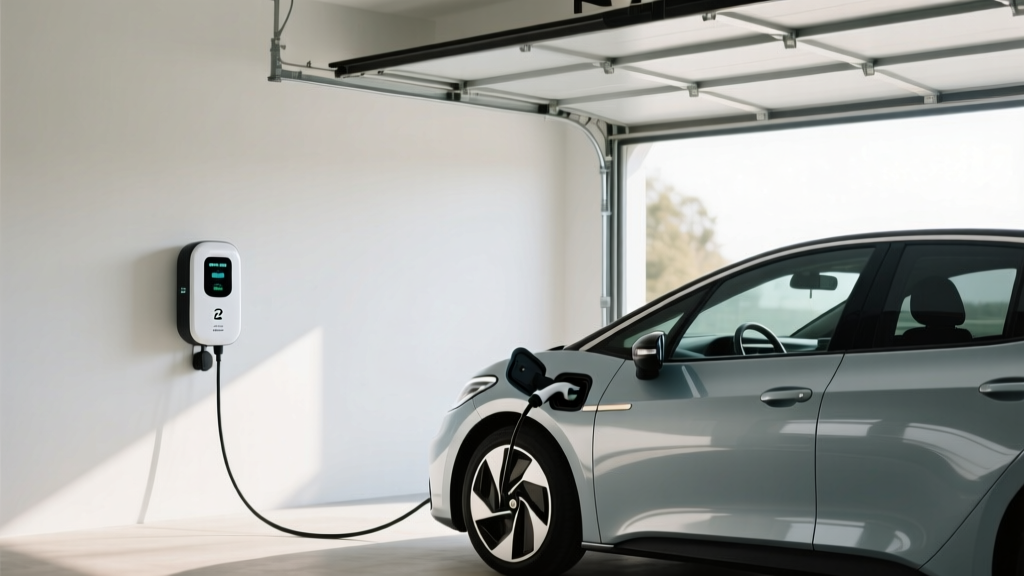
Installing a Level 2 home charger is the single most impactful upgrade for EV ownership. Here's what's involved for the Kia EV3 or any compact EV with an ~80 kWh battery.
Electrical Requirements
A typical Level 2 charger requires a 240-volt dedicated circuit, similar to what an electric dryer or oven uses. Common configurations:
- 32-amp circuit (40-amp breaker): Delivers 7.7 kW — sufficient for overnight charging of the EV3
- 40-amp circuit (50-amp breaker): Delivers 9.6 kW — faster, recommended if your panel has capacity
- 48-amp circuit (60-amp breaker): Delivers 11.5 kW — fastest Level 2 option; requires adequate panel headroom
Panel upgrade considerations: Most modern homes with a 200-amp electrical panel can accommodate a 40-amp EV circuit without upgrades. Older homes with 100-amp panels or panels already near capacity (electric heating, hot tubs, multiple large appliances) may need a panel upgrade to 200A, which adds $1,500–$3,500 to the project. Always have a licensed electrician perform a load calculation before committing to an amperage.
Installation Cost Breakdown
| Component | Low-End Estimate | High-End Estimate |
|---|---|---|
| Level 2 charger (hardware) | $350 | $750 |
| Electrician labor (short run, <25 ft from panel) | $400 | $800 |
| Electrician labor (long run, conduit, >50 ft) | $800 | $2,000 |
| Permit and inspection | $50 | $250 |
| Panel upgrade (if needed) | $1,500 | $3,500 |
| Total (no panel upgrade) | $800 | $3,800 |
| Total (with panel upgrade) | $2,300 | $7,300 |
Most homeowners without panel issues spend between $1,000 and $2,500 total for a professionally installed Level 2 charger. Get at least three quotes from licensed electricians, and confirm that the quote includes permit and inspection — this is required by code and protects your home insurance coverage.
Connector Compatibility: NACS, CCS1, and the Kia EV3
Connector standards have shifted dramatically in 2024–2026. Here's where the Kia EV3 fits in the North American landscape.
| Connector | Description | Kia EV3 Compatibility |
|---|---|---|
| NACS (Tesla / J3400) | North American Charging Standard; adopted by most automakers for 2025+ models | Expected native NACS on US-spec EV3 (Kia confirmed NACS adoption for new EVs starting 2025) |
| CCS1 (Combo) | Legacy standard; still widely available at Electrify America, EVgo, and ChargePoint stations | May require NACS-to-CCS adapter at older stations; Kia provides or offers adapters |
| CHAdeMO | Legacy DC standard (Nissan Leaf, older Mitsubishi) | Not compatible; no adapter available |
| J1772 (Level 2 AC) | Standard AC connector for Level 1/2 | NACS vehicles use a J1772-to-NACS adapter (typically included with vehicle) |
Key takeaway: The US-spec Kia EV3 is expected to ship with a native NACS port, giving it access to Tesla Superchargers (now open to non-Tesla EVs) as well as growing NACS-native public networks. For existing CCS-only stations, a NACS-to-CCS adapter (typically $150–$250) ensures broad compatibility. Confirm adapter availability with your Kia dealer at purchase.
Cost to Charge: Home vs. Public vs. Gas
One of the strongest arguments for the Kia EV3 is the cost-per-mile advantage over gasoline vehicles. Here's how charging costs break down across scenarios, using the EV3's estimated efficiency of ~3.5–4.0 miles/kWh (approximately 110–120 MPGe combined).
| Charging Scenario | Cost per kWh | Cost per Mile (EV3) | Full Charge Cost (81.4 kWh) |
|---|---|---|---|
| Home (off-peak utility rate) | $0.08–$0.12 | $0.02–$0.03 | $6.50–$9.80 |
| Home (standard utility rate) | $0.14–$0.18 | $0.04–$0.05 | $11.40–$14.65 |
| Public Level 2 (ChargePoint, etc.) | $0.25–$0.49 | $0.07–$0.14 | $20.35–$39.90 |
| DC Fast Charging (Electrify America, EVgo) | $0.35–$0.55 | $0.10–$0.16 | $28.50–$44.80 |
| Gasoline equivalent (30 MPG, $3.50/gal) | — | $0.12/mile | ~$30 per 250 mi |
The bottom line: Charging the Kia EV3 at home on off-peak rates costs roughly $0.02–$0.03 per mile — about one-quarter the cost of gasoline at $3.50/gallon. Even DC fast charging on road trips is competitive with or cheaper than gas per mile. If you drive 12,000 miles per year and charge primarily at home, annual fuel savings vs. a 30 MPG gas vehicle can exceed $1,000–$1,200.
Best Level 2 Home Chargers for the Kia EV3
With a NACS port expected on the US-spec EV3, you'll want a Level 2 charger that either natively supports NACS or uses a J1772 connector with the included adapter. Here are top picks across budgets:
Emporia Vue Smart Charger (NACS)
- Power Output: 11.5 kW (48A) / 9.6 kW (40A) configurable
- Connector: Native NACS (J3400)
- Cable Length: 24 ft
- Smart Features: Wi-Fi, app scheduling, solar integration, load management
- Price: ~$400
- Best For: Budget-conscious buyers wanting full smart features and NACS
ChargePoint Home Flex (NACS)
- Power Output: Up to 12 kW (50A) configurable
- Connector: Native NACS or J1772 versions available
- Cable Length: 23 ft
- Smart Features: Wi-Fi, app with charge tracking, Alexa, load-sharing
- Price: ~$550–$650
- Best For: Reliable brand with strong app ecosystem and flexible amperage
Tesla Wall Connector (J3400/NACS)
- Power Output: Up to 11.5 kW (48A)
- Connector: Native NACS
- Cable Length: 24 ft
- Smart Features: Wi-Fi, OTA updates, Power Sharing (multi-unit), access control
- Price: ~$450
- Best For: NACS-native EVs like the EV3; clean design, proven reliability
Important: All three chargers above require a hardwired 240V connection (recommended) or a NEMA 14-50 outlet installation. Hardwired installations are preferred for 48A chargers, as NEMA 14-50 outlets are typically rated for 40A continuous draw. Your electrician will advise on the best approach for your panel.
Safety, Code, and Installation Best Practices
EV charging involves sustained high-current draw — unlike a dryer that cycles on and off, an EV charger may run at full load for 6–8 hours straight. This makes code compliance and safety non-negotiable.
- Dedicated circuit: Your Level 2 charger must have its own dedicated circuit — never share with other appliances
- GFCI protection: NEC 2020 and later require GFCI protection for EV charging outlets; hardwired installations with listed chargers may have GFCI built into the unit
- Outdoor rating: If installing outdoors (garage exterior, driveway), ensure the charger carries a NEMA 4 or IP65 weatherproof rating — all three picks above are outdoor-rated
- Permit and inspection: Required in virtually all jurisdictions; unpermitted work can void home insurance claims and cause issues at resale
- Cable management: Use a wall-mounted cable organizer to prevent tripping hazards and connector damage
Always hire a licensed electrician familiar with EV charger installations. Ask whether they've installed EV chargers before and whether their quote includes the permit fee. For detailed electrical code requirements, reference the National Electrical Code (NEC) Article 625.
Federal Tax Credits and Incentives for Home Charging
The IRS §30C Alternative Fuel Vehicle Refueling Property Credit covers up to 30% of home charger equipment and installation costs, capped at $1,000. Eligibility requires that your home is located in a qualifying census tract (generally non-urban or low-income areas). The credit applies to both the charger hardware and electrician labor.
Separately, the §30D New Clean Vehicle Credit may apply to the Kia EV3 itself (up to $7,500, subject to MSRP caps, buyer income limits, and battery-sourcing requirements). Eligibility rules change frequently — consult a tax professional and verify current requirements on irs.gov before purchasing.
Frequently Asked Questions
How much does it cost to install a home EV charger for the Kia EV3?
Most homeowners spend between $800 and $3,800 total for a Level 2 home charger installation without a panel upgrade. This includes the charger ($350–$750), electrician labor ($400–$2,000 depending on wiring distance), and permit fees ($50–$250). If your home needs a 200A panel upgrade, add $1,500–$3,500.
How fast will each charging level add range to the Kia EV3?
Level 1 (120V) adds roughly 3–5 miles per hour — too slow for daily use. Level 2 (240V, 11.5 kW) adds approximately 35–40 miles per hour, fully replenishing the EV3's long-range battery overnight. DC fast charging at peak rate (~130 kW) can add 150+ miles in 15–20 minutes during the initial charge phase.
Which connector and charger is compatible with the Kia EV3?
The US-spec Kia EV3 is expected to use a NACS (J3400) connector, compatible with Tesla Superchargers and NACS-native public stations. For CCS-only stations, a NACS-to-CCS adapter is needed. For Level 2 home charging, any NACS-compatible or J1772 charger (with adapter) will work.
How much does charging the Kia EV3 cost per mile vs. gas?
Home charging on off-peak rates costs approximately $0.02–$0.03 per mile. Public DC fast charging costs roughly $0.10–$0.16 per mile. A comparable 30 MPG gas vehicle at $3.50/gallon costs about $0.12 per mile. Home charging saves $0.09–$0.10 per mile, or roughly $1,080–$1,200 annually at 12,000 miles/year.
What electrical upgrades might I need for a Kia EV3 home charger?
If your home has a 200-amp panel with available capacity, no upgrade is typically needed. Homes with 100-amp panels, electric heating, or panels already near their load limit may need a panel upgrade to 200A ($1,500–$3,500). A licensed electrician will perform a load calculation to determine if your existing panel can handle a 40A or 50A dedicated EV circuit.
Should I charge the Kia EV3 to 100% every night?
For daily driving, charging to 80% SoC is recommended to maximize long-term battery health, especially with NMC chemistry. Reserve 100% charges for road trips where you need maximum range. The EV3's battery management system includes a buffer, but consistent 80% daily limits will help preserve capacity over the 8-year/100,000-mile battery warranty period.
Sources: Kia global press specifications, fueleconomy.gov, IRS §30D and §30C credit pages, National Fire Protection Association NEC guidelines.