Why Kia's Electric Range Claims Need a Charging Reality Check
If you're researching how to evaluate the auto company Kia on electric car range, you've likely seen the headline numbers: 310 miles for the EV6, 304 for the EV9, and 243 for the Niro EV. Those EPA stickers are competitive, but range is only half the ownership equation. A 310-mile battery means nothing if you can't recharge it efficiently at home or on the road. This guide pairs Kia's real-world range expectations with a complete charging breakdown — from Level 1 trickle charging to 800V DC fast charging — so you can make a spec-driven decision before signing a lease or purchase agreement.
- Kia EV6 Long Range AWD: EPA 282 mi | Expect ~240-260 mi highway, ~210-230 mi in freezing temps
- Kia EV6 RWD: EPA 310 mi | Expect ~265-285 mi highway, ~230-250 mi cold weather
- Kia EV9 Land AWD: EPA 280 mi | Expect ~240-260 mi highway (boxy aero penalty at 75+ mph)
- Kia Niro EV: EPA 239 mi | Expect ~200-220 mi highway, ~180-200 mi cold
Highway driving at 70-80 mph and cold-weather battery chemistry reduce usable range 15-30% vs. the EPA combined cycle.
Kia's Electric Lineup: Range, Battery, and Charging Specs at a Glance
| Model | Battery (kWh usable) | Chemistry | EPA Range | Max DC Charge (kW) | 10-80% DC Time | Level 2 Rate (kW) | Base MSRP |
|---|---|---|---|---|---|---|---|
| EV6 RWD | 77.4 | NMC | 310 mi | 240 (peak) | ~18 min | 10.9 | $42,900 |
| EV6 AWD | 77.4 | NMC | 282 mi | 240 (peak) | ~18 min | 10.9 | $46,900 |
| EV9 Land AWD | 100.0 | NMC | 280 mi | 210 (peak) | ~24 min | 10.9 | $59,900 |
| Niro EV | 64.8 | NMC | 239 mi | 77 (peak) | ~43 min | 11.0 | $39,600 |
Kia uses the E-GMP platform (shared with Hyundai Ioniq 5/6) for the EV6 and EV9, which supports 800V DC fast charging — a major differentiator at this price point. The Niro EV runs on a 400V architecture, limiting its peak charge rate. All current Kia EVs use NMC (nickel manganese cobalt) battery chemistry, which offers higher energy density than LFP but is more sensitive to sustained 100% state of charge. Source: fueleconomy.gov and Kia America.
Charging Levels Explained: kW, Miles Per Hour, and What They Mean for Kia Owners
The single most important EV literacy concept: kW (kilowatts) measures power — how fast energy flows into the battery. kWh (kilowatt-hours) measures energy — the battery's total capacity. Think of kW as the width of the hose and kWh as the size of the bucket. A 77.4 kWh battery (EV6) charged at 10.9 kW takes about 7 hours from empty; at 240 kW DC, the same battery fills to 80% in roughly 18 minutes.
| Level | Voltage | Power (kW) | Miles of Range Added Per Hour | Best For |
|---|---|---|---|---|
| Level 1 | 120V AC | 1.2–1.4 kW | 3–5 mi/hr | Overnight top-off, PHEVs, emergency use |
| Level 2 | 240V AC | 7.2–19.2 kW | 20–60 mi/hr | Daily home charging, workplace, destinations |
| DC Fast (400V) | 400–500V DC | 50–150 kW | 150–400 mi/hr | Road trips (Niro EV class) |
| DC Fast (800V) | 800V DC | 150–350 kW | 400–900 mi/hr | Road trips (EV6, EV9 — E-GMP platform) |
Charging curve reality: Peak kW numbers are just that — peaks. A Kia EV6 hitting 240 kW at 10% SoC will taper to ~150 kW by 50% and ~80 kW by 70%. That 18-minute 10-80% claim assumes a 350 kW-capable station with battery preconditioning active. On a 150 kW Electrify America stall, expect 22-25 minutes for the same window. Always precondition your battery (via the Kia Connect app or navigation routing) before arriving at a DC fast charger — cold batteries cap charge rates severely, sometimes below 50 kW even on an 800V vehicle.
Home Charger Installation: Electrical Requirements, Costs, and Panel Upgrades
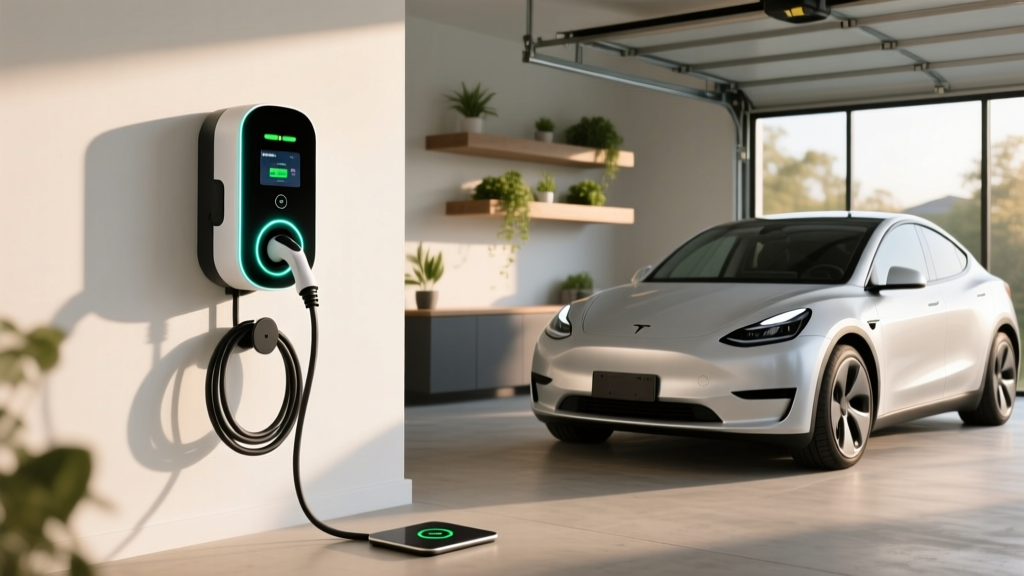
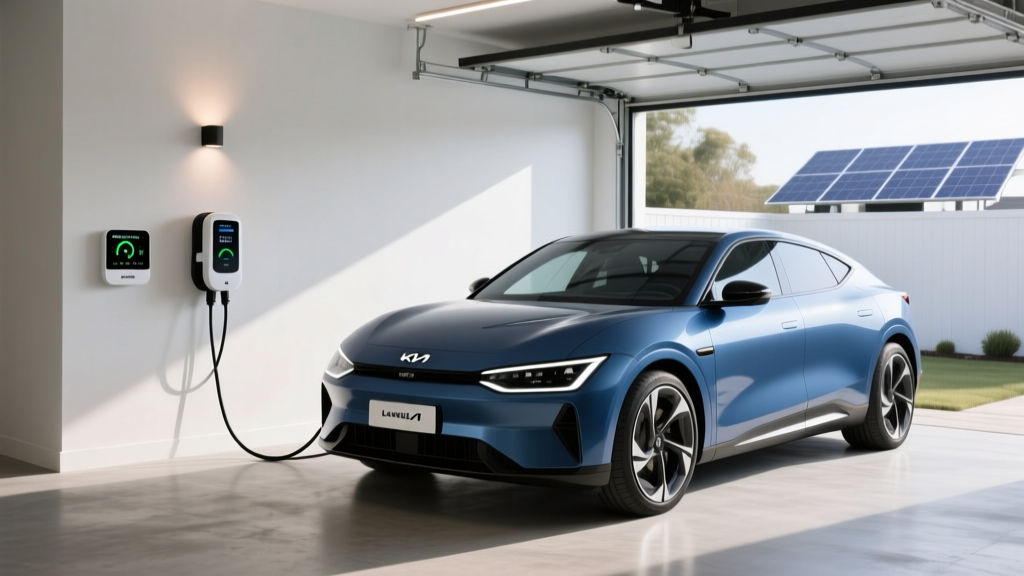
Most Kia EV owners will install a Level 2 home charger on a dedicated 240V circuit. The EV6 and EV9 accept up to 10.9 kW on Level 2, which requires a 48-amp circuit (60-amp breaker, per NEC 125% continuous-load rule). The Niro EV accepts 11 kW, requiring a similar setup.
| Item | Typical Cost Range | Notes |
|---|---|---|
| Level 2 Charger (Equipment) | $350–$700 | Smart Wi-Fi chargers; 32A–48A output |
| Electrical Permit | $50–$200 | Varies by municipality |
| Electrician Labor (standard install) | $500–$1,500 | Short run from panel to garage, no panel upgrade |
| Electrical Panel Upgrade (if needed) | $1,500–$3,500 | 100A → 200A service; older homes often need this |
| Total (no panel upgrade) | $900–$2,400 | Most newer homes with 200A service |
| Total (with panel upgrade) | $2,400–$5,900 | Homes built before 1990 or with high existing loads |
Panel upgrade gotcha: If your home has a 100-amp main panel and you already run electric HVAC, an electric dryer, and an electric range, adding a 48-amp EV circuit may exceed your panel's capacity. A licensed electrician will perform a load calculation per NEC Article 220. Budget for this assessment ($150-$300) before committing to a charger purchase.
Safety and Code Considerations
- Dedicated circuit: EV chargers must be on their own breaker — never shared with other appliances.
- GFCI protection: Required for outdoor installations per NEC 2023/2026; many indoor jurisdictions now require it as well.
- NEMA 14-50 vs hardwired: A NEMA 14-50 outlet offers portability but requires a GFCI breaker ($80-$150 extra). Hardwired installations skip the outlet, reducing failure points and often lowering permit scrutiny.
- Outdoor rating: If mounting outside, ensure the charger carries a NEMA 4 or IP65 rating. All recommended models below qualify.
Which Connector Does My Kia EV Use? Compatibility and Adapter Needs
As of the 2025 model year, Kia transitioned all new EVs to the NACS (North American Charging Standard) port — the Tesla-designed connector now adopted industry-wide. If you purchase a 2025 or 2026 Kia EV6, EV9, or Niro EV, it will ship with a NACS port, granting native access to Tesla Superchargers (15,000+ stalls in the US).
| Connector | Kia Model Years | Networks Supported | Adapter Needed? |
|---|---|---|---|
| NACS (native) | 2025+ EV6, EV9, Niro EV | Tesla Supercharger, Electrify America (new stalls), EVgo, most new public chargers | None for NACS stations; CCS1 adapter (~$200) for legacy CCS chargers |
| CCS1 (legacy) | 2022–2024 EV6, 2024 EV9, 2023–2024 Niro EV | Electrify America, EVgo, ChargePoint, most non-Tesla networks | NACS-to-CCS1 adapter (~$200–$250) for Tesla Superchargers |
| CHAdeMO | Not used on any current Kia EV | Nissan Leaf, older Mitsubishi | N/A — no adapter exists for CHAdeMO-to-NACS DC charging |
Home charger connector: All Level 2 home chargers use a J1772 plug (AC charging), which connects to your Kia's AC inlet regardless of whether the DC port is NACS or CCS1. The NACS port on 2025+ Kias includes a built-in J1772 adapter for Level 2 compatibility. For older CCS1 Kias, the CCS port natively accepts J1772 for AC charging.
Level 2 Charger Recommendations for Kia EVs
These chargers pair well with Kia's 10.9 kW onboard charger. Each is UL-listed, Wi-Fi enabled for scheduling and monitoring, and rated for indoor/outdoor use.
Emporia Vue Level 2 (Best Value)
- Power: 48A / 11.5 kW (240V)
- Connector: J1772 (NACS adapter included)
- Cable: 24 ft
- Smart features: Wi-Fi scheduling, solar integration, energy monitoring via Emporia app
- Price: ~$399
- Best for: Budget-conscious Kia owners who want full app control
ChargePoint Home Flex (Most Versatile)
- Power: Configurable 16A–50A / up to 12 kW (240V)
- Connector: J1772 (NACS cable available separately)
- Cable: 23 ft
- Smart features: Wi-Fi, Alexa integration, amperage adjustment via app (no electrician revisit)
- Price: ~$549
- Best for: Homes with limited panel capacity — dial down to 32A if needed
Wallbox Pulsar Plus (Compact & Powerful)
- Power: 48A / 11.5 kW (240V)
- Connector: J1772 (NACS version available)
- Cable: 25 ft
- Smart features: Wi-Fi + Bluetooth, load sharing (two chargers on one circuit), compact form factor
- Price: ~$599
- Best for: Two-EV households, tight garage spaces
Cost to Charge a Kia EV Per Mile vs. Gasoline
Charging economics depend heavily on where and when you plug in. Here's a realistic cost breakdown using the EV6 AWD (282 mi EPA, ~3.4 mi/kWh efficiency) as the baseline:
| Scenario | Rate ($/kWh) | Cost to Add 200 mi | Cost Per Mile |
|---|---|---|---|
| Home (off-peak utility rate) | $0.12 | $7.06 | $0.035 |
| Home (standard residential avg) | $0.16 | $9.41 | $0.047 |
| Public Level 2 (ChargePoint, workplace) | $0.25–$0.35 | $14.70–$20.59 | $0.074–$0.103 |
| DC Fast (Electrify America / EVgo) | $0.38–$0.55 | $22.35–$32.35 | $0.112–$0.162 |
| Tesla Supercharger (NACS Kia) | $0.28–$0.36 | $16.47–$21.18 | $0.082–$0.106 |
| Gasoline equivalent (25 MPG, $3.40/gal) | — | $27.20 | $0.136 |
Home charging at off-peak rates delivers a ~75% fuel cost reduction vs. a comparable gas SUV. Even DC fast charging on road trips undercuts gasoline on a per-mile basis at most current rates. The break-even point where DC fast charging costs more than gas occurs around $0.50/kWh — which some urban Electrify America stations now approach during peak hours. Plan road-trip charging around networks like Tesla Supercharger (if your Kia has NACS) or EVgo's subscription plans ($4.99/mo for reduced per-kWh rates) to keep costs low. Source: US EIA average electricity rates and fueleconomy.gov.
Federal Tax Credit and Home Charger Incentives
Under current IRS §30D rules, Kia EVs face a complex eligibility picture. The EV6 and EV9 may qualify for up to $7,500 in federal tax credits, but eligibility hinges on battery critical-mineral sourcing, buyer income caps ($150K single / $300K joint), and MSRP limits ($55K for sedans, $80K for SUVs). The EV9 AWD starts at $59,900, which falls under the SUV cap, but higher trims (GT-Line, Land) can exceed $70K and remain eligible as SUVs. The point-of-sale transfer option allows dealers to apply the credit as an immediate price reduction if eligibility is confirmed.
- MSRP cap: $80,000 for SUVs (EV9, EV6 GT-Line AWD classified as SUV); $55,000 for sedans/wagons
- Income cap: $150,000 (single), $225,000 (head of household), $300,000 (joint)
- Battery sourcing: Critical minerals and battery components must meet phased-in domestic/free-trade-partner thresholds — check IRS §30D guidance for current-year percentages
- Home charger credit: §30C offers up to $1,000 for residential charger installation in qualifying census tracts — verify your address eligibility
Frequently Asked Questions
How much does it cost to install a home EV charger for a Kia?
A standard Level 2 installation (48A, 240V, no panel upgrade) runs $900–$2,400 total, including the charger ($350–$700), electrician labor ($500–$1,500), and permit ($50–$200). If your home needs a 100A-to-200A panel upgrade, add $1,500–$3,500. Always get a load calculation from a licensed electrician before purchasing equipment.
How fast will each charging level add range to my Kia EV?
Level 1 (120V): 3–5 miles per hour — only practical for overnight top-offs or PHEVs. Level 2 (240V, 48A): roughly 32–37 miles per hour on the EV6 — a full overnight charge from 20% to 100%. DC fast charging (800V, EV6/EV9): up to 180+ miles in 18 minutes on a 350 kW station, though real-world rates taper above 50% SoC.
Which connector does my Kia EV use and what chargers are compatible?
2025 and newer Kia EVs use the NACS connector, giving native access to Tesla Superchargers and new NACS-equipped public stations. 2022–2024 models use CCS1, compatible with Electrify America, EVgo, and most non-Tesla networks. A CCS1-to-NACS adapter (~$200–$250 from Kia or third-party) bridges the gap for older models. All Level 2 home chargers use J1772, which works with both port types.
How much does charging a Kia EV cost per mile compared to gas?
At home on off-peak rates ($0.12/kWh), an EV6 costs about $0.035 per mile — roughly 75% cheaper than a 25 MPG gas SUV at $3.40/gallon ($0.136/mi). Public DC fast charging at $0.40/kWh raises the cost to ~$0.12/mile, still competitive with gas. The biggest savings come from consistent home charging; heavy reliance on public DC fast charging narrows the economic advantage.
What electrical upgrades might my home need for a Kia EV charger?
Homes with a 200-amp panel and moderate existing loads typically need only a new 60-amp double-pole breaker and a wire run to the garage ($500–$1,500 labor). Homes with 100-amp service, electric heat, and an electric range may require a full panel upgrade to 200A ($1,500–$3,500). Some utilities offer load-management devices that let you add an EV circuit without upgrading the panel by temporarily reducing charger power when other appliances cycle on — ask your electrician about options like the Emporia load-management module.
Does the Kia EV6 really charge from 10-80% in 18 minutes?
Yes, but only at a 350 kW-capable DC fast charger with the battery preconditioned (warmed to optimal temperature via navigation routing or the Kia Connect app). At a 150 kW station, expect 22–25 minutes. In cold weather without preconditioning, charge rates can drop below 100 kW, extending the 10-80% window to 35+ minutes. The EV9's larger 100 kWh battery takes roughly 24 minutes under the same ideal conditions. The Niro EV, limited to 77 kW peak DC, needs about 43 minutes regardless of station capacity.