Why the JuiceBox Rescue Untether EV Charger Matters in 2026
If you own or are shopping for a JuiceBox Rescue untether EV charger, you are likely navigating a pivotal shift in the home charging market. Following the well-documented Enel X Way North America service disruption in late 2024, the JuiceBox brand underwent a significant transition. The "Rescue" program and subsequent untethered (cordless) JuiceBox models represent a specific path forward for owners seeking reliable Level 2 charging without being locked into a proprietary cable or defunct software ecosystem.
Untethered Level 2 chargers — units that provide a J1772 or NACS receptacle rather than an attached cable — offer flexibility for households with mixed EV fleets or owners who prefer to use their vehicle's OEM cable. This guide breaks down what the JuiceBox Rescue untether EV chargers deliver, how they stack up against current 2026 alternatives, and what you need to know about installation, cost, and electrical requirements.
Charging Levels Explained: Speeds, Power, and Range Added
Before evaluating any specific charger, it is essential to understand the three charging tiers and what they deliver in real-world terms. Remember: kW (kilowatts) measures power — the rate of energy delivery — while kWh (kilowatt-hours) measures energy — the total amount stored in your battery. A 48-amp Level 2 charger delivers up to 11.5 kW of power; a 75 kWh battery holds 75 kWh of energy.
| Level | Voltage | Max Power (kW) | Miles of Range Added Per Hour | Typical Use Case |
|---|---|---|---|---|
| Level 1 | 120V AC | 1.4–1.9 kW | 3–5 miles | Overnight trickle; PHEV top-ups |
| Level 2 | 240V AC | 3.3–19.2 kW | 12–75 miles | Home daily charging; destination |
| DC Fast (Level 3) | 400–800V DC | 50–350+ kW | 150–1,000+ miles (equivalent) | Road trips; commercial fleets |
For a typical 75 kWh battery (e.g., Tesla Model Y, Hyundai Ioniq 5), a 48-amp (11.5 kW) Level 2 charger like the JuiceBox 48 adds roughly 35–40 miles of range per hour. A full 10–80% charge takes approximately 5–6 hours. On a DC fast charger rated at 250 kW, that same 10–80% session can complete in 18–25 minutes, though charge-curve taper above 80% SoC significantly slows the final 20%.
Home Installation: Electrical Requirements and Cost Breakdown
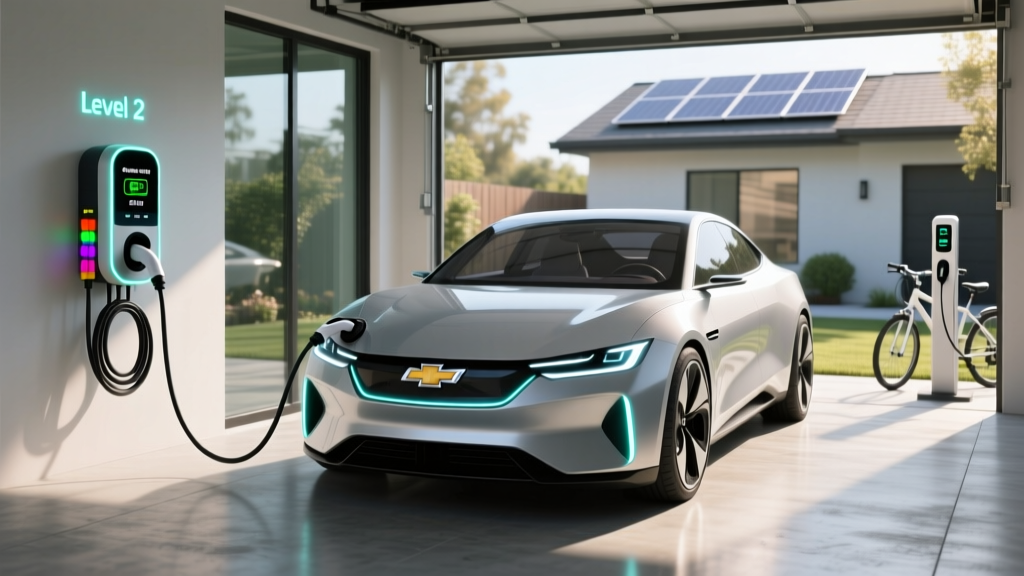
Installing any Level 2 charger — including a JuiceBox Rescue untether model — requires a dedicated 240V circuit. The National Electrical Code (NEC) mandates that continuous loads (EV charging qualifies) not exceed 80% of a circuit's rated capacity. This means a 48-amp charger requires a 60-amp breaker and circuit; a 40-amp charger needs a 50-amp breaker.
Typical Home Level 2 Charger Installation Cost (2026)
| Component | Cost Range | Notes |
|---|---|---|
| Level 2 Charger Equipment (untethered) | $350–$750 | Varies by power output, smart features |
| Electrician Labor | $500–$2,000 | Depends on panel proximity, conduit run length |
| Electrical Permit | $50–$250 | Required in most jurisdictions; varies by locality |
| Panel Upgrade (if needed) | $1,500–$4,000 | Common in homes with 100A service or full panels |
| Total (no panel upgrade) | $900–$3,000 | Most installations fall in this range |
| Total (with panel upgrade) | $2,400–$7,000 | Older homes frequently require this |
Panel upgrade reality check: Homes built before 2000 often have 100-amp or 150-amp electrical panels. Adding a 60-amp EV circuit may push total load beyond safe capacity, necessitating a 200-amp panel upgrade. This is the single largest variable in installation cost and one many online guides understate. Always have a licensed electrician perform a load calculation before committing to equipment.
Safety and Code Considerations
- Dedicated circuit: Your Level 2 charger must have its own breaker — no sharing with dryers, ovens, or HVAC.
- GFCI protection: NEC 2020 and later require GFCI protection for EV charging circuits in garages and all outdoor locations. Many modern chargers include built-in GFCI; verify compatibility with your breaker type to avoid nuisance tripping.
- Outdoor rating: If mounting outside, ensure the charger carries a NEMA 4 or IP65 rating for weather resistance. Untethered models with exposed receptacles need a weatherproof cover when not in use.
- Hardwired vs. plug-in: Chargers above 40 amps typically require hardwiring (no NEMA 14-50 receptacle). Hardwired installations are more reliable and eliminate a common failure point, but make the charger non-portable.
Connector Compatibility: NACS, CCS1, and CHAdeMO
The connector landscape in 2026 has consolidated significantly around NACS (North American Charging Standard, originally Tesla's proprietary connector) and CCS1 (Combined Charging System). CHAdeMO remains on legacy Nissan Leaf and Mitsubishi models but is effectively discontinued for new vehicles.
| Connector | Brands Using It | Adapter Needed? |
|---|---|---|
| NACS (J3400) | Tesla, Ford, GM, Rivian, Volvo, Polestar, Hyundai/Kia (2025+), BMW, Mercedes, Nissan (new models) | Most non-Tesla NACS vehicles include CCS-to-NACS adapter for public CCS stations |
| CCS1 | Legacy VW ID.4, older Hyundai/Kia, Audi e-tron (pre-2025), Stellantis | NACS-to-CCS adapter needed for Tesla Superchargers |
| CHAdeMO | Nissan Leaf (all years), Mitsubishi Outlander PHEV | No practical adapter; use CHAdeMO public stations |
| J1772 (Level 2 AC) | All non-Tesla EVs for AC charging | Tesla owners use included J1772-to-NACS mobile adapter |
Untethered JuiceBox Rescue chargers typically ship with a J1772 receptacle. For NACS-equipped vehicles, you will use your car's OEM charging cable (which has a J1772 connector on the wall end and NACS on the vehicle end) or a standalone J1772-to-NACS adapter. This flexibility is the primary advantage of untethered designs: one wall unit serves any EV you plug into it.
Equipment Comparison: JuiceBox Rescue Untether vs. 2026 Alternatives
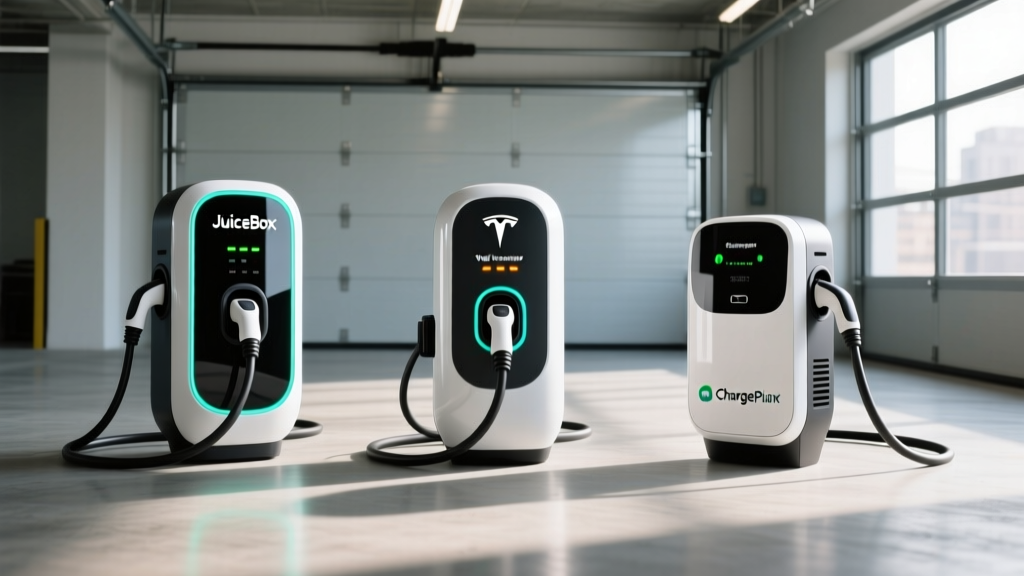
The JuiceBox Rescue untether lineup emerged from Enel X Way's transition, with hardware support assumed by new partners. Below is how these units compare to leading 2026 Level 2 chargers.
JuiceBox 48 Untethered (Rescue)
- Power Output: 11.5 kW (48A, 240V)
- Connector: J1772 receptacle (untethered)
- Cable: User supplies OEM or aftermarket cable (typically 18–25 ft)
- Smart Features: Wi-Fi, app-based scheduling, energy tracking (service continuity varies post-transition)
- Price: ~$449–$549 (unit only)
- Warranty: 3 years
ChargePoint Home Flex (NACS or J1772)
- Power Output: Up to 12 kW (50A, 240V) — adjustable via DIP switch
- Connector: Available as NACS-attached cable or J1772-attached cable (not untethered)
- Cable Length: 24 ft attached
- Smart Features: Wi-Fi, Alexa, app scheduling, utility demand-response integration
- Price: ~$599–$699
- Warranty: 3 years
Emporia Level 2 EV Charger (Untethered Option)
- Power Output: 11.5 kW (48A, 240V)
- Connector: J1772 receptacle (untethered) or attached cable options
- Cable Length: 24 ft (attached version)
- Smart Features: Wi-Fi, solar integration with Emporia Vue energy monitor, load management
- Price: ~$399–$499
- Warranty: 2 years
Tesla Wall Connector (Gen 3)
- Power Output: 11.5 kW (48A, 240V)
- Connector: NACS attached cable; includes J1772 adapter for non-Tesla vehicles
- Cable Length: 24 ft
- Smart Features: Wi-Fi, OTA updates, Power-Share (load-split between two units), vehicle integration
- Price: ~$475
- Warranty: 4 years
The JuiceBox 48 Untethered Rescue model holds its own on power output and price. Its primary risk in 2026 is software and cloud-service continuity following the Enel X Way transition. If app-based scheduling and remote monitoring are critical to your workflow — especially for time-of-use rate optimization — verify current cloud-service status before purchasing.
Cost to Charge: Home vs. Public vs. Gas Per Mile
Charging economics depend entirely on your local electricity rates and whether you can charge at home. Below are representative 2026 scenarios for a mid-size EV achieving 3.5 miles per kWh (roughly 100 MPGe combined, typical of a Model Y or Ioniq 5).
| Scenario | Cost per kWh | Cost Per Mile (at 3.5 mi/kWh) | Notes |
|---|---|---|---|
| Home — Off-Peak TOU Rate | $0.08–$0.12 | $0.023–$0.034 | Best-case; schedule charging for 10pm–6am |
| Home — Standard Residential Rate | $0.14–$0.18 | $0.040–$0.051 | Average US residential electricity |
| Public Level 2 (ChargePoint, EVgo) | $0.25–$0.49 | $0.071–$0.140 | Varies widely by location and network |
| DC Fast Charging (Electrify America, Tesla) | $0.35–$0.55 | $0.100–$0.157 | Road-trip rates; idle fees may apply |
| Gasoline Vehicle (28 MPG combined, $3.50/gal) | — | $0.125 | US average regular unleaded, 2026 |
Home charging on off-peak rates delivers fuel costs roughly 75–80% lower than a comparable gasoline vehicle. Even at standard residential rates, home-charged EVs cost 50–60% less per mile. However, exclusive reliance on public DC fast charging can equal or exceed gasoline costs — a critical consideration for apartment dwellers or those without home charging access.
Charging Time Examples: 10–80% by Battery Size
Charge time depends on battery capacity (kWh), the charger's power output (kW), and the vehicle's onboard charger limit. Most EVs accept the full 11.5 kW from a 48-amp Level 2 charger, but some PHEVs and older EVs cap at 6.6 kW or 7.2 kW internally.
| Battery Size (kWh Usable) | Example Vehicle | 10–80% on 48A (11.5 kW) Level 2 | 10–80% on 250 kW DC Fast |
|---|---|---|---|
| 15 kWh | Toyota RAV4 Prime (PHEV) | ~1.5 hours | Not DC-fast capable |
| 40 kWh | Nissan Leaf (base) | ~3 hours | ~45 min (50 kW CHAdeMO max) |
| 65 kWh | VW ID.4 (Standard) | ~4.5 hours | ~28 min |
| 75 kWh | Tesla Model Y / Hyundai Ioniq 5 | ~5 hours | ~18–22 min |
| 100 kWh | Tesla Model S / Ford F-150 Lightning (Extended) | ~6.5 hours | ~25–35 min |
These Level 2 times assume you start at 10% State of Charge (SoC). In daily use, most EV owners charge from 30–60% overnight, which completes in 2–3 hours on a 48-amp unit — well within a typical sleep cycle.
Federal Tax Credit: §30D and Home Charger Incentives
Under current IRS rules, the Alternative Fuel Vehicle Refueling Property Credit provides up to $1,000 for residential EV charger installation (30% of equipment + labor, capped at $1,000). This credit is separate from the §30D vehicle purchase credit and has its own eligibility requirements, including that the installation must be in an eligible census tract (typically low-income or non-urban areas).
Key caveats:
- The credit is non-refundable — it can reduce your tax liability to zero but won't generate a refund beyond that.
- Eligibility depends on your installation address meeting census-tract criteria as defined by the IRS. Check the IRS guidance page for the current mapping tool.
- Many states and utilities offer additional rebates ($200–$1,000+) for Level 2 charger installation — check your local utility and AFDC incentive database.
- Tax rules change frequently. Consult a tax professional before relying on credit eligibility.
Real-World Charging Insights: What the Spec Sheet Doesn't Tell You
After years of daily EV ownership and testing dozens of chargers, here are the practical realities that spec sheets omit:
Charge-Curve Taper Is Real
DC fast chargers advertise "up to 250 kW," but no EV sustains peak power for the entire session. A typical charge curve delivers peak kW from roughly 10–40% SoC, then tapers to 60–70% of peak through 60%, and drops sharply above 80%. This is why 10–80% times are the industry-standard benchmark — the final 20% can take as long as the first 70%.
Cold Weather Reduces Charging Speed
Lithium-ion batteries accept charge more slowly when cold. In sub-freezing temperatures, expect Level 2 charging speeds to remain normal (the onboard charger manages this), but DC fast charging can take 20–40% longer unless your vehicle has active battery preconditioning. Tesla, Hyundai/Kia (E-GMP platform), and GM (Ultium) vehicles precondition automatically when a charger is set as a navigation destination.
Untethered Cable Management
The appeal of untethered chargers is flexibility, but the trade-off is cable management. You will need to store, handle, and occasionally replace your charging cable. OEM cables typically run $200–$350 for a 25-foot J1772 or NACS unit. Budget for a cable holster or hook on your wall to keep things tidy and prevent connector damage.
Frequently Asked Questions
How much does it cost to install a home EV charger?
Most Level 2 home charger installations cost between $900 and $3,000 total, including equipment ($350–$750), electrician labor ($500–$2,000), and permit fees ($50–$250). If your home requires a 200-amp panel upgrade — common in pre-2000 construction — add $1,500–$4,000. Always get a load calculation from a licensed electrician before purchasing equipment.
How fast will each charging level add range?
Level 1 (120V) adds 3–5 miles of range per hour. Level 2 (240V, 48A) adds 35–40 miles per hour for most EVs. DC fast charging adds 150–1,000+ equivalent miles per hour depending on peak kW, but sessions are typically measured in 10–80% completion time (18–35 minutes for most 2026 EVs at 150–250 kW stations).
Which connector/charger is compatible with my EV?
For Level 2 home charging, all non-Tesla EVs use J1772; Tesla vehicles use NACS but include a J1772 adapter. Untethered chargers like the JuiceBox Rescue use a J1772 receptacle, so you plug in your vehicle's own cable. For 2026, most new EVs from Ford, GM, Hyundai/Kia, Rivian, and others have switched to NACS — check your vehicle's charge port before selecting a tethered charger.
How much does charging cost per mile vs. gas?
Home charging on off-peak electricity costs $0.02–$0.05 per mile — roughly 60–80% less than gasoline at $3.50/gallon and 28 MPG combined ($0.125/mile). Public DC fast charging at $0.35–$0.55/kWh costs $0.10–$0.16 per mile, which can match or exceed gasoline costs. Home access is the primary economic driver of EV ownership savings.
What electrical upgrades might I need?
The most common upgrade is a panel capacity increase from 100A or 150A to 200A, which costs $1,500–$4,000. You will also need a dedicated 240V circuit with appropriate breaker size (50A for 40A chargers, 60A for 48A chargers). Older homes may need new conduit runs, grounding upgrades, or GFCI breaker compatibility checks. A licensed electrician's load calculation will identify all requirements.
Is the JuiceBox Rescue untether charger still supported in 2026?
Following the Enel X Way North America transition, JuiceBox hardware has continued under new ownership and service partnerships. The "Rescue" program addressed warranty and connectivity continuity for existing owners. Before purchasing new, verify current firmware update availability and cloud-service status with the seller or current JuiceBox support channels. Hardware quality remains solid — the risk is primarily software-side.
Can I use the JuiceBox Rescue untether with a Tesla or NACS vehicle?
Yes. Untethered JuiceBox units provide a standard J1772 receptacle. Tesla vehicles include a J1772-to-NACS adapter in the glovebox (or you can purchase one separately). For 2025+ NACS-native vehicles from Ford, GM, and others, the OEM charging cable typically has a J1772 wall-end connector, so you plug directly into the JuiceBox without an additional adapter.
Verdict: Is the JuiceBox Rescue Untether Right for You?
The JuiceBox 48 Untethered Rescue charger delivers competitive 11.5 kW output, flexible J1772 receptacle design, and a reasonable price point around $449–$549. It is a practical choice for multi-EV households, mixed-fleet garages, and owners who prefer using their vehicle's OEM cable.
Choose the JuiceBox Rescue untether if you value connector flexibility, already own quality J1772 or NACS cables, and have verified current software support. Consider the ChargePoint Home Flex or Tesla Wall Connector if you prefer an integrated attached-cable solution with more predictable long-term software support. Either way, budget realistically for installation — the charger itself is the smallest line item in your total home-charging investment.