Why the JuiceBox Still Anchors Home EV Charging in 2026
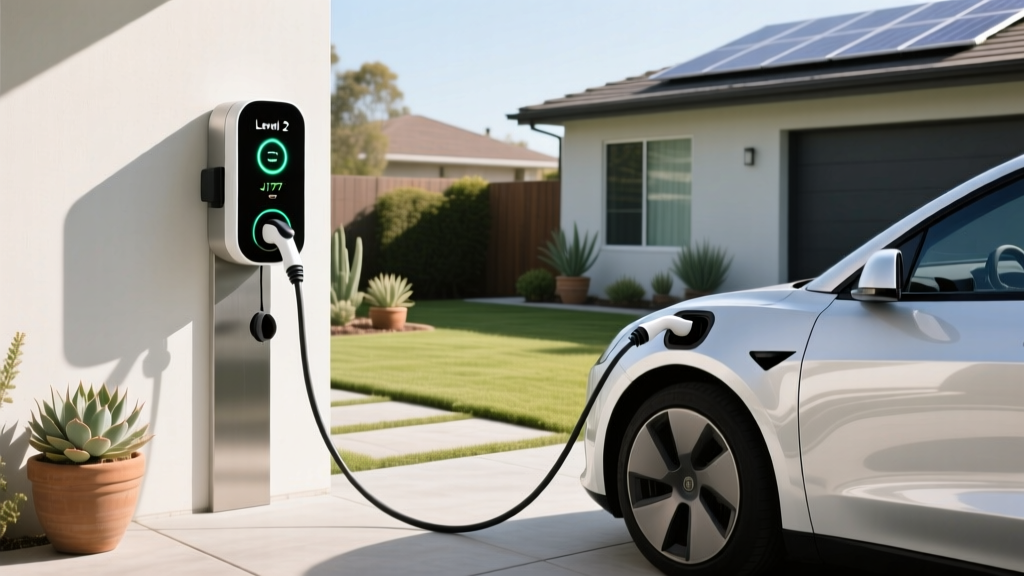
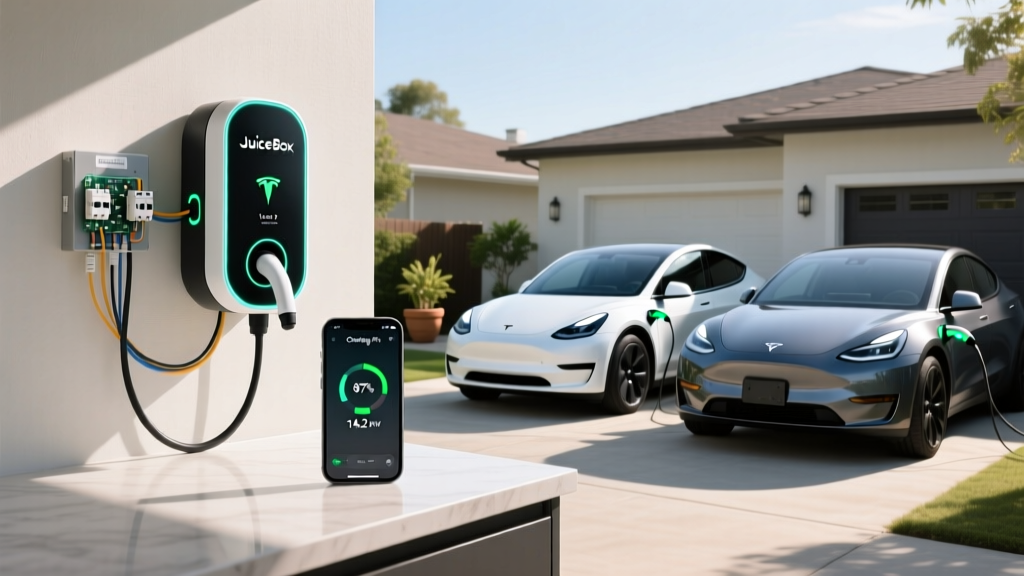
Enel's JuiceBox line has been a staple of Level 2 home charging for over a decade, and the current-generation JuiceBox Pro 48 and JuiceBox Pro 40 remain among the most widely installed Wi-Fi-enabled EV chargers in North America. Whether you're pairing one with a new Tesla Model Y, a Hyundai Ioniq 5, or a Ford F-150 Lightning, the fundamentals of getting a JuiceBox on your wall — and doing it safely and cost-effectively — haven't changed much, even as the connector landscape has shifted dramatically toward the North American Charging Standard (NACS).
This guide walks through everything a buyer needs to know: electrical requirements, real installation costs, connector compatibility in a post-CCS world, charging speeds by battery size, and how the JuiceBox compares to rivals like the ChargePoint Home Flex and Tesla Wall Connector.
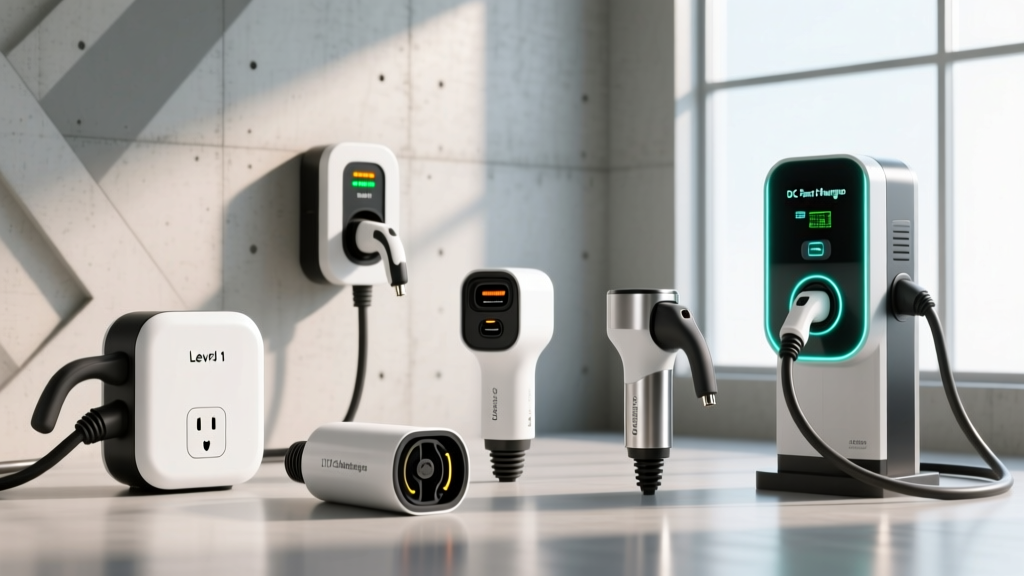
Charging Levels Explained: kW, Miles per Hour, and What Your JuiceBox Actually Delivers
The single most important distinction in EV charging is between kW (kilowatts — the rate of power flow, like water pressure from a hose) and kWh (kilowatt-hours — the total energy delivered, like gallons in a bucket). Your JuiceBox is rated in kW; your car's battery is rated in kWh. A 48-amp JuiceBox on a 240V circuit delivers up to 11.5 kW of power. If your battery holds 77 kWh usable, a full 0–100% charge at sustained 11.5 kW takes roughly 6.7 hours — though real sessions are shorter because you rarely charge from zero.
| Level | Voltage | Max Power (kW) | Miles of Range Added per Hour | Typical Use |
|---|---|---|---|---|
| Level 1 | 120V AC | 1.2–1.9 kW | 3–5 mi/hr | Overnight trickle; PHEVs, low-mileage drivers |
| Level 2 (JuiceBox 40) | 240V AC | 9.6 kW | 25–35 mi/hr | Standard home charging; most EVs |
| Level 2 (JuiceBox 48) | 240V AC | 11.5 kW | 30–42 mi/hr | Faster home charging; large-battery EVs |
| DC Fast Charging | 400–800V DC | 50–350 kW | 150–1,200+ mi/hr | Road trips; public stations |
The "miles per hour" column varies by vehicle efficiency. A Hyundai Ioniq 5 (averaging roughly 3.5 mi/kWh per EPA data) gains about 40 miles of range per hour on an 11.5 kW JuiceBox. A heavier, less efficient Ford F-150 Lightning (roughly 2.0 mi/kWh) gains closer to 23 miles per hour on the same unit.
Home Installation: Electrical Requirements, Panel Upgrades, and True Costs
The JuiceBox Pro 48 requires a dedicated 60-amp circuit (the National Electrical Code mandates that continuous loads — which EV charging qualifies as — not exceed 80% of a circuit's rating, so 48A continuous needs a 60A breaker). The JuiceBox Pro 40 requires a dedicated 50-amp circuit. Both units need 240V split-phase power, the same voltage your electric dryer or oven uses.
What Your Electrician Will Evaluate
- Panel capacity: Most modern homes have 200-amp service panels. Adding a 60A EV circuit is usually straightforward. Older homes with 100A panels may need a service upgrade ($1,500–$3,500) or a smart load-management device like the Emporia Vue with automatic circuit sharing.
- Wire gauge: A 60A circuit requires 6 AWG copper wire (or 4 AWG aluminum). Run length affects cost — longer runs mean more wire and potentially larger conduit.
- Outlet vs. hardwired: The JuiceBox Pro 48 is available in both NEMA 14-50 plug-in and hardwired configurations. Hardwired installations avoid the GFCI breaker requirement that the 2023 NEC added for 14-50 receptacles in garages, saving $50–$120 on the breaker alone.
- Permit: Most jurisdictions require an electrical permit for a new 240V circuit. Costs range from $25 to $150 depending on your municipality.
| Item | Low-End | Typical | High-End (Complex Run) |
|---|---|---|---|
| JuiceBox Pro 48 unit | $599 | $599 | $599 |
| JuiceBox Pro 40 unit | $499 | $499 | $499 |
| Electrician labor (2–4 hrs) | $300 | $600 | $1,200 |
| Wire, conduit, breaker | $100 | $250 | $600 |
| Permit | $25 | $75 | $150 |
| Panel upgrade (if needed) | $0 | $0 | $2,500 |
| Total (no panel upgrade) | $1,024 | $1,524 | $2,549 |
| Total (with panel upgrade) | $2,524 | $3,024 | $5,049 |
Connector Compatibility: NACS, CCS, and What Works With Your EV
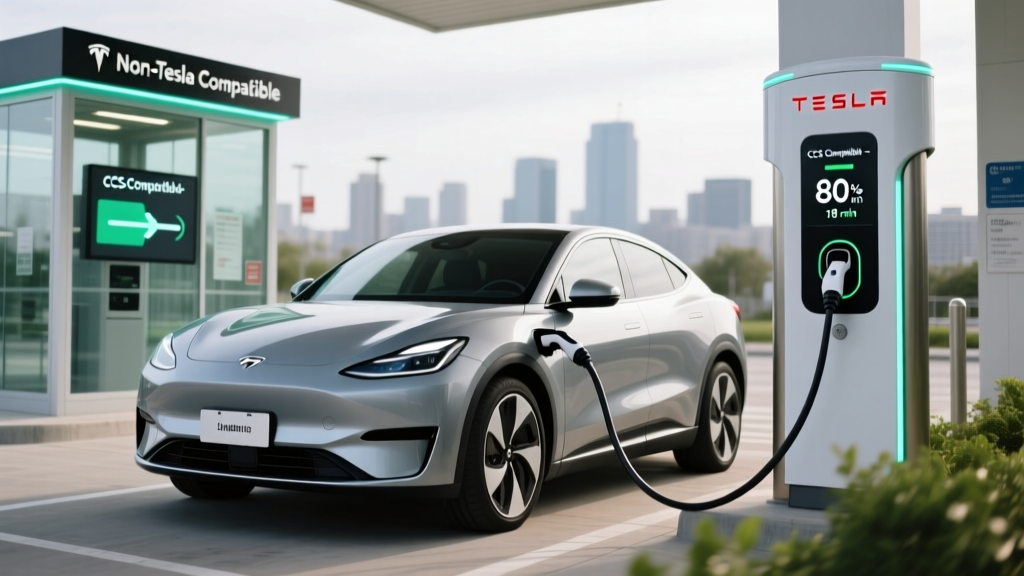
The connector landscape has shifted significantly since 2023, when Tesla opened its Supercharger network and most major automakers committed to the NACS (North American Charging Standard) plug. As of the 2026 model year, nearly every new EV sold in the US ships with a NACS charge port — including vehicles from Ford, GM, Rivian, Hyundai, Kia, and Volvo. The legacy CCS1 connector is still present on some 2023–2025 models and remains supported at public stations, but it's effectively a legacy standard for new vehicles.
| Connector | Brands Using It (2026) | JuiceBox Compatibility |
|---|---|---|
| NACS (J3400) | Tesla, Ford, GM, Rivian, Hyundai, Kia, Volvo, Polestar, BMW (new) | JuiceBox Pro 48 NACS edition (native); CCS models require NACS-to-CCS adapter |
| CCS1 | VW (ID.4 through 2025), some 2023–2025 Hyundai/Kia/Stellantis models | JuiceBox Pro 48 CCS edition (native); NACS vehicles require adapter |
| CHAdeMO | Nissan Leaf (legacy, discontinued after 2025) | Not available on JuiceBox; use dedicated CHAdeMO charger |
Enel currently sells the JuiceBox Pro 48 in both NACS and CCS1 configurations. If you're buying in 2026 for a new NACS-equipped vehicle, order the NACS version. If you own a 2023–2025 Ioniq 5 or EV6 with a CCS port, get the CCS version. A NACS-to-CCS adapter (such as the Lectron or A2Z adapter, typically $150–$250) lets you use either charger type, but adds bulk and a slight efficiency loss at the connection point.
Charging Time by Battery Size: What to Expect Overnight
Most EV owners charge from roughly 20% to 80% State of Charge (SoC) at home — the "daily sweet spot" that balances convenience with battery longevity (especially for NMC chemistry batteries, which degrade faster when held at 100% for extended periods). Here's what that looks like on a JuiceBox Pro 48 (11.5 kW) versus a JuiceBox Pro 40 (9.6 kW):
| Vehicle | Battery (kWh usable) | 60% Charge Needed (kWh) | JuiceBox 48 (11.5 kW) | JuiceBox 40 (9.6 kW) |
|---|---|---|---|---|
| Tesla Model Y LR (2026) | 75 kWh | 45 kWh | ~3 hr 55 min | ~4 hr 41 min |
| Hyundai Ioniq 5 (2026) | 81 kWh | 48.6 kWh | ~4 hr 14 min | ~5 hr 4 min |
| Ford F-150 Lightning Ext. (2026) | 131 kWh | 78.6 kWh | ~6 hr 50 min | ~8 hr 11 min |
| Chevrolet Equinox EV (2026) | 85 kWh | 51 kWh | ~4 hr 26 min | ~5 hr 19 min |
| Toyota RAV4 PHEV (2026) | 18.1 kWh | 10.9 kWh | ~57 min | ~1 hr 8 min |
For most daily drivers covering 30–50 miles, a JuiceBox Pro 40 replenishes a full day's driving in under two hours. The Pro 48's advantage shows on road-trip recovery nights or for high-mileage commuters who arrive home at 20% SoC and need a full battery by morning.
Cost to Charge: JuiceBox at Home vs. Public vs. Gas
Home charging on a JuiceBox is almost always the cheapest way to fuel an EV. The exact cost depends on your utility rate and whether you can access time-of-use (TOU) off-peak pricing. The JuiceBox app supports scheduled charging, letting you set sessions to begin at 10 PM or midnight when rates drop.
| Scenario | Cost per kWh | Vehicle Efficiency | Cost per Mile |
|---|---|---|---|
| Home (off-peak TOU) | $0.08–$0.12 | 3.5 mi/kWh (Ioniq 5) | $0.023–$0.034 |
| Home (flat rate, US avg) | $0.16 | 3.5 mi/kWh | $0.046 |
| Home (off-peak, large SUV) | $0.10 | 2.0 mi/kWh (F-150 Lightning) | $0.050 |
| Public Level 2 (ChargePoint, etc.) | $0.25–$0.49 | 3.5 mi/kWh | $0.071–$0.140 |
| DC Fast Charging (EA, Tesla SC) | $0.32–$0.56 | 3.5 mi/kWh | $0.091–$0.160 |
| Gasoline (US avg $3.40/gal, 28 MPG) | — | 28 mi/gal | $0.121 |
At off-peak home rates, a JuiceBox delivers fuel at roughly one-quarter to one-fifth the per-mile cost of a 28-MPG gas vehicle. Even at flat-rate national average electricity prices, home EV charging costs less than half what gasoline does per mile. The savings shrink at public DC fast chargers, where pricing often matches or slightly exceeds gasoline on a per-mile basis — which is exactly why a reliable home JuiceBox setup is the financial backbone of EV ownership.
JuiceBox Pro 48 vs. Pro 40 vs. Competitors: Equipment Comparison
JuiceBox Pro 48 (NACS or CCS)
- Power: 11.5 kW (48A, 240V)
- Circuit required: 60A dedicated
- Cable length: 25 ft
- Smart features: Wi-Fi, app scheduling, energy tracking, Alexa integration, load sharing with second JuiceBox
- Connector: NACS or CCS1 (choose at purchase)
- Indoor/Outdoor: NEMA 4 rated (indoor and outdoor)
- Warranty: 3 years
- Price: ~$599
JuiceBox Pro 40 (NACS or CCS)
- Power: 9.6 kW (40A, 240V)
- Circuit required: 50A dedicated
- Cable length: 25 ft
- Smart features: Same as Pro 48
- Connector: NACS or CCS1
- Indoor/Outdoor: NEMA 4 rated
- Warranty: 3 years
- Price: ~$499
ChargePoint Home Flex (NACS)
- Power: Up to 12 kW (50A, adjustable down)
- Circuit required: 60A (at 50A setting)
- Cable length: 23 ft
- Smart features: Wi-Fi, app, Alexa, flexible amperage
- Connector: NACS or J1772
- Indoor/Outdoor: NEMA 4
- Warranty: 3 years
- Price: ~$649
Tesla Wall Connector (NACS)
- Power: 11.5 kW (48A)
- Circuit required: 60A dedicated
- Cable length: 24 ft
- Smart features: Wi-Fi, OTA updates, Power Sharing with up to 6 units
- Connector: NACS only
- Indoor/Outdoor: Indoor/outdoor rated
- Warranty: 4 years
- Price: ~$475
Verdict: The JuiceBox Pro 48's key advantage over the Tesla Wall Connector is CCS availability — if you own a non-Tesla EV with a CCS port, the JuiceBox is one of the few high-quality NACS-or-CCS smart chargers on the market. The ChargePoint Home Flex offers more amperage flexibility (you can dial it down to match a smaller circuit), but at a slightly higher price. If you drive exclusively Tesla/NACS vehicles and don't need app-based energy dashboards, the Tesla Wall Connector is hard to beat at $475 with a 4-year warranty.
Safety, Code Compliance, and Installation Best Practices
EV chargers draw sustained high current for hours — a duty cycle far more demanding than most household appliances. Cutting corners on installation is a fire risk. Here's what proper JuiceBox installation looks like per the 2023 NEC (adopted by most states as of 2026):
- Dedicated circuit: The JuiceBox must be on its own breaker — no sharing with other outlets or appliances.
- GFCI protection: If you install a NEMA 14-50 receptacle (plug-in JuiceBox), the 2023 NEC requires a GFCI breaker. Hardwired JuiceBox installations do not require GFCI protection, which is one reason many electricians prefer hardwiring.
- Outdoor rating: The JuiceBox is NEMA 4 rated, meaning it handles rain and dust. However, the connection point between the cable and your car should be sheltered from direct rain during charging sessions where possible.
- Cable management: Use the included cable holster. Don't let the cable rest on a garage floor where it can be driven over or tripped on — this degrades internal conductors over time.
- Utility rebates: Many utilities offer $200–$500 rebates for smart Level 2 charger installations. Check your local utility's EV program before purchasing — some require specific models or load-management features to qualify.
Federal and State Incentives for Home Charger Installation
The federal Alternative Fuel Vehicle Refueling Property Credit (IRS Form 8911) covers 30% of the cost of home EV charging equipment and installation, up to $1,000. However, this credit is subject to census-tract eligibility requirements — your home must be in a qualifying non-urban or low-income census tract to claim it. The IRS provides a lookup tool; check before assuming eligibility.
State-level incentives vary widely. California's utility programs, New York's NYSERDA rebates, and Colorado's Xcel Energy program have all offered $200–$1,000 toward charger equipment or installation. These change annually, so consult your state energy office or utility directly.
Frequently Asked Questions
How much does it cost to install a JuiceBox home EV charger?
A typical JuiceBox Pro 48 installation runs $1,024–$2,549 total when no panel upgrade is needed. That includes the $599 unit, $300–$1,200 in electrician labor, $100–$600 in materials (wire, conduit, breaker), and $25–$150 for a permit. If your home needs a 200A panel upgrade, add $1,500–$3,500.
How fast will each charging level add range to my EV?
Level 1 (120V) adds 3–5 miles per hour. The JuiceBox Pro 40 (Level 2, 9.6 kW) adds 25–35 miles per hour depending on vehicle efficiency. The JuiceBox Pro 48 (11.5 kW) adds 30–42 miles per hour. DC fast chargers at 150+ kW can add 150–1,200+ miles per hour, but are for public use only.
Which connector and JuiceBox model is compatible with my EV?
If your EV has a NACS port (most 2025+ models from Tesla, Ford, GM, Hyundai, Kia, Rivian), buy the JuiceBox Pro 48 NACS edition. If your EV has a CCS1 port (most 2023–2025 non-Tesla EVs), buy the CCS edition. CHAdeMO vehicles (Nissan Leaf) are not compatible with JuiceBox units. An adapter ($150–$250) can bridge between standards in a pinch.
How much does charging at home cost per mile compared to gas?
At off-peak home electricity rates ($0.08–$0.12/kWh), a typical EV costs $0.02–$0.05 per mile to charge on a JuiceBox. A 28-MPG gas car at $3.40/gallon costs about $0.12 per mile. Home EV charging is typically one-quarter to one-half the per-mile cost of gasoline.
What electrical upgrades might I need before installing a JuiceBox?
You'll need a dedicated 60A circuit (Pro 48) or 50A circuit (Pro 40) at 240V. If your electrical panel is already near capacity (common with 100A panels in older homes), you may need a panel upgrade to 200A ($1,500–$3,500) or a smart load-management device that shares capacity between the charger and other appliances. A licensed electrician should perform a load calculation before installation.
Can I use a JuiceBox outdoors?
Yes. The JuiceBox carries a NEMA 4 rating, which covers rain, splashing water, and dust. It's designed for both indoor garage and outdoor wall mounting. Just ensure the mounting surface is structurally sound and the electrical connection inside the wall is properly sealed.
Does the JuiceBox qualify for any tax credits?
The federal Alternative Fuel Vehicle Refueling Property Credit (30% up to $1,000 on equipment + installation) may apply, but only if your home is in a qualifying census tract per IRS guidelines. Many state and utility rebate programs also cover part of the cost — check with your local utility before purchasing.