The 2025-2026 Jeep Wagoneer S enters the premium electric SUV segment with an EPA-estimated range of up to 310 miles and a 100-kWh battery pack. But that Jeep Wagoneer S EV range figure is just the starting point. What determines your real-world experience — how often you stop, how long charging takes, and what it costs — depends almost entirely on your charging strategy. This guide breaks down exactly how to set up home and public charging for the Wagoneer S, including installation costs, equipment recommendations, and the math behind cost per mile.
Jeep Wagoneer S EV Range: EPA Sticker vs. Real World
Before sizing your charger, you need an honest picture of how far a full battery actually takes you. The Wagoneer S (Limited and Launch Edition trims) carries a ~100 kWh usable battery on Stellantis' STLA Large platform with dual-motor AWD producing 600 horsepower.
| Condition | Expected Range |
|---|---|
| EPA Estimated (Combined) | 310 miles |
| Highway (70-80 mph, 75°F) | ~255-275 miles |
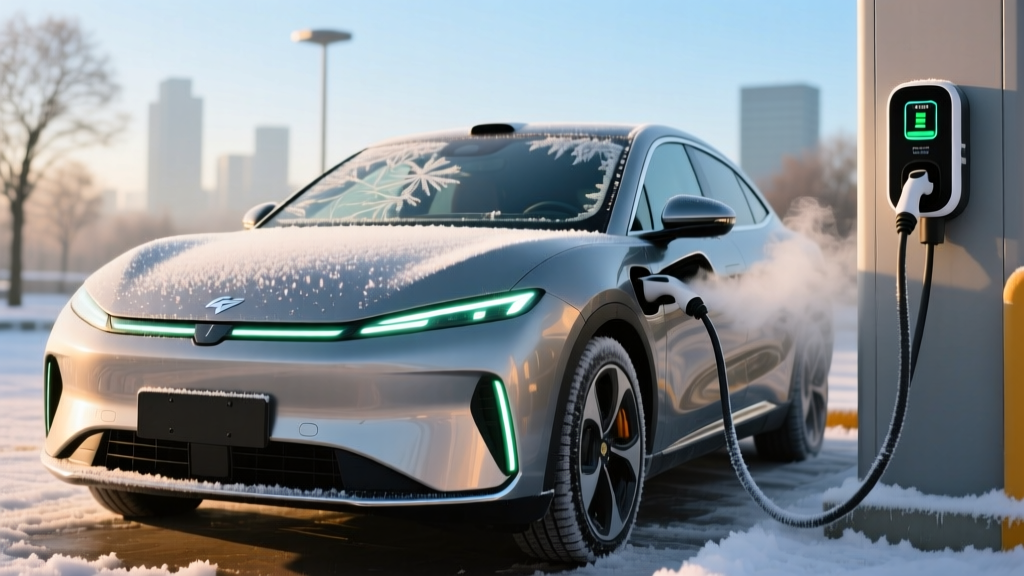
| Cold Weather (30°F, highway) | ~220-245 miles |
| City / Suburban (moderate) | ~300-320 miles |
Source: fueleconomy.gov / manufacturer data. Real-world range varies with driving style, terrain, HVAC use, and tire choice.
At highway speeds, aerodynamic drag dominates and efficiency drops. In cold weather, battery heating and cabin HVAC can reduce range by 20-30%. If your daily commute is under 60 miles round-trip, you'll rarely dip below 80% state of charge (SoC) — which is actually ideal for long-term battery health.
Charging Levels Explained: How Fast Each Adds Range
EV charging comes in three tiers. The key distinction: kW (kilowatts) measures charging power — how fast energy flows into the battery. kWh (kilowatt-hours) measures energy capacity — the size of the battery. Think of kW as water pressure and kWh as the tank size.
| Level | Power (kW) | Voltage | Miles of Range Per Hour | 10-80% Time |
|---|---|---|---|---|
| Level 1 (120V outlet) | 1.0-1.4 kW | 120V AC | ~3-4 mi/hr | ~70+ hours |
| Level 2 (240V home/public) | 7.2-19.2 kW | 240V AC | ~22-58 mi/hr | ~5-14 hours |
| DC Fast Charging | Up to 175 kW (peak) | 400V+ DC | ~300-500 mi/hr (peak) | ~23-28 minutes |
The Wagoneer S's onboard AC charger maxes out at approximately 11 kW, meaning even a 19.2 kW Level 2 station will only deliver ~11 kW into the vehicle. For DC fast charging, the peak rate is around 175 kW via CCS1, though sustained rates taper significantly above 80% SoC — expect an average of ~110-120 kW across a 10-80% session.
Home Charger Installation: Costs, Requirements & Upgrades
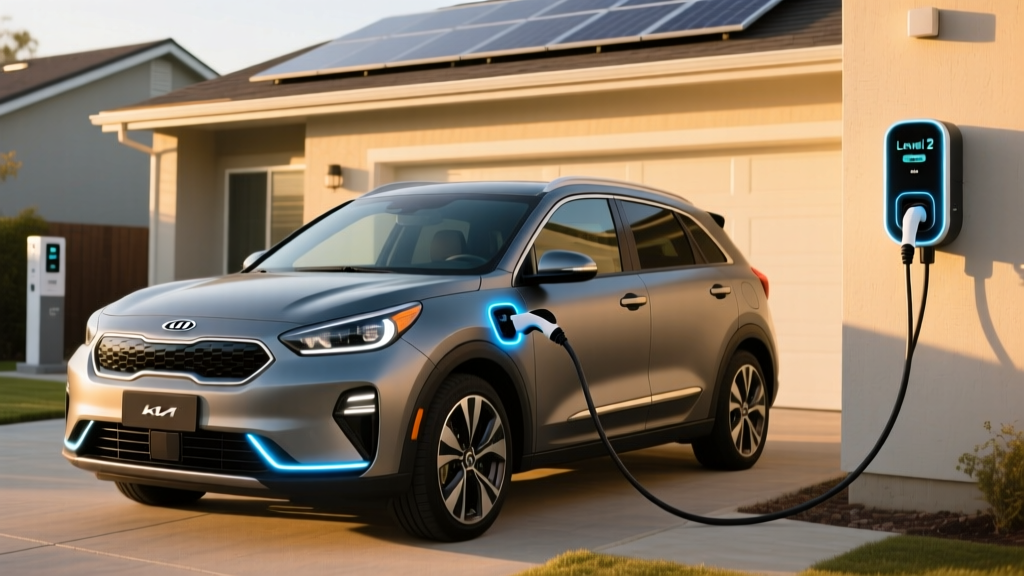
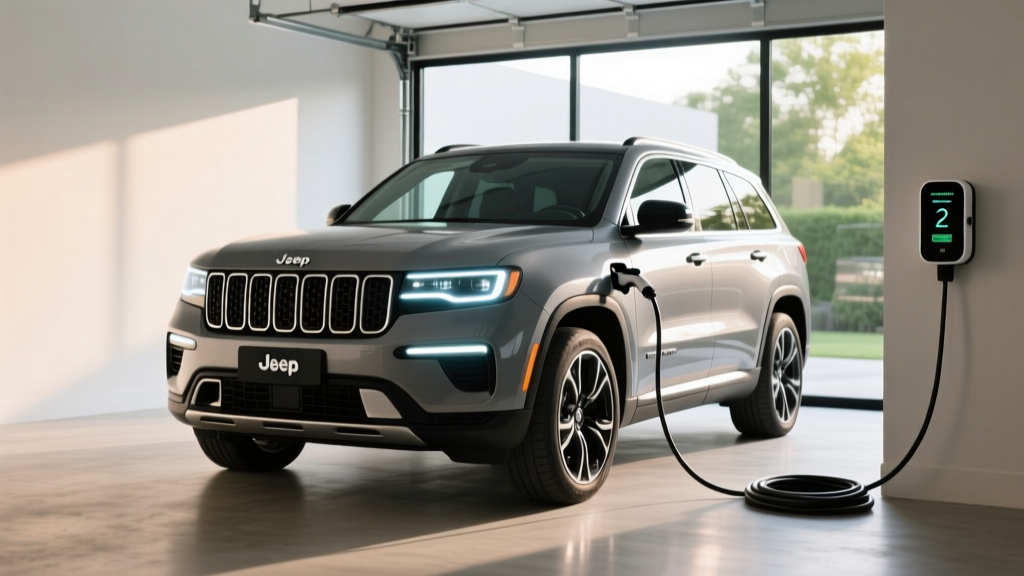
Most Wagoneer S owners will want a Level 2 home charger for overnight replenishment. A 10-80% charge on an 11 kW Level 2 unit takes roughly 6.5 hours — plug in at 10 PM, wake up at 6:30 AM with 70% of your range restored.
Electrical Requirements
A typical Level 2 home charger delivering 11 kW (48 amps) requires a 240V, 60-amp dedicated circuit. The National Electrical Code (NEC) mandates that continuous loads (like EV charging) use only 80% of a circuit's rated capacity, so a 48A charger needs a 60A breaker. Lower-power units (32A/7.7 kW) can run on a 40A circuit.
Installation Cost Breakdown
| Item | Cost Range |
|---|---|
| Level 2 Charger (hardware) | $400 - $750 |
| Electrician labor (standard install, <50 ft run) | $500 - $1,500 |
| Permit & inspection | $50 - $300 |
| Electrical panel upgrade (if needed, 200A service) | $1,500 - $4,000 |
| Total (no panel upgrade) | $950 - $2,550 |
| Total (with panel upgrade) | $2,450 - $6,550 |
Panel upgrade reality: Homes built before 2000 often have 100A or 150A electrical panels. Adding a 60A EV circuit alongside existing loads (HVAC, dryer, oven) may require upgrading to a 200A panel. This is the single biggest cost variable. A licensed electrician can assess your panel's spare capacity with a load calculation — get this done before buying equipment.
Safety & Code Considerations
- Dedicated circuit: Your EV charger must have its own breaker — no sharing with other appliances.
- GFCI protection: NEC 2020+ requires GFCI (ground-fault circuit interrupter) protection for outdoor receptacles and many indoor EV installations. Most hardwired chargers have built-in ground-fault protection.
- Outdoor rating: If your charger mounts outside, ensure it carries a NEMA 4 or IP65 rating for weather resistance.
- Hardwired vs. plug: Hardwired installations (no plug) are generally safer, allow higher amperage, and avoid the cost of a 240V receptacle. A NEMA 14-50 outlet offers portability but adds $150-$350 in parts and labor.
Connector Compatibility: NACS, CCS1 & Adapter Needs
The 2025-2026 Jeep Wagoneer S ships with a CCS1 (Combined Charging System) port, consistent with Stellantis' current North American EV lineup. However, the industry is rapidly shifting to NACS (the Tesla connector standard, now SAE J3400), and this affects where and how you charge publicly.
| Connector | Native Support? | Home Charging | Public DC Fast |
|---|---|---|---|
| CCS1 | Yes (native) | J1772 (Level 2) | Electrify America, EVgo, ChargePoint |
| NACS / J3400 | Adapter required | N/A for AC | Tesla Supercharger (via adapter) |
| CHAdeMO | No | N/A | Largely discontinued |
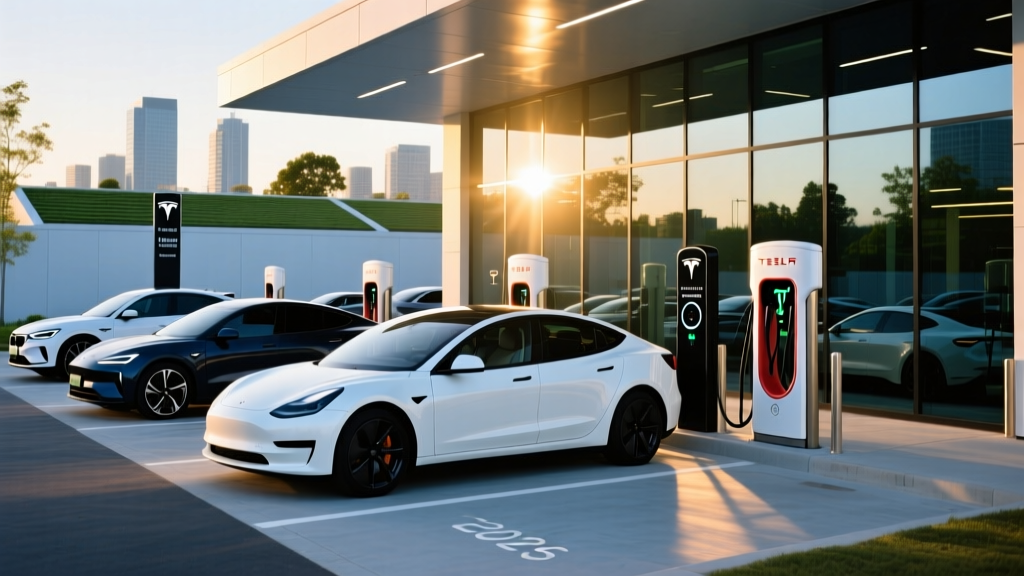
Tesla Supercharger access: Stellantis has announced NACS adapter support for its EVs, but availability and timing of a certified CCS1-to-NACS adapter for the Wagoneer S should be confirmed with your dealer. Once available, this unlocks 15,000+ Tesla Supercharger stalls. Third-party adapters exist but may not be covered under warranty — always check with the manufacturer.
For Level 2 home charging, the J1772 connector is universal across all non-Tesla EVs in North America. Any J1772 Level 2 charger will plug directly into the Wagoneer S.
Cost to Charge: Home vs. Public vs. Gas Comparison
The Wagoneer S achieves approximately 85 MPGe combined (per fueleconomy.gov), which translates to roughly 35 kWh per 100 miles driven. Here's what that costs at different charging scenarios:
| Scenario | Rate ($/kWh) | Cost per 100 Miles | Cost per Mile | Full 0-100% Cost |
|---|---|---|---|---|
| Home (off-peak utility rate) | $0.12 | $4.20 | $0.042 | $12.00 |
| Home (average US rate) | $0.17 | $5.95 | $0.060 | $17.00 |
| Public Level 2 (ChargePoint, etc.) | $0.25-$0.40 | $8.75-$14.00 | $0.088-$0.14 | $25-$40 |
| DC Fast (Electrify America) | $0.38-$0.56 | $13.30-$19.60 | $0.13-$0.20 | $38-$56 |
| Gas equivalent (25 MPG, $3.50/gal) | $3.50/gal | $14.00 | $0.14 | N/A |
Home charging at off-peak rates delivers fueling costs roughly 70% lower than a comparable gas SUV getting 25 MPG. Even public DC fast charging at peak rates is competitive with gas — and most Wagoneer S owners will do 85-95% of their charging at home. If your utility offers time-of-use (TOU) rates, scheduling charges between 11 PM and 6 AM maximizes savings.
Best Level 2 Home Chargers for the Wagoneer S
Since the Wagoneer S's onboard charger caps at ~11 kW, you need a Level 2 unit that delivers at least 48 amps. Here are three proven options:
ChargePoint Home Flex
- Power: Up to 12 kW (50A) — adjustable in-app
- Connector: J1772 (native fit for Wagoneer S)
- Cable length: 23 ft
- Smart features: Wi-Fi, scheduling, Alexa, energy tracking
- Price: ~$549 (hardware only)
- Best for: Flexibility — adjustable amperage means it works on 40A, 50A, or 60A circuits
Emporia Level 2 EV Charger
- Power: Up to 11.5 kW (48A)
- Connector: J1772
- Cable length: 24 ft
- Smart features: Wi-Fi, scheduling, solar integration, energy monitoring
- Price: ~$399
- Best for: Budget-conscious buyers who still want smart scheduling and energy data
Grizzl-E Smart
- Power: Up to 10 kW (40A)
- Connector: J1772
- Cable length: 24 ft
- Smart features: OCPP-compatible, app scheduling
- Price: ~$449
- Best for: Extreme cold climates — rated to -40°F, rugged Canadian-built unit
Our pick for the Wagoneer S: The ChargePoint Home Flex at 50A delivers the full 11 kW the vehicle can accept, has the longest track record for reliability, and the adjustable amperage protects you if you move to a home with a smaller panel. The Emporia is a strong value pick if budget matters more.
DC Fast Charging: Road Trip Strategy for the Wagoneer S
On longer drives, the Wagoneer S's ~175 kW peak DC fast-charge capability means practical stops of 23-28 minutes for a 10-80% session. But the charge curve matters more than the peak number:
- 10-40% SoC: Sustains near peak (~160-175 kW) — fastest segment
- 40-60% SoC: Tapers to ~130-150 kW
- 60-80% SoC: Further taper to ~80-110 kW
- 80-100% SoC: Drops sharply to <40 kW — avoid charging above 80% on road trips unless necessary
Road trip planning tip: With ~250 miles of real highway range, plan DC fast stops every 180-200 miles to keep SoC from dropping below 15%. Use the PlugShare or A Better Routeplanner apps to map CCS1-compatible stations along your route. Electrify America and EVgo are the most widespread CCS1 networks.
Always precondition the battery before a DC fast stop. The Wagoneer S does this automatically when you navigate to a charger via the built-in infotainment system — warming the battery to optimal temperature can cut your 10-80% charge time by 5-8 minutes in cool weather.
Tax Credits & Incentives for Home Charging
The federal Alternative Fuel Vehicle Refueling Property Credit (§30C) covers up to 30% of home charger hardware and installation costs, capped at $1,000 for residential installations. This credit applies to both the charger and electrician labor.
Eligibility requirements (per IRS §30C):
- Charger must be installed at your primary residence
- Property must be located in an eligible census tract (low-income or non-urban area — check via the DOE eligibility tool)
- Credit is non-refundable (you must owe federal taxes to benefit)
- Income caps do not apply (unlike the §30D vehicle credit)
Additionally, many utilities offer rebates of $250-$500 for Level 2 charger installation, and some states provide their own incentives. Check with your local utility and state energy office for current programs.
Frequently Asked Questions
How much does it cost to install a home EV charger for the Jeep Wagoneer S?
Expect $950-$2,550 for a standard installation (charger, electrician, permit) if your electrical panel has spare capacity. If your home needs a 200A panel upgrade, total costs can reach $2,450-$6,550. Always get a load calculation from a licensed electrician before purchasing equipment.
How fast will each charging level add range to the Wagoneer S?
Level 1 (120V) adds about 3-4 miles per hour — only practical for emergencies or very low daily mileage. Level 2 (240V, 48A) adds approximately 33-36 miles per hour, fully replenishing overnight. DC fast charging adds 200+ miles in roughly 25 minutes at peak rate.
Which connector and charger is compatible with my Wagoneer S?
The Wagoneer S uses a CCS1 port for DC fast charging and J1772 for Level 1/Level 2 AC charging. Any J1772 home charger will work natively. For Tesla Supercharger access, you'll need a CCS1-to-NACS adapter — confirm availability with your dealer.
How much does charging cost per mile compared to gas?
At home on off-peak rates ($0.12/kWh), the Wagoneer S costs about $0.04/mile to fuel — roughly 70% less than a gas SUV getting 25 MPG at $3.50/gallon ($0.14/mile). Even public DC fast charging at $0.48/kWh comes to ~$0.17/mile, still competitive with gas.
What electrical upgrades might I need for a home charger?
The most common upgrade is a panel replacement from 100A or 150A to 200A service, costing $1,500-$4,000. This is needed when your existing panel lacks spare capacity for a new 60A dedicated circuit. Homes with modern 200A panels typically need no upgrade — just a new breaker and wiring run.
Should I charge my Wagoneer S to 100% every night?
No. For daily driving, set your charge limit to 80% to prolong battery life. Reserve 100% charges for road trips where you need maximum range. The Wagoneer S's battery management system includes a buffer, but habitual 100% charging accelerates long-term degradation.
Does the Wagoneer S qualify for the $7,500 federal EV tax credit?
Eligibility for the §30D New Clean Vehicle Credit depends on MSRP caps ($80,000 for SUVs), buyer income limits ($300K joint / $150K single), battery sourcing requirements, and final assembly in North America. The Wagoneer S is assembled in North America, but critical mineral and battery component sourcing rules change annually. Verify current eligibility on fueleconomy.gov and consult a tax professional before relying on the credit.