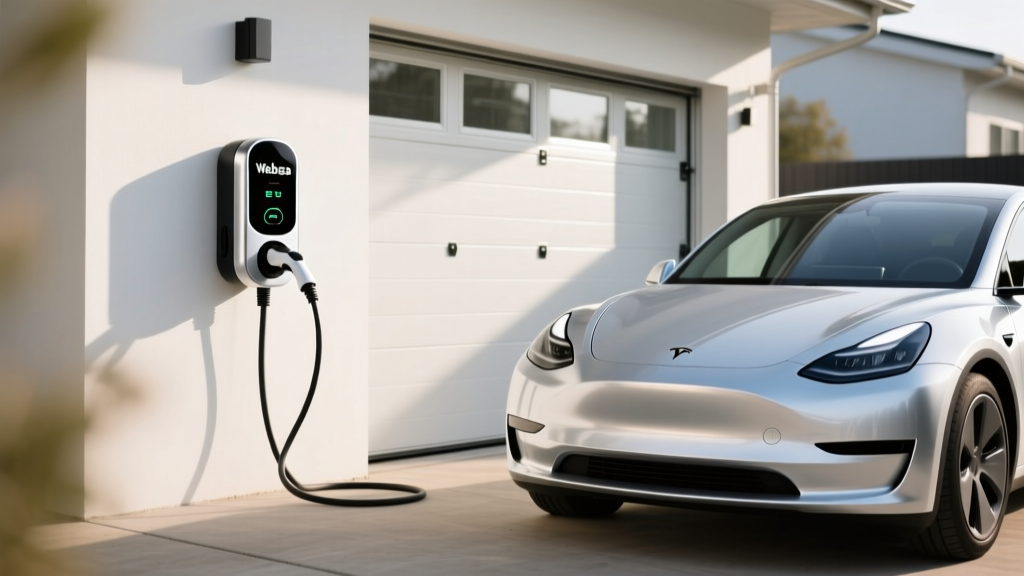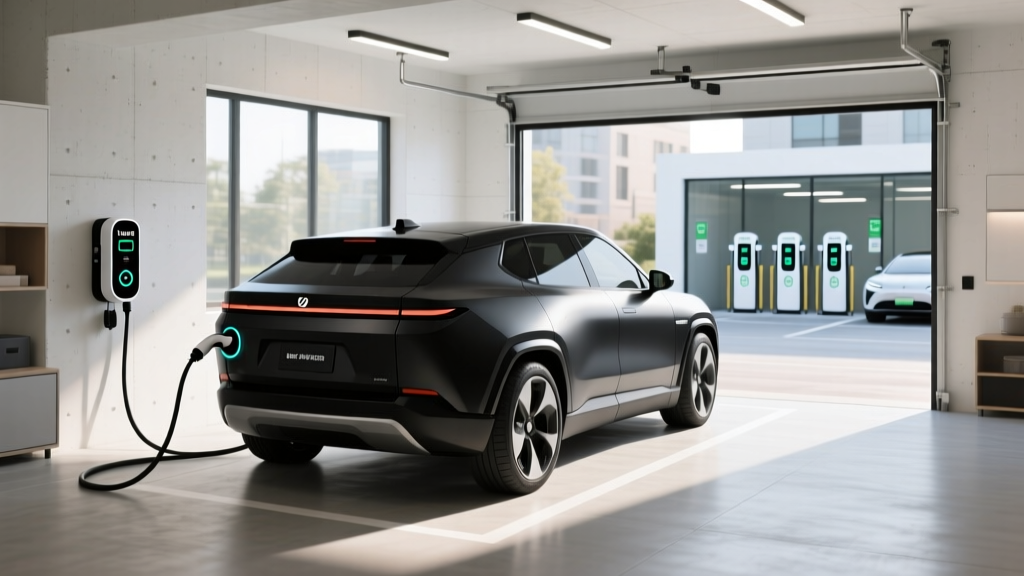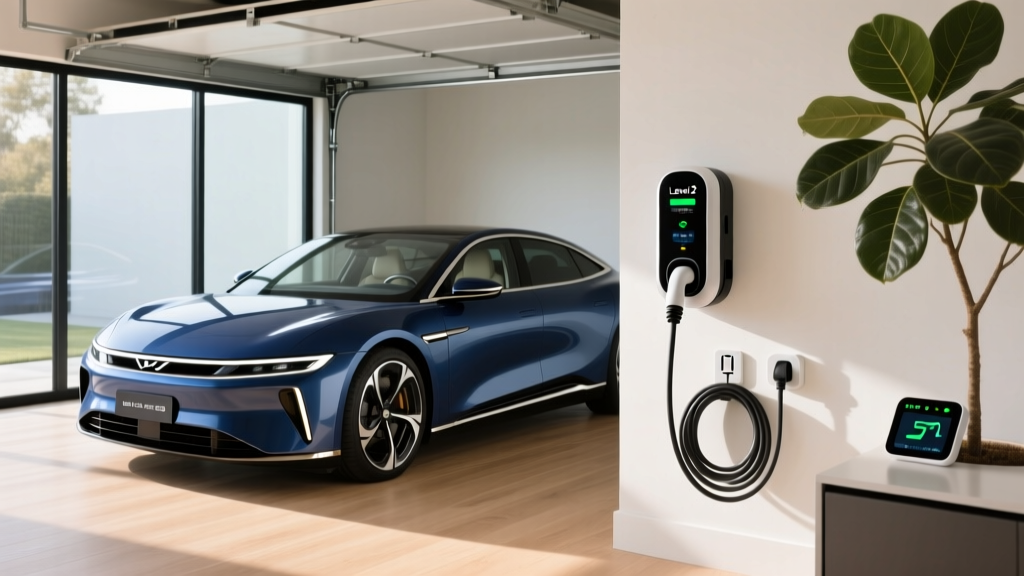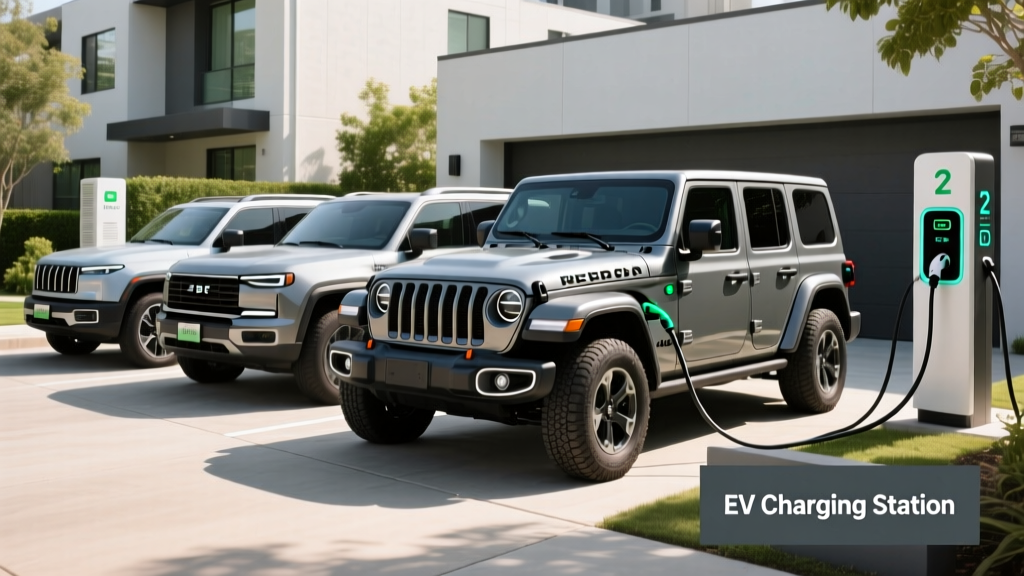
If you own a Jeep 4xe plug-in hybrid or are shopping for the all-electric Recon and Wagoneer S, the first practical question after signing the paperwork is how you'll keep it charged. Jeep's electrified lineup spans very different battery sizes — from the 17.3 kWh pack in the Wrangler 4xe to the 100+ kWh batteries in the Recon and Wagoneer S — and the right Jeep charger setup depends entirely on which one you drive.
This guide covers home Level 2 installation costs, public DC fast charging realities, connector compatibility, and equipment picks for every current Jeep EV and PHEV. All figures reflect 2026 model-year specs.
Jeep's Electrified Lineup: Battery Sizes and What They Mean for Charging
Before choosing a charger, you need to know your battery capacity (measured in kilowatt-hours, or kWh — the total energy stored) and your vehicle's maximum charge acceptance rate (measured in kilowatts, or kW — the speed at which energy flows in). Confusing kW with kWh is the single most common EV mistake. Think of it this way: kWh is the size of your gas tank; kW is how fast the pump fills it.
| Model | Battery (kWh) | EPA Electric Range | Max AC Level 2 (kW) | Max DC Fast (kW) | Connector |
|---|---|---|---|---|---|
| Wrangler 4xe | 17.3 | 22 mi (PHEV) | 7.7 kW | N/A (no DC port) | J1772 |
| Grand Cherokee 4xe | 17.3 | 26 mi (PHEV) | 7.7 kW | N/A (no DC port) | J1772 |
| Wagoneer S | 100.0 | ~300 mi | 11.5 kW | ~180 kW | CCS1 / NACS (via adapter) |
| Recon | ~85.0 | ~300+ mi (est.) | 11.5 kW | ~170 kW | CCS1 / NACS (via adapter) |
The 4xe models are plug-in hybrids (PHEVs) with modest batteries designed for short electric commutes. They only accept Level 1 and Level 2 AC charging — there is no DC fast-charge port. The fully electric Wagoneer S and Recon have large batteries that benefit significantly from both a robust home Level 2 setup and DC fast charging on road trips.
Charging Levels Explained: Speeds, kW, and Miles Per Hour
Every Jeep EV and PHEV owner will use some combination of three charging levels. Here's what each delivers in real terms:
| Level | Voltage | Power (kW) | Miles of Range/Hour | Best For |
|---|---|---|---|---|
| Level 1 (120V) | 120V / 12A | ~1.4 kW | 3–5 mi/hr | PHEV overnight top-ups (4xe) |
| Level 2 (240V) | 240V / 32–48A | 7.7–11.5 kW | 20–45 mi/hr | Daily home charging (all Jeeps) |
| DC Fast Charge | 400V+ DC | 50–350 kW | 150–600+ mi/hr | Road trips (Wagoneer S, Recon only) |
For Wrangler and Grand Cherokee 4xe owners, Level 1 charging from a standard 120V outlet is genuinely viable. The 17.3 kWh battery charges from empty to full in roughly 12 hours on Level 1 — plug in after work, and it's topped up by morning. Level 2 cuts that to about 2–2.5 hours.
For Wagoneer S and Recon owners, Level 2 is essential. A 100 kWh battery on Level 1 would take over 70 hours — completely impractical. On a 48A Level 2 charger (11.5 kW), the Wagoneer S goes from 10% to full overnight in roughly 9 hours.
Home Charger Installation: Electrical Requirements, Costs, and Panel Upgrades
Installing a Level 2 home charger is the single best upgrade any Jeep EV owner can make. But costs vary dramatically based on your home's electrical panel, the distance from panel to charger location, and local permit fees.
Electrical Requirements
A typical Level 2 Jeep charger installation requires:
- 240V dedicated circuit (like a dryer or oven outlet)
- 40A or 50A breaker — a 48A charger requires a 60A breaker (NEC code mandates 125% overrating for continuous loads)
- Panel capacity — most homes need 200A service minimum for a 48A EV charger; older 100A panels will need an upgrade
- GFCI protection — required by 2026 NEC for outdoor outlets and many jurisdictions for indoor garage circuits
Panel Upgrade Reality
Homes built before 2000 often have 100A or 150A electrical panels. Adding a 60A breaker for an EV charger may exceed your panel's capacity, especially if you're already running central AC, an electric dryer, and an electric range. A panel upgrade to 200A typically costs $1,500–$3,500, and in some cases you may need a full service upgrade from the utility, pushing costs to $4,000–$7,000.
An alternative: some smart chargers offer load management features that monitor your home's total draw and throttle the charger when other appliances kick on. This can avoid a panel upgrade entirely, though it may reduce charging speed during peak usage.
| Component | Low Estimate | High Estimate | Notes |
|---|---|---|---|
| Level 2 Charger (hardware) | $300 | $750 | 32A–48A smart chargers |
| Electrician labor | $500 | $2,000 | Depends on panel-to-charger distance |
| Electrical permit | $50 | $250 | Varies by municipality |
| Panel upgrade (if needed) | $1,500 | $4,000 | 200A upgrade; not always required |
| Conduit/wiring materials | $100 | $500 | Longer runs cost more |
| Total (no panel upgrade) | $950 | $3,500 | Typical garage install |
| Total (with panel upgrade) | $2,450 | $7,500 | Older homes with 100A service |
Federal incentive: Under the §30D tax credit rules, a separate Alternative Fuel Vehicle Refueling Property Credit (IRC §30C) may cover up to 30% of home charger hardware and installation costs, capped at $1,000. Eligibility depends on your census tract and income — consult a tax professional and IRS guidelines for current-year rules.
Which Connector Does My Jeep Use? NACS, CCS1, and Adapter Needs
The EV connector landscape has shifted dramatically. The North American Charging Standard (NACS), developed by Tesla, is now the dominant connector for new vehicles. Here's where Jeep's lineup stands in 2026:
| Model | Built-In Connector | Tesla Supercharger Access | Adapter Needed? |
|---|---|---|---|
| Wrangler 4xe | J1772 (AC only) | N/A — no DC port | N/A |
| Grand Cherokee 4xe | J1772 (AC only) | N/A — no DC port | N/A |
| Wagoneer S | CCS1 (AC + DC) | Yes, via NACS adapter | CCS-to-NACS adapter (~$200) |
| Recon | CCS1 (AC + DC) | Yes, via NACS adapter | CCS-to-NACS adapter (~$200) |
For home Level 2 charging, all Jeeps use the J1772 standard (which is the AC portion of the CCS1 connector). Any Level 2 home charger with a J1772 plug will work with every Jeep PHEV and EV. The connector question only matters for DC fast charging, where the Wagoneer S and Recon use CCS1.
The critical adapter to own: a CCS-to-NACS adapter unlocks Tesla's Supercharger network — the largest and most reliable DC fast-charging network in North America with over 30,000 stalls. Stellantis has confirmed Supercharger compatibility for its CCS-equipped vehicles via adapter. Without this adapter, you're limited to Electrify America, EVgo, and other CCS networks, which have more variable reliability.
Charging Time Examples: How Long Does Each Jeep Take?
Charging speed isn't linear. Batteries charge fastest between roughly 10% and 50% State of Charge (SoC), then taper significantly above 80% to protect battery health. Here's what to expect with each Jeep model:
Wrangler 4xe / Grand Cherokee 4xe (17.3 kWh battery)
- Level 1 (120V, 1.4 kW): 0–100% in ~12 hours
- Level 2 (240V, 7.7 kW): 0–100% in ~2.5 hours
- DC Fast: Not available — no DC port
Wagoneer S (100 kWh battery)
- Level 1 (120V, 1.4 kW): Not practical (70+ hours)
- Level 2 (240V, 11.5 kW): 10–100% in ~9 hours
- DC Fast (~180 kW peak): 10–80% in ~28 minutes; 80–100% adds another 20+ minutes due to taper
Recon (~85 kWh battery, estimated)
- Level 2 (240V, 11.5 kW): 10–100% in ~7.5 hours
- DC Fast (~170 kW peak): 10–80% in ~25 minutes
Real-world DC fast charging rarely matches peak rates for the full session. The Wagoneer S may peak at 180 kW around 20–40% SoC, but average closer to 100–120 kW across a full 10–80% session. Cold weather (below 40°F) can add 15–30% to charging times unless you precondition the battery via the vehicle's navigation-routed preconditioning feature.
Cost to Charge Your Jeep: Home vs. Public vs. Gas
One of the biggest ownership advantages of a Jeep PHEV or EV is fuel cost savings — but only if you charge strategically. Here's how costs break down:
| Scenario | Rate ($/kWh) | Cost to Add 100 mi (Wagoneer S, ~3.0 mi/kWh) | Cost Per Mile |
|---|---|---|---|
| Home (off-peak utility rate) | $0.09 | $3.00 | $0.03 |
| Home (average US rate) | $0.17 | $5.67 | $0.057 |
| Public Level 2 (ChargePoint, etc.) | $0.30 | $10.00 | $0.10 |
| DC Fast (Electrify America) | $0.48 | $16.00 | $0.16 |
| DC Fast (Tesla Supercharger) | $0.35 | $11.67 | $0.12 |
| Gas equivalent (25 MPG, $3.40/gal) | — | $13.60 | $0.136 |
Key takeaways from this data:
- Home off-peak charging is the cheapest option by far — roughly $0.03/mile, or 75% less than gas.
- Public DC fast charging can cost MORE than gas if you're paying $0.48/kWh at peak rates. Use DC fast charging for road-trip convenience, not as your primary fueling strategy.
- 4xe PHEV owners should calculate their electric-only commute cost separately. With a 22-mile electric range and home charging, most daily commutes cost under $0.70 in electricity before the gas engine engages.
Check if your utility offers time-of-use (TOU) rates or EV-specific plans. Many utilities offer overnight rates of $0.06–$0.10/kWh, which dramatically reduces your fuel cost. Some utilities even offer rebates of $200–$500 for installing a smart Level 2 charger.
Best Jeep Charger Equipment Picks for 2026
Not all Level 2 chargers are equal. Here are tested picks that pair well with Jeep's electrified lineup, based on power output, cable length, smart features, and build quality:
Best Overall: ChargePoint Home Flex
- Power: Up to 12 kW (50A) — adjustable down to 16A
- Connector: J1772 (fits all Jeeps)
- Cable: 23 feet
- Smart features: Wi-Fi, app scheduling, Alexa, load sharing
- Price: ~$550
- Why it works for Jeep: Adjustable amperage lets you match your panel capacity without oversizing the circuit. The 23-foot cable reaches most garage parking spots.
Best Value: Emporia Level 2 EV Charger
- Power: Up to 11.5 kW (48A)
- Connector: J1772
- Cable: 24 feet
- Smart features: Wi-Fi, app, energy monitoring, solar integration
- Price: ~$350
- Why it works for Jeep: Lowest-cost smart charger with full 48A output. Excellent energy monitoring helps track your 4xe or EV charging costs precisely.
Best for Outdoors: Tesla Universal Wall Connector
- Power: Up to 11.5 kW (48A)
- Connector: Integrated NACS + J1772 adapter built in
- Cable: 24 feet
- Smart features: Wi-Fi, OTA updates, power sharing, load management
- Price: ~$650
- Why it works for Jeep: The built-in J1772 adapter means one charger serves both Tesla and non-Tesla vehicles. Weather-sealed for outdoor installation. Load management feature can avoid panel upgrades.
Best for 4xe Owners (Budget): Lectron V-BOX Pro
- Power: Up to 7.7 kW (32A)
- Connector: J1772
- Cable: 20 feet
- Smart features: Basic app, scheduling
- Price: ~$200
- Why it works for Jeep: The 4xe's 7.7 kW onboard charger means a 32A unit is all you need. No reason to pay for 48A hardware when the vehicle can't use it.
NEMA 14-50 vs. hardwired: Some chargers plug into a NEMA 14-50 outlet (like a dryer), making them portable. Hardwired units are permanently connected but support higher amperage (up to 60A/14.4 kW) and don't require GFCI breakers in many jurisdictions — saving $100–$200 on the install. For a garage-mounted Jeep charger, hardwired is usually the better choice.
Safety, Code, and Permit Considerations
EV charger installation is electrical work that must comply with the National Electrical Code (NEC) and your local jurisdiction's amendments. Key requirements in 2026:
- Dedicated circuit: Your EV charger must be on its own breaker — no sharing with other outlets or appliances.
- GFCI protection: Required for outdoor installations and in many jurisdictions for indoor garages. Hardwired units may be exempt in some areas.
- Outdoor rating: If installing outside, the charger must carry a NEMA 4 or IP65 weather-resistance rating. All three picks above qualify.
- Permit and inspection: Most municipalities require an electrical permit ($50–$250) and a post-installation inspection. Skipping the permit can void home insurance coverage and cause problems at resale.
- Wire gauge: 6 AWG copper for 50A circuits; 4 AWG for 60A. Your electrician will size this correctly based on run length.
Never use an extension cord with a Level 2 charger, and avoid adapters that convert a dryer outlet to an EV plug unless the circuit has been inspected and rated for continuous EV load.
Frequently Asked Questions
How much does it cost to install a home EV charger for my Jeep?
Expect $950–$3,500 for a standard Level 2 installation (charger, electrician, permit) if your electrical panel has sufficient capacity. Homes needing a 200A panel upgrade should budget $2,450–$7,500. Get three quotes from licensed electricians — pricing varies significantly by region and job complexity.
How fast will each charging level add range to my Jeep?
Level 1 (120V) adds 3–5 miles per hour — enough for 4xe PHEVs overnight. Level 2 (240V) adds 20–45 miles per hour depending on the vehicle and charger amperage, fully charging any Jeep overnight. DC fast charging adds 150–600+ miles per hour at peak rates, delivering a 10–80% charge in roughly 25–28 minutes for the Wagoneer S and Recon.
Which connector and charger is compatible with my Jeep?
For home Level 2 charging, every Jeep EV and PHEV uses the J1772 connector — any standard Level 2 charger will work. For DC fast charging (Wagoneer S and Recon only), the native connector is CCS1. A CCS-to-NACS adapter (~$200) unlocks Tesla Supercharger access. The 4xe models have no DC fast-charge port.
How much does charging a Jeep cost per mile compared to gas?
Home charging at average US electricity rates ($0.17/kWh) costs roughly $0.057/mile for the Wagoneer S — about 58% less than a gas SUV at 25 MPG and $3.40/gallon ($0.136/mile). Off-peak home rates drop this to $0.03/mile. Public DC fast charging at $0.48/kWh can cost $0.16/mile, exceeding gas costs.
What electrical upgrades might I need for a Jeep home charger?
The most common upgrade is a 200A electrical panel replacement ($1,500–$3,500), needed in older homes with 100A or 150A service. You'll also need a dedicated 240V circuit with a 40A–60A breaker. If the charger location is far from the panel, longer wire runs add $200–$500 in conduit and copper costs. Smart chargers with load management can sometimes avoid panel upgrades entirely.
Can I use a regular 120V outlet for my Jeep Wrangler 4xe?
Yes. The 4xe's 17.3 kWh battery charges from empty to full in about 12 hours on a standard 120V outlet. This is one of the key advantages of a PHEV with a smaller battery — Level 1 charging is practical for daily use. Just ensure the outlet is on a dedicated 15A or 20A circuit and isn't shared with high-draw appliances.