From Supercharged V8 to Silent Kilowatts: The XKR Owner's Charging Primer
The Jaguar XKR Supercharged — with its 5.0-liter AJ-V8 pushing 510 horsepower and a 0-60 time around 4.6 seconds — remains one of the most visceral grand tourers of the 2010s. But with EPA fuel economy hovering near 15 MPG combined and premium fuel costs climbing, a growing number of XKR owners are eyeing the electric exit ramp. Whether you're considering a full EV swap of your XKR chassis or simply trading the supercharged cat for a 2026 EV like the Jaguar I-PACE, Porsche Taycan, or Lucid Air, one question looms larger than horsepower: how exactly do I charge this thing?
This guide breaks down every charging variable an ex-XKR owner (or any new EV buyer) needs to budget for — from the electrical panel in your garage to the DC fast charger on the interstate.
Charging Levels Explained: kW, Miles Per Hour, and What They Mean
The single most important literacy point in EV ownership: kW (kilowatts) is power — how fast energy flows. kWh (kilowatt-hours) is energy — how much the battery holds. Think of kW as the diameter of the hose and kWh as the size of the bucket. Confusing them is the #1 mistake new EV owners make when shopping for chargers.
Here's how each level translates to real range added, using a mid-size EV with roughly 3.5 mi/kWh efficiency (similar to an I-PACE or Taycan):
| Level | Voltage | Power (kW) | Miles Added/Hour | Typical Use |
|---|---|---|---|---|
| Level 1 | 120V | 1.2–1.9 kW | 3–5 mi/hr | Emergency / overnight trickle |
| Level 2 | 240V | 3.3–19.2 kW | 12–67 mi/hr | Daily home & workplace charging |
| DC Fast | 400–800V DC | 50–350 kW | 150–900+ mi/hr (burst) | Road trips, highway corridors |
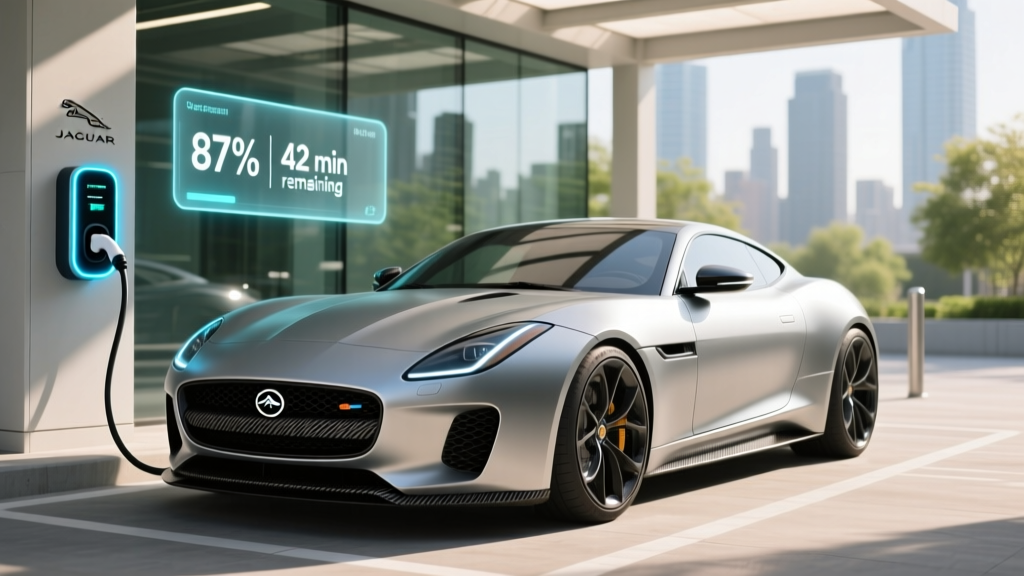
For context, an XKR Supercharged owner accustomed to a 3-minute gas stop will find DC fast charging (10–80% in 18–25 minutes on modern 800V architectures) the closest analog. Level 2 at home is more like "refueling while you sleep" — and it's where 85%+ of all EV charging actually happens.
Home Charger Installation: What Your Garage Actually Needs
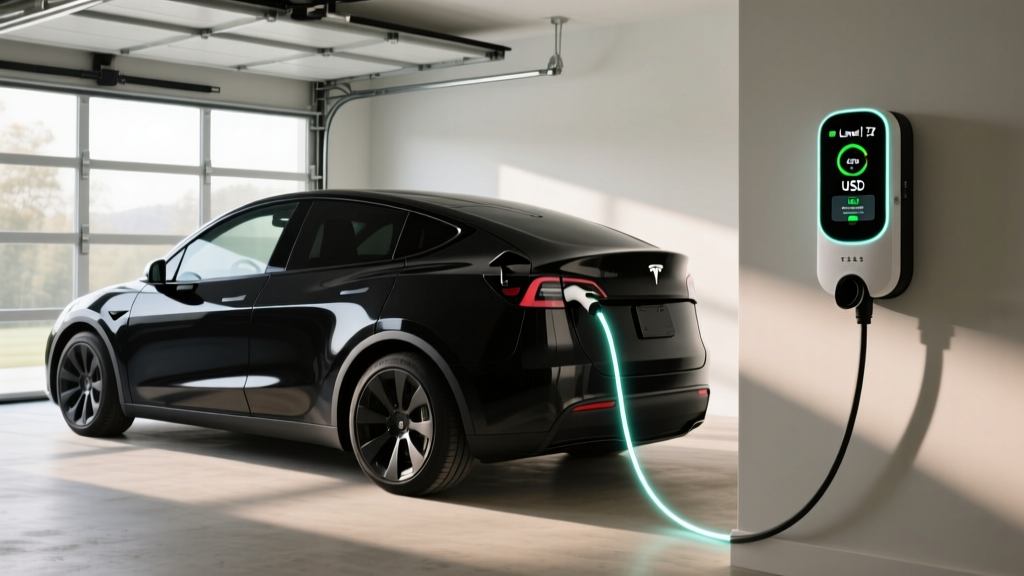
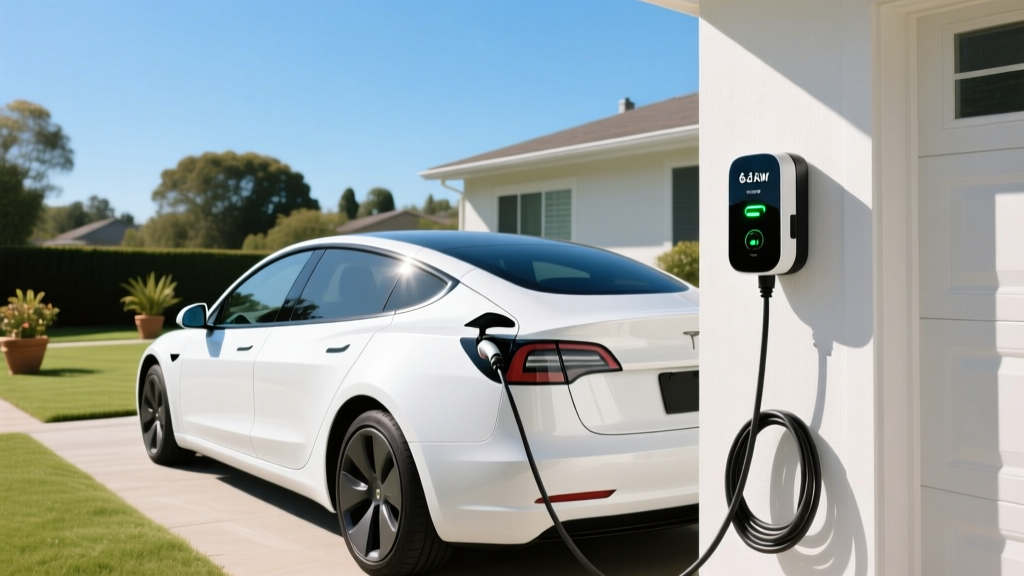
Before you plug in, you need to know what your electrical system can handle. A typical Level 2 home charger runs on a 240V dedicated circuit, most commonly 40A or 48A, which requires a 50A or 60A breaker respectively (the National Electrical Code requires circuits rated 125% above continuous load).
Common Electrical Requirements
- 40A circuit (9.6 kW output): Requires 50A breaker, 6 AWG copper wire. Adequate for most daily driving.
- 48A circuit (11.5 kW output): Requires 60A breaker, 4 AWG copper wire. Ideal for larger packs (100 kWh+).
- 80A circuit (19.2 kW output): Requires 100A breaker, 2 AWG copper. Rare in residential; common for high-power fleet or luxury installs.
Will You Need a Panel Upgrade?
Homes built before 2000 often have 100A or 150A main service panels. Adding a 50A EV circuit to an already-loaded panel can push you past safe capacity — especially if you have electric range, dryer, and HVAC. A licensed electrician will perform a load calculation (NEC Article 220) to determine whether you need a panel upgrade to 200A service. Budget $1,500–$3,500 for this if required.
| Component | Low Estimate | High Estimate |
|---|---|---|
| Level 2 charger hardware (smart, Wi-Fi) | $350 | $750 |
| Electrician labor (standard install, <50 ft run) | $500 | $1,500 |
| Electrical permit & inspection | $50 | $250 |
| Wire, conduit, breaker, misc materials | $150 | $500 |
| Panel upgrade (if needed) | $1,500 | $3,500 |
| Total (no panel upgrade) | $1,050 | $3,000 |
| Total (with panel upgrade) | $2,550 | $6,500 |
The federal Alternative Fuel Vehicle Refueling Property Credit (IRS Form 8911) may cover up to 30% of home charger hardware and installation costs (capped at $1,000 for residential) — but eligibility depends on whether your census tract qualifies. Confirm with a tax professional before budgeting around it.
Connectors: NACS, CCS, and What Fits What in 2026
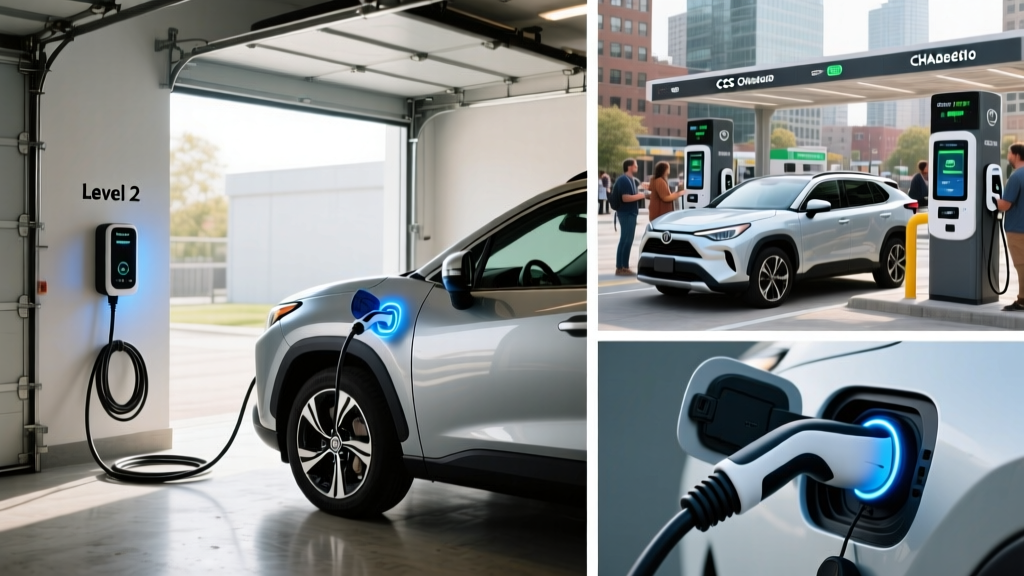
The connector landscape has consolidated dramatically since Tesla opened the North American Charging Standard (NACS). As of 2026, nearly every new EV sold in the U.S. ships with a NACS port, and the legacy CCS1 connector is being phased out on new models. CHAdeMO is effectively dead outside the used Nissan Leaf market.
| Connector | Brands Using It | DC Fast Network Access |
|---|---|---|
| NACS (native) | Tesla, Ford, GM, Rivian, Hyundai/Kia, Volvo, Polestar, Jaguar (I-PACE 2025+), BMW, Mercedes | Tesla Supercharger + most new Electrify America / EVgo stalls |
| CCS1 (legacy) | 2024 and older VW, BMW, Hyundai, Kia; older I-PACE | Electrify America, EVgo, ChargePoint (adapter needed for Superchargers) |
| CHAdeMO | Nissan Leaf (discontinued), Mitsubishi Outlander PHEV (older) | Limited; shrinking network |
If you're buying a used 2023–2024 Jaguar I-PACE with CCS1, you'll need a CCS-to-NACS adapter (roughly $200–$250 from Lectron or A2Z) to access Tesla Superchargers, which now form the largest and most reliable DC fast network in North America.
Cost to Charge: XKR Fuel Bill vs. EV Electricity
This is where the math gets satisfying for anyone still feeding a 5.0L supercharged V8. The XKR Supercharged averages roughly 15 MPG combined on premium fuel. At $4.50/gallon (a reasonable 2026 national premium average), that's $0.30 per mile just in fuel.
| Scenario | Cost per kWh or Gallon | Efficiency | Cost Per Mile |
|---|---|---|---|
| XKR Supercharged (premium gas) | $4.50/gal | 15 MPG | $0.30 |
| EV — home off-peak (utility rate) | $0.13/kWh | 3.0 mi/kWh | $0.043 |
| EV — home TOU peak rate | $0.28/kWh | 3.0 mi/kWh | $0.093 |
| EV — public Level 2 (ChargePoint, etc.) | $0.35/kWh | 3.0 mi/kWh | $0.117 |
| EV — DC fast (Electrify America / EVgo) | $0.48/kWh | 3.0 mi/kWh | $0.16 |
| EV — Tesla Supercharger (average) | $0.30/kWh | 3.0 mi/kWh | $0.10 |
Even at the most expensive DC fast charger, you're paying roughly half what the XKR demands per mile. At home off-peak rates, the savings are nearly 85%. Over 12,000 miles/year, that's a fuel-cost reduction from $3,600 to roughly $520 — a $3,080 annual savings.
Charging Times: What to Expect with Common Battery Sizes
Charge time depends on both the battery's capacity (kWh) and the charger's power output (kW). Here are realistic 10–80% times for common pack sizes, assuming the vehicle can accept the charger's full output:
- 60 kWh pack (e.g., base Hyundai Ioniq 5): ~18 min on 250 kW DC; ~5.5 hr on 9.6 kW Level 2
- 84 kWh pack (e.g., Jaguar I-PACE): ~25 min on 150 kW DC (I-PACE peaks around 100 kW); ~7.5 hr on 9.6 kW Level 2
- 100 kWh pack (e.g., Lucid Air, Taycan): ~20 min on 350 kW DC (800V architecture); ~9 hr on 11.5 kW Level 2
- 131 kWh pack (e.g., F-150 Lightning Extended): ~40 min on 250 kW DC; ~12 hr on 11.5 kW Level 2
Equipment Picks: 2026 Home Chargers Worth the Money
Not all Level 2 chargers are equal. Here are three we'd recommend based on reliability, smart features, and value — each with its power output, connector, and cable length noted:
Emporia Vue 2 Smart Charger
- Output: 48A (11.5 kW on 60A circuit)
- Connector: NACS (J1772 adapter included)
- Cable: 24 ft
- Smart features: Wi-Fi, app scheduling, solar integration, energy monitoring
- Price: ~$399
- Best for: Solar-panel owners; budget-conscious smart charging
ChargePoint Home Flex
- Output: Configurable 16A–50A (up to 12 kW)
- Connector: NACS or J1772 (choose at purchase)
- Cable: 23 ft
- Smart features: Wi-Fi, Alexa, app scheduling, amperage dial
- Price: ~$599
- Best for: Flexible amperage for older panels
Tesla Wall Connector
- Output: 48A (11.5 kW on 60A circuit)
- Connector: NACS (J1772 adapter included with Gen 4)
- Cable: 24 ft
- Smart features: Wi-Fi, OTA updates, power sharing (up to 6 units on one circuit)
- Price: ~$475
- Best for: Tesla owners; multi-EV households
All three are UL-listed, NEMA 4-rated for outdoor installation, and compatible with hardwired or NEMA 14-50 plug-in mounting. Hardwired is preferred for 48A+ units (NEMA 14-50 receptacles are rated for 50A max and can overheat at sustained high loads).
Safety, Code, and the Details That Matter
A few non-negotiable installation standards every XKR-turned-EV owner should verify with their electrician:
- Dedicated circuit: Your EV charger must have its own breaker — no sharing with dryer, range, or HVAC.
- GFCI protection: NEC 2023 and later require GFCI breakers for all 240V EV receptacles (NEMA 14-50). Hardwired units are exempt.
- Outdoor rating: If your charger lives outside, it must be NEMA 4 (weather-resistant). Look for UL "wet location" listing.
- Wire gauge: Undersized wire is a fire hazard. 6 AWG for 50A circuits, 4 AWG for 60A, 2 AWG for 100A — copper, not aluminum, for EV circuits.
- Permit and inspection: Skipping the permit saves $100 today but can void your homeowner's insurance if a fire traces back to unpermitted work.
Frequently Asked Questions
How much does it cost to install a home EV charger?
Expect $1,050–$3,000 for a standard Level 2 install (equipment, electrician, permit, materials) if your panel has capacity. Add $1,500–$3,500 if you need a 200A panel upgrade. The IRS Refueling Property Credit may reimburse up to $1,000 (30%) in qualifying census tracts.
How fast will each charging level add range?
Level 1 (120V): 3–5 miles per hour. Level 2 (240V, 48A): roughly 35–40 miles per hour for a typical EV. DC fast charging: 10–80% in 18–40 minutes depending on pack size and vehicle charge-rate capability.
Which connector/charger is compatible with my EV?
Any 2025+ EV sold in the U.S. likely uses NACS. Older CCS1 vehicles (2023–2024 I-PACE, ID.4, etc.) need a CCS-to-NACS adapter (~$200) for Tesla Supercharger access. CHAdeMO is effectively discontinued. For home Level 2, all connectors use the J1772 protocol under the hood — NACS and J1772 plugs are interchangeable with adapters.
How much does charging cost per mile vs gas?
Home charging at off-peak rates averages $0.04/mile. The Jaguar XKR Supercharged at 15 MPG on $4.50 premium costs $0.30/mile. That's a roughly $3,000/year fuel savings over 12,000 miles.
What electrical upgrades might I need?
The most common upgrade is a 200A panel replacement if your home has older 100A or 150A service with high existing loads. Some utilities offer load-management devices that let you add an EV circuit without a panel upgrade by throttling the charger when other appliances run — ask your electrician about "EV energy management systems" (EVEMS).