Electrifying a Jaguar XJR Supercharged: What You Need to Know About Charging
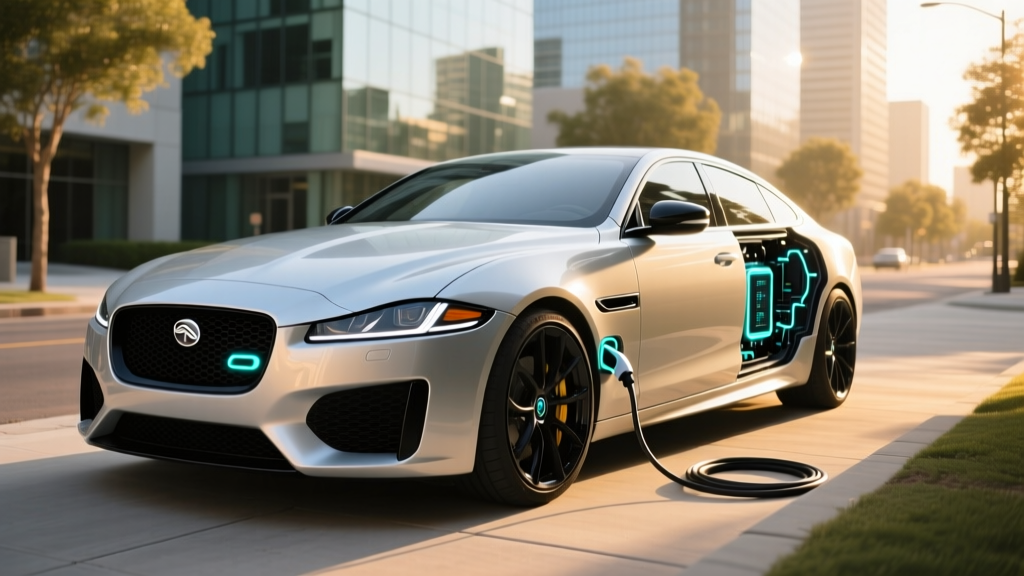
The Jaguar XJR Supercharged — with its 5.0L supercharged V8 producing up to 550 hp in the X351 generation — is one of the most visceral British luxury sedans ever built. But with fuel economy hovering around 15-18 MPG combined and maintenance costs climbing as these cars age, a growing number of XJR owners are exploring EV conversions or trading up to Jaguar's electric offerings like the I-PACE and the upcoming GT lineup. Whether you're running a professionally converted XJR with an aftermarket battery pack, planning a conversion, or simply cross-shopping an electrified Jaguar against your supercharged classic, understanding EV charging is essential.
This guide covers the full charging landscape — from Level 1 trickle charging in your garage to DC fast charging on road trips — with exact numbers on speed, cost, equipment, and electrical requirements. We'll also address the specific considerations that apply to EV-converted classic Jaguars, which often use non-standard battery sizes and connectors.
Charging Levels Explained: Speeds in kW and Miles Per Hour
Before plugging in anything, you need to understand the difference between kW (kilowatts) and kWh (kilowatt-hours). kW measures the rate of power delivery — think of it as the width of the hose. kWh measures total energy stored or delivered — the size of the bucket. A 100 kWh battery charged at 10 kW takes roughly 10 hours. This distinction is non-negotiable for EV literacy.
| Level | Voltage | Max Power (kW) | Miles of Range Added Per Hour | Best Use Case |
|---|---|---|---|---|
| Level 1 | 120V AC | 1.2–1.9 kW | 3–5 miles | Overnight topping off, emergency backup |
| Level 2 | 240V AC | 3.3–19.2 kW | 12–75 miles | Daily home/workplace charging |
| DC Fast Charge | 400–800V DC | 50–350 kW | 150–1,000+ miles | Road trips, rapid top-ups |
For a converted Jaguar XJR running a typical 60–80 kWh aftermarket battery pack (such as those using Tesla Large Drive Unit or NetGain Hyper 9 setups), Level 2 charging at 7.2 kW will add roughly 25–30 miles of range per hour. A full 10–80% charge at that rate takes approximately 6–8 hours depending on pack size. DC fast charging capability depends entirely on your conversion's onboard charger and whether a CCS or CHAdeMO inlet was installed.
Real-World Charging Note: Peak kW ratings are never sustained across the full charge session. A vehicle rated for 150 kW DC fast charging typically peaks near 150 kW only between 10–40% State of Charge, then tapers progressively. Expect a 10–80% session to average 60–70% of the peak rate. Cold battery temperatures (below 50°F) can reduce charging speeds by 30–50% without preconditioning.
Home Charger Installation: Electrical Requirements and Costs
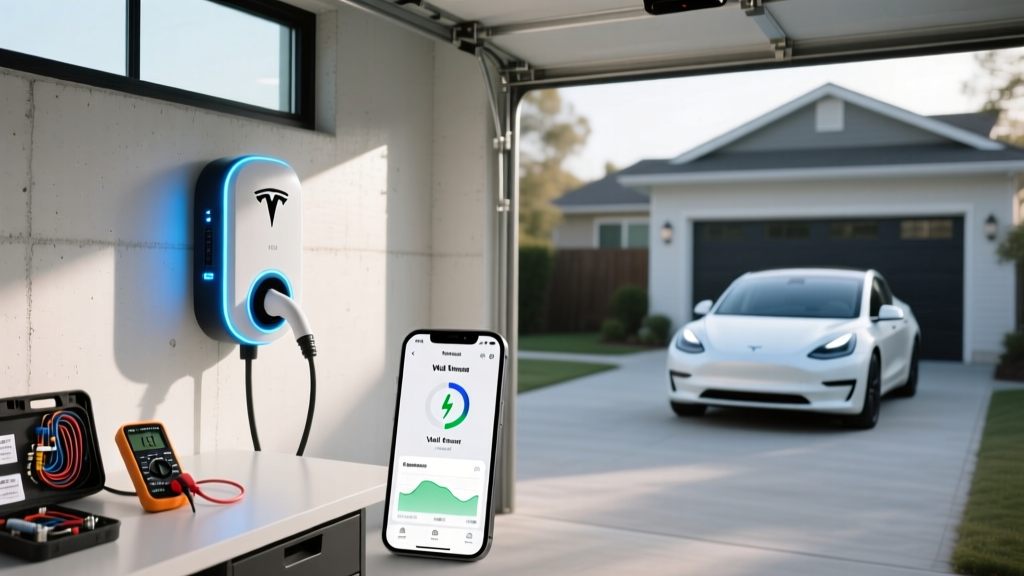
Installing a Level 2 home charger is the single biggest ownership upgrade you can make. Most EV owners do 80%+ of their charging at home, and a proper Level 2 setup turns your garage into a personal fueling station. But the installation isn't as simple as plugging in a dryer.
Electrical Requirements
A typical Level 2 home charger requires a dedicated 240V circuit on a double-pole breaker. The most common configurations:
- 40-amp circuit / 32-amp continuous (7.7 kW): Suitable for most EVs and conversions with batteries under 80 kWh. Requires 8 AWG copper wire.
- 50-amp circuit / 40-amp continuous (9.6 kW): Recommended for larger battery packs (80–100+ kWh). Requires 6 AWG copper wire.
- 60-amp circuit / 48-amp continuous (11.5 kW): Ideal for future-proofing or high-capacity conversions. Requires 4 AWG copper wire.
The National Electrical Code (NEC) requires that continuous loads (like EV charging, which runs for 3+ hours) not exceed 80% of the breaker rating. A 50-amp breaker delivers 40 amps continuously — that's 9.6 kW at 240V. Always consult a licensed electrician for your final specification.
Panel Upgrade Considerations
Many older homes — particularly those built before 1990 — have 100-amp or even 60-amp main electrical panels. Adding a 40–50 amp dedicated EV circuit may push your panel beyond its safe capacity, especially if you're also running central A/C, an electric range, and a dryer. A panel upgrade to 200 amps typically costs $1,500–$3,500 installed, and in some cases your utility may require a service upgrade from the street as well.
Some installers offer load-management devices (like the Emporia Smart Load Manager or Tesla Wall Connector load-sharing) that dynamically throttle charger amperage based on real-time household demand, potentially avoiding a panel upgrade.
| Cost Component | Low Estimate | High Estimate | Notes |
|---|---|---|---|
| Level 2 Charger (hardwired) | $350 | $750 | Varies by brand, power output, smart features |
| Electrician labor | $500 | $2,000 | Depends on run length, wall type, conduit |
| Electrical materials (wire, conduit, breaker) | $150 | $600 | Longer runs and larger gauge = higher cost |
| Permit and inspection | $50 | $300 | Varies by municipality |
| Panel upgrade (if needed) | $1,500 | $3,500 | 200-amp upgrade from 100-amp service |
| Total (no panel upgrade) | $1,050 | $3,650 | Most homes with 200A panels |
| Total (with panel upgrade) | $2,550 | $7,150 | Older homes needing service upgrade |
The federal government offers the Alternative Fuel Vehicle Refueling Property Credit (IRC §30C), which covers up to 30% of home charger equipment and installation costs, capped at $1,000. This credit is subject to income and census-tract eligibility requirements — check the IRS guidelines or consult a tax professional.
Connector Compatibility: NACS, CCS1, CHAdeMO, and Conversion Considerations
The connector landscape in 2026 has largely consolidated around NACS (North American Charging Standard), the connector originally developed by Tesla and now adopted by nearly every major automaker. However, for EV-converted classics like the Jaguar XJR Supercharged, connector choice depends on what your conversion shop installed.
| Connector | Standard | Max DC kW | Common Vehicles / Use | Adapter Availability |
|---|---|---|---|---|
| NACS | SAE J3400 | Up to 350 kW | Tesla, Ford, GM, Rivian, Hyundai, most 2025+ EVs | CCS-to-NACS adapters widely available ($150–$300) |
| CCS1 | SAE J1772 + DC pins | Up to 350 kW | VW ID.4, BMW i4, older Ford/GM EVs, many conversions | NACS-to-CCS adapters available |
| CHAdeMO | IEC 62196 Type 3 | Up to 400 kW (rare) | Nissan Leaf, Mitsubishi Outlander PHEV (legacy) | Adapters limited; network declining |
| J1772 | SAE J1772 | AC only (up to 19.2 kW) | All Level 2 AC charging in North America | Tesla Mobile Connector includes J1772 adapter |
For EV-converted Jaguars: Most professional conversion shops install a CCS1 inlet, as it provides access to the Electrify America, EVgo, and ChargePoint DC fast-charging networks. If your conversion uses a Tesla drive unit with the Tesla charge controller, you may have a NACS inlet natively. Confirm your inlet type before purchasing a home charger — a hardwired J1772-connector charger works with CCS1 and NACS vehicles (for AC Level 2) but you'll need the appropriate adapter for DC fast charging.
Charging Cost Per Mile: EV vs. Supercharged V8
One of the most compelling reasons XJR owners explore electrification is the fuel cost delta. The 5.0L supercharged V8 in the XJR returns roughly 16 MPG combined on premium fuel. At $4.20/gallon (2026 national average for premium), that's approximately $0.26 per mile in fuel alone.
EV charging costs vary dramatically depending on where and when you charge:
| Charging Scenario | Cost per kWh | Cost per Mile (3.0 mi/kWh) | Annual Cost (12,000 mi) |
|---|---|---|---|
| Home, off-peak utility rate | $0.10–$0.14 | $0.03–$0.05 | $360–$600 |
| Home, standard residential rate | $0.15–$0.20 | $0.05–$0.07 | $600–$840 |
| Public Level 2 (ChargePoint, etc.) | $0.25–$0.40 | $0.08–$0.13 | $960–$1,560 |
| DC fast charging (Electrify America, EVgo) | $0.35–$0.55 | $0.12–$0.18 | $1,440–$2,160 |
| XJR Supercharged (premium gas) | $4.20/gal | $0.26 | $3,120 |
Even at the most expensive DC fast-charging rates, an electrified Jaguar costs roughly half per mile to "fuel" compared to the supercharged V8. At home off-peak rates, the savings are dramatic: 80–85% less per mile. Over 12,000 miles annually, that's $2,500+ in fuel savings — enough to pay for a home charger installation in the first year.
Charging Time Examples for Common Conversion Battery Sizes
EV conversions of vehicles like the Jaguar XJR Supercharged typically use battery packs in the 40–100 kWh range, depending on available space (trunk, rear seat delete, under-floor) and budget. Here's what charging times look like across levels:
| Battery Size | Level 1 (1.4 kW) | Level 2 (7.7 kW) | Level 2 (11.5 kW) | DC Fast 50 kW (10–80%) | DC Fast 150 kW (10–80%) |
|---|---|---|---|---|---|
| 40 kWh (modest conversion) | ~20 hours | ~3.6 hours | ~2.4 hours | ~35 min | ~18 min* |
| 60 kWh (typical conversion) | ~30 hours | ~5.5 hours | ~3.7 hours | ~52 min | ~25 min* |
| 80 kWh (high-capacity conversion) | ~40 hours | ~7.3 hours | ~4.9 hours | ~70 min | ~32 min* |
| 100 kWh (max-pack conversion) | ~50 hours | ~9.1 hours | ~6.1 hours | ~88 min | ~38 min* |
*DC fast-charge times assume the battery management system (BMS) supports the stated charge rate. Many aftermarket conversion BMS units limit DC fast charging to 50–80 kW to protect cell longevity. Always verify your conversion's maximum accepted DC charge rate with your installer.
Recommended Home Charging Equipment
Below are proven Level 2 chargers that work well with EV conversions and production EVs alike. Each recommendation includes power output, connector type, and key features.
Emporia Vue EV Charger
- Power: 48A / 11.5 kW (hardwired) or 40A / 9.6 kW (NEMA 14-50 plug)
- Connector: J1772 (works with CCS1 and NACS vehicles for Level 2)
- Cable length: 24 feet
- Smart features: Wi-Fi, load management, solar integration, scheduling, energy monitoring via Emporia Vue panel
- Price: $399–$449
- Best for: Homes with solar panels or those wanting detailed energy tracking
ChargePoint Home Flex
- Power: Configurable 16–50A / 3.8–12 kW (adjustable via DIP switches)
- Connector: J1772 or NACS (select at purchase)
- Cable length: 23 feet
- Smart features: Wi-Fi, Alexa integration, scheduling, ChargePoint network account, flexible amperage to match your circuit
- Price: $499–$549
- Best for: Homes with limited panel capacity (set to lower amperage) or those wanting NACS native
Tesla Wall Connector
- Power: 48A / 11.5 kW (hardwired on 60A circuit)
- Connector: NACS native (J1772 adapter included for non-Tesla vehicles)
- Cable length: 24 feet
- Smart features: Wi-Fi, over-the-air updates, load sharing with multiple Wall Connectors, Power Share with Tesla vehicles
- Price: $475
- Best for: Tesla conversions or households with a Tesla plus a converted Jaguar
Grizzl-E Smart
- Power: 40A / 9.6 kW (NEMA 14-50) or 48A / 11.5 kW (hardwired)
- Connector: J1772
- Cable length: 24 feet
- Smart features: Bluetooth + Wi-Fi, OCPP compatibility, extreme-weather rated (-40°F to 122°F), aluminum enclosure
- Price: $449–$549
- Best for: Outdoor installs in cold climates, unheated garages, rugged environments
Safety, Code Compliance, and Installation Best Practices
EV charging draws sustained high current for hours — it's one of the most demanding continuous loads in a residential electrical system. Cutting corners here creates fire risk. Here's what code requires and what best practice demands:
- Dedicated circuit: Your Level 2 charger must have its own dedicated double-pole breaker. No sharing with outlets, lights, or other appliances.
- GFCI protection: NEC 2020 and later requires GFCI protection for outdoor receptacles used for EV charging. Hardwired installations are exempt in most jurisdictions but still recommended for safety.
- Outdoor rating: If mounting outdoors, ensure the charger carries a NEMA 4 or IP65 rating. All recommended units above meet outdoor requirements.
- Wire gauge: Undersized wire causes overheating. Your electrician will calculate proper gauge based on circuit amperage and run length. For a 50-amp circuit, expect 6 AWG copper for runs under 50 feet; longer runs may require 4 AWG to limit voltage drop.
- Permit and inspection: Nearly all jurisdictions require a permit for new 240V circuits. The inspection verifies wire gauge, breaker sizing, grounding, and proper connections. Don't skip this — unpermitted work can void homeowners insurance in the event of an electrical fire.
- Load calculation: A licensed electrician will perform an NEC Article 220 load calculation to confirm your panel can handle the new circuit. This is especially critical in older homes where the XJR's future garage might double as a charging station.
Frequently Asked Questions
How much does it cost to install a home EV charger?
A typical Level 2 home charger installation costs between $1,050 and $3,650 when no panel upgrade is needed. This includes the charger unit ($350–$750), electrician labor ($500–$2,000), materials ($150–$600), and permits ($50–$300). If your home needs a panel upgrade from 100A to 200A service, add $1,500–$3,500. The federal §30C tax credit can offset up to 30% of costs (capped at $1,000) if you meet income and location requirements.
How fast will each charging level add range?
Level 1 (120V) adds 3–5 miles per hour — essentially overnight trickle charging. Level 2 (240V) at 7.7 kW adds roughly 25–30 miles per hour, while 11.5 kW pushes that to 35–45 miles per hour. DC fast charging at 50 kW adds approximately 150 miles per hour, and 150 kW stations can theoretically add 500+ miles per hour (though taper means real sessions average lower). For a converted XJR with a 60 kWh pack, Level 2 at 7.7 kW will take about 5.5 hours from 10–80%.
Which connector/charger is compatible with my EV or EV conversion?
Production EVs sold in North America from 2025 onward predominantly use NACS. Earlier vehicles and many EV conversions use CCS1. Check your vehicle's charge port: if it has two large DC pins below the J1772 connector, it's CCS1. If it's a smaller single-port design, it's likely NACS. For Level 2 home charging, all vehicles accept J1772 AC power (NACS vehicles use an adapter). Your conversion shop should document the inlet type and maximum accepted charge rate — this determines which public networks you can use.
How much does charging cost per mile vs gas?
Home charging at off-peak utility rates costs approximately $0.03–$0.05 per mile. Public DC fast charging runs $0.12–$0.18 per mile. Compare this to a Jaguar XJR Supercharged getting 16 MPG on $4.20 premium fuel: $0.26 per mile. Even the most expensive public charging is roughly 30–50% cheaper per mile than the supercharged V8, and home charging delivers 80–85% savings.
What electrical upgrades might I need?
The most common upgrade is a panel replacement from 100A to 200A service ($1,500–$3,500). You may also need a new conduit run from your panel to the garage or exterior wall ($200–$800 depending on distance and difficulty). Some utilities require a service lateral upgrade if the wire from the street to your meter is undersized — this can add $2,000–$5,000 and may involve utility coordination delays. Load-management devices offer a workaround in some cases, throttling the charger when other high-draw appliances are active.
Can I charge a converted Jaguar XJR at Tesla Superchargers?
Only if your conversion has a NACS inlet and the conversion's BMS communicates properly with the Supercharger protocol — which is rare for aftermarket conversions. Most conversions are limited to CCS1 networks like Electrify America and EVgo. Some shops offer NACS retrofit kits, but compatibility varies. Always test at a public charger before relying on it for a road trip.
Whether you're preserving the soul of your XJR Supercharged through an EV conversion or simply researching the charging landscape before jumping to a production electric Jaguar, the fundamentals remain the same: invest in a proper Level 2 home installation, understand your connector type, and know your real per-mile costs. The supercharger under the hood may be gone, but the electrons flow just as fast.