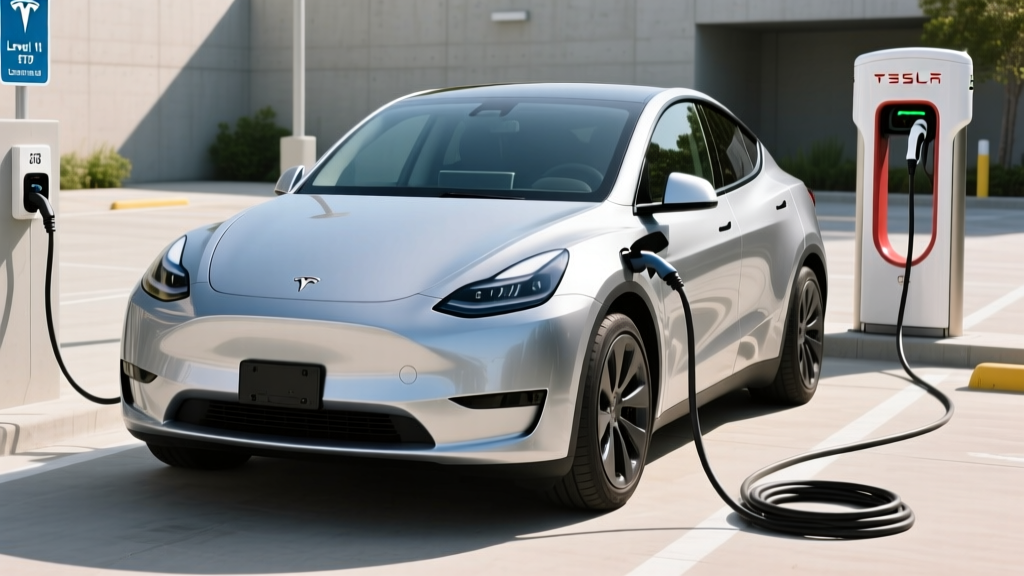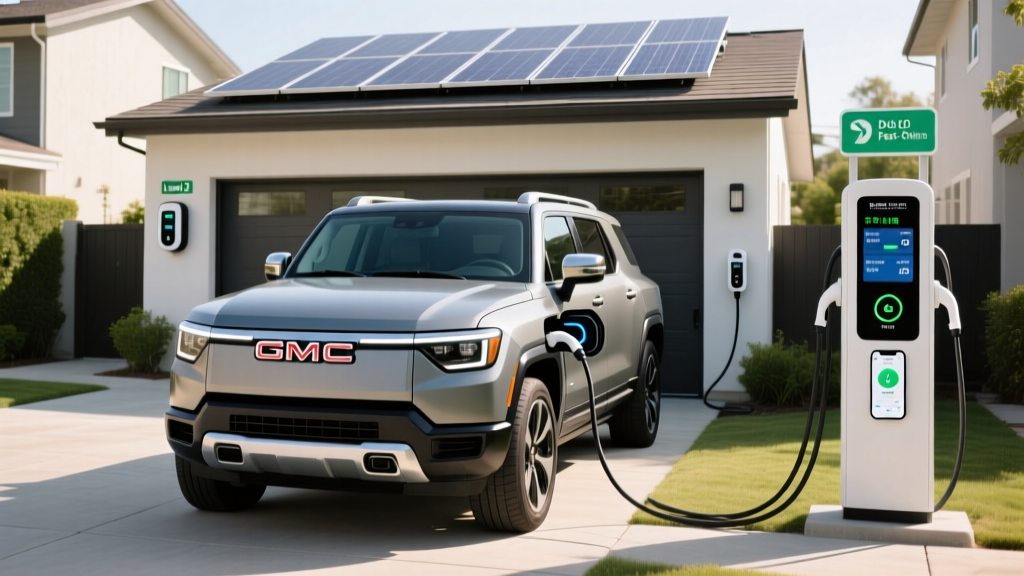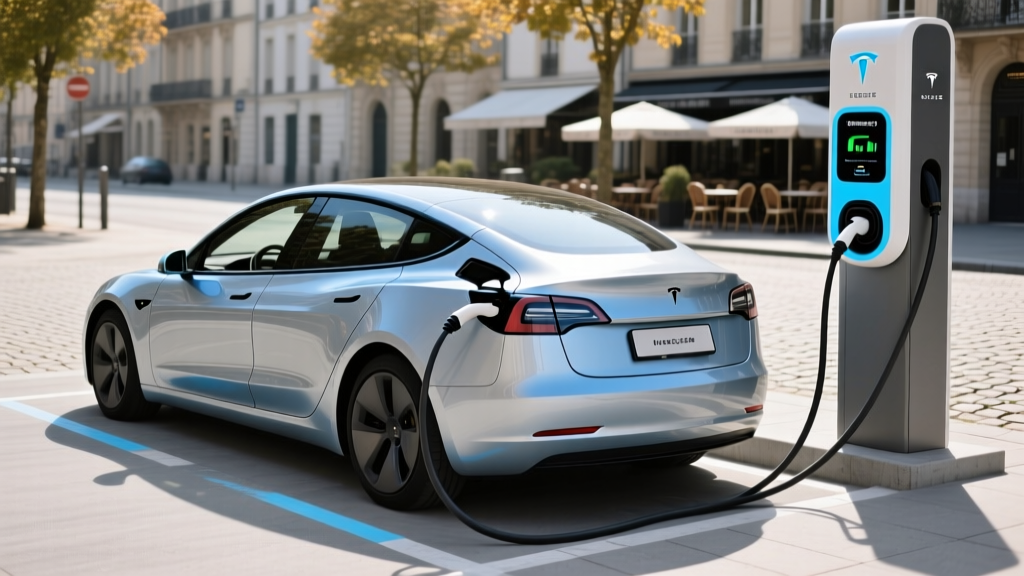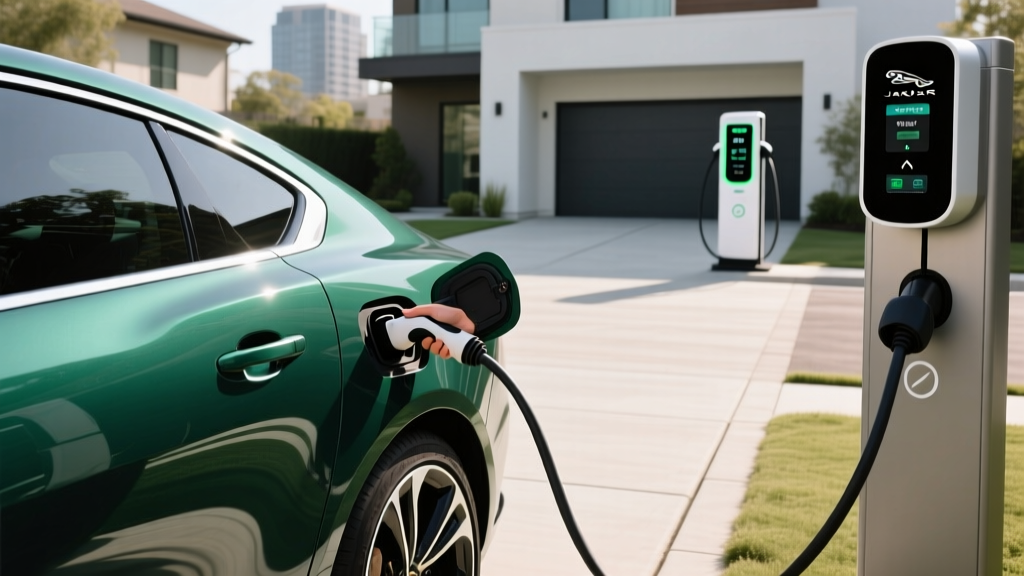
If you've been searching for a Jaguar XF supercharger, you've likely hit a wall — and for good reason. The Jaguar XF is a luxury internal-combustion sedan (and mild-hybrid in some markets), not a battery-electric vehicle. It has no traction battery, no charge port, and no compatibility with any DC fast-charging network, Tesla Superchargers included. What you can supercharge is a Jaguar EV — specifically the I-PACE, Jaguar's all-electric crossover — or any modern BEV from rival brands.
This guide untangles the naming confusion, then delivers what actually matters: exact charging speeds in kilowatts (kW), real installation costs for home Level 2 setups, connector compatibility across networks, and per-mile fueling costs versus gas. Whether you own an I-PACE, are shopping for one, or are cross-shopping EVs and stumbled onto this page, the data below applies.
Why There Is No Jaguar XF Supercharger
The Jaguar XF, produced through the 2024 model year and discontinued in the U.S. market, was offered with turbocharged four-cylinder and six-cylinder engines, some with 48-volt mild-hybrid assist (MHEV). MHEV systems use a small battery to smooth stop-start and provide minor torque fill — they cannot be plugged in, and they do not accept external charging. The term "supercharger" in automotive contexts also refers to a mechanical forced-induction device bolted to an engine's intake, not an EV charging station.
Jaguar's actual electric vehicle for the U.S. market is the I-PACE, a battery-electric SUV with a 90 kWh battery pack and CCS1 charging capability. Looking ahead, Jaguar is repositioning as a fully electric luxury brand, with a new generation of EVs expected from the 2026 model year onward on the Jaguar Type 00 platform.
Charging Levels Explained: kW Speeds and Miles Per Hour
Understanding EV charging starts with separating kW (kilowatts), which measures power — how fast energy flows — from kWh (kilowatt-hours), which measures energy capacity, like the size of a fuel tank. Confusing the two is the single most common mistake in EV ownership. A 90 kWh battery (capacity) charging at 7.2 kW (power) fills in roughly 12.5 hours from empty.
| Level | Voltage / Amps | Power (kW) | Miles of Range Per Hour | Typical Use |
|---|---|---|---|---|
| Level 1 | 120V / 12A | 1.4 kW | 3–5 mi/hr | Emergency / overnight trickle |
| Level 2 (Home) | 240V / 32–48A | 7.7–11.5 kW | 25–44 mi/hr | Daily home charging |
| DC Fast (Public) | 400V–800V DC | 50–350 kW | 150–1,000+ mi/hr (peak) | Road trips, quick top-ups |
For the Jaguar I-PACE specifically: its onboard charger accepts up to 11 kW on Level 2 (three-phase in Europe; 7.4 kW single-phase in the U.S. on a 32A circuit). On DC fast charging, the I-PACE peaks around 100 kW — respectable but well behind newer 800V architectures like the Hyundai Ioniq 5 (240 kW peak) or Porsche Taycan (270 kW peak). Expect a 10–80% DC fast charge in approximately 40–45 minutes at a 100+ kW station, tapering significantly above 80% state of charge.
Home Charger Installation: Electrical Requirements and Costs
Installing a Level 2 home charger is the single highest-impact upgrade for EV ownership. Most daily driving (the U.S. average is under 40 miles round-trip) is fully replenished overnight on Level 2, eliminating public-charging dependency for routine use.
Electrical Requirements
A typical Level 2 home charger requires a 240-volt dedicated circuit, similar to what an electric dryer or oven uses. Common configurations:
- 32-amp circuit (delivers 7.7 kW) — requires a 40-amp breaker (NEC requires circuits rated at 125% of continuous load)
- 40-amp circuit (delivers 9.6 kW) — requires a 50-amp breaker
- 48-amp circuit (delivers 11.5 kW) — requires a 60-amp breaker
For the I-PACE's 7.4 kW U.S. onboard charger limit, a 40-amp circuit (32A continuous) is sufficient. A 48-amp circuit provides future-proofing for a next vehicle with a higher onboard acceptance rate.
Panel Upgrade Considerations
Homes with older 100-amp electrical service may not have sufficient spare capacity for a new 40–60 amp dedicated circuit. A licensed electrician will perform a load calculation per NEC Article 220 to determine available headroom. If your panel is maxed out, a service upgrade to 200 amps typically costs $1,500–$3,000 before the charger circuit is even added. Some utilities offer load-management devices (e.g., the Emporia Smart Load Management system) that allow charger installation without a panel upgrade by throttling charge rate when household demand is high.
| Component | Low End | High End | Notes |
|---|---|---|---|
| Level 2 Charger Unit (hardwired, 32–48A) | $350 | $700 | Wi-Fi-enabled smart chargers cost more |
| Electrician Labor (2–4 hrs) | $300 | $800 | Varies by region; conduit runs add cost |
| Materials (wire, conduit, breaker) | $100 | $400 | Longer runs from panel = higher cost |
| Permit & Inspection | $50 | $200 | Required in most jurisdictions |
| Panel Upgrade (if needed) | $1,500 | $3,000 | Only for 100A service or maxed panels |
| Total (no panel upgrade) | $800 | $2,100 | Most homes with 200A service |
| Total (with panel upgrade) | $2,300 | $5,100 | Older homes with 100A service |
Safety and Code Requirements
National Electrical Code (NEC) requirements for EV charging circuits include:
- Dedicated circuit: The EV charger must have its own breaker — no sharing with other outlets or appliances
- GFCI protection: Required for outdoor receptacles (NEC 2020+); hardwired units may have built-in ground-fault protection
- Outdoor rating: If installed outside, the charger must carry a NEMA 4 (weatherproof) rating
- Permit and inspection: Nearly all jurisdictions require an electrical permit and final inspection for new 240V circuits
Always hire a licensed electrician. Per the National Electrical Contractors Association, improper EV charger installations have caused residential fires — cut no corners on wire gauge, breaker sizing, or torque specifications.
Connector Compatibility: NACS, CCS1, and CHAdeMO
The EV charging connector landscape has shifted dramatically. As of 2025–2026, the North American Charging Standard (NACS), developed by Tesla, has become the dominant connector for new vehicles. However, many EVs on the road — including the Jaguar I-PACE — use the CCS1 (Combined Charging System) connector.
| Connector | Vehicles Using It | DC Fast Networks | Adapter Available? |
|---|---|---|---|
| NACS (Tesla) | Tesla (all), Ford, GM, Rivian, Volvo, others (2025+) | Tesla Supercharger, Electrify America (new stalls) | CCS-to-NACS adapters from Tesla, A2Z, Lectron |
| CCS1 | Jaguar I-PACE, VW ID.4, Hyundai Ioniq 5 (pre-2026), BMW i4 | Electrify America, EVgo, ChargePoint, Ionity | NACS-to-CCS adapters for Supercharger access |
| CHAdeMO | Nissan LEAF, Mitsubishi Outlander PHEV (legacy) | Limited; being phased out | No widely available adapter |
Jaguar I-PACE owners: Your vehicle uses CCS1. You can charge at Electrify America, EVgo, and most non-Tesla DC fast networks natively. To access Tesla Supercharger stations (which now open to non-Tesla vehicles at select locations), you'll need a CCS-to-NACS adapter — Tesla sells one for approximately $199, and third-party options from Lectron and A2Z EV are available for $150–$250. Verify adapter compatibility with your specific model year before purchasing.
Charging Cost Per Mile: EV vs. Gas
One of the strongest economic arguments for EVs is lower per-mile fueling cost — but the savings depend heavily on where and when you charge. Let's compare using real 2026 electricity and gasoline rates.
| Scenario | Rate | Cost Per Mile (I-PACE at 2.4 kWh/mi) | Cost Per Mile (Gas Sedan at 30 MPG) |
|---|---|---|---|
| Home, Off-Peak Electricity | $0.12/kWh | $0.029/mi | — |
| Home, Standard Rate | $0.17/kWh | $0.041/mi | — |
| Public Level 2 (e.g., ChargePoint) | $0.30/kWh | $0.072/mi | — |
| DC Fast Charging (e.g., Electrify America) | $0.48/kWh | $0.115/mi | — |
| Gasoline ($3.60/gallon) | $3.60/gal | — | $0.120/mi |
The takeaway: Home charging at off-peak rates delivers a roughly 75% cost reduction per mile compared to gasoline. Even public DC fast charging at premium rates ($0.48/kWh) is marginally cheaper than gas at $3.60/gallon for a 30 MPG sedan. However, if you rely exclusively on DC fast charging, your savings narrow considerably — and at rates above $0.50/kWh (common in California and some urban areas), EV charging can match or exceed the cost of fueling a fuel-efficient gas car.
The Jaguar I-PACE's efficiency of approximately 76 MPGe combined (per fueleconomy.gov) is lower than many competing EVs — the Tesla Model Y achieves 122 MPGe, and the Hyundai Ioniq 5 reaches 114 MPGe. Lower efficiency means higher per-mile charging costs, which is a meaningful factor in total cost of ownership.
Recommended Home Level 2 Chargers
Based on reliability, features, and value, these are the Level 2 chargers we recommend for 2026. All units below are available in J1772 (universal Level 2 connector) and/or NACS configurations.
ChargePoint Home Flex
- Power Output: Up to 12 kW (50A circuit, adjustable down to 16A)
- Connector: J1772 (NACS version available)
- Cable Length: 23 feet
- Smart Features: Wi-Fi, app scheduling, Alexa integration, utility demand-response
- Price: ~$599
- Best For: Flexibility — adjustable amperage fits any panel capacity
Emporia Level 2 EV Charger
- Power Output: Up to 11.5 kW (48A, hardwired)
- Connector: J1772
- Cable Length: 24 feet
- Smart Features: Wi-Fi, energy monitoring, solar integration, load management with Emporia panel monitor
- Price: ~$399
- Best For: Budget-conscious buyers; solar homes wanting charge-from-sun scheduling
Tesla Wall Connector (J1772 or NACS)
- Power Output: Up to 11.5 kW (48A, hardwired)
- Connector: NACS native; J1772 version available
- Cable Length: 24 feet
- Smart Features: Wi-Fi, over-the-air updates, power sharing between two units on one circuit
- Price: ~$450
- Best For: Tesla owners or multi-EV households (power sharing avoids panel upgrades)
Grizzl-E Smart
- Power Output: Up to 10 kW (40A)
- Connector: J1772
- Cable Length: 24 feet
- Smart Features: Wi-Fi, OCPP-compatible, extreme cold rated (-40°F)
- Price: ~$449
- Best For: Cold-climate installations; Canadian-built durability
Charging time examples for common EV battery sizes on Level 2:
- Jaguar I-PACE (90 kWh battery, 7.4 kW onboard limit): 10–80% in approximately 8.5 hours on a 32A/7.7 kW circuit
- Tesla Model Y Long Range (75 kWh usable, 11.5 kW onboard): 10–80% in approximately 4.5 hours on a 48A/11.5 kW circuit
- Hyundai Ioniq 5 (77.4 kWh usable, 10.9 kW onboard): 10–80% in approximately 5 hours on a 48A circuit
Frequently Asked Questions
How much does it cost to install a home EV charger?
For most homes with a 200-amp electrical panel and a short wire run, expect $800–$2,100 total (charger unit, electrician labor, materials, and permit). Homes requiring a panel upgrade from 100A to 200A service should budget an additional $1,500–$3,000, bringing the total to $2,300–$5,100. Always get at least two quotes from licensed electricians.
How fast will each charging level add range?
Level 1 (120V standard outlet) adds 3–5 miles of range per hour — adequate only for low-mileage drivers or overnight trickle charging. Level 2 (240V, 32–48A) adds 25–44 miles per hour, fully replenishing most EVs overnight. DC fast charging adds 150–1,000+ miles per hour at peak rates, but actual sessions are limited by the vehicle's charge-curve taper above 80% state of charge.
Which connector and charger is compatible with my EV?
Check your vehicle's charge port. Most non-Tesla EVs built before 2025 use CCS1 (including the Jaguar I-PACE). Tesla vehicles use NACS. Starting in 2025, Ford, GM, Rivian, and others have switched to NACS. CCS1 vehicles can access Tesla Superchargers at participating locations using a CCS-to-NACS adapter ($150–$250). CHAdeMO (Nissan LEAF) is a legacy standard with diminishing infrastructure.
How much does charging cost per mile vs. gas?
Home charging at off-peak rates ($0.12/kWh) costs roughly $0.03 per mile for an average-efficiency EV — about 75% less than gasoline at $3.60/gallon in a 30 MPG sedan ($0.12/mile). Public DC fast charging at $0.48/kWh narrows the gap to roughly $0.11–$0.12 per mile. The less efficient your EV, the smaller the savings: the I-PACE at 2.4 kWh/mile costs more per mile than a Tesla Model Y at 3.5 miles/kWh.
What electrical upgrades might I need?
If your home has a 100-amp service panel, you will likely need an upgrade to 200 amps ($1,500–$3,000) before adding a dedicated 40–60 amp EV circuit. Homes with 200-amp service usually have sufficient headroom, but a licensed electrician must perform a load calculation. Alternatives include: installing a lower-amperage charger (16A / 3.8 kW), using a smart load-management device that throttles charging during peak household demand, or pairing the charger with a circuit-sharing outlet (e.g., NeoCharge Smart Splitter) if a 240V dryer outlet is nearby.
Can I charge a Jaguar I-PACE at a Tesla Supercharger?
Not natively. The I-PACE uses a CCS1 connector, while Tesla Superchargers use NACS. However, Tesla has opened select Supercharger stations to non-Tesla EVs via the Tesla app, and a CCS-to-NACS adapter enables access at participating locations. Verify station availability in the Tesla app before planning a trip around Supercharger access.
Does the Jaguar XF have any electric or plug-in hybrid variant?
No. The Jaguar XF was offered with mild-hybrid (MHEV) powertrains that use a small 48V battery for stop-start efficiency, but this battery charges only through regenerative braking and the engine — it cannot be plugged in. Jaguar's electrified lineup centers on the I-PACE (fully electric) and upcoming models on the Type 00 platform.
For authoritative efficiency data, consult the EPA at fueleconomy.gov. For federal EV tax credit eligibility (§30D) — which can offset up to $7,500 of a new EV purchase or $4,000 for a used EV — review current rules at IRS.gov, noting that income caps, MSRP limits, and battery-sourcing requirements apply and change annually.