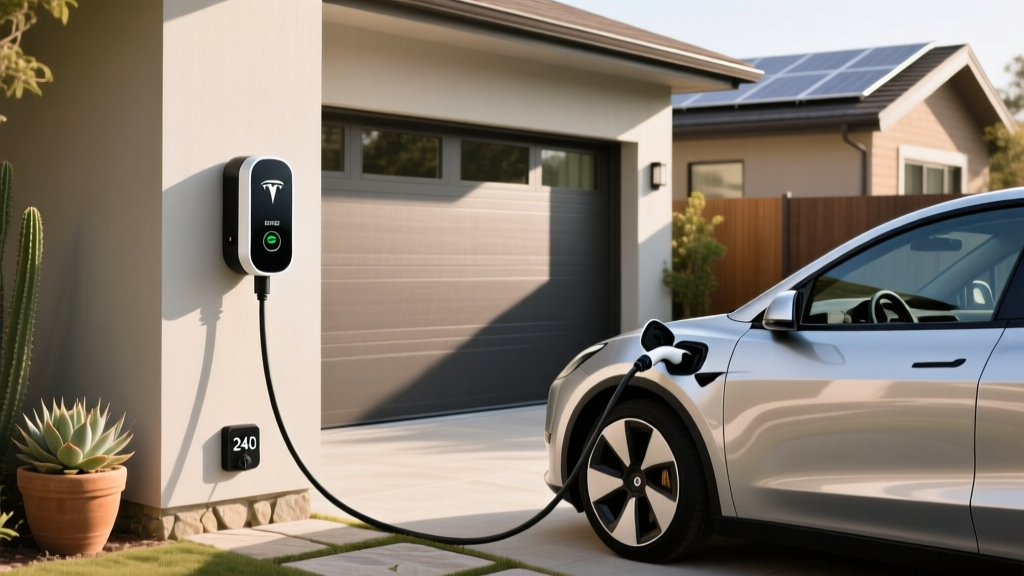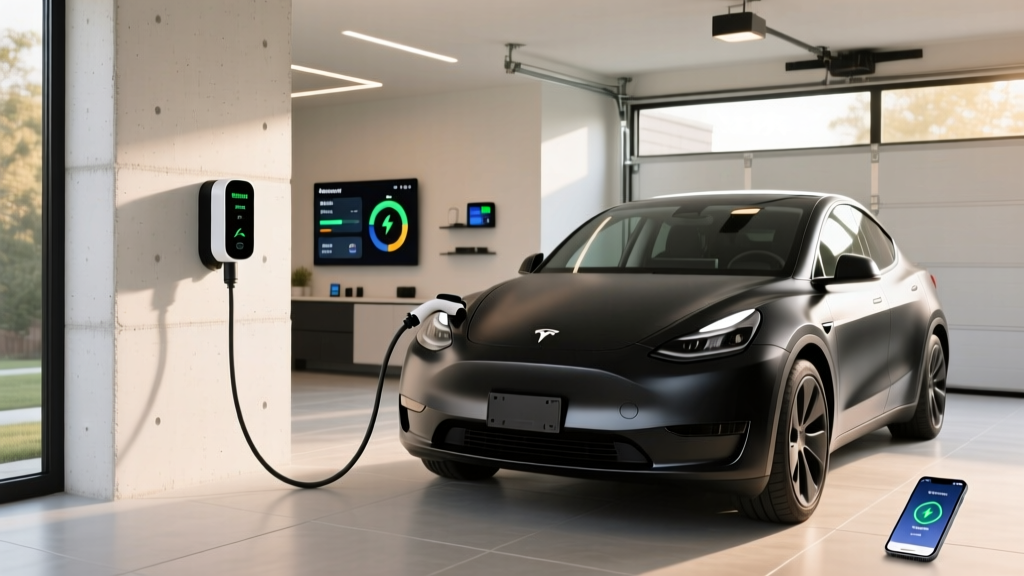
Owners of high-performance gas sedans like the 2015 Jaguar XF Supercharged — with its 5.0L V8 pushing 470 hp and returning a combined 18 MPG per the EPA — are increasingly eyeing electric vehicles for daily driving. The question that stops many at the research stage isn't whether EVs are fast enough; it's whether home charging is practical and affordable. This guide breaks down exactly what a home EV charging setup costs, how fast each level adds range, and how the per-mile cost stacks up against supercharged V8 fueling.
Charging Levels Explained: Speeds in kW and Miles Per Hour
Before comparing costs, the three charging tiers need precise definition. The most common point of confusion in EV ownership is mixing up kW (kilowatts — the rate of power delivery, like water pressure) with kWh (kilowatt-hours — total energy stored, like gallons in a tank). A charger's kW rating tells you how fast energy flows; your battery's kWh capacity tells you how much it holds.
| Level | Voltage | Power (kW) | Miles of Range Added Per Hour | Typical Use Case |
|---|---|---|---|---|
| Level 1 | 120V AC | 1.0–1.4 kW | 3–5 mi/hr | Overnight trickle; PHEV-friendly |
| Level 2 | 240V AC | 3.3–19.2 kW | 12–70 mi/hr | Home daily charging; destination |
| DC Fast | 400–800V DC | 50–350 kW | 150–1,200+ mi/hr (peak) | Road trips; highway corridors |
A practical example: a 2025 Hyundai Ioniq 5 with a 77.4 kWh battery charging on a 7.7 kW Level 2 home circuit adds roughly 28 miles of range per hour. A full 10–80% session takes about 7 hours — ideal for overnight. On a 250 kW DC fast charger, that same 10–80% session takes approximately 18 minutes, though peak speed only sustains up to roughly 55% State of Charge before tapering to protect battery health.
How Much Does It Cost to Install a Home EV Charger?
Home Level 2 installation is the single biggest variable in EV ownership setup. Costs depend on your electrical panel's remaining capacity, the distance from panel to charger location, and local permit fees. Here's a realistic breakdown for a 240V / 48A (hardwired) Level 2 installation — the most common configuration for a 40A-continuous-draw charger:
| Component | Typical Range | Notes |
|---|---|---|
| Level 2 Charger (Equipment) | $400–$750 | Smart Wi-Fi chargers; 40–48A hardwired |
| Electrician Labor | $600–$2,500 | Depends on run length, conduit, wall penetrations |
| Electrical Permit | $50–$250 | Varies by municipality |
| Panel Upgrade (if needed) | $1,500–$4,000 | Required if panel lacks spare capacity for a 60A breaker |
| Total (no panel upgrade) | $1,050–$3,500 | Most homes with 200A service |
| Total (with panel upgrade) | $2,550–$7,500 | Older homes with 100A service |
Panel upgrade gotcha: Homes built before the 1990s often have 100A main panels that are already near capacity. Adding a 60A breaker for a 48A continuous charger may exceed the panel's rated load calculation. A licensed electrician will perform a NEC Article 220 load calculation before recommending an upgrade. Do not skip this step — an overloaded panel is a fire hazard, and most jurisdictions require the permit inspection to verify capacity.
The federal government offers a 30C Alternative Fuel Vehicle Refueling Property Credit covering up to 30% of home charging equipment and installation costs (capped at $1,000), though eligibility depends on census-tract requirements. Consult a tax professional for your specific situation.
Which Connector Is Compatible With Your EV?
The connector landscape has consolidated significantly since 2024, when Ford, GM, Rivian, Volvo, and most major automakers committed to the North American Charging Standard (NACS) — the connector originally designed by Tesla. By the 2026 model year, nearly all new EVs sold in the U.S. ship with a native NACS port. Vehicles from 2024 and earlier with CCS1 ports can access Tesla Superchargers using an adapter.
| Connector | Native Brands | Adapter Required For |
|---|---|---|
| NACS (Tesla) | Tesla, Ford, GM, Rivian, Volvo, Polestar, Mercedes, BMW (2025+) | CCS vehicles using NACS-to-CCS adapter (~$200) |
| CCS1 | Hyundai, Kia, VW, older Ford/GM/Rivian (pre-2025) | Tesla Supercharger access requires CCS adapter |
| CHAdeMO | Nissan Leaf (legacy); effectively discontinued for new models | Limited DC fast network; adapters rare |
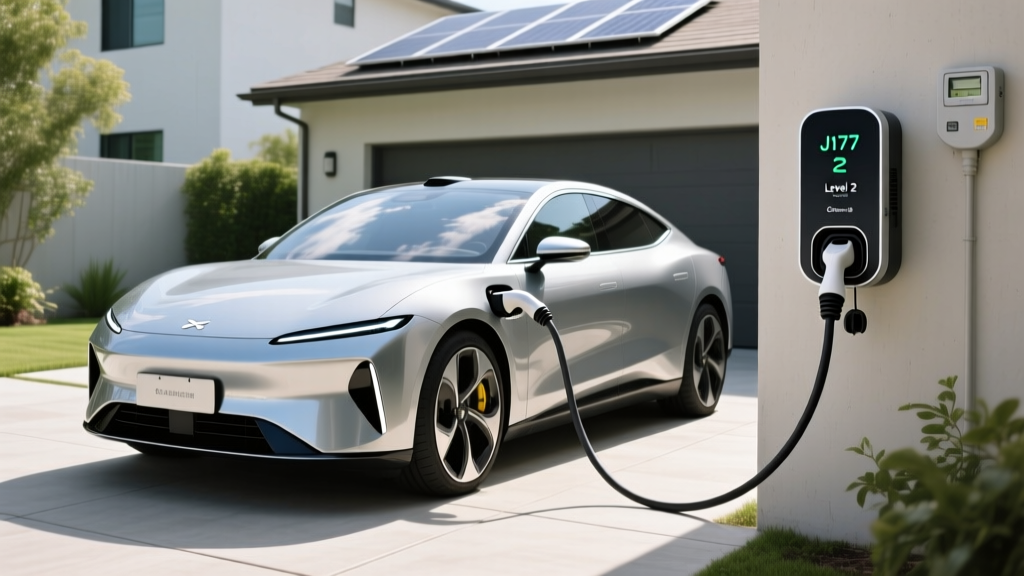
For home Level 2 charging, all non-Tesla EVs use the J1772 connector (or NACS, which supports Level 2 natively). If you drive a Tesla at home, you'll use the NACS connector directly. If you own a CCS-equipped EV, most universal home chargers include a J1772 plug that works seamlessly — no adapter needed for Level 2.
EV Charging Cost Per Mile vs. the 2015 Jaguar XF Supercharged
The 2015 Jaguar XF Supercharged's 5.0L V8 delivers thrilling performance but drinks premium fuel at roughly 18 MPG combined. With premium gasoline averaging $4.50/gallon in early 2026, that's approximately $0.25 per mile in fuel alone.
Here's how EV charging compares across common scenarios, using a 2025 Tesla Model 3 Long Range (averaging 26 kWh/100 mi or roughly 3.8 mi/kWh) as the benchmark:
| Scenario | Rate | Cost/Mile (Model 3 LR) | vs. Jaguar XF SC |
|---|---|---|---|
| Home off-peak (utility time-of-use) | $0.08–$0.12/kWh | $0.02–$0.03 | Save 88–92% |
| Home standard rate | $0.14–$0.18/kWh | $0.04–$0.05 | Save 80–84% |
| Public Level 2 (ChargePoint, etc.) | $0.25–$0.49/kWh | $0.07–$0.13 | Save 48–72% |
| DC Fast (Electrify America, Tesla) | $0.35–$0.55/kWh | $0.09–$0.14 | Save 44–64% |
| 2015 Jaguar XF Supercharged | Premium ~$4.50/gal, 18 MPG | $0.25 | Baseline |
At 15,000 miles per year, a Jaguar XF Supercharged owner spends roughly $3,750 annually on premium fuel. A Tesla Model 3 owner charging primarily at home on off-peak rates spends approximately $375–$450 per year on electricity — a savings exceeding $3,000 annually. Even exclusive DC fast charging at highway rates keeps annual fueling costs under $2,100.
Charging Time Examples: 10–80% for Common Battery Sizes
Most EV owners charge between 10% and 80% State of Charge for daily use, as charging slows dramatically above 80% to protect battery chemistry. Here's how long 10–80% sessions take across popular battery sizes and charger types:
| Battery Size | Example Vehicle | 7.7 kW Level 2 | 11.5 kW Level 2 | 150 kW DC Fast | 250 kW DC Fast |
|---|---|---|---|---|---|
| 60 kWh | 2025 Chevy Equinox EV | ~5.5 hrs | ~3.7 hrs | ~28 min | ~22 min |
| 77 kWh | 2025 Hyundai Ioniq 5 | ~7.0 hrs | ~4.7 hrs | ~25 min | ~18 min |
| 85 kWh | 2025 Tesla Model 3 LR | ~7.7 hrs | ~5.2 hrs | ~28 min | ~20 min |
| 100 kWh | 2025 Ford F-150 Lightning Ext. | ~9.1 hrs | ~6.1 hrs | ~38 min | ~28 min |
| 123 kWh | 2025 GMC Sierra EV | ~11.2 hrs | ~7.5 hrs | ~45 min | ~35 min |
Real-world caveat: DC fast charging times assume the battery is preconditioned (warmed to optimal temperature) and ambient conditions are moderate. In sub-30°F weather, expect 10–80% times to increase by 20–40% unless your vehicle actively preconditioned the pack during navigation to the charger. Peak kW is never sustained for the full session — the charge curve tapers as SoC rises.
Recommended Home Level 2 Chargers: Equipment Picks
The home charger market has matured considerably, with smart features like Wi-Fi scheduling, utility demand-response integration, and load-sharing now standard on mid-range units. Here are top picks for 2025–2026 installations:
Emporia Level 2 EV Charger
- Power Output: 48A (11.5 kW on 240V, hardwired) or 40A (9.6 kW, NEMA 14-50 plug)
- Connector: J1772 (NACS adapter included)
- Cable Length: 24 feet
- Smart Features: Wi-Fi scheduling, energy monitoring, solar integration, load management
- Price: ~$399 (plug-in) / ~$449 (hardwired)
- Best For: Budget-conscious buyers wanting full smart features
ChargePoint Home Flex
- Power Output: Up to 50A (12 kW, hardwired) or 40A (9.6 kW, NEMA 14-50)
- Connector: J1772 (NACS adapter available)
- Cable Length: 23 feet
- Smart Features: App scheduling, Alexa/Google Home, utility demand-response
- Price: ~$599
- Best For: Proven reliability, wide amperage flexibility
Tesla Wall Connector (Universal)
- Power Output: Up to 48A (11.5 kW, hardwired on 60A circuit)
- Connector: NACS native + J1772 adapter (Magic Dock style)
- Cable Length: 24 feet
- Smart Features: Wi-Fi updates, power sharing with second unit, Tesla app integration
- Price: ~$600
- Best For: Tesla owners or mixed-vehicle households (NACS + J1772)
Grizzl-E Smart
- Power Output: 40A (9.6 kW, NEMA 14-50) or 48A (11.5 kW, hardwired)
- Connector: J1772
- Cable Length: 24 feet
- Smart Features: OCPP protocol, app control, adjustable amperage
- Price: ~$549
- Best For: Extreme cold climates (rated to -40°F), Canadian-built durability
Safety and Electrical Code Considerations
A Level 2 charger draws sustained high current for hours — this is fundamentally different from plugging in a dryer that cycles on and off. The National Electrical Code (NEC) treats EV charging as a continuous load, meaning the circuit must be rated for 125% of the charger's maximum draw. A 48A charger requires a 60A breaker and 6 AWG copper wire (or 4 AWG aluminum).
Key safety requirements for any home EV charging installation:
- Dedicated circuit: The charger must have its own breaker — no sharing with other appliances. EV draw is continuous and high; sharing risks overheating.
- GFCI protection: NEC 2020 and later require GFCI (Ground Fault Circuit Interrupter) protection for all EV charging outlets. Hardwired units typically have GFCI built into the charger itself. If using a NEMA 14-50 receptacle, your electrician must install a GFCI breaker — these cost $80–$150 more than standard breakers.
- Outdoor rating: If your charger mounts outdoors, verify the unit carries a NEMA 4 (weatherproof) rating. All recommended chargers above meet this standard, but cable management and connector holsters should keep the plug off the ground.
- Permit and inspection: Virtually all jurisdictions require a permit for a new 240V circuit. The inspection verifies wire gauge, breaker sizing, grounding, and GFCI compliance. Skipping the permit risks insurance denial in the event of an electrical fire.
- NEMA 14-50 receptacle torque: If using a plug-in charger rather than hardwired, the 14-50 receptacle must be torqued to manufacturer specification. Loose connections under sustained 40A load generate heat — a leading cause of EV charging fires. Many electricians now recommend hardwiring to eliminate this failure point.
The National Fire Protection Association maintains the NEC, and local amendments may impose additional requirements. Always hire a licensed electrician familiar with EV charging installations — general electricians unfamiliar with continuous-load calculations may undersize components.
Making the Switch: From Supercharged V8 to Electric
The 2015 Jaguar XF Supercharged remains a benchmark for internal-combustion performance sedans — 470 hp, a 0–60 time around 4.7 seconds, and a supercharger whine that no electric motor can replicate acoustically. But the ownership math has shifted. At $0.25/mile in fuel, plus higher maintenance costs (supercharged V8s consume oil, require premium synthetic changes, and need supercharger belt inspections), annual running costs routinely exceed $5,000 for a 15,000-mile driver.
Compare that to a 2025 BMW i5 M60 (601 hp, 0–60 in 3.7 seconds, EPA range 295 miles) charging at home for $0.03/mile. The performance gap has not just closed — it's inverted in many metrics — while the fueling cost dropped by nearly 90%.
For former XF Supercharged owners ready to transition, the home charging investment of $1,050–$3,500 pays for itself in fuel savings within 5–12 months, depending on your local electricity rates and annual mileage. According to fueleconomy.gov, the average EV driver saves between $4,000 and $9,000 in fuel costs over the vehicle's lifetime compared to a comparable gasoline vehicle.
Frequently Asked Questions
How much does it cost to install a home EV charger?
A typical 240V Level 2 home installation costs between $1,050 and $3,500 if your electrical panel has sufficient spare capacity. If a panel upgrade from 100A to 200A is required, total costs range from $2,550 to $7,500. Equipment itself runs $400–$750 for a quality smart charger; electrician labor and permits make up the remainder.
How fast will each charging level add range?
Level 1 (120V) adds 3–5 miles per hour — adequate for plug-in hybrids with small batteries. Level 2 (240V) adds 12–70 miles per hour depending on amperage and vehicle acceptance rate. DC fast charging adds 150–1,200+ miles per hour at peak, though sessions are typically measured in minutes (18–45 min for 10–80%) rather than sustained hourly rates.
Which connector/charger is compatible with my EV?
For 2025–2026 model-year vehicles, most new EVs use NACS natively (Tesla, Ford, GM, Rivian, Volvo, BMW, Mercedes). Hyundai, Kia, and VW still primarily use CCS1. For home Level 2, J1772 works with all non-Tesla EVs, and NACS handles Tesla vehicles. Universal chargers like the Tesla Wall Connector now include both connector types.
How much does charging cost per mile vs. gas?
Home charging costs $0.02–$0.05 per mile for most EVs, compared to $0.25 per mile for a 2015 Jaguar XF Supercharged on premium fuel. Even the most expensive public DC fast charging ($0.09–$0.14/mile) remains significantly cheaper than gasoline. Annual savings for a 15,000-mile driver range from $2,000 to $3,400.
What electrical upgrades might I need?
The most common upgrade is a panel replacement from 100A to 200A service ($1,500–$4,000), needed in older homes lacking breaker capacity. You may also need conduit runs if the charger location is far from the panel, a GFCI breaker for plug-in installations ($80–$150 premium), or a utility service upgrade if your home's incoming supply is limited. A licensed electrician's load calculation determines what's required before any work begins.