If you've spent years enjoying the supercharged V6 or V8 rumble of a Jaguar XF Supercharged, you already know what performance luxury feels like — 340 to 380 horsepower, effortless highway passing, and a cabin that isolates you from the road. But with fuel costs climbing and electrified alternatives like the Jaguar I-PACE, BMW i5, and Mercedes EQE offering comparable refinement, many XF Supercharged owners are evaluating the switch. The biggest question isn't range or performance — it's charging. Specifically: what does it take to set up home charging, what will it cost, and how does the per-mile economics compare to filling that 18.5-gallon tank with premium?
This guide walks through every practical element of home and public EV charging, calibrated for drivers transitioning from a high-performance luxury sedan to a modern battery-electric vehicle.
Why XF Supercharged Owners Are Looking at EVs
The Jaguar XF Supercharged (produced through the 2020 model year in the U.S.) delivers 340 hp from its 3.0L supercharged V6 in later trims, with earlier 5.0L V8 variants pushing 470 hp in the XFR-S. Real-world fuel economy for the 3.0L hovers around 18–21 MPG combined per EPA data on fueleconomy.gov, requiring premium 91+ octane fuel. At $4.20/gallon for premium and 15,000 miles driven annually, that translates to roughly $3,000–$3,500 per year in fuel.
Compare that to a 2026 EV in the luxury midsize segment — the Jaguar I-PACE (EPA 246 mi range, 90 kWh battery) or the BMW i5 eDrive40 (EPA 295 mi, 84.3 kWh usable) — and home charging at $0.14/kWh drops annual "fuel" cost to approximately $700–$900. That's a $2,000+ annual swing, and it's the primary financial driver for the switch.
Charging Levels Explained: Speeds, Power, and Range Added
Before buying equipment, you need to understand the three charging tiers. The critical distinction: kW (kilowatts) measures power — how fast energy flows into the battery. kWh (kilowatt-hours) measures energy — the battery's total capacity, analogous to gallons in a fuel tank. Never confuse them.
| Level | Voltage | Power (kW) | Miles of Range Added per Hour | Typical Use Case |
|---|---|---|---|---|
| Level 1 | 120V AC | 1.2–1.9 kW | 3–5 mi/hr | Overnight trickle; emergency top-up |
| Level 2 | 240V AC | 3.3–19.2 kW | 12–75 mi/hr | Home daily charging; workplace; destination |
| DC Fast Charge | 400–800V DC | 50–350 kW | 150–1,000+ mi/hr (peak) | Road trips; highway corridor charging |
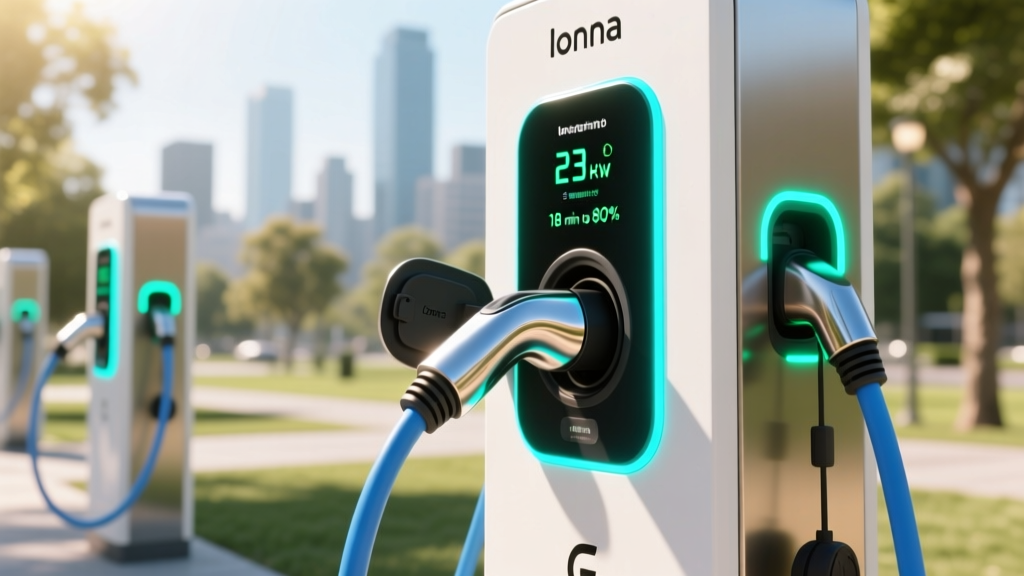
Real-world context: A 2026 BMW i5 eDrive40 with an 84.3 kWh usable battery charging on a 48-amp (11.5 kW) Level 2 circuit will add roughly 35–40 miles of range per hour. A full 10–80% charge (approximately 59 kWh replenished) takes about 5.5–6 hours — ideal for overnight charging. On a 150 kW DC fast charger, that same 10–80% session takes roughly 25–30 minutes, though the charge curve tapers significantly above 80% SoC to protect battery longevity.
Home Charger Installation: Electrical Requirements and Costs
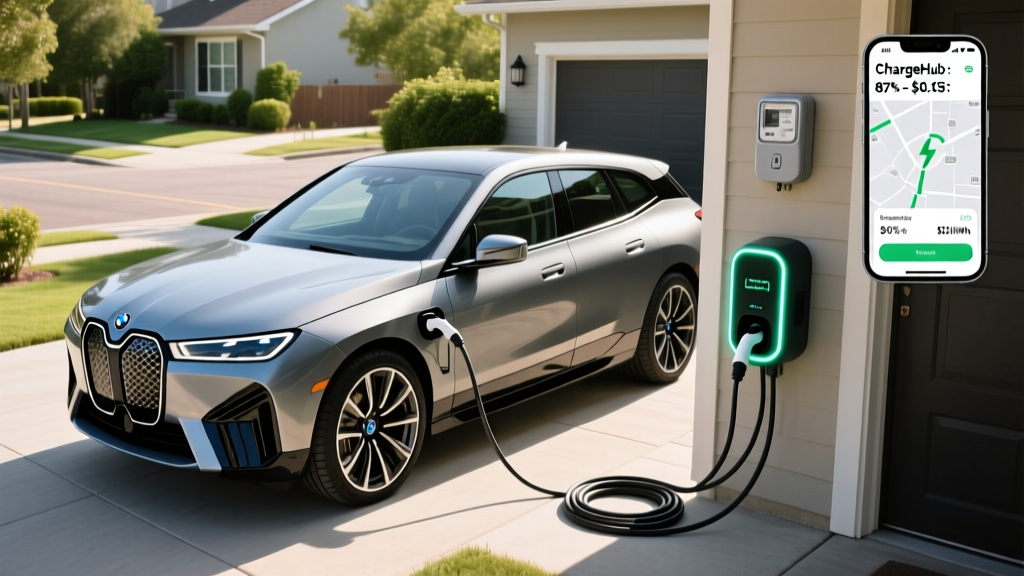
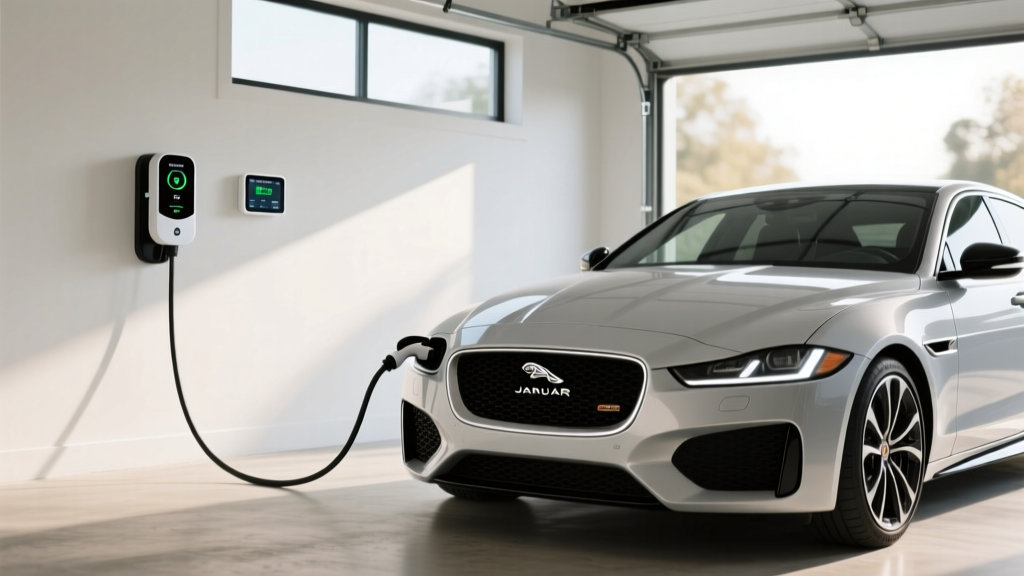
This is where most new EV owners encounter surprises. A Level 2 home charger requires a dedicated 240V circuit — the same voltage as your electric dryer or oven. The most common setup for luxury EV owners is a 48-amp charger on a 60-amp dedicated circuit (National Electrical Code requires the circuit to be rated 125% above the continuous load).
What Your Electrical Panel Needs
Most homes built after 1990 have a 200-amp main panel, which typically supports a 60-amp EV circuit without upgrade. However, if your panel is already near capacity (common in homes with electric heat, electric range, hot tub, or pool equipment), you may need:
- Panel upgrade from 100A or 150A to 200A: $1,500–$3,500
- Service upgrade from 200A to 320A (for larger homes or future-proofing): $3,000–$5,000+
- Load management device (avoids panel upgrade by dynamically sharing power): $300–$600 installed
A licensed electrician should perform a load calculation per NEC Article 220 before recommending an upgrade. Do not skip this step — an overloaded panel is a fire hazard.
Installation Cost Breakdown
| Component | Low End | High End | Notes |
|---|---|---|---|
| Level 2 Charger (hardware) | $350 | $750 | 40A–48A smart charger, hardwired or NEMA 14-50 plug |
| Electrician labor (standard install) | $500 | $1,500 | Panel to garage, <30 ft run, drywall patching |
| Permit and inspection | $50 | $250 | Varies by municipality; some waive for EV circuits |
| Panel upgrade (if needed) | $1,500 | $3,500 | 100A→200A; not required in most modern homes |
| Conduit/wiring materials | $100 | $400 | THHN in EMT conduit; longer runs cost more |
| Total (no panel upgrade) | $1,000 | $2,900 | Most common scenario |
| Total (with panel upgrade) | $2,500 | $6,650 | Older homes or high-load panels |
Connector Compatibility: NACS, CCS1, and What You Need to Know
The connector landscape has consolidated significantly. As of 2026, the North American Charging Standard (NACS) — originally developed by Tesla — has been adopted by Ford, GM, Rivian, Volvo, Polestar, Mercedes, BMW, and most major manufacturers. The legacy CCS1 (Combined Charging System) connector remains on vehicles from Stellantis, Volkswagen ID.4 (pre-2026 model years), and some Hyundai/Kia models.
| Connector | Brands Using It (2026) | Adapter Needed? |
|---|---|---|
| NACS (Tesla-style) | Tesla, Ford, GM, Rivian, Volvo, Polestar, BMW, Mercedes, Hyundai (new) | No for NACS vehicles; CCS→NACS adapters available (~$200) |
| CCS1 | VW (older), some Stellantis, legacy Hyundai/Kia | NACS→CCS1 adapter needed for Supercharger access (~$200–$250) |
| CHAdeMO | Nissan LEAF (discontinued in U.S.), Mitsubishi Outlander PHEV | Limited public infrastructure; network declining |
For the home charger: Most Level 2 chargers ship with a J1772 connector (the AC charging standard). NACS vehicles include a J1772-to-NACS adapter in the glovebox. If you buy a Tesla Wall Connector, it ships with NACS and includes a J1772 adapter for non-Tesla vehicles.
Level 2 Charger Equipment Recommendations
For luxury EV owners accustomed to the XF Supercharged's build quality, here are three chargers that match that standard in reliability, smart features, and cable management:
ChargePoint Home Flex
- Power: Up to 12 kW (50A), configurable 16A–50A
- Connector: J1772 (NACS adapter included)
- Cable: 23 ft
- Smart features: Wi-Fi, scheduling, Alexa, energy tracking
- Price: ~$549
- Best for: Flexible amperage if panel capacity is tight
Tesla Wall Connector (Gen 4)
- Power: Up to 11.5 kW (48A)
- Connector: NACS native (J1772 adapter included)
- Cable: 24 ft
- Smart features: Wi-Fi, OTA updates, power sharing (multiple units), load management
- Price: ~$420
- Best for: NACS-vehicle households; best value
Emporia Vue Level 2 Charger
- Power: Up to 11.5 kW (48A)
- Connector: J1772
- Cable: 24 ft
- Smart features: Solar integration, energy monitoring, scheduling, V2H-ready
- Price: ~$399
- Best for: Solar-panel owners wanting integrated energy management
Cost to Charge: EV vs. Premium Gasoline Per Mile
This is where the XF Supercharged comparison becomes stark. Let's run the numbers against a representative 2026 luxury EV — the BMW i5 eDrive40, which delivers performance and refinement in the XF's class.
| Scenario | Jaguar XF Supercharged 3.0L | BMW i5 eDrive40 |
|---|---|---|
| Energy/Fuel | Premium 91 octane | Electricity |
| Efficiency | 20 MPG combined (real-world) | 3.0 mi/kWh (97 MPGe combined, EPA) |
| Home off-peak ($0.12/kWh) | — | $0.040/mile |
| Home standard ($0.16/kWh) | — | $0.053/mile |
| Public Level 2 ($0.30/kWh) | — | $0.100/mile |
| DC Fast Charge ($0.45/kWh) | — | $0.150/mile |
| Premium gas ($4.20/gal) | $0.210/mile | — |
| Annual cost (15,000 mi, home charging) | $3,150 | $600–$795 |
The takeaway: Even using exclusively public DC fast charging — the most expensive scenario — the i5 costs $0.15/mile vs. the XF Supercharged's $0.21/mile. With home charging, the EV cost drops to roughly $0.04–$0.05/mile, a 75–80% reduction in per-mile energy cost.
Over five years and 75,000 miles, the fuel savings alone range from $10,000 to $13,000, depending on your electricity rate and charging mix. Factor in eliminated oil changes, no supercharger belt replacements, and reduced brake wear from regenerative braking, and total ownership savings widen further.
Safety, Code, and Permit Considerations
A Level 2 charger installation is not a DIY project. NEC (National Electrical Code) requirements are specific and enforced by local inspectors:
- Dedicated circuit: The EV charger must have its own breaker — no sharing with other appliances.
- GFCI protection: NEC 2020 and later require GFCI protection for all 240V EV charging outlets (NEMA 14-50). Hardwired installations may be exempt depending on jurisdiction.
- Outdoor rating: If your charger mounts outside, it must carry a NEMA 4 or IP65 weather rating. All recommended chargers above meet this standard.
- Permit required: Most municipalities require an electrical permit ($50–$250) and a post-installation inspection. Unpermitted work can void home insurance claims.
- Wire gauge: A 60-amp circuit requires 6 AWG copper (THHN) or 4 AWG aluminum. Your electrician will specify based on run length and local amendments.
Always hire a licensed electrician who pulls permits. Ask for a load calculation report before approving a panel upgrade — some electricians recommend upgrades that aren't strictly necessary.
Public Charging for Road Trips: What XF Owners Need to Adjust
The XF Supercharged's 18.5-gallon tank and 20 MPG combined yields a real-world range of approximately 370 miles before refueling, with a fill-up taking 5 minutes. This is the benchmark your expectations should calibrate against.
Modern luxury EVs approach but don't match this convenience:
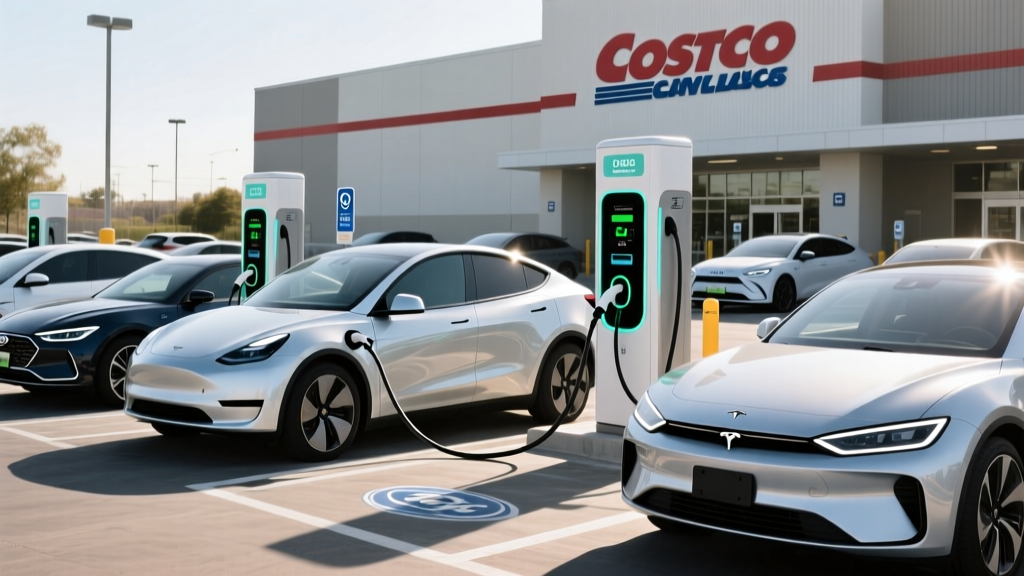
- BMW i5 eDrive40: EPA 295 mi range; real-world highway ~250 mi; DC fast charge 10–80% in ~28 min at 205 kW peak
- Mercedes EQE 350+: EPA 305 mi range; real-world highway ~260 mi; DC fast charge 10–80% in ~32 min at 170 kW peak
- Jaguar I-PACE (2026): EPA 246 mi range; real-world highway ~200 mi; DC fast charge 10–80% in ~35 min at 100 kW peak
- Lucid Air Pure: EPA 419 mi range; real-world highway ~350 mi; DC fast charge 10–80% in ~25 min at 200+ kW peak
Road-trip planning apps like A Better Routeplanner (ABRP) or the vehicle's native navigation will route you through DC fast chargers and precondition the battery for optimal charge speed. Expect to stop every 2.5–3.5 hours on long drives — a natural rest cadence that many former ICE drivers find acceptable once they adjust.
Frequently Asked Questions
How much does it cost to install a home EV charger?
For a standard installation without a panel upgrade, expect $1,000–$2,900 all-in (charger hardware, electrician labor, permit, wiring). If your panel needs upgrading from 100A to 200A, add $1,500–$3,500. The federal alternative fuel refueling property credit may cover 30% of costs up to $1,000 if you're in a qualifying census tract.
How fast will each charging level add range?
Level 1 (120V): 3–5 miles per hour. Level 2 (240V, 48A): 30–40 miles per hour for most luxury EVs. DC Fast Charge: 150–300+ miles in a 20–30 minute session, depending on the vehicle's peak charge rate and battery preconditioning.
Which connector/charger is compatible with my EV?
Check your vehicle's charge port. 2026 models from Tesla, Ford, GM, BMW, Mercedes, Volvo, and Rivian use NACS. Older or remaining CCS1 vehicles (some VW, Hyundai/Kia) can use a NACS-to-CCS adapter (~$200) for Supercharger access. For home Level 2 charging, all EVs accept J1772 (or use the included J1772-to-NACS adapter).
How much does charging cost per mile vs gas?
Home charging at $0.14/kWh averages $0.04–$0.05 per mile for a luxury EV. The Jaguar XF Supercharged on premium gas at $4.20/gallon costs approximately $0.21 per mile. That's a 75–80% per-mile savings with home charging.
What electrical upgrades might I need?
Most 200-amp panels can accommodate a 60-amp EV circuit without upgrade. Homes with 100A or 150A service, or those with heavy existing electric loads (heat pump, electric range, pool), may need a panel upgrade ($1,500–$3,500) or a load-management device ($300–$600) that shares capacity dynamically. A licensed electrician's load calculation is the definitive answer.