If you're stepping out of a 2010 Jaguar XJ Supercharged or XF Supercharged and into your first electric vehicle, the single biggest shift isn't the silent powertrain — it's refueling. Instead of 5 minutes at a gas station, you'll be plugging in at home, at work, or on the road. The good news: most daily charging happens in your garage while you sleep, and the per-mile cost is a fraction of what that supercharged 5.0L V8 demanded.
This guide walks you through exactly what's involved in setting up home charging, what each public charging level delivers, which connectors you'll encounter, and what it all costs — with real numbers, not marketing fluff.
Charging Levels Explained: Level 1, Level 2, and DC Fast
EV charging is categorized into three levels, each defined by power delivery in kilowatts (kW). Remember: kW measures power (the rate energy flows), while kWh measures energy (the total capacity stored in your battery). Think of kW as the width of the pipe and kWh as the size of the tank.
| Level | Voltage | Power (kW) | Miles of Range Added Per Hour | Typical Use Case |
|---|---|---|---|---|
| Level 1 | 120V AC | 1.0–1.4 kW | 3–5 miles | Overnight top-up, low daily mileage |
| Level 2 | 240V AC | 7.2–19.2 kW | 25–75 miles | Home garage, workplace, shopping centers |
| DC Fast | 400–800V DC | 50–350 kW | 150–1,200+ miles (peak) | Road trips, highway corridors |
Level 1 uses a standard 120V household outlet. Every EV ships with a Level 1 cord. It's painfully slow — adding roughly 4 miles per hour — but works for drivers covering under 30 miles daily who can plug in for 12+ hours overnight.
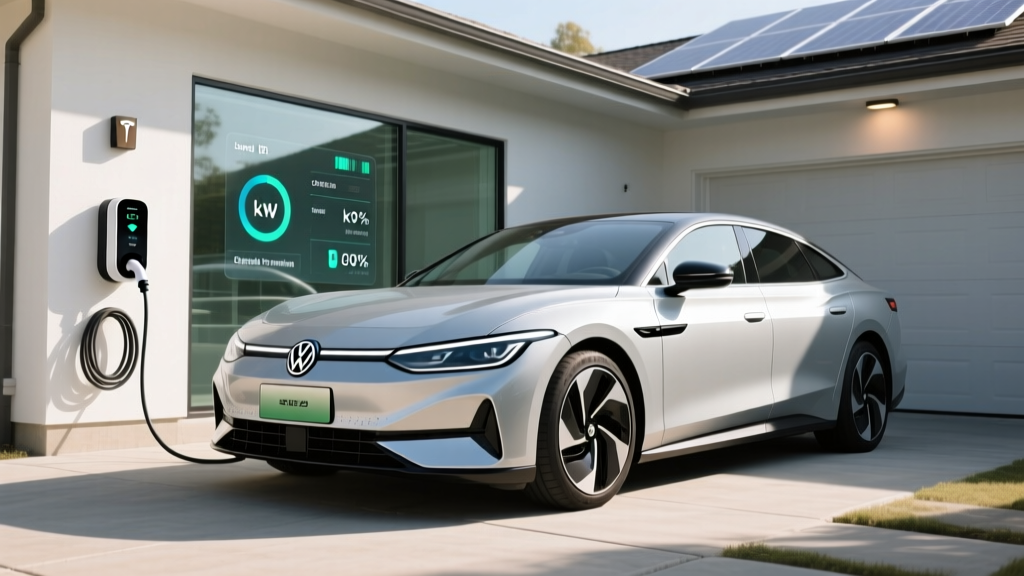
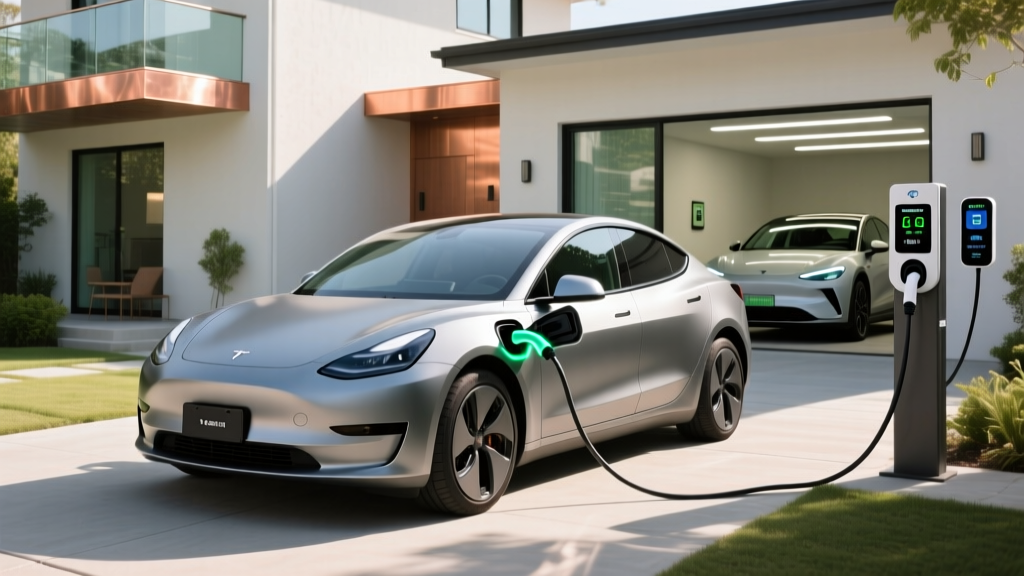
Level 2 requires a 240V circuit, identical to what a clothes dryer or electric oven uses. This is the home-charging sweet spot. A 48-amp Level 2 station delivers 11.5 kW, replenishing 30–45 miles of range per hour depending on your EV's efficiency. A full overnight charge easily covers any daily commute.
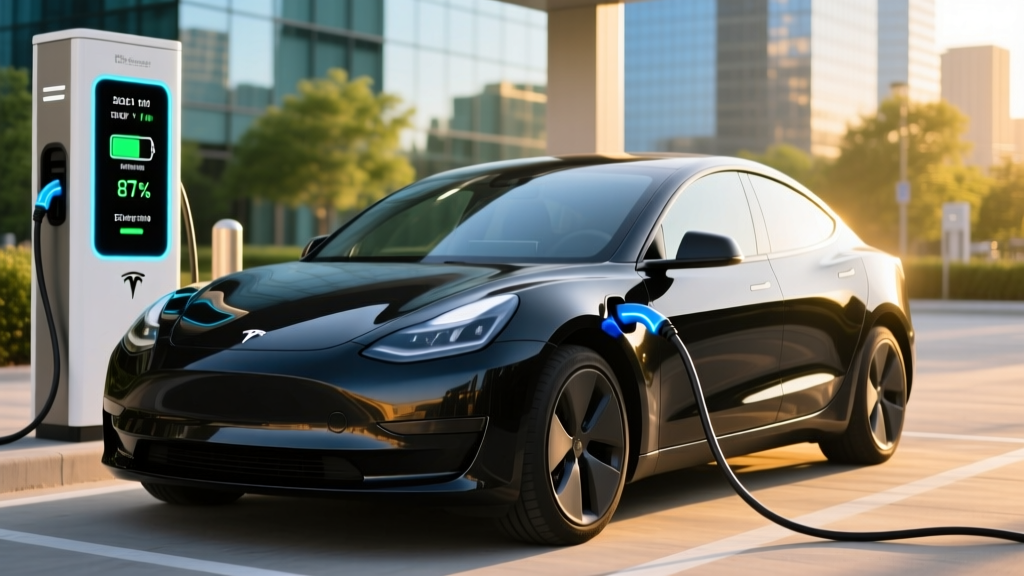
DC Fast Charging (DCFC) bypasses the car's onboard charger and feeds DC current directly to the battery. Speeds range from 50 kW (older stations) to 350 kW (latest CCS and NACS chargers). A 150 kW station can take a typical 75 kWh battery from 10% to 80% in roughly 25–30 minutes. Note that charge speed tapers significantly above 80% State of Charge (SoC) to protect battery health — so the last 20% takes as long as the first 60%.
Home Charger Installation: Electrical Requirements, Costs, and Gotchas
Installing a Level 2 home charger isn't just buying a wallbox — it's an electrical project. Here's what's involved:
Circuit requirements: A 48-amp charger needs a dedicated 60-amp circuit (the National Electrical Code requires circuits to be rated at 125% of continuous load). A 40-amp charger needs a 50-amp circuit. Your electrician will run appropriately gauged wire (typically 6 AWG copper for 60A) from your panel to the charger location.
Panel capacity: This is the make-or-break variable. Most modern homes have a 200-amp main panel. If your panel is already near capacity (electric heating, hot tub, multiple large appliances), adding a 60-amp EV circuit may require a panel upgrade to 200A or even 400A, or the installation of a sub-panel. Homes built before 1990 with 100-amp service almost always need an upgrade.
Permits: Virtually every jurisdiction requires an electrical permit for a Level 2 install. Your electrician typically pulls this. Expect a $50–$200 permit fee and a post-install inspection.
| Component | Low End | High End | Notes |
|---|---|---|---|
| Level 2 charger hardware | $350 | $750 | 40A–48A Wi-Fi-enabled units |
| Electrician labor (basic install) | $400 | $900 | Short run from panel, drywall |
| Wire, conduit, breakers | $100 | $400 | Varies with run length |
| Electrical permit | $50 | $200 | Local jurisdiction fee |
| Panel upgrade (if needed) | $1,500 | $4,000 | 200A to 400A service upgrade |
| Total (no panel upgrade) | $900 | $2,250 | Typical scenario |
| Total (with panel upgrade) | $2,400 | $6,250 | Older or maxed-out panels |
Pro tip: Before hiring an electrician, locate your main panel and check the amperage rating printed on the main breaker. Take a photo of the panel's circuit directory. This speeds up the quote process and helps you identify whether a panel upgrade is likely.
Some utilities offer rebates of $250–$500 for Level 2 installations, and the federal Residential Clean Energy Credit (as of 2026) covers 30% of home charging equipment and installation costs, up to $1,000 — though this applies only to equipment placed in service before the phase-out deadline. Check irs.gov for current eligibility.
Connector Compatibility: NACS, CCS1, CHAdeMO, and Adapters
The connector landscape has consolidated significantly since the early 2020s, but you'll still encounter three main standards at public chargers:
| Connector | Brands Using It (2026) | Max DC Fast Power | Notes |
|---|---|---|---|
| NACS (Tesla / SAE J3400) | Tesla, Ford, GM, Rivian, Volvo, Polestar, Hyundai, Kia, BMW, Mercedes-Benz, Nissan, Subaru, Lucid | Up to 350 kW | Now the dominant North American standard; smaller, lighter connector |
| CCS1 | Legacy vehicles (pre-2025 models from VW, Hyundai, BMW, etc.); still on some Stellantis models | Up to 350 kW | Being phased out on new vehicles; widely available at Electrify America, EVgo |
| CHAdeMO | Nissan Leaf (legacy), Mitsubishi Outlander PHEV (legacy) | Up to 100 kW | Essentially discontinued for new models; stations still exist |
By 2026, nearly every major automaker has adopted the North American Charging Standard (NACS), originally developed by Tesla. If you're buying a new EV in 2026, it almost certainly has a NACS port. Owners of CCS1-equipped vehicles (2023–2024 models) can purchase CCS-to-NACS adapters ($150–$250) to access Tesla Superchargers, which now welcome non-Tesla vehicles at many locations.
For home Level 2 charging, the J1772 connector remains universal — even NACS-equipped EVs include a J1772 adapter or the home charger itself may come with a NACS connector option.
Cost to Charge: Per-Mile Comparison vs. the Supercharged V8
If you're coming from a 2010 Jaguar XJ Supercharged — which returned roughly 16 MPG combined on premium fuel — the per-mile savings with an EV are substantial. Here's a realistic breakdown:
| Scenario | Cost per kWh | EV Efficiency (kWh/100mi) | Cost per Mile |
|---|---|---|---|
| Home charging (off-peak utility rate) | $0.10 | 30 | $0.030 |
| Home charging (average US rate) | $0.16 | 30 | $0.048 |
| Public Level 2 (network pricing) | $0.30 | 30 | $0.090 |
| DC Fast Charging (EA, EVgo, etc.) | $0.48 | 30 | $0.144 |
| 2010 Jaguar Supercharged (premium gas, $4.50/gal, 16 MPG) | — | — | $0.281 |
Even at the most expensive DC fast-charging rates, an EV costs roughly half what that supercharged 5.0L V8 costs per mile. At home on off-peak electricity, you're spending less than one-ninth of the Jaguar's fuel cost per mile. Over 15,000 annual miles, that's a difference of $3,200–$3,700 per year in energy costs alone.
According to fueleconomy.gov, the average EV achieves 2.5–3.5 miles per kWh. Efficiency varies: a Hyundai Ioniq 6 SE delivers roughly 4.0 mi/kWh (25 kWh/100mi), while a Rivian R1T quad-motor achieves around 2.2 mi/kWh (45 kWh/100mi). Check the EPA window sticker for the specific model you're considering.
Charging Time Examples: What to Expect With Common Battery Sizes
Charging time depends on three factors: battery capacity (kWh), charger power output (kW), and your EV's onboard charger limit (for Level 2). Here are real-world estimates:
Level 2 Home Charging (48A / 11.5 kW):
- 60 kWh battery (e.g., Chevy Equinox EV): 0–100% in ~5.5 hours
- 82 kWh battery (e.g., Tesla Model Y Long Range): 0–100% in ~7.5 hours
- 100 kWh battery (e.g., Ford F-150 Lightning Extended Range): 0–100% in ~9 hours
DC Fast Charging (10% to 80% SoC):
- 150 kW charger, 75 kWh battery: ~25–30 minutes
- 250 kW charger, 82 kWh battery (Tesla V3 Supercharger): ~18–22 minutes
- 350 kW charger, 77.4 kWh battery (Hyundai Ioniq 5, 800V architecture): ~18 minutes
- 50 kW charger, 60 kWh battery: ~55–65 minutes
The charge curve matters. Peak kW ratings are sustained only between roughly 10–50% SoC. Above 80%, charging speed drops sharply to protect the battery. This is why road-trip strategy focuses on 10–80% charging sessions — and why you should precondition your battery (most EVs do this automatically when a DC fast charger is entered in navigation) to reach peak speeds faster.
Recommended Home Chargers: 2026 Picks
Here are three Level 2 home chargers that consistently earn strong reviews for reliability, features, and value:
ChargePoint Home Flex
- Power output: Up to 12 kW (50A) — configurable down to 16A for lower-capacity panels
- Connector: J1772 (NACS adapter included or available)
- Cable length: 23 feet
- Smart features: Wi-Fi, scheduling, energy tracking via app, Alexa integration
- Price: ~$550 (hardware only)
- Best for: Flexibility — adjustable amperage means it works with almost any panel
Wallbox Pulsar Plus
- Power output: Up to 11.5 kW (48A)
- Connector: J1772 or NACS (select at purchase)
- Cable length: 25 feet
- Smart features: Wi-Fi + Bluetooth, load balancing (shares panel capacity), Power Sharing for multi-charger setups
- Price: ~$500
- Best for: Homes with tight panel capacity; load-balancing feature prevents breaker trips
Emporia Level 2 EV Charger
- Power output: Up to 11.5 kW (48A)
- Connector: J1772 (NACS version available)
- Cable length: 24 feet
- Smart features: Wi-Fi, detailed energy monitoring, integration with Emporia home energy monitor, solar-aware scheduling
- Price: ~$400
- Best for: Budget-conscious buyers who want robust energy monitoring and solar integration
All three units are UL-listed (or ETL-listed), hardwired or plug-in (NEMA 14-50), and carry at least a 2-year warranty. For outdoor installation, confirm the unit's NEMA 4 (weatherproof) rating — all three above qualify.
Safety, Code, and Installation Best Practices
EV charging is a continuous high-draw electrical load — your charger will pull maximum current for 6–10 hours straight. This is more demanding than any other household appliance. Key safety requirements:
- Dedicated circuit: Your Level 2 charger must have its own dedicated circuit — it cannot share with other outlets or appliances. This is non-negotiable per NEC Article 625.
- GFCI protection: The 2023 NEC update requires GFCI protection for EV charging outlets. Hardwired installations are exempt from this specific GFCI requirement, which is why many electricians recommend hardwiring over plug-in.
- NEMA 14-50 receptacle quality: If you choose a plug-in charger with a NEMA 14-50 plug, insist on an industrial-grade receptacle (Hubbell, Bryant, or Cooper — not residential-grade). Cheap 14-50 outlets have been linked to overheating and melting under continuous EV loads.
- Outdoor rating: If your charger is mounted outside or in an unsealed garage, it must be rated NEMA 4 (weatherproof). All chargers listed above meet this standard.
- Wire gauge: 6 AWG copper for 60A circuits (48A charger); 8 AWG copper for 50A circuits (40A charger). Aluminum wire requires one size larger.
Never use an extension cord with a Level 2 charger. If the cable doesn't reach your car's charge port, move the charger location or have your electrician install a longer run.
Frequently Asked Questions
How much does it cost to install a home EV charger?
A typical Level 2 home installation runs $900–$2,250 if your electrical panel has sufficient capacity. If you need a panel upgrade (common in homes with 100A service or heavy existing loads), total costs can reach $2,400–$6,250. The federal Residential Clean Energy Credit may offset 30% of equipment and installation costs up to $1,000.
How fast will each charging level add range?
Level 1 (120V) adds 3–5 miles per hour. Level 2 (240V, 48A) adds 25–45 miles per hour depending on your EV's efficiency. DC Fast Charging at 150 kW can add 200+ miles in a 20-minute session, though speeds taper above 80% SoC.
Which connector/charger is compatible with my EV?
For 2026 models, nearly all new EVs use the NACS connector for DC fast charging and accept J1772 for Level 2. Older CCS1 vehicles (2022–2024) can use a CCS-to-NACS adapter (~$150–$250) to access Tesla Superchargers. Check your vehicle's charge port or the manufacturer's spec sheet to confirm.
How much does charging cost per mile vs. gas?
At the US average electricity rate of ~$0.16/kWh and an EV efficiency of 30 kWh/100mi, home charging costs about $0.048 per mile. Compare that to a 2010 Jaguar Supercharged getting 16 MPG on $4.50/gallon premium: $0.281 per mile. Even public DC fast charging at $0.48/kWh costs $0.144/mile — still roughly half the cost of gasoline.
What electrical upgrades might I need?
The most common upgrade is a panel capacity increase. If your main breaker is rated 100A or your panel is near its load limit, you'll likely need a 200A or 400A upgrade ($1,500–$4,000). Some homeowners opt for a smart panel or load-management device ($200–$400) that dynamically limits charger draw to stay within existing panel capacity, avoiding a full upgrade.
Transitioning from a supercharged V8 to an EV is a shift in mindset, not a sacrifice. With a properly installed Level 2 home charger, you'll start every morning with a full "tank" — and spend a fraction of what you once did on premium fuel.