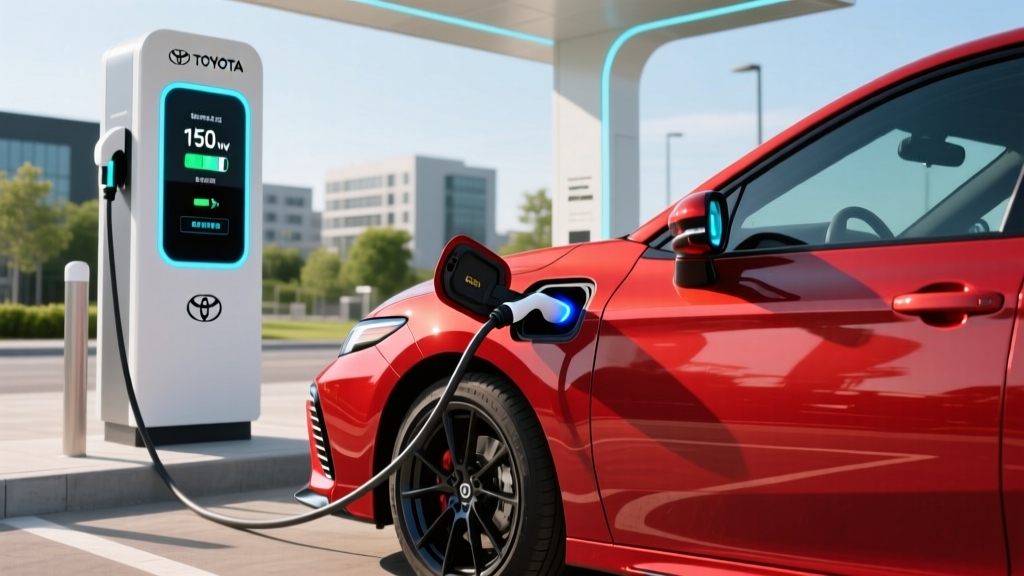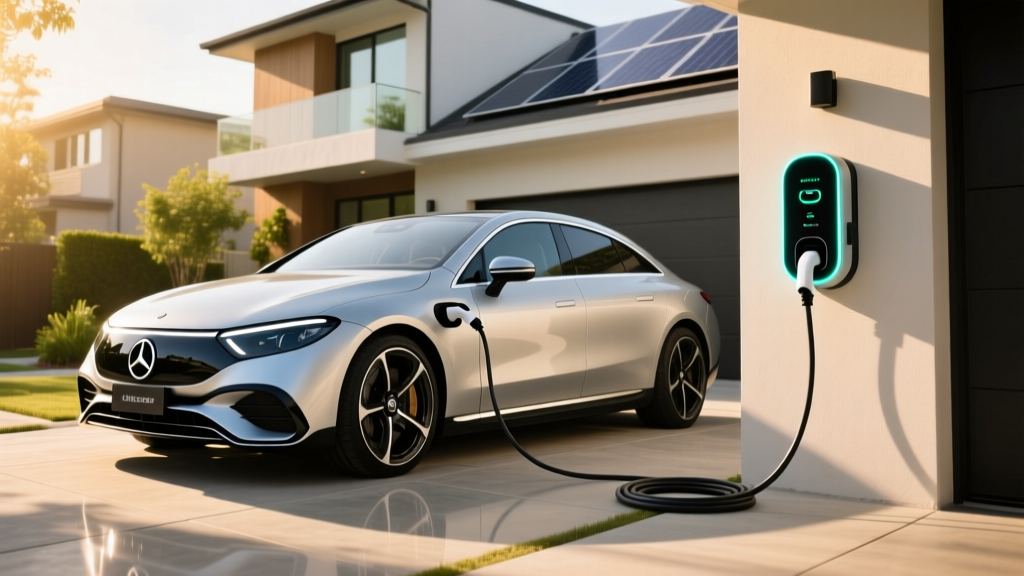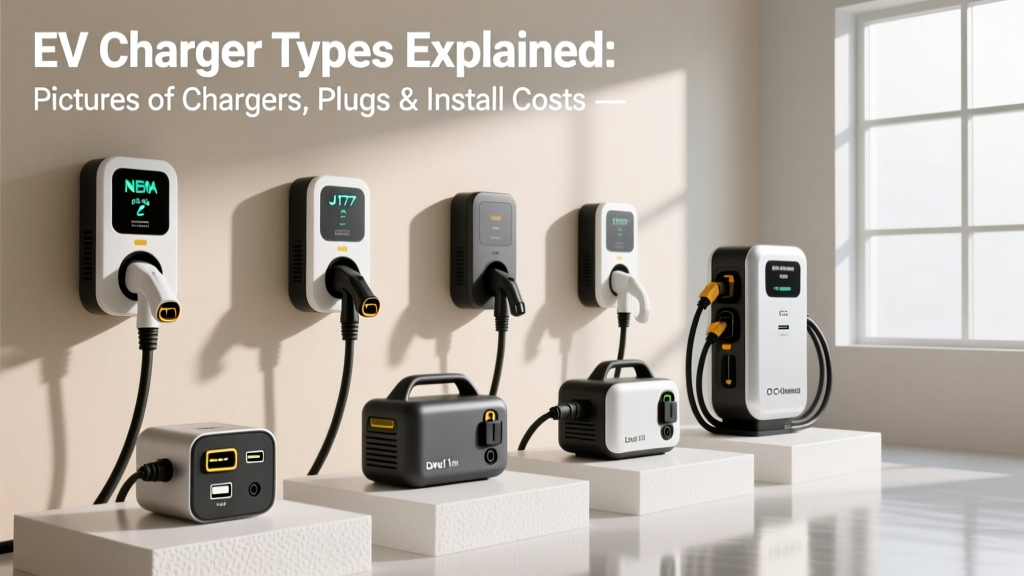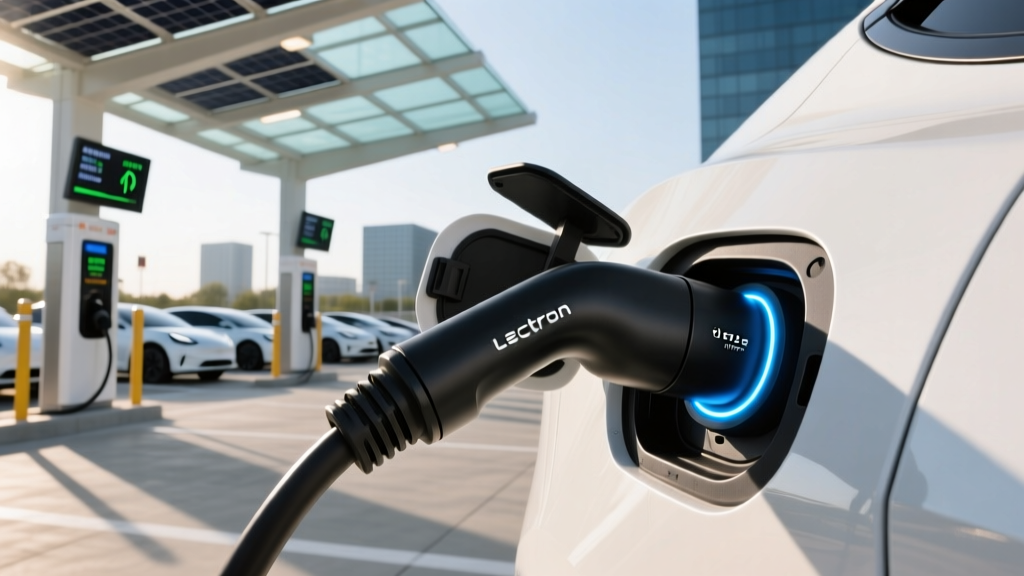
If you drive a Tesla in North America, you already have access to the most reliable fast-charging network on the continent. But for Level 2 charging at hotels, workplaces, shopping centers, and older public stations, the J1772 connector is still everywhere. The Lectron J1772 to Tesla adapter bridges that gap — letting you plug into any standard Level 2 station using your Tesla's North American Charging Standard (NACS) port. This guide covers exactly how the adapter works, what charging speeds to expect, how much a home Level 2 setup costs, and whether you need an electrical panel upgrade.
Why You Still Need a J1772 to Tesla Adapter in 2026
By 2026, nearly every new EV sold in the US ships with a NACS (Tesla-style) charge port. Ford, GM, Rivian, Volvo, Polestar, and others have adopted the connector. However, the existing installed base of Level 2 public chargers — estimated at over 100,000 ports — was built with J1772 connectors. Many of these stations won't be retrofitted for years. Hotels, apartment complexes, municipal parking garages, and workplace chargers overwhelmingly still use J1772 plugs.
The Lectron J1772 to Tesla adapter is a simple, passive device: you plug the J1772 cable into the adapter, then plug the adapter into your Tesla's NACS port. No electronics, no app pairing, no handshake protocol issues — the adapter simply routes the pilot and proximity signals correctly so the vehicle and charger can communicate.
Charging Levels Explained: Speed, Power, and Range Added
Understanding the three charging levels is essential before you buy an adapter or install a home charger. Here's how they break down:
| Level | Voltage / Amperage | Max Power (kW) | Miles of Range per Hour | Connector |
|---|---|---|---|---|
| Level 1 | 120V / 12A | 1.4 kW | 3–5 mi/hr | Standard outlet (NEMA 5-15) |
| Level 2 | 240V / 32A–48A | 7.7–11.5 kW | 25–44 mi/hr | J1772 (or NACS native) |
| DC Fast Charging | 400V–800V / up to 500A | 50–350 kW | 150–1,000+ mi/hr (peak) | NACS / CCS1 / CHAdeMO |
Important caveat: The Lectron J1772 to Tesla adapter is designed exclusively for Level 2 AC charging. It will not work with DC fast chargers. For fast charging, Tesla vehicles use the NACS connector natively at Superchargers and at NACS-equipped third-party DC stations.
Real-world miles-per-hour figures depend on your vehicle's efficiency. A Tesla Model 3 (approximately 4 mi/kWh) will gain more range per hour than a heavier Tesla Model X (approximately 3 mi/kWh) at the same charger. Cold weather, battery preconditioning state, and charge curve taper above 80% State of Charge (SoC) all reduce effective charging speed.
Lectron J1772 to Tesla Adapter: Compatibility and How It Works
The Lectron adapter is rated for up to 240V and 60A, meaning it supports the full range of Level 2 charging available in North America. Most public Level 2 stations deliver between 6.6 kW (32A) and 7.7 kW (40A), well within the adapter's rating. Even high-output 48A (11.5 kW) home chargers are supported, though your Tesla's onboard charger determines the actual maximum intake — currently 11.5 kW (48A) on the Model S and Model X, and 11.5 kW on the refreshed Model 3 and Model Y.
| EV Brand / Model | Charge Port | Needs J1772-to-Tesla Adapter? | Notes |
|---|---|---|---|
| Tesla Model 3 / Y / S / X | NACS | Yes — for J1772 stations | Adapter required for non-NACS Level 2 |
| Ford F-150 Lightning, Mustang Mach-E (2025+) | NACS | Yes — for J1772 stations | Switched to NACS starting 2025 MY |
| GM (Chevy, Cadillac, GMC 2025+) | NACS | Yes — for J1772 stations | Equinox EV, Blazer EV, Silverado EV, Lyriq |
| Rivian R1T / R1S (2025+) | NACS | Yes — for J1772 stations | Native NACS from 2025 MY |
| Hyundai Ioniq 5/6, Kia EV6/EV9 (2025+) | NACS | Yes — for J1772 stations | 800V architecture; NACS from late 2025 |
| Older non-Tesla EVs (pre-NACS adoption) | J1772 / CCS1 | No — native J1772 | Plug directly into J1772 stations |
Build quality note: The Lectron adapter uses a locking mechanism that secures the J1772 plug into the adapter body. In real-world use, the connection is firm and doesn't rattle. The adapter weighs roughly 0.7 lbs — small enough to keep in your glovebox or center console permanently. Lectron rates it for IP54 weather resistance, meaning it handles rain and splashing water during outdoor charging sessions.
Home Level 2 Charger Installation: Costs, Electrical Requirements, and Panel Upgrades
If you're buying a J1772 to Tesla adapter, you likely also want a reliable home Level 2 charger. Here's what a proper installation involves.
Electrical Requirements
A Level 2 home charger requires a dedicated 240V circuit. The two most common configurations:
- 40A circuit / 32A continuous charge: Uses a NEMA 14-50 outlet or hardwired connection. Delivers up to 7.7 kW. Suitable for most daily charging needs — adds roughly 30 miles of range per hour.
- 60A circuit / 48A continuous charge: Hardwired only (NEC code requires hardwiring for circuits above 50A in most jurisdictions). Delivers up to 11.5 kW. Adds roughly 44 miles of range per hour. Ideal for larger batteries like the Model S (100 kWh) or F-150 Lightning (131 kWh extended range).
Per the National Electrical Code (NEC), continuous loads — including EV chargers — cannot exceed 80% of a circuit's rated capacity. A 40A breaker supports 32A continuous draw; a 60A breaker supports 48A continuous draw.
Do You Need a Panel Upgrade?
This is the question that can double your installation cost. Most homes built after 1990 have a 200A main electrical panel. A load calculation (required by your local electrical inspector) determines whether your panel has enough spare capacity for a new 40A or 60A circuit. If your panel is already near capacity — common in homes with electric ranges, dryers, HVAC, and hot tubs — you may need a panel upgrade to 200A or even 400A service.
Homes with 100A panels (common in pre-1970 construction) almost always need an upgrade before adding a Level 2 charger.
| Cost Component | Low End | High End | Notes |
|---|---|---|---|
| Level 2 Charger Equipment | $300 | $700 | 32A–48A, NACS or J1772 |
| Electrician Labor (standard install) | $400 | $1,200 | Depends on run length, conduit, wall type |
| Permit & Inspection | $50 | $250 | Varies by municipality |
| Panel Upgrade (if needed) | $1,500 | $4,000+ | 100A→200A or 200A→400A service |
| Total (no panel upgrade) | $750 | $2,150 | Most common scenario |
| Total (with panel upgrade) | $2,250 | $6,150+ | Older homes, high-load panels |
Home Charger Equipment Recommendations for Tesla Owners
Since you're using a NACS-equipped Tesla (or any NACS vehicle), you have two paths for home charging: install a NACS-native charger, or install a J1772 charger and use your Lectron adapter. Here are the best options in each category:
Tesla Wall Connector (Gen 4)
- Power: Up to 48A (11.5 kW) on 60A circuit
- Connector: NACS native
- Cable length: 24 ft
- Smart features: Wi-Fi, OTA updates, load sharing with multiple units, access control
- Price: ~$475
- Best for: Tesla-only households; no adapter needed at home
ChargePoint Home Flex (NACS)
- Power: Up to 50A (12 kW) on 60A circuit
- Connector: NACS (2025+ model) or J1772 (older)
- Cable length: 23 ft
- Smart features: Wi-Fi, app scheduling, Alexa integration, detailed energy reporting
- Price: ~$599
- Best for: Mixed-fleet households; excellent app and scheduling
Emporia Vue Level 2 Charger
- Power: Up to 48A (11.5 kW) on 60A circuit
- Connector: J1772 (use with Lectron adapter) or NACS variant
- Cable length: 24 ft
- Smart features: Integration with Emporia energy monitoring, solar-aware charging, scheduling
- Price: ~$399
- Best for: Budget-conscious buyers; solar households
Grizzl-E Smart (United Chargers)
- Power: Up to 40A (9.6 kW) on 50A circuit
- Connector: J1772 (use with Lectron adapter) or NACS
- Cable length: 24 ft
- Smart features: OCPP compatible, adjustable amperage, rugged outdoor build
- Price: ~$449
- Best for: Harsh climates; outdoor installs in cold regions
Editor's pick for Tesla owners: The Tesla Wall Connector (Gen 4) is the most seamless option — no adapter needed, native integration with your vehicle's scheduled charging, and load-sharing capability if you add a second unit for a two-EV garage. If you have a mixed-fleet household (say, a Tesla and a pre-NACS Hyundai), a J1772 charger with the Lectron adapter for the Tesla and direct plug for the Hyundai is a practical approach.
Charging Cost: Home Electricity vs. Public Stations vs. Gas
One of the strongest arguments for EV ownership is lower fueling cost — but the savings vary dramatically depending on where you charge. Here's a realistic breakdown:
| Charging Scenario | Cost per kWh | Cost per Mile* | Annual Cost (12,000 mi) |
|---|---|---|---|
| Home — off-peak utility rate | $0.08–$0.14 | $0.02–$0.04 | $240–$480 |
| Home — standard rate (no TOU) | $0.14–$0.20 | $0.04–$0.05 | $480–$600 |
| Public Level 2 (network pricing) | $0.25–$0.49 | $0.06–$0.12 | $720–$1,440 |
| DC Fast Charging (EA, EVgo, etc.) | $0.35–$0.65 | $0.09–$0.16 | $1,080–$1,920 |
| Gasoline vehicle (27 MPG avg, $3.40/gal) | — | $0.13 | $1,560 |
*Based on a vehicle efficiency of 3.5–4.0 miles per kWh (typical for a Tesla Model 3 or Model Y). Heavier vehicles like the Model X or Cybertruck will be closer to 2.5–3.0 mi/kWh, increasing per-mile costs proportionally.
The takeaway: home charging on an off-peak rate is roughly one-quarter the cost of gasoline per mile. Public DC fast charging, however, can approach or even exceed gas costs in some markets. This is why home Level 2 charging is the economic backbone of EV ownership — and why the Lectron adapter, which lets you access free or low-cost J1772 chargers at workplaces and hotels, has real financial value.
Charging Time Examples: How Long Does a Full Session Take?
Charge time depends on your battery size, the charger's power output, and the vehicle's onboard charger limit. Here are real-world examples for common Tesla models using Level 2 charging:
| Vehicle | Usable Battery (kWh) | Onboard Charger Limit | 10–80% at 11.5 kW (48A) | 10–80% at 7.7 kW (32A) |
|---|---|---|---|---|
| Tesla Model 3 Long Range | ~75 kWh | 11.5 kW | ~4.5 hours | ~6.8 hours |
| Tesla Model Y Long Range | ~75 kWh | 11.5 kW | ~4.5 hours | ~6.8 hours |
| Tesla Model S | ~95 kWh | 11.5 kW | ~5.8 hours | ~8.6 hours |
| Tesla Cybertruck AWD | ~123 kWh | 11.5 kW | ~7.5 hours | ~11.2 hours |
For overnight home charging, even a 32A (7.7 kW) setup fully replenishes a Model 3 or Model Y from 10% to 80% while you sleep. The 48A setup is more relevant for the Cybertruck or for drivers who need rapid turnaround between trips.
Safety, Code Compliance, and Installation Best Practices
EV charging places a sustained high-current load on your home's electrical system for hours at a time. Proper installation isn't optional — it's a safety requirement.
- Dedicated circuit: Your Level 2 charger must be on its own dedicated breaker — no sharing with other appliances. A 40A charger needs a 50A breaker (to maintain the 80% continuous-load rule); a 48A charger needs a 60A breaker.
- GFCI protection: The 2020 NEC requires GFCI protection for EV charging outlets in garages and outdoor locations. Hardwired chargers are typically exempt from this requirement, which is one reason many electricians recommend hardwiring.
- Outdoor rating: If your charger is installed outdoors, ensure it carries at least a NEMA 4 (weatherproof) rating. The Lectron adapter itself is IP54-rated and handles outdoor use, but store it out of direct standing water.
- Wire gauge: A 60A circuit requires 4 AWG copper wire (or 3 AWG aluminum) for typical residential runs. Longer runs may require upsizing to compensate for voltage drop. Your electrician will calculate this based on the distance from panel to charger.
- Permit and inspection: Virtually all jurisdictions require a permit for EV charger installation. The inspection verifies correct wire sizing, breaker rating, grounding, and GFCI compliance. Do not skip this step — it protects your home and is required for insurance coverage of any electrical fire.
According to NHTSA and the National Fire Protection Association, EV charging fires are exceedingly rare when equipment is properly installed and certified (UL-listed or ETL-listed). The Lectron adapter carries appropriate certifications, but always verify UL/ETL markings on any adapter you purchase — counterfeit or uncertified adapters from unknown sellers on marketplace sites are a real safety concern.
Frequently Asked Questions
How much does it cost to install a home EV charger?
A standard Level 2 home charger installation (equipment + electrician + permit) typically costs between $750 and $2,150 if your electrical panel has sufficient capacity. If a panel upgrade is needed — common in homes with 100A service or heavily loaded 200A panels — expect total costs between $2,250 and $6,150+. The federal §25D energy credit covers 30% of equipment cost up to $1,000 through 2032.
How fast will each charging level add range?
Level 1 (120V) adds roughly 3–5 miles per hour. Level 2 at 32A (7.7 kW) adds roughly 25–30 miles per hour. Level 2 at 48A (11.5 kW) adds roughly 38–44 miles per hour. DC fast charging at 150–250 kW can add 150–250 miles in 15–20 minutes, though the charge curve tapers significantly above 80% SoC. These figures assume a vehicle efficiency of approximately 3.5–4.0 mi/kWh.
Which connector and charger is compatible with my EV?
If your EV has a NACS port (all current Teslas, plus Ford, GM, Rivian, Hyundai, and Kia models from 2025 onward), you can plug directly into NACS chargers and use a J1772-to-Tesla/NACS adapter like the Lectron for J1772 stations. If your EV has a J1772/CCS1 port (most pre-2025 non-Tesla EVs), you plug directly into J1772 stations and need a CCS1-to-NACS adapter for Tesla Superchargers.
How much does charging cost per mile compared to gas?
Home charging at off-peak utility rates costs approximately $0.02–$0.04 per mile — roughly one-quarter the cost of gasoline at $0.13/mile (27 MPG, $3.40/gal). Public Level 2 charging runs $0.06–$0.12/mile, and DC fast charging can reach $0.09–$0.16/mile. Home charging is where the economics strongly favor EVs.
What electrical upgrades might I need?
The most common upgrade is a panel capacity increase from 100A to 200A service ($1,500–$3,000). If your panel already has 200A service but is heavily loaded, a load calculation by a licensed electrician will determine if you need a 400A upgrade or can use a lower-amperage charger (e.g., 32A instead of 48A) to stay within existing capacity. Some utilities offer smart-panel solutions (like Span or Lumin) that manage circuit-level loads dynamically, avoiding the need for a full panel upgrade.
Does the Lectron J1772 to Tesla adapter support DC fast charging?
No. The Lectron J1772 to Tesla adapter is designed exclusively for AC Level 2 charging. J1772 does not carry DC fast-charge protocols. For DC fast charging, Tesla vehicles use their native NACS connector at Superchargers and NACS-equipped third-party networks.
Can I leave the adapter plugged in at public stations unattended?
The adapter locks into your Tesla's charge port using the vehicle's built-in locking mechanism, so it cannot be removed while the car is locked. However, the J1772 cable on the station side is not locked to the adapter — someone could unplug the cable from the adapter. For unattended charging, position the adapter so the connection is not easily accessible, and use stations in well-lit, visible areas.
Sources: fueleconomy.gov (EPA efficiency data), IRS.gov (§25D energy credit), manufacturer specifications. Electrical installation costs reflect national averages — consult a licensed electrician for your specific project.