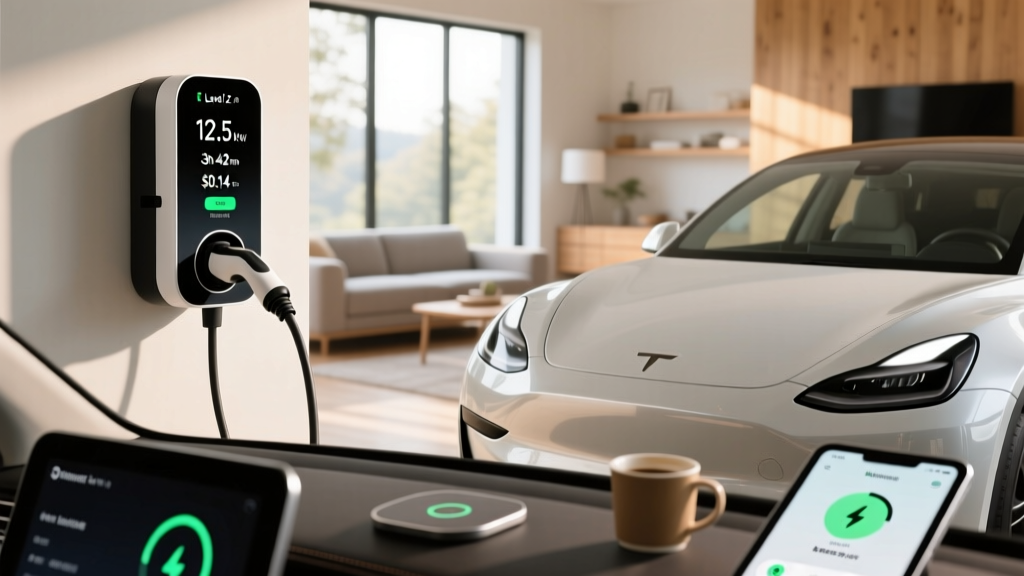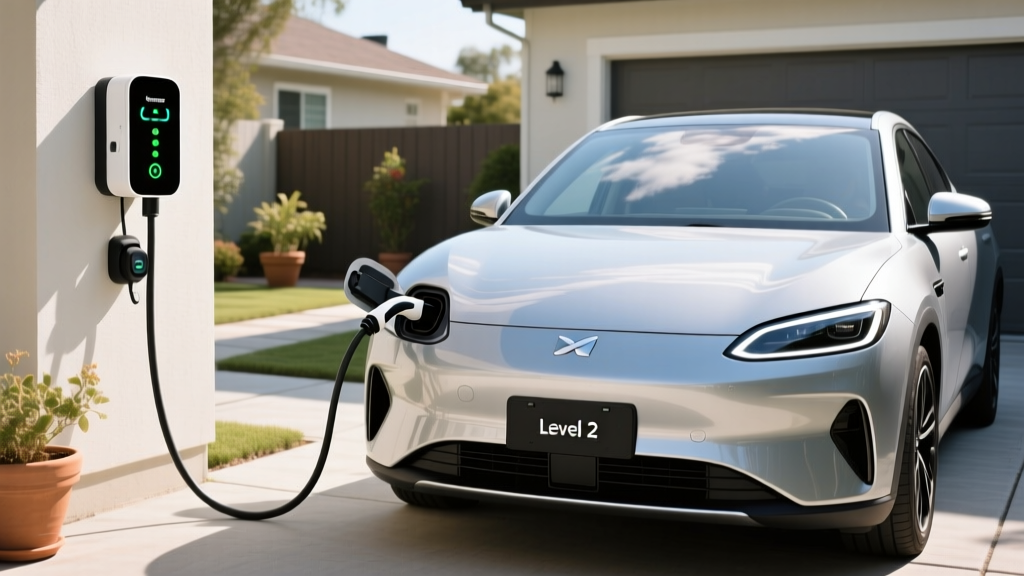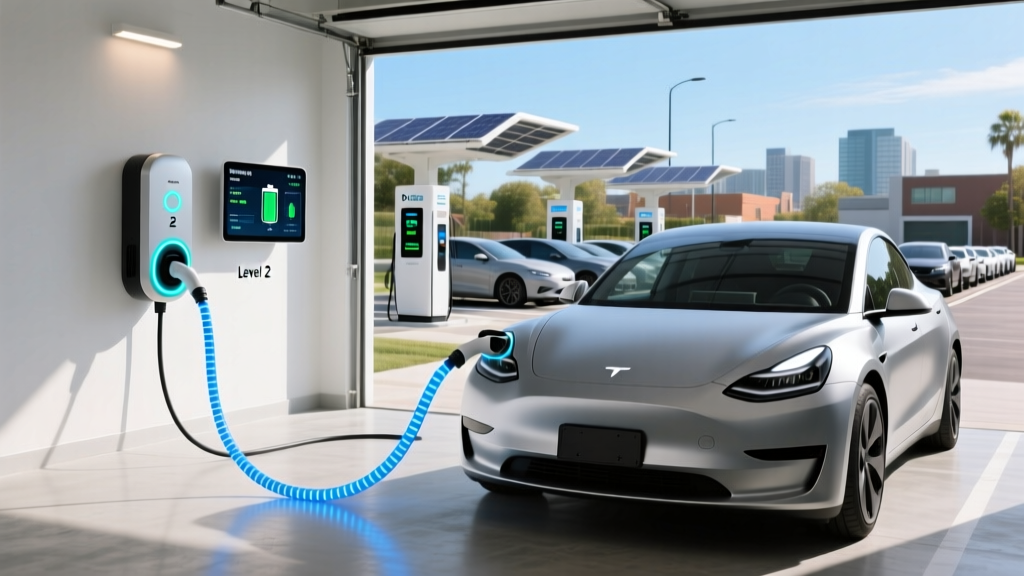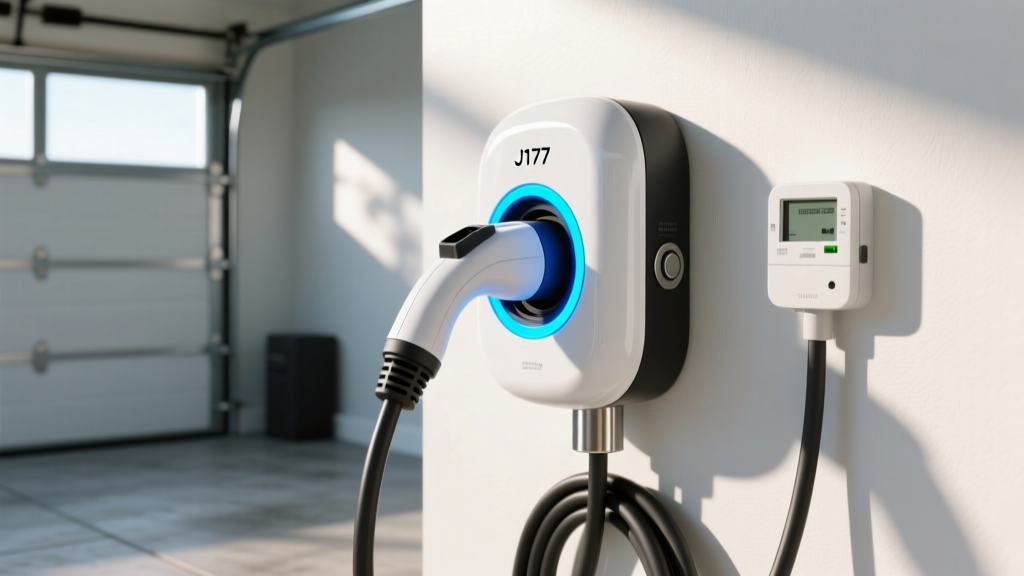
If you've unboxed a new EV or plug-in hybrid and stared at the charging cable, you've almost certainly encountered the J1772 standard. Formally known as SAE J1772, this connector specification has been the default AC charging interface for virtually every electric vehicle sold in North America since 2010. Even as Tesla's NACS connector gains ground for DC fast charging, J1772 remains the backbone of home and workplace Level 2 charging in 2026 — and understanding it is essential before you spend a dollar on equipment or electrical work.
This guide breaks down what the J1772 standard actually covers, how it relates to charging speeds (in kW, not kWh — we'll clarify that critical distinction), what you'll pay to install a home station, and which chargers deliver the best value this year.
What the J1772 Standard Actually Defines
The SAE J1772 standard specifies the physical connector, communication protocol, and safety requirements for AC conductive charging of electric vehicles in North America. It covers the five-pin coupler (three for power/ground, two for communication and proximity detection) that plugs into your car's charge port for Level 1 and Level 2 charging.
Key things J1772 does not define:
- DC fast charging connectors. DC fast charging uses separate standards — CCS1 (which adds two DC pins below the J1772 connector), CHAdeMO, or Tesla's NACS — all of which handle high-voltage DC directly to the battery.
- Charging speed. J1772 specifies the connector and signaling, not the power delivery. The actual charge rate in kW depends on your vehicle's onboard charger and the station's output.
- Tesla's proprietary connector (pre-2025). Tesla used a proprietary connector through model year 2024 but included a J1772 adapter with every vehicle. Starting in 2025, Tesla transitioned to NACS across all models, and most legacy J1772 vehicles now ship with a NACS adapter or can use aftermarket adapters to access Tesla Superchargers.
Charging Levels: Speeds, Power, and Real-World Range Recovery
Every EV sold in the U.S. with a J1772 port can accept Level 1 and Level 2 AC charging. Here's how each tier performs in practice:
| Level | Voltage / Amperage | Max Power (kW) | Miles of Range per Hour | Connector |
|---|---|---|---|---|
| Level 1 | 120V / 12A | 1.4 kW | 3–5 mi/hr | J1772 (standard 120V plug) |
| Level 2 (32A) | 240V / 32A | 7.7 kW | 23–30 mi/hr | J1772 |
| Level 2 (48A) | 240V / 48A | 11.5 kW | 35–44 mi/hr | J1772 or hardwired |
| Level 2 (80A) | 240V / 80A | 19.2 kW | 52–65 mi/hr | Hardwired (NACS or J1772) |
| DC Fast Charge | 400–800V DC | 50–350 kW | 150–300+ mi in 20 min | CCS1 / NACS / CHAdeMO |
Real-world context: Those miles-per-hour figures assume an average efficiency of 3–3.5 miles per kWh (typical for a midsize SUV like the Hyundai Ioniq 5 or Tesla Model Y). Cold weather reduces efficiency by 20–30%, which means fewer miles added per hour of charging. A Level 2 station delivering 11.5 kW might add 44 miles per hour in mild weather but only 30–35 miles per hour at 20°F.
For charging time context, here's what a 10–80% session looks like on common battery sizes at Level 2:
- 60 kWh battery (e.g., base Chevrolet Equinox EV): ~3.7 hours at 11.5 kW, ~5.5 hours at 7.7 kW
- 77 kWh battery (e.g., Ford Mustang Mach-E Extended Range): ~4.7 hours at 11.5 kW, ~7 hours at 7.7 kW
- 100 kWh battery (e.g., Rivian R1S Max Pack): ~6.1 hours at 11.5 kW (note: many large-battery vehicles cap onboard AC charging at 11.5 kW regardless of station capacity)
Connector Compatibility in 2026: J1772, NACS, CCS1, and CHAdeMO
The connector landscape has shifted dramatically since Tesla opened its North American Charging Standard (NACS) to other automakers. Here's where things stand for AC and DC charging:
| Brand | AC Charging (Home/L2) | DC Fast Charging | Adapter Needed? |
|---|---|---|---|
| Tesla (2025+) | NACS (native) | NACS (native) | J1772→NACS adapter for older L2 stations |
| Ford, GM, Rivian, Volvo, Polestar | NACS (2025+ models) | NACS (native) | CCS→NACS for legacy DC stations |
| Hyundai, Kia, BMW, VW | J1772 (most models) | CCS1 | NACS adapter for Supercharger access |
| Nissan (Leaf), Mitsubishi | J1772 | CHAdeMO | Limited adapter options; CHAdeMO network declining |
| Toyota bZ4X, Subaru Solterra | J1772 | CCS1 | NACS adapter available from OEM |
The critical takeaway for home charging: J1772 remains the universal AC standard. Even vehicles with NACS charge ports can accept J1772 AC charging via a simple, inexpensive adapter (typically $50–$100). This means installing a J1772 Level 2 home station is a safe, future-proof investment regardless of which EV you drive next.
For DC fast charging on the road, however, the picture is more fragmented. If your vehicle has a CCS1 port and you want to use Tesla Superchargers (now open to non-Tesla EVs at many locations), you'll need a NACS-to-CCS adapter. Ford, GM, and Rivian provide these adapters with qualifying vehicles; aftermarket options from brands like Lectron and A2Z run $150–$250.
Home Charger Installation: Electrical Requirements, Costs, and Panel Upgrades
Installing a Level 2 home charger is an electrical project, not just a plug-and-play purchase. Here's what the process actually involves and what you should budget.
Electrical Requirements by Charger Amperage
The National Electrical Code (NEC) requires that a continuous load — which EV charging qualifies as — not exceed 80% of a circuit's rated capacity. This means:
- 32A charger → requires a 40A dedicated circuit (240V)
- 40A charger → requires a 50A dedicated circuit (240V)
- 48A charger → requires a 60A dedicated circuit (240V)
- 80A charger → requires a 100A dedicated circuit (240V, hardwired only)
Most homes built after 2000 have a 200A main electrical panel with available capacity for a 40–60A circuit. Older homes with 100A or 150A service may need a panel upgrade or a smart load-management device to avoid overloading the system.
Installation Cost Breakdown
| Component | Simple Install (panel nearby) | Complex Install (long run / panel upgrade) |
|---|---|---|
| Level 2 charger (equipment) | $350–$700 | $350–$700 |
| Electrician labor | $400–$800 | $1,200–$3,000 |
| Permit and inspection | $50–$200 | $100–$350 |
| Wiring / conduit materials | $100–$300 | $400–$1,200 |
| Panel upgrade (if needed) | $0 | $1,500–$4,000 |
| Total estimated cost | $900–$2,000 | $3,550–$9,250 |
The panel-upgrade wildcard: If your home has a 100A panel that's already near capacity (common in pre-1980 construction), upgrading to 200A service can add $1,500–$4,000 to the project. An alternative is a smart load-management system like the Emporia VUE or Span panel, which dynamically throttles charger amperage when other high-draw appliances are running. These systems cost $300–$800 and can avoid a full panel upgrade.
Before hiring an electrician, check for local utility rebates. Many utilities offer $250–$1,000 rebates for Level 2 charger installation, and some states offer additional incentives. The federal Residential Clean Energy Credit covers 30% of charger equipment and installation costs (up to $1,000) through 2032 for installations in eligible census tracts — consult a tax professional for your specific eligibility.
Charging Cost Per Mile: Home vs. Public vs. Gas
The economic case for home charging is compelling, but public DC fast charging narrows the gap — and in some cases, exceeds gasoline costs. Here's a data-driven comparison using a midsize electric SUV averaging 3.2 miles per kWh (similar to a 2026 Hyundai Ioniq 5 or Tesla Model Y):
| Scenario | Rate | Cost per kWh | Cost per Mile |
|---|---|---|---|
| Home (off-peak utility rate) | $0.09/kWh | $0.09 | $0.028/mi |
| Home (average U.S. residential) | $0.17/kWh | $0.17 | $0.053/mi |
| Public Level 2 (network pricing) | $0.30–$0.45/kWh | $0.35 avg | $0.109/mi |
| DC Fast Charge (Electrify America, EVgo) | $0.40–$0.60/kWh | $0.50 avg | $0.156/mi |
| Gasoline (28 MPG combined, $3.40/gal) | $3.40/gal | — | $0.121/mi |
At home on an off-peak rate, charging costs roughly one-quarter what gasoline does per mile. Even on a standard residential rate, EV fueling is about half the cost. But exclusive reliance on DC fast charging at $0.50/kWh actually costs more per mile than a 28 MPG gas car — which is why home charging access is the single biggest economic factor in EV ownership.
For a driver covering 12,000 miles per year, the annual fuel cost difference looks like this:
- Home off-peak charging: ~$336/year
- Home average rate: ~$636/year
- Gasoline at 28 MPG: ~$1,457/year
Level 2 Charger Recommendations for 2026
After testing dozens of Level 2 stations across multiple homes and vehicles, here are the chargers that deliver the best combination of power output, build quality, smart features, and value. All of these use the J1772 connector or are available with a J1772 plug.
Best Overall: ChargePoint Home Flex
- Power output: Up to 11.5 kW (48A, adjustable 16–50A)
- Connector: J1772 (NACS version also available)
- Cable length: 23 feet
- Smart features: Wi-Fi, app scheduling, Alexa/Google integration, energy tracking
- Price: ~$549
- Why it wins: Adjustable amperage lets you match any circuit from 20A to 60A without buying a different unit. NEMA 4 outdoor rating. UL-listed.
Best Budget: Emporia Level 2 EV Charger
- Power output: Up to 11.5 kW (48A)
- Connector: J1772
- Cable length: 24 feet
- Smart features: Wi-Fi, app with real-time energy monitoring, solar integration
- Price: ~$399
- Why it wins: Best-in-class energy monitoring at a lower price point. Pairs well with Emporia VUE home energy monitor for load management.
Best for High Power: Tesla Wall Connector (J1772 adapter)
- Power output: Up to 11.5 kW (48A on J1772 vehicles with adapter)
- Connector: NACS native; use with J1772 adapter for non-Tesla EVs
- Cable length: 24 feet
- Smart features: Wi-Fi, OTA updates, power sharing (link multiple units on one circuit)
- Price: ~$450 + ~$75 J1772 adapter
- Why it wins: Sleek design, power-sharing capability for multi-EV households, and future-proof if you switch to a NACS vehicle.
Best Hardwired: Grizzl-E Smart
- Power output: Up to 9.6 kW (40A)
- Connector: J1772
- Cable length: 24 feet
- Smart features: OCPP-compatible, works with multiple smart-home platforms
- Price: ~$549
- Why it wins: Built in Canada for extreme cold (-40°F rated). IP67 waterproof. 3-year warranty. Ideal for unheated garages and outdoor installs in cold climates.
Safety, Electrical Code, and Installation Best Practices
EV charging is a high-draw, continuous electrical load that runs for hours — sometimes every day for years. Cutting corners on safety is not an option. Here's what proper installation requires:
- Dedicated circuit: Your Level 2 charger must be on its own dedicated circuit with no other outlets or loads sharing it. This is a NEC requirement, not a suggestion.
- GFCI protection: The 2020 NEC (and later) requires GFCI protection for EV charging outlets rated 150V to ground or less and 60A or less. Many quality Level 2 chargers have built-in GFCI protection; confirm with your electrician that the installation meets your local code cycle.
- Outdoor rating: If your charger is installed outdoors or in an exposed carport, it needs a minimum NEMA 4 rating (protection against splashing water and ice). NEMA 4X adds corrosion resistance for coastal environments. Indoor garage installs can use NEMA 3R or higher.
- Hardwired vs. plug-in: Chargers rated above 40A (i.e., 48A and 80A units) are typically hardwired rather than using a NEMA 14-50 outlet. Hardwired installations eliminate the outlet as a potential failure point and are required by code for circuits above 50A in many jurisdictions.
- Permit and inspection: Virtually all jurisdictions require an electrical permit for a new 240V circuit. The inspection ensures proper wire gauge, breaker sizing, grounding, and GFCI compliance. Skipping the permit risks insurance coverage denial in the event of an electrical fire.
Frequently Asked Questions
How much does it cost to install a home EV charger?
A straightforward Level 2 installation with the electrical panel near the garage typically costs $900–$2,000 total (charger, electrician, permit, materials). Complex installs requiring long wire runs, conduit through walls, or a panel upgrade can reach $3,500–$9,000+. Get at least two quotes from licensed electricians and ask specifically about your panel's available amperage capacity.
How fast will each charging level add range?
Level 1 (120V) adds roughly 3–5 miles per hour — adequate for PHEVs with small batteries but painfully slow for full EVs. Level 2 at 32A/7.7 kW adds about 23–30 miles per hour; at 48A/11.5 kW, expect 35–44 miles per hour. DC fast charging adds 150–300+ miles in a 20-minute session, depending on the vehicle's peak charge rate and battery state of charge.
Which connector or charger is compatible with my EV?
For home AC charging, virtually every EV sold in North America accepts J1772 — either natively or via an adapter. Tesla vehicles with NACS ports can use a J1772-to-NACS adapter (~$50–$100). For DC fast charging on the road, check whether your vehicle uses CCS1, NACS, or CHAdeMO, and carry the appropriate adapter for the networks you'll encounter. The EPA's fueleconomy.gov site lists connector types for every EV model.
How much does charging cost per mile compared to gas?
Home charging on an off-peak utility rate (~$0.09/kWh) costs about $0.03/mile — roughly one-quarter the cost of gasoline at $3.40/gallon for a 28 MPG vehicle ($0.12/mile). On an average residential rate of $0.17/kWh, home charging costs ~$0.05/mile. Public DC fast charging at $0.45–$0.60/kWh can cost $0.14–$0.19/mile, which is comparable to or more expensive than gasoline. The economic advantage of an EV depends heavily on reliable home charging access.
What electrical upgrades might I need for a Level 2 charger?
If your home has a 200A electrical panel with available breaker slots and sufficient remaining capacity (typically 20–30% headroom), you likely need nothing beyond the new circuit. Homes with 100A or 150A panels, or panels already running near capacity (electric heat, hot tub, multiple large appliances), may require a panel upgrade to 200A ($1,500–$4,000) or a smart load-management system ($300–$800) that dynamically limits charger draw. A licensed electrician can perform a load calculation to determine your specific situation.
Is J1772 becoming obsolete with NACS taking over?
No. While NACS is becoming the standard for DC fast charging and new-vehicle charge ports, J1772 remains the established standard for AC Level 2 charging infrastructure. Thousands of public Level 2 stations, workplace chargers, and apartment-building installations use J1772 connectors. Even NACS-equipped vehicles can charge via J1772 with a simple adapter. Installing a J1772 home charger in 2026 remains a practical, long-term investment.