If you've searched for an Izivia Express charging station near you — or you're considering Izivia's network and hardware for your own EV charging setup — you need a clear picture of how charging levels, connectors, and real-world costs stack up. Izivia, a subsidiary of EDF Renewables, operates public charging infrastructure primarily in Europe, and its Express stations deliver DC fast charging at up to 150 kW alongside AC Level 2 points. But whether you're plugging in at an Izivia Express location or planning a home charging installation, the physics and economics follow the same rules.
This guide breaks down every charging tier with exact numbers, walks through home installation requirements and costs, maps connector compatibility across today's EVs, and gives you the cost-per-mile math to compare against gasoline. We'll also cover the specific equipment worth buying in 2026 and the electrical gotchas that catch first-time EV owners off guard.
Understanding EV Charging Levels: Speeds That Actually Matter
The single most common EV confusion is mixing up kW (kilowatts — the rate of power delivery, like water pressure from a hose) and kWh (kilowatt-hours — the total energy stored, like the size of the bucket you're filling). A 7.7 kW charger delivering power for one hour adds 7.7 kWh to your battery. Your battery capacity is measured in kWh; your charger's speed is measured in kW. Getting this right is non-negotiable for comparing equipment.
| Level | Voltage / Phase | Power (kW) | Miles of Range Added per Hour | Typical Use Case |
|---|---|---|---|---|
| Level 1 | 120V AC, single-phase | 1.2–1.9 kW | 3–5 miles | Overnight trickle; emergency top-ups |
| Level 2 | 240V AC, single-phase | 3.3–19.2 kW | 12–75 miles | Home daily charging; workplace; destination |
| DC Fast Charging | 400–900V DC | 50–350 kW | 150–1,200+ miles per hour (peak) | Road trips; rapid top-ups at stations like Izivia Express |
A few real-world caveats: Level 2 "miles per hour" varies enormously depending on your vehicle's efficiency. A Tesla Model 3 (roughly 25 kWh/100mi) gains range faster on the same 11.5 kW charger than a Ford F-150 Lightning (roughly 48 kWh/100mi). And DC fast charging never sustains its peak rate — the charge curve tapers significantly above 80% state of charge (SoC) to protect battery chemistry. A station rated at 150 kW may deliver that peak only between 10–40% SoC, then drop to 75 kW, then 40 kW as the battery fills.
What Is an Izivia Express Charging Station?
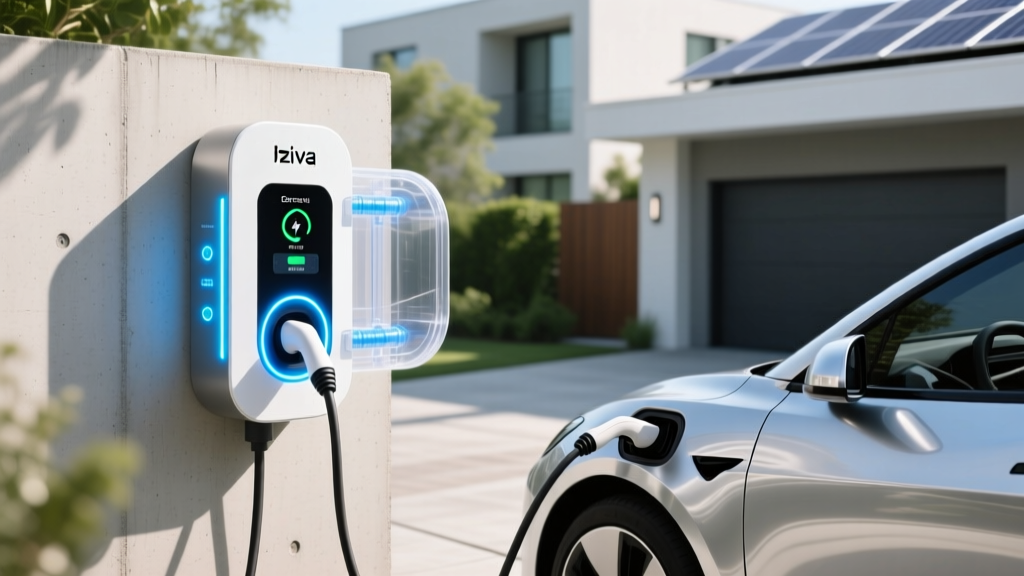
Izivia Express stations are public DC fast-charging locations operated by Izivia (formerly part of the Sodetrel network), a French charging network backed by EDF Group. These stations typically feature:
- DC fast chargers at 50–150 kW, using CCS2 connectors (the European standard, analogous to CCS1 in North America) and sometimes CHAdeMO
- AC Level 2 points at 22 kW (Type 2 connector) for slower destination charging
- Payment via the Izivia mobile app, RFID badge, or contactless credit card
- Locations along highways, retail parks, and fleet depots across France, Belgium, and neighboring markets
For North American drivers, the closest equivalents are Electrify America, EVgo, or Tesla Supercharger stations. The charging physics are identical — a 150 kW DC fast charge on an Izivia Express stall behaves the same as a 150 kW Electrify America stall when connected to a comparable vehicle. The key differences are connector standards (CCS2 vs. CCS1/NACS) and payment ecosystems.
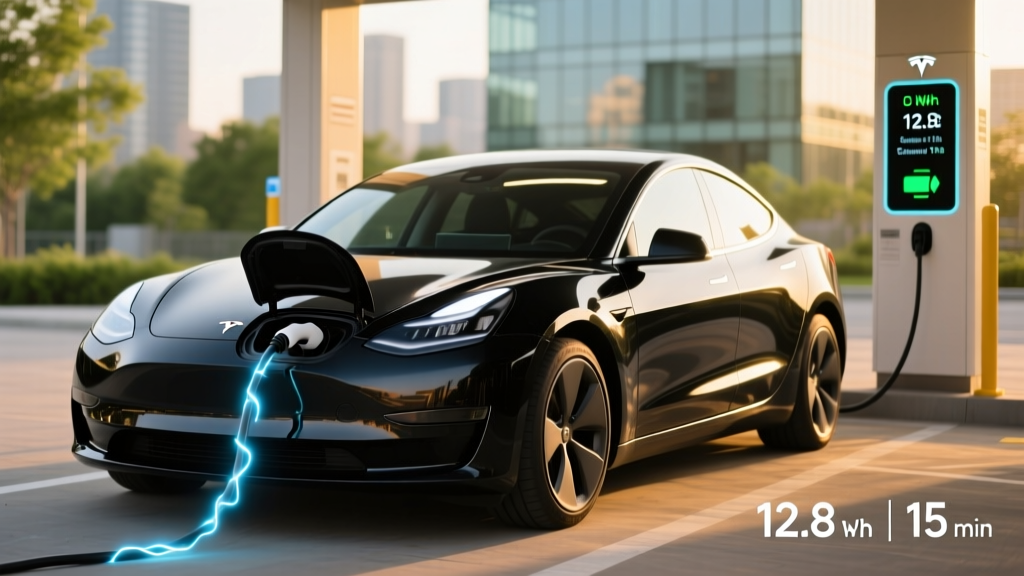
On a vehicle with a 75 kWh battery (e.g., VW ID.4, Hyundai Ioniq 5), expect a 10–80% charge in approximately 25–32 minutes at a 150 kW station — not the theoretical minimum. Vehicles with 800V architectures (Ioniq 5, Kia EV6, Porsche Taycan) sustain higher rates longer and may achieve 10–80% in 18–22 minutes. Below 10% SoC or above 80%, speeds drop sharply regardless of station capability.
Home EV Charger Installation: Electrical Requirements and Costs
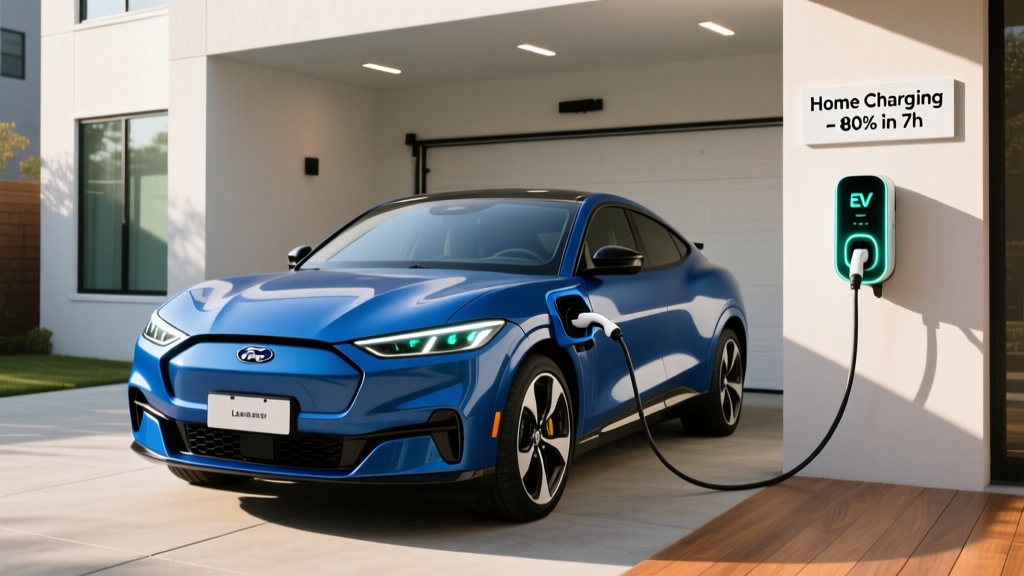
If you're relying on public networks like Izivia Express for road trips but want the convenience and lower cost of home charging, here's what a Level 2 home installation actually requires.
Electrical Specifications
A standard home Level 2 charger needs a 240V dedicated circuit — the same voltage as your electric dryer or oven. The most common residential setup is a 40-amp or 48-amp circuit, which supports chargers rated at 32A (7.7 kW) or 40A (9.6 kW) respectively. Electrical code requires the circuit breaker to be rated at 125% of the continuous load, so a 48A charger needs a 60A breaker.
- Minimum viable: 240V / 20A circuit → 3.8 kW charger (adds ~14 mi/hr for an efficient sedan)
- Recommended standard: 240V / 40A circuit → 7.7–9.6 kW charger (adds ~28–36 mi/hr)
- High-power: 240V / 60A circuit → 11.5 kW charger (adds ~42 mi/hr; requires robust panel capacity)
Panel Upgrade Considerations
This is where costs can jump unexpectedly. Most homes built after the 1990s have a 200-amp main electrical panel, which typically supports adding a 40–60A EV circuit without an upgrade. However, older homes with 100A service, or homes already running high-draw appliances (electric range, heat pump, hot tub, dryer), may need a panel upgrade to 200A or even 400A. A panel upgrade adds $1,500–$4,000+ to your project.
Some utilities and electricians offer a load-management device ($200–$500 installed) that dynamically throttles your charger's draw based on your home's real-time consumption — avoiding a panel upgrade entirely. This is worth asking about during your electrical assessment.
| Component | Low End | High End | Notes |
|---|---|---|---|
| Level 2 charger (hardware) | $250 | $700 | 32A–48A smart chargers; see equipment picks below |
| Electrician labor (standard install) | $300 | $800 | Short run from panel to garage; conduit, wiring, outlet or hardwire |
| Permit and inspection | $50 | $250 | Varies by municipality; some jurisdictions waive EV permits |
| Panel upgrade (if needed) | $1,500 | $4,000 | 100A → 200A upgrade; not needed in most newer homes |
| Long wire run (>50 ft from panel) | $200 | $600 | Additional conduit and heavier-gauge copper |
| Total (no panel upgrade) | $600 | $1,750 | Typical scenario for most homes |
| Total (with panel upgrade) | $2,100 | $5,350 | Older homes or high-load situations |
Always hire a licensed electrician familiar with EV charging installations. The National Electrical Code (NEC Article 625) has specific requirements for EV supply equipment, and your local inspector will verify compliance. Some states and utilities offer rebates of $200–$1,000 that offset installation costs — check the AFDC incentive database for current programs in your area.
Connector Compatibility: Which Plug Fits Your EV?
Connector standards have consolidated significantly, but the landscape still requires attention — especially if you're traveling internationally and encountering networks like Izivia.
| Connector | Region | AC / DC | Vehicles Using It |
|---|---|---|---|
| NACS (J3400) | North America | AC + DC | Tesla (all); Ford, GM, Rivian, Hyundai, Kia, Volvo, and most others starting 2025–2026 model years |
| CCS1 | North America | DC (AC uses J1772) | Legacy non-Tesla EVs (2024 and earlier models); being phased out in favor of NACS |
| CCS2 | Europe | AC + DC | All European-market EVs; used at Izivia Express stations |
| CHAdeMO | Global (declining) | DC only | Nissan Leaf, Mitsubishi Outlander PHEV; largely discontinued for new models |
| J1772 (Type 1) | North America | AC only | All non-Tesla North American EVs for Level 1/2 AC charging (or via NACS adapter) |
Adapter reality in 2026: If you own a CCS1-equipped EV (e.g., a 2023 VW ID.4 or Hyundai Ioniq 5) and need to use Tesla Superchargers — now the largest DC fast-charging network — you'll need a CCS-to-NACS adapter. Tesla sells one for approximately $250, and aftermarket options exist for $150–$200. For European travel where Izivia Express stations use CCS2, North American vehicles aren't directly compatible without a CCS1-to-CCS2 adapter, though this is a niche scenario for most US-based owners.
For home Level 2 charging: nearly all home chargers come with a J1772 connector (North America) or include a NACS plug. Tesla owners use a J1772-to-NACS adapter (included with the car) for non-Tesla home chargers, or buy a Tesla Wall Connector with the native NACS plug.
Cost to Charge: Per-Mile Economics vs. Gasoline
The economic case for EV charging hinges on where and when you charge. Here's the real math using 2026 electricity and fuel prices.
| Scenario | Rate ($/kWh) | Vehicle Efficiency (kWh/100mi) | Cost per Mile | Annual Cost (12,000 mi) |
|---|---|---|---|---|
| Home, off-peak utility rate | $0.08–$0.13 | 28 kWh/100mi | $0.022–$0.036 | $264–$432 |
| Home, standard residential rate | $0.14–$0.18 | 28 kWh/100mi | $0.039–$0.050 | $468–$600 |
| Public Level 2 (ChargePoint, etc.) | $0.25–$0.49 | 28 kWh/100mi | $0.070–$0.137 | $840–$1,644 |
| DC Fast Charging (EA, EVgo, Izivia-type) | $0.35–$0.60 | 28 kWh/100mi | $0.098–$0.168 | $1,176–$2,016 |
| Gasoline car (28 MPG avg, $3.40/gal) | — | — | $0.121 | $1,457 |
The takeaway: home charging is dramatically cheaper than gasoline — typically 60–80% less per mile. But exclusive reliance on DC fast charging at public rates can equal or exceed gasoline costs. The optimal ownership model is 85–90% home charging with DC fast charging reserved for road trips. This is where the Izivia Express model (and its North American equivalents) makes sense: fast infrastructure for when you need it, not as your daily routine.
If your utility offers time-of-use (TOU) rates, scheduling your charger to run between 10 PM and 6 AM can cut your per-kWh cost by 30–50%. Most smart Level 2 chargers have built-in scheduling, or you can set it through your vehicle's infotainment system.
Equipment Recommendations: Best Home Level 2 Chargers in 2026
Here are proven, code-compliant home chargers worth considering. All are UL-listed (or equivalent) and support the features that matter: adjustable amperage, load management, and robust cable length.
ChargePoint Home Flex
- Power output: Up to 12 kW (50A) — configurable down to 16A for weaker panels
- Connector: J1772 (NACS adapter available)
- Cable length: 23 feet
- Smart features: Wi-Fi, app scheduling, Alexa integration, energy tracking
- Price: ~$450–$550
- Best for: Flexibility across panel capacities; strong app ecosystem
Tesla Wall Connector (Gen 4)
- Power output: Up to 11.5 kW (48A)
- Connector: NACS native; J1772 adapter included for non-Tesla EVs
- Cable length: 24 feet
- Smart features: Wi-Fi, over-the-air updates, power sharing (link two units on one circuit), vehicle-specific access control
- Price: ~$475
- Best for: Tesla owners or households with NACS-equipped vehicles; cleanest integration
Emporia Level 2 EV Charger
- Power output: Up to 11.5 kW (48A)
- Connector: J1772 (NACS version available)
- Cable length: 24 feet
- Smart features: Wi-Fi, detailed energy monitoring, solar integration (pairs with Emporia Vue home energy monitor), TOU scheduling
- Price: ~$350–$400
- Best for: Budget-conscious buyers who want granular energy data and solar pairing
Grizzl-E Smart
- Power output: Up to 10 kW (40A)
- Connector: J1772 or NACS
- Cable length: 24 feet
- Smart features: OCPP protocol, app control, adjustable amperage, built-in load management
- Price: ~$400–$500
- Best for: Cold-climate durability (rated to -40°F); Canadian-built; rugged outdoor install
A note on hardwired vs. plug-in: a NEMA 14-50 outlet (the same as a range outlet) allows you to unplug and take your charger when you move. However, NEC 2023+ code requires a GFCI breaker for receptacle-based EV circuits, which adds $50–$150 and can occasionally nuisance-trip. Hardwired installations avoid the GFCI requirement and are preferred by many electricians for reliability. Discuss both options during your site assessment.
Safety and Code Considerations You Can't Skip
EV charging draws sustained high current for hours — far longer than a dryer cycle. This makes proper installation critical:
- Dedicated circuit: Your EV charger must be on its own breaker, not shared with other appliances. Sharing causes overheating risk and code violations.
- Wire gauge: A 48A charger on a 60A breaker requires 6 AWG copper wire (or 4 AWG aluminum). Undersized wire is a fire hazard.
- GFCI protection: Required for all receptacle-installed chargers (NEC 625.54). Hardwired units are exempt but still benefit from the charger's internal ground-fault protection.
- Outdoor rating: If installing outside, the charger must carry a NEMA 4 or IP65 rating for weather resistance. All chargers listed above meet this standard.
- Permit and inspection: Skipping the permit voids your homeowner's insurance coverage for any electrical fire originating from the installation. The $50–$250 permit fee is non-negotiable insurance.
- Utility notification: Some utilities require you to notify them before adding a Level 2 charger, especially on TOU rate plans. They may also offer a dedicated EV meter or secondary service drop.
Charging Time Examples: What to Expect with Common Battery Sizes
To make this concrete, here are 10–80% charging times for popular 2026 EVs across charging levels:
| Vehicle (Battery kWh) | Level 1 (1.4 kW) | Level 2 (7.7 kW) | Level 2 (11.5 kW) | DC Fast (150 kW station) |
|---|---|---|---|---|
| Tesla Model 3 (75 kWh usable) | ~37 hours | ~6.8 hours | ~4.6 hours | ~28 minutes |
| Hyundai Ioniq 5 (77.4 kWh, 800V) | ~38 hours | ~7.0 hours | ~4.7 hours | ~18 minutes |
| Ford F-150 Lightning (131 kWh ext.) | ~65 hours | ~12 hours | ~8.0 hours | ~42 minutes |
| Chevrolet Equinox EV (85 kWh) | ~42 hours | ~7.7 hours | ~5.2 hours | ~32 minutes |
The Hyundai Ioniq 5's 800V architecture is the standout here — it sustains higher DC fast-charging rates longer than 400V vehicles, which is why it hits 10–80% roughly 10 minutes faster at the same 150 kW station. This matters on road trips. If you frequently drive routes served by Izivia Express or equivalent 150 kW networks, an 800V vehicle extracts more value from that infrastructure.
Frequently Asked Questions
How much does it cost to install a home EV charger?
A standard Level 2 home charger installation costs $600–$1,750 total (hardware + electrician + permit) when your electrical panel has sufficient capacity. If you need a panel upgrade from 100A to 200A, add $1,500–$4,000. Always get a site assessment from a licensed electrician before purchasing equipment.
How fast will each charging level add range?
Level 1 (120V) adds 3–5 miles per hour. Level 2 (240V, 7.7 kW) adds roughly 28–36 miles per hour for an efficient EV. DC fast charging at 150 kW can add 200+ miles in 15–20 minutes during the peak portion of the charge curve (10–50% SoC). Exact rates depend on your vehicle's efficiency (kWh/100mi) and its onboard charger or DC charge acceptance rate.
Which connector/charger is compatible with my EV?
In North America for 2026 model-year vehicles: Tesla uses NACS natively. Ford, GM, Rivian, Hyundai, Kia, and most others have transitioned to NACS. Older non-Tesla EVs (2024 and earlier) typically have CCS1. For home Level 2 AC charging, J1772 is universal (with a NACS adapter for Teslas). Check your vehicle's charge port or owner's manual for the definitive answer.
How much does charging cost per mile vs. gas?
Home charging at average residential rates ($0.14–$0.18/kWh) costs $0.04–$0.05 per mile for a typical EV — roughly 65% less than a 28 MPG gas car at $3.40/gallon ($0.12/mile). DC fast charging at public rates ($0.35–$0.60/kWh) can cost $0.10–$0.17 per mile, which equals or exceeds gasoline. Maximize home charging for the best economics.
What electrical upgrades might I need?
Most homes with a 200A panel need no upgrade — just a new 40A or 60A breaker and a wire run to your garage or parking spot. Homes with 100A service, or those already running multiple high-draw electric appliances, may need a panel upgrade ($1,500–$4,000) or a load-management device ($200–$500) to avoid one. Your electrician will calculate your existing load during the assessment.
Can I use an Izivia Express station with a North American EV?
Not directly. Izivia Express stations use CCS2 connectors (European standard). North American EVs use NACS or CCS1. If you're traveling in Europe with a North American-spec vehicle, you'd need a CCS1-to-CCS2 adapter — though most travelers rent or lease a local EV instead. The charging speeds and pricing models at Izivia Express are comparable to Electrify America or EVgo in the US.