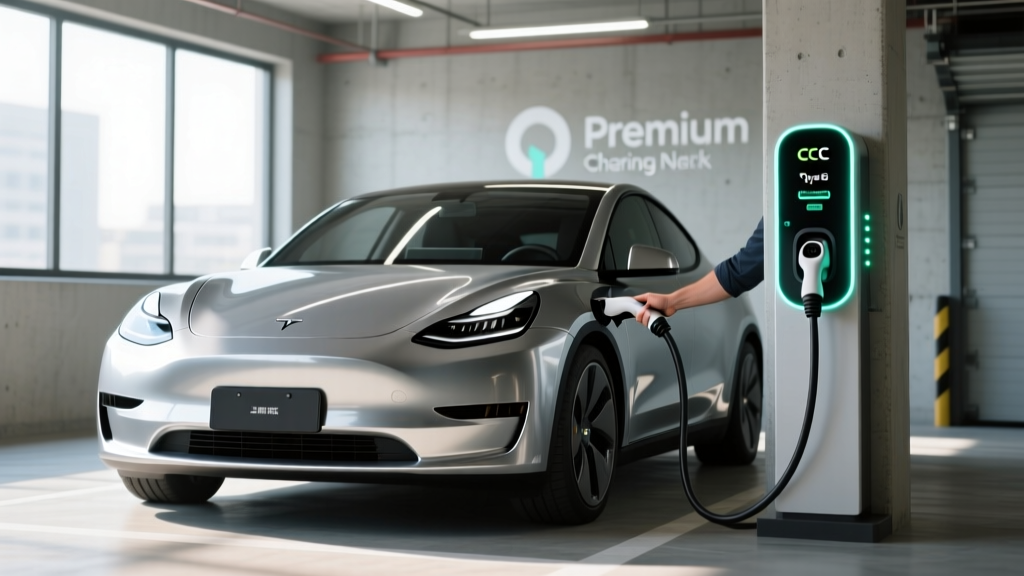
If you own a Tesla—or are about to buy one—you've probably heard the warning: frequent Supercharging degrades your battery faster. The short answer is that DC fast charging does accelerate degradation slightly compared to Level 2 home charging, but the real-world impact is smaller than most owners fear. What matters far more is how you manage your state of charge (SoC), your charging habits over years, and whether you have access to reliable home charging.
This guide breaks down the physics behind Supercharger battery wear, compares every charging level by the numbers (kW, miles per hour, cost per mile), and walks you through exactly what it takes to install a Level 2 home charger—including the panel upgrades, permits, and costs that catch new EV owners off guard.
Is Supercharger Bad for Tesla Battery Health? The Data
Tesla's Supercharger network delivers DC fast charging at up to 250 kW (V3 stalls) and, as of 2025–2026, up to 325 kW at newer V4 stalls. That speed is possible because high-voltage DC current bypasses the car's onboard charger and goes straight into the battery pack. The trade-off: high current generates significant heat, and heat is the primary enemy of lithium-ion cell longevity.
Here's what the data actually shows:
- Tesla's own fleet data (published in Tesla's 2023 Impact Report) showed that Model S/X batteries retained approximately 88% capacity after 200,000 miles. Model 3/Y with LFP (lithium iron phosphate) chemistry showed even slower degradation curves.
- Recurrent Auto's 2024 study of over 12,500 Tesla vehicles found that vehicles that Supercharged more than 90% of the time showed only a marginal increase in degradation compared to those that primarily used Level 2 charging—roughly a 2-3 percentage point difference over 100,000 miles.
- Heat management matters more than charge speed. Tesla's active liquid thermal management system preconditioning the battery before a Supercharger session (navigating to a Supercharger triggers this automatically) significantly reduces the thermal stress on cells.
The bigger degradation risks are actually: regularly charging to 100% and leaving the car sitting at full charge (especially in hot climates), frequently draining below 10%, and exposing the pack to sustained high temperatures. Supercharging itself is a secondary factor.
Charging Levels Explained: Speed, Power & Range Added
Before we get into costs and equipment, let's establish the three charging levels every EV owner needs to know. The critical distinction: kW (kilowatts) measures power—how fast energy flows into your battery. kWh (kilowatt-hours) measures energy—the total capacity stored in your battery, like gallons in a fuel tank.
| Level | Power (kW) | Voltage / Amps | Miles of Range Per Hour | 10–80% Time (75 kWh Battery) |
|---|---|---|---|---|
| Level 1 (120V household) | 1.0–1.4 kW | 120V / 12A | 3–5 mi/hr | 40+ hours (impractical) |
| Level 2 (240V home/public) | 3.3–19.2 kW | 240V / 16–80A | 12–75 mi/hr | 4–9 hours |
| DC Fast Charging (Supercharger/CCS) | 50–350 kW | 400–800V DC | 150–1,000+ mi/hr | 15–40 minutes |
Charge curve reality check: That peak 250 kW at a Tesla V3 Supercharger is not sustained for the entire session. Charging follows a curve—power peaks around 10-30% SoC and tapers significantly above 50%, dropping sharply past 80%. A typical 10-80% session in a Model Y Long Range (75 kWh usable, NMC chemistry) at a V3 Supercharger takes about 25-28 minutes. The last 20% (80-100%) can take nearly as long as the first 70%.
How Much Does It Cost to Install a Home EV Charger?
Home Level 2 charging is where the vast majority of Tesla owners do their charging—and for good reason. It's cheaper per kWh, gentler on battery health, and your car is always topped up by morning. But installation costs vary enormously based on your home's electrical infrastructure.
Here's a realistic breakdown for a 240V / 48A hardwired Level 2 charger installation in 2026:
| Component | Simple Install (panel nearby) | Complex Install (long run / upgrade) |
|---|---|---|
| Level 2 Charger (Equipment) | $400–$700 | $400–$700 |
| Electrician Labor (2–8 hrs @ $100–$150/hr) | $200–$500 | $800–$1,500 |
| Electrical Permit | $50–$150 | $100–$300 |
| Wiring/Conduit (up to 50 ft run) | $100–$200 | $300–$800 |
| Panel Upgrade (100A → 200A, if needed) | N/A | $1,500–$3,500 |
| TOTAL | $750–$1,550 | $3,100–$6,800 |
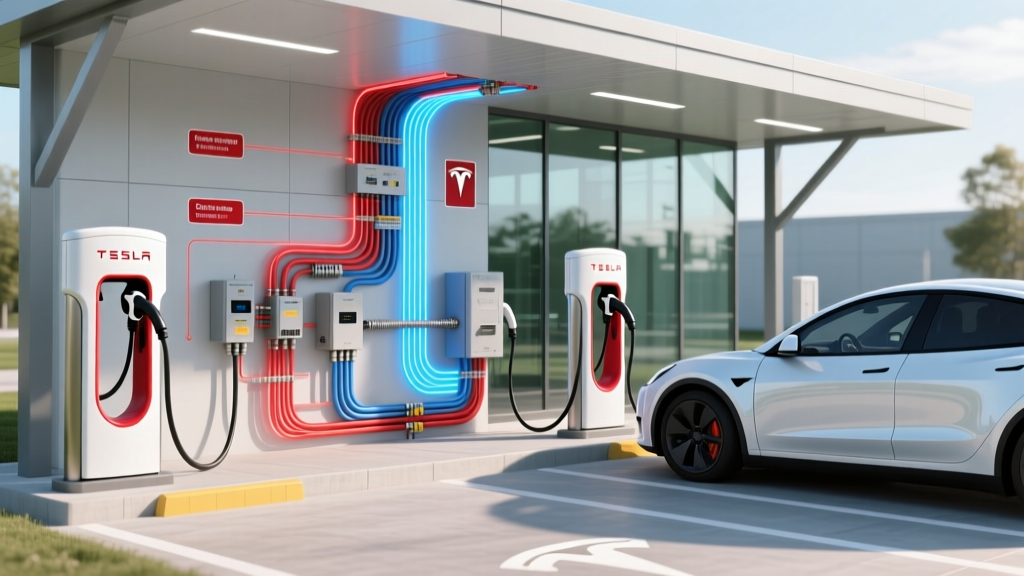
The panel upgrade gotcha: Homes built before 2000 often have 100-amp or 150-amp electrical panels. A 48A Level 2 charger draws 60A on a dedicated circuit (NEC code requires circuits rated at 125% of continuous load). If your panel is already near capacity with HVAC, electric range, and dryer loads, you'll need a panel upgrade or a smart splitter device (like the NeoCharge Smart Splitter, ~$350) that shares an existing 240V outlet with your dryer—cutting installation cost dramatically but limiting charging to ~24A (5.8 kW).
Always get a licensed electrician to perform a load calculation before committing to a charger size. This is non-negotiable for safety and code compliance.
Charging Cost Per Mile: Home vs. Supercharger vs. Gas
One of the strongest arguments for home charging is cost. Let's compare real-world scenarios for a 2026 Tesla Model Y Long Range (EPA 320 miles, ~75 kWh usable battery, ~3.7 miles/kWh efficiency):
| Scenario | Rate / Cost | Cost Per Mile | Full Charge (10–80%) |
|---|---|---|---|
| Home (off-peak utility rate) | $0.08–$0.14/kWh | $0.02–$0.04 | $3.15–$7.35 |
| Home (standard rate) | $0.15–$0.22/kWh | $0.04–$0.06 | $5.88–$11.55 |
| Tesla Supercharger V3 (avg.) | $0.25–$0.40/kWh | $0.07–$0.11 | $9.80–$21.00 |
| Electrify America / 3rd-party DCFC | $0.35–$0.55/kWh | $0.09–$0.15 | $13.65–$28.88 |
| Gas Vehicle (28 MPG avg., $3.40/gal) | $3.40/gallon | $0.12 | $14.00 (12 gal tank) |
The math is clear: Home off-peak charging costs roughly one-third to one-half of Supercharging, and one-quarter to one-sixth the cost per mile of gasoline. Even at standard residential rates, a Tesla is cheaper per mile than a comparable gas vehicle. Supercharging is the most expensive way to charge a Tesla—roughly equivalent to gas costs on a per-mile basis in many markets.
For the latest average electricity rates by state, check the U.S. Energy Information Administration (EIA) monthly reports.
Connector Compatibility: NACS, CCS & Adapter Requirements
The connector landscape shifted dramatically in 2024–2025 when nearly every major automaker adopted Tesla's North American Charging Standard (NACS) for their EVs. By 2026, NACS is the dominant connector in the U.S., but millions of CCS1-equipped EVs remain on the road.
| Connector | Native Brands (2026 Models) | Adapter Needed For |
|---|---|---|
| NACS (Tesla) | Tesla (all), Ford, GM, Rivian, Volvo, Polestar, Mercedes-Benz, BMW, Hyundai/Kia (2025+) | CCS1 stations (Tesla provides CCS adapter) |
| CCS1 | Volkswagen, Subaru, older Hyundai/Kia, Lucid, legacy models | Tesla Superchargers (NACS-to-CCS adapter, ~$200–$250) |
| CHAdeMO | Nissan Leaf (legacy only; no new models) | NACS or CCS stations (limited adapter options) |
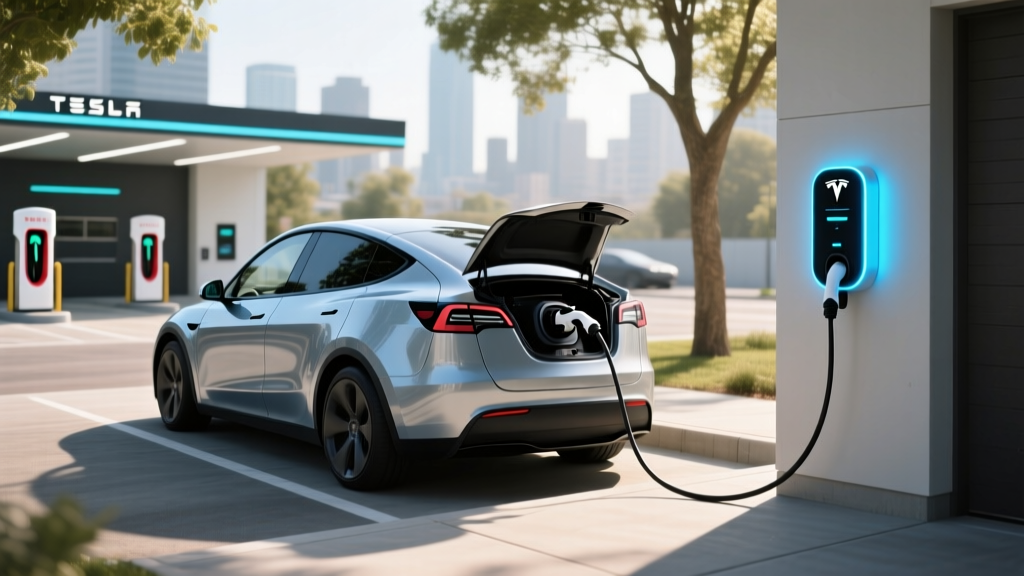
For Tesla owners: All Tesla vehicles ship with NACS natively. If you need to use a CCS1 public charger (Electrify America, EVgo, etc.), Tesla sells a CCS adapter for approximately $175. For home Level 2 charging, Tesla's Mobile Connector and Wall Connector both use NACS natively—no adapter needed.
For non-Tesla EVs with NACS (2025+ models): You now have full access to Tesla Superchargers natively, which dramatically expands your fast-charging network. Check your manufacturer's app for Supercharger routing.
Home Charger Equipment: Top Picks for 2026
Your choice of home charger (technically called EVSE—Electric Vehicle Supply Equipment) determines your daily charging speed, smart features, and long-term reliability. Here are the top options for Tesla and NACS-equipped EVs:
Tesla Wall Connector
- Power: Up to 11.5 kW (48A, hardwired) or 9.6 kW (40A, NEMA 14-50 plug)
- Connector: NACS native
- Cable: 24 ft
- Smart features: Wi-Fi, OTA updates, power sharing between multiple units, Tesla app integration
- Price: ~$475 (hardwired)
- Best for: Tesla-only households wanting maximum simplicity
ChargePoint Home Flex
- Power: Up to 12 kW (50A, hardwired) or 9.6 kW (40A, plug-in)
- Connector: NACS or J1772 (select at purchase)
- Cable: 23 ft
- Smart features: Wi-Fi, ChargePoint app, Alexa, scheduled charging, detailed energy reports
- Price: ~$599 (NACS version)
- Best for: Multi-EV households (NACS + non-Tesla)
Grizzl-E Smart
- Power: Up to 11.5 kW (48A) — adjustable down to 16A
- Connector: NACS or J1772
- Cable: 24 ft
- Smart features: Wi-Fi, OCPP protocol, adjustable amperage (great for panel-limited homes)
- Price: ~$449
- Best for: Budget-conscious buyers or homes with limited panel capacity
Emporia Level 2 Charger
- Power: Up to 11.5 kW (48A hardwired)
- Connector: NACS or J1772
- Cable: 24 ft
- Smart features: Wi-Fi, Emporia energy monitoring ecosystem, solar integration, load management
- Price: ~$399
- Best for: Homes with solar panels or Emporia Vue energy monitors
Key buying tip: Match your charger's amperage to your circuit. A 48A charger requires a 60A breaker (NEC 125% rule for continuous loads). If your panel can only spare a 40A breaker, choose a charger adjustable to 32A. The Grizzl-E and Emporia both offer this flexibility.
Safety, Electrical Code & Installation Requirements
EV charging draws sustained high current for hours—this is fundamentally different from most household loads. Here's what code and safety require:
- Dedicated circuit: Your Level 2 charger must be on its own dedicated breaker. No sharing with other outlets or appliances (unless using a UL-listed smart splitter).
- GFCI protection: NEC 2023 (and most 2026 local adoptions) requires GFCI protection for all EVSE outlets. Hardwired units often have built-in GFCI. For NEMA 14-50 receptacle installations, your electrician must install a GFCI breaker—these cost $50–$100 more than standard breakers.
- Outdoor rating: If your charger is installed outdoors (garage-free homes), ensure the unit is rated NEMA 4 (weatherproof). The Tesla Wall Connector and Grizzl-E both carry NEMA 4 ratings.
- Wire gauge: A 60A circuit requires 6 AWG copper wire (or 4 AWG aluminum). Your electrician will size this based on run length—longer runs may need thicker wire to prevent voltage drop.
- Permit and inspection: Most jurisdictions require an electrical permit for EVSE installation ($50–$300 depending on locality). The inspection ensures your installation meets NEC code. Do not skip this—it's required for insurance coverage and home resale.
A note on the Tesla Mobile Connector: The included Mobile Connector with a NEMA 14-50 adapter delivers up to 7.7 kW (32A) on a properly wired 240V/50A outlet. This is a viable daily charging solution for many owners, adding roughly 30 miles of range per hour—enough to fully recharge overnight for most daily driving needs. However, Tesla and most electricians recommend against using the Mobile Connector as a permanent daily solution because the plug/receptacle connection is a wear point over years of high-current use. A hardwired Wall Connector is more reliable long-term.
Optimizing Battery Longevity: Best Charging Practices for Tesla Owners
Based on battery degradation data and Tesla's own recommendations, here's a practical charging protocol:
- Daily driving: Set charge limit to 80% (for NMC batteries in Long Range/Performance models). For LFP batteries (Model 3 RWD, some Model Y Standard Range), Tesla recommends charging to 100% at least weekly to maintain battery calibration.
- Home Level 2 is your default: Charge overnight at home whenever possible. Slower charging generates less heat and causes less cell stress.
- Supercharge when needed, not as default: Use Superchargers for road trips and when you can't charge at home. Occasional Supercharging (1-2x/week) shows negligible long-term impact.
- Precondition before Supercharging: Always navigate to the Supercharger in the Tesla nav system—this triggers battery preconditioning, warming the pack to optimal temperature for faster charging and reduced stress.
- Avoid extreme SoC storage: Don't leave the car sitting at 100% for days (especially in hot weather). Don't store below 10% for extended periods. For long-term storage (travel, etc.), set to 50%.
- Use scheduled charging: Set your Tesla to charge during off-peak utility hours (often 10 PM–6 AM) for the lowest electricity rates and reduced grid strain.
Frequently Asked Questions
How fast will each charging level add range to my Tesla?
Level 1 (120V) adds roughly 3–5 miles per hour—barely enough for low-mileage drivers. Level 2 (240V, 48A) adds roughly 44 miles per hour in a Model Y—fully recharging overnight. DC Fast Charging (Supercharger V3, 250 kW peak) adds up to 200 miles in 15 minutes, though the charge curve tapers significantly above 50% SoC.
Does frequent Supercharging void my Tesla battery warranty?
No. Tesla's battery warranty (8 years / 100,000–150,000 miles depending on model, covering degradation below 70% capacity) is not voided by Supercharger use. Tesla explicitly designs their battery thermal management system for regular DC fast charging. However, if you exclusively Supercharge and see above-average degradation, the warranty still applies only if capacity falls below the 70% threshold.
What electrical upgrades might I need for a home charger?
The most common upgrade is a panel replacement from 100A or 150A to 200A service ($1,500–$3,500). You may also need a new dedicated 60A breaker, 6 AWG wiring run to your garage, and a GFCI breaker if using a receptacle. Homes with older Federal Pacific or Zinsco panels should be upgraded regardless—they're known fire hazards and won't pass inspection.
Is it cheaper to charge at home or use Tesla Superchargers?
Home charging is dramatically cheaper. At the national average residential rate of ~$0.16/kWh (per EIA data), a full Model Y charge costs about $8.40. The same charge at a Supercharger ($0.32/kWh average) costs about $16.80. Over a year of 12,000 miles, home charging costs roughly $325 vs. $840 for exclusive Supercharging—a $515 annual savings.
Can I use a regular 120V outlet to charge my Tesla?
Yes, using the Tesla Mobile Connector with a standard NEMA 5-15 adapter. You'll get roughly 3–5 miles of range per hour (1.0–1.4 kW). For a driver covering 30 miles/day, this means 6–10 hours of charging nightly—which works if your daily commute is short and you can leave the car plugged in overnight. But it's inefficient and puts sustained load on a standard household outlet not designed for continuous high draw. A 240V Level 2 setup is strongly recommended for daily use.
How much does charging cost per mile compared to gas?
Home Level 2 charging averages $0.03–$0.06 per mile depending on your utility rate. Supercharging averages $0.07–$0.11 per mile. A comparable gas vehicle at 28 MPG and $3.40/gallon costs about $0.12 per mile. Even the most expensive Supercharging is competitive with gasoline, while home charging delivers 50–75% fuel cost savings. See our EPA EV technology overview for efficiency comparisons across models.