If you've searched for "EV charging free" and found a patchwork of hotel chargers, dealership plugs, and expired promotional networks, you're not alone. Free EV charging does exist in 2026, but it's neither universal nor reliable enough to plan ownership around. The real question is how much charging actually costs, where free sessions fit into a practical routine, and how those costs compare to filling a gas tank.
This guide walks through the three charging levels, exact speeds, home installation costs, connector compatibility, and a clear cost-per-mile comparison against gasoline — with real numbers from the EPA, IRS, and current market rates.
Where EV Charging Is Actually Free in 2026
Free charging falls into a few predictable categories, and none of them should be the backbone of your fueling strategy:
- Destination chargers at hotels, malls, and workplaces: Often complimentary for customers or employees, typically Level 2 (6–19 kW). Availability is inconsistent and turnover is a real problem.
- Automaker promotional credits: Brands like Volkswagen, Hyundai, and BMW have bundled complimentary DC fast charging with new vehicle purchases (e.g., 2–3 years of Electrify America or Ionity sessions). These expire.
- Municipal and utility-sponsored stations: Some cities and utilities offer free Level 2 charging at public lots, libraries, or park-and-rides to encourage adoption. These are often low-power and time-limited.
- Dealerships: Many franchised dealers allow free top-ups while you wait, but this is a service-lane courtesy, not a fueling network.
The catch? Free public chargers are frequently occupied, broken, or limited to 2–4 hours. They're a bonus, not a strategy. Most EV owners in 2026 charge at home 85–95% of the time, paying residential electricity rates.
Charging Levels Explained: Speeds, kW, and Miles Per Hour
Before comparing costs, you need to understand what each level actually delivers. The most common confusion in EV ownership is mixing up kW (kilowatts), which measures power or charge rate, with kWh (kilowatt-hours), which measures energy or battery capacity. Think of kW as the width of the pipe and kWh as the size of the tank.
| Level | Voltage | Typical Power (kW) | Miles of Range Added Per Hour | Best Use Case |
|---|---|---|---|---|
| Level 1 | 120V | 1.2–1.4 kW | 3–5 miles | Overnight top-up, low daily mileage |
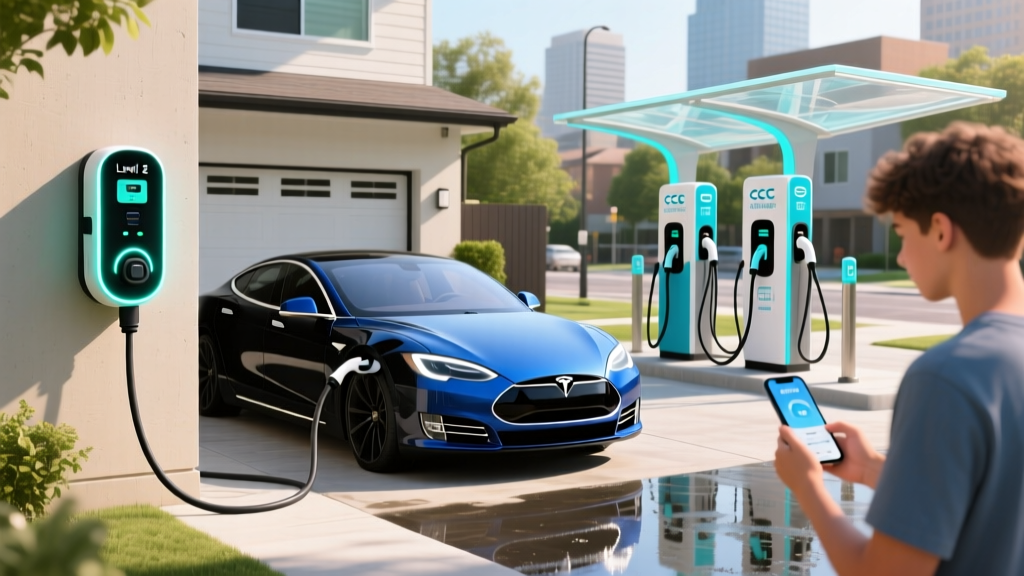
| Level 2 (Home/Public) | 240V | 7.2–19.2 kW | 25–70 miles | Daily home charging, workplace, destination |
| DC Fast Charging | 400–800V DC | 50–350 kW | 150–1,200 miles (peak, first 10 min) | Road trips, rapid top-ups |
Real-world caveat: DC fast charging speeds are peak rates, not sustained. A vehicle rated for 250 kW peak may only hold that rate for a few minutes before the charge curve tapers. A 10–80% session on a 250 kW-capable vehicle with an 80 kWh battery typically takes 18–28 minutes depending on battery chemistry, temperature, and preconditioning.
How Much Does It Cost to Install a Home EV Charger?
Home Level 2 charging is where the economics of EV ownership really work. But installation costs vary wildly depending on your electrical panel's age, capacity, and proximity to your parking spot.
| Component | Typical Cost Range | Notes |
|---|---|---|
| Level 2 Charger (Equipment) | $350–$700 | Smart Wi-Fi chargers (ChargePoint Home Flex, Emporia Level 2, Wallbox Pulsar Plus); 32A–48A |
| Electrician Labor | $600–$2,500 | Depends on run length, conduit, and whether drywall/concrete cutting is needed |
| Permit & Inspection | $50–$300 | Required in most jurisdictions; varies by city/county |
| Electrical Panel Upgrade (if needed) | $1,500–$4,000 | Needed if panel is 100A or maxed out; upgrading to 200A service |
| Total (no panel upgrade) | $1,000–$3,200 | Most newer homes with 200A panels |
| Total (with panel upgrade) | $2,500–$6,500 | Older homes, 100A service, or heavy existing loads |
What electrical upgrades might you need? A dedicated 240V circuit is mandatory for Level 2 charging. Most chargers run on a 40A or 50A breaker (NEMA 14-50 outlet or hardwired). If your panel is already near capacity — common in homes with electric heating, dryers, and ranges — a licensed electrician will need to perform a load calculation. Homes with 100-amp service almost always require an upgrade to 200A before adding a 40A EV circuit.
The IRS Residential Clean Energy Credit (IRC §25D) may cover up to 30% of charger equipment and installation costs (capped at $1,000) through 2032. This is separate from the vehicle purchase credit under §30D. Consult a tax professional for eligibility.
Which Connector Is Compatible With My EV?
The connector landscape has consolidated significantly since 2023, when Ford and GM adopted the North American Charging Standard (NACS). As of 2026, nearly all new EVs sold in the U.S. ship with a NACS charge port. Legacy CCS1 vehicles can access Tesla Superchargers and NACS stations using an adapter.
| Connector | Brands Using It (New Vehicles) | Adapter Needed? |
|---|---|---|
| NACS (Tesla) | Tesla, Ford, GM, Rivian, Volvo, Polestar, Hyundai/Kia (2025+), BMW, Mercedes | CCS-to-NACS adapter for older CCS stations |
| CCS1 | Legacy models (2024 and earlier from VW, Hyundai, Kia, BMW, etc.) | NACS-to-CCS adapter for Superchargers (~$200–$250) |
| CHAdeMO | Nissan Leaf (discontinued), Mitsubishi Outlander PHEV | Limited network; no practical adapter to NACS/CCS for DC fast |
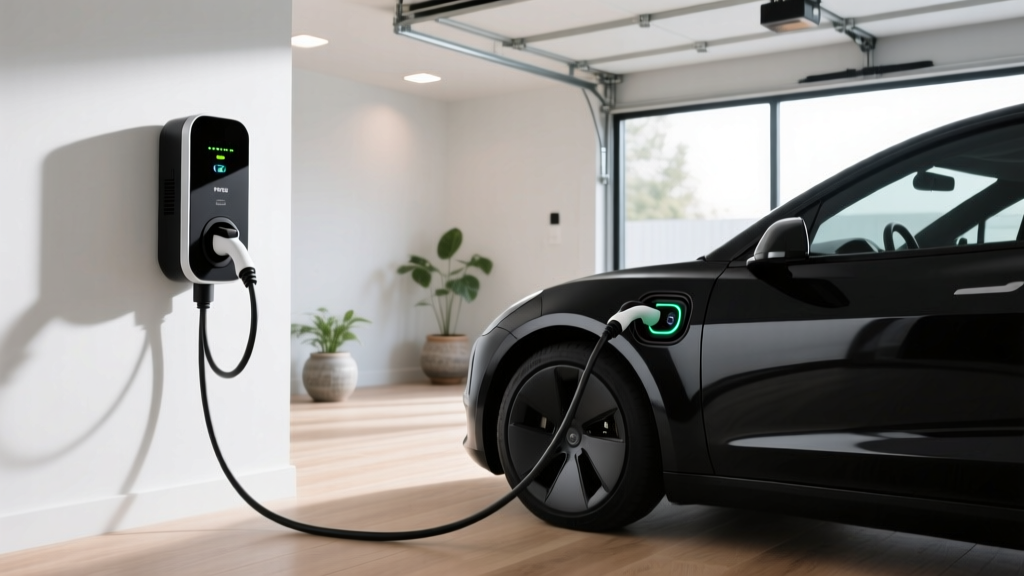
For home Level 2 charging: All Level 2 chargers use a J1772 connector, which NACS vehicles can accept with the small J1772-to-NACS adapter included with most new Teslas and other NACS vehicles. Many 2026 smart chargers now ship with a NACS connector built in, eliminating the adapter need entirely.
Cost to Charge: Home, Public, and DC Fast Compared
This is where the "EV charging free" question meets reality. Here's what charging actually costs across scenarios, using a national average residential electricity rate of ~$0.17/kWh and a common 80 kWh usable battery (similar to a Tesla Model Y Long Range or Hyundai Ioniq 5):
| Scenario | $/kWh | Cost for 10–80% Session | Cost Per Mile (est.) |
|---|---|---|---|
| Home (off-peak utility rate) | $0.10–$0.14 | $5.60–$7.84 | $0.03–$0.04 |
| Home (standard residential avg.) | $0.17 | $9.52 | $0.05 |
| Public Level 2 (ChargePoint, EVgo L2) | $0.25–$0.49 | $14.00–$27.44 | $0.07–$0.14 |
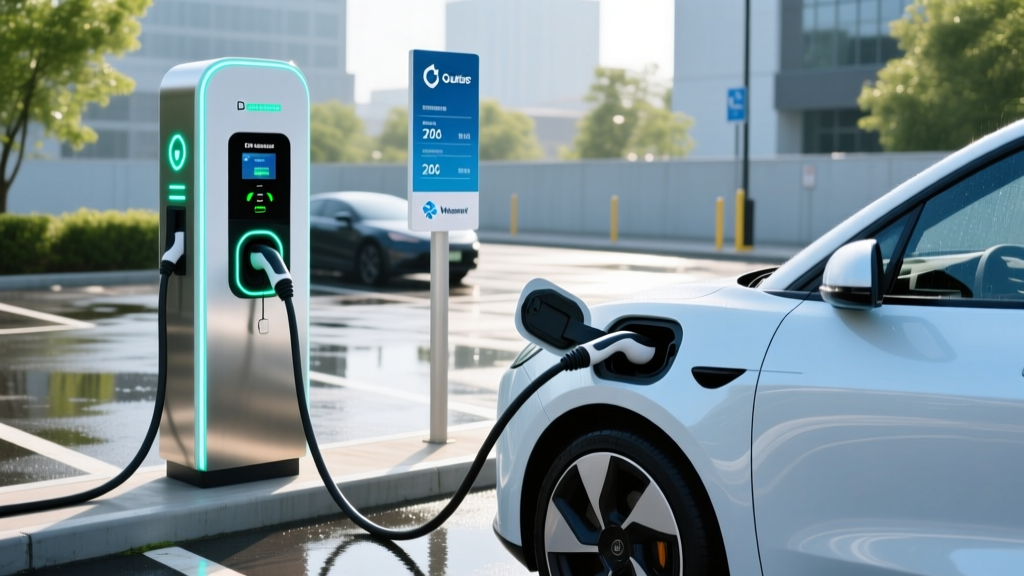
| DC Fast Charging (Electrify America, Tesla Supercharger) | $0.35–$0.55 | $19.60–$30.80 | $0.10–$0.16 |
| Free destination/workplace charger | $0.00 | $0.00 | $0.00 |
Cost per mile vs. gas: A comparable gas-powered compact SUV averaging 28 MPG combined at $3.40/gallon costs roughly $0.12 per mile in fuel alone. Home EV charging at standard rates costs $0.04–$0.05/mile — less than half. Even exclusive DC fast charging at $0.48/kWh averages ~$0.13/mile, roughly equal to gas. The savings come from charging at home.
Charging time examples:
- 60 kWh battery (e.g., Chevrolet Equinox EV): Level 2 at 11.5 kW → 10–80% in ~4.5 hours. DC fast at 150 kW peak → 10–80% in ~28 minutes.
- 80 kWh battery (e.g., Tesla Model Y, Hyundai Ioniq 5): Level 2 at 11.5 kW → 10–80% in ~5.5 hours. DC fast at 250 kW peak → 10–80% in ~18–22 minutes.
- 100 kWh battery (e.g., Ford F-150 Lightning Extended Range): Level 2 at 11.5 kW → 10–80% in ~7 hours. DC fast at 230 kW peak → 10–80% in ~30–35 minutes.
Recommended Home EV Chargers (2026)
Based on reliability, smart features, connector flexibility, and value, here are three chargers worth considering for home installation:
ChargePoint Home Flex
- Power Output: Up to 12 kW (50A) on a 60A circuit; configurable down to 16A
- Connector: J1772 (NACS adapter included or available)
- Cable Length: 23 feet
- Smart Features: Wi-Fi, scheduling, energy tracking, Alexa integration
- Price: ~$550–$650
- Best For: Flexibility across amperage settings; proven reliability
Emporia Level 2 EV Charger
- Power Output: Up to 11.5 kW (48A) on a 60A circuit
- Connector: J1772 or NACS (select at purchase)
- Cable Length: 24 feet
- Smart Features: Wi-Fi, load management with Emporia energy monitor, solar integration
- Price: ~$400–$500
- Best For: Budget-conscious buyers with solar panels or energy monitoring
Wallbox Pulsar Plus
- Power Output: Up to 11.5 kW (48A)
- Connector: J1772 or NACS
- Cable Length: 25 feet
- Smart Features: Wi-Fi + Bluetooth, Power Sharing (daisy-chain two units on one circuit), compact form factor
- Price: ~$500–$600
- Best For: Tight garage spaces; two-EV households
Safety, Code, and Installation Must-Knows
EV charging draws sustained high current for hours — this isn't like plugging in a dryer for 45 minutes. The National Electrical Code (NEC) treats EV charging as a continuous load, meaning the circuit must be rated for 125% of the charger's maximum draw. A 48A charger requires a 60A breaker.
Key safety and code requirements:
- Dedicated circuit: Your EV charger must have its own circuit — no sharing with other appliances.
- GFCI protection: NEC 2020 and later requires GFCI protection for 240V EV outlets in garages. Hardwired installations may have different requirements depending on local code.
- Outdoor rating: If installing outside, both the charger and any outlet must carry a NEMA 4 (weatherproof) rating. Most quality chargers are rated for outdoor use.
- Permit and inspection: Required in most jurisdictions. Skipping this risks insurance denial if an electrical fire occurs and voids some charger warranties.
- Load calculation: A licensed electrician must verify your panel can handle the added load. Don't rely on guesswork — panel fires from overloaded circuits are a real risk.
Always hire a licensed electrician. According to the U.S. Department of Energy, improper installation is the leading cause of EV charging safety incidents.
Frequently Asked Questions
Is EV charging ever completely free?
Yes, but selectively. Free Level 2 chargers exist at some workplaces, hotels, shopping centers, and municipal lots. Some automakers include complimentary DC fast charging credits with new vehicle purchases (typically 2–3 years). However, free chargers are unreliable as a primary fueling strategy due to availability, occupancy, and time limits. Most EV owners budget for home electricity costs.
How fast will each charging level add range?
Level 1 (120V) adds 3–5 miles of range per hour. Level 2 (240V) adds 25–70 miles per hour depending on amperage and vehicle acceptance rate. DC fast charging can add 150+ miles in 10–15 minutes at peak rates, though charging slows significantly above 80% state of charge due to battery protection protocols.
How much does charging cost per mile compared to gas?
Home charging at average U.S. electricity rates (~$0.17/kWh) costs about $0.04–$0.05 per mile for a typical EV. A comparable gas vehicle at 28 MPG combined and $3.40/gallon costs about $0.12 per mile. Home charging is roughly 60% cheaper per mile. Public DC fast charging narrows the gap to roughly equal cost.
What electrical upgrades might I need for a home charger?
You need a dedicated 240V circuit (typically 40A–60A breaker). If your home has a 100-amp electrical panel, or if your panel is already near capacity with existing appliances, you'll likely need a panel upgrade to 200A service — costing $1,500–$4,000. A licensed electrician can perform a load calculation to determine this before installation.
Can I use any charger with any EV?
For Level 2 home charging, yes — all EVs accept J1772, and NACS vehicles use an included adapter. For DC fast charging, check your vehicle's charge port: most 2025+ vehicles use NACS, while older models may have CCS1 or (rarely) CHAdeMO. CCS1 vehicles can access NACS/Supercharger networks with a $200–$250 adapter. CHAdeMO vehicles have limited fast-charging options in 2026.