Is EV Charging Free? The Short Answer
No, EV charging is not free — but it can come close in specific situations. Most EV owners pay for electricity the same way they pay for gasoline: per unit of energy consumed. The confusion arises because some workplaces, apartment buildings, shopping centers, and hotels offer complimentary charging as an amenity. Municipal lots in certain cities also provide free Level 2 sessions to encourage EV adoption. However, these represent a small fraction of total charging events. For the vast majority of miles driven, you will pay something — and understanding exactly what you will pay, and where the free options exist, is the real advantage.
This guide breaks down the actual cost structure of EV charging in 2026 across all three charging levels, compares your cost per mile to gasoline, and explains what it takes to set up efficient home charging — including the electrical upgrades that catch many buyers off guard.
The Three Charging Levels: Speed, Power, and Cost
Before discussing price, you need to understand the three charging tiers available to EV owners. The distinction between kW (kilowatts — the rate of power delivery, like water pressure from a hose) and kWh (kilowatt-hours — the total energy stored or delivered, like gallons in a tank) is the single most important concept in EV ownership. Your electricity bill charges you per kWh consumed. Your charger's speed is rated in kW.
| Level | Voltage | Power (kW) | Miles of Range Added per Hour | Typical Use Case |
|---|---|---|---|---|
| Level 1 | 120V AC | 1.0–1.4 kW | 3–5 mi/hr | Overnight top-up, PHEV owners, emergency |
| Level 2 | 240V AC | 3.3–19.2 kW | 12–75 mi/hr | Home daily charging, workplace, public AC |
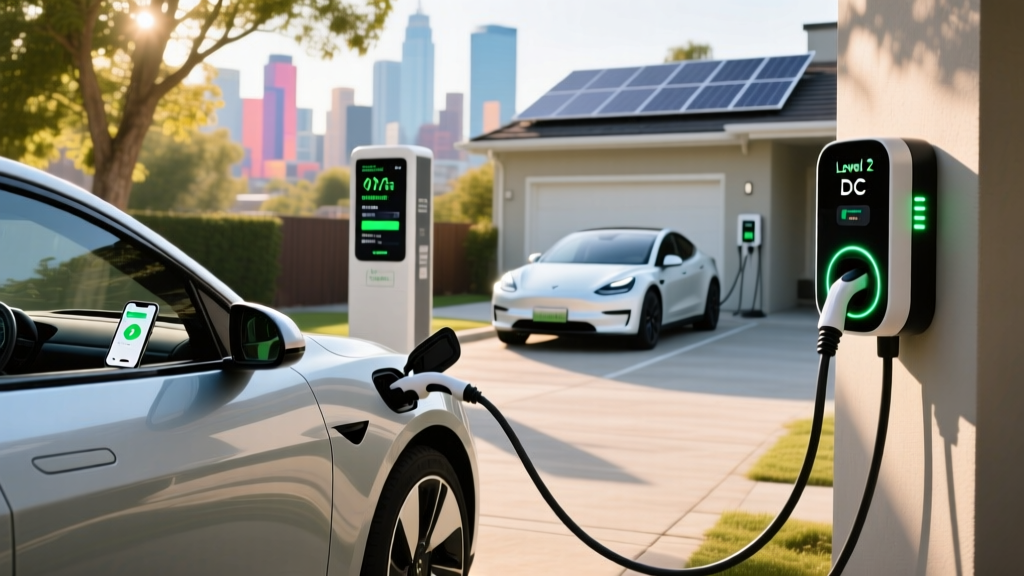
| DC Fast Charge | 200–800V DC | 50–350 kW | 150–1,200+ mi/hr (peak) | Road trips, rapid top-up, commercial fleets |
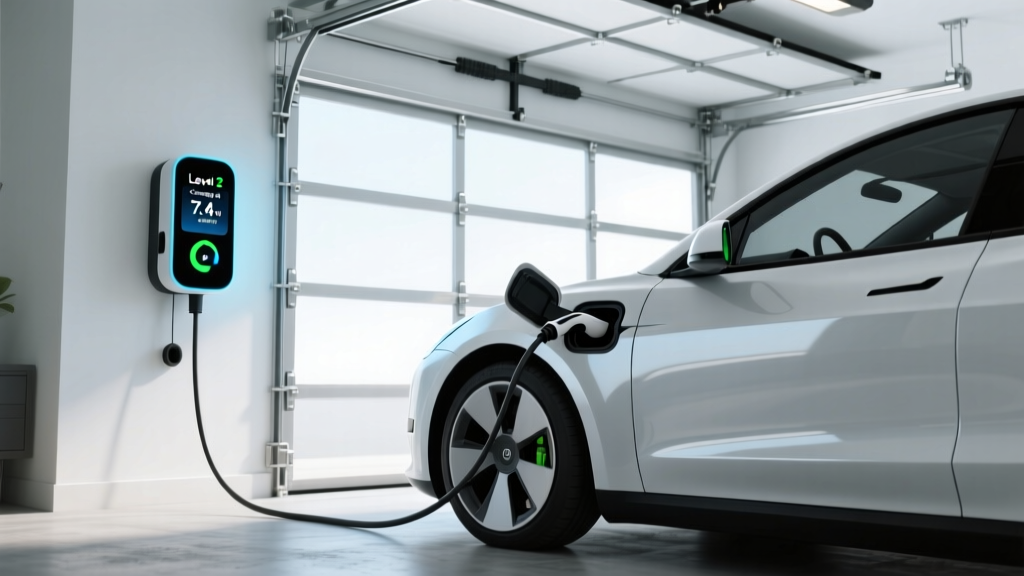
Level 1 plugs into any standard household outlet and requires no installation, but it is painfully slow for battery-electric vehicles with 60–100 kWh batteries. A full charge from empty could take 60–100 hours. Level 2 is the standard for home and destination charging — fast enough to replenish a full battery overnight. DC fast charging bypasses the vehicle's onboard AC-to-DC converter and feeds direct current straight to the battery, enabling 10–80% charges in roughly 18–40 minutes depending on the vehicle's peak acceptance rate and battery chemistry.
Where EV Charging Actually Is Free (and Where It Isn't)
Free charging does exist, but it is situational and often time-limited. Here is where you will find it in 2026:
- Workplace charging: Many employers offer free Level 2 charging as an employee benefit, though some have begun implementing nominal fees ($0.10–$0.15/kWh) as EV adoption has scaled and electricity costs have risen.
- Destination charging: Hotels, shopping centers, and restaurants sometimes offer complimentary Level 2 charging to attract customers. Expect 6–11 kW speeds — useful for topping up during a multi-hour visit, not for rapid replenishment.
- Municipal programs: Some cities subsidize public charging in municipal lots. These programs are often grant-funded and may expire.
- Manufacturer promotions: Automakers occasionally include complimentary charging credits on networks like Electrify America or EVgo with new vehicle purchases — typically 250–1,000 kWh worth, expiring within 1–3 years.
- Apartment/condo amenities: Some multi-family buildings include EV charging in HOA fees or rent, effectively making it "free" at point of use (though you are paying indirectly).
For routine daily driving, however, most EV owners rely on home Level 2 charging (paid via their utility bill) and public DC fast charging on road trips (paid per kWh or per minute at the charger).
Cost to Charge: Home vs. Public vs. DC Fast
The cost per mile of driving an EV varies enormously depending on where and when you charge. Here is a realistic breakdown using 2026 electricity and fuel prices:
| Scenario | Rate ($/kWh) | Vehicle Efficiency (kWh/100 mi) | Cost per Mile |
|---|---|---|---|
| Home Level 2 — national avg. residential | $0.16 | 30 kWh | $0.048 |
| Home Level 2 — off-peak TOU rate | $0.08 | 30 kWh | $0.024 |
| Home Level 2 — high-cost state (CA, HI) | $0.30 | 30 kWh | $0.090 |
| Public Level 2 (ChargePoint, EVgo) | $0.25–$0.49 | 30 kWh | $0.075–$0.147 |
| DC Fast Charge (Electrify America, Tesla Supercharger) | $0.35–$0.55 | 30 kWh | $0.105–$0.165 |
| Gasoline vehicle (28 MPG combined, $3.40/gal) | — | — | $0.121 |
Source: U.S. Energy Information Administration (EIA electricity prices) and fueleconomy.gov for vehicle efficiency data.
How Much Does a Home EV Charger Installation Cost?
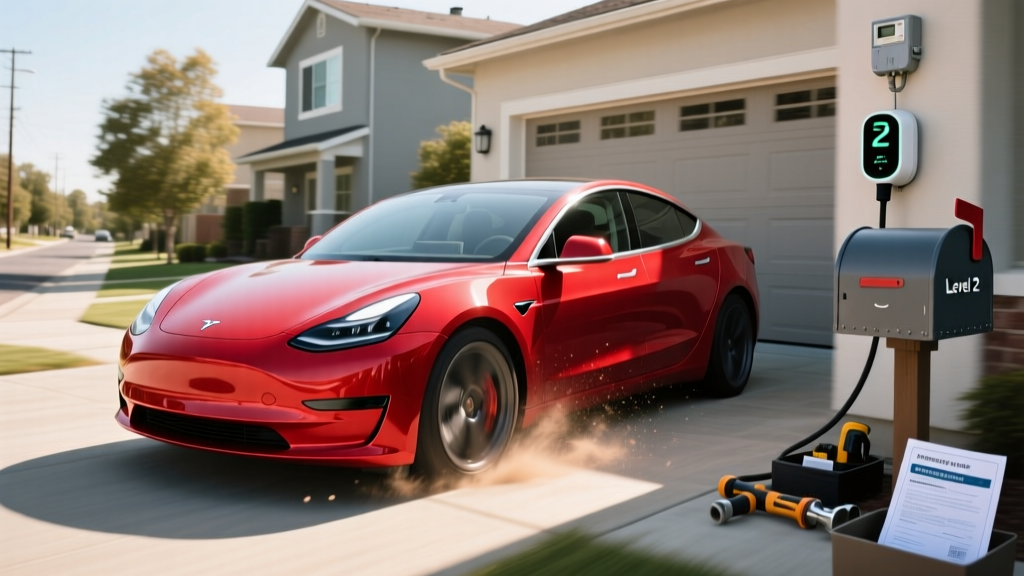
Installing a Level 2 home charger is the single highest-impact investment an EV owner can make. It transforms your daily fueling from a chore into a non-event: plug in at night, wake up with a full battery. But installation costs vary widely based on your home's electrical infrastructure.
Electrical Requirements
A typical Level 2 home charger requires a 240-volt dedicated circuit, similar to what powers an electric dryer or oven. The most common residential setup is a 40-amp or 48-amp circuit, which supports chargers drawing 32A or 40A continuous (the National Electrical Code requires circuits rated at 125% of the continuous load — so a 40A charger needs a 50A circuit).
Higher-power units (up to 80A / 19.2 kW) are available for vehicles with large batteries and compatible onboard chargers, but they require a 100A dedicated circuit and thicker-gauge wiring.
Installation Cost Breakdown
| Component | Simple Install (panel nearby, no upgrade) | Complex Install (long run, panel upgrade) |
|---|---|---|
| Level 2 charger equipment | $350–$700 | $350–$700 |
| Electrician labor | $300–$800 | $800–$2,500 |
| Electrical permit | $50–$200 | $50–$200 |
| Panel upgrade (100A → 200A) if needed | $0 | $1,500–$3,500 |
| Conduit, wiring, misc. materials | $50–$150 | $200–$600 |
| Total | $750–$1,850 | $2,900–$7,500 |
Federal Tax Credit for Home Charging Equipment
The IRS §30C Alternative Fuel Vehicle Refueling Property Credit covers 30% of the cost of home EV charging equipment and installation, up to $1,000. Eligibility depends on your census tract meeting certain low-income or non-urban criteria. Consult a tax professional to confirm your eligibility — this credit is separate from the §30D new-vehicle credit.
Which Connector and Charger Is Compatible with My EV?
The connector landscape in North America has consolidated significantly since 2024, when major automakers began adopting the North American Charging Standard (NACS). Here is where things stand in 2026:
| Connector | Brands Using It (Native) | Notes |
|---|---|---|
| NACS (Tesla / SAE J3400) | Tesla, Ford, GM, Rivian, Volvo, Polestar, Mercedes-Benz, Nissan (new models), Hyundai/Kia (new models), BMW, Lucid, Fisker | Now the dominant standard. Access to Tesla Supercharger network natively or via adapter. |
| CCS1 (Combined Charging System) | Volkswagen, Audi, Porsche, Stellantis (some), Honda, Subaru, older Hyundai/Kia/Nissan models | Still widely available at Electrify America, EVgo, ChargePoint DC stations. Adapters to NACS available. |
| CHAdeMO | Nissan Leaf (legacy), Mitsubishi Outlander PHEV (legacy) | Effectively discontinued for new vehicles. Stations still exist but are not being expanded. |
If you own a CCS1-equipped vehicle and want access to the Tesla Supercharger network (now the largest and most reliable DC fast-charging network in North America), you will need a CCS-to-NACS adapter. Tesla, Ford, and third-party manufacturers sell these for $150–$250. Conversely, NACS-equipped vehicles can use CCS stations with a NACS-to-CCS adapter.
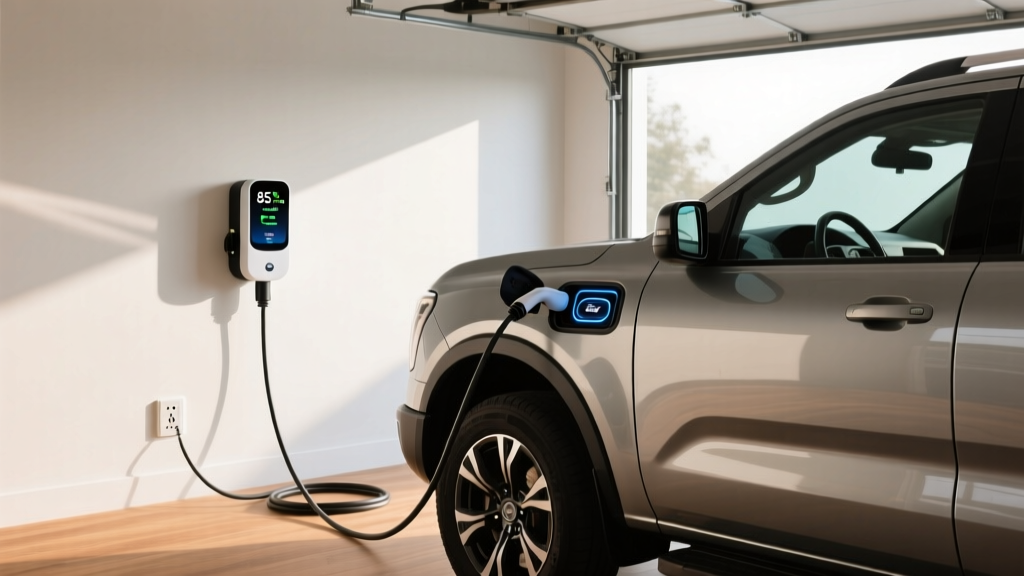
For Level 2 home charging, all vehicles use the J1772 connector (or NACS, which supports Level 2 AC via the same pins). Any J1772 home charger will work with any EV sold in North America, either natively or via a simple adapter included with the vehicle.
Recommended Home EV Chargers for 2026
The following Level 2 chargers represent the best value-to-performance options based on power output, cable management, smart features, build quality, and real-world reliability:
Tesla Wall Connector (Gen 4)
- Power: Up to 11.5 kW (48A on a 60A circuit)
- Connector: NACS native; J1772 adapter included
- Cable length: 24 ft
- Smart features: Wi-Fi, OTA updates, power sharing between two units, access control
- Price: ~$475
- Best for: NACS-equipped vehicles, Tesla owners, multi-EV households
ChargePoint Home Flex
- Power: Up to 12 kW (50A on a 60A circuit); configurable down to 16A
- Connector: J1772 (NACS adapter available)
- Cable length: 23 ft
- Smart features: Wi-Fi, app scheduling, Alexa integration, energy tracking
- Price: ~$550–$700
- Best for: CCS/J1772 vehicles, renters who may move (flexible amperage)
Emporia Level 2 EV Charger
- Power: Up to 11.5 kW (48A)
- Connector: J1772
- Cable length: 24 ft
- Smart features: Wi-Fi, app control, solar integration, load management
- Price: ~$350–$400
- Best for: Budget-conscious buyers, solar-panel households
Grizzl-E Smart
- Power: Up to 10 kW (40A on a 50A circuit)
- Connector: J1772
- Cable length: 24 ft
- Smart features: Wi-Fi, OCPP support, adjustable amperage
- Price: ~$400–$500
- Best for: Extreme cold climates (rated to -40°F), outdoor installs
Charging Time Examples: What to Expect in Practice
Charging time depends on battery capacity (kWh), charger power (kW), and the vehicle's onboard charger limit (for AC) or DC acceptance curve. Here are realistic 10–80% times for common scenarios:
| Vehicle (Usable Battery) | Level 1 (1.2 kW) | Level 2 Home (11.5 kW) | DC Fast (Peak Rate) |
|---|---|---|---|
| Tesla Model Y LR (~75 kWh) | ~44 hrs | ~4.5 hrs | ~22 min (250 kW peak) |
| Hyundai Ioniq 5 (~77.4 kWh) | ~45 hrs | ~5 hrs | ~18 min (350 kW peak, 800V) |
| Ford F-150 Lightning Ext. (~131 kWh) | ~77 hrs | ~8 hrs | ~41 min (150 kW peak) |
| Chevrolet Equinox EV (~85 kWh) | ~50 hrs | ~5.5 hrs | ~30 min (150 kW peak) |
| Toyota RAV4 PHEV (~18.1 kWh) | ~10.5 hrs | ~2 hrs (3.3 kW onboard) | N/A (no DC fast) |
Note that Level 1 charging is impractical for full battery-electric vehicles with large packs but works adequately for PHEVs with smaller batteries. Many PHEV owners charge exclusively on Level 1 overnight, since 10–12 hours is sufficient to refill a 15–20 kWh pack.
Safety, Code, and Installation Best Practices
Home EV charging involves sustained high-current draw — often 8+ hours at 32–48 amps. This is more demanding on your electrical system than almost any other household appliance. Follow these non-negotiable safety practices:
- Dedicated circuit: Your EV charger must be on its own dedicated breaker. Never share a circuit with other high-draw appliances.
- GFCI protection: The 2023 NEC (National Electrical Code) requires GFCI protection for EV charging outlets. Hardwired chargers with built-in ground-fault protection may satisfy this requirement without a separate GFCI breaker.
- Outdoor rating: If your charger is installed outdoors (driveway, exterior wall), ensure the unit carries a NEMA 4 or IP65 rating for weather resistance.
- Proper wire gauge: Your electrician will size wiring to the circuit amperage. For a 50A circuit, 6 AWG copper is standard; longer runs may require 4 AWG to prevent voltage drop.
- Permit and inspection: Most jurisdictions require an electrical permit for EV charger installation. The work must pass inspection to be code-compliant. Unpermitted work can void homeowner's insurance coverage in the event of an electrical fire.
- Load management: If your panel is near capacity, consider a smart charger with load-management features that dynamically reduces charging current when other appliances are drawing power.
Frequently Asked Questions
Is EV charging free at Tesla Superchargers?
No. Tesla Superchargers charge per kWh (typically $0.25–$0.50/kWh depending on location and time of day). Tesla occasionally offers promotional free Supercharging credits with vehicle referrals or purchases, but routine Supercharging is a paid service. Idle fees of $0.50–$1.00/minute also apply if you remain plugged in after reaching your charge limit.
Can I charge my EV for free at home with solar panels?
If you own (not lease) a rooftop solar system that produces surplus energy during the day, you can effectively charge your EV at near-zero marginal cost by scheduling charging during peak solar production hours. However, you still pay for the solar system itself, and net-metering policies vary by utility. The "free" solar charging benefit is most significant in states with poor net-metering compensation, where self-consumption is more valuable than exporting to the grid.
How much does it cost to charge an EV on a road trip?
Expect to pay $0.35–$0.55/kWh at DC fast chargers on major highway corridors. For a vehicle averaging 30 kWh/100 miles, that works out to $0.105–$0.165 per mile — comparable to a gasoline car getting 21–32 MPG at $3.40/gallon. Road-trip charging is the one scenario where EVs lose their cost advantage. The savings come from daily home charging.
Do free public chargers have hidden costs?
Some free public chargers require paid parking, have strict time limits (2–4 hours), or deliver very low power (3.3–6.6 kW), meaning you gain only 12–25 miles of range per hour. Others may require membership in a specific network or app. Always check the charger's power output and parking terms before relying on a "free" station.
What electrical upgrades might I need for a home charger?
The most common and costly upgrade is a panel upgrade from 100A to 200A service, required when your existing panel lacks spare capacity for a 40–50A EV circuit. Other potential upgrades include: replacing a Federal Pacific or Zinsco panel (known fire hazards that must be replaced regardless), running a new 240V circuit from the panel to your garage or driveway (costs increase with distance), and adding a sub-panel if your main panel is far from the charging location. A licensed electrician can perform a load calculation to determine exactly what your home needs.
Is Level 1 charging really free?
Level 1 charging uses a standard 120V outlet and requires no special equipment or installation, so there is no upfront cost. However, you still pay for the electricity consumed — typically $0.12–$0.30/kWh depending on your utility. For a PHEV with a 15 kWh battery, a full Level 1 charge costs roughly $1.80–$4.50. It is inexpensive, not free.