The short answer: no, electric car charging is rarely free — but it can be dramatically cheaper than gasoline, and in a few specific scenarios, you can charge at zero marginal cost. The longer answer requires untangling home electricity rates, public network pricing, DC fast-charge premiums, and the upfront cost of installing a home charger. Below, we map out every charging scenario an EV owner will encounter, with exact numbers for costs, speeds, and equipment.
Is Electric Car Charging Free? Where You Can (and Can't) Charge for $0
Some workplaces, shopping centers, hotels, and municipal lots still offer complimentary Level 2 charging as an amenity. Networks like Volta (now part of Shell Recharge) built their business on free, ad-supported charging. However, the landscape in 2026 is shifting: most free chargers have either been decommissioned, converted to paid stations, or capped at limited sessions. Realistically, you should plan to pay for the majority of your charging.
Where free charging still exists, it's typically:
- Workplace chargers subsidized by employers (often Level 2, 6–19 kW)
- Retail/hotel amenities — limited to 1–2 hours or a set kWh cap
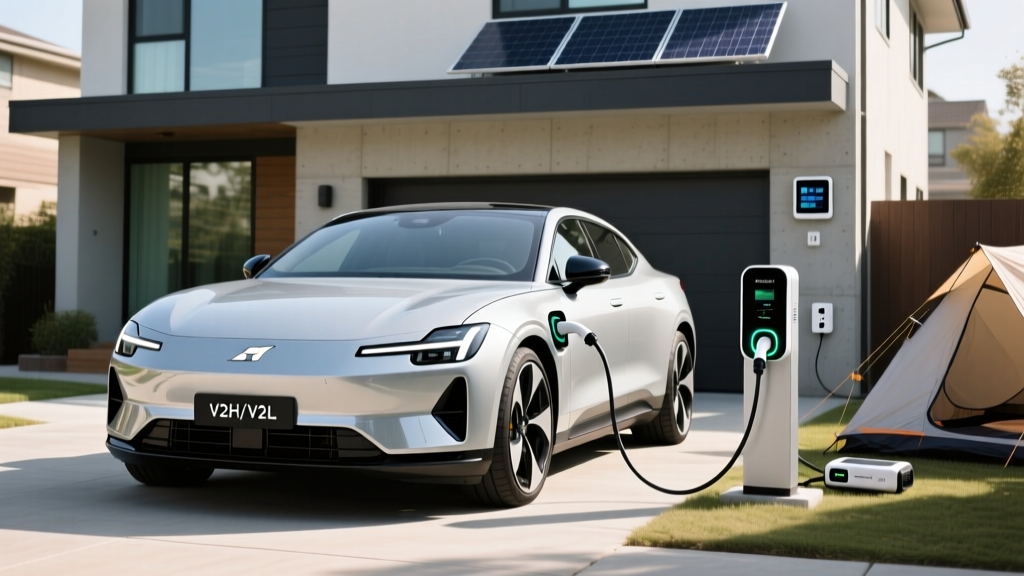
- Solar-powered home charging — free at the margin if your panels produce surplus
- Promotional network credits — automaker partnerships (e.g., complimentary Electrify America or Tesla Supercharger credits with new vehicle purchase)
For daily ownership economics, the most relevant cost comparison is home charging versus gasoline — and that's where EVs consistently win.
Charging Levels Explained: Speeds in kW and Miles Per Hour
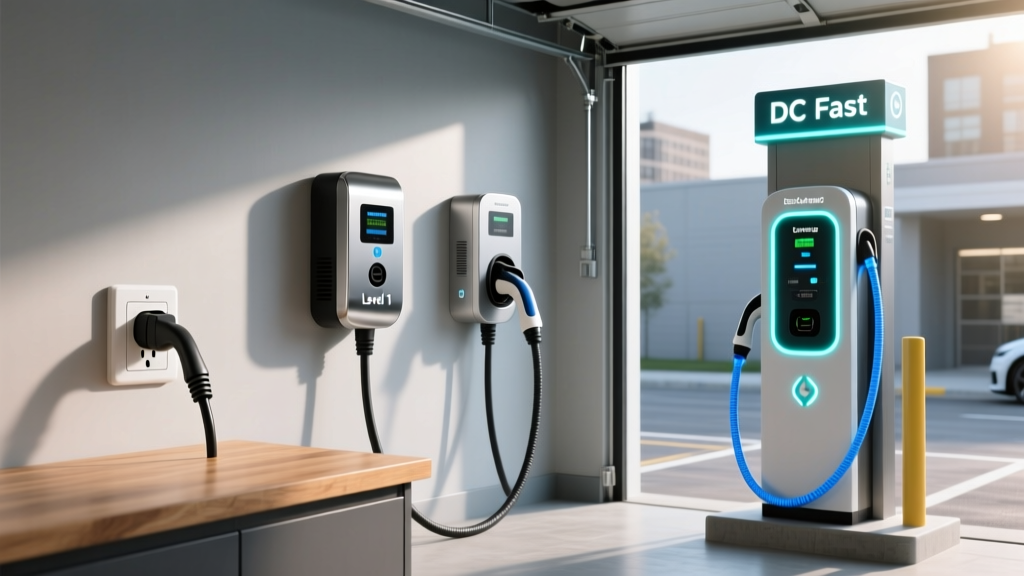
Before comparing costs, you need to understand the three charging tiers. A critical distinction: kW (kilowatts) measures power — how fast energy flows into your battery. kWh (kilowatt-hours) measures energy — the total capacity stored. Think of kW as the flow rate of a hose and kWh as the size of the bucket.
| Level | Voltage | Power (kW) | Miles of Range Added Per Hour | Typical Use |
|---|---|---|---|---|
| Level 1 | 120V AC | 1.0–1.4 kW | 3–5 mi/hr | Overnight trickle; PHEVs; emergency |
| Level 2 | 240V AC | 7.2–19.2 kW | 25–70 mi/hr | Home daily charging; workplace; public |
| DC Fast Charge | 400–800V DC | 50–350 kW | 150–1,000+ mi/hr (peak) | Road trips; rapid top-ups |
Real-world charging times depend on your battery size and the charge curve. Most EVs accept peak power only between roughly 10% and 40% state of charge (SoC), then taper significantly above 80% to protect battery health. A vehicle advertising "250 kW peak" may average closer to 130–170 kW over a 10–80% session.
Charging Time Examples: 10–80% for Common Battery Sizes
- Hyundai Ioniq 5 (84 kWh usable, 800V architecture): 10–80% in ~18 minutes on a 350 kW charger; ~25 minutes on a 150 kW unit
- Tesla Model Y Long Range (75 kWh usable, NACS): 10–80% in ~25 minutes on a V3 Supercharger (250 kW peak)
- Ford F-150 Lightning Extended Range (131 kWh usable): 10–80% in ~41 minutes on a 150 kW charger; ~28 minutes on a 350 kW station (peak 230 kW)
- Chevrolet Equinox EV (85 kWh usable): 10–80% in ~30 minutes on a 150 kW DC fast charger (peak 190 kW)
How Much Does It Cost to Install a Home EV Charger?
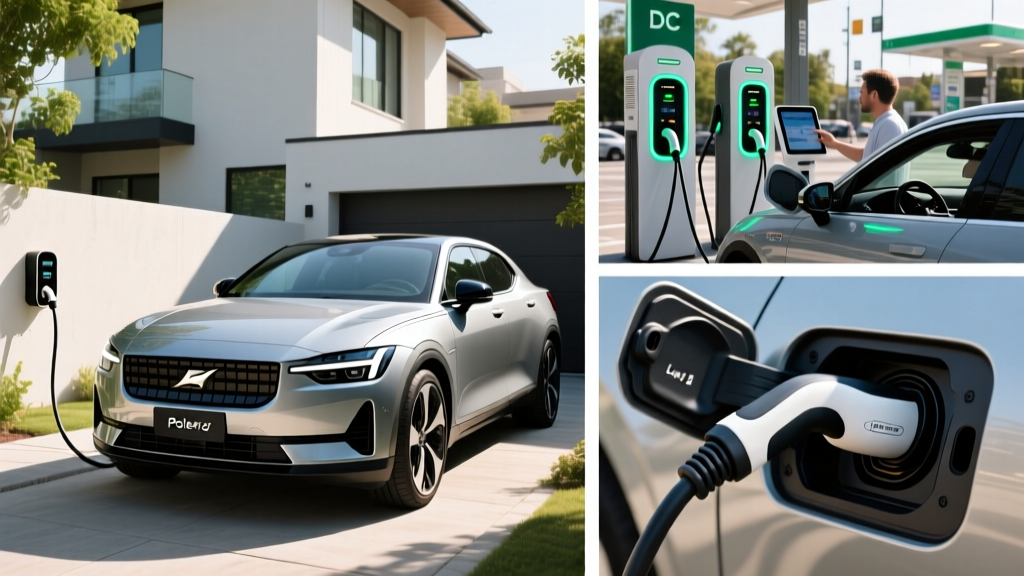
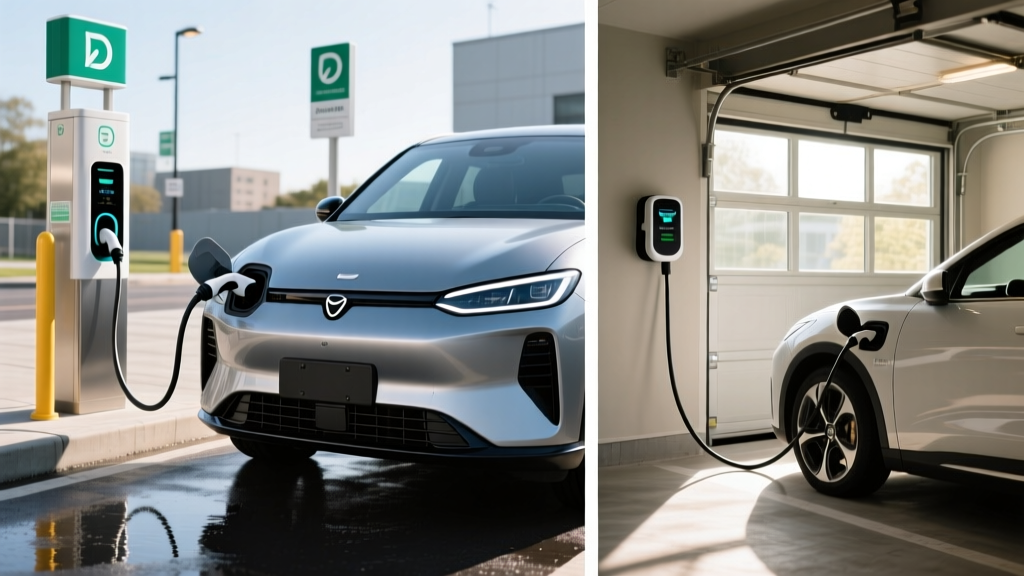
Home Level 2 charging is where EV owners save the most money and gain the most convenience. But installation costs vary enormously based on your home's electrical infrastructure. A straightforward install on a modern panel might cost $800–$1,500 total. An older home needing a panel upgrade could see $3,000–$5,500+.
| Component | Simple Install | Complex Install (Panel Upgrade) |
|---|---|---|
| Level 2 Charger (hardwired, 48A) | $400–$700 | $400–$700 |
| Electrician labor (2–4 hrs standard) | $300–$600 | $800–$1,500 |
| Electrical permit | $50–$200 | $50–$200 |
| Conduit/wiring run (if >20 ft) | $100–$400 | $200–$600 |
| Panel upgrade (100A → 200A, if needed) | N/A | $1,500–$3,000 |
| Total Estimated Cost | $850–$1,900 | $2,950–$6,000 |
Electrical Requirements for a Level 2 Home Charger
A typical 48-amp Level 2 charger requires a dedicated 60-amp, 240-volt circuit (the National Electrical Code requires circuits to be rated at 125% of continuous load, so 48A × 1.25 = 60A breaker). If you opt for a 32-amp charger, a 40-amp circuit suffices.
Panel capacity check: Your electrician will perform a load calculation per NEC Article 220 to determine if your existing panel can handle the additional 60A draw. Homes with 100-amp service often need an upgrade to 200 amps. Homes with 200-amp service usually have sufficient headroom.
Safety and code considerations:
- Dedicated circuit — never share the EV charger circuit with other appliances
- GFCI protection required for outdoor installations (NEC 2023/2026)
- NEMA 4-rated enclosure for outdoor chargers (weatherproof)
- Hardwired connections preferred over NEMA 14-50 receptacles for reliability and code compliance in many jurisdictions
- Always hire a licensed electrician — improper EV charger wiring is a fire risk
Cost to Charge: $/kWh at Home, Public Level 2, and DC Fast Chargers
Electricity pricing varies by utility, time of day, and network. Here's what EV owners actually pay in 2026:
| Scenario | Typical $/kWh | Cost for 60 kWh Session | Cost Per Mile (at 3 mi/kWh) |
|---|---|---|---|
| Home — off-peak (utility time-of-use) | $0.08–$0.14 | $4.80–$8.40 | $0.027–$0.047 |
| Home — standard rate (no TOU plan) | $0.13–$0.18 | $7.80–$10.80 | $0.043–$0.060 |
| Public Level 2 (ChargePoint, EVgo L2) | $0.25–$0.49 | $15.00–$29.40 | $0.083–$0.163 |
| DC Fast Charge (Electrify America, EVgo) | $0.35–$0.55 | $21.00–$33.00 | $0.117–$0.183 |
| Tesla Supercharger (varies by location/time) | $0.25–$0.45 | $15.00–$27.00 | $0.083–$0.150 |
Cost Per Mile: EV Charging vs. Gasoline
The average US gasoline price in early 2026 sits around $3.30/gallon, and the average new gas car achieves roughly 28 MPG combined (per fueleconomy.gov). That works out to about $0.118 per mile.
An efficient EV like the Tesla Model 3 or Hyundai Ioniq 6 achieves around 3.5–4 miles per kWh. At the national average residential electricity rate of ~$0.16/kWh (EIA data), home charging costs roughly $0.040–$0.046 per mile — about one-third the cost of gasoline. Even at public DC fast charger rates of $0.48/kWh, you're paying $0.12–$0.14 per mile, roughly at parity with gas.
The takeaway: home charging delivers massive fuel savings. Exclusive reliance on public DC fast charging erases most of the cost advantage.
Which Connector Is Compatible With My EV?
The North American connector landscape consolidated significantly in 2024–2025 when most major automakers adopted the North American Charging Standard (NACS), originally developed by Tesla. As of 2026, NACS is the dominant connector for new EVs, though CCS1 vehicles remain on the road and CHAdeMO persists on older Nissan Leafs and Mitsubishi Outlander PHEVs.
| Connector | AC Level 2 | DC Fast | Brands Using It (2026) |
|---|---|---|---|
| NACS (Tesla) | Yes | Yes | Tesla, Ford, GM, Rivian, Volvo, Polestar, Hyundai/Kia (2025+), BMW, Mercedes, Nissan (new models) |
| CCS1 | Via J1772 | Yes | Legacy models: older VW ID.4, BMW i4 (pre-2025), some Stellantis EVs; adapters available for NACS vehicles |
| CHAdeMO | Via J1772 | Yes | Nissan Leaf (discontinued), Mitsubishi Outlander PHEV (older); being phased out |
Adapter reality: If you own a CCS1-equipped EV and need to use Tesla Superchargers (now open to non-Tesla vehicles at many locations), you'll need a CCS-to-NACS adapter. Tesla sells one for ~$250; third-party options from Lectron and A2Z exist at ~$150–$200 but verify UL certification before purchasing. NACS-native vehicles can use legacy CCS stations with a NACS-to-CCS adapter (~$200).
Best Home EV Chargers: Equipment Picks for 2026
We evaluate home chargers on power output (kW), cable length, smart features (Wi-Fi, scheduling, energy monitoring), connector type, and build quality. All picks below are UL-listed or ETL-listed for safety.
ChargePoint Home Flex (NACS or CCS)
- Power: Up to 12 kW (50A) on a 60A circuit; adjustable down to 16A for smaller circuits
- Connector: Available in NACS or J1772 (CCS vehicles use J1772 for Level 2)
- Cable: 23 feet
- Smart features: Wi-Fi, app scheduling, energy tracking, Alexa integration
- Price: ~$550–$650
- Best for: Flexibility across circuit sizes; strong app ecosystem
Tesla Wall Connector (NACS)
- Power: Up to 11.5 kW (48A) on a 60A circuit
- Connector: NACS native; includes J1772 adapter in box for non-Tesla EVs
- Cable: 24 feet
- Smart features: Wi-Fi, OTA updates, power sharing between two units, load management
- Price: ~$475
- Best for: NACS-vehicle owners; best value at 48A; clean integration with Tesla ecosystem
Emporia Level 2 EV Charger
- Power: Up to 11.5 kW (48A) on a 60A circuit
- Connector: J1772 (works with all non-Tesla EVs; NACS vehicles use adapter)
- Cable: 24 feet
- Smart features: Wi-Fi, detailed energy monitoring, solar integration with Emporia Vue panel monitor, time-of-use scheduling
- Price: ~$400
- Best for: Budget-conscious buyers with solar; excellent energy tracking
Grizzl-E Smart (NACS or J1772)
- Power: Up to 10 kW (40A) on a 50A circuit
- Connector: NACS or J1772
- Cable: 24 feet
- Smart features: Wi-Fi, OCPP compatibility, adjustable amperage via dip switches
- Price: ~$450–$550
- Best for: Cold-climate durability (rated to -40°F); Canadian-built; rugged outdoor use
Federal Tax Credit for Home Charger Installation
The IRS §30C Alternative Fuel Vehicle Refueling Property Credit covers 30% of home EV charger equipment and installation costs, up to $1,000. This credit is available for chargers installed at your primary residence. Key rules per irs.gov:
- Credit is 30% of combined equipment + installation cost, capped at $1,000
- Must be installed at your primary residence in the United States
- The charger must be new (not previously used)
- Eligibility may be restricted by census tract (must be in a qualifying low-income or non-urban area — check IRS guidance for the current year)
- Nonrefundable credit — it can reduce your tax liability to zero but won't generate a refund beyond that
This credit can meaningfully offset installation costs, particularly for straightforward installs. Consult a tax professional to confirm eligibility for your specific situation.
Frequently Asked Questions
How much does it cost to install a home EV charger?
A standard Level 2 home charger installation (48A, hardwired, 240V on a 60A circuit) costs between $850 and $1,900 if your electrical panel has sufficient capacity. If your home requires a panel upgrade from 100A to 200A service, total costs can range from $2,950 to $6,000 including equipment, labor, permits, and the panel work. Always get a load calculation from a licensed electrician before committing.
How fast will each charging level add range?
Level 1 (120V) adds roughly 3–5 miles of range per hour — suitable for PHEVs with small batteries but impractical for full BEVs. Level 2 (240V, 48A) adds 25–45 miles per hour, easily replenishing a daily commute overnight. DC fast charging at 150–350 kW adds 150–1,000+ miles per hour at peak, but the charge curve tapers significantly above 80% SoC, so real-world 10–80% sessions take 18–45 minutes depending on the vehicle and charger.
Which connector/charger is compatible with my EV?
For 2026 model-year vehicles, NACS is the dominant standard — Tesla, Ford, GM, Rivian, Hyundai/Kia, Volvo, BMW, and most others now ship with NACS ports. Older CCS1 vehicles can use CCS-to-NACS adapters (~$150–$250) to access Tesla Superchargers. CHAdeMO is effectively discontinued on new vehicles. For home Level 2 charging, all EVs use either a NACS connector or J1772 (which NACS vehicles can accept with the adapter that typically ships with the car).
How much does charging cost per mile vs gas?
At the US average residential electricity rate of ~$0.16/kWh and an EV efficiency of 3.5 miles per kWh, home charging costs about $0.046 per mile. Compare that to gasoline at $3.30/gallon and 28 MPG combined: roughly $0.118 per mile. Home charging saves about $0.07 per mile, or about $700–$1,000 annually for a driver covering 10,000–14,000 miles per year. Public DC fast charging at $0.48/kWh costs roughly $0.137/mile — slightly more than gas, which is why home charging is essential to the EV cost advantage.
What electrical upgrades might I need?
The most common upgrade is a panel capacity increase from 100A to 200A service, required when your existing panel lacks headroom for a 60A dedicated EV circuit. Your electrician will perform a NEC Article 220 load calculation to determine this. Other potential upgrades include running new conduit from the panel to the garage or driveway (if the run exceeds 20+ feet, costs increase), installing a sub-panel for detached garages, or adding a smart load-management device (like the Emporia Vue or Span panel) that dynamically adjusts charger amperage to avoid overloading the panel — which can sometimes eliminate the need for a full panel upgrade.