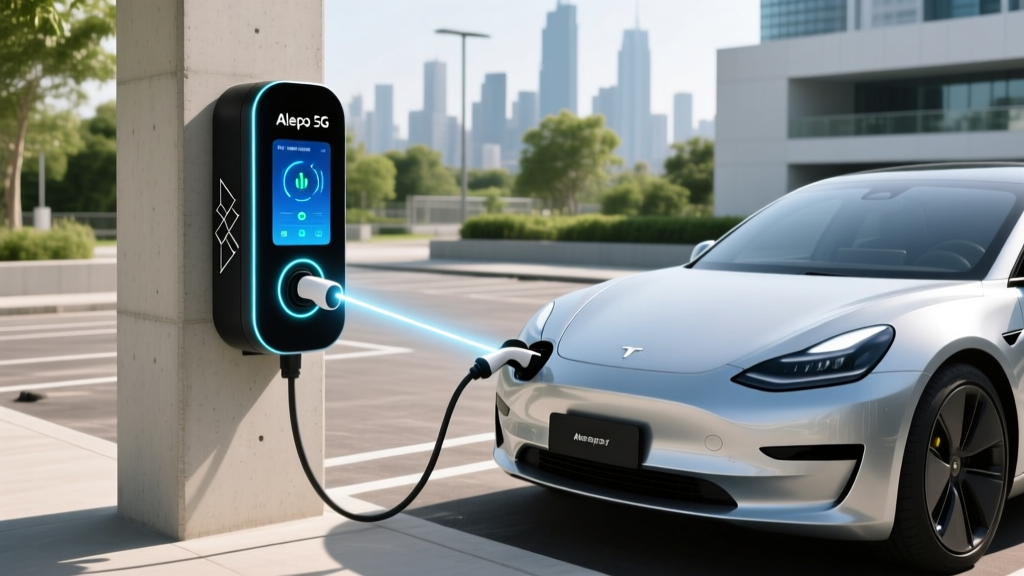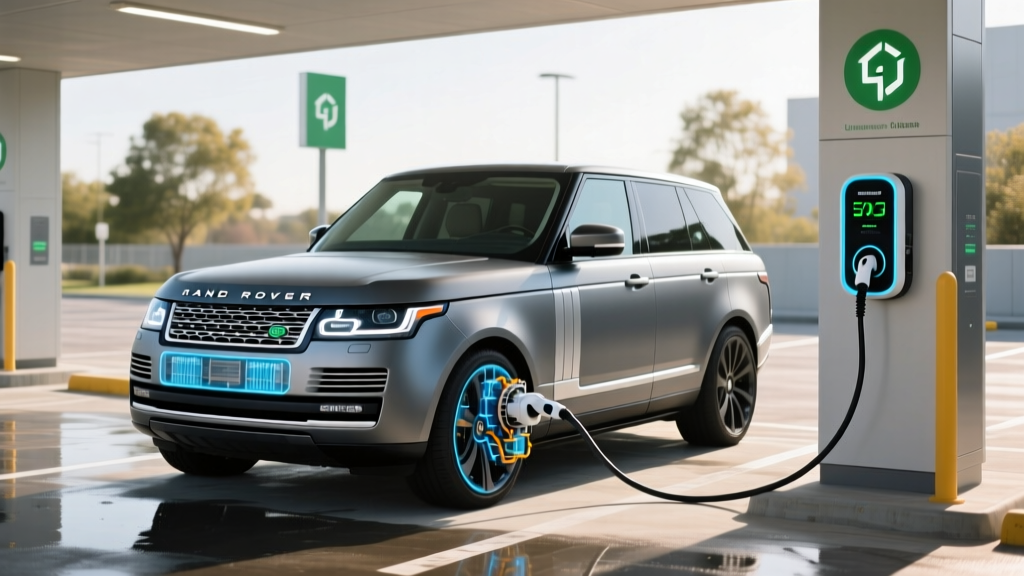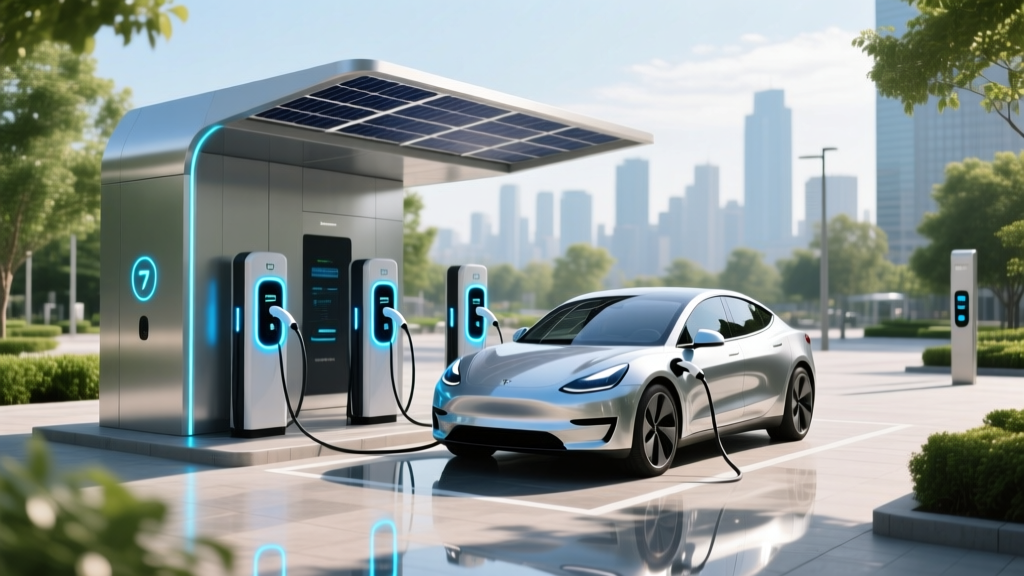
The intersection of real estate investment trusts (REITs) and electric vehicle infrastructure has become one of the most closely watched tax-policy developments in the EV sector. A series of IRS private letter rulings and subsequent guidance have clarified how REITs can participate in EV charging deployments — and what that means for the broader charging ecosystem that everyday EV owners rely on.
Whether you're an investor tracking the IRS ruling on REIT EV charging eligibility or an EV owner trying to understand why public charging networks are expanding the way they are, this guide covers both the policy landscape and the practical realities of charging an electric vehicle in 2026.
Why the IRS REIT EV Charging Ruling Matters to EV Owners
REITs own and operate income-producing real estate — shopping centers, apartment complexes, office parks, and warehouses. The IRS has issued guidance (notably through private letter rulings and IRS Chief Counsel memoranda) addressing whether EV charging stations installed on REIT-owned property qualify as permissible real estate assets and whether the income generated from charging services constitutes "qualifying income" under REIT tax rules.
The core takeaway: the IRS has generally treated EV charging equipment as real property when it is permanently affixed to a structure and serves the property's tenants or visitors. This classification allows REITs to invest in charging infrastructure without jeopardizing their tax-advantaged status. For EV owners, this translates to more charging destinations at the places you already visit — retail centers, apartment garages, and workplace parking structures.
Charging Levels Explained: Speeds, Power, and Range Added
Before evaluating where and how to charge, you need to understand the three charging tiers. The critical distinction: kW (kilowatts) measures power — how fast energy flows into your car. kWh (kilowatt-hours) measures energy — the total capacity of your battery. Think of kW as the width of the pipe and kWh as the size of the tank.
| Level | Voltage | Power (kW) | Miles of Range per Hour | Best For |
|---|---|---|---|---|
| Level 1 | 120V AC | 1.0–1.4 kW | 3–5 mi/hr | Overnight top-up, PHEVs, low-mileage drivers |
| Level 2 | 240V AC | 3.3–19.2 kW | 12–75 mi/hr | Home daily charging, workplace, retail/REIT locations |
| DC Fast Charge | 400–800V DC | 50–350 kW | 150–1,200+ mi/hr (peak) | Road trips, highway corridors, rapid top-ups |
Real-world charging times depend on battery size and the vehicle's charge curve. A 75 kWh battery (like the Tesla Model Y Long Range) charging on a Level 2 circuit at 11.5 kW takes roughly 7–8 hours from 10% to 80%. On a 250 kW DC fast charger, that same 10–80% session takes approximately 18–22 minutes — but only if the battery is preconditioned and ambient temperatures are moderate. Above 80% state of charge, charging speed tapers significantly to protect battery health.
Home EV Charger Installation: Electrical Requirements and Costs
Most EV owners do 80% or more of their charging at home on a Level 2 circuit. Here is what a proper installation requires and what it costs.
Electrical Specifications
- Circuit: Dedicated 240V circuit, typically 40A or 50A breaker (supports 32A or 40A continuous charging, respectively — NEC requires circuits rated at 125% of continuous load)
- Wire gauge: 6 AWG copper for 50A circuits; 8 AWG for 40A
- Connector: NEMA 14-50 outlet (most common) or hardwired connection (required above 50A and preferred by many electricians for reliability)
- Panel capacity: Your home's main panel must have sufficient spare amperage. A 200A panel with existing heavy loads (electric range, dryer, HVAC) may require a load calculation or panel upgrade
Panel Upgrade Reality
Homes built before 2000 often have 100A or 150A main panels. Adding a 50A EV circuit can push total calculated load beyond the panel's rating, triggering a panel upgrade to 200A or even 400A. This is the single largest variable in home charging installation cost and the reason you should never skip the electrician's load calculation.
| Component | Low Estimate | High Estimate | Notes |
|---|---|---|---|
| Level 2 Charger (Equipment) | $300 | $750 | 32A–48A smart charger, NACS or J1772 |
| Electrician Labor | $500 | $2,000 | Varies by run length, conduit, wall type |
| Electrical Permit | $50 | $300 | Municipality-dependent; required in most jurisdictions |
| Panel Upgrade (if needed) | $1,500 | $4,500 | 100A→200A or 200A→400A upgrade |
| Total (no panel upgrade) | $850 | $3,050 | Most homes with adequate panel capacity |
| Total (with panel upgrade) | $2,350 | $7,550 | Older homes or those with maxed-out panels |
Some utilities and states offer rebates of $250–$1,000 for home charger installation, and certain installations may qualify for the federal Alternative Fuel Vehicle Refueling Property Credit (up to $1,000 for residential charging equipment, subject to census-tract eligibility). Consult a tax professional for your specific situation.
Connector Compatibility: NACS, CCS, and CHAdeMO in 2026
The connector landscape has consolidated significantly. Tesla's North American Charging Standard (NACS) has been adopted by Ford, GM, Rivian, Hyundai, Kia, and most major automakers for 2025+ models. CCS1 remains on many 2022–2024 vehicles, and CHAdeMO persists only on the legacy Nissan Leaf.
| Connector | Brands Using It (2026 MY) | Adapter Needed? |
|---|---|---|
| NACS (Tesla standard) | Tesla, Ford, GM, Rivian, Hyundai, Kia, Volvo, Polestar, BMW, Mercedes-Benz | No — native on most new models |
| CCS1 | VW ID.4 (remaining inventory), older Ford/GM EVs (2022–2024) | CCS-to-NACS adapter (~$150–$250) for Supercharger access |
| CHAdeMO | Nissan Leaf (legacy only; discontinued) | Limited DC fast-charge network; plan accordingly |
For home Level 2 charging, most non-Tesla EVs through 2024 use the J1772 connector. NACS-equipped vehicles can use a J1772-to-NACS adapter (often included with the vehicle) to charge on J1772 home stations. Tesla's Wall Connector now ships with a NACS plug and includes a J1772 adapter in the box.
Cost to Charge: Home vs. Public vs. Gas Comparison
Charging economics vary dramatically by location and method. Here are representative 2026 scenarios:
| Scenario | Rate | Cost per Mile (at 3 mi/kWh or 30 MPG) |
|---|---|---|
| Home off-peak (utility time-of-use) | $0.09–$0.13/kWh | $0.03–$0.04/mi |
| Home standard rate | $0.14–$0.18/kWh | $0.05–$0.06/mi |
| Public Level 2 (network pricing) | $0.25–$0.49/kWh | $0.08–$0.16/mi |
| DC Fast Charge (Electrify America, EVgo) | $0.35–$0.65/kWh | $0.12–$0.22/mi |
| Tesla Supercharger (varies by location) | $0.25–$0.45/kWh | $0.08–$0.15/mi |
| Gasoline vehicle (30 MPG, $3.40/gal) | $3.40/gallon | $0.11/mi |
| Gasoline vehicle (22 MPG, $3.40/gal) | $3.40/gallon | $0.15/mi |
The takeaway: home charging at off-peak rates delivers the lowest per-mile cost of any fueling method. DC fast charging on the road approaches or exceeds gasoline costs per mile, which is why it should be reserved for road trips rather than daily use. According to fueleconomy.gov, most current EVs achieve 3–4 miles per kWh, making the math straightforward.
Recommended Home EV Chargers for 2026
Tesla Wall Connector (Gen 4)
- Power: Up to 48A (11.5 kW on 60A circuit)
- Connector: NACS native; J1772 adapter included
- Cable: 24 ft
- Smart features: Wi-Fi, OTA updates, load sharing, access control
- Price: ~$475
Best for: Tesla owners and NACS-equipped vehicles. Excellent build quality and the most reliable Wi-Fi connectivity in the segment.
ChargePoint Home Flex
- Power: Configurable 16A–50A (up to 12 kW on 50A circuit)
- Connector: J1772 (NACS adapter available)
- Cable: 23 ft
- Smart features: Wi-Fi, app scheduling, Alexa integration, energy reporting
- Price: ~$550–$650
Best for: J1772-equipped vehicles and households wanting granular energy tracking and utility demand-response integration.
Emporia Level 2 EV Charger
- Power: Up to 48A (11.5 kW)
- Connector: J1772 (NACS version available)
- Cable: 24 ft
- Smart features: Wi-Fi, solar integration with Emporia Vue energy monitor, scheduling
- Price: ~$399
Best for: Budget-conscious buyers and homes with solar panels seeking integrated energy management.
Grizzl-E Smart
- Power: Up to 40A (9.6 kW)
- Connector: J1772 (NACS version available)
- Cable: 24 ft
- Smart features: OCPP-compatible, adjustable amperage, outdoor-rated (NEMA 4)
- Price: ~$449
Best for: Outdoor installations and extreme climates. Built in Canada with a robust aluminum enclosure rated to -40°F.
Safety, Code, and Permit Considerations
A compliant installation is not optional — it protects your home, your vehicle, and your insurance coverage.
- Dedicated circuit: NEC Article 625 requires EV charging equipment to be on a dedicated branch circuit. Sharing a circuit with other appliances is a code violation and a fire risk.
- GFCI protection: The 2020 NEC (and subsequent editions adopted by most jurisdictions by 2026) requires GFCI protection for 240V EV outlets. Hardwired installations are exempt from this specific GFCI requirement, which is one reason many electricians prefer hardwiring.
- Outdoor rating: If your charger is mounted outdoors, it must carry a NEMA 3R or NEMA 4 rating. All chargers listed above meet this standard.
- Permit and inspection: Nearly all municipalities require an electrical permit for a new 240V circuit. The inspection verifies wire gauge, breaker sizing, grounding, and GFCI compliance. Skipping the permit can void homeowner's insurance claims related to electrical fires.
- Utility notification: Some utilities require notification before adding a significant new load. This is also the moment to inquire about EV-specific time-of-use rate plans, which can cut your charging cost by 30–50%.
How REIT Charging Infrastructure Expands Your Options
The IRS ruling on REIT EV charging has real-world implications for where you can charge. As REITs gain clarity that permanently installed charging equipment qualifies as real estate assets, expect accelerated deployment of Level 2 chargers at:
- Apartment and condo complexes: REIT-owned multifamily properties are adding charging as an amenity, often with load-management systems that share a single circuit among multiple stalls.
- Retail centers: Shopping center REITs are installing 50–150 kW DC fast chargers in partnership with networks like Electrify America and EVgo, generating both tenant foot traffic and direct charging revenue through a taxable REIT subsidiary.
- Industrial and logistics parks: Warehouse REITs are deploying charging for fleet electrification — delivery vans and box trucks that need overnight Level 2 or opportunity DC fast charging.
For the individual EV owner, this means your charging map is filling in at the destinations you already frequent. The IRS framework that enables REIT investment in charging is, indirectly, building out the public network you rely on when away from home.
Frequently Asked Questions
How much does it cost to install a home EV charger?
A typical Level 2 home installation costs $850–$3,050 when your electrical panel has sufficient capacity. If a panel upgrade from 100A to 200A is required, total costs can reach $2,350–$7,550. The equipment itself (a quality smart charger) runs $300–$750, with electrician labor and permits making up the remainder.
How fast will each charging level add range?
Level 1 (120V) adds 3–5 miles of range per hour — suitable only for PHEVs or very low daily mileage. Level 2 (240V, 40A–50A) adds 25–40 miles per hour, easily replenishing a day's driving overnight. DC fast charging at 150–250 kW can add 150–300 miles in a 20–30 minute session, though the charge curve tapers significantly above 80% state of charge.
Which connector is compatible with my EV?
For 2025–2026 model-year vehicles, NACS is the dominant standard across Tesla, Ford, GM, Hyundai, Kia, Rivian, and most others. If your EV has a CCS1 port (common on 2022–2024 models), you'll need a CCS-to-NACS adapter ($150–$250) for Tesla Supercharger access. The Nissan Leaf remains the primary CHAdeMO vehicle, with a shrinking DC fast-charge network.
How much does EV charging cost per mile compared to gas?
Home charging at off-peak rates costs $0.03–$0.04 per mile — roughly one-third the cost of gasoline at $3.40/gallon in a 30 MPG vehicle ($0.11/mile). Public DC fast charging at $0.45–$0.65/kWh costs $0.15–$0.22 per mile, which can exceed gasoline costs. The economic advantage of EV ownership depends heavily on access to affordable home charging.
What electrical upgrades might I need for a home charger?
The most common upgrade is a panel capacity increase. If your home has a 100A or 150A main panel and you already run electric HVAC, a dryer, and a range, adding a 50A EV circuit may exceed your panel's calculated load. A licensed electrician will perform a NEC Article 220 load calculation to determine whether an upgrade is required. Secondary upgrades may include running new conduit from the panel to the garage or parking area, particularly in homes where the panel is far from the charging location.
Does the IRS REIT EV charging ruling affect residential charger tax credits?
No. The REIT rulings govern how real estate investment trusts classify charging equipment for tax purposes. Residential EV charger tax credits fall under the Alternative Fuel Vehicle Refueling Property Credit (IRC §30C), which offers up to $1,000 for home charging equipment installed in eligible census tracts. These are separate provisions. Consult a tax professional to determine your eligibility.