If you've driven a Hyundai Ioniq 5, Kia EV6, or BMW iX on a long road trip in 2025 or 2026, you've likely encountered a frustrating reality: the public DC fast-charging network is still a patchwork of broken chargers, confusing apps, and inconsistent speeds. Enter Ionna, the joint-venture charging network backed by seven major automakers that is rapidly deploying high-power stations across the United States. By mid-2026, Ionna has opened over 200 stations with a stated goal of 30,000 chargers nationwide, positioning itself as the most credible alternative to Tesla's Supercharger network and Electrify America.
This guide breaks down exactly what Ionna charging stations offer, how fast they charge, what they cost, which EVs are compatible, and how they compare to the competition — with the real-world numbers you need to plan your next trip.
What Is Ionna? The Automaker-Backed Charging Network
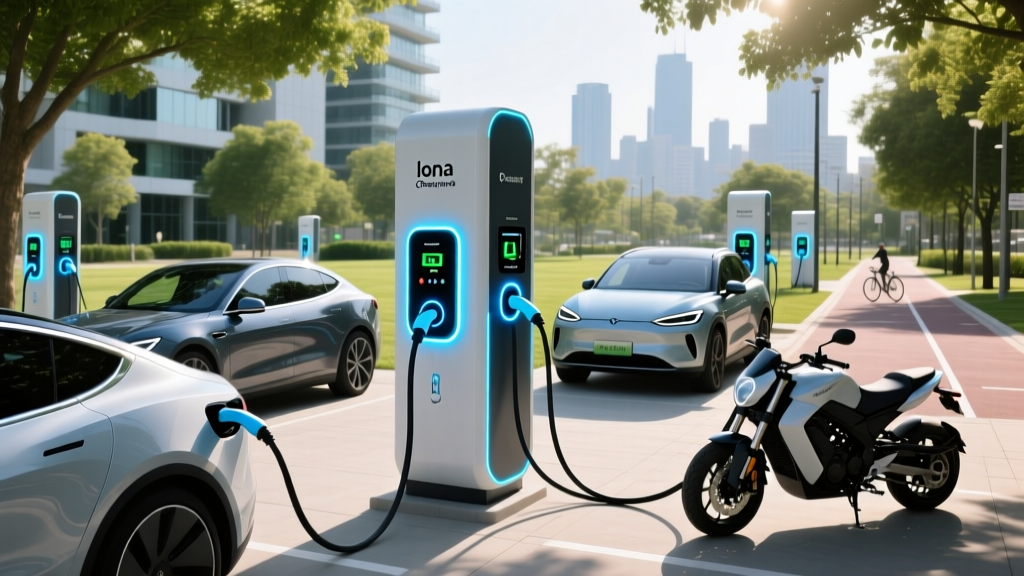
Ionna (pronounced "ee-OH-nuh") is a joint venture formed in 2023 by BMW, General Motors, Honda, Hyundai, Kia, Mercedes-Benz, and Stellantis. The automakers pooled resources to build a reliable, high-power DC fast-charging network after years of frustration with third-party providers. Unlike networks that rely on a mix of hardware generations, Ionna has deployed a uniform fleet of next-generation dispensers rated for up to 400 kW peak output per stall.
The network launched its first stations in late 2024, initially concentrated along the East Coast I-95 corridor and in California. As of mid-2026, Ionna has expanded into the Midwest, Texas, and the Southeast, with stations placed at travel centers, shopping destinations, and highway rest areas. Each station typically features 8 to 20 charging stalls, pull-through lanes for vehicles towing trailers, covered canopies with solar panels, and amenities including restrooms, Wi-Fi, and vending.
Ionna's stated target is 30,000 chargers across North America by 2030, with a near-term goal of approximately 1,000 stations by 2028. Source: Ionna official site.
Charging Speeds: How Fast Does an Ionna Charging Station Deliver Power?
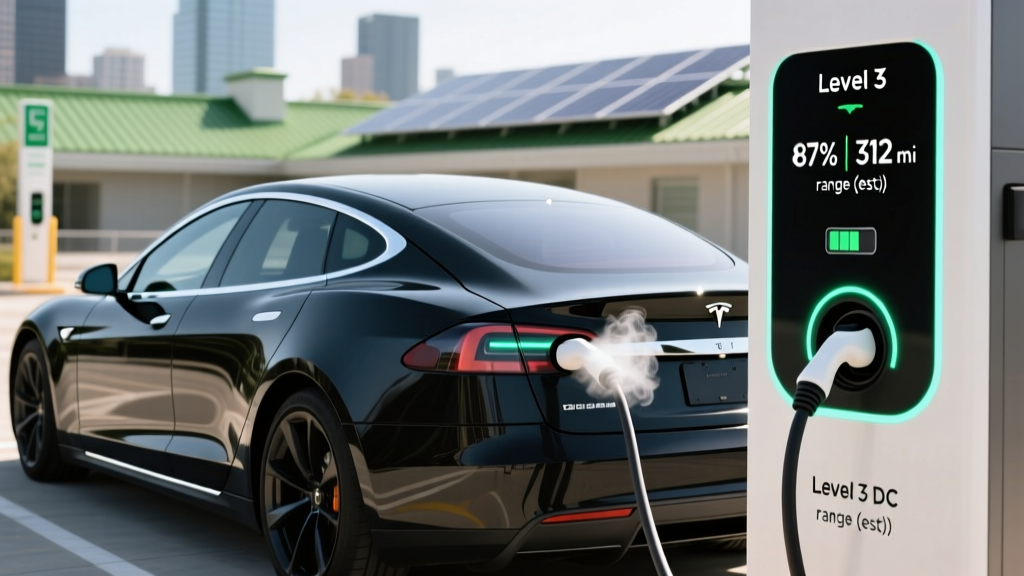
Ionna stations feature DC fast chargers (Level 3) capable of delivering up to 400 kW per connector. However, your actual charging speed depends on your vehicle's maximum charge acceptance rate, battery state of charge (SoC), battery temperature, and the charging curve.
Here's how the three main EV charging levels compare in practical terms:
| Level | Voltage | Max Power (kW) | Miles of Range Added per Hour | Typical Use Case |
|---|---|---|---|---|
| Level 1 | 120V AC | 1.4 kW | 3–5 mi/hr | Emergency / overnight trickle |
| Level 2 | 240V AC | 7.2–19.2 kW | 20–60 mi/hr | Home daily charging, workplace |
| DC Fast (Level 3) | 400–900V DC | 50–400 kW | 150–1,000+ mi/hr (peak) | Road trips, rapid top-ups |
At an Ionna station, a vehicle with an 800-volt architecture like the Hyundai Ioniq 5 (peak acceptance ~240 kW) or the Kia EV6 (~240 kW) can charge from 10% to 80% in approximately 18 minutes. The BMW iX xDrive50 (peak ~150 kW) will take roughly 28 minutes for the same window. Vehicles limited to 400V architecture and lower acceptance rates — such as the base Nissan Ariya (~130 kW peak) — will see 10–80% times closer to 35–40 minutes.
Connector Compatibility: NACS, CCS1, and Adapter Requirements
The North American charging connector landscape has undergone a massive shift. Tesla's North American Charging Standard (NACS) has been adopted by nearly every major automaker starting with 2025 model-year vehicles. Ionna stations are deployed with both NACS and CCS1 connectors at every stall, eliminating the adapter headache that plagues other networks.
| Brand | Native Connector (2025+) | Ionna Compatibility | Adapter Needed? |
|---|---|---|---|
| Tesla (all models) | NACS | NACS plug at Ionna | No |
| Hyundai / Kia (2025+) | NACS | NACS plug at Ionna | No |
| Ford (2025+) | NACS | NACS plug at Ionna | No |
| GM (2025+) | NACS | NACS plug at Ionna | No |
| BMW, Mercedes (2025+) | NACS (new models) / CCS1 (carryover) | Both available | Check your model year |
| Volkswagen / Audi | CCS1 | CCS1 plug at Ionna | No |
| Nissan Ariya / Leaf | CCS1 / CHAdeMO (Leaf) | CCS1 available; CHAdeMO limited | Leaf may need adapter |
If you drive a 2024 or earlier model with a CCS1 port, Ionna's dual-connector stalls mean you can plug in directly. If you drive a Tesla and encounter an older CCS-only station on another network, you'll need a CCS-to-NACS adapter (Tesla sells one for approximately $250). At Ionna, this is a non-issue.
Ionna Charging Station Pricing: Cost per kWh and Cost per Mile
Ionna's pricing varies by location, time of day, and whether you're a subscriber. As of mid-2026, typical rates are:
- Standard (pay-as-you-go): $0.43–$0.58 per kWh depending on the state and station
- Ionna Pass subscription ($9.99/month): Discounted rates of $0.33–$0.45 per kWh
- Idle fees: $1.00/minute after your vehicle reaches its SoC limit or after 10 minutes past full charge
How does this translate to cost per mile? Here's a comparison using a midsize electric SUV averaging 3.0 miles per kWh (roughly 112 MPGe combined):
| Scenario | Rate | Cost per Mile |
|---|---|---|
| Home Level 2 (off-peak utility rate) | $0.13/kWh | $0.043 |
| Home Level 2 (peak utility rate) | $0.28/kWh | $0.093 |
| Ionna Standard (pay-as-you-go) | $0.48/kWh avg | $0.160 |
| Ionna Pass subscriber | $0.38/kWh avg | $0.127 |
| Gasoline vehicle (28 MPG avg, $3.40/gal) | $3.40/gallon | $0.121 |
At Ionna's standard pay-as-you-go rates, DC fast charging on road trips can actually cost more per mile than gasoline at current fuel prices. The Ionna Pass subscription narrows the gap, and home charging remains dramatically cheaper. The economic case for EV ownership rests heavily on your ability to charge at home at utility rates — public DC fast charging is a convenience premium, not a cost saver.
Where Are Ionna Charging Stations Located?
As of mid-2026, Ionna's network is concentrated in these regions:
- Northeast corridor: I-95 from Boston to Washington, D.C., with stations every 50–80 miles
- California: I-5 corridor, Bay Area, Los Angeles basin, and San Diego
- Southeast: I-85 through the Carolinas and Georgia, I-75 through Florida
- Midwest: I-80 and I-90 corridors through Ohio, Indiana, Illinois, and into Michigan
- Texas: I-35 from Dallas to Austin/San Antonio, I-10 through Houston
Ionna publishes a live station map and real-time stall availability through its mobile app and integrates with Apple CarPlay, Android Auto, and in-dash navigation systems in partner-brand vehicles (BMW, Hyundai, Kia, GM, Mercedes). You can filter stations by connector type, power output, and amenities.
Ionna vs. Tesla Supercharger vs. Electrify America: Network Comparison
| Feature | Ionna | Tesla Supercharger | Electrify America |
|---|---|---|---|
| Peak power per stall | 400 kW | 250 kW (V3) / 500 kW (V4 select) | 350 kW |
| Station count (US) | ~200+ | ~2,000+ | ~1,000+ |
| Connector types | NACS + CCS1 | NACS (CCS via adapter) | CCS1 + NACS (select) |
| Reliability (uptime) | ~97% (reported) | ~97–99% | ~88–93% |
| Avg pricing ($/kWh) | $0.43–$0.58 | $0.25–$0.50 | $0.48–$0.64 |
| Idle fees | $1.00/min | $0.50–$1.00/min | $0.40/min |
| Plug & Charge support | Yes (partner brands) | Yes (Tesla native) | Limited |
| Towing-friendly pull-through | Most new stations | Select V4 stations | Rare |
Tesla's Supercharger network remains the gold standard for coverage and reliability, with nearly ten times the station count of Ionna. However, Tesla pricing is often lower, and the network now welcomes non-Tesla vehicles via the NACS standard or Magic Dock adapter at select locations. Ionna's advantage lies in its 400 kW hardware, dual-connector availability at every stall, and Plug & Charge functionality for partner-brand vehicles — meaning you simply plug in, and the station identifies your car, initiates charging, and bills your linked account automatically.
Electrify America, while the largest non-Tesla network, continues to struggle with uptime and customer satisfaction. Ionna was, in part, a response by legacy automakers to the need for a more reliable alternative.
Home Charging Setup: What You Need Beyond Public Stations
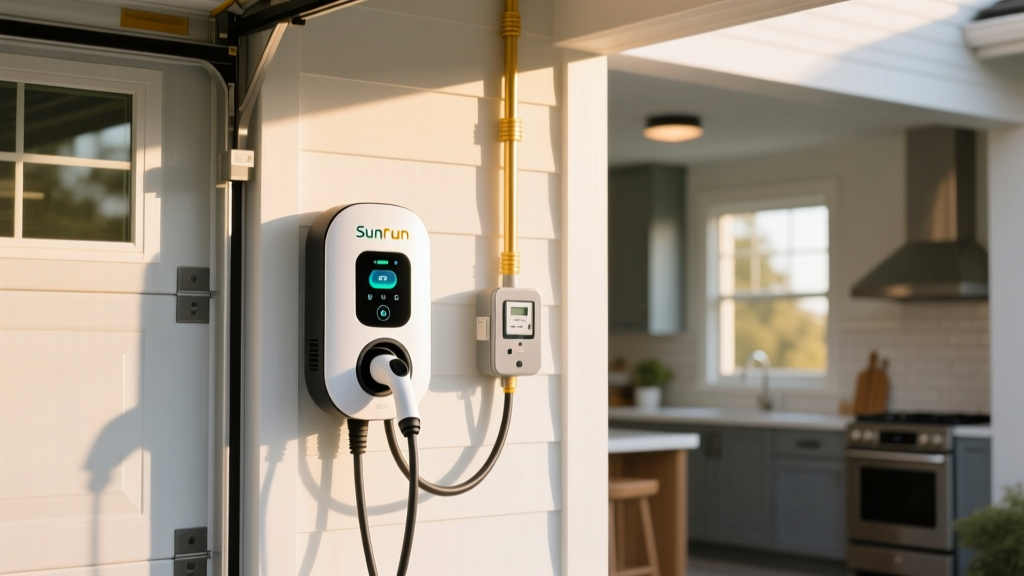
Relying solely on public DC fast charging is expensive and impractical for daily driving. Most EV owners do 80–90% of their charging at home on a Level 2 charger. Here's what a home installation involves and what it costs.
Electrical Requirements for Level 2 Home Charging
A Level 2 home charger requires a 240-volt dedicated circuit, the same voltage as your electric dryer or oven. The most common setup is a 40-amp or 48-amp circuit, which requires a 50-amp or 60-amp breaker respectively (National Electrical Code requires breaker capacity to be 125% of continuous load).
- 40A circuit / 48A breaker: Delivers up to 9.6 kW — sufficient for overnight charging of most EVs
- 48A circuit / 60A breaker: Delivers up to 11.5 kW — faster, recommended for large batteries (100+ kWh)
- 32A circuit / 40A breaker: Delivers up to 7.7 kW — adequate for smaller batteries and PHEVs
Panel Upgrade: The Hidden Cost
If your home has a 100-amp electrical panel (common in homes built before the 1990s), adding a 40–48A EV circuit may exceed your panel's capacity. A panel upgrade to 200 amps typically costs $1,500–$3,500 and may be required before an electrician will sign off on your EV charger permit. Homes with existing 200A panels usually have sufficient headroom.
| Item | Cost Range |
|---|---|
| Level 2 charger (hardware) | $350–$750 |
| Electrician labor (standard install, <50 ft run) | $500–$1,500 |
| Permit and inspection | $100–$400 |
| Electrical panel upgrade (if needed) | $1,500–$3,500 |
| Total (no panel upgrade) | $950–$2,650 |
| Total (with panel upgrade) | $2,450–$6,150 |
Recommended Home Level 2 Chargers
ChargePoint Home Flex
- Power: Up to 11.5 kW (48A, adjustable)
- Connector: NACS (J1772 adapter included)
- Cable length: 23 ft
- Smart features: Wi-Fi, app scheduling, utility integration, Alexa
- Price: ~$599
Grizzl-E Smart
- Power: Up to 9.6 kW (40A)
- Connector: J1772 (NACS adapter available)
- Cable length: 24 ft
- Smart features: Wi-Fi, app, OCPP support, extreme-weather rated (-40°F)
- Price: ~$449
Tesla Wall Connector
- Power: Up to 11.5 kW (48A)
- Connector: NACS native (J1772 adapter sold separately)
- Cable length: 24 ft
- Smart features: Wi-Fi, OTA updates, power sharing (multiple units)
- Price: ~$475
Safety and Code Requirements
Every Level 2 installation must meet these minimums per the National Electrical Code (NEC):
- Dedicated circuit: The EV charger must have its own breaker — no sharing with other appliances
- GFCI protection: Required for outdoor installations (NEC 2023 and later)
- Outdoor rating: If mounted outside, the charger must carry a NEMA 4 (weatherproof) rating
- Permit and inspection: Required in virtually all jurisdictions; do not skip this — unpermitted work can void insurance claims
Always hire a licensed electrician. Final specifications for wire gauge, conduit, and breaker sizing should be determined by a qualified professional evaluating your home's specific electrical system.
How to Use an Ionna Charging Station: Step by Step
- Locate a station via the Ionna app, your vehicle's in-dash navigation (if a partner brand), or PlugShare.
- Pull into a stall — Ionna stations feature pull-through lanes at most locations, so you don't need to unhitch a trailer.
- Plug in using the NACS or CCS1 connector that matches your vehicle's charge port.
- Authenticate via Plug & Charge (automatic for partner-brand vehicles), RFID card, or the Ionna app.
- Monitor your session in the app or on your vehicle's display. Charging will follow your vehicle's charge curve, tapering as SoC increases.
- Unplug and go — your session is billed automatically. Move your vehicle promptly to avoid idle fees.
Frequently Asked Questions
How much does it cost to install a home EV charger?
A standard Level 2 home charger installation costs between $950 and $2,650 when your electrical panel has sufficient capacity. If a panel upgrade from 100A to 200A is needed, total costs range from $2,450 to $6,150. Equipment (the charger itself) accounts for $350–$750 of the total; the rest is electrician labor, permits, and materials.
How fast will each charging level add range?
Level 1 (120V) adds 3–5 miles of range per hour. Level 2 (240V) adds 20–60 miles per hour depending on amperage. DC fast charging at an Ionna station can add 100–200+ miles in 15–20 minutes for compatible vehicles, though actual speed depends on your EV's peak charge acceptance rate and battery temperature.
Which connector is compatible with my EV?
For 2025 and newer models from Tesla, Ford, GM, Hyundai, Kia, Rivian, and others that adopted NACS, you'll use the NACS connector. For 2024 and earlier models from most non-Tesla brands, you'll use CCS1. Ionna stations provide both at every stall. Check your vehicle's charge port or owner's manual to confirm.
How much does charging cost per mile vs. gas?
Home Level 2 charging at off-peak utility rates costs roughly $0.04–$0.05 per mile — about one-third the cost of gasoline at $3.40/gallon and 28 MPG ($0.12/mile). Public DC fast charging at Ionna's standard rates costs approximately $0.16 per mile, which can exceed gasoline costs. The economic advantage of EV ownership depends on maximizing home charging.
What electrical upgrades might I need?
If your home has a 100-amp electrical panel, you'll likely need an upgrade to 200 amps ($1,500–$3,500). If your panel is already 200A, you typically only need a new dedicated circuit and breaker. Older wiring, long conduit runs from the panel to your garage, or detached structures can add to labor costs. A licensed electrician can assess your specific situation.
Is the Ionna app required to charge?
No. While the Ionna app provides the smoothest experience and access to subscriber pricing, you can also authenticate via RFID card, credit card tap at the terminal, or Plug & Charge if your vehicle supports it. Partner-brand vehicles (BMW, Hyundai, Kia, GM, Mercedes) with Plug & Charge enabled will begin charging automatically upon plugging in.
Does Ionna offer any free charging promotions?
Some automakers include complimentary Ionna charging with new EV purchases — for example, certain 2025–2026 Hyundai, Kia, and GM models include 2 years of complimentary charging (capped kWh or session limits apply). Check your purchase agreement or dealer for current promotions, as these vary by model year and region.