The Ionna charging network — a joint venture backed by seven major automakers including BMW, GM, Honda, Hyundai, Kia, Mercedes-Benz, and Stellantis — began rolling out DC fast-charging stations across the United States starting in late 2024. By 2026, the network is actively expanding, and the Ionna charging app is the primary tool EV owners use to locate stations, initiate sessions, and track costs. But how does Ionna stack up against established networks like Electrify America and Tesla Superchargers, and what do you need to know before relying on it for road trips?
This guide covers the Ionna app experience, station hardware and charging speeds, pricing structures, connector compatibility, and how Ionna fits into a complete charging strategy that includes home Level 2 charging. We'll also break down home charger installation costs, electrical requirements, and the real per-mile cost of charging versus gasoline.
What Is Ionna and How Does the Charging App Work?
Ionna (pronounced "ee-OH-nuh") is a DC fast-charging network purpose-built for the North American market. Unlike legacy networks that grew through piecemeal deployments, Ionna was designed from the ground up with higher-power chargers, better canopy coverage, and integrated amenities. The network targets a minimum of 30,000 chargers across the U.S. over its buildout period.
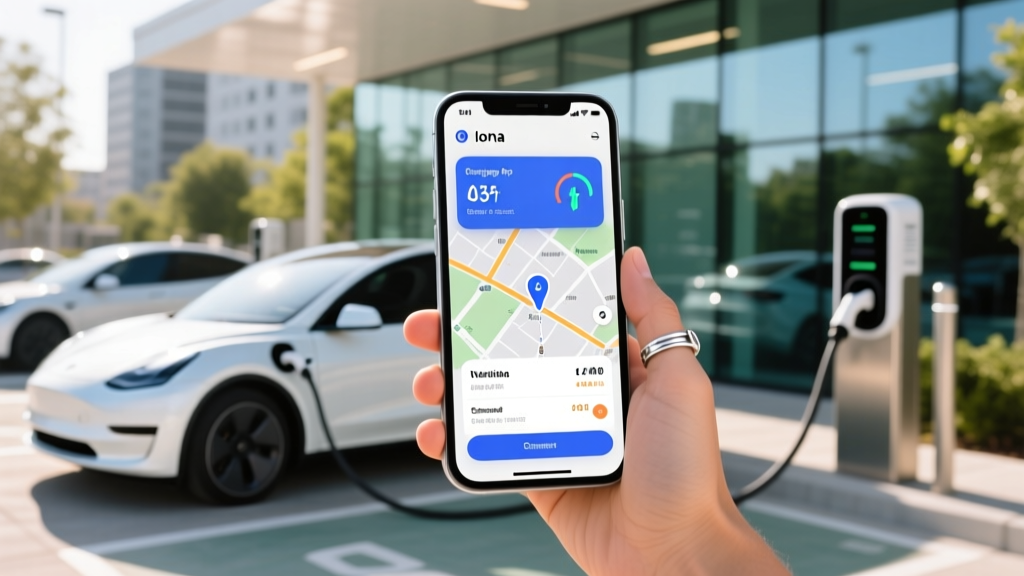
The Ionna charging app serves as the primary interface for drivers. Key features include:
- Station locator with real-time availability showing how many stalls are occupied vs. open
- Charger power ratings displayed per stall (typically 150 kW, 175 kW, or 350 kW capable)
- Session initiation via app, RFID card, or plug-and-charge (on supported vehicles)
- Pricing transparency showing $/kWh rates before you plug in
- Charging history with kWh delivered, session duration, and total cost
- Charger status alerts including out-of-service stall notifications
Plug-and-charge functionality — where the vehicle automatically authenticates and billing begins the moment you connect — is a priority for Ionna and is supported on vehicles from its parent automakers. For non-partner vehicles (such as Teslas using an adapter or older CHAdeMO cars), app-based or RFID session start is required.
Ionna Station Hardware: Charging Speeds and Power Output
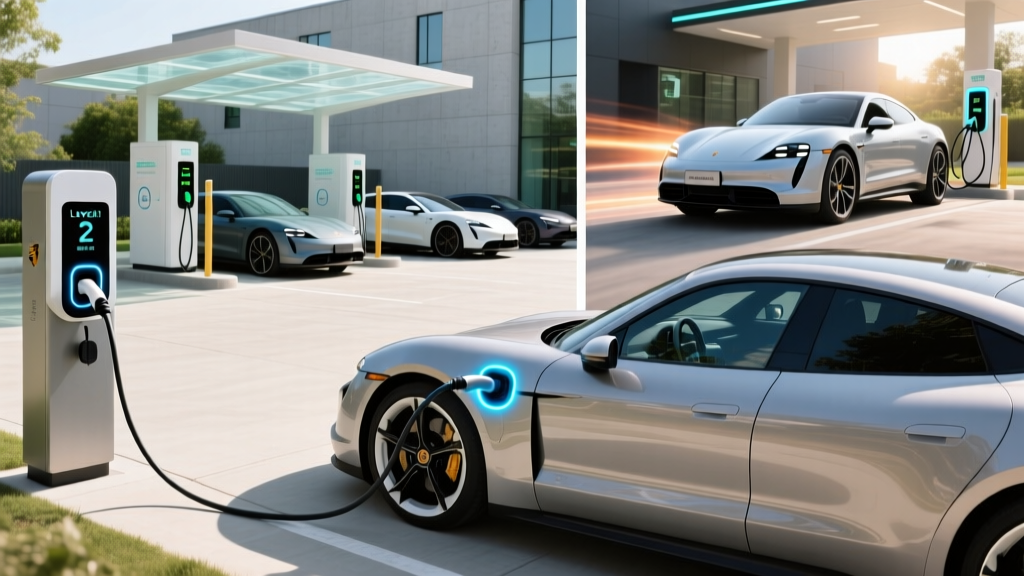
Ionna stations deploy DC fast chargers (DCFC) primarily in the 150 kW to 350 kW range. Most locations feature a mix of charger types to serve both current-generation and next-generation EVs capable of accepting higher charge rates.
| Level | Power (kW) | Voltage | Miles of Range Added per Hour | Typical Use Case |
|---|---|---|---|---|
| Level 1 (120V) | 1.2–1.9 kW | 120V AC | 3–5 mi/hr | Overnight trickle; PHEV top-ups |
| Level 2 (240V) | 7.2–19.2 kW | 240V AC | 20–60 mi/hr | Home daily charging; workplace |
| DC Fast Charge | 50–350 kW | 200–900V DC | 150–1,200+ mi/hr (peak) | Road trips; rapid top-ups |
Important distinction: kW (kilowatts) measures power — the rate at which energy flows into your battery. kWh (kilowatt-hours) measures energy — the total capacity of your battery. A 350 kW charger doesn't deliver 350 kWh; it can deliver energy at a rate of up to 350 kW, meaning an 80 kWh battery could theoretically fill in roughly 14 minutes at sustained peak rate. In practice, no EV sustains peak rate for an entire session due to charge-curve taper.
Real-World Charging Times at Ionna Stations
Charging speed depends on your vehicle's maximum acceptance rate, battery state of charge (SoC), battery temperature, and the charger's output. Here are realistic 10–80% charging times for common EV battery sizes at Ionna's typical hardware:
| Battery Size | Example Vehicle | At 150 kW Charger | At 350 kW Charger (if vehicle supports) |
|---|---|---|---|
| 58 kWh usable | VW ID.4 (2026) | ~28 min | ~28 min (vehicle caps at ~135 kW) |
| 77 kWh usable | Hyundai Ioniq 5 (2026) | ~25 min | ~18 min (800V architecture, peaks ~240 kW) |
| 85 kWh usable | Kia EV9 (2026) | ~32 min | ~24 min (800V, peaks ~210 kW) |
| 100 kWh usable | GMC Sierra EV (2026) | ~40 min | ~22 min (800V, peaks ~350 kW) |
The charge curve matters enormously. Most EVs hit peak charge rate between 10–30% SoC, then taper progressively. Above 80%, charging slows dramatically to protect battery health — which is why DC fast charging is typically quoted as 10–80%, not 0–100%. Charging from 80–100% on DC fast can take as long as the 10–80% session.
Connector Compatibility: Will Ionna Work With Your EV?
The North American charging landscape underwent a major connector transition beginning in 2023 when Tesla opened its Supercharger network and the North American Charging Standard (NACS) emerged as the dominant connector. By 2026, most new EVs ship with NACS ports, while older vehicles may still have CCS1 or CHAdeMO connectors.
| Connector | Brands Using It (2026 Models) | Ionna Compatibility |
|---|---|---|
| NACS (Tesla/J3400) | Tesla, Ford, GM, Rivian, Volvo, Polestar, Hyundai (new models), Kia (new models) | Native NACS cables at most Ionna stations; plug-and-charge on partner brands |
| CCS1 (Combo) | VW, BMW, older Hyundai/Kia, older Ford Mustang Mach-E, legacy models | CCS1 cables available at all Ionna stations |
| CHAdeMO | Nissan Leaf (discontinued), Mitsubishi Outlander PHEV (older) | Limited; adapter required — check app for station-specific availability |
Adapter needs: If you drive a CCS1-equipped vehicle and arrive at an Ionna station with only NACS cables (increasingly rare but possible at newer deployments), you'll need a CCS1-to-NACS adapter. Several are available from brands like Lectron and A2Z for $150–$250. Conversely, NACS-equipped vehicles visiting CCS-only stations need a NACS-to-CCS adapter. Ionna's app clearly labels which connector types are available at each station before you navigate there.
How Much Does Charging Cost on Ionna vs. Home vs. Gas?
Charging costs vary enormously depending on where and when you charge. Home charging on off-peak electricity is by far the cheapest option, while public DC fast charging carries a premium for convenience and speed.
| Charging Scenario | Average $/kWh | Cost Per Mile (at 3 mi/kWh) | Equivalent Gas MPG Cost |
|---|---|---|---|
| Home Level 2 (off-peak utility rate) | $0.08–$0.14 | $0.03–$0.05 | Gas at $1.05–$1.75/gal (50 MPG) |
| Home Level 2 (standard rate) | $0.14–$0.20 | $0.05–$0.07 | Gas at $1.75–$2.45/gal (35 MPG) |
| Public Level 2 (workplace, retail) | $0.20–$0.35 | $0.07–$0.12 | Gas at $2.45–$4.20/gal (35 MPG) |
| DC Fast Charge (Ionna, EA, etc.) | $0.35–$0.55 | $0.12–$0.18 | Gas at $4.20–$6.30/gal (35 MPG) |
| Gasoline (2026 U.S. avg) | — | $0.11–$0.15 (at 30 MPG, $3.50/gal) | Baseline |
The takeaway: home charging saves 60–80% per mile compared to gasoline, while DC fast charging on road trips costs roughly the same as or slightly more than gas per mile. Most EV owners do 80–90% of their charging at home, making the blended cost far lower than gas. Ionna's pricing is competitive with Electrify America and EVgo, typically falling in the $0.35–$0.48/kWh range depending on location and time of day. Some Ionna stations offer lower rates during off-peak hours — check the app for time-of-use pricing at your local station.
For the most current utility rates and EV efficiency data by model, the EPA's fueleconomy.gov remains the authoritative source for kWh/100mi figures.
Home EV Charger Installation: Costs, Electrical Requirements, and Upgrades
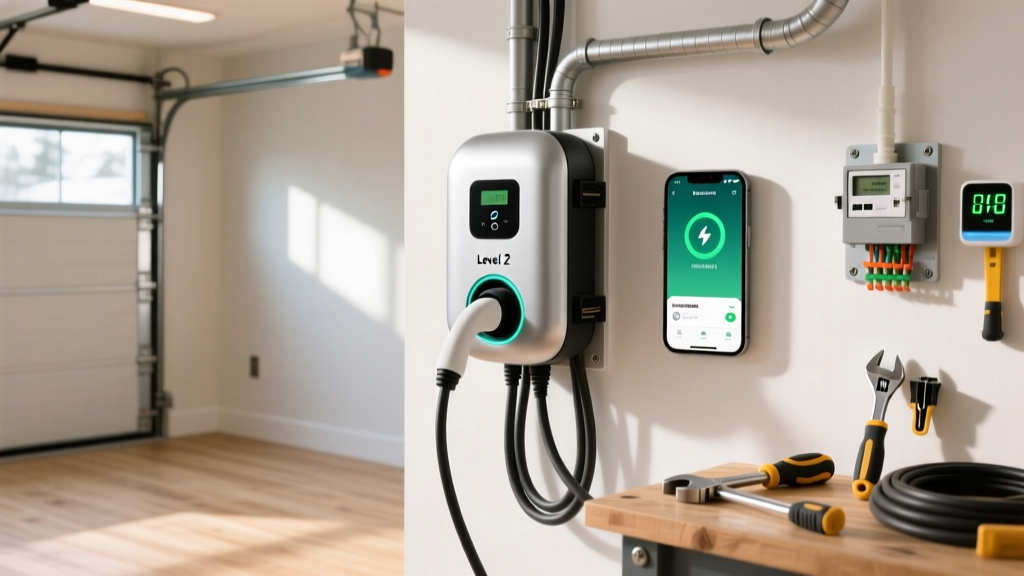
While Ionna serves road-trip and away-from-home charging, the backbone of EV ownership is a reliable home Level 2 charger. Here's what installation actually involves and what it costs in 2026.
Electrical Requirements for Home Level 2 Charging
A Level 2 home charger requires a 240-volt dedicated circuit, similar to what powers an electric dryer or oven. The most common configurations:
- 240V / 40A circuit → delivers up to 9.6 kW (most common; sufficient for overnight charging of any EV)
- 240V / 48A circuit → delivers up to 11.5 kW (faster; requires thicker wire and a 60A breaker)
- 240V / 60A circuit → delivers up to 14.4 kW (fastest residential; needed for large batteries like the F-150 Lightning Extended Range)
Most EVs have onboard chargers that cap at 11.5 kW (48A) or 7.7 kW (32A), so a 48A charger covers virtually all current vehicles. Hardwired installations are preferred over NEMA 14-50 outlets for safety and code compliance in many jurisdictions.
Installation Cost Breakdown
| Cost Component | Simple Install (panel nearby, no upgrade) | Complex Install (long run, panel upgrade) |
|---|---|---|
| Level 2 Charger Equipment | $400–$700 | $400–$700 |
| Electrician Labor | $500–$1,200 | $1,500–$3,500 |
| Electrical Permit | $50–$200 | $50–$200 |
| Panel Upgrade (100A → 200A, if needed) | N/A | $1,500–$3,500 |
| Conduit/Wire (long runs >50 ft) | $100–$300 | $400–$1,000 |
| Total Estimated Cost | $1,050–$2,400 | $3,850–$8,900 |
Panel upgrade reality: Homes built before 1990 often have 100-amp electrical panels that may lack capacity for a 40A or 48A EV circuit, especially if you already run electric heat, an electric dryer, and an electric oven. A licensed electrician will perform a load calculation per NEC Article 220 to determine if your panel can handle the additional draw. If not, a panel upgrade to 200A adds $1,500–$3,500 to the project. Always get a detailed quote that separates equipment, labor, and permit costs.
The IRS offers a residential energy credit (25C) that may cover up to $1,000 of EV charger installation costs through 2032 — consult a tax professional for eligibility specifics.
Recommended Home Level 2 Chargers for 2026
The following chargers are proven, UL-listed, and well-suited to daily EV charging. All support 240V operation and are available in hardwired or plug-in configurations.
ChargePoint Home Flex
- Power Output: Up to 12 kW (50A) — adjustable down to 16A via app
- Connector: NACS (J3400) native; CCS adapter included
- Cable Length: 23 ft
- Smart Features: Wi-Fi, scheduling, energy tracking, Alexa integration
- Price: ~$550–$650
- Best For: Flexible amperage settings for older electrical panels
Grizzl-E Smart
- Power Output: Up to 11.5 kW (48A)
- Connector: NACS or J1772 (configurable)
- Cable Length: 24 ft
- Smart Features: Wi-Fi, OCPP compatible, works with utility demand-response programs
- Price: ~$450–$550
- Best For: Outdoor-rated durability (IP67); Canadian-built; extreme cold tested to -40°F
Emporia Level 2 EV Charger
- Power Output: Up to 11.5 kW (48A)
- Connector: NACS native (2026 model); J1772 version available
- Cable Length: 24 ft
- Smart Features: Wi-Fi, solar integration, energy dashboard, load management with Emporia Vue panel monitor
- Price: ~$400–$500
- Best For: Homes with solar panels; budget-conscious buyers who want smart features
Safety, Code Compliance, and Installation Best Practices
EV charging draws sustained high current for hours — this is fundamentally different from short-burst appliances. Proper installation is non-negotiable for safety and insurance coverage.
- Dedicated circuit: Your Level 2 charger must be on its own dedicated breaker — never shared with other outlets or appliances.
- GFCI protection: NEC 2023 and later codes require GFCI (Ground Fault Circuit Interrupter) protection for EV charging outlets. Hardwired chargers may have built-in ground-fault protection; confirm with your electrician.
- Outdoor rating: If your charger is installed outdoors or in an unenclosed carport, it must carry at minimum an IP55 rating (protected against water jets). IP67 is preferred for flood-prone areas.
- Wire gauge: A 48A circuit requires 6 AWG copper wire; a 40A circuit requires 8 AWG. Undersized wire creates fire risk.
- Permit and inspection: Virtually all jurisdictions require a permit for EV charger installation. Skipping this risks insurance claim denial in the event of an electrical fire. Your electrician should pull the permit — never do unpermitted work.
- NEMA 14-50 outlet caution: If using a plug-in charger with a 14-50 receptacle, use a high-quality industrial-grade outlet (Hubbell, Bryant). Consumer-grade 14-50 outlets have been linked to overheating under sustained EV charging loads.
Building a Complete Charging Strategy: Home + Ionna + Backup
Reliance on a single charging network is a mistake. The most resilient EV ownership strategy layers multiple options:
- Home Level 2 (daily driver): Covers 80–90% of your charging at the lowest cost. Wake up every morning with a full battery.
- Ionna + partner networks (road trips): The Ionna charging app is your primary tool for DC fast charging on road trips, supplemented by Electrify America, EVgo, and Tesla Superchargers (open to non-Tesla vehicles via the Magic Dock adapter at select locations).
- Workplace / destination Level 2: Many employers and retail locations offer free or low-cost Level 2 charging — a valuable supplement if you lack home charging access.
- Emergency backup: Know where the nearest Level 2 public charger is to your home in case of a power outage or charger failure.
The Ionna app integrates well into this layered approach, particularly for drivers of vehicles from its parent automakers who benefit from plug-and-charge convenience and potentially discounted member rates.
Frequently Asked Questions
How much does it cost to install a home EV charger?
A straightforward Level 2 installation with an adequate electrical panel typically costs $1,050–$2,400 including equipment, electrician labor, and permit. If your home needs a panel upgrade from 100A to 200A, total costs can reach $3,850–$8,900. Always get a detailed quote that breaks down equipment, labor, permit, and any panel work separately.
How fast will each charging level add range?
Level 1 (120V) adds roughly 3–5 miles of range per hour. Level 2 (240V) adds 20–60 miles per hour depending on amperage and your vehicle's onboard charger. DC fast charging at an Ionna station can add 150–300+ miles in a 20–30 minute session, depending on your vehicle's peak acceptance rate and battery size.
Which connector/charger is compatible with my EV?
Check your vehicle's charge port: NACS (smaller, Tesla-style) is standard on most 2025–2026 models from Ford, GM, Rivian, Hyundai, and Kia. CCS1 (larger, two-pin-bottom) is found on VW, BMW, and older models. CHAdeMO (round, mostly discontinued) is limited to the Nissan Leaf and a few legacy vehicles. Ionna stations primarily offer NACS and CCS1 cables — verify connector availability in the Ionna charging app before navigating to a station.
How much does charging cost per mile vs. gas?
Home Level 2 charging at average U.S. electricity rates ($0.14–$0.20/kWh) costs roughly $0.05–$0.07 per mile — about half the cost of gasoline at $3.50/gal in a 30 MPG car ($0.12/mile). DC fast charging at $0.40–$0.50/kWh costs $0.13–$0.17 per mile, roughly comparable to gas. The savings compound over time: a driver covering 12,000 miles/year saves $600–$1,000 annually by charging primarily at home versus buying gas.
What electrical upgrades might I need?
The most common upgrade is a panel increase from 100A to 200A service, needed when your existing panel lacks spare capacity for a 40–48A EV circuit. Your electrician will perform a NEC Article 220 load calculation. Other potential upgrades include running new conduit for long wire runs (garage far from the panel), adding a sub-panel, or upgrading the meter socket. Homes with 200A or larger panels rarely need upgrades for a single EV charger.
Does the Ionna charging app work with all EVs?
The Ionna app works for locating stations, checking availability, and initiating charging sessions regardless of your vehicle brand. However, plug-and-charge (automatic authentication upon plugging in) is currently supported primarily for vehicles from Ionna's parent automakers: BMW, GM, Honda, Hyundai, Kia, Mercedes-Benz, and Stellantis. Non-partner EVs can still charge using the app or an RFID card.