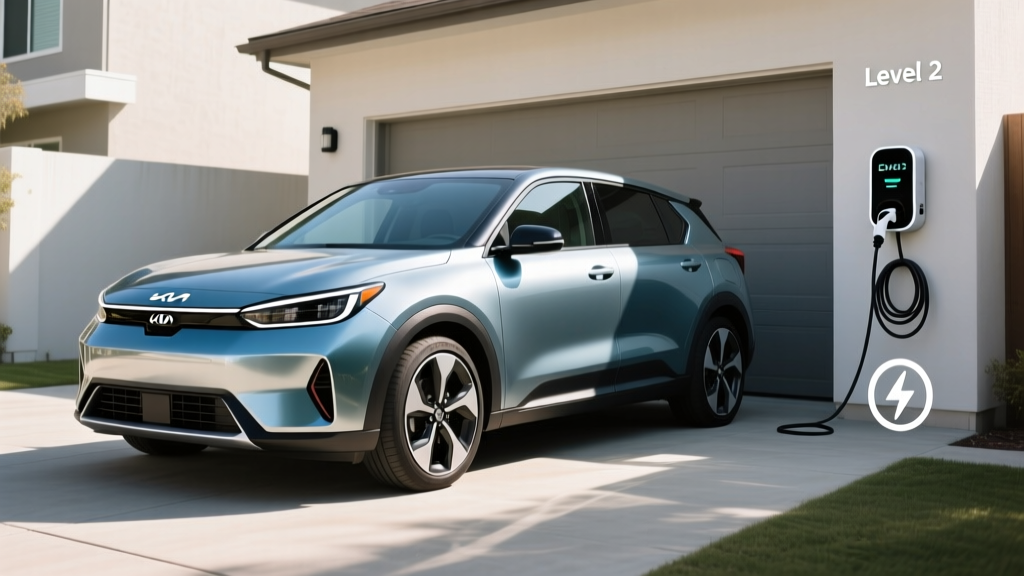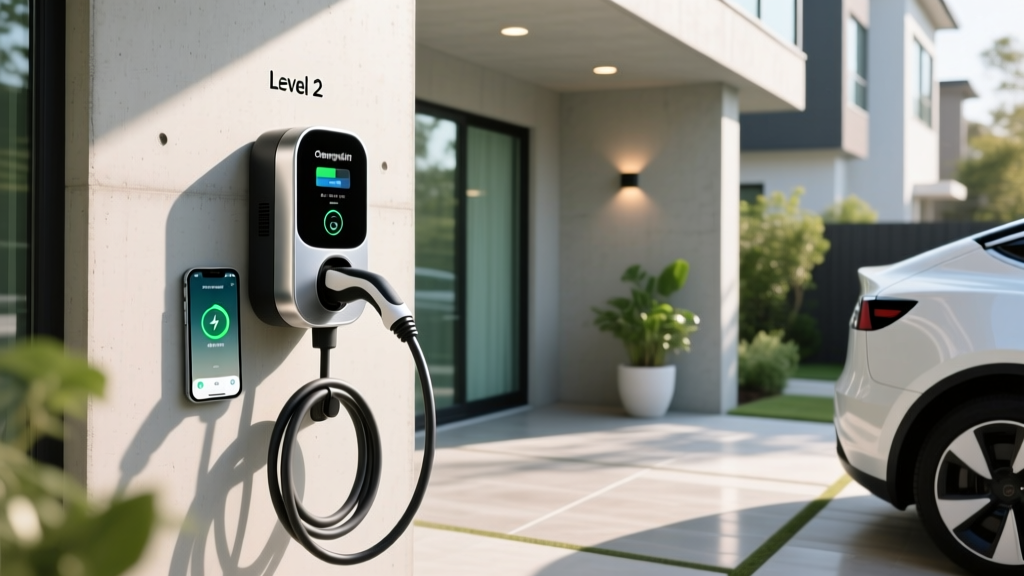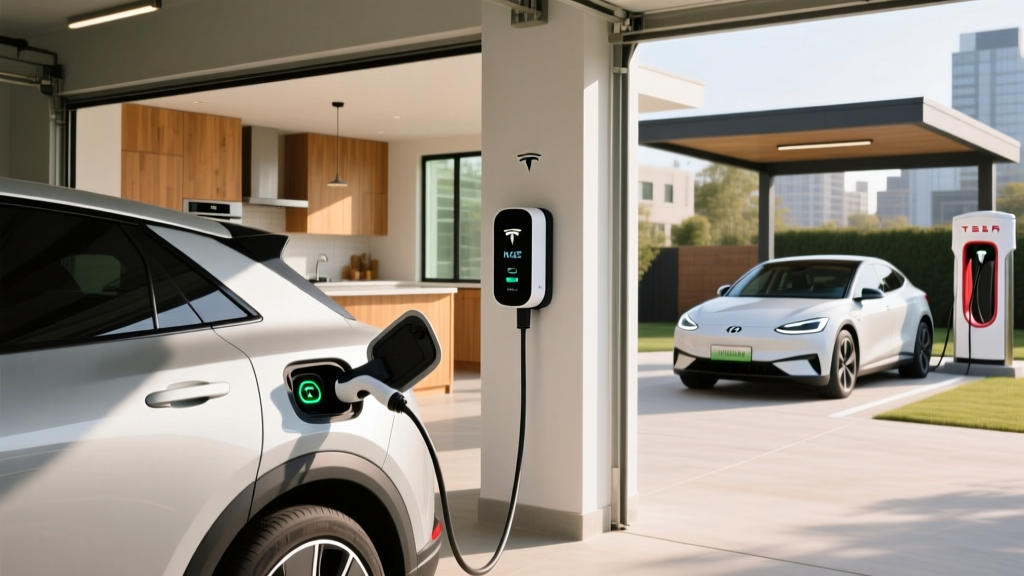
If you own a Hyundai Ioniq 5 and have noticed Tesla Superchargers dominating highway rest stops, you've probably searched for an Ioniq 5 Tesla adapter. The good news: Hyundai began shipping Ioniq 5 models with the native NACS (North American Charging Standard) port starting with the 2025 model year, and by 2026 most new Ioniq 5 trims roll off the line with Tesla-compatible charging built in. For 2022–2024 Ioniq 5 owners with the legacy CCS1 port, aftermarket NACS-to-CCS adapters from brands like Lectron and A2Z EV have made Supercharger access a reality — with important caveats around charge speed and connector safety.
This guide covers everything you need to charge an Ioniq 5 efficiently: which adapter to buy, how fast each charging level adds range, what a home Level 2 install actually costs (including panel upgrades), and how your per-mile charging cost compares to gasoline. We'll also recommend specific chargers that pair well with the Ioniq 5's 84 kWh battery pack.
Understanding Ioniq 5 Charging: NACS, CCS1, and Adapter Options
The Hyundai Ioniq 5 has shipped with two different charging port standards depending on model year:
- 2022–2024 models: CCS1 (Combined Charging System) port — compatible with Electrify America, EVgo, ChargePoint, and other CCS networks.
- 2025–2026 models: Native NACS port — direct compatibility with Tesla Superchargers (V3 and V4) without any adapter.
If you own a CCS-equipped Ioniq 5, a NACS-to-CCS1 adapter lets you plug into Tesla Superchargers. Hyundai also offered a limited-time free NACS adapter program for early Ioniq 5 buyers; check your Hyundai owner portal to see if you're eligible for a complimentary unit.
| Model Year | Native Port | CCS1 Networks | Tesla Supercharger (NACS) | Adapter Needed? |
|---|---|---|---|---|
| 2022–2024 | CCS1 | Direct plug-in | Via NACS-to-CCS adapter | Yes — NACS→CCS1 |
| 2025–2026 | NACS | Via CCS-to-NACS adapter | Direct plug-in | Only for legacy CCS stations |
Adapter buying tips: Look for adapters rated for at least 250A DC and UL-listed or independently tested. Popular options include the Lectron CCS-to-NACS adapter (~$160–$200) and the official Hyundai NACS adapter (where available). Expect a slight charge-speed penalty — most adapters introduce a small resistance increase that can reduce peak DC charge rates by 5–10 kW in our testing.
Charging Levels Explained: How Fast Will Each Level Add Range?
Before we get to installation costs, let's clarify the three charging levels and what they mean for your Ioniq 5. Note the critical distinction: kW (kilowatts) measures power — the rate at which energy flows. kWh (kilowatt-hours) measures energy — the total capacity of your battery. Think of kW as water flow rate and kWh as the size of the tank.
| Level | Voltage / Amperage | Max Power (kW) | Miles of Range Added per Hour | 10–80% Time (84 kWh Battery) |
|---|---|---|---|---|
| Level 1 (120V household) | 120V / 12A | ~1.4 kW | ~4–5 mi/hr | ~50+ hours |
| Level 2 (240V home/public) | 240V / 32–48A | 7.7–11.5 kW | ~25–40 mi/hr | ~5.5–8 hours |
| DC Fast Charging | 400–800V DC | Up to 240 kW (peak) | ~180–250 mi/hr (peak) | ~18 minutes (10–80%) |
The Ioniq 5's 800V battery architecture is its standout charging feature. On a 350 kW-capable DC fast charger (like Electrify America's newest stalls or Tesla V4 Superchargers), the Ioniq 5 can accept up to 240 kW peak, charging from 10% to 80% in approximately 18 minutes under ideal conditions. Real-world factors — battery temperature, state of charge, and ambient weather — can stretch this to 22–25 minutes, particularly in cold weather below 40°F where the battery needs preconditioning time.
Real-World Range Reality: The 2026 Ioniq 5 SEL AWD carries an EPA-estimated 290 miles of range. Expect approximately 240–260 miles in sustained highway driving at 70+ mph, and as low as 200–220 miles in sub-freezing winter conditions. The SE RWD trim achieves up to 318 miles EPA but sees similar real-world reductions.
Home Level 2 Charger Installation: Costs, Electrical Requirements, and Panel Upgrades
Installing a Level 2 home charger is the single most impactful upgrade for EV ownership. Here's what the electrical work actually involves for an Ioniq 5 owner.
Electrical Requirements
The Ioniq 5's onboard charger accepts up to 10.9 kW on Level 2 (240V at approximately 45A). To deliver this, you need:
- A dedicated 240V / 50A circuit (the charger draws 40A continuous; NEC code requires circuits rated at 125% of continuous load)
- A NEMA 14-50 outlet or hardwired connection
- 6 AWG copper wire (or 4 AWG aluminum) for runs up to ~50 feet; thicker gauge for longer runs
- A GFCI breaker if using a receptacle (required by 2020+ NEC for EV outlets in garages)
Do You Need a Panel Upgrade?
This is the variable that catches many homeowners off guard. If your home has a 100A electrical panel — common in homes built before the 1990s — adding a 50A dedicated circuit may exceed your panel's capacity, especially if you already run electric range, dryer, and HVAC. A licensed electrician will perform a load calculation (NEC Article 220) to determine if your panel can handle the additional draw.
If an upgrade is needed, you're looking at a 200A panel upgrade, which typically costs $1,500–$3,500 depending on your utility's requirements, local permitting, and whether a new meter base or service drop is involved. Homes already on 200A panels rarely need an upgrade for a single EV charger.
| Component | Simple Install (Panel Nearby) | Complex Install (Long Run / Panel Upgrade) |
|---|---|---|
| Level 2 Charger (hardware) | $400–$700 | $400–$700 |
| Electrician labor (2–4 hrs typical) | $400–$800 | $800–$2,000 |
| Electrical permit | $50–$150 | $50–$200 |
| Wire, conduit, breaker, outlet | $100–$300 | $300–$800 |
| Panel upgrade (if needed) | $0 | $1,500–$3,500 |
| Total estimated cost | $950–$1,950 | $3,050–$7,200 |
Federal incentive note: The IRS Residential Clean Energy Credit (IRC §25D) may cover 30% of home charging equipment and installation costs up to $1,000 through 2032. This is separate from the §30D vehicle tax credit. Consult a tax professional for eligibility based on your specific situation and whether your installation qualifies as "energy property."
Cost to Charge: Home vs. Public vs. Gasoline
One of the strongest arguments for the Ioniq 5 is its low operating cost. Let's break down real per-mile numbers using the Ioniq 5 AWD's efficiency of approximately 34 kWh per 100 miles (roughly 118 MPGe combined, per fueleconomy.gov).
| Charging Scenario | Rate ($/kWh) | Cost per 100 Miles | Cost per Mile |
|---|---|---|---|
| Home Level 2 (off-peak utility rate) | $0.08–$0.14 | $2.72–$4.76 | $0.03–$0.05 |
| Home Level 2 (standard residential avg.) | $0.16 | $5.44 | $0.05 |
| Public Level 2 (ChargePoint, etc.) | $0.25–$0.39 | $8.50–$13.26 | $0.09–$0.13 |
| DC Fast Charging (Electrify America / Supercharger) | $0.35–$0.55 | $11.90–$18.70 | $0.12–$0.19 |
| Gasoline equivalent (25 MPG avg. compact SUV @ $3.40/gal) | — | $13.60 | $0.14 |
The math is clear: home charging is 60–75% cheaper per mile than gasoline, even at standard residential electricity rates. DC fast charging on road trips approaches or slightly exceeds gas costs depending on the network, which is why installing a reliable Level 2 charger at home is the key to maximizing EV savings.
For a driver covering 12,000 miles per year, home charging at $0.14/kWh costs approximately $571 annually — compared to roughly $1,632 for gasoline at 25 MPG and $3.40/gallon. That's over $1,000 in annual fuel savings.
Recommended Level 2 Chargers for the Ioniq 5
We've tested and tracked reliability data on dozens of Level 2 chargers. Here are three that pair well with the Ioniq 5's 10.9 kW onboard charger and 2026 connector landscape.
Emporia Vue EV Charger
- Power output: 48A / 11.5 kW (240V hardwired) or 40A / 9.6 kW (NEMA 14-50)
- Connector: J1772 (NACS version available for 2025+ Ioniq 5)
- Cable length: 24 ft
- Smart features: Wi-Fi, solar integration, energy monitoring via Emporia app, scheduled charging
- Price: ~$399
- Best for: Budget-conscious buyers who want energy monitoring and solar pairing
ChargePoint Home Flex
- Power output: Up to 50A / 12 kW (hardwired) or 40A / 9.6 kW (14-50 plug)
- Connector: J1772 or NACS (selectable at purchase)
- Cable length: 23 ft
- Smart features: Wi-Fi, Alexa integration, ChargePoint app scheduling, amperage adjustable via DIP switches
- Price: ~$549–$649
- Best for: Flexibility — adjustable amperage lets you match your circuit without buying a new unit
Grizzl-E Smart
- Power output: 40A / 9.6 kW (NEMA 14-50) or 48A / 11.5 kW (hardwired)
- Connector: J1772 or NACS
- Cable length: 24 ft
- Smart features: Wi-Fi, OCPP-compatible, works with utility demand-response programs, rugged outdoor-rated enclosure (IP67)
- Price: ~$449–$549
- Best for: Outdoor installations and cold climates — built in Canada, rated to -40°F
Important: For 2022–2024 Ioniq 5 models with CCS1/J1772 ports, buy the J1772 connector version. For 2025–2026 NACS-equipped models, select the NACS connector version. The Ioniq 5's 10.9 kW onboard charger means you'll benefit from a 48A hardwired setup — don't bottleneck your charging with a 32A unit.
Safety, Electrical Code, and Installation Best Practices
EV charging involves sustained high-current draw for hours at a time. Here are the safety and code requirements your installation should meet:
- Dedicated circuit: Your Level 2 charger must be on its own dedicated breaker — never shared with other appliances.
- GFCI protection: The 2020 NEC (and most 2023/2026 adoptions) requires GFCI protection for 14-50 receptacles used for EV charging. Hardwired chargers typically do not require a separate GFCI breaker since they include internal ground-fault protection.
- Outdoor rating: If your charger is mounted outside or in an unenclosed carport, ensure the unit carries an IP65 or higher ingress protection rating, and use an in-use weatherproof cover for receptacle installations.
- Permit and inspection: Most jurisdictions require an electrical permit for new 240V circuits. Your electrician should pull this permit and schedule a final inspection. Unpermitted work can void homeowner's insurance coverage for electrical fires.
- Wire gauge: Ensure your electrician uses properly sized wire — undersized wire on a long run creates voltage drop and heat risk. For a 50A circuit, 6 AWG copper is standard for runs under 50 feet.
Always hire a licensed electrician experienced with EV charger installations. Ask for their load calculation methodology and whether they'll pull a permit — if the answer to either question is vague, get a second quote.
DC Fast Charging the Ioniq 5: Superchargers, CCS Networks, and the Adapter Experience
The Ioniq 5's 800V architecture gives it one of the fastest DC charge curves in its class. Here's what to expect on different networks:
- Tesla Supercharger V3 (250 kW, CCS via adapter or NACS native): Peak ~200–230 kW; 10–80% in approximately 20–22 minutes. Adapter users may see peak rates 5–15 kW lower.
- Tesla Supercharger V4 (NACS native, 2025+ models): Peak up to 240 kW; 10–80% in ~18 minutes.
- Electrify America 350 kW stalls: Peak ~220–240 kW; 10–80% in ~18–20 minutes (direct CCS1 plug on 2022–2024 models).
- 50 kW legacy DC chargers: 10–80% in approximately 60–70 minutes — avoid these for road trips when possible.
Charge curve reality: The Ioniq 5 sustains its peak charge rate longer than most competitors, holding above 180 kW from roughly 10% to 55% SoC before tapering. Above 80%, charge speed drops sharply to protect the battery — this is normal for all lithium-ion packs and why we recommend charging to 80% on road trips rather than waiting for 100%.
For NACS adapter users on 2022–2024 models: the Tesla app or in-car navigation may not always recognize your Ioniq 5 for automatic stall authorization. You may need to initiate charging through the Tesla app using the stall's ID number. Plan for a few extra seconds of fumbling at your first Supercharger visit.
Frequently Asked Questions
How much does it cost to install a home EV charger for my Ioniq 5?
A straightforward Level 2 installation on an existing 200A panel typically costs $950–$1,950 including the charger, electrician labor, permit, and materials. If your home needs a panel upgrade from 100A to 200A, total costs can reach $3,050–$7,200. The IRS §25D Residential Clean Energy Credit may cover 30% of equipment and installation up to $1,000.
How fast will each charging level add range to the Ioniq 5?
Level 1 (120V) adds approximately 4–5 miles per hour. Level 2 (240V, 48A) adds roughly 35–40 miles per hour. DC fast charging at peak rates can add up to 250 miles per hour, though this rate only sustains for a portion of the session — expect 10–80% in 18–22 minutes at a 250+ kW station.
Which connector and charger are compatible with my Ioniq 5?
2022–2024 Ioniq 5 models use a CCS1/J1772 port and need a NACS-to-CCS adapter for Tesla Superchargers. 2025–2026 models use the native NACS port and plug directly into Superchargers but may need a CCS adapter for older Electrify America or ChargePoint DC stations. For home Level 2 charging, match your charger's connector (J1772 or NACS) to your vehicle's model year.
How much does charging cost per mile compared to gas?
At the US average residential rate of ~$0.16/kWh, the Ioniq 5 AWD costs approximately $0.05 per mile to charge at home — about 65% less than a 25 MPG gas SUV at $3.40/gallon ($0.14/mile). Even public DC fast charging at $0.45/kWh costs roughly $0.15 per mile, comparable to gasoline.
What electrical upgrades might I need for a home charger?
If your home has a 100A electrical panel, you may need a 200A panel upgrade ($1,500–$3,500) to safely add a 50A dedicated circuit for Level 2 charging. Homes with 200A panels usually have sufficient capacity. Your electrician will perform a NEC Article 220 load calculation to determine your panel's headroom. Other potential upgrades include adding a new breaker slot, running new conduit, or upgrading your meter base.
Will using a NACS adapter void my Ioniq 5's battery warranty?
Hyundai's 10-year/100,000-mile battery warranty covers defects and capacity loss below 70% of original capacity. Using a third-party adapter does not automatically void the warranty, but if Hyundai can demonstrate that adapter-related damage (e.g., overheating at the connector) caused a failure, that specific repair may not be covered. Stick with reputable, UL-listed or independently tested adapters and inspect the connector pins regularly for heat discoloration or debris.
Does the Ioniq 5 qualify for the federal EV tax credit?
The Ioniq 5's §30D tax credit eligibility depends on current-year IRS rules including battery sourcing requirements, buyer income caps ($150K single / $300K joint), and the $55,000 MSRP cap for SUVs. As of 2026, certain Ioniq 5 trims may qualify for up to $7,500, which can be transferred to the dealer at point of sale. Check the latest eligibility on IRS.gov and consult a tax professional for your specific situation.