The 2024 Hyundai Ioniq 5 SE Standard Range is one of the most accessible entries in Hyundai's electric lineup, pairing a 58 kWh battery pack with an EPA-estimated 220 miles of range and a starting MSRP around $41,800. But owning an EV is only as practical as your charging setup. Whether you're plugging into a 120V wall outlet overnight or pulling up to a 350 kW DC fast charger on a road trip, the math changes dramatically. This guide breaks down every charging scenario for the Ioniq 5 SE Standard Range — with exact kW figures, real installation costs, and the per-mile economics that determine whether electrification actually saves you money.
Understanding the Ioniq 5 SE Standard Range Battery and Charging Architecture
Before connecting any charger, you need to know what's under the floor. The 2024 Ioniq 5 SE Standard Range uses a 58 kWh (usable) lithium-ion NMC battery pack and is equipped with Hyundai's E-GMP platform, which supports an 800V electrical architecture. That 800V system is the key differentiator — it allows the vehicle to accept DC fast charging at up to 175 kW peak, far faster than most competitors in this price bracket.
The onboard AC charger is rated at 10.9 kW, meaning a properly provisioned Level 2 home station can replenish the battery at that rate. Here's a critical distinction: kW (kilowatts) measures power — how fast energy flows. kWh (kilowatt-hours) measures energy — the total capacity of the battery, like gallons in a fuel tank. Confusing the two is the most common EV literacy mistake. Think of kW as the width of the hose, and kWh as the size of the bucket.
| Specification | Value |
|---|---|
| Battery (usable) | 58 kWh, NMC chemistry |
| EPA Range | 220 miles |
| Real-world range (highway, mild weather) | ~185–200 miles |
| Real-world range (cold weather, 20°F) | ~150–170 miles |
| Onboard AC charger | 10.9 kW |
| Max DC fast charge rate | 175 kW (peak) |
| DC fast charge 10–80% | ~18 minutes (at 350 kW station) |
| Connector | CCS1 (NACS via adapter in 2025+) |
| MPGe (combined) | 110 MPGe |
| EPA efficiency | 30 kWh/100 mi |
Real-World Range Reality: The EPA's 220-mile estimate assumes mixed driving in moderate temperatures. Expect 185–200 miles on a warm-weather highway trip at 70 mph. In winter conditions (below 30°F), cold reduces battery efficiency and cabin heating draws power — plan for 150–170 miles of usable range. Source: fueleconomy.gov.
Charging Levels Explained: Level 1, Level 2, and DC Fast Charging
EV charging operates across three tiers, each with different infrastructure requirements and speeds. Here's how each level performs with the Ioniq 5 SE Standard Range's 58 kWh pack:
| Level | Voltage | Power (kW) | Miles Added per Hour | 0–100% Time (58 kWh) | Best Use Case |
|---|---|---|---|---|---|
| Level 1 (120V) | 120V AC | ~1.4 kW | ~4–5 mi/hr | ~41+ hours | Emergency top-up, overnight trickle |
| Level 2 (240V) | 240V AC | Up to 10.9 kW | ~32–36 mi/hr | ~5.5 hours | Daily home charging |
| DC Fast (Level 3) | 400–800V DC | Up to 175 kW peak | ~500+ mi/hr (peak) | 10–80% in ~18 min | Road trips, quick top-ups |
Level 1 plugs into any standard 120V household outlet. It's slow — roughly 4–5 miles of range per hour — but it's free to set up since Hyundai includes a portable charging cord with the vehicle. For the 58 kWh pack, a full charge from empty takes over 40 hours. This is practical only for PHEV owners or BEV drivers with very short daily commutes under 30 miles who can top off overnight.
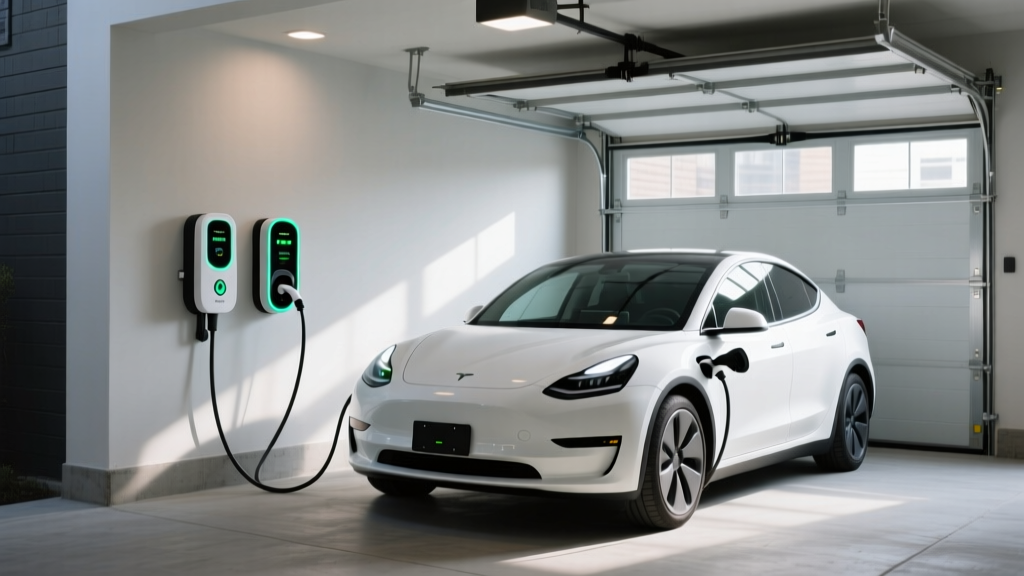
Level 2 requires a 240V circuit — the same voltage your electric dryer uses. A hardwired or NEMA 14-50 outlet-connected Level 2 station delivers up to 10.9 kW to the Ioniq 5's onboard charger, adding roughly 32–36 miles of range per hour. A full charge from near-empty takes about 5.5 hours. This is the standard for daily EV ownership: plug in when you get home, wake up with a full battery.
DC Fast Charging bypasses the onboard AC charger entirely, sending DC current directly to the battery at much higher power. The Ioniq 5's 800V architecture lets it accept up to 175 kW at a 350 kW-capable station (like Electrify America's newest stalls). However, charging speed follows a charge curve — the battery accepts peak power only at lower states of charge. Expect the Ioniq 5 SE Standard Range to peak near 175 kW around 10–30% SoC, then taper progressively. The 10–80% sprint takes roughly 18 minutes under ideal conditions. Above 80%, charging slows dramatically to protect battery health — plan your road-trip stops to charge to 80%, not 100%.
Home Charger Installation: Electrical Requirements and Costs
Installing a Level 2 home charger is the single most impactful upgrade for EV ownership. Here's what the Ioniq 5 SE Standard Range demands and what it will cost you.
Electrical Requirements
To unlock the full 10.9 kW onboard charging rate, you need a 240V circuit rated for at least 50 amps (a 48A continuous charger requires a 60A breaker per the National Electrical Code's 80% rule). Alternatively, a 40A circuit with a 32A charger still delivers ~7.7 kW — roughly 23 miles of range per hour — which is adequate for most daily needs and easier on older electrical panels.
Your home's electrical panel is the first checkpoint. Most modern homes have a 200A main panel with enough spare capacity for a 50A EV circuit. Older homes — especially those built before 1990 with 100A or 150A service — may need a panel upgrade, which is the single largest variable in installation cost.
| Component | Low Estimate | High Estimate | Notes |
|---|---|---|---|
| Level 2 Charger (hardware) | $350 | $700 | 32A–48A, Wi-Fi enabled |
| Electrician labor (standard install) | $500 | $1,500 | Run from panel to garage/carport, ~30–50 ft |
| Permit and inspection | $100 | $400 | Varies by municipality |
| Electrical panel upgrade (if needed) | $1,500 | $4,000 | 100A → 200A service upgrade |
| Total (no panel upgrade) | $950 | $2,600 | Typical for homes with 200A service |
| Total (with panel upgrade) | $2,450 | $6,600 | Older homes with 100A service |
A few critical considerations:
- Dedicated circuit: The EV charger must have its own dedicated breaker — never shared with other appliances.
- GFCI protection: NEC 2020 and later require GFCI protection for 240V receptacles in garages. Hardwired chargers often bypass this requirement and are generally recommended for reliability.
- Outdoor rating: If your parking spot is outside, ensure the charger has a NEMA 4 (weatherproof) rating. Most quality units do.
- Utility rebates: Many utilities offer $250–$1,000 rebates for Level 2 installation, especially if you agree to time-of-use (TOU) rate plans. Check your local utility's EV program before scheduling work.
Do You Need a Panel Upgrade?
Run a quick load calculation: add up your existing major loads (HVAC, electric oven, dryer, water heater) and compare to your panel's rated capacity. If you're already running a 150A panel near capacity with electric appliances, a 50A EV circuit could push you over. A licensed electrician will perform a NEC Article 220 load calculation as part of the permit process. Budget $1,500–$4,000 for a service upgrade if needed — and plan for a 4–8 week lead time in many markets due to utility coordination.
Connector Compatibility: CCS1, NACS, and the Adapter Transition
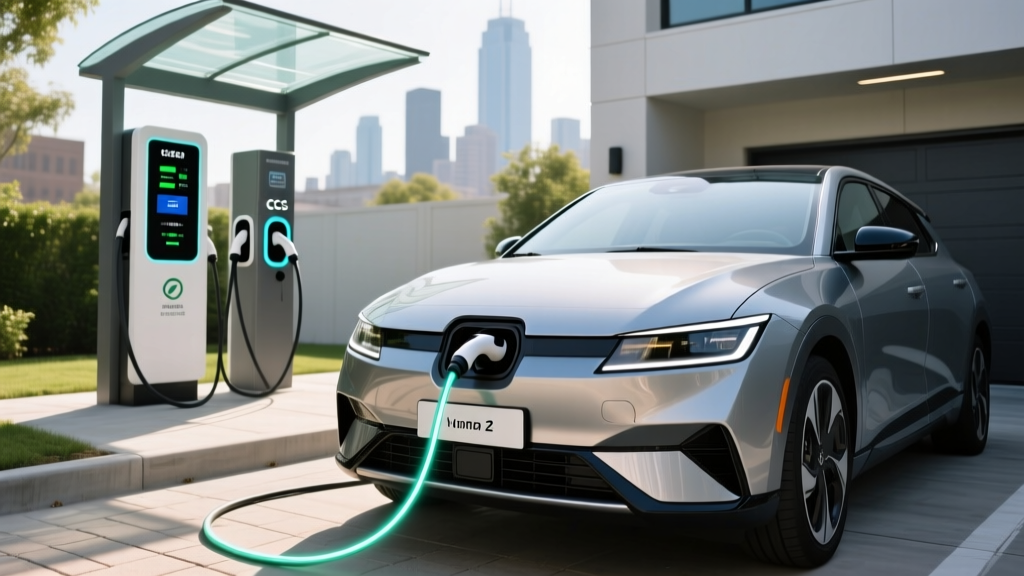
The 2024 Ioniq 5 SE Standard Range ships with a CCS1 (Combined Charging System) port — the standard used by most non-Tesla EVs in North America. CCS1 handles both Level 2 AC charging (via the J1772 upper section) and DC fast charging (via the two DC pins below).
| Connector | Used By | Compatible with Ioniq 5? | Adapter Needed? |
|---|---|---|---|
| CCS1 | Hyundai, Kia, VW, Ford, GM, most others | Yes — native | No |
| NACS (Tesla) | Tesla, Ford (2025+), GM (2025+), Rivian, others | Via adapter | Yes — Hyundai provides or sells CCS1→NACS adapter |
| CHAdeMO | Nissan Leaf (legacy) | No | No practical adapter exists |
The NACS transition matters for Ioniq 5 owners. Hyundai has committed to adopting the North American Charging Standard (NACS) on new vehicles starting with the 2025 model year. For 2024 Ioniq 5 owners, Hyundai offers a CCS1-to-NACS adapter that unlocks access to Tesla's Supercharger network — over 25,000 stalls in North America. As of 2025–2026, the adapter is available through Hyundai dealers and typically costs $0–$200 depending on current incentive programs. This adapter is worth obtaining: it dramatically expands your DC fast charging options, especially in rural areas where Electrify America and EVgo coverage is sparse.
What It Costs to Charge the Ioniq 5 SE Standard Range
The economics of EV ownership hinge on electricity rates, which vary dramatically by location, time of day, and charging venue. The Ioniq 5 SE Standard Range consumes approximately 30 kWh per 100 miles (per the EPA), which gives us a clean baseline for cost calculations.
| Charging Scenario | Rate ($/kWh) | Cost per 100 Miles | Cost per Mile | Equivalent Gas Price (at 28 MPG) |
|---|---|---|---|---|
| Home off-peak (TOU rate) | $0.09 | $2.70 | $0.027 | $0.76/gal |
| Home standard rate | $0.16 | $4.80 | $0.048 | $1.34/gal |
| Public Level 2 (ChargePoint, etc.) | $0.30 | $9.00 | $0.090 | $2.52/gal |
| DC Fast (Electrify America) | $0.48 | $14.40 | $0.144 | $4.03/gal |
| DC Fast (Tesla Supercharger via adapter) | $0.35 | $10.50 | $0.105 | $2.94/gal |
| Gasoline comparison (28 MPG avg) | $3.40/gal | $12.14 | $0.121 | — |
The takeaway is clear: home charging is where EV economics shine. On an off-peak TOU rate of $0.09/kWh, you're fueling the Ioniq 5 for less than 3 cents per mile — the equivalent of buying gas at $0.76 per gallon. Even at a standard residential rate of $0.16/kWh, you're still saving roughly 60% versus gasoline at $3.40/gal.
Public DC fast charging narrows the gap considerably. At $0.48/kWh on Electrify America's standard rate, you're paying more per mile than a fuel-efficient gas car. The strategy: charge at home for daily driving, use DC fast charging only for road trips, and sign up for network membership plans (EA's Pass+ or EVgo's subscription) that lower per-kWh rates by 10–25%.
Recommended Home Level 2 Chargers for the Ioniq 5
The Ioniq 5 SE Standard Range's 10.9 kW onboard charger means you can benefit from a 48A station — but a 32A or 40A unit still delivers strong overnight performance and may be easier on your electrical panel. Here are three proven options:
Emporia Vue Level 2 Charger
- Power output: 48A / 11.5 kW max (240V)
- Connector: J1772 (CCS1 compatible)
- Cable length: 24 ft
- Smart features: Wi-Fi, app scheduling, solar integration, energy monitoring
- Price: ~$399
- Why it fits: Maximizes the Ioniq 5's 10.9 kW onboard charger. Excellent app with real-time kWh tracking. Requires a 60A breaker.
ChargePoint Home Flex
- Power output: Configurable 16A–50A / up to 12 kW (240V)
- Connector: J1772 (CCS1 compatible)
- Cable length: 23 ft
- Smart features: Wi-Fi, Alexa, app scheduling, flexible amperage
- Price: ~$599
- Why it fits: The configurable amperage is the standout — you can set it to 32A on a 40A breaker or 40A on a 50A breaker, matching your panel's capacity without oversizing. Hardwired or NEMA 14-50.
Wallbox Pulsar Plus
- Power output: 40A / 9.6 kW (240V)
- Connector: J1772 (CCS1 compatible)
- Cable length: 25 ft
- Smart features: Wi-Fi + Bluetooth, app control, Power Sharing for dual installations
- Price: ~$449
- Why it fits: Compact, NEMA 4 outdoor-rated, and delivers ~29 mi/hr to the Ioniq 5. Only needs a 50A breaker. Good choice if your panel is tight on capacity.
For all three chargers, hardwired installation is recommended over a NEMA 14-50 plug. Hardwired connections avoid the GFCI breaker requirement that NEC imposes on 240V receptacles in garages, reducing nuisance trips and simplifying the install.
DC Fast Charging on the Road: Networks and Practical Tips
The Ioniq 5 SE Standard Range's 800V architecture makes it one of the fastest-charging vehicles in its class at DC stations — but only if the station can deliver. Here's how the major networks stack up:
- Electrify America: 350 kW stalls unlock the Ioniq 5's full 175 kW peak rate. 10–80% in ~18 minutes. Standard CCS1 connector. Rates: $0.48/kWh (guest) or $0.36/kWh (Pass+ subscription at $4/month).
- Tesla Supercharger (via adapter): V3 Superchargers peak at 250 kW, still more than enough for the Ioniq 5's 175 kW max. Expect 10–80% in ~22 minutes. Rates: $0.28–$0.40/kWh depending on location and time. Requires the Hyundai CCS1-to-NACS adapter.
- EVgo: 350 kW stalls at newer locations. Rates: $0.43/kWh (guest) or $0.33/kWh (subscription). Mixed CCS1 availability.
- ChargePoint: Mostly 62.5–125 kW DC stalls. The Ioniq 5 will charge at the station's max rate. Expect 10–80% in 25–35 minutes at 62.5 kW.
Preconditioning matters. The Ioniq 5 can warm its battery to optimal charging temperature when you navigate to a DC fast charger using the built-in route planner. This is especially critical in cold weather — a cold battery may accept only 50–70 kW instead of the full 175 kW, doubling your charge time. Always enter your charging destination into the car's navigation before arriving.
Safety, Electrical Code, and Best Practices
EV charging involves sustained high-current draw over many hours — more like running a welder than plugging in a phone charger. Follow these non-negotiable safety rules:
- Never use an extension cord for Level 1 or Level 2 charging. The sustained current generates heat that standard cords can't handle.
- Use a dedicated circuit — the charger must be the only load on its breaker.
- Hardwired over plug: A hardwired charger eliminates the receptacle as a failure point and avoids the NEC-mandated GFCI breaker on 240V garage outlets, which can nuisance-trip during long charge sessions.
- Permit and inspect: Every jurisdiction requires a permit for new 240V circuits. The inspection ensures proper wire gauge, breaker sizing, and grounding. Skipping the permit risks insurance denial in the event of a fire.
- Outdoor installations: Ensure the charger is rated NEMA 4 or higher. Use a licensed electrician familiar with outdoor conduit and weatherproof junction boxes.
For the Ioniq 5 specifically, set the charge limit to 80% for daily driving via the car's infotainment system (Settings → EV → Charge Limit). Charging to 100% occasionally for road trips is fine, but sustained 100% storage accelerates NMC battery degradation over time. Hyundai's battery warranty covers 10 years/100,000 miles with a capacity retention threshold — typically 70% of original capacity. For detailed warranty terms, refer to Hyundai's electrified vehicle page.
Frequently Asked Questions
How much does it cost to install a home EV charger for the Ioniq 5?
Expect $950–$2,600 for a standard installation in a home with a 200A electrical panel. This includes the charger hardware ($350–$700), electrician labor ($500–$1,500), and permits ($100–$400). If your home has a 100A panel and needs a service upgrade, add $1,500–$4,000. Utility rebates can offset $250–$1,000 of this cost.
How fast will each charging level add range to the Ioniq 5 SE Standard Range?
Level 1 (120V) adds roughly 4–5 miles per hour. Level 2 (240V, 48A) adds 32–36 miles per hour. DC fast charging at a 350 kW station can add up to 130+ miles in 10 minutes at peak rate, with a full 10–80% session taking approximately 18 minutes.
Which connector and charger is compatible with my 2024 Ioniq 5?
The 2024 Ioniq 5 uses a CCS1 connector natively. Any J1772 Level 2 charger or CCS1 DC fast charger is compatible without adapters. To access Tesla Superchargers, you'll need Hyundai's CCS1-to-NACS adapter. CHAdeMO stations are not compatible.
How much does charging cost per mile vs gas?
At home on a $0.16/kWh standard rate, the Ioniq 5 SE Standard Range costs about $0.048 per mile — roughly 60% less than a 28 MPG gas car at $3.40/gallon ($0.121/mile). On off-peak TOU rates at $0.09/kWh, the cost drops to $0.027/mile. Public DC fast charging at $0.48/kWh costs $0.144/mile, which exceeds the gas-car cost.
What electrical upgrades might I need?
The most common upgrade is a panel service increase from 100A to 200A, needed in older homes that are already near capacity with electric appliances. This costs $1,500–$4,000 and requires utility coordination. You may also need a new conduit run from the panel to the garage (included in the electrician's labor estimate). A licensed electrician will perform a NEC Article 220 load calculation to determine if your panel can handle the additional 40–50A load. For more on electrical safety standards, see NFPA's National Electrical Code resources.
Does the Ioniq 5 SE Standard Range qualify for the federal EV tax credit?
Federal §30D tax credit eligibility depends on current-year IRS rules, including buyer income caps ($150K single / $300K joint), vehicle MSRP limits ($55K for sedans, $80K for SUVs/trucks), and battery mineral sourcing requirements. The 2024 Ioniq 5 SE Standard Range's MSRP falls within the cap, but battery sourcing rules may limit or eliminate the credit depending on the manufacturing batch. Always verify current eligibility on IRS.gov or consult a tax professional. Some buyers may qualify for a point-of-sale transfer of the credit, reducing the purchase price at the dealer.