What Charger Type Does the Hyundai Ioniq 5 Use?
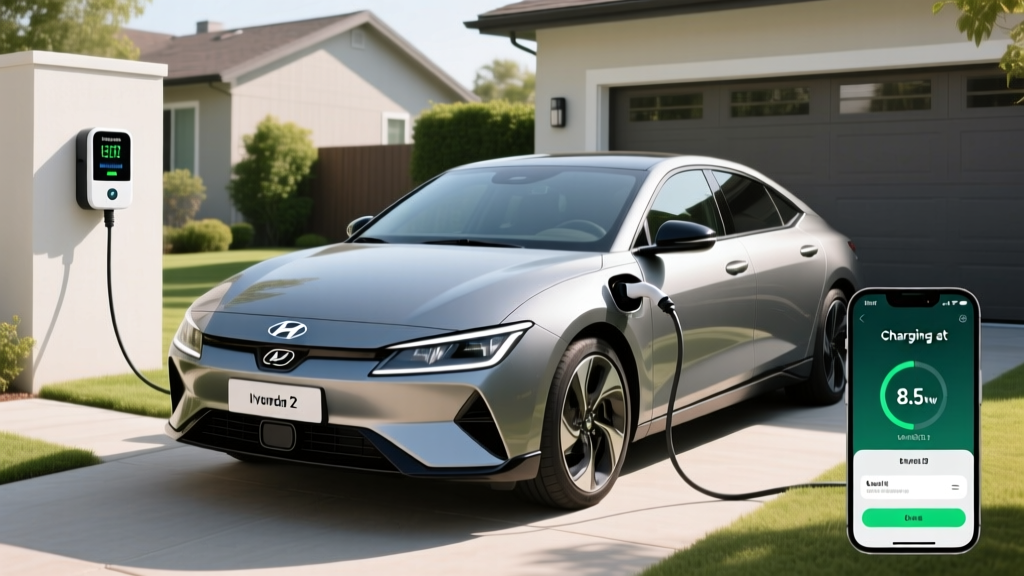
If you own or are shopping for a Hyundai Ioniq 5, one of the first questions you'll face is which plug it takes — and the answer depends on the model year. The 2022–2024 Hyundai Ioniq 5 ships with a CCS1 (Combined Charging System) port for both Level 2 AC and DC fast charging. Starting with the 2025 model year, Hyundai transitioned the Ioniq 5 to the NACS (North American Charging Standard) connector — the same port Tesla uses — granting native access to the Tesla Supercharger network without an adapter.
This matters for three practical reasons: the physical plug you'll handle every day at home, the public networks you can use without adapters, and the equipment you should buy for your garage or driveway. This guide breaks down every charging scenario for the Ioniq 5 — from the standard-range 58 kWh battery to the long-range 77.4 kWh pack (and the 84 kWh battery in the Ioniq 5 N) — with exact speeds, costs, and installation realities.
| Model Year | Built-In Port | Level 2 AC | DC Fast Charge | Tesla Supercharger Access |
|---|---|---|---|---|
| 2022–2024 | CCS1 | J1772 / CCS1 | CCS1 | Requires CCS-to-NACS adapter (provided by Hyundai for eligible owners) |
| 2025–2026 | NACS | NACS native | NACS native | Native — no adapter needed |
Charging Levels Explained: kW, Speed, and What Each Adds
EV charging is measured in kW (kilowatts), which is a rate of power delivery — think of it as the width of the hose filling your battery. Your battery capacity is measured in kWh (kilowatt-hours), which is the total volume of energy it stores. A 77.4 kWh battery charged at 7.2 kW will take roughly 10+ hours from empty to full; at 240 kW DC fast charging, a 10–80% session can finish in under 20 minutes.
| Level | Voltage | Power (kW) | Miles of Range Added/Hour | Best For |
|---|---|---|---|---|
| Level 1 | 120V AC | 1.2–1.4 kW | ~3–5 mi/hr | Overnight top-off, emergency backup |
| Level 2 | 240V AC | 7.2–11.5 kW | ~22–38 mi/hr | Daily home charging, workplace |
| DC Fast Charge | 400V / 800V DC | Up to 240 kW (peak) | ~200+ mi in 18 min (10–80%) | Road trips, rapid top-ups |
The Ioniq 5's onboard charger accepts up to 10.9 kW on Level 2 AC (for the long-range AWD models), meaning a full charge from near-empty takes roughly 7–8 hours on a properly sized 48-amp home charger. The standard-range RWD model with the 58 kWh battery tops out at 7.2 kW AC, so a 32-amp circuit is sufficient.
On DC fast charging, the Ioniq 5's 800V architecture is its standout feature. Where most competitors peak at 150–175 kW, the long-range Ioniq 5 can pull up to 240 kW on a compatible 350 kW charger. In real-world testing, expect a 10–80% session in approximately 18 minutes under ideal conditions (warm battery, low state of charge at arrival). The charge curve tapers significantly above 80% — this is normal and protects battery longevity — so charging to 100% on DC fast adds an extra 20+ minutes for diminishing range gains.
How Much Does Home Charger Installation Cost?
Home Level 2 charging is where most Ioniq 5 owners will do 80–90% of their charging. The total cost to install a dedicated 240V circuit and wall-mounted charger depends on your home's electrical panel, the distance from the panel to the charger location, and local permit fees.
| Component | Low Estimate | High Estimate | Notes |
|---|---|---|---|
| EVSE equipment (Level 2 charger) | $350 | $700 | Smart Wi-Fi chargers from ChargePoint, Emporia, Wallbox |
| Electrician labor (standard install) | $500 | $1,200 | Short run, accessible panel, same wall or garage |
| Electrical permit | $50 | $200 | Varies by municipality |
| Panel upgrade (if needed) | $1,500 | $4,000+ | Required if panel is 100A or lacks spare capacity |
| Total (no panel upgrade) | $900 | $2,100 | Most homes with 200A service |
| Total (with panel upgrade) | $2,400 | $6,300+ | Older homes with 100A or maxed-out panels |
The Ioniq 5 long-range model can accept up to 10.9 kW AC, which requires a 48-amp continuous circuit on a 60-amp breaker with 6 AWG copper wire. If you opt for a 40-amp charger (like the popular ChargePoint Home Flex configured at 40A), a 50-amp breaker with 6 AWG or 8 AWG wire suffices. The standard-range Ioniq 5 needs only a 32-amp circuit (40-amp breaker).
Panel upgrade reality check: Homes built before 2000 often have 100-amp or 150-amp panels that may already be near capacity with HVAC, electric range, and dryer loads. A licensed electrician will perform a load calculation per NEC Article 220 before pulling a permit. If you need a panel upgrade to 200A, budget $2,000–$4,000 and expect 1–3 weeks for utility coordination. Some utilities offer rebates of $250–$500 for panel upgrades tied to EV adoption — check with your local provider.
The federal IRS §30D credit applies to the vehicle purchase, not charger equipment. However, the separate §30C Alternative Fuel Vehicle Refueling Property Credit covers up to 30% of home charging equipment and installation costs (capped at $1,000) — but only if you live in a qualifying census tract. Confirm eligibility with a tax professional before counting on it.
What Electrical Upgrades Might I Need?
Beyond the panel itself, here are the electrical considerations specific to Ioniq 5 home charging:
- Dedicated circuit required: NEC code requires EV chargers to be on a dedicated circuit — you cannot share with a dryer or HVAC. This means a new breaker and a dedicated wire run from the panel.
- GFCI protection: The 2020 and 2023 NEC revisions require GFCI protection for outlets used for EV charging in garages. Hardwired chargers (no plug) typically do not require an external GFCI breaker because the EVSE has built-in ground-fault protection — this can save $80–$150 on a GFCI breaker. Most experienced EV electricians recommend hardwiring for this reason.
- Outdoor rating: If your charger is mounted outdoors, ensure the EVSE is NEMA 4 rated (weatherproof). The ChargePoint Home Flex and Emporia Vue are both rated for indoor/outdoor use. The cable and connector should also be rated for UV exposure and temperature extremes.
- Conduit and wire gauge: For a 60-amp breaker (48A continuous), you need 6 AWG copper THHN in conduit, or 4 AWG aluminum. Runs over 50 feet may require upsizing to compensate for voltage drop — your electrician will calculate this.
- Smart vs. dumb charger: Smart chargers with Wi-Fi let you schedule charging during off-peak utility hours, monitor energy use, and integrate with solar. They cost $100–$200 more but often pay for themselves through time-of-use savings.
Cost to Charge an Ioniq 5: Home vs. Public vs. Gas
The Ioniq 5 long-range AWD has an EPA-rated efficiency of approximately 101 MPGe combined (about 33 kWh/100 miles), per fueleconomy.gov. That means charging costs depend heavily on where and when you plug in.
| Charging Scenario | $/kWh | Cost per 100 Miles | Cost per Mile |
|---|---|---|---|
| Home off-peak (utility TOU rate) | $0.08–$0.12 | $2.64–$3.96 | $0.03–$0.04 |
| Home standard residential rate | $0.14–$0.18 | $4.62–$5.94 | $0.05–$0.06 |
| Public Level 2 (ChargePoint, EVgo) | $0.25–$0.40 | $8.25–$13.20 | $0.08–$0.13 |
| DC fast charge (Electrify America, EVgo) | $0.35–$0.55 | $11.55–$18.15 | $0.12–$0.18 |
| Tesla Supercharger (2025+ NACS Ioniq 5) | $0.25–$0.40 | $8.25–$13.20 | $0.08–$0.13 |
| Comparable gas SUV at $3.50/gal, 25 MPG | — | $14.00 | $0.14 |
At home on an off-peak rate, the Ioniq 5 costs roughly 3–4 cents per mile — less than a quarter of what a 25 MPG gas SUV spends at $3.50/gallon. Even on DC fast chargers at highway rest stops, you're generally paying less per mile than gasoline. The key is maximizing home charging; relying exclusively on public DC fast chargers erodes the cost advantage and accelerates battery wear from repeated high-power sessions.
Best Home Chargers for the Hyundai Ioniq 5
Here are three chargers that pair well with the Ioniq 5's charging capabilities, with specifics on power output, connector, and features:
ChargePoint Home Flex (NACS or J1772)
- Power output: Up to 12 kW (50A) on a 60-amp breaker, configurable down to 16A
- Connector: Available in NACS (for 2025+ Ioniq 5) or J1772 (for 2022–2024 CCS1 models via adapter)
- Cable length: 23 feet
- Smart features: Wi-Fi scheduling, energy tracking, Alexa/Google Home integration, utility demand-response programs
- Price: ~$550–$650
- Why it fits: Flexible amperage lets you match your circuit capacity. UL-listed, NEMA 4 outdoor-rated.
Emporia Vue Level 2 Charger
- Power output: Up to 11.5 kW (48A) on a 60-amp breaker
- Connector: J1772 standard; NACS version available
- Cable length: 24 feet
- Smart features: Integrates with Emporia home energy monitor, solar-aware charging, TOU scheduling
- Price: ~$399–$449
- Why it fits: Best value for a smart charger. Ideal if you have or plan to install Emporia's whole-home energy monitor.
Wallbox Pulsar Plus (J1772)
- Power output: Up to 11.5 kW (48A) on a 60-amp breaker
- Connector: J1772 (use Hyundai-provided adapter for CCS1 models)
- Cable length: 25 feet
- Smart features: Wi-Fi, Bluetooth, load balancing with Power Meter accessory, compact form factor
- Price: ~$499–$599
- Why it fits: One of the smallest wall-mounted units available. Load-balancing feature is useful if your panel is near capacity.
For 2022–2024 Ioniq 5 owners with CCS1 ports: if you purchase a J1772 charger, you'll use the J1772-to-CCS adapter that came with the car (or purchase one for ~$50–$100). For 2025–2026 NACS models, buying a native NACS charger eliminates adapters entirely and future-proofs your setup as the industry standardizes on NACS.
Public Charging Networks and the Ioniq 5
The Ioniq 5's 800V battery architecture means it can accept DC fast charging at rates that most competitors cannot match. But you need to find chargers that can actually deliver that power — a 50 kW CHAdeMO station or a 150 kW Electrify America stall will not unlock the Ioniq 5's full charging potential.
For 2022–2024 CCS1 models: Electrify America, EVgo, and ChargePoint DC fast stations use CCS1 natively. Hyundai has offered eligible owners a complimentary adapter for Tesla Supercharger access — check with your dealer for current availability. On a 350 kW Electrify America stall, expect peak rates of 220–240 kW.
For 2025–2026 NACS models: You gain native access to the Tesla Supercharger network — over 30,000 stalls in North America — without an adapter. This is a significant practical advantage for road trips, as Supercharger reliability and uptime consistently outperform other networks. Electrify America and EVgo are also rolling out NACS connectors at new and retrofitted stations.
Charging time examples for common scenarios:
- 10–80% on a 350 kW DC fast charger: ~18 minutes (long-range 77.4 kWh battery, warm conditions)
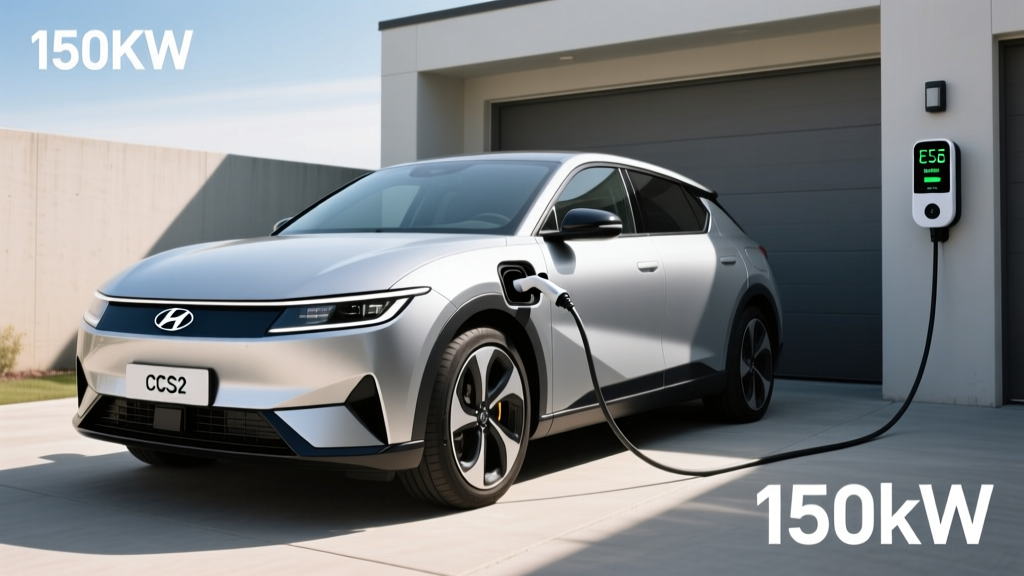
- 10–80% on a 150 kW DC fast charger: ~25–28 minutes (sustained rate limited by charger, not the car)
- 10–80% on a 50 kW DC fast charger: ~60–70 minutes (not recommended — avoid these if faster options exist)
- 0–100% on Level 2 at 10.9 kW: ~7.5 hours (long-range battery, full charge overnight)
- 0–100% on Level 1 at 1.4 kW: ~55+ hours (emergency/trickle only — not practical for daily use)
Charging the Ioniq 5 in Cold Weather
Battery chemistry is temperature-sensitive, and the Ioniq 5's lithium-ion pack is no exception. In temperatures below 32°F (0°C), expect two effects:
- Range reduction: The EPA-rated 266 miles (long-range AWD, 2025) may drop to 190–220 miles in sustained sub-freezing driving due to cabin heating demands and increased battery resistance. The Ioniq 5's standard heat pump (on most trims) mitigates this better than resistive heating, but 20–30% range loss in cold weather is realistic.
- Charging speed reduction: A cold battery cannot accept peak charge rates. If you arrive at a DC fast charger without preconditioning, the Ioniq 5 may initially charge at 50–80 kW until the battery warms. Use the car's navigation to route to a charger — this triggers battery preconditioning, warming the pack for faster charging upon arrival.
For cold-climate owners, a Level 2 home charger is even more essential: you can precondition the cabin and battery while plugged in, drawing power from the grid rather than the battery. This preserves range and ensures full charging speed at public stations.
Frequently Asked Questions
Can I charge a 2022–2024 Ioniq 5 at a Tesla Supercharger?
Yes, but you'll need a CCS1-to-NACS adapter. Hyundai has offered these adapters to eligible Ioniq 5 owners — contact your dealer to check availability. Starting with the 2025 model year, the Ioniq 5 has a native NACS port and requires no adapter.
How fast will a Level 2 charger add range to my Ioniq 5?
At 10.9 kW (the maximum for long-range AWD models), you'll add roughly 35–38 miles of range per hour. For the standard-range RWD at 7.2 kW, expect about 22–25 miles per hour. A full overnight charge (8 hours) at 10.9 kW adds approximately 280+ miles — more than the car's full EPA range.
Do I need a 48-amp or 32-amp home charger?
If you have the long-range Ioniq 5 (77.4 kWh battery), a 48-amp charger on a 60-amp circuit maximizes your onboard charger's 10.9 kW capability. If you have the standard-range (58 kWh), a 32-amp charger on a 40-amp circuit is sufficient and cheaper to install. In either case, have your electrician verify panel capacity before choosing.
Is it safe to charge the Ioniq 5 in the rain?
Yes. EV charging connectors and EVSE equipment are designed and rated for outdoor use in all weather conditions. Ensure your charger is NEMA 4 rated for outdoor installation and that the connector holster keeps the plug protected when not in use. Never use an extension cord with an EV charger.
What is the Ioniq 5's battery warranty?
Hyundai covers the Ioniq 5's high-voltage battery for 10 years or 100,000 miles (whichever comes first) against defects and capacity loss below 70% of original capacity. This is one of the longest EV battery warranties in the industry, per Hyundai's official specifications.
How much does it cost to charge an Ioniq 5 at home per month?
If you drive 1,000 miles per month and charge exclusively at home on a $0.12/kWh off-peak rate, you'd use approximately 330 kWh at a cost of about $39.60/month. Compare that to $140/month in gasoline for a 25 MPG SUV at $3.50/gallon. Over a year, home charging saves roughly $1,200.