What "Ionic Charging" Actually Means for Your EV
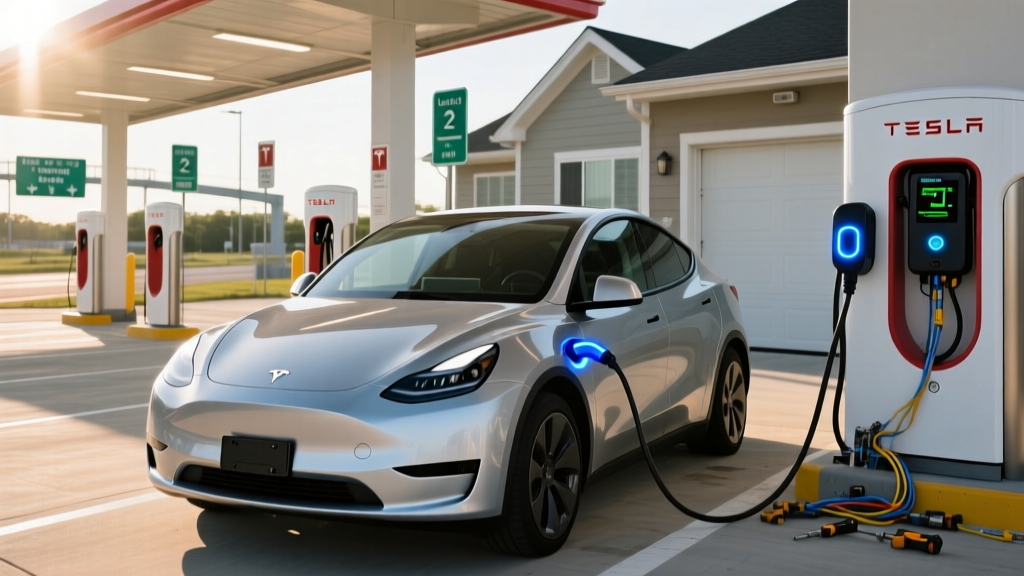
If you've searched for "ionic charging" while researching how to power an electric vehicle, you're not alone — the term pops up in forums, YouTube thumbnails, and even some charger marketing. In electrochemistry, charging a lithium-ion battery is literally an ionic process: lithium ions shuttle through the electrolyte from the cathode to the anode during charging, and back again during discharge. So every time you plug in a Tesla, Hyundai, Ford, or Rivian, you're relying on ionic movement inside the cells.
For buyers and owners, though, the practical question is never the chemistry — it's how fast, how much, and what do I need at home? This guide translates the physics into the numbers that actually matter: kilowatts (kW, the rate of power delivery), kilowatt-hours (kWh, the energy stored), dollars per mile, and the real cost of getting a Level 2 charger wired into your garage.
kW is power (how fast energy flows, like water pressure). kWh is energy (how much the battery holds, like gallons in a tank). A 19.2 kW Level 2 charger delivers 19.2 kWh of energy in one hour. Confusing the two is the #1 source of bad EV advice online.
The Three EV Charging Levels, With Real Speeds
Every EV sold in the U.S. supports three charging tiers. The table below uses 2026 production vehicles and EPA efficiency data from fueleconomy.gov.
| Level | Voltage / Current | Power (kW) | Miles of Range Added per Hour | Typical Use Case |
|---|---|---|---|---|
| Level 1 | 120V / 12A | ~1.4 kW | 3–5 mi/hr | Overnight top-up, PHEVs, emergencies |
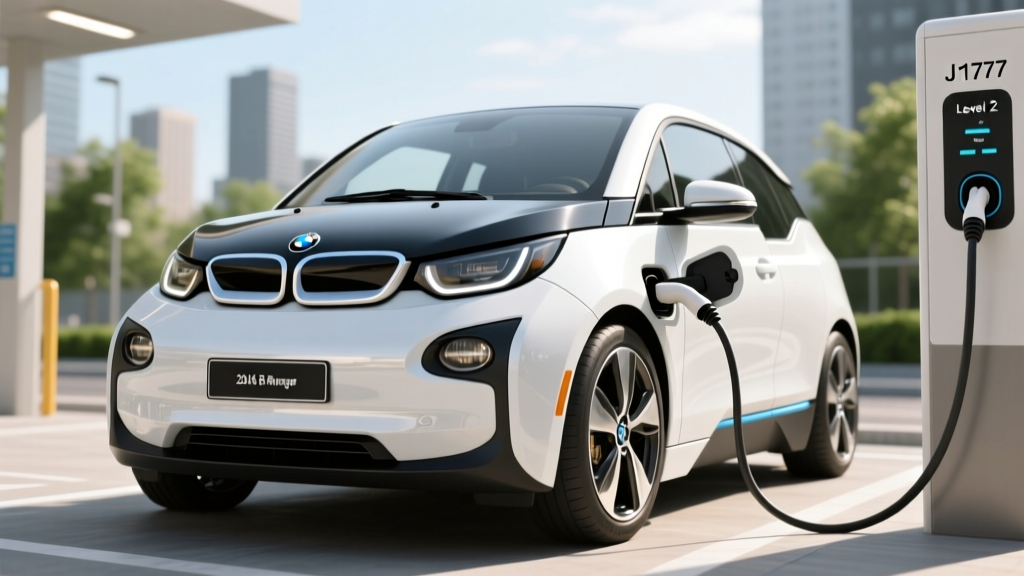
| Level 2 | 240V / 32–48A | 7.7–11.5 kW | 22–44 mi/hr | Home daily charging, workplaces, hotels |
| DC Fast | 400–800V DC | 50–350 kW | 150–1,200+ mi/hr (peak) | Road trips, highway corridors |
A few nuances the spec sheets bury:
- Charge curve taper is real. A Hyundai Ioniq 5 may peak at 240 kW at 10% state of charge (SoC) but will taper to ~100 kW by 60% and ~50 kW by 80%. That's why manufacturers quote 10–80% time, not 0–100%.
- Level 2 at home is the sweet spot. Most owners do 80–90% of their charging on a 240V circuit overnight, waking up to a full battery every morning.
- 800V architectures (Ioniq 5/6, Kia EV6/EV9, Porsche Taycan, Lucid Air, Ram 1500 REV) accept higher DC power and sustain it longer than 400V packs.
Charging Time Examples for Common 2026 Battery Sizes
Battery chemistry and usable capacity dictate how long you're plugged in. Here are realistic 10–80% times using typical peak/sustained DC curves and a 48A Level 2 home charger.
| Vehicle (2026 MY) | Usable Battery (kWh) | Chemistry | Peak DC kW | 10–80% DC Time | 0–100% Level 2 (48A / 11.5 kW) |
|---|---|---|---|---|---|
| Tesla Model Y Long Range | 75 | NMC | 250 | ~25 min | ~7.5 hr |
| Hyundai Ioniq 5 AWD | 84 | NMC | 240 | ~18 min | ~8.5 hr |
| Ford F-150 Lightning Ext. Range | 131 | NMC | 150 | ~41 min | ~13 hr |
| Tesla Model 3 RWD | 57.5 | LFP | 170 | ~28 min | ~6 hr |
| Chevrolet Equinox EV 3RS | 85 | NMC | 190 | ~28 min | ~8.5 hr |
Note on LFP batteries (Tesla Model 3 RWD, some Model Y Standard Range): Lithium iron phosphate cells tolerate frequent 100% charges better than NMC and Tesla recommends periodic full charges for accurate BMS calibration. NMC owners should stick to an 80% daily limit for longevity.
How Much Does It Cost to Install a Home EV Charger?
This is where real-world variance is huge. A simple plug-in install on an existing 240V outlet can run under $500; a panel upgrade plus a 60-foot conduit run can exceed $3,000. The breakdown below reflects 2026 national averages from licensed electricians.
| Line Item | Simple Install | Typical Install | Complex Install (Panel Upgrade) |
|---|---|---|---|
| Level 2 charger hardware | $400–$650 | $400–$650 | $400–$650 |
| Electrician labor (2–6 hrs @ $90–$150/hr) | $180–$300 | $400–$900 | $900–$1,500 |
| New 240V/50A circuit, wiring, conduit | $0–$150 (existing outlet) | $300–$800 | $500–$1,200 |
| Electrical permit | $50–$150 | $50–$150 | $100–$250 |
| Panel upgrade (100A → 200A), if needed | — | — | $1,500–$3,500 |
| Total | $630–$1,250 | $1,150–$2,500 | $3,400–$7,100 |
Panel-upgrade gotcha: Homes built before 1990 often have 100-amp service. Adding a 48A continuous-load EV circuit (which code requires sizing at 60A) can push the panel past its safe capacity. Budget a $1,500–$3,500 upgrade if your electrician flags this during the load calculation. Some utilities offer rebates of $300–$1,000 for panel upgrades tied to EV adoption — check with your provider.
Electrical Requirements You Must Know
- Circuit sizing: NEC Article 625 treats EV charging as a continuous load. A 48A charger needs a 60A breaker (125% rule).
- Dedicated circuit: Never share the EV circuit with other major appliances.
- GFCI protection: 2020 and 2023 NEC revisions require GFCI on 240V receptacles used for EV charging in garages; hardwired chargers often exempt you from this requirement and are generally more reliable.
- Outdoor rating: If the charger mounts outside, insist on NEMA 4-rated enclosure and a UL-listed unit.
- Smart vs dumb charger: Smart chargers (Wi-Fi, app-based scheduling) let you exploit off-peak utility rates — a $0.08/kWh overnight tariff vs $0.28/kWh peak can save $400+/year.
Connector Compatibility: NACS, CCS1, CHAdeMO & Adapters
The North American connector landscape consolidated dramatically between 2023 and 2026. Here's where things stand.
| Connector | Brands Using It (2026 MY) | Public Network Availability |
|---|---|---|
| NACS (Tesla / SAE J3400) | Tesla, Ford, GM, Rivian, Volvo, Polestar, Mercedes, Fisker, Hyundai/Kia (new platforms) | Tesla Supercharger (open to all via Magic Dock or native), Electrify America, EVgo expanding |
| CCS1 | VW, BMW, legacy Hyundai/Kia, Stellantis, Honda, Nissan Ariana | Electrify America, EVgo, ChargePoint, Tesla Supercharger (via NACS→CCS adapter) |
| CHAdeMO | Nissan Leaf (legacy only — discontinued after 2025 MY) | Shrinking; few new installations |
Adapter reality check: Ford, GM, and Rivian owners with NACS ports need a NACS→CCS adapter (often included by the OEM, ~$200 aftermarket) to access Electrify America's CCS-only stalls. Tesla owners visiting CCS-only networks need a Tesla→CCS adapter (~$250). Confirm your vehicle's native port before buying aftermarket chargers.
Cost to Charge per Mile vs Gas (2026 Numbers)
Electricity rates vary wildly by state, utility, and time of day. The table below uses a 3.0 mi/kWh EV (typical midsize crossover like the Ioniq 5 or Model Y) vs a 28 MPG gas crossover at $3.40/gal national average.
| Scenario | Rate | Cost per Mile (EV) | Cost per Mile (28 MPG Gas) | Annual Savings @ 12,000 mi |
|---|---|---|---|---|
| Home off-peak (utility overnight) | $0.09/kWh | $0.030 | $0.121 | $1,092 |
| Home blended (avg residential) | $0.17/kWh | $0.057 | $0.121 | $768 |
| Public Level 2 (ChargePoint, etc.) | $0.32/kWh | $0.107 | $0.121 | $168 |
| DC fast (Electrify America, peak) | $0.52/kWh | $0.173 | $0.121 | −$624 (EV costs more) |
The takeaway is blunt: home charging is where EV economics win. DC fast charging as your primary fuel source can actually cost more than gasoline. Plan road-trip DC stops around networks with membership pricing (EA Pass, EVgo Plus) and precondition the battery for the fastest charge curve.
2026 Home Charger Equipment Picks
These are the units we'd actually install on our own homes based on power output, cable length, smart features, NACS/CCS availability, and UL certification.
ChargePoint Home Flex (NACS or CCS)
- Power: Up to 11.5 kW (48A) on a 60A circuit; adjustable down to 16A for smaller circuits
- Cable: 23 ft
- Smart features: Wi-Fi, app scheduling, Alexa, utility demand-response integration
- Price: ~$599 (hardware only)
- Best for: Most homeowners; flexible amperage accommodates older panels
Tesla Wall Connector (NACS native)
- Power: Up to 11.5 kW (48A); 800V-capable
- Cable: 24 ft
- Smart features: Wi-Fi, OTA updates, Power-Share between two units on one circuit
- Price: ~$475
- Best for: Tesla and NACS-native Ford/GM/Rivian owners; cleanest integration with Tesla app
Emporia Vue Level 2 Charger
- Power: Up to 11.5 kW (48A)
- Cable: 24 ft
- Smart features: Tight integration with Emporia home energy monitor, solar-aware scheduling
- Price: ~$399
- Best for: Solar-home owners; budget-conscious buyers who still want smart scheduling
Grizzl-E Smart (CCS1 or NACS)
- Power: Up to 9.6 kW (40A)
- Cable: 24 ft
- Smart features: OCPP-compatible, works with many utility apps
- Price: ~$449
- Best for: Cold-climate and outdoor installs (−40°F rated, NEMA 4)
Safety, Code & Permit Considerations
Skipping the permit is tempting but risky: unpermitted EV charger installs can void homeowner's insurance coverage if a fire is traced back to the circuit. Per the National Electrical Code (NEC) and most local AHJs (Authorities Having Jurisdiction):
- Pull an electrical permit — usually $50–$250, and it triggers an inspection that protects you.
- Hardwired chargers eliminate the GFCI nuisance-trip issue that plagues some 240V receptacles.
- Use copper wire (THHN in conduit or NM-B where permitted) sized to the breaker, not the charger nameplate.
- Outdoor mounts need a weatherproof enclosure and a drip loop on the cable entry.
- Never use an extension cord or adapter to step a NEMA 14-50 outlet down from a dryer circuit — dedicated circuit only.
Frequently Asked Questions
Is "ionic charging" a real type of EV charger I can buy?
No — "ionic" describes the lithium-ion chemistry inside your EV's battery pack, not a proprietary charger standard. Any UL-listed Level 2 or DC fast charger will move ions into your cells correctly. Ignore marketing that uses the term as if it were a special technology.
How fast will each charging level add range?
Level 1 adds 3–5 miles per hour, Level 2 adds 22–44 miles per hour depending on amperage, and DC fast charging adds 150–1,200+ miles per hour at peak — though peak rates only sustain for a portion of the session before tapering.
Which connector/charger is compatible with my EV?
Check your vehicle's charge port: 2026 Tesla, Ford, GM, Rivian, Volvo, and Polestar vehicles use NACS (J3400). Most VW, BMW, and legacy Hyundai/Kia use CCS1. Nissan Leaf (discontinued after 2025) used CHAdeMO. Match your home charger's connector to your car's native port to avoid adapter hassle.
How much does charging cost per mile vs gas?
At a typical home blended rate of $0.17/kWh and 3.0 mi/kWh efficiency, an EV costs ~$0.057/mile — roughly half the $0.121/mile of a 28 MPG gas crossover at $3.40/gallon. DC fast charging at $0.52/kWh flips the math and costs more than gas.
What electrical upgrades might I need?
Pre-1990 homes with 100A service often need a $1,500–$3,500 panel upgrade to 200A. You'll also need a dedicated 60A breaker for a 48A charger, proper-gauge copper wiring, and a permit. Your electrician's load calculation determines whether your existing panel has headroom.
Does the federal tax credit apply to home charger installation?
The IRS §30D credit applies to new EV purchases, not charger hardware. However, the separate §30C Alternative Fuel Vehicle Refueling Property Credit can cover up to 30% of home charger hardware + installation (capped at $1,000), but only if you live in a qualifying census tract and meet prevailing-wage requirements. Check the current rules at irs.gov and consult a tax professional — eligibility varies by address and year.
Bottom Line: Plan Around Home Charging First
The "ionic" magic of EV ownership only delivers its promised economics when you charge at home on a Level 2 circuit. Budget $1,150–$2,500 for a typical install, confirm your connector (NACS vs CCS1), pick a UL-listed smart charger sized to your circuit, and pull the permit. Do that once, and you'll spend the next decade paying $0.03–$0.06 per mile while your gas-driving neighbors pay double.