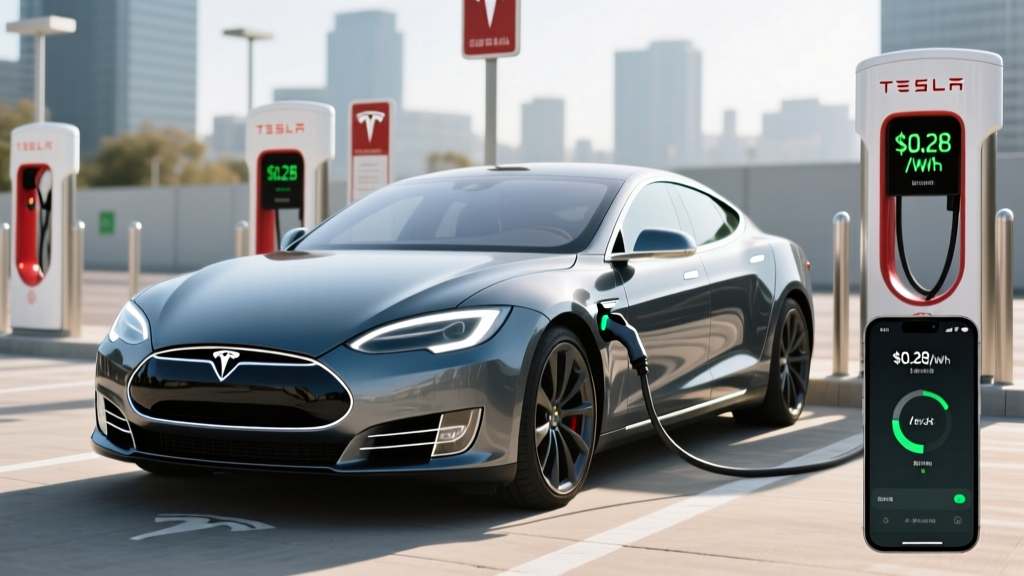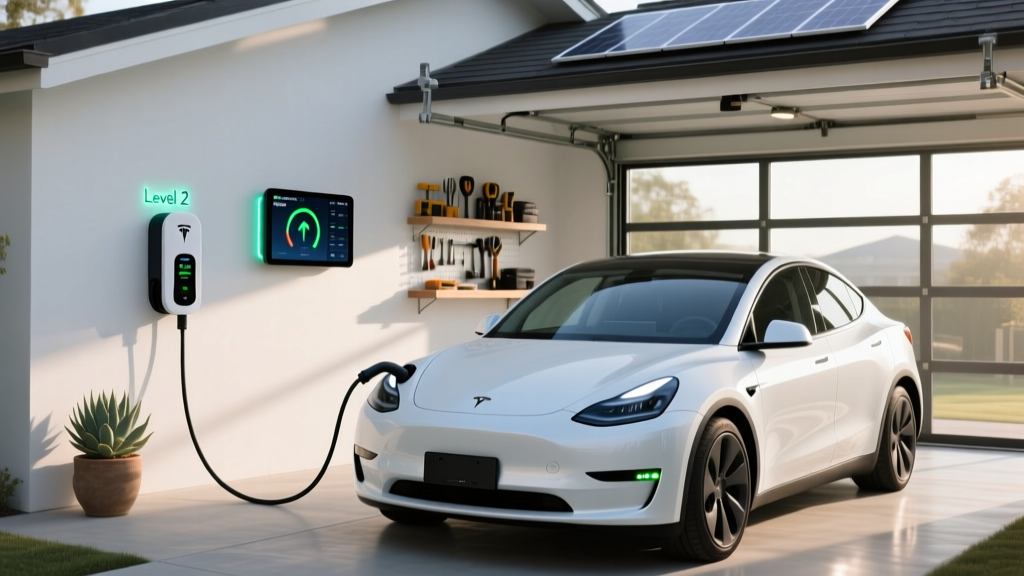
Home charging remains the single biggest quality-of-life upgrade an EV owner can make. While public DC fast-charging networks continue to expand, the math and convenience overwhelmingly favor charging where you park overnight. If you've been weighing whether to invest in EV charging stations for your garage or driveway, this guide gives you the exact numbers — from electrical requirements and installation costs to equipment picks and per-mile fuel savings — so you can decide with confidence.
Understanding EV Charging Levels: Speeds That Actually Matter
Before selecting equipment, you need to understand the three charging tiers available to EV owners. The critical distinction: kW (kilowatts) measures power — how fast energy flows into your car. kWh (kilowatt-hours) measures energy — the total capacity of your battery. Think of kW as the flow rate of a hose, and kWh as the size of the bucket.
| Level | Voltage | Power (kW) | Miles of Range per Hour | Typical Use Case |
|---|---|---|---|---|
| Level 1 | 120V AC | 1.0–1.4 kW | 3–5 mi/hr | Overnight trickle; PHEV topping off |
| Level 2 | 240V AC | 7.2–19.2 kW | 20–60 mi/hr | Daily home and workplace charging |
| DC Fast Charge (Level 3) | 400–800V DC | 50–350 kW | 150–800+ mi/hr (peak) | Road trips and highway corridors |
Real-world charging time examples: A 75 kWh battery (like the Tesla Model Y Long Range) charging from 10% to 80% on a 48-amp (11.5 kW) Level 2 home station takes roughly 4.5 hours. That same 10–80% session on a 150 kW DC fast charger takes approximately 22–28 minutes, though sustained speeds taper significantly above 80% State of Charge as the battery management system protects cell health. A 320-mile EPA-rated SUV losing range to cold weather and highway speeds may realistically deliver 240–270 miles before needing a charge — plan accordingly.
How Much Does It Cost to Install a Home EV Charger?
The total cost to invest in a home Level 2 EV charging station spans a wide range depending on your electrical panel's capacity, the distance from your panel to the charging location, and local permitting requirements. Here's a realistic breakdown based on 2026 national averages:
| Component | Simple Install (Panel Near Garage) | Complex Install (Long Run or Panel Upgrade) |
|---|---|---|
| Level 2 charging equipment (hardwired or plug-in) | $350–$700 | $350–$700 |
| Electrician labor (licensed) | $300–$800 | $1,000–$2,500 |
| Electrical permit | $50–$150 | $50–$200 |
| Electrical panel upgrade (100A → 200A, if needed) | $0 | $1,500–$3,500 |
| Conduit, wiring, and misc. materials | $100–$300 | $300–$800 |
| Total estimated cost | $800–$1,950 | $3,200–$7,700 |
Panel upgrade reality check: Homes built before 2000 frequently have 100-amp service panels. Adding a 48-amp continuous-load EV circuit (requiring a 60-amp breaker per NEC 80% rule) may max out your panel. A licensed electrician will perform a load calculation to determine if an upgrade to 200 amps is necessary. This is the single biggest variable in installation cost and is non-negotiable for safety.
Electrical Requirements: What Your Home Needs
A proper Level 2 installation requires a dedicated 240-volt circuit. The most common configurations:
- 32-amp circuit (7.7 kW): Requires a 40-amp breaker. Adequate for most daily driving needs (adds ~25 miles of range per hour of charging).
- 48-amp circuit (11.5 kW): Requires a 60-amp breaker. Ideal for larger-battery EVs (90+ kWh) and faster overnight replenishment.
- 80-amp circuit (19.2 kW): Requires a 100-amp breaker. Maximum residential Level 2 speed; requires robust panel capacity and heavier-gauge wiring.
Safety and Code Considerations
The National Electrical Code (NEC) mandates specific protections for EV charging circuits:
- Dedicated circuit: Your EV charger cannot share a circuit with other appliances. This prevents overloads and breaker trips.
- GFCI protection: NEC 2020 and later requires Ground Fault Circuit Interrupter protection for outdoor receptacles used for EV charging. Hardwired units may have built-in GFCI; plug-in units on a NEMA 14-50 outlet must have GFCI at the breaker.
- Outdoor rating: If your charger is mounted outside, both the unit and any receptacle must carry a NEMA 4 (weatherproof) rating.
- Wire gauge: A 60-amp circuit typically requires 6 AWG copper wire for runs under 50 feet; longer runs may need 4 AWG to minimize voltage drop. Your electrician will spec this precisely.
Always hire a licensed electrician familiar with EV installations. The National Electrical Code Article 625 governs EV charging equipment specifically, and local jurisdictions may have additional requirements.
Connector Compatibility: NACS, CCS, and CHAdeMO in 2026
The connector landscape has shifted dramatically. Tesla's North American Charging Standard (NACS) has become the dominant connector for new EVs sold in the US, with most legacy automakers transitioning from CCS1 starting with 2025 model-year vehicles. Here's where things stand:
| Connector | Brands Using It (Level 2 AC / DC Fast) | Adapter Needed? |
|---|---|---|
| NACS (Tesla standard) | Tesla (all), Ford, GM, Rivian, Hyundai, Kia, BMW, Mercedes-Benz, Volvo, Polestar | CCS→NACS adapter for older CCS vehicles accessing Superchargers |
| CCS1 (Combined Charging System) | Volkswagen, some Stellantis models, pre-2025 legacy EVs | NACS→CCS adapter if charging at Tesla Superchargers |
| CHAdeMO | Nissan Leaf (legacy); effectively discontinued on new US models | Increasingly limited public infrastructure |
| J1772 (AC only) | All non-Tesla EVs for Level 1/2 AC charging (pre-2025) | Tesla Mobile Connector includes J1772 adapter; NACS vehicles use built-in or supplied adapter |
Practical advice: If you're buying a new EV in 2026, it almost certainly uses NACS for both AC Level 2 and DC fast charging. Purchase a home charger with a native NACS connector. If you own a pre-2025 EV with a CCS1 or J1772 port, select a charger with the matching connector or use the manufacturer-supplied adapter. Tesla Wall Connectors now include adapters for J1772-equipped vehicles.
Level 2 Home Charger Picks: What to Buy in 2026
Not all Level 2 chargers are created equal. Here are proven, widely available units with the specs that matter:
Tesla Wall Connector (Gen 4)
- Power output: Up to 11.5 kW (48 amps)
- Connector: Native NACS; J1772 adapter included
- Cable length: 24 feet
- Smart features: Wi-Fi, OTA updates, power sharing between multiple units, Tesla app scheduling
- Outdoor rating: NEMA 4 (indoor/outdoor)
- Price: ~$475
Best for: Tesla owners and NACS-equipped EVs. Excellent build quality and reliable connectivity.
ChargePoint Home Flex
- Power output: Up to 12 kW (50 amps), configurable down to 16A
- Connector: J1772 (NACS adapter available) or native NACS version
- Cable length: 23 feet
- Smart features: Wi-Fi, Alexa integration, ChargePoint app with energy tracking, flexible amperage settings
- Outdoor rating: NEMA 4
- Price: ~$550–$650
Best for: Non-Tesla EV owners who want app-based scheduling and energy monitoring. The adjustable amperage is ideal if your panel capacity is limited.
Emporia Level 2 Smart Charger
- Power output: Up to 11.5 kW (48 amps)
- Connector: J1772 (NACS adapter sold separately)
- Cable length: 24 feet
- Smart features: Wi-Fi, integration with Emporia energy monitor for whole-home solar/load tracking, time-of-use scheduling
- Outdoor rating: NEMA 4
- Price: ~$399
Best for: Budget-conscious buyers with solar panels or those who want detailed energy-cost tracking.
Cost to Charge: Home vs. Public vs. Gas — The Per-Mile Math
The economic case for home charging is compelling when you compare real per-mile costs. Electricity rates vary by region, but here are representative 2026 scenarios for an EV averaging 3.5 miles per kWh (approximately 28.6 kWh/100 mi, typical of a mid-size electric SUV):
| Scenario | Rate / Price | Cost per Mile |
|---|---|---|
| Home charging (off-peak utility rate) | $0.09/kWh | $0.026 |
| Home charging (standard residential rate) | $0.16/kWh | $0.046 |
| Public Level 2 (networked station) | $0.25–$0.40/kWh | $0.071–$0.114 |
| DC Fast Charging (Electrify America, Tesla Supercharger) | $0.32–$0.55/kWh | $0.091–$0.157 |
| Gasoline vehicle (28 MPG combined, $3.30/gal) | $3.30/gallon | $0.118 |
The takeaway: Charging at home on an off-peak rate costs roughly 2.6 cents per mile — about 78% less than fueling a comparable gasoline vehicle. Even at standard residential rates, home charging undercuts gas by 60%. However, relying exclusively on DC fast charging at public stations erases most of the cost advantage, and in some regions, can actually exceed gasoline per-mile costs. This is why investing in a home charger is the single most impactful financial decision an EV owner can make.
For a driver covering 12,000 miles per year, home off-peak charging saves approximately $1,100–$1,300 annually compared to gasoline at $3.30/gallon. The installation cost of a basic Level 2 setup ($800–$1,950) pays for itself within 1–2 years of ownership.
What Electrical Upgrades Might Your Home Need?
Before committing to a charger purchase, have an electrician assess these factors:
- Service panel amperage: A 200-amp panel can typically accommodate a 60-amp EV breaker without issue. A 100-amp panel likely cannot, especially if you run central air, an electric dryer, and an electric range simultaneously. Panel upgrades cost $1,500–$3,500 but add long-term home value.
- Panel location vs. charging location: Every foot of conduit and wire adds cost. A charger mounted on the garage wall directly behind the panel may cost $300 in labor; one routed 80 feet through a finished basement and out to a detached carport could exceed $2,000 in labor alone.
- Utility service capacity: In rare cases, your utility's service drop to the home may need upgrading. Contact your utility early — some offer free or subsidized panel upgrades for EV adopters.
- Time-of-use (TOU) rate enrollment: Many utilities offer off-peak electricity rates (often $0.06–$0.10/kWh overnight). Enrolling in a TOU plan and scheduling your charger to run between midnight and 6 AM maximizes savings and reduces grid strain.
Federal and Local Incentives for Home Charging
The IRS §30C Alternative Fuel Vehicle Refueling Property Credit covers 30% of the cost of home EV charging equipment and installation, up to a maximum of $1,000. Key eligibility details per IRS guidelines:
- Covers both equipment and installation labor
- The property must be placed in service at your primary residence
- Must be located in an eligible census tract (generally non-urban or low-income communities — check the IRS eligibility tool)
- Claimed on IRS Form 8911 with your annual tax return
Additionally, many utilities and state energy agencies offer rebates of $250–$750 for Level 2 charger purchases. Check with your local utility and your state's energy office for current programs. These incentives can reduce a $1,500 installation to under $500 out of pocket.
Frequently Asked Questions
How much does it cost to install a home EV charger?
A straightforward Level 2 installation with an adequate electrical panel typically costs $800–$1,950 total (equipment, electrician, permit). If your home needs a panel upgrade from 100A to 200A, expect $3,200–$7,700 all-in. The federal §30C credit can offset up to $1,000 of this cost if your home is in an eligible census tract.
How fast will each charging level add range?
Level 1 (120V) adds 3–5 miles per hour — suitable only for plug-in hybrids or very low-mileage drivers. Level 2 (240V) at 48 amps adds roughly 35–45 miles per hour, fully replenishing most EVs overnight. DC fast charging at 150 kW can add 150–250 miles in 20–25 minutes, though speeds taper above 80% battery State of Charge.
Which connector and charger is compatible with my EV?
For 2026 model-year EVs, NACS is the dominant standard (Tesla, Ford, GM, Hyundai, Kia, Rivian, BMW, and others). Older CCS1-equipped EVs (pre-2025 Volkswagens, some Stellantis models) require a CCS1-compatible charger or an adapter. Check your vehicle's charge port or owner's manual, then match your home charger's connector accordingly.
How much does charging cost per mile vs. gas?
Home charging at off-peak rates ($0.09/kWh) costs approximately $0.026 per mile for a typical electric SUV — roughly 78% less than gasoline at $3.30/gallon and 28 MPG. Even at standard residential rates ($0.16/kWh), the cost is $0.046 per mile, still 60% cheaper. Public DC fast charging ($0.35–$0.55/kWh) narrows the gap to 5–25% savings depending on your region.
What electrical upgrades might I need before installing a charger?
The most common upgrade is a service panel increase from 100 amps to 200 amps ($1,500–$3,500), required when your existing panel lacks capacity for a dedicated 40–60 amp EV circuit. Other potential upgrades include running new conduit for long wire runs, adding GFCI breaker protection, or upgrading your utility service drop. A licensed electrician's load calculation is the definitive answer — schedule this assessment before purchasing equipment.
Is a hardwired charger better than a plug-in NEMA 14-50 unit?
Hardwired units eliminate the NEMA 14-50 receptacle as a failure point (these outlets can overheat under sustained 40-amp loads if not installed to exacting standards). Hardwired installations also avoid the NEC GFCI breaker requirement for outdoor receptacles, which can cause nuisance trips with some chargers. However, plug-in units offer portability if you move. Both are safe when installed correctly; hardwired is marginally more reliable for daily heavy use.