Understanding Interior Charger Options: Level 1, Level 2, and DC Fast Charging
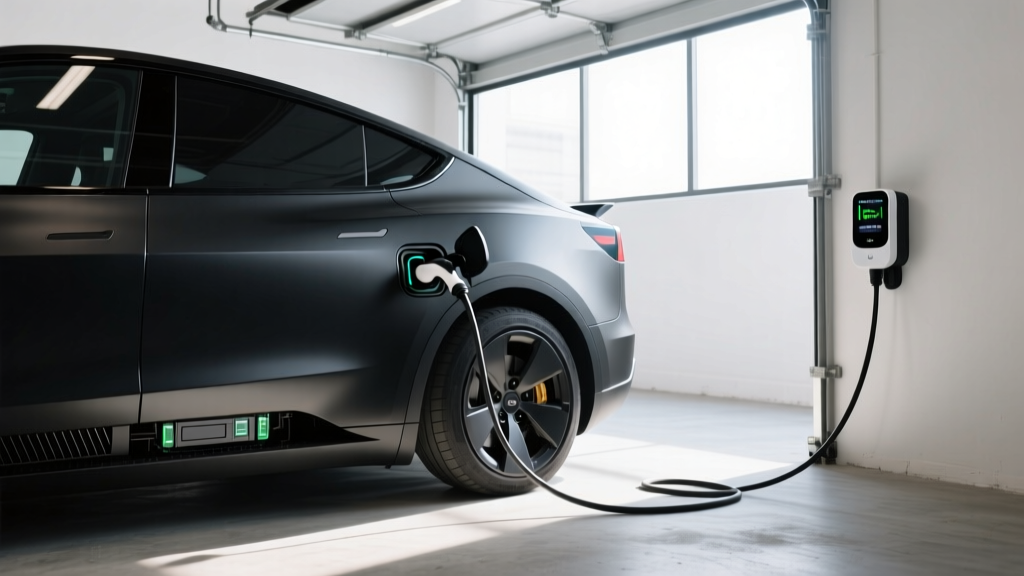
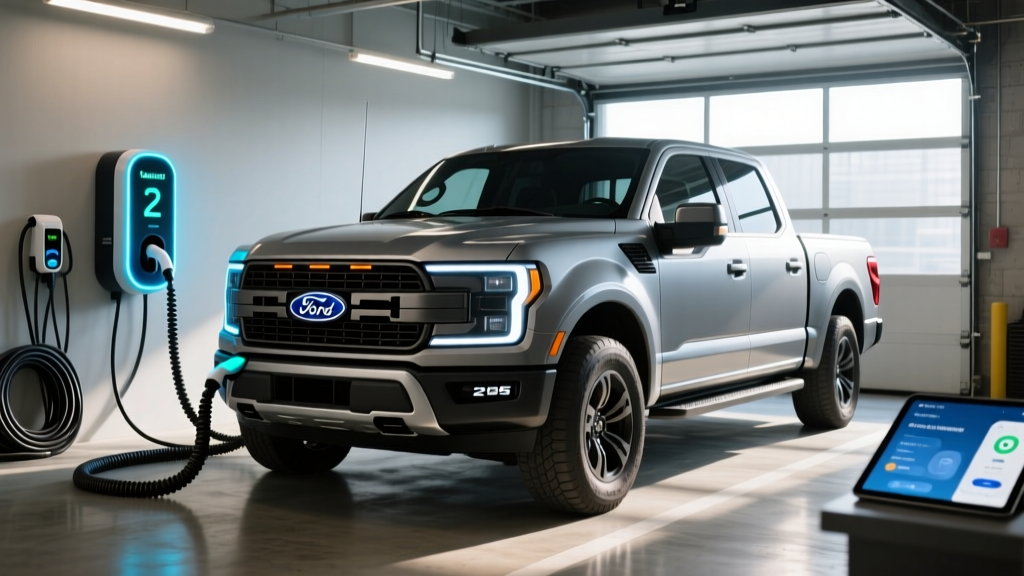
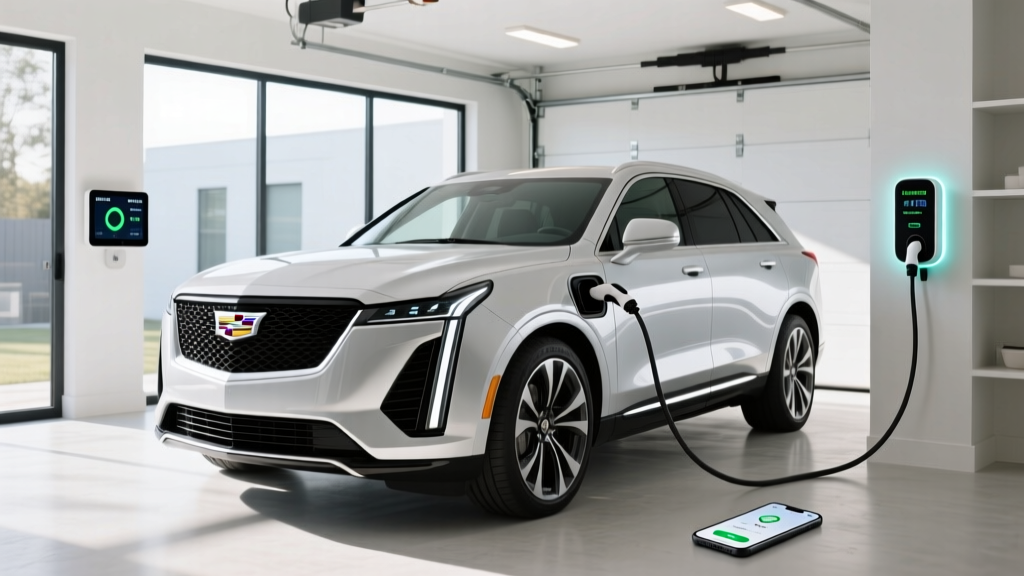
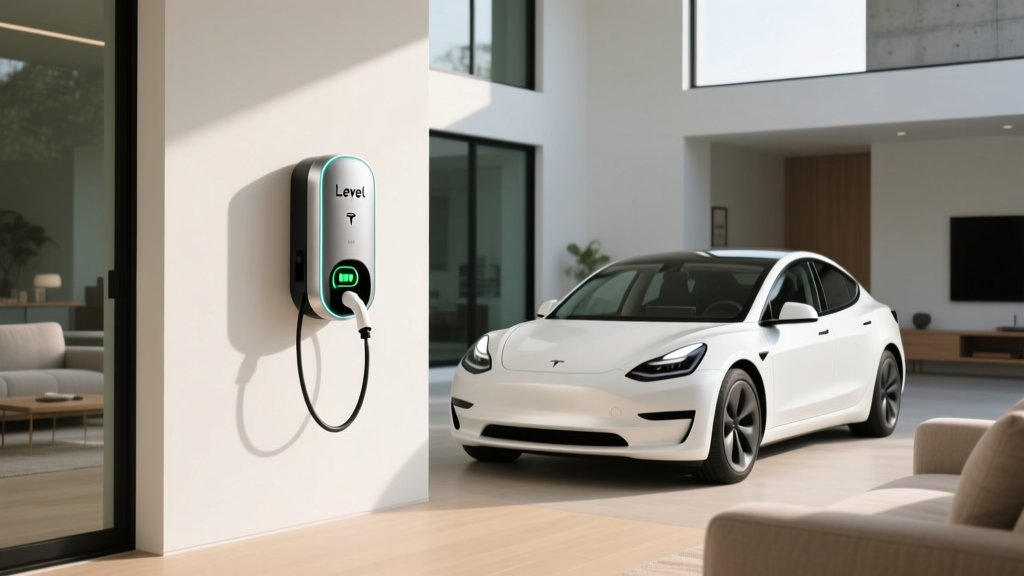
When EV owners search for an "interior charger," they're typically looking for home charging solutions—equipment installed inside a garage or carport that replenishes the vehicle's battery overnight. The term can refer to the wall-mounted charging unit itself, the in-vehicle charging port, or the complete home charging ecosystem. For practical purposes, we'll focus on what matters most: selecting and installing the right Level 2 home charger for your specific EV and electrical setup.
Before diving into equipment and installation, you need to understand the three charging levels and what each delivers in real-world range recovery:
| Level | Voltage/Power | Typical kW Output | Miles of Range Added Per Hour | Best For |
|---|---|---|---|---|
| Level 1 | 120V / 12-16A | 1.4-1.9 kW | 3-5 miles | Overnight top-ups, PHEVs, low-mileage drivers |
| Level 2 (Home) | 240V / 32-48A | 7.7-11.5 kW | 25-44 miles | Daily home charging, most BEV owners |
| DC Fast Charging | 400-800V DC | 50-350 kW | 150-1000+ miles (in 20-30 min sessions) | Road trips, rapid top-ups (not for daily use) |
Critical distinction: kW (kilowatts) measures power—how fast energy flows into your battery. kWh (kilowatt-hours) measures energy—the total capacity your battery holds. A 75 kWh battery charged at 11.5 kW takes roughly 6.5 hours from empty to full, but real-world charging follows a curve that slows dramatically above 80% state of charge.
Real-World Charging Time Examples (10-80% State of Charge)
- Tesla Model Y (75 kWh battery, NMC chemistry): Level 2 at 11.5 kW = ~5 hours; DC fast at 250 kW peak = ~18 minutes (tapering above 80%)
- Ford Mustang Mach-E Extended Range (91 kWh usable, NMC): Level 2 at 11.5 kW = ~6.3 hours; DC fast at 150 kW peak = ~32 minutes
- Hyundai Ioniq 5 (77.4 kWh, NMC): Level 2 at 10.9 kW = ~5.7 hours; DC fast at 240 kW peak (800V architecture) = ~18 minutes
- Chevrolet Bolt EV (65 kWh, NMC): Level 2 at 11.5 kW = ~4.5 hours; DC fast limited to 55 kW peak = ~55 minutes
Note: These times assume optimal battery temperature (preconditioned) and don't include the slower 80-100% phase, which can add 30-60% more time due to charge-curve taper.
Home Interior Charger Installation: Electrical Requirements and Costs
Installing a Level 2 interior charger requires a dedicated 240-volt circuit, similar to what powers an electric dryer or oven. The most common setup is a 240V/40A circuit supporting a 32A continuous-draw charger (electrical code requires circuits rated 125% above continuous load). Higher-power chargers (40-48A continuous) need 50-60A circuits.
What Your Electrical Panel Must Handle
Before purchasing equipment, assess your home's electrical service:
- Panel capacity: Most modern homes have 200A service. Older homes (pre-1980s) may have 100A or 150A panels that lack headroom for EV charging.
- Available breaker spaces: You need two adjacent slots for a double-pole breaker.
- Load calculation: A licensed electrician will perform a load calculation per NEC Article 220 to ensure your panel can handle the added demand without overloading.
Panel upgrade reality: If your panel is maxed out or outdated (e.g., Federal Pacific, Zinsco, or old 100A service), you'll need a panel upgrade or replacement. This adds $1,500-$3,500 to your project and may require utility coordination. Don't skip this step—overloading a panel creates fire risk and may void insurance coverage.
| Component | Cost Range | Notes |
|---|---|---|
| Level 2 Charger Equipment | $400-$800 | 32-48A smart chargers; basic models from $300 |
| Electrician Labor | $500-$1,500 | Depends on run distance, conduit needs, panel accessibility |
| Electrical Permit | $50-$200 | Varies by jurisdiction; required for code compliance |
| Panel Upgrade (if needed) | $1,500-$3,500 | 200A service upgrade or panel replacement |
| Total (no panel upgrade) | $950-$2,500 | Most installations fall in $1,200-$1,800 range |
| Total (with panel upgrade) | $2,450-$6,000 | Older homes, high-load scenarios |
Federal tax credit: The IRS §30D alternative fuel vehicle refueling property credit covers 30% of home charger installation costs (equipment + labor), up to $1,000. This credit has income caps and applies to your principal residence. Check current IRS guidelines for eligibility, as sourcing requirements and income limits apply.
Connector Compatibility: NACS, CCS1, and CHAdeMO
Your EV's charging port determines which connectors work. As of 2026, the North American market has largely standardized on two connector types for Level 2 and DC fast charging:
| Connector Type | Brands Using It | Adapter Needed? |
|---|---|---|
| NACS (Tesla) | Tesla (all models), Ford (2025+), GM (2025+), Rivian (2025+), Volvo/Polestar (2025+), Nissan Ariya (2026+) | Non-Tesla NACS vehicles may need CCS adapter for legacy public chargers |
| CCS1 | Hyundai/Kia (most models), VW/Audi, BMW, Mercedes, Stellantis brands, Honda Prologue | CCS-to-NACS adapter required for Tesla Supercharger access (where enabled) |
| CHAdeMO | Nissan Leaf (legacy), Mitsubishi Outlander PHEV (older models) | Phasing out; limited public availability |
Home charger selection: Most Level 2 home chargers come with a J1772 connector (the legacy standard). If you own a Tesla or newer NACS-equipped vehicle, you have two options:
- Buy a NACS-connector home charger (Tesla Wall Connector, Lectron V-BOX Pro NACS)
- Use a J1772-to-NACS adapter (included with most NACS vehicles or available for ~$150-200)
For CCS1 vehicles, a standard J1772 home charger works directly—no adapter needed for Level 2. Adapters only matter for DC fast charging on public networks.
Cost to Charge: Home vs. Public vs. Gas Comparison
One of the strongest arguments for home interior chargers is the per-mile cost advantage. Electricity rates vary wildly by region and time-of-use, but here's how typical scenarios break down:
| Scenario | Cost per kWh | Cost per Mile (at 3 mi/kWh efficiency) | Annual Cost (12,000 miles) |
|---|---|---|---|
| Home charging (off-peak rate) | $0.12-$0.18 | $0.04-$0.06 | $480-$720 |
| Home charging (standard rate) | $0.15-$0.25 | $0.05-$0.08 | $600-$960 |
| Public Level 2 (networks like ChargePoint) | $0.25-$0.45 | $0.08-$0.15 | $960-$1,800 |
| DC Fast Charging (Electrify America, EVgo) | $0.35-$0.60 | $0.12-$0.20 | $1,440-$2,400 |
| Gas vehicle (30 MPG combined, $3.50/gal) | N/A | $0.12 | $1,400 |
Key takeaway: Home charging at off-peak rates delivers 60-70% lower fuel costs compared to gas. Public DC fast charging can equal or exceed gas costs, which is why home interior chargers are essential for EV economics. If you can't install a home charger, a PHEV or hybrid may be more cost-effective.
Best Interior Charger Equipment Picks (2026)
Based on power output, reliability, smart features, and value, here are the top Level 2 home chargers for most EV owners:
1. ChargePoint Home Flex (NACS or J1772)
- Power: Up to 12 kW (50A circuit, 40A continuous)
- Cable length: 23 feet
- Smart features: Wi-Fi, app scheduling, Alexa integration, energy tracking
- Price: $699 (frequent sales to $549)
- Best for: Most EVs, flexible amperage adjustment via app
2. Tesla Wall Connector (NACS)
- Power: Up to 11.5 kW (60A circuit, 48A continuous)
- Cable length: 24 feet
- Smart features: Wi-Fi, over-the-air updates, power sharing (multiple units on one circuit)
- Price: $475
- Best for: Tesla owners and NACS-equipped vehicles (Ford, GM, Rivian 2025+)
3. Emporia Vue Level 2 Charger
- Power: Up to 11.5 kW (60A circuit, 48A continuous)
- Cable length: 24 feet
- Smart features: Integration with Emporia energy monitoring, solar-aware charging, time-of-use optimization
- Price: $399
- Best for: Budget-conscious buyers, solar panel owners, energy monitoring enthusiasts
4. Grizzl-E Smart (J1772 or NACS)
- Power: Up to 10 kW (50A circuit, 40A continuous)
- Cable length: 24 feet
- Smart features: OCPP-compatible, adjustable amperage, outdoor-rated
- Price: $499
- Best for: Outdoor installations, cold climates (-40°C rated), commercial/fleet use
Selection tip: Match charger amperage to your EV's onboard charger capacity. Most 2026 EVs accept 11.5 kW (48A) or less, so a 48A charger future-proofs your setup. If your EV maxes at 7.7 kW (32A), a 40A circuit and 32A charger saves on electrical work.
Safety, Code Compliance, and Installation Best Practices
Interior charger installation isn't a DIY project unless you're a licensed electrician. Here's what proper installation requires:
- Dedicated circuit: Your charger must have its own breaker—no sharing with other appliances.
- GFCI protection: NEC 2023 and later require ground-fault circuit interrupter protection for EV charging circuits (built into most modern breakers or chargers).
- Proper wire gauge: 6 AWG copper for 40-50A circuits; 4 AWG for 60A circuits. Aluminum wire requires larger gauge.
- Conduit and protection: Exposed wiring needs conduit; garage installations should protect cables from vehicle impact.
- Outdoor rating (if applicable): Carport or exterior installations require NEMA 4-rated (weatherproof) equipment.
Permit and inspection: Most jurisdictions require an electrical permit and post-installation inspection. This ensures code compliance and protects your home insurance coverage. Skipping permits risks failed inspections during home sales and potential liability if electrical issues arise.
Load management: If your panel is near capacity, consider a smart charger with load-sensing capabilities (e.g., Emporia, Wallbox Pulsar Plus with Power Meter). These monitor your home's real-time consumption and reduce charging power when other high-draw appliances activate, preventing breaker trips without requiring a panel upgrade.
Frequently Asked Questions
How much does it cost to install a home EV charger?
Most interior charger installations cost $1,200-$1,800 total (equipment + electrician + permit) if your electrical panel has capacity. Older homes needing panel upgrades can see costs rise to $2,500-$6,000. The IRS §30D tax credit covers 30% of installation costs up to $1,000, reducing your net expense.
How fast will each charging level add range?
Level 1 (120V) adds 3-5 miles per hour—suitable for PHEVs or very low daily mileage. Level 2 (240V, 32-48A) adds 25-44 miles per hour, fully replenishing most EVs overnight. DC fast charging (50-350 kW) can add 150-300 miles in 20-30 minutes but isn't practical for daily home use due to cost and battery wear.
Which connector/charger is compatible with my EV?
Check your vehicle's charging port: Tesla and 2025+ Ford/GM/Rivian use NACS; most other brands (Hyundai, Kia, VW, BMW) use CCS1 (J1772 for Level 2). Home chargers typically come with J1772 connectors; NACS vehicles use an adapter or a NACS-specific charger. For 2026 models, verify with your manufacturer—connector transitions are ongoing.
How much does charging cost per mile vs gas?
Home charging at off-peak rates costs $0.04-$0.06 per mile, compared to $0.12 per mile for a 30 MPG gas vehicle at $3.50/gallon. That's a 50-70% fuel cost reduction. Public DC fast charging can cost $0.12-$0.20 per mile, eliminating the savings advantage—home charging is essential for EV economics.
What electrical upgrades might I need?
If your home has 200A service with available breaker spaces and load headroom, you likely need only a dedicated 240V circuit. Older homes (100-150A service), panels at capacity, or outdated panel brands (Federal Pacific, Zinsco) require upgrades costing $1,500-$3,500. A licensed electrician's load calculation determines your specific needs.
Final recommendation: Get 2-3 quotes from licensed electricians, verify they have EV charger installation experience, and confirm permit requirements with your local building department. The cheapest bid isn't always best—improper installation creates fire risk and may void equipment warranties.