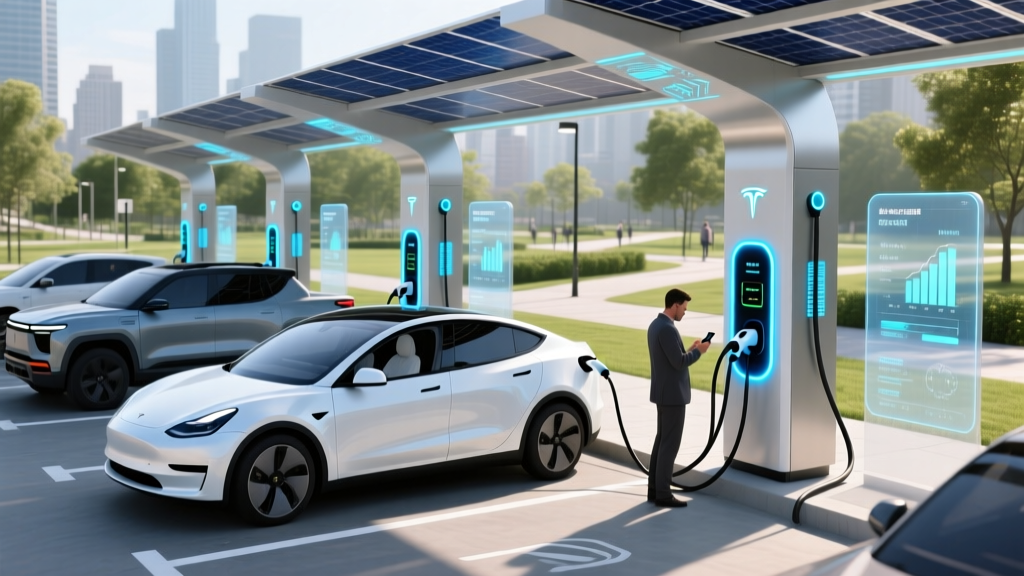
If you're still holding onto a 2004 Chevrolet Impala SS Supercharged — with its 3.8L supercharged V6 making 240 hp and burning premium fuel at 18 mpg city — you've probably felt the sting of $4.00+ gas prices one too many times. Switching to an electric vehicle (EV) in 2026 eliminates tailpipe emissions, slashes per-mile fuel costs, and delivers instant torque that makes that old supercharger feel quaint. But before you hand over the keys at the dealership, you need to understand exactly how EV charging works at home, on the road, and what it will cost you. This guide covers every kilowatt (kW), every dollar, and every electrical upgrade you might need.
EV Charging Levels Explained: Speeds in kW and Miles Per Hour
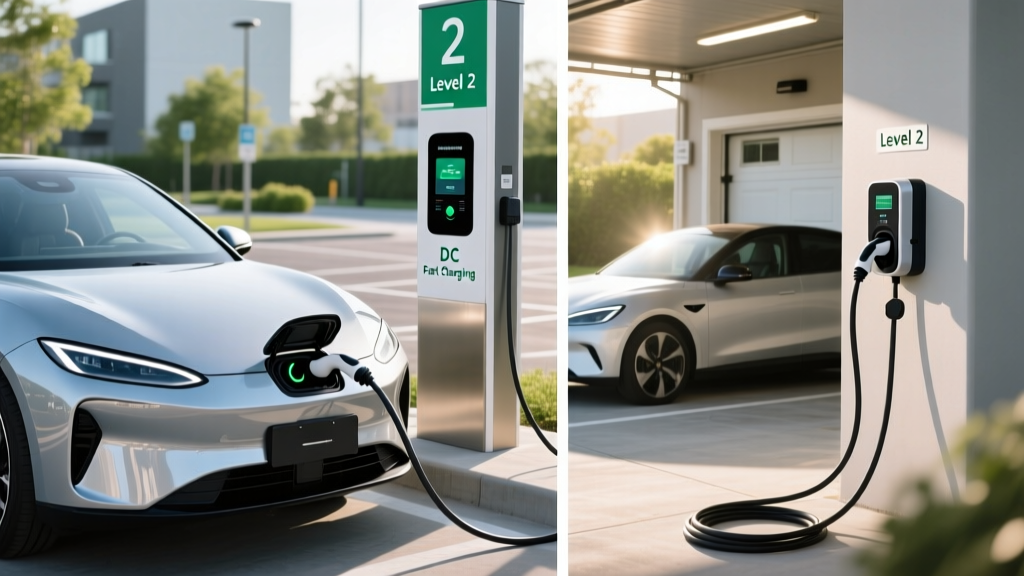
The single most common mistake new EV buyers make is confusing kW (kilowatts) with kWh (kilowatt-hours). Think of it like a garden hose: kW is the flow rate (how fast energy moves), while kWh is the bucket size (how much energy your battery holds). A 75 kWh battery charged at 7.2 kW will take roughly 10.4 hours from empty to full. Here's how each level stacks up:
| Charging Level | Voltage | Power (kW) | Miles of Range Added Per Hour | Best Use Case |
|---|---|---|---|---|
| Level 1 (Standard Outlet) | 120V AC | 1.2–1.4 kW | 3–5 miles | Overnight top-offs, PHEVs, emergencies |
| Level 2 (Home/Public AC) | 240V AC | 3.3–19.2 kW | 12–75 miles | Daily home charging, workplace, shopping |
| DC Fast Charging (Level 3) | 400–800V DC | 50–350+ kW | 150–1,200+ miles/hr (peak) | Road trips, highway corridors |
Real-world context: A typical 2026 EV with a 75 kWh battery and ~300 miles of EPA range will add roughly 30 miles of range per hour on a 7.2 kW Level 2 charger. On a 150 kW DC fast charger, that same vehicle might go from 10% to 80% State of Charge (SoC) in about 25–30 minutes — but expect the charge curve to taper significantly above 80%, which is why most road-trippers target 10–80% charges.
How Much Does a Home Level 2 Charger Installation Really Cost?
This is where many EV buyers get blindsided. The charger hardware itself is often the cheapest part of the equation. Your home's electrical panel, the distance from panel to garage, and local permitting drive the real cost.
| Cost Component | Low End | High End | Notes |
|---|---|---|---|
| Level 2 Charger Hardware | $350 | $750 | 32A–48A smart chargers; Wi-Fi enabled models cost more |
| Electrician Labor | $300 | $1,200 | Depends on run length, conduit, and wall material |
| Electrical Permit | $50 | $250 | Varies by municipality; some areas require inspection |
| Panel Upgrade (if needed) | $1,500 | $4,000+ | Upgrading from 100A to 200A service; common in pre-2000 homes |
| Total (no panel upgrade) | $700 | $2,200 | Most homes with 200A panels fall in this range |
| Total (with panel upgrade) | $2,200 | $6,200+ | Older homes, especially those built before 1990 |
Panel upgrade reality check: If you're coming from a home built around the same era as that 04 Impala SS — or earlier — there's a real chance you're running a 100-amp or 150-amp electrical panel. A 48-amp Level 2 charger draws roughly 11.5 kW continuously, which requires a dedicated 60-amp circuit (the National Electrical Code requires circuits to be rated at 125% of continuous load). If your panel is already near capacity with HVAC, an electric range, and a dryer, a panel upgrade or a smart load-management system like the Span smart panel may be necessary.
Electrical Requirements: Voltage, Amperage, and Safety Code
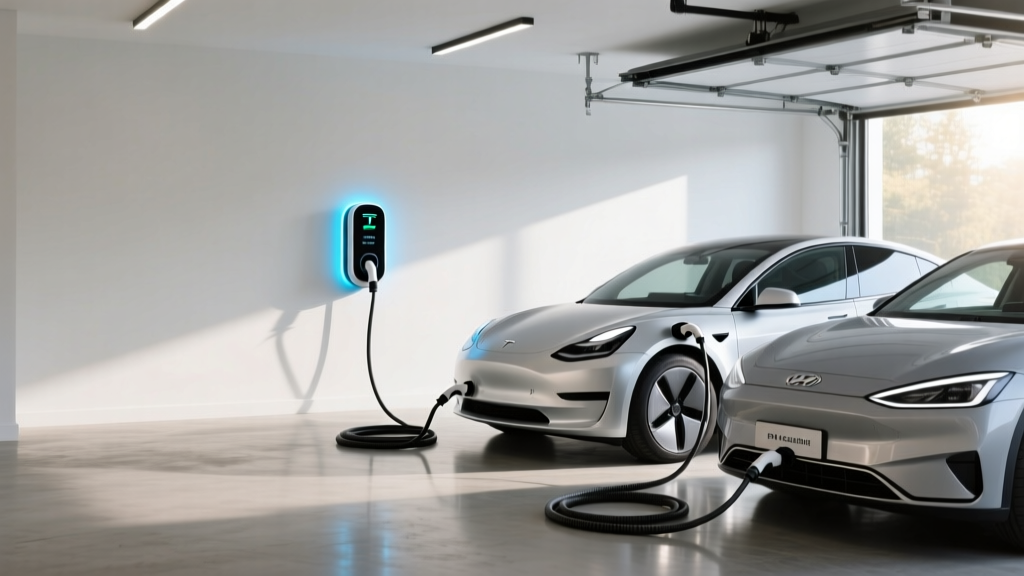
A proper Level 2 home installation isn't just plugging something in. Here's what your licensed electrician will spec out:
- Voltage: 240V AC (same as your electric dryer or oven)
- Circuit amperage: 40A, 50A, or 60A dedicated breaker depending on charger rating
- Charger amperage: 32A chargers need a 40A circuit; 48A chargers need a 60A circuit
- Wiring: 6 AWG copper for 48A; 8 AWG for 32A (THHN in conduit or NM-B cable)
- GFCI protection: Required by NEC 2020+ for outdoor receptacles; hardwired installations may bypass this depending on local code
- Outdoor rating: If your charger is mounted outside or in an open carport, it must carry a NEMA 4 (weatherproof) rating
- Hardwired vs. plug: Hardwired chargers (directly connected to the circuit) avoid the GFCI nuisance-trip issues common with NEMA 14-50 receptacles and are generally preferred for new installs
Always pull a permit and schedule an inspection. Unpermitted work can void home insurance claims and create problems at resale. The National Electrical Code (NEC) Article 625 governs EV charging installations specifically.
Connector Compatibility: NACS, CCS1, and CHAdeMO in 2026
The connector landscape has consolidated significantly since the early 2020s. Here's where things stand for the 2026 model year:
| Connector Standard | Brands Using It (2026) | DC Fast Charge Availability | Adapter Needed? |
|---|---|---|---|
| NACS (Tesla / North American Charging Standard) | Tesla, Ford, GM, Rivian, Volvo, Polestar, Hyundai, Kia, BMW, Mercedes-Benz, Nissan (new models) | Tesla Superchargers + growing NACS networks (Electrify America, EVgo adding NACS) | CCS-to-NACS adapters available for legacy CCS vehicles |
| CCS1 (Combined Charging System) | Legacy models: pre-2025 VW ID.4, older BMW i4, Stellantis EVs, Honda Prologue (early builds) | Electrify America, EVgo, ChargePoint — most public DC stations | NACS-to-CCS adapter included with many 2025+ models |
| CHAdeMO | Discontinued; only legacy Nissan Leaf and Mitsubishi Outlander PHEV | Limited and shrinking public availability | No widely available adapter to NACS/CCS |
Key takeaway for 2026: NACS has won the standards war. If you're buying a new EV today, it almost certainly has a NACS port or comes with a CCS-to-NACS adapter. If you own an older CCS-equipped EV, adapters from Tesla and third-party brands (Lectron, A2Z) let you access Superchargers, though at slightly reduced peak charge rates due to adapter resistance.
Charging Time Examples: 10–80% for Common Battery Sizes
Here's what real charging sessions look like for popular 2026 EV battery sizes. These times assume optimal battery preconditioning and ambient temperatures of 65–80°F:
| Vehicle Example | Battery (kWh usable) | Peak DC kW | 10–80% DC Fast Charge | Level 2 at 11.5 kW (48A) |
|---|---|---|---|---|
| Tesla Model Y Long Range | 75 kWh (NMC) | 250 kW | ~22 minutes | ~5.5 hours (0–100%) |
| Hyundai Ioniq 5 (Long Range) | 77.4 kWh (NMC) | 240 kW (800V architecture) | ~18 minutes | ~6 hours |
| Ford F-150 Lightning (Extended) | 131 kWh (NMC) | 155 kW | ~41 minutes | ~10 hours |
| Chevrolet Equinox EV | 85 kWh (NMC) | 150 kW | ~32 minutes | ~7 hours |
| Tesla Model 3 RWD (LFP) | 60 kWh (LFP) | 170 kW | ~25 minutes | ~5 hours |
Charge curve reality: That "250 kW peak" figure only applies at low SoC (roughly 10–30%). By 60% SoC, most NMC batteries taper to ~100 kW, and above 80%, speeds drop to ~50 kW or lower. This is why 10–80% is the standard road-trip metric — the last 20% can take as long as the first 70%.
Cost Per Mile: EV Charging vs. Your Old Impala SS Supercharged
That 2004 Impala SS with its supercharged 3.8L V6 gets roughly 20 mpg combined on premium fuel. At $4.20/gallon for premium (a reasonable 2026 national average), you're spending about $0.21 per mile just on fuel. Here's how EV charging compares across scenarios:
| Charging Scenario | Cost per kWh | Cost Per Mile (at 3.5 mi/kWh) | Annual Cost (12,000 mi) |
|---|---|---|---|
| Home Level 2 (off-peak utility rate) | $0.09–$0.13 | $0.026–$0.037 | $310–$445 |
| Home Level 2 (standard residential rate) | $0.14–$0.18 | $0.040–$0.051 | $480–$615 |
| Public Level 2 (network pricing) | $0.25–$0.49 | $0.071–$0.140 | $855–$1,680 |
| DC Fast Charging (road trip) | $0.35–$0.55 | $0.100–$0.157 | $1,200–$1,885 |
| 04 Impala SS Supercharged (20 mpg, premium) | $4.20/gal | $0.210 | $2,520 |
Even in the worst-case scenario (exclusively using DC fast chargers at highway rates), an EV costs roughly $0.10–$0.16 per mile — still significantly less than the Impala's $0.21. But the sweet spot is home charging on an off-peak rate, where you'll spend $310–$445 per year versus $2,520 for gas. That's a $2,000+ annual fuel savings that compounds over ownership.
Check your utility for time-of-use (TOU) plans. Many utilities offer rates as low as $0.06–$0.08/kWh between 10 PM and 6 AM, which makes home charging absurdly cheap. The U.S. Department of Energy's EV charging resources provide state-by-state electricity rate data.
Best Home EV Chargers for 2026: Equipment Picks
ChargePoint Home Flex (NACS)
- Power Output: Up to 12 kW (50A) on a 60A circuit; adjustable down to 16A
- Connector: NACS (native); CCS adapter available
- Cable Length: 23 feet
- Smart Features: Wi-Fi, app scheduling, Alexa integration, energy tracking, load sharing between two units
- Price: ~$599 (frequently on sale for $499)
- Best For: Most homeowners; flexible amperage means it works on 40A or 60A circuits
Grizzl-E Smart (NACS)
- Power Output: Up to 9.6 kW (40A) on a 50A circuit
- Connector: NACS or CCS1 available
- Cable Length: 24 feet
- Smart Features: Wi-Fi, OCPP-compatible, app control, works with utility demand-response programs
- Price: ~$449
- Best For: Budget-conscious buyers who want smart features; built in Canada with a 3-year warranty
Tesla Wall Connector (NACS)
- Power Output: Up to 11.5 kW (48A) on a 60A circuit
- Connector: NACS (native)
- Cable Length: 24 feet
- Smart Features: Wi-Fi, over-the-air updates, Power Share (load balance two units on one circuit), integrates with Tesla vehicles for scheduled charging
- Price: $475
- Best For: Tesla owners; cleanest aesthetic and tightest vehicle integration
Emporia Vue Level 2 Charger
- Power Output: Up to 11.5 kW (48A) on a 60A circuit
- Connector: NACS (2025+ models); CCS1 (older stock)
- Cable Length: 24 feet
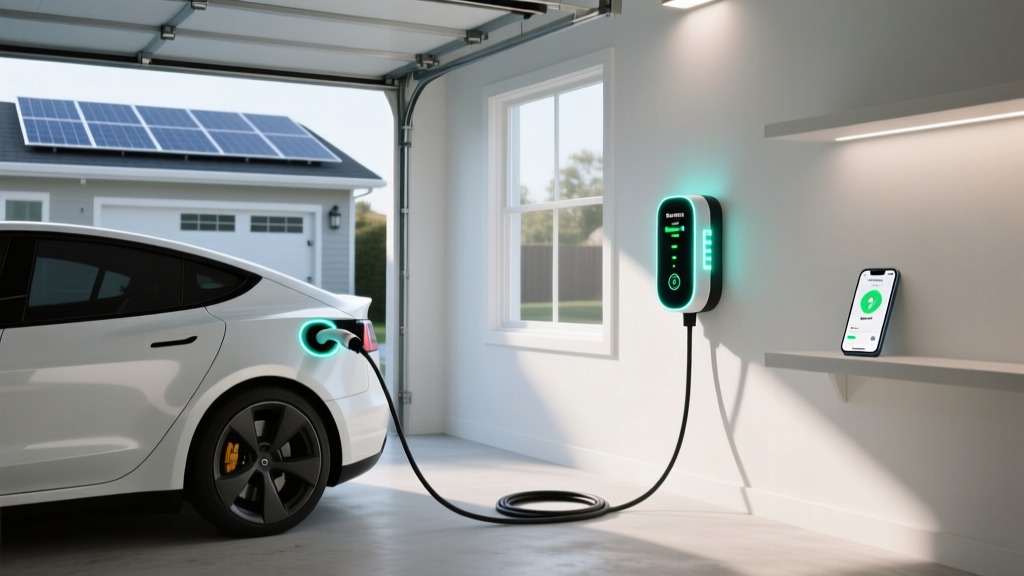
- Smart Features: Integrates with Emporia Vue home energy monitor, solar-aware charging, TOU scheduling, detailed cost tracking per session
- Price: ~$399
- Best For: Solar owners and energy-monitoring enthusiasts; best value at 48A
Pro tip: Always buy a charger rated for at least 48A (requiring a 60A circuit) even if your current panel only supports 40A. You can set most smart chargers to a lower amperage in the app and upgrade the circuit later without replacing the hardware.
Frequently Asked Questions
How much does it cost to install a home EV charger?
Expect $700–$2,200 for a standard Level 2 installation if your electrical panel has capacity. If you need a panel upgrade (common in homes built before 2000 with 100A service), total costs can reach $2,200–$6,200+. Get at least three quotes from licensed electricians, and ask specifically about the dedicated circuit amperage and whether a permit is included.
How fast will each charging level add range?
Level 1 (120V) adds 3–5 miles per hour — adequate for PHEVs with small batteries but painfully slow for a full EV. Level 2 at 48A/11.5 kW adds roughly 30–40 miles per hour for a typical midsize EV, easily replenishing a day's driving overnight. DC fast charging at 150+ kW adds 150–400+ miles per hour at peak, but tapers above 60–70% SoC.
Which connector/charger is compatible with my EV?
For 2026 model-year vehicles, the vast majority use NACS (the Tesla connector adopted industry-wide). If you drive a pre-2025 EV with CCS1, most manufacturers include or sell a CCS-to-NACS adapter for Supercharger access. CHAdeMO is effectively dead — avoid any new vehicle still using it. For home chargers, buy NACS unless you specifically own a CCS-only vehicle with no adapter path.
How much does charging cost per mile vs gas?
Home charging on off-peak rates costs $0.03–$0.04 per mile — roughly 80% cheaper than a 20 mpg vehicle on premium fuel ($0.21/mile). Even public DC fast charging at $0.45/kWh yields ~$0.13/mile, still a meaningful savings. Your old supercharged Impala SS at 18 mpg city on premium was one of the most expensive vehicles to fuel in your driveway.
What electrical upgrades might I need?
The most common upgrade is a panel increase from 100A or 150A to 200A service ($1,500–$4,000). Older homes may also need aluminum-to-copper wiring updates, a new grounding rod, or conduit runs if the panel is far from the garage. Some homeowners opt for a smart load-management system instead of a full panel upgrade — these devices dynamically share amperage between the EV charger and other high-draw appliances, avoiding the need for a larger panel entirely.
Can I use the federal tax credit for a home charger?
The IRS §30D credit covers the vehicle, not the charger. However, the Alternative Fuel Vehicle Refueling Property Credit (IRS §30C) provides up to $1,000 (30% of cost) for home charging equipment installed in eligible census tracts through 2032. Check the IRS §30C page for current eligibility rules and tract maps, as these are location-dependent.
Is it safe to charge an EV in the rain or outdoors?
Yes. All EV chargers rated for outdoor use (NEMA 4 rating) are sealed against rain, snow, and dust. The connector and vehicle inlet are designed with safety interlocks — no current flows until a secure connection is confirmed. That said, avoid charging during active lightning storms as a general precaution, and ensure your installation includes proper GFCI protection if required by local code.
Trading in that 04 Impala SS Supercharged for a modern EV is one of the most impactful financial and environmental decisions a car enthusiast can make. The supercharger whine might be gone, but instant electric torque, $0.03-per-mile fueling, and never visiting a gas station again more than compensate. Get your home charging infrastructure dialed in first — it's the foundation of a frustration-free EV ownership experience.