From Gas Pump to Wall Plug: The EV Charging Learning Curve
If you've spent years pulling up to a gas station, filling a tank in five minutes, and never thinking about fueling infrastructure at home, the idea of an "ICE car charger" might seem like a reasonable search. But internal combustion engine vehicles don't have chargers — they have fuel tanks. What you're likely looking for is the bridge between your gas-car experience and the EV charging ecosystem you'll need to navigate when you go electric.
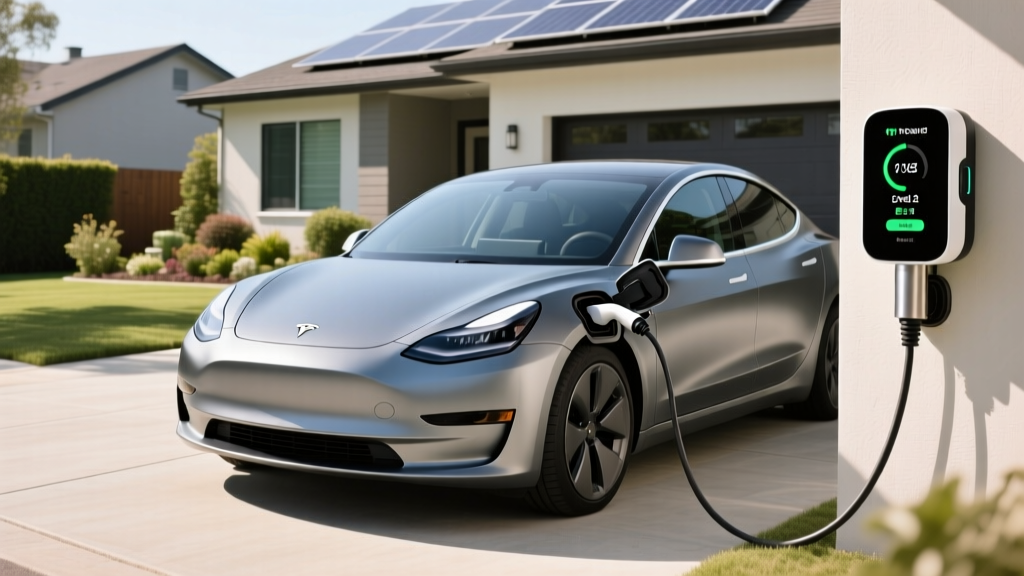
Here's the reality most new EV buyers underestimate: about 80% of all EV charging happens at home, according to the U.S. Department of Energy. Your garage or driveway becomes your personal fueling station. But that transition from an ICE car requires understanding electrical capacity, connector types, charging speeds, and real costs — none of which exist in the gas-car world.
This guide translates every charging concept into terms an ICE car owner will immediately understand, with exact numbers, real costs, and zero fluff.
Charging Levels Explained: Your New "Fuel Grades"
Think of charging levels like fuel grades, except they determine how fast electrons flow into your battery rather than octane ratings. Here's the breakdown every former gas-car driver needs memorized:
| Level | Voltage | Power (kW) | Miles of Range Added Per Hour | Best Use Case |
|---|---|---|---|---|
| Level 1 | 120V (standard outlet) | 1.0–1.4 kW | 3–5 miles | Overnight top-ups, PHEVs, low daily mileage |
| Level 2 | 240V (dryer-style outlet) | 7.2–19.2 kW | 25–65 miles | Daily home charging, workplace, shopping centers |
| DC Fast Charge | 400V–800V+ DC | 50–350 kW | 150–1,000+ miles (theoretical) | Road trips, highway corridors, quick stops |
Critical distinction: kW (kilowatts) measures power — how fast energy flows, like gallons-per-minute at a gas pump. kWh (kilowatt-hours) measures energy stored — like the total gallons in your tank. A 75 kWh battery charged at 11 kW takes roughly 7 hours from empty. A 150 kW DC fast charger can refill that same battery's usable range in about 30 minutes (to 80%).
- 60 kWh battery (e.g., Nissan Leaf, base Hyundai Kona Electric): ~38 min at 150 kW DCFC; ~6 hrs at 9.6 kW Level 2
- 82 kWh battery (e.g., Tesla Model Y Long Range): ~25 min at 250 kW Supercharger; ~8 hrs at 11.5 kW Level 2
- 100 kWh battery (e.g., Ford F-150 Lightning Extended Range): ~40 min at 150 kW DCFC; ~10 hrs at 11.5 kW Level 2
Note: DC fast charging slows dramatically above 80% SoC to protect the battery. This is the "charge curve taper" — peak kW is only sustained in the 10-50% window, then drops. Always plan road-trip stops around 10-80% sessions, not full fills.
Home Charger Installation: What It Really Costs
This is where the ICE-to-EV transition hits your wallet first. Installing a Level 2 home charger isn't just plugging something into a wall — it involves electrical work, permits, and potentially a panel upgrade if your home's electrical service can't handle the additional load.
Most homes built after 1990 have a 200-amp electrical panel, which can typically support a 40-amp dedicated circuit for a Level 2 charger. Older homes with 100-amp service may require a panel upgrade — a $1,500–$3,500 job on its own.
| Component | Low-End Cost | High-End Cost | Notes |
|---|---|---|---|
| Level 2 Charger Equipment | $300 | $750 | Smart Wi-Fi chargers (Emporia, ChargePoint, Wallbox); basic units from $200 |
| Electrician Labor (240V circuit + outlet/hardwire) | $500 | $2,000 | Depends on run length from panel to garage; longer runs = more conduit and wire |
| Electrical Permit | $50 | $250 | Varies by municipality; required for code compliance and insurance |
| Panel Upgrade (if needed) | $1,500 | $3,500 | 100A → 200A service upgrade; not always necessary |
| Total (no panel upgrade) | $850 | $3,000 | Typical scenario for modern homes |
| Total (with panel upgrade) | $2,350 | $6,500 | Older homes or high-load households |
Some utilities offer rebates of $200–$500 for Level 2 charger installation, and certain states provide additional incentives. Check your local utility's EV programs before scheduling work. The Alternative Fuels Data Center maintains a state-by-state incentive database.
Electrical Requirements: What Your Home Needs
A Level 2 charger requires a dedicated 240-volt circuit — the same type of circuit your electric dryer or oven uses. Here are the specifics your electrician will evaluate:
- Circuit amperage: A 40-amp circuit supports chargers up to 32 amps continuous draw (electrical code requires circuits rated at 125% of continuous load). A 50-amp circuit supports 40-amp chargers; a 60-amp circuit supports 48-amp chargers.
- Wire gauge: 6 AWG copper for 40-amp circuits; 4 AWG for 50-amp; varies by run length and local code.
- NEMA 14-50 outlet vs. hardwire: A NEMA 14-50 receptacle gives you flexibility to unplug and take the charger when you move. Hardwired installations are slightly cheaper (no outlet cost) and allow higher amperage in some setups but are permanent.
- GFCI protection: The 2023 NEC requires GFCI protection for EV charging outlets. Some chargers have built-in GFCI, which can avoid the need for a GFCI breaker (which adds $50–$100 and can nuisance-trip).
- Outdoor rating: If your charger mounts outside, it must carry a NEMA 4 or IP55+ weather rating. All major chargers listed below meet this standard.
Panel capacity check: Your electrician will perform a load calculation (NEC Article 220) to confirm your panel can handle the charger alongside existing loads. A 200-amp panel in a home with gas appliances usually has ample headroom. All-electric homes (electric heat, water heater, dryer, stove) may be tighter.
Connector Compatibility: NACS, CCS, and CHAdeMO Explained
Unlike the universal gas nozzle, EV connectors have fragmented — though as of 2026, the industry has largely converged on the North American Charging Standard (NACS), originally developed by Tesla.
| Connector | Physical Design | Brands Using It (2026) | DC Fast Charge Support |
|---|---|---|---|
| NACS (J3400) | Compact, no latch, single-pin AC / dual-pin DC | Tesla, Ford, GM, Rivian, Volvo, Polestar, Hyundai/Kia (2025+), Nissan (2025+), BMW, Mercedes-Benz, Lucid | Yes — up to 350 kW+ on compatible vehicles |
| CCS1 (Combo) | Larger, latched, J1772 top + two DC pins below | Legacy: older VW ID.4, BMW i4 (pre-2025), some Stellantis models. Rapidly being phased out. | Yes — up to 350 kW |
| CHAdeMO | Round, large, dedicated DC connector | Discontinued for new US models. Legacy Nissan Leaf (pre-2025) only. | Yes — up to 100 kW typically |
Adapter reality for 2026: If you buy a non-Tesla EV with a NACS port, you can charge at Tesla Superchargers natively. If you own a CCS-equipped EV (model year 2024 or earlier), most automakers now sell or provide a CCS-to-NACS adapter ($100–$250) for Supercharger access. CHAdeMO adapters are rare and not recommended for new purchases.
For Level 2 home charging, all connectors use the J1772 standard (or NACS, which is backward-compatible with J1772 via adapter on the vehicle side). Your home charger will have either a J1772 plug or a NACS plug — confirm which matches your vehicle before purchasing.
Cost Per Mile: EV Charging vs. Gas for ICE Car Owners
This is the comparison that sells most ICE car owners on going electric. Here's the math with 2026 average prices:
| Scenario | Cost per kWh or Gallon | Vehicle Efficiency | Cost Per Mile |
|---|---|---|---|
| Home Level 2 (off-peak utility rate) | $0.11/kWh | 3.0 mi/kWh (typical EV) | $0.037 |
| Home Level 2 (national avg rate) | $0.17/kWh | 3.0 mi/kWh | $0.057 |
| Public Level 2 (ChargePoint, EVgo) | $0.30/kWh | 3.0 mi/kWh | $0.10 |
| DC Fast Charging (Electrify America, Tesla) | $0.40/kWh | 3.0 mi/kWh | $0.133 |
| Gas vehicle (28 MPG combined) | $3.30/gallon | 28 MPG | $0.118 |
| Gas vehicle (22 MPG, truck/SUV) | $3.30/gallon | 22 MPG | $0.150 |
At home off-peak rates, an EV costs roughly one-third what a 28 MPG gas car costs per mile. Even at DC fast charger prices, you're roughly at parity with a mid-efficiency gas car — and still cheaper than a truck or large SUV. According to fueleconomy.gov, the average 2026 EV achieves 100–130 MPGe combined, translating to 3.0–4.0 miles per kWh.
The catch: These savings depend on home charging access. If you rely entirely on public DC fast chargers at $0.40+/kWh, your fuel cost may equal or exceed a fuel-efficient gas car. This is why home Level 2 installation is practically mandatory for EV ownership economics to work.
Equipment Picks: Level 2 Chargers Worth Buying in 2026
Not all Level 2 chargers are equal. Here are four proven units with exact specs, smart features, and real pricing:
Emporia Vue Level 2 EV Charger
- Power Output: 48 amps (11.5 kW on 60A circuit)
- Connector: J1772 (NACS adapter included with select bundles)
- Cable Length: 24 feet
- Smart Features: Wi-Fi, solar integration, energy monitoring via Emporia app, scheduled charging
- Price: ~$399
- Best For: Solar-panel owners, budget-conscious buyers wanting high amperage
ChargePoint Home Flex
- Power Output: Up to 50 amps (12 kW on 60A circuit); adjustable down to 16A
- Connector: J1772 or NACS (choose at purchase)
- Cable Length: 23 feet
- Smart Features: Wi-Fi, Alexa/Google Home, ChargePoint app, flexible amperage dial
- Price: ~$649
- Best For: Versatility across panel capacities, premium app experience
Wallbox Pulsar Plus
- Power Output: 40 amps (9.6 kW on 50A circuit)
- Connector: J1772 or NACS
- Cable Length: 25 feet
- Smart Features: Wi-Fi + Bluetooth, Power Sharing (daisy-chain two units on one circuit), compact form factor
- Price: ~$449
- Best For: Two-EV households, tight garage spaces
Tesla Wall Connector
- Power Output: 48 amps (11.5 kW on 60A circuit)
- Connector: NACS native (J1772 adapter available)
- Cable Length: 24 feet
- Smart Features: Wi-Fi, over-the-air updates, Power Sharing, load management with Tesla Powerwall
- Price: ~$450
- Best For: Tesla owners, NACS-equipped Ford/GM/Rivian owners
Pro tip: Buy a charger rated for at least 80% of your circuit's amperage. A 50-amp circuit supports a 40-amp charger; a 60-amp circuit supports a 48-amp charger. This maximizes your Level 2 charging speed without violating NEC continuous-load rules.
Safety, Code, and the Things That Trip Up New EV Owners
A few critical safety and compliance points your electrician will handle, but you should understand:
- Dedicated circuit: Your EV charger must be on its own dedicated circuit — not shared with other appliances. This prevents overloads and nuisance breaker trips.
- Permit and inspection: Most jurisdictions require an electrical permit and post-installation inspection. Skipping this can void your homeowner's insurance coverage for electrical fires.
- Ventilation: Level 2 chargers generate minimal heat and don't require special ventilation (unlike gas appliances). Indoor garage installation is standard.
- Cable management: A 24-foot cable on a garage floor is a tripping hazard. Wall-mount a cable organizer or choose a charger with a retractable cord reel.
- Utility notification: Some utilities require you to notify them before adding an EV charger to your service, especially if you're on a time-of-use rate plan. This is also how you access off-peak charging discounts.
Frequently Asked Questions for ICE-to-EV Switchers
How much does it cost to install a home EV charger?
A typical Level 2 home installation runs $850–$3,000 when no panel upgrade is needed. This includes the charger ($300–$750), electrician labor ($500–$2,000 depending on wire run length), and a permit ($50–$250). If your home needs a 100A-to-200A panel upgrade, add $1,500–$3,500. Total worst-case: up to $6,500 for older homes.
How fast will each charging level add range?
Level 1 (120V) adds 3–5 miles per hour — adequate for PHEVs or drivers covering under 40 miles daily. Level 2 (240V) adds 25–65 miles per hour, fully replenishing most EVs overnight. DC fast charging adds 150+ miles in 15–30 minutes at highway rest stops, but is not intended for daily use due to cost and battery-thermal stress.
Which connector or charger is compatible with my EV?
For 2026 models, nearly every major automaker has adopted NACS (Tesla's connector). If you buy a new Ford, GM, Hyundai, Kia, Rivian, or Tesla, you'll use NACS. Older CCS-equipped vehicles (2024 and earlier) can use CCS-to-NACS adapters for Supercharger access. For home Level 2 charging, confirm whether your vehicle uses a NACS or J1772 inlet and buy the matching charger plug.
How much does charging cost per mile vs. gas?
Home charging at off-peak rates ($0.11/kWh) costs about $0.037 per mile — roughly one-third the cost of a 28 MPG gas car at $3.30/gallon ($0.118/mile). Even at the national average residential rate of $0.17/kWh, EV charging costs $0.057/mile. Public DC fast charging at $0.40/kWh brings the cost to $0.133/mile, near gas-car parity.
What electrical upgrades might I need?
Homes with a 200-amp panel and gas appliances rarely need upgrades. Homes with 100-amp service or all-electric appliances (heat pump, electric water heater, electric range, dryer) may need a panel upgrade to 200A or even 400A. Your electrician's load calculation (NEC Article 220) determines this. Some utilities offer "make-ready" programs that cover part of the panel-upgrade cost.