If you own or are considering a Hyundai Kona Electric, understanding how to charge it efficiently is just as important as knowing its EPA-estimated range. The 2025–2026 Kona Electric carries a 64.8 kWh usable battery (NMC chemistry) and an EPA-estimated 261 miles of range in the SEL and Limited trims, according to fueleconomy.gov. But real-world range and how quickly you replenish it depend heavily on your charging setup, ambient temperature, and driving style.
This guide walks through every charging scenario Kona Electric owners face — from a standard 120V outlet to DC fast charging on a road trip — with exact speeds, costs, equipment picks, and the electrical work your home might require.
Hyundai Kona Electric Range: EPA Sticker vs. Real World
SE Trim (17-inch wheels): 261 miles EPA
Real-World Highway (70 mph, mild weather): ~220–235 miles
Real-World Cold Weather (below 32°F, mixed driving): ~175–200 miles
Efficiency: 113 MPGe combined / 30 kWh per 100 miles
The Kona Electric's efficiency of roughly 3.3 miles per kWh is competitive among subcompact EVs. On highway-heavy road trips at sustained 70–75 mph speeds, expect to consume more energy due to aerodynamic drag — the Kona's bluff front end works against it here. In freezing temperatures, battery heating demands and reduced regenerative braking can shave 25–35% off your range. Preconditioning the battery while plugged in mitigates some of this loss.
Charging Levels Explained: Speeds and Range Added Per Hour
Before we get into costs and equipment, let's establish a critical distinction: kW (kilowatts) measures power — how fast energy flows into the battery. kWh (kilowatt-hours) measures energy capacity — how much the battery holds. Think of kW as the flow rate of a hose and kWh as the size of the bucket. The Kona Electric's bucket holds 64.8 kWh.
| Level | Power (kW) | Miles of Range Per Hour | 0–100% Full Charge Time | Best Use Case |
|---|---|---|---|---|
| Level 1 (120V / 12A) | ~1.4 kW | ~4–5 mi/hr | ~46–50 hours | Overnight trickle / emergency |
| Level 2 (240V / 32A) | 7.7 kW | ~25–28 mi/hr | ~8.5–9 hours | Daily home charging |
| Level 2 (240V / 48A) | 11.5 kW | ~37–40 mi/hr | ~5.5–6 hours | Faster home / workplace |
| DC Fast Charge (CCS) | Peak ~100 kW | ~180+ mi in 30 min | 10–80% in ~43 min | Road trips |
Charging curve reality check: The Kona Electric's peak DC charge rate of ~100 kW is only sustained from roughly 10–55% state of charge. Above 60%, the rate tapers significantly — dropping to 50 kW and eventually below 25 kW past 85%. This means that 10–80% takes approximately 43 minutes on a 150 kW+ station, but charging from 80–100% can take an additional 40+ minutes. Plan road-trip stops around the 10–80% window for efficiency.
Home Charger Installation: Requirements, Costs, and Panel Upgrades
Installing a Level 2 home charger is the single highest-impact upgrade for Kona Electric ownership. Here's what the electrical work actually involves.
Electrical Requirements for Level 2 Charging
- Voltage: 240V (same as your electric dryer or oven)
- Amperage: 40A dedicated circuit for a 32A charger, or 60A circuit for a 48A charger (NEC requires circuits rated 125% above continuous load)
- Wiring: 6 AWG copper for 40A; 4 AWG copper for 60A (may vary by run length)
- Outlet vs. hardwired: NEMA 14-50 outlet offers portability; hardwired units avoid the ~$80–$150 outlet cost and are often preferred for outdoor installs
- GFCI breaker: Required by NEC 2020+ for EV receptacles in most jurisdictions (~$100–$150 for the breaker alone)
Will You Need a Panel Upgrade?
This is the make-or-break cost variable. Homes built before 2000 often have 100A or 150A main service panels. Adding a 40–60A EV circuit may exceed your panel's spare capacity — especially if you already run electric heat, an electric dryer, and an electric range.
An electrician will perform a load calculation (NEC Article 220) to determine if your panel can handle the additional draw. If your panel is at or near capacity, a 200A service upgrade typically costs $2,500–$5,000 including permits, utility coordination, and a new panel. Some utilities offer rebates that offset $500–$1,000 of this cost.
If your panel has headroom, the charger install itself is straightforward:
| Component | Cost Range | Notes |
|---|---|---|
| Level 2 Charger (hardware) | $300–$700 | 32A–48A smart charger |
| Electrician labor (2–5 hrs) | $400–$1,500 | Varies by run length, attic/crawlspace access |
| Electrical materials (wire, conduit, breaker) | $150–$500 | Longer runs = more copper = higher cost |
| Permit (municipal) | $50–$200 | Required in most jurisdictions; inspection included |
| NEMA 14-50 outlet (if not hardwired) | $80–$150 | Industrial-grade receptacle recommended |
| TOTAL (no panel upgrade) | $980–$3,050 | Typical average: $1,500–$2,200 |
| TOTAL (with 200A panel upgrade) | $3,500–$6,500 | Older homes with 100A/150A service |
Federal incentive note: The IRS Residential Clean Energy Credit (25C) covers 30% of qualified EV charger installation costs up to $1,000 — but only for installations in eligible census tracts. Check the IRS tool or consult a tax professional to confirm eligibility for your address.
Which Connector Does the Hyundai Kona Electric Use?
Connector compatibility determines where you can charge. Here's what Kona Electric owners need to know:
| Connector | Native on Kona Electric? | Adapter Needed? | Where You'll Find It |
|---|---|---|---|
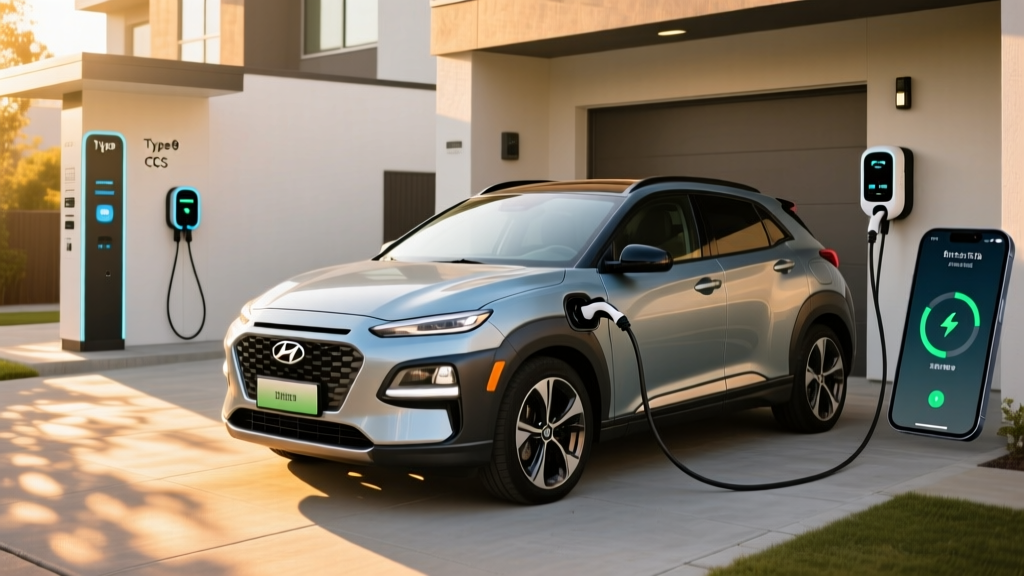
| J1772 (Level 2 AC) | Yes — native port | No | Home chargers, public Level 2 stations, workplaces |
| CCS1 (DC Fast) | Yes — native port (lower pins) | No | Electrify America, EVgo, ChargePoint DC stations |
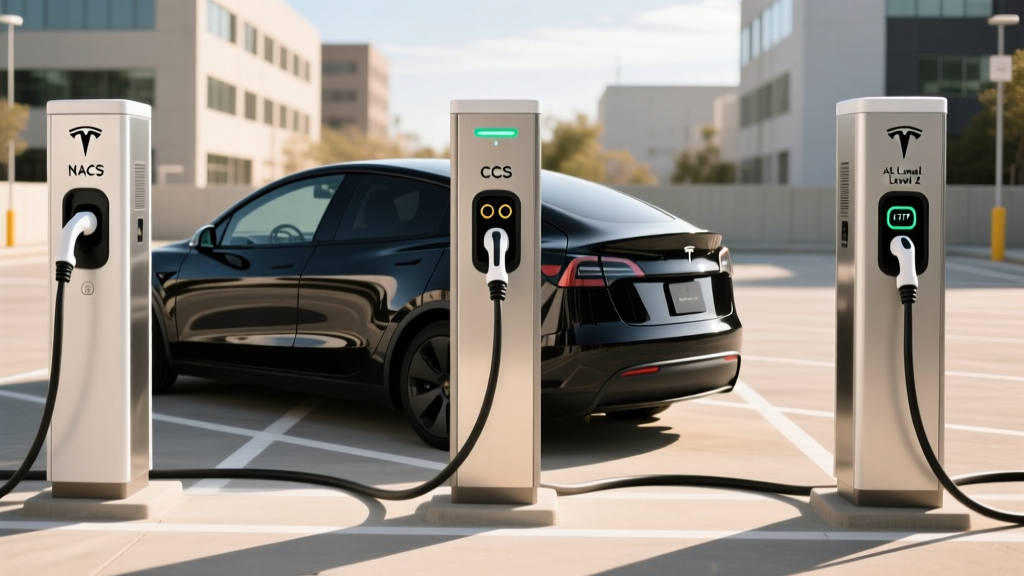
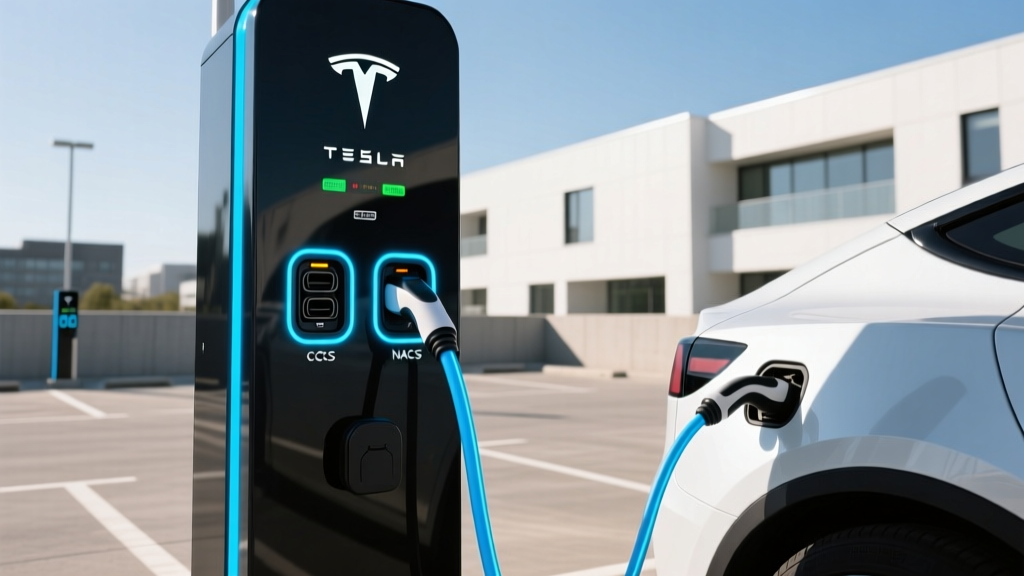
| NACS (Tesla / North American Charging Standard) | No | Yes — CCS-to-NACS adapter (~$200–$300) | Tesla Superchargers (open network, 2024+) |
| CHAdeMO | No | Not available (legacy standard) | Older Nissan Leaf stations — declining |
The NACS adapter situation: As Tesla's Supercharger network opens to non-Tesla EVs via the built-in Magic Dock or third-party CCS-to-NACS adapters (from brands like Lectron or A2Z), Kona Electric owners can access thousands of additional fast chargers. Hyundai does not currently provide a free NACS adapter with the Kona Electric (unlike some Ford or Rivian programs), so plan for a ~$200–$300 aftermarket purchase if Supercharger access matters in your area. Verify adapter compatibility with your specific model year before purchasing.
Level 2 Charger Equipment Picks for the Kona Electric
The Kona Electric's onboard charger maxes out at 10.9 kW on Level 2, meaning a 48A charger can utilize the car's full AC acceptance rate. Here are three well-regarded options:
Emporia Vue Level 2 EV Charger
- Power Output: 48A / 11.5 kW (240V)
- Connector: J1772 (NACS adapter available)
- Cable Length: 24 ft
- Smart Features: Wi-Fi, app scheduling, solar integration, energy monitoring
- Price: ~$399
- Best For: Budget-conscious buyers wanting full 48A output and smart scheduling
ChargePoint Home Flex
- Power Output: Up to 50A / 12 kW (adjustable 16A–50A)
- Connector: J1772
- Cable Length: 23 ft
- Smart Features: Wi-Fi, Alexa, app scheduling, amperage dial for panel flexibility
- Price: ~$649
- Best For: Homes with limited panel headroom (dial down to 32A/40A without swapping hardware)
Grizzl-E Smart
- Power Output: 40A / 9.6 kW (240V)
- Connector: J1772
- Cable Length: 24 ft
- Smart Features: Wi-Fi, OCPP support, extreme cold rated (-40°F), rugged aluminum case
- Price: ~$499
- Best For: Cold-climate owners, outdoor installs, Canadian-built durability
All three chargers are UL-listed (or ETL-listed), which is critical for passing electrical inspection and maintaining your homeowner's insurance coverage. Avoid unbranded or non-certified chargers from online marketplaces — they may lack proper safety mechanisms and will likely fail inspection.
Charging Cost Per Mile: Kona Electric vs. Gasoline
The Kona Electric's efficiency of approximately 3.3 mi/kWh (or 30 kWh/100 miles) makes it one of the cheaper EVs to fuel. Here's how costs compare across charging scenarios:
| Scenario | $/kWh | Cost Per 100 Miles | Cost Per Mile |
|---|---|---|---|
| Home — off-peak utility rate | $0.09 | $2.70 | $0.027 |
| Home — standard rate (national avg) | $0.16 | $4.80 | $0.048 |
| Public Level 2 (ChargePoint, etc.) | $0.30 | $9.00 | $0.090 |
| DC Fast Charge (Electrify America) | $0.48 | $14.40 | $0.144 |
| Gasoline car (28 MPG, $3.50/gal) | — | $12.50 | $0.125 |
At home on a standard utility rate, the Kona Electric costs roughly $0.05 per mile to fuel — less than half the cost of a comparable gasoline subcompact SUV. Even on DC fast chargers, the cost per mile is comparable to gasoline, and on home off-peak rates, the savings are dramatic: about $980 saved annually for a driver covering 10,000 miles per year versus the gas baseline.
Check whether your utility offers a time-of-use (TOU) plan with off-peak rates between 10 PM and 6 AM. Many utilities in California, Texas, and the Northeast offer rates as low as $0.06–$0.10/kWh during these windows, making overnight home charging extraordinarily cheap.
Safety, Code, and Best Practices for Home Charging
EV charging is a continuous high-draw electrical load — unlike a dryer that cycles on and off, a Level 2 charger can pull maximum current for 6–9 hours straight. This makes proper installation non-negotiable:
- Dedicated circuit: Your EV charger must have its own breaker — never share a circuit with other appliances.
- Outdoor-rated equipment: If installing outside, ensure the charger carries a NEMA 4 or NEMA 4X rating for weather resistance. The J1772 connector itself is rated for outdoor use, but the charger enclosure must be too.
- GFCI protection: NEC 2020 and later requires GFCI protection for all EV charging receptacles (625.40). Hardwired chargers with built-in ground-fault protection may satisfy this without a GFCI breaker.
- Cable management: A 24-foot cable coiled on a garage floor is a tripping hazard and can degrade from being driven over. Use a wall-mounted holster or retractable cable management system.
- Permit and inspection: Skipping the permit saves $50–$200 but risks failed insurance claims if an electrical fire occurs and voids utility rebate eligibility. Always pull a permit.
Frequently Asked Questions
How much does it cost to install a home EV charger for the Kona Electric?
Expect $1,500–$2,200 for a typical Level 2 installation in a home with adequate panel capacity. This includes a 32A–48A smart charger ($300–$700), electrician labor ($400–$1,500), materials, and permits. If your home needs a 200A panel upgrade, add $2,500–$5,000, bringing the total to $3,500–$6,500.
How fast will each charging level add range to the Kona Electric?
Level 1 (120V) adds roughly 4–5 miles per hour — suitable only for overnight trickle charging if you drive less than 40 miles daily. Level 2 at 32A adds about 25–28 miles per hour, fully replenishing the 64.8 kWh battery in ~9 hours. At 48A, expect ~37–40 miles per hour and a full charge in about 6 hours. DC fast charging peaks at ~100 kW and adds roughly 100 miles in 20 minutes under ideal conditions.
Which connector and charger are compatible with my Kona Electric?
The Kona Electric uses a J1772 connector for Level 1 and Level 2 AC charging and a CCS1 connector for DC fast charging — both are native ports on the vehicle. To access Tesla Superchargers, you'll need a CCS-to-NACS adapter ($200–$300). CHAdeMO is not compatible and is being phased out in the US market.
How much does charging the Kona Electric cost per mile versus gas?
At the US average home electricity rate of ~$0.16/kWh, the Kona Electric costs approximately $0.048 per mile to fuel. A comparable gas SUV at 28 MPG and $3.50/gallon costs $0.125 per mile — roughly 2.6× more. Over 10,000 miles annually, that's a $770/year fuel savings with home charging.
What electrical upgrades might I need for a home Level 2 charger?
The most common upgrade is a panel capacity increase. If your home has a 100A or 150A main panel and already runs multiple 240V appliances (dryer, range, HVAC), adding a 40A–60A EV circuit may exceed capacity. A licensed electrician will perform a load calculation per NEC Article 220. If an upgrade is needed, expect a 200A panel swap to cost $2,500–$5,000. Homes built after 2005 with 200A service rarely need this upgrade.
Can the Hyundai Kona Electric use Tesla Superchargers?
Yes, but only with a CCS-to-NACS adapter. Tesla's Supercharger network has opened to non-Tesla vehicles at select locations via the Magic Dock connector, and third-party adapters (Lectron, A2Z, Tesla's own CCS adapter for non-Teslas) enable broader access. The Kona Electric's peak DC charge rate of ~100 kW is well within most Supercharger stalls' capability, so you'll see near-peak speeds on V3 (250 kW) and V4 stalls.
Does cold weather affect the Kona Electric's range and charging speed?
Yes, significantly. In temperatures below 32°F, expect 25–35% range reduction due to battery heating demands and reduced regenerative braking efficiency. DC fast charging is also slower when the battery is cold — preconditioning via the Hyundai Bluelink app while plugged in warms the battery and restores near-normal charge speeds. On a 261-mile EPA Kona, plan for ~175–200 miles of real-world winter range.