Why Your Hyundai Ioniq 5 Charges Slowly at Tesla Superchargers
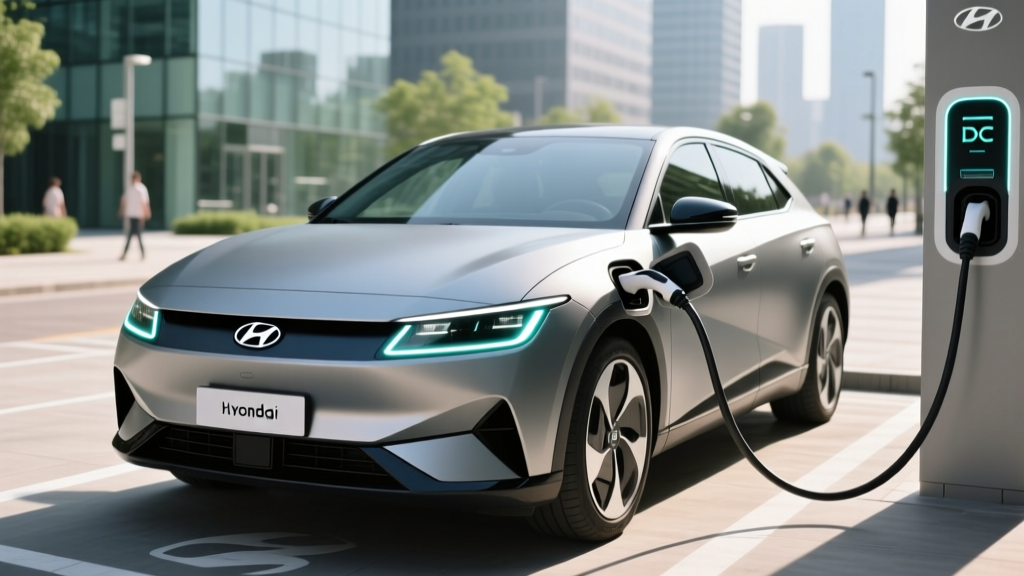
If you've pulled up to a Tesla Supercharger with your Hyundai Ioniq 5 and a CCS-to-NACS adapter, only to see charge speeds crawl well below the vehicle's 240 kW peak capability, you're not imagining things. The Ioniq 5's 800V E-GMP architecture is one of the fastest-charging platforms on the road — when paired with a compatible DC fast charger, it can add 10-80% in roughly 18 minutes. But when you route that power through a passive CCS1-to-NACS adapter at a Tesla V3 or V4 Supercharger, real-world speeds often plateau between 50 and 100 kW, sometimes dipping lower depending on state of charge, ambient temperature, and the specific adapter in use.
The reasons are both electrical and software-related. Passive adapters lack the active communication handshakes that native connectors perform with the vehicle's Battery Management System (BMS). Tesla's Supercharger network was engineered around the NACS protocol, and while the opening of the network to CCS vehicles via adapters has been a massive step forward for EV infrastructure, the adapter layer introduces resistance, protocol translation latency, and thermal throttling. The result: your Ioniq 5 is capable of far more than the adapter and charger combination is delivering.
This guide breaks down exactly why this happens, what you can do to maximize your charging speed, and how to set up a home charging system that eliminates public-charging frustration altogether.
Understanding Charging Levels: Speeds, Power, and What They Mean for Your Ioniq 5
Before diagnosing slow Supercharger sessions, it's essential to distinguish between kW (kilowatts), which measures the rate of power delivery, and kWh (kilowatt-hours), which measures total energy stored. Your Ioniq 5's battery holds 84 kWh of usable energy (in the Long Range AWD trim); the charger's kW rating tells you how fast that battery fills.
| Level | Voltage / Amps | Max Power (kW) | Miles of Range Added per Hour | Typical Use Case |
|---|---|---|---|---|
| Level 1 (120V) | 120V / 12A | ~1.4 kW | 3-5 mi/hr | Emergency / overnight trickle |
| Level 2 (240V) | 240V / 32-48A | 7.7-11.5 kW | 25-44 mi/hr | Home daily charging |
| DC Fast Charging | 400-800V DC | 50-350 kW | 150-900+ mi/hr (peak) | Road trips, rapid top-ups |
The Ioniq 5's onboard charger accepts up to 10.9 kW on Level 2 (at 48A), meaning a full charge from 10% to 100% takes roughly 7.5 hours at home. On DC fast charging at a compatible 350 kW CCS station, the 800V architecture allows peak rates up to ~240 kW — but that peak is sustained only briefly before the charge curve tapers. Expect a realistic 10-80% session at a native CCS charger to take 18-22 minutes, depending on battery temperature and starting state of charge.
How Much Does It Cost to Install a Home EV Charger?
Home Level 2 charging is the single most impactful upgrade an Ioniq 5 owner can make. You'll wake up to a full battery every morning, avoid public charger queues, and pay significantly less per mile than gasoline or public DC fast charging. But installation costs vary widely depending on your home's electrical panel, the distance from panel to charger location, and local permitting requirements.
| Component | Typical Cost Range | Notes |
|---|---|---|
| Level 2 Charger (Equipment) | $350 - $750 | Smart Wi-Fi chargers with 25ft cable |
| Electrician Labor (standard install) | $500 - $1,500 | Varies by run length, wall type, conduit |
| Electrical Permit | $50 - $250 | Required in most jurisdictions |
| Panel Upgrade (if needed) | $1,500 - $4,000 | 100A to 200A service upgrade for older homes |
| Total (no panel upgrade) | $900 - $2,500 | Most homes with 200A service |
| Total (with panel upgrade) | $2,400 - $6,500 | Homes with 100A or older panels |
What electrical upgrades might I need? The Ioniq 5 benefits most from a 48A Level 2 circuit, which requires a dedicated 60A breaker (EV chargers are considered continuous loads under NEC Article 625, so the circuit must be rated at 125% of the charger's max draw — 48A × 1.25 = 60A). If your home has a 200-amp electrical panel with available capacity, you likely won't need an upgrade. Homes with 100-amp service, or panels already near capacity from HVAC, electric ranges, and dryers, may require a service upgrade. A licensed electrician will perform a load calculation to determine this.
Important: The federal IRS §30D tax credit applies to the vehicle, not the charger. However, the separate Alternative Fuel Vehicle Refueling Property Credit (IRS §30C) may cover up to 30% of home charger installation costs (up to $1,000) if you live in an eligible census tract. Consult a tax professional for your specific eligibility.
Connector Compatibility: NACS, CCS1, and Your Ioniq 5
The 2026 Hyundai Ioniq 5 ships with a native CCS1 (Combined Charging System) port. This is the standard connector used by Electrify America, EVgo, and most non-Tesla DC fast-charging networks in North America. Tesla's NACS (North American Charging Standard) connector is now available on the Ioniq 6 and some newer Hyundai models, but the current Ioniq 5 still uses CCS1.
| Connector | Used By | Ioniq 5 Compatibility | Adapter Required? |
|---|---|---|---|
| CCS1 | Electrify America, EVgo, ChargePoint, most non-Tesla networks | Native (built-in port) | No |
| NACS (Tesla) | Tesla Superchargers, growing adoption by other networks | Via adapter | Yes — CCS-to-NACS adapter |
| CHAdeMO | Legacy Nissan Leaf infrastructure (declining) | Not compatible | N/A — no reliable adapter exists |
| J1772 | Level 2 public charging (CCS1 includes J1772 for AC) | Native (top portion of CCS port) | No |
Which connector/charger is compatible with my EV? For home Level 2 charging, any J1772 connector charger will plug directly into the Ioniq 5's CCS1 port (the upper J1772 portion handles AC charging). For DC fast charging, native CCS1 stations deliver the best performance. If you need Tesla Supercharger access for road trips, you'll need a CCS-to-NACS adapter — Hyundai has offered compatible adapters through dealerships, and third-party options from brands like Lectron and A2Z are available. However, understand the speed trade-off detailed in the opening section.
Charging Cost per Mile: Home vs. Public vs. Gas
One of the most compelling arguments for home charging is cost. Let's compare real scenarios for the Ioniq 5 Long Range AWD, which achieves an EPA-rated 101 MPGe combined (roughly 3.0 miles per kWh).
| Scenario | Rate | Cost per Full Charge (84 kWh) | Cost per Mile |
|---|---|---|---|
| Home (off-peak utility rate) | $0.09/kWh | $7.56 | $0.030 |
| Home (average US residential) | $0.17/kWh | $14.28 | $0.057 |
| Public Level 2 (ChargePoint, etc.) | $0.25-$0.49/kWh | $21-$41 | $0.08-$0.16 |
| DC Fast (Electrify America) | $0.35-$0.55/kWh | $29-$46 | $0.12-$0.18 |
| Tesla Supercharger (via adapter) | $0.28-$0.42/kWh | $24-$35 | $0.09-$0.14 |
| Gas equivalent (25 MPG, $3.50/gal) | — | $35.28 (for ~252 mi) | $0.14 |
How much does charging cost per mile vs. gas? At home off-peak rates, the Ioniq 5 costs roughly 3 cents per mile — about one-fifth the cost of a 25 MPG gas car at $3.50/gallon. Even at average residential rates, you're paying under 6 cents per mile. Public DC fast charging narrows the gap considerably, sometimes matching gas costs, which is why home charging is the economic sweet spot.
Equipment Recommendations: Best Home Chargers for the Ioniq 5
For maximum Level 2 performance with the Ioniq 5's 10.9 kW onboard charger, you want a 48-amp charger on a 60-amp dedicated circuit. Here are three proven options:
Emporia Vue Smart EV Charger
- Power Output: 48A / 11.5 kW (max)
- Connector: J1772 (compatible with Ioniq 5 CCS port)
- Cable Length: 24 feet
- Smart Features: Wi-Fi, energy monitoring via Emporia app, solar integration, scheduled charging, load management
- Price: ~$399
- Best For: Budget-conscious buyers wanting full smart features and energy tracking
ChargePoint Home Flex
- Power Output: Up to 50A / 12 kW (adjustable 16-50A via DIP switch)
- Connector: J1772
- Cable Length: 23 feet
- Smart Features: Wi-Fi, ChargePoint app, Alexa integration, scheduling, charging history
- Price: ~$649
- Best For: Brand reliability, flexible amperage for panel-constrained homes
Wallbox Pulsar Plus
- Power Output: 48A / 11.5 kW
- Connector: J1772
- Cable Length: 25 feet
- Smart Features: Wi-Fi + Bluetooth, myWallbox app, Power Sharing (two chargers on one circuit), eco-smart mode
- Price: ~$549
- Best For: Compact form factor, dual-charger garage setups
All three chargers are NEMA 4 rated for outdoor installation and include integrated cable management. For the Ioniq 5, any of these will deliver the full 10.9 kW the vehicle can accept on Level 2, adding approximately 40-44 miles of range per hour of charging.
Safety, Code Compliance, and Installation Best Practices
EV charger installation is electrical work that must meet National Electrical Code (NEC) requirements. Key considerations your electrician will address:
- Dedicated Circuit: Your Level 2 charger must be on its own dedicated circuit — it cannot share with other outlets or appliances. For a 48A charger, this means a 60A breaker.
- GFCI Protection: NEC 2020 and later requires GFCI (Ground Fault Circuit Interrupter) protection for EV charging outlets. Most hardwired chargers have built-in GFCI; if you use a NEMA 14-60 receptacle, your electrician will install a GFCI breaker.
- Outdoor Rating: If your charger is mounted outside, it must be rated NEMA 4 (weatherproof). All three chargers recommended above carry this rating.
- Wire Gauge: A 60A circuit typically requires 6 AWG copper wire (THHN in conduit) or 4 AWG aluminum. Longer runs may require upsizing to account for voltage drop.
- Permit and Inspection: Most municipalities require an electrical permit for EV charger installation, followed by an inspection. This protects your home insurance coverage and ensures code compliance.
Never use extension cords, adapters from unverified sources, or plug your charger into an outlet not rated for continuous duty. EV charging draws maximum current for hours — undersized wiring is a fire hazard.
Maximizing Your Ioniq 5's Charging Speed: Practical Tips
Beyond the Supercharger adapter limitation, here's how to extract the fastest possible charge from any scenario:
- Precondition the battery: Use the Ioniq 5's navigation-based battery preconditioning. When you set a DC fast charger as your navigation destination, the vehicle's thermal management system warms (or cools) the battery to optimal temperature before you arrive. This can shave 5-10 minutes off a 10-80% session, especially in cold weather.
- Start at a low state of charge: DC fast charging is fastest between 10-50% SoC. Above 80%, the charge rate tapers dramatically — from 240 kW peak down to under 30 kW. Plan to unplug at 80% and move on; the time spent charging from 80-100% at a DC fast station is rarely worth it.
- Choose 350 kW CCS stations: Electrify America's 350 kW chargers let the Ioniq 5's 800V system stretch its legs. A native CCS connection at these stations delivers the full 10-80% in 18-22 minutes — roughly half the time of a throttled Supercharger adapter session.
- Monitor charging via the Hyundai app: Watch real-time kW delivery. If you're consistently seeing under 100 kW at a 350 kW CCS station, the issue may be station-related (shared cabinet power splitting) rather than vehicle-related. Try a different stall.
Frequently Asked Questions
Why does my Ioniq 5 charge slower at Tesla Superchargers with an adapter?
Passive CCS-to-NACS adapters introduce protocol translation overhead, electrical resistance, and thermal limits. The Ioniq 5's BMS cannot communicate natively with Tesla's Supercharger protocol through the adapter, resulting in conservative charge rates typically between 50-100 kW — well below the vehicle's 240 kW capability on native CCS chargers.
How fast will each charging level add range to my Ioniq 5?
Level 1 (120V): 3-5 miles per hour. Level 2 (240V, 48A): approximately 40-44 miles per hour. DC Fast Charging (native CCS, 350 kW station): up to 200+ miles added in 18 minutes (10-80% session).
Is it worth buying a CCS-to-NACS adapter for my Ioniq 5?
Yes, for road-trip redundancy. Tesla's Supercharger network remains the most reliable and widespread DC fast-charging infrastructure in North America. Even at reduced speeds of 50-100 kW, having adapter access means more charging options on long drives. For daily use and planned road trips, prioritize native CCS stations for faster charging.
Can I charge my Ioniq 5 on a standard 120V outlet?
Yes, using the portable Level 1 charger that comes with the vehicle. At ~1.4 kW, you'll add roughly 3-5 miles of range per hour — enough to replenish 30-45 miles overnight. This works for low-mileage drivers but is impractical as a primary charging strategy for the 84 kWh battery.
What's the battery warranty on the Ioniq 5?
Hyundai covers the Ioniq 5's battery pack with a 10-year/100,000-mile warranty that guarantees the battery will retain at least 70% of its original capacity. Real-world degradation data from E-GMP platform vehicles suggests most owners will see 90%+ capacity retention at 100,000 miles under normal use.
How much does a full home charge cost for the Ioniq 5?
At the US average residential rate of $0.17/kWh, fully charging the 84 kWh battery costs approximately $14.28 — yielding roughly 252 real-world highway miles. Off-peak utility rates can bring this below $8.