Quick Verdict: Charging the Ioniq 5 SE Standard Range
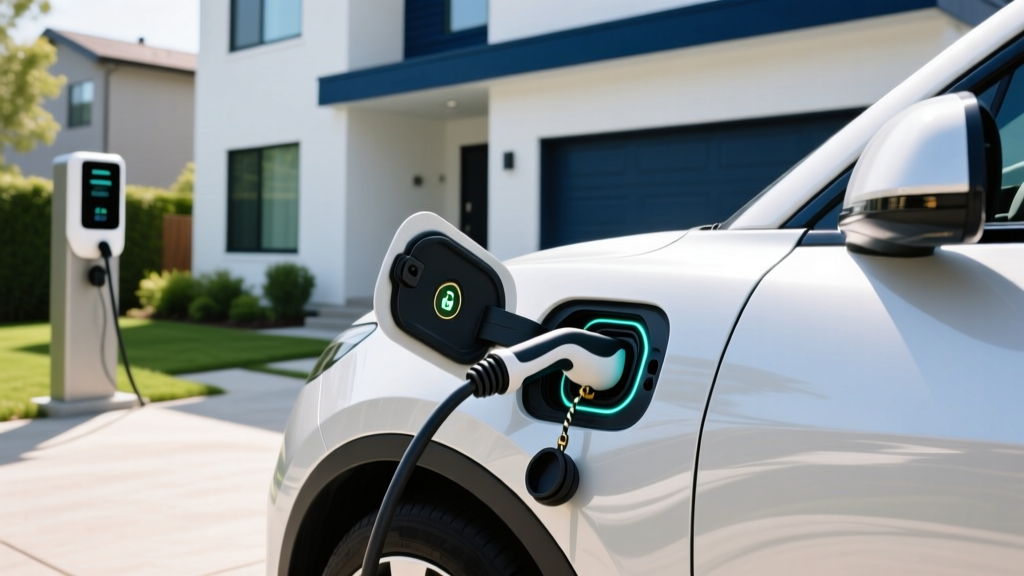
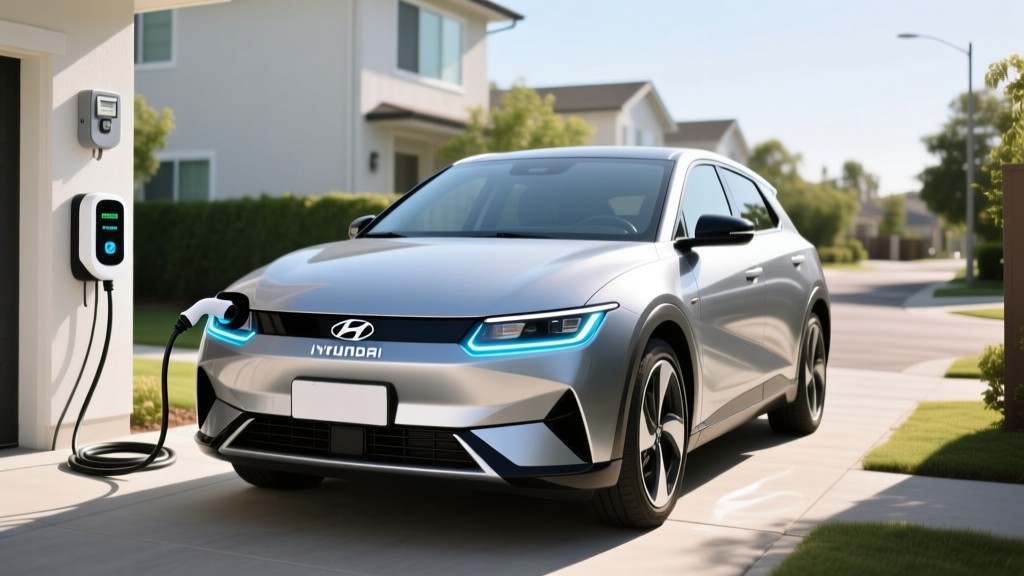
The Hyundai Ioniq 5 SE Standard Range pairs a 58 kWh usable battery (NMC chemistry) with an 800V-capable architecture that accepts up to 150 kW on DC fast chargers. That means a 10–80% charge in roughly 21 minutes at a compatible 150 kW+ station — or about 11.5 hours on a standard 120V household outlet (Level 1). For most owners, a home Level 2 charger wired to a 240V/48A circuit is the sweet spot, refilling the pack overnight in under 6 hours while costing roughly $0.04–$0.05 per mile on off-peak utility rates.
This guide walks through every charging scenario Ioniq 5 SE Standard Range owners will encounter — from garage wiring to road-trip DC fast charging — with exact numbers, costs, and equipment picks.
| Spec | Value |
|---|---|
| Battery (usable) | 58 kWh, NMC |
| EPA Range | 220 mi (RWD) |
| Real-World Highway Range | ~175–195 mi (70–80 mph); ~150–165 mi in cold weather (<32°F) |
| Max DC Fast Charge Rate | 150 kW (peak) |
| 10–80% DCFC Time | ~21 minutes (at 150 kW+ station, preconditioned) |
| Max Level 2 AC Rate | 10.9 kW (onboard charger) |
| Level 2 Full Charge (0–100%) | ~5.5 hours at 10.9 kW |
| Connector (2026 model year) | NACS (native Tesla Supercharger access) |
| EPA Efficiency | 114 MPGe combined (29 kWh/100 mi) |
| Battery Warranty | 10 years / 100,000 miles (≥70% capacity retention) |
| Base MSRP | ~$42,600 (before incentives) |
Charging Levels Explained: How Fast Will Each Add Range?
The single most common confusion for new EV owners is the difference between kW (power — how fast energy flows into the battery) and kWh (energy — the total capacity of the battery, like gallons in a tank). Your Ioniq 5 SE Standard Range has a 58 kWh battery. A 10 kW charger delivers 10 kWh of energy per hour. Simple math from there.
| Level | Voltage / Amperage | Max Power (kW) | Miles of Range Added per Hour | 10–80% Time (~41 kWh) |
|---|---|---|---|---|
| Level 1 (120V household outlet) | 120V / 12A | ~1.4 kW | ~4–5 mi/hr | ~29 hours |
| Level 2 (240V home/public) | 240V / 48A | 10.9 kW (vehicle-limited) | ~32–36 mi/hr | ~3.8 hours |
| DC Fast Charge (50 kW station) | 400V+ DC | 50 kW | ~150–170 mi/hr | ~49 minutes |
| DC Fast Charge (150+ kW station) | 800V DC | 150 kW (peak) | ~430–500 mi/hr (peak) | ~21 minutes |
Key insight: The Ioniq 5's onboard AC charger is rated at 10.9 kW. Even if you plug into a 48A Level 2 station capable of 11.5 kW, the car caps intake at 10.9 kW. That's still fast enough for overnight refills — you'll wake up with a full battery every morning unless you're driving 200+ miles daily.
DC fast-charge taper reality: The 150 kW peak rate applies roughly between 10–55% State of Charge (SoC). Above 55%, the rate tapers to ~100 kW; above 80%, it drops further to ~40–50 kW to protect battery longevity. That's why manufacturers quote 10–80% times rather than 0–100%. Charging from 80–100% on DCFC can take as long as 10–80%.
Home Charger Installation: Electrical Requirements & Costs
Installing a dedicated Level 2 home charger is the single biggest quality-of-life upgrade for Ioniq 5 ownership. Here's what the installation actually involves and what it costs.
Electrical Requirements
To get the Ioniq 5's full 10.9 kW Level 2 rate, you need a 240V circuit rated at 60 amps (EVSE derated to 48A continuous per NEC code). If your home's electrical panel is at or near capacity, you may need a panel upgrade from 100A to 200A service — a significant added cost for older homes.
| Item | Low End | High End | Notes |
|---|---|---|---|
| Level 2 EVSE equipment (smart charger, 48A) | $400 | $700 | Emporia, ChargePoint, Wallbox |
| Electrician labor (standard install, <50 ft run) | $500 | $1,200 | Varies by region and run complexity |
| Electrical permit | $50 | $200 | Required in most jurisdictions |
| Panel upgrade (100A → 200A, if needed) | $1,500 | $3,500 | Older homes often need this |
| Total (no panel upgrade) | $950 | $2,100 | Most homes with modern panels |
| Total (with panel upgrade) | $2,450 | $5,600 | Homes with 100A or maxed-out panels |
Panel upgrade gotcha: Homes built before 2000 often have 100A or 150A main panels. Adding a 60A EV circuit may exceed the panel's capacity, especially if you also run electric HVAC, a dryer, and an electric stove. Have your electrician do a load calculation before committing. Some utilities offer panel-upgrade rebates — check with your local provider.
Lower-cost alternative: If a 60A circuit isn't feasible, a 240V/20A circuit (NEMA 14-50 outlet on a 20A breaker) delivers ~3.8 kW — enough to add ~12–14 miles of range per hour. That refills the 58 kWh battery in about 15 hours, which works if you drive under 100 miles daily and can top off over two nights.
Connector Compatibility: NACS, CCS1, and Adapter Needs
For the 2026 model year, Hyundai has transitioned the Ioniq 5 to the NACS (North American Charging Standard) connector — the same plug used by Tesla. This gives you native access to Tesla Superchargers (V3 and V4) without an adapter, dramatically expanding your public fast-charging network.
| Network / Station Type | Connector | Compatible? | Adapter Needed? |
|---|---|---|---|
| Tesla Supercharger (V3/V4) | NACS | Yes (native) | No |
| Electrify America | NACS (newer stations) / CCS1 (legacy) | Yes | CCS1→NACS adapter for legacy stalls |
| EVgo | NACS / CCS1 | Yes | CCS1→NACS adapter for older stalls |
| ChargePoint (Level 2) | J1772 | Yes | J1772→NACS adapter (usually included with car) |
| Older public CCS1 stations | CCS1 | Yes | CCS1→NACS adapter (e.g., Lectron, A2Z, ~$150–$200) |
| CHAdeMO (Nissan Leaf standard) | CHAdeMO | No | No reliable adapter available |
Practical advice: Keep a CCS1-to-NACS adapter in your trunk. While new Electrify America and EVgo stations are adding NACS cables, many legacy stalls still use CCS1 exclusively. A $150–$200 adapter ensures you're never stranded. The J1772-to-NACS adapter for Level 2 public charging typically ships with the vehicle.
Cost to Charge: Home vs. Public vs. Gas
The Ioniq 5 SE Standard Range consumes approximately 29 kWh per 100 miles (EPA combined). Here's what that translates to in real dollars across different charging scenarios.
| Scenario | Rate | Cost per 100 Miles | Cost per Mile |
|---|---|---|---|
| Home Level 2 (off-peak utility rate) | $0.10/kWh | $2.90 | $0.029 |
| Home Level 2 (average US residential) | $0.17/kWh | $4.93 | $0.049 |
| Public Level 2 (ChargePoint, EVgo) | $0.30/kWh | $8.70 | $0.087 |
| DC Fast Charge (Electrify America) | $0.48/kWh | $13.92 | $0.139 |
| Tesla Supercharger (avg 2026) | $0.35/kWh | $10.15 | $0.102 |
| Gasoline vehicle (27 MPG avg, $3.40/gal) | $3.40/gal | $12.59 | $0.126 |
The takeaway: Charging at home on off-peak rates costs roughly one-quarter of what gasoline costs per mile. Even at public DC fast-charger prices, the Ioniq 5 is competitive with or cheaper than a 27 MPG gas car. The economics favor home charging heavily — if you can install Level 2 at home, your annual fuel cost for 12,000 miles of driving drops to roughly $350–$590, versus $1,510 for gasoline.
Time-of-use tip: Many utilities offer EV-specific rate plans with off-peak prices as low as $0.06–$0.10/kWh between 10 PM and 6 AM. Set your Ioniq 5's scheduled charging feature (via the infotainment system or Hyundai app) to charge during these windows and you'll minimize cost while waking up to a full battery.
Best Home Level 2 Chargers for the Ioniq 5 SE Standard Range
Since the Ioniq 5 caps AC charging at 10.9 kW, you don't need a 80A charger — but a 48A unit on a 60A circuit maximizes your car's capability. Here are three proven options for 2026.
Emporia Vue Level 2 EVSE (48A)
- Power Output: 11.5 kW max (Ioniq 5 will draw 10.9 kW)
- Connector: NACS (native)
- Cable Length: 24 ft
- Smart Features: Wi-Fi, app scheduling, energy monitoring, integrates with Emporia home energy monitor
- Price: ~$399
- Best For: Budget-conscious buyers who want smart scheduling and energy tracking
ChargePoint Home Flex (up to 50A)
- Power Output: 12 kW at 50A (Ioniq 5 caps at 10.9 kW)
- Connector: NACS (2026 model)
- Cable Length: 23 ft
- Smart Features: Wi-Fi, Alexa integration, app scheduling, Alexa/Google Home voice control
- Price: ~$549
- Best For: Smart-home enthusiasts who want voice control and robust app features
Wallbox Pulsar Max (48A)
- Power Output: 11.5 kW max
- Connector: NACS
- Cable Length: 25 ft (longest in class)
- Smart Features: Wi-Fi, Bluetooth, app scheduling, solar integration (pairs with home solar for green charging)
- Price: ~$599
- Best For: Homes with solar panels or longer cable-run needs
Installation note: All three chargers require a dedicated 60A, 240V circuit with 6 AWG copper wire (or 4 AWG aluminum). Your electrician will handle wire sizing based on run length. All are NEMA 4 rated for outdoor installation. Hardwired connections are preferred over plug-in (NEMA 14-50) for reliability and code compliance in many jurisdictions.
Safety, Code, and Permitting Essentials
EV charger installation is electrical work that must comply with the National Electrical Code (NEC Article 625) and your local jurisdiction's amendments. Here's what to verify with your electrician:
- Dedicated circuit: Your EVSE must be on its own dedicated breaker — no sharing with other appliances. A 48A continuous load requires a 60A breaker per NEC 125% rule.
- GFCI protection: NEC 2020+ requires GFCI protection for EVSE outlets. Hardwired units with built-in ground-fault protection satisfy this requirement.
- Outdoor rating: If your charger is mounted outside or in an unenclosed carport, it must be rated NEMA 4 (weatherproof). All three chargers recommended above meet this standard.
- Permit and inspection: Most municipalities require an electrical permit ($50–$200) and a post-installation inspection. Skipping the permit can void homeowner's insurance claims related to electrical fires and may cause issues at resale.
- Wire gauge: 6 AWG copper for runs under 100 feet; your electrician will upsize for longer runs to prevent voltage drop.
- Utility notification: Some utilities require you to notify them before adding a significant new load. This is also how you access EV-specific rate plans and rebates.
DC Fast Charging on Road Trips: What to Expect
The Ioniq 5's 800V electrical architecture is its charging superpower. While many competitors in this price range are limited to 400V systems (capping at ~100–125 kW DCFC), the Ioniq 5 can accept up to 150 kW — and it sustains high charge rates longer thanks to superior thermal management.
Real-world road-trip charging scenario (58 kWh battery):
- 10–55% SoC: Sustained ~140–150 kW — roughly 12 minutes, adding ~120 miles of range
- 55–80% SoC: Tapers to ~80–100 kW — roughly 9 minutes, adding ~65 miles of range
- 80–100% SoC: Drops to ~30–40 kW — roughly 18 minutes (skip this on road trips; drive on at 80%)
Preconditioning is critical: Use the Hyundai app or in-car navigation to route to your charging station. This triggers battery preconditioning — warming the pack to optimal temperature so it accepts peak charge rates upon arrival. Without preconditioning, especially in cold weather, your first 5–10 minutes of charging may be limited to 40–60 kW, adding several minutes to your stop.
Supercharger access: With the 2026 NACS-native Ioniq 5, you can use Tesla Superchargers directly. Tesla's V3 stalls deliver up to 250 kW, but the Ioniq 5 caps at 150 kW — still fast, and the Supercharger network's reliability is a major road-trip advantage. Use the Tesla app or the Ioniq 5's native navigation to locate and activate stalls.
Federal Tax Credit & Charging Incentives
The federal EV tax credit under IRS §30D remains available for qualifying new EVs, but eligibility for the Ioniq 5 SE Standard Range depends on several factors that change periodically:
- MSRP cap: SUVs must be under $80,000 — the Ioniq 5 SE qualifies at ~$42,600
- Buyer income cap: AGI must not exceed $150,000 (single) / $300,000 (joint) — verify against your tax return
- Battery sourcing: Critical minerals and battery components must meet phased-in domestic-content thresholds that tighten annually through 2030 — check fueleconomy.gov for current eligibility of the specific VIN
- Point-of-sale transfer: As of 2024+, you can transfer the credit to the dealer for an immediate price reduction at purchase — no need to wait for tax filing
- Home charger credit: A separate 30% credit (up to $1,000) under §30C may apply to home EVSE installation if you live in an eligible census tract — consult a tax professional
Always verify current eligibility before purchase. The Ioniq 5's South Korean assembly has historically complicated §30D qualification, though Hyundai's Savannah, GA plant (operational since late 2024) now produces US-built Ioniq 5s that may satisfy sourcing requirements. Confirm with your dealer and cross-reference the IRS eligible-vehicle list.
Frequently Asked Questions
How much does it cost to install a home EV charger for the Ioniq 5?
Expect $950–$2,100 for a standard installation (equipment + electrician + permit) if your electrical panel has sufficient capacity. If a panel upgrade from 100A to 200A is needed, total costs rise to $2,450–$5,600. Get at least two quotes from licensed electricians and verify they include permit costs.
How fast will each charging level add range to the Ioniq 5 SE Standard Range?
Level 1 (120V) adds roughly 4–5 miles per hour — too slow for daily use if you drive more than 40 miles. Level 2 (240V/48A) adds 32–36 miles per hour, refilling the 58 kWh battery in about 5.5 hours. DC fast charging at 150 kW adds 10–80% in ~21 minutes, ideal for road trips.
Which connector does the 2026 Ioniq 5 use, and will it work at non-Tesla stations?
The 2026 Ioniq 5 uses the NACS connector natively, giving direct access to Tesla Superchargers. For legacy CCS1 stations (still common at Electrify America and EVgo), you'll need a CCS1-to-NACS adapter (~$150–$200). For Level 2 public stations with J1772 connectors, a J1772-to-NACS adapter is typically included with the car.
How much does charging the Ioniq 5 cost per mile compared to a gas car?
At home on average US electricity rates ($0.17/kWh), the Ioniq 5 SE Standard Range costs about $0.049/mile — roughly 60% less than a 27 MPG gas car at $3.40/gallon ($0.126/mile). On off-peak utility rates ($0.10/kWh), it drops to $0.029/mile. Even at public DC fast-charger rates ($0.48/kWh), it's roughly comparable to gasoline at $0.139/mile.
What electrical upgrades might my home need for a Level 2 charger?
The most common upgrade is a panel replacement from 100A to 200A service ($1,500–$3,500) if your existing panel lacks capacity for a new 60A circuit. Homes built after ~2005 with 200A panels usually have sufficient headroom. Your electrician will perform a load calculation per NEC Article 220 to determine if an upgrade is required. Some utilities and states offer rebates for panel upgrades tied to EV adoption.
Does the Ioniq 5 SE Standard Range support vehicle-to-load (V2L)?
Yes. The Ioniq 5 offers V2L capability through an available outlet adapter, allowing you to power devices or small appliances (up to ~3.6 kW) from the vehicle's battery. This is useful for camping, tailgating, or emergency backup power. However, V2L does not support full vehicle-to-home (V2H) bidirectional charging — that requires different hardware currently available only on select models like the Ford F-150 Lightning.
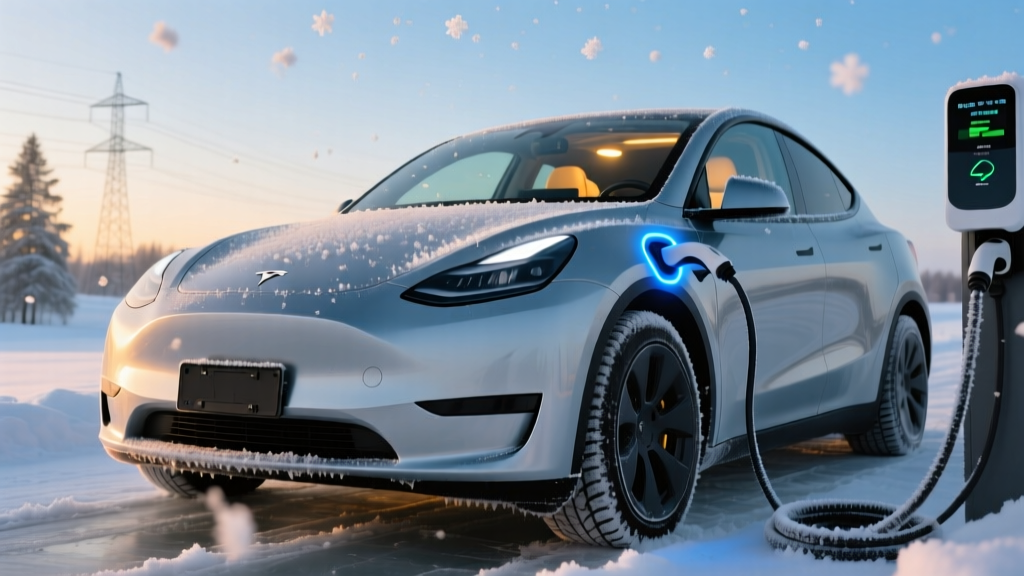
How does cold weather affect charging speed?
In temperatures below 32°F, a cold battery will accept charge more slowly until it warms up. Without preconditioning, DC fast charging may start at 40–60 kW instead of the normal 150 kW peak, adding 5–10 minutes to your 10–80% time. Always use the Ioniq 5's navigation to route to a charger — this triggers automatic battery preconditioning. Range also drops 20–30% in freezing weather due to cabin heating demands and reduced battery efficiency.