If you own or are shopping for a Hyundai Ioniq 5, understanding how to charge it efficiently is just as important as knowing its EPA range sticker. The 2026 Ioniq 5 comes in two battery configurations: a 63.0 kWh Standard Range pack and a 84.0 kWh Long Range pack (both NMC chemistry). The Long Range AWD variant delivers an EPA-estimated 305 miles of range, while the RWD model pushes up to 318 miles. But those numbers only matter if you can replenish them conveniently and affordably at home and on the road.
This guide breaks down exactly what it takes to charge an Ioniq 5 — from the electrical requirements for a Level 2 home install to real-world DC fast-charging curves, connector compatibility, and what you'll actually pay per mile compared to gas. We'll also recommend specific chargers that pair well with the Ioniq 5's 800-volt architecture.
Understanding the Ioniq 5's Battery and Real-World Range
Before choosing a charger, you need to know what you're filling. The Ioniq 5's E-GMP platform supports both 400V and 800V charging, which is a significant advantage at DC fast chargers. Here's the spec breakdown:
| Spec | Standard Range (RWD) | Long Range (RWD) | Long Range (AWD) |
|---|---|---|---|
| Battery (usable) | 63.0 kWh (NMC) | 84.0 kWh (NMC) | 84.0 kWh (NMC) |
| EPA Range | 245 mi | 318 mi | 305 mi |
| Real-World Highway | ~205-220 mi | ~265-285 mi | ~255-270 mi |
| Real-World Cold (30°F) | ~180-195 mi | ~230-250 mi | ~220-240 mi |
| MPGe (combined) | 119 MPGe | 114 MPGe | 110 MPGe |
| Peak DC Charge Rate | ~185 kW | ~233 kW | ~233 kW |
| 10-80% DC Fast Time | ~20 min | ~18 min (800V station) | ~18 min (800V station) |
| Level 2 (AC) Max Rate | 10.9 kW | 10.9 kW | 10.9 kW |
Charging Levels Explained: How Fast Will Each Add Range to Your Ioniq 5?
A critical distinction every EV owner must internalize: kW (kilowatts) measures power — the rate at which energy flows into your battery. kWh (kilowatt-hours) measures energy — the total capacity of the battery itself. Think of kW as the width of the hose and kWh as the size of the bucket. Your Ioniq 5 Long Range has an 84 kWh bucket; how fast you fill it depends on the kW rating of the charger.
| Level | Voltage | Power (kW) | Miles Added/Hour | Full Charge Time (84 kWh) |
|---|---|---|---|---|
| Level 1 (120V outlet) | 120V / 12A | ~1.4 kW | ~4-5 mi/hr | ~60+ hours |
| Level 2 (240V home) | 240V / 48A | ~11.5 kW | ~35-38 mi/hr | ~7.5 hours (0-100%) |
| Level 2 (240V / 40A) | 240V / 40A | ~9.6 kW | ~29-32 mi/hr | ~9 hours (0-100%) |
| DC Fast (350 kW station) | 800V DC | Up to ~233 kW peak | ~14-18 mi/min (at peak) | 10-80% in ~18 min |
| DC Fast (150 kW station) | 400-800V DC | Up to ~150 kW | ~10-12 mi/min (at peak) | 10-80% in ~25 min |
| DC Fast (50 kW station) | DC | ~50 kW | ~3-4 mi/min | 10-80% in ~75 min |
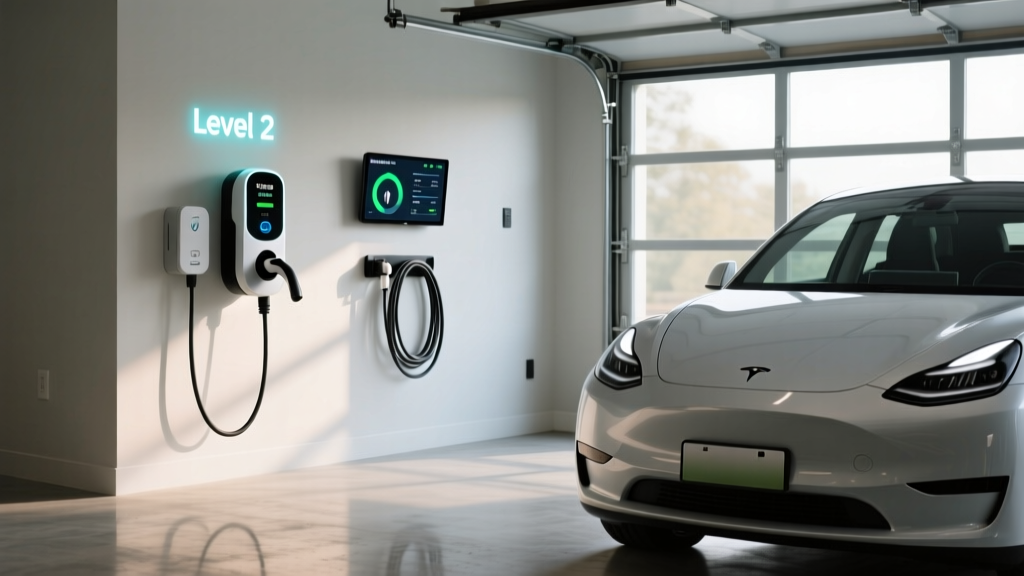
What this means for Ioniq 5 owners: A 48-amp Level 2 home charger is the sweet spot. The Ioniq 5's onboard charger maxes out at 10.9 kW, so a 48A/11.5 kW charger will use nearly all of it. A 40A charger (9.6 kW) is slightly slower but still adds about 200 miles overnight — more than enough for most drivers. Level 1 is viable only as a trickle top-up; at 4-5 miles per hour, fully recharging the Long Range battery takes over 2.5 days.
For DC fast charging, the Ioniq 5's 800V architecture is its party trick. At a 350 kW Electrify America or Ionity station, the Long Range model peaks near 233 kW and sustains over 180 kW through roughly 55% SoC before tapering. The 10-80% sprint takes about 18 minutes in ideal conditions. At a 150 kW CCS station — still the most common type in the U.S. — expect 10-80% in roughly 25 minutes.
Home Charger Installation: Electrical Requirements and Costs
Installing a Level 2 home charger is the single biggest quality-of-life upgrade for any Ioniq 5 owner. Here's what your electrician will assess:
Electrical Requirements
- Circuit: A 48A charger requires a dedicated 60-amp breaker (NEC requires circuits be rated 125% of continuous load). A 40A charger needs a 50-amp breaker.
- Voltage: 240V, single-phase — the same as your electric dryer or oven.
- Wire gauge: Typically 6 AWG copper for a 60A circuit, 8 AWG for 50A, depending on run length.
- Panel capacity: Most modern homes with 200-amp service can accommodate a 60A EV circuit. Older homes with 100A or 150A panels may need a panel upgrade or a load-management device.
Do You Need a Panel Upgrade?
If your home has a 200A main panel with available breaker slots and a load calculation that shows headroom, you're likely fine. If you have a 100A panel — common in homes built before the 1990s — you'll probably need an upgrade to 200A, which adds $1,500-$3,000 to the project. A licensed electrician will perform a NEC Article 220 load calculation to determine this.
Some utilities and municipalities now allow automated load management devices (e.g., the Emporia V2 with load-sensing module) that monitor your panel in real time and throttle the charger if total home draw gets too high. This can avoid a panel upgrade entirely, though not all jurisdictions accept them yet.
| Component | Low Estimate | High Estimate | Notes |
|---|---|---|---|
| Level 2 Charger (hardware) | $350 | $700 | 40A-48A smart charger |
| Electrician labor (standard install) | $400 | $1,200 | Depends on panel-to-garage distance, wall type |
| Materials (wire, conduit, breaker) | $100 | $400 | Longer runs cost more in copper |
| Permit & inspection | $50 | $250 | Varies by municipality |
| Panel upgrade (if needed) | $1,500 | $3,000 | 100A → 200A service upgrade |
| Total (no panel upgrade) | $900 | $2,550 | Typical: $1,200-$1,800 |
| Total (with panel upgrade) | $2,400 | $5,550 | Less common scenario |
The federal Alternative Fuel Vehicle Refueling Property Credit (IRC §30C) may cover up to 30% of home charging equipment and installation costs (capped at $1,000), though it's subject to census-tract eligibility requirements. Check IRS guidance or consult a tax professional for your specific situation.
Connector Compatibility: What Plug Does the Ioniq 5 Use?
The connector landscape has shifted dramatically. For the 2026 model year, Hyundai has transitioned the Ioniq 5 to the NACS (North American Charging Standard) port — the Tesla-designed connector now adopted by most major automakers. This is a significant change from the 2022-2024 models, which used CCS1.
| Model Year | Built-In Port | Tesla Supercharger Access | CCS Network Access | Adapter Needed? |
|---|---|---|---|---|
| 2025-2026 Ioniq 5 | NACS | Native (no adapter) | NACS-to-CCS adapter for Electrify America, EVgo CCS stalls | CCS adapter (sometimes included by Hyundai) |
| 2022-2024 Ioniq 5 | CCS1 | Tesla CCS adapter required | Native (no adapter) | Tesla NACS adapter for Superchargers |
Practical advice: If you're buying a 2026 Ioniq 5, you'll charge natively at Tesla Superchargers (now open to NACS-equipped non-Tesla EVs) and will need a NACS-to-CCS adapter for Electrify America and other CCS-only networks. Hyundai has indicated that a CCS adapter may be included with certain trims or available as a dealer accessory — confirm with your dealer at purchase. For home Level 2 charging, the NACS connector is used for all AC charging on the 2025+ models, so ensure your home charger has a NACS plug (or buy a J1772-to-NACS adapter if you already own a J1772 charger).
For owners of 2022-2024 Ioniq 5 models with CCS1, Tesla sells a CCS adapter (~$250) that unlocks Supercharger access. Third-party options from brands like Lectron are also available. The Ioniq 5's 800V system will operate at reduced speed on Tesla V3 Superchargers (which are 400V), peaking around 130-150 kW instead of the 233 kW possible at 800V Electrify America stations.
Charging Cost: What You'll Pay Per Mile vs. Gas
The economics of charging an Ioniq 5 depend heavily on where and when you plug in. The Long Range AWD model consumes roughly 30 kWh per 100 miles (or about 3.3 miles per kWh) in mixed driving, according to fueleconomy.gov.
| Scenario | Rate ($/kWh) | Cost for 300 mi | Cost per Mile | Gas Equivalent (30 MPG @ $3.50/gal) |
|---|---|---|---|---|
| Home (off-peak utility rate) | $0.09 | $8.10 | $0.027 | $35.00 ($0.117/mi) |
| Home (avg. national rate) | $0.16 | $14.40 | $0.048 | $35.00 ($0.117/mi) |
| Public Level 2 (ChargePoint, etc.) | $0.25-$0.39 | $22.50-$35.10 | $0.075-$0.117 | $35.00 ($0.117/mi) |
| DC Fast (Electrify America) | $0.36-$0.48 | $32.40-$43.20 | $0.108-$0.144 | $35.00 ($0.117/mi) |
| Tesla Supercharger (NACS) | $0.25-$0.36 | $22.50-$32.40 | $0.075-$0.108 | $35.00 ($0.117/mi) |
The takeaway: Charging at home on off-peak utility rates saves roughly 75% per mile compared to a 30 MPG gas vehicle at $3.50/gallon. Even at average residential rates, you'll save more than half. Public DC fast charging is the most expensive scenario and can approach or exceed gas costs per mile — but it's meant for road trips, not daily use.
Many utilities offer time-of-use (TOU) plans that drop rates to $0.06-$0.10/kWh overnight. Setting your Ioniq 5's scheduled charging feature (or your smart charger's scheduling) to charge between 11 PM and 6 AM can dramatically reduce your fuel costs. Some utilities — like PG&E's EV2-A plan or Xcel Energy's EV rate — offer dedicated EV tariffs worth investigating.
Best Home Chargers for the Hyundai Ioniq 5
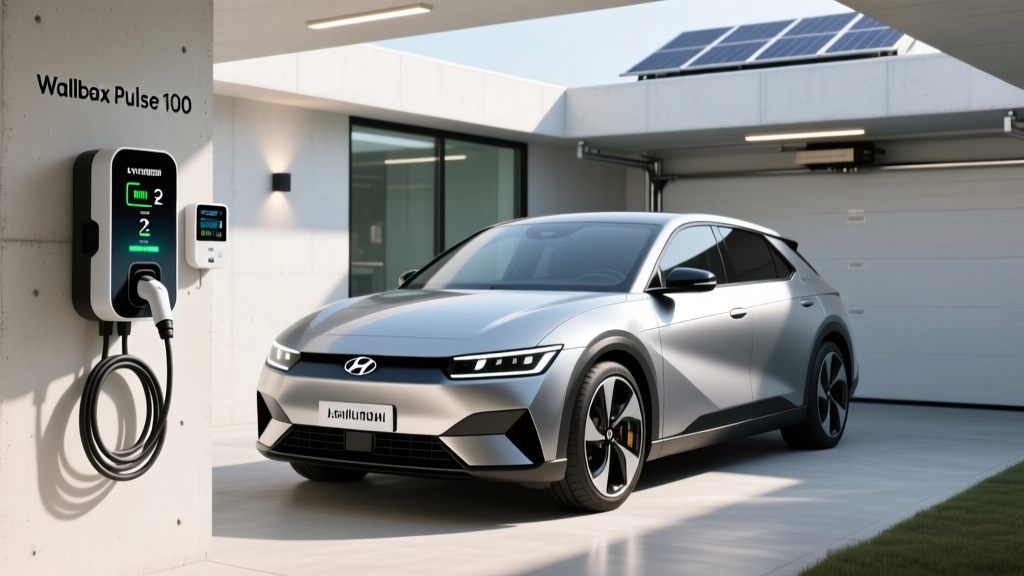
The Ioniq 5's 10.9 kW onboard charger means any 48A (11.5 kW) Level 2 charger will max it out. Here are our top picks based on reliability, features, and value:
Emporia Vue V2 (48A)
Power: 11.5 kW / 48A max (adjustable down)
Connector: NACS (J1772 version also available)
Cable length: 24 ft
Smart features: Wi-Fi, app scheduling, energy monitoring, load management module available, solar integration
Price: ~$399 (charger only); ~$499 with load management
Why it pairs well: The load management feature can avoid a panel upgrade in older homes. Real-time energy data helps track charging costs.
ChargePoint Home Flex (up to 50A)
Power: 12 kW / 50A max (selectable via app to match circuit)
Connector: NACS or J1772 (choose at purchase)
Cable length: 23 ft
Smart features: Wi-Fi, app scheduling, Alexa/Google integration, detailed session history
Price: ~$549
Why it pairs well: Flexible amperage setting means you can match it to a 40A, 50A, or 60A circuit without buying different hardware. Excellent app and reliability track record.
Grizzl-E Smart (40A)
Power: 9.6 kW / 40A
Connector: NACS or J1772
Cable length: 24 ft
Smart features: Wi-Fi, OCPP-compatible, app scheduling
Price: ~$449
Why it pairs well: Built in Canada for extreme cold (-40°F rated). If you're in a cold climate and want rugged outdoor durability, this is the pick. The 40A output still adds ~29 miles/hour — plenty overnight.
Tesla Wall Connector (48A)
Power: 11.5 kW / 48A
Connector: NACS (native)
Cable length: 24 ft
Smart features: Wi-Fi, OTA updates, power sharing (link multiple units), load management
Price: ~$475
Why it pairs well: If your 2025-2026 Ioniq 5 has NACS, this is a native plug match. Clean design, reliable hardware, and Tesla's firmware update track record is strong.
Our top pick for most Ioniq 5 owners: The ChargePoint Home Flex if you want maximum flexibility, or the Tesla Wall Connector if you have a 2025+ NACS model and want a seamless native connector experience. Both deliver the full 10.9 kW the Ioniq 5 can accept.
Safety, Permits, and Code Considerations
EV charging is a significant continuous electrical load, and shortcuts here are dangerous — and potentially uninsurable. Here's what you need to know:
- Dedicated circuit: Your Level 2 charger must be on its own dedicated breaker. Sharing a circuit with other appliances is a code violation and a fire hazard.
- GFCI protection: NEC 2020 (and later) requires GFCI protection for all 125V/250V EV charging outlets rated 50A or less. Hardwired chargers may be exempt depending on local interpretation, but most inspectors now require it. Many modern chargers have built-in GFCI protection.
- Outdoor rating: If your charger is mounted outside or in an unenclosed carport, it must be rated for outdoor use (NEMA 4 or IP65). All four chargers recommended above carry outdoor ratings.
- Permit and inspection: Most jurisdictions require a permit for a new 240V circuit. The inspection ensures the wire gauge, breaker size, grounding, and bonding meet NEC standards. Expect $50-$250 for the permit. Skipping it can void home insurance claims related to electrical fires.
- Hardwired vs. plug-in: A 48A charger on a NEMA 14-60 receptacle is common, but some jurisdictions require hardwired connections for circuits above 50A. Hardwired installs also eliminate the failure point of a receptacle that can loosen over time with daily plugging/unplugging.
Always hire a licensed electrician familiar with NEC Article 625 (Electric Vehicle Charging System Equipment). Ask for a detailed load calculation and a written quote that includes the permit fee.
DC Fast Charging the Ioniq 5: Maximizing the 800V Advantage
The Ioniq 5's ability to charge at 800V is one of its strongest competitive advantages, but it requires the right infrastructure to realize. Here's what you need to know about the charging curve:
Peak vs. sustained charging: The 233 kW peak rate on the Long Range model applies only between roughly 10% and 45% SoC at an 800V-capable station (350 kW rated). After 55%, the rate tapers to around 150 kW, then drops further to 80-90 kW above 70%, and slows significantly above 85% to protect the battery. This is why the industry standard metric is 10-80% time, not a full charge.
Preconditioning matters: The Ioniq 5 will precondition its battery for faster charging when you navigate to a DC fast charger via the built-in navigation system. If you arrive at a charger without preconditioning (e.g., you drove there without setting it as a nav destination), peak rates may be lower, especially in cold weather. Always use the nav system's "charge preconditioning" feature when possible.
Station compatibility: For maximum speed, seek out 350 kW Electrify America, Ionity (in Europe), or other 800V-capable stations. Tesla V4 Superchargers (rolling out in 2025-2026) are also expected to support higher voltages. Older Tesla V3 Superchargers are 400V and will cap the Ioniq 5 at roughly 130-150 kW — still fast, but not the 18-minute 10-80% the car is capable of.
Frequently Asked Questions
How much does it cost to install a home EV charger for the Ioniq 5?
A typical Level 2 home installation (48A charger, 60A circuit, moderate wire run) costs $1,200-$1,800 all-in, including the charger, electrician labor, materials, and permit. If your home needs a panel upgrade from 100A to 200A service, add $1,500-$3,000. The federal §30C tax credit may cover up to 30% of equipment and installation costs (max $1,000), subject to census-tract eligibility.
How fast will each charging level add range to the Ioniq 5?
Level 1 (120V) adds about 4-5 miles per hour — useful only for overnight trickle charging. Level 2 at 48A (240V) adds about 35-38 miles per hour, fully replenishing the Long Range battery in roughly 7.5 hours. DC fast charging at a 350 kW 800V station adds roughly 14-18 miles per minute at peak, achieving 10-80% in about 18 minutes.
Which connector does the 2026 Ioniq 5 use, and what charger should I buy?
The 2026 Ioniq 5 uses the NACS connector. For home Level 2 charging, buy a NACS-equipped charger like the Tesla Wall Connector or the NACS version of the ChargePoint Home Flex. For public DC fast charging, the Ioniq 5 can use Tesla Superchargers natively. For CCS-only networks like some Electrify America stations, you'll need a NACS-to-CCS adapter.
How much does charging the Ioniq 5 cost per mile compared to gas?
At a national average residential electricity rate of $0.16/kWh, the Ioniq 5 Long Range AWD costs roughly $0.048 per mile to charge at home — about 60% less than a 30 MPG gas car at $3.50/gallon ($0.117/mile). On off-peak utility rates ($0.09/kWh), the cost drops to $0.027/mile, a 77% savings. Public DC fast charging at $0.36-$0.48/kWh is the most expensive scenario and can approach gas costs.
What electrical upgrades might my home need for an Ioniq 5 charger?
Most homes with 200A electrical service and available breaker slots can accommodate a Level 2 charger without upgrades. Homes with 100A or 150A service may need a panel upgrade ($1,500-$3,000). An alternative is an automated load management device that dynamically throttles the charger to avoid overloading the panel — ask your electrician if this is permitted in your jurisdiction.
Should I charge my Ioniq 5 to 100% every night?
For the NMC battery in the Ioniq 5, daily charging to 80% is recommended for longevity. Set the car's charge limit to 80% for daily use and only charge to 100% when you need the full range for a road trip. Hyundai's battery warranty covers 10 years/100,000 miles with a capacity retention threshold of 70%, but conservative charging habits help you stay well above that.
Sources: Range and efficiency data from fueleconomy.gov (U.S. EPA). Hyundai Ioniq 5 specifications from Hyundai Motor America. Federal tax credit rules from IRS.gov (IRC §30C). Always verify current-year eligibility with a tax professional.