Hyundai Ioniq 5 CLTC Range vs. EPA: What the Numbers Actually Mean
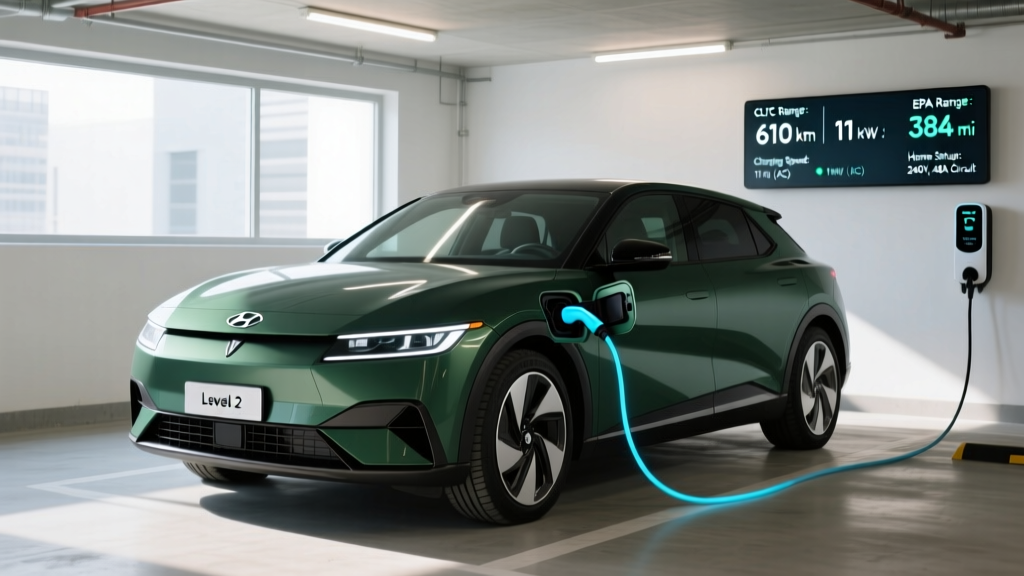
If you've been researching the Hyundai Ioniq 5 and stumbled across the Hyundai Ioniq 5 CLTC range figure, you're not alone. CLTC (China Light-Duty Vehicle Test Cycle) numbers often look significantly higher than the EPA estimates U.S. buyers rely on — and the Ioniq 5 is a prime example. The CLTC cycle tends to produce range figures 15-25% higher than the EPA cycle because it features lower average speeds, gentler acceleration, and less highway driving. For U.S. shoppers, the EPA number is the one that matters.
Ioniq 5 Range: CLTC vs. EPA vs. Real World
| Test Cycle / Scenario | Estimated Range |
|---|---|
| CLTC (China cycle, SE RWD Long Range) | ~610 km / ~379 mi |
| EPA (U.S. sticker, SE RWD Long Range) | 303 mi |
| EPA (SEL/Limited AWD) | 261 mi |
| Real-world highway (70 mph, moderate weather) | ~250-270 mi (RWD), ~215-235 mi (AWD) |
| Real-world cold weather (30°F, mixed driving) | ~210-240 mi (RWD) |
Sources: fueleconomy.gov, Hyundai spec sheets. CLTC figures are approximate conversions for the long-range RWD variant.
The takeaway: if you see a CLTC range figure around 379 miles for the Ioniq 5, understand that the real U.S. EPA rating is 303 miles for the RWD Long Range and 261 miles for AWD trims. On actual highway road trips, expect to plan charging stops at roughly 220-250 miles for the RWD and 190-210 miles for the AWD, depending on temperature and terrain.
The Ioniq 5's 800V Charging Architecture: Speeds That Actually Deliver
The Ioniq 5's standout feature isn't just range — it's the 800V E-GMP platform, which enables some of the fastest DC fast charging in its class. Here's the exact spec:
| Spec | Detail |
|---|---|
| Usable battery capacity | 77.4 kWh (Long Range, NMC chemistry) |
| Peak DC fast charge rate | ~240 kW (on 350 kW charger) |
| 10-80% DC fast charge time | ~18 minutes (optimal conditions) |
| Sustained charge rate (10-60%) | ~175-240 kW (tapers above ~65%) |
| Level 2 AC charge rate (onboard charger) | 10.9 kW |
| Level 2 full charge time (0-100%) | ~7 hours 20 minutes |
| Level 1 (120V) charge rate | ~1.4 kW |
The 800V architecture means the Ioniq 5 can sustain higher charge rates longer than 400V competitors. On a 350 kW Electrify America or Tesla Supercharger (with NACS adapter), you'll see peak rates near 235-240 kW through the low-to-mid state of charge, with a meaningful taper starting around 65-70% SoC. On a 150 kW charger, peak rates cap around 135-145 kW, pushing 10-80% to roughly 25-28 minutes.
A critical nuance: kW is power (charge rate); kWh is energy (battery capacity). The Ioniq 5's 77.4 kWh battery stores energy; a 240 kW charger delivers power to fill it. Think of kWh as the size of the tank and kW as the speed of the hose.
Charging Levels Explained: Speeds in kW and Miles Per Hour
| Level | Voltage | Power (kW) | Miles of Range Added Per Hour | Best Use Case |
|---|---|---|---|---|
| Level 1 | 120V AC | 1.0-1.4 kW | 3-5 mi/hr | Overnight top-off, PHEVs, low-mileage drivers |
| Level 2 (home) | 240V AC | 7.2-11.5 kW | 22-35 mi/hr | Daily home charging, full overnight replenishment |
| Level 2 (public) | 208-240V AC | 6.6-19.2 kW | 20-55 mi/hr | Workplace, shopping, destination charging |
| DC Fast (50 kW) | 400-800V DC | 50 kW | ~120-150 mi/hr | Older infrastructure, moderate road trips |
| DC Fast (150 kW) | 400-800V DC | 135-150 kW | ~350-450 mi/hr | Road-trip highway stops |
| DC Fast (350 kW) | 800V DC | 200-350 kW | ~500-750 mi/hr | Ioniq 5 peak capability, ultra-fast stops |
For the Ioniq 5 specifically, Level 2 home charging at its full 10.9 kW onboard rate adds roughly 33 miles of range per hour. A full overnight session from 20% to 100% takes about 6 hours — easily within a standard sleep cycle. DC fast charging at peak 240 kW can add approximately 175 miles in just 10 minutes under ideal conditions.
Home Charger Installation: Costs, Electrical Requirements, and Gotchas
Installing a Level 2 home charger for your Ioniq 5 is the single most impactful upgrade for EV ownership convenience. But costs vary dramatically depending on your home's electrical panel, the distance from panel to charger location, and local permit fees.
Electrical Requirements for the Ioniq 5
To take full advantage of the Ioniq 5's 10.9 kW onboard charger, you need a 240V circuit rated for at least 48 amps (a 60-amp breaker, since EV chargers should run at 80% of breaker capacity per NEC code). A 40-amp circuit (delivering 32 amps / 7.7 kW) will still charge the car overnight, just about 30% slower.
| Component | Typical Cost Range | Notes |
|---|---|---|
| Level 2 EVSE equipment (charger) | $300 - $700 | 40A-48A smart charger, 20-25 ft cable |
| Electrician labor (standard install) | $500 - $1,500 | Panel to garage, <30 ft run, conduit |
| Electrical permit | $50 - $200 | Varies by municipality |
| Panel upgrade (if needed) | $1,500 - $3,500 | 100A → 200A service; older homes common |
| Total (no panel upgrade) | $850 - $2,400 | Most newer homes with 200A service |
| Total (with panel upgrade) | $2,350 - $5,900 | Homes with 100A or maxed-out panels |
Do You Need a Panel Upgrade?
Homes built after 2000 typically have 200-amp service with spare breaker slots — you're likely fine. Homes built before 1985 often have 100-amp or 150-amp service. If your panel is near capacity (electric range, dryer, AC, water heater all running), adding a 48-60 amp EV circuit may require a panel upgrade or a smart load-management device like the Emporia V2 with automatic load shedding.
Safety and Code Considerations
- Dedicated circuit: NEC requires a dedicated breaker for EV charging — no sharing with other appliances.
- GFCI protection: Required for outdoor installations (NEC 2020+); most modern EVSEs include built-in GFCI.
- Outdoor rating: If mounting outside, ensure the charger is NEMA 4 rated for weather resistance.
- Hardwired vs. plug: 48-amp chargers typically require hardwiring (no NEMA 14-50 receptacle at 48A continuous). A 40-amp charger can use a NEMA 14-50 plug for portability.
- Permit and inspection: Most jurisdictions require a permit and final inspection — don't skip this, as it affects insurance and home resale.
Connector Compatibility: NACS, CCS1, and the Ioniq 5
For the 2025-2026 model years, Hyundai has transitioned the Ioniq 5 to the NACS (North American Charging Standard) connector in the U.S. market, aligning with Tesla's Supercharger network. Earlier model years (2022-2024) shipped with CCS1.
| Connector | Used By | Ioniq 5 Compatibility |
|---|---|---|
| NACS (Tesla/J3400) | Tesla, Ford, GM, Hyundai (2025+), Rivian, Volvo, others | Native on 2025+ models; adapter needed for 2022-2024 |
| CCS1 | Legacy VW, BMW, older Hyundai/Kia, Electrify America stations | Native on 2022-2024; adapter needed for 2025+ at CCS stations |
| CHAdeMO | Nissan Leaf, Mitsubishi (discontinued standard) | Not compatible — no adapter available |
If you own a 2022-2024 Ioniq 5 with CCS1, Hyundai and third-party manufacturers offer CCS1-to-NACS adapters (~$200-$300) enabling access to Tesla Superchargers. For 2025+ NACS-equipped Ioniq 5 models, most new Electrify America and EVgo stations now include NACS cables, but carrying a NACS-to-CCS adapter (~$150) ensures compatibility with older CCS-only stations during the transition period.
Charging Cost Per Mile: Ioniq 5 vs. Gas
The Ioniq 5 RWD Long Range achieves an EPA-rated 117 MPGe combined, consuming roughly 29 kWh per 100 miles. Here's what that translates to in real dollars:
| Charging Scenario | Rate ($/kWh) | Cost per 100 Miles | Cost per Mile |
|---|---|---|---|
| Home (off-peak utility rate) | $0.08 - $0.12 | $2.32 - $3.48 | $0.023 - $0.035 |
| Home (standard residential avg) | $0.16 | $4.64 | $0.046 |
| Public Level 2 (ChargePoint, EVgo) | $0.25 - $0.40 | $7.25 - $11.60 | $0.073 - $0.116 |
| DC Fast (Electrify America, EA Pass) | $0.35 - $0.55 | $10.15 - $15.95 | $0.102 - $0.160 |
| Gas equivalent (25 MPG, $3.40/gal) | — | $13.60 | $0.136 |
With home charging on a time-of-use plan, the Ioniq 5 costs roughly $0.03-0.05 per mile — about 70-75% cheaper than a comparable 25 MPG gas car. Even exclusive DC fast charging at $0.48/kWh averages around $0.14/mile, roughly on par with gas. The economics strongly favor home charging.
According to fueleconomy.gov, the Ioniq 5's annual fuel cost (electricity) is estimated at approximately $600-$700 for 15,000 miles of driving at average residential electricity rates, versus $1,800-$2,200 for a comparable gas crossover.
Best Level 2 Home Chargers for the Ioniq 5 (2026 Picks)
Emporia Vue Level 2 EV Charger
- Power output: 48 amps / 11.5 kW (hardwired) or 40 amps / 9.6 kW (NEMA 14-50)
- Connector: J1772 (CCS-compatible) or NACS (new variant)
- Cable length: 24 feet
- Smart features: Wi-Fi, app scheduling, solar integration, energy monitoring, load management
- Price: ~$350-$400
- Why it works: Matches the Ioniq 5's 10.9 kW onboard charger at near-max capacity. Excellent energy monitoring pairs well with solar or TOU rate optimization.
ChargePoint Home Flex
- Power output: Configurable 16-50 amps / 3.8-12 kW (hardwired at 50A)
- Connector: J1772 or NACS (2025+ models)
- Cable length: 23 feet
- Smart features: Wi-Fi, Alexa, app scheduling, flexible amperage settings
- Price: ~$550-$700
- Why it works: Adjustable amperage lets you match your circuit without a panel upgrade. Set to 32A on a 40A circuit or 48A on a 60A circuit.
Tesla Wall Connector (Universal)
- Power output: 48 amps / 11.5 kW (hardwired, 60A breaker)
- Connector: NACS native + J1772 adapter included
- Cable length: 24 feet
- Smart features: Wi-Fi, OTA updates, power sharing (multiple units on one circuit), load management
- Price: ~$600
- Why it works: Ideal for 2025+ NACS Ioniq 5. Power-sharing feature lets two chargers share a single 60A circuit — useful for two-EV households.
Ioniq 5 Charging FAQ
How much does it cost to install a home EV charger for the Ioniq 5?
Most installations with existing 200-amp service run $850-$2,400 including the charger, electrician labor, and permit. If your home needs a panel upgrade from 100A to 200A, add $1,500-$3,500. The federal §30D tax credit does not cover charger installation for residential use, but some utilities offer $250-$500 rebates — check with your local provider. The IRS previously offered a 30% charger credit under §30C, but availability depends on current-year extension and census-tract eligibility.
How fast will each charging level add range to the Ioniq 5?
Level 1 (120V): roughly 3-5 miles per hour. Level 2 (240V, 48A): roughly 33 miles per hour — a full overnight charge. DC fast at 150 kW: roughly 175 miles in 15 minutes. DC fast at 350 kW (Ioniq 5 peak): roughly 175 miles in 10 minutes, or 10-80% in approximately 18 minutes.
Which connector is compatible with my Ioniq 5?
2025 and newer Ioniq 5 models use the NACS connector natively, granting direct access to Tesla Superchargers. 2022-2024 models use CCS1 and require a CCS1-to-NACS adapter for Supercharger access. All model years can use J1772 Level 2 public chargers with appropriate adapters. CHAdeMO is not compatible.
How much does charging the Ioniq 5 cost per mile vs. gas?
With home charging at average residential rates ($0.16/kWh), the Ioniq 5 costs approximately $0.046 per mile — about 66% less than a 25 MPG gas car at $3.40/gallon ($0.136/mile). On off-peak utility rates ($0.08-0.12/kWh), costs drop to $0.023-0.035 per mile.
What electrical upgrades might I need for a Level 2 charger?
If your home has 200-amp service and open breaker slots, you likely need nothing beyond a new 60-amp breaker and conduit run. If your panel is 100-amp or near capacity, you'll need either a panel upgrade ($1,500-$3,500) or a smart load-management system that throttles the charger when other large appliances are running. Homes with only 120V outlets in the garage will need a 240V circuit installed. Always get a licensed electrician's assessment before purchasing equipment.
Does cold weather affect the Ioniq 5's charging speed?
Yes. The Ioniq 5's battery thermal management system helps, but in temperatures below 40°F, expect 10-80% DC fast charge times to increase by 20-40% unless you precondition the battery. Use the car's navigation to route to a charger — this triggers automatic battery preconditioning, warming the pack for optimal charge acceptance. Without preconditioning in freezing weather, peak charge rates may be limited to 100-150 kW instead of 240 kW.