For years, Hyundai EV owners watched Tesla drivers breeze past Electrify America queues and plug into reliably maintained Supercharger stalls. That gap closed when Hyundai began offering a free NACS adapter to owners of its CCS1-equipped electric vehicles, granting access to Tesla's Supercharger network — over 30,000 stalls strong in North America. If you drive a 2022–2025 Ioniq 5, Ioniq 6, or Kona Electric, here's exactly how the program works, what charging speeds to expect, and how to set up your home charging to match.
Why the Hyundai Free NACS Adapter Matters
Hyundai, like Ford, GM, Rivian, and most major automakers, committed to adopting the North American Charging Standard (NACS) — the connector Tesla designed and opened to competitors. Starting with the 2025 model year, new Hyundai EVs began shipping with a native NACS port. But for the tens of thousands of CCS1-equipped Hyundai EVs already on the road, the automaker launched a complimentary adapter program.
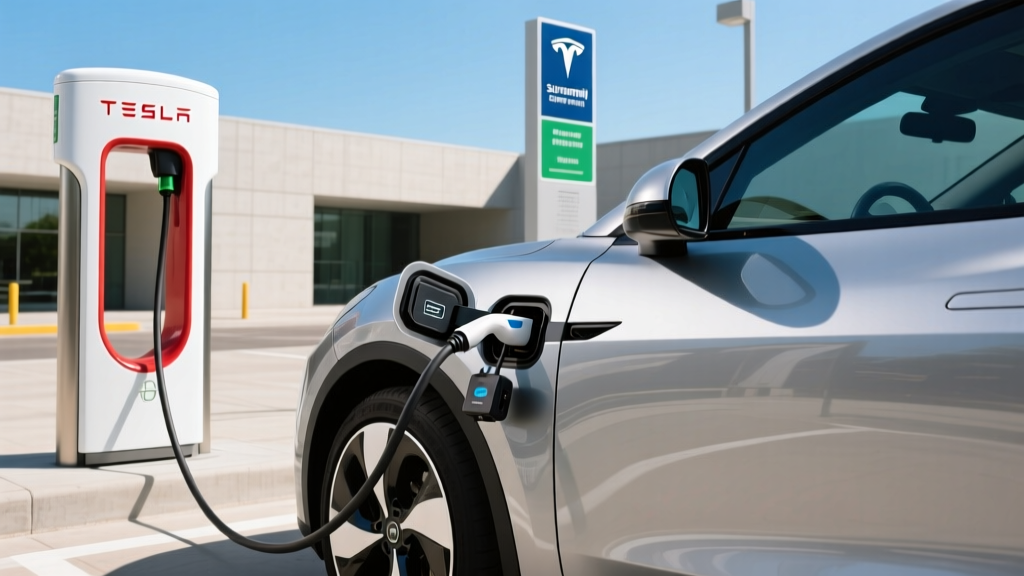
The adapter converts your vehicle's CCS1 (Combined Charging System) inlet to a NACS plug, letting you use Tesla Supercharger V3 and V4 stalls. This is significant because Tesla's network consistently ranks highest in reliability among DC fast-charging providers, with uptime frequently exceeding 99% at maintained stations.
Adapter limitation: The Hyundai NACS adapter supports DC fast charging at Supercharger stalls only. It does not enable AC Level 2 charging at Tesla Wall Connectors or Tesla Destination Chargers. For Level 2 public charging, you'll still need a J1772 connection (which most non-Tesla public stations provide natively).
Which Hyundai EVs Qualify for the Free NACS Adapter?
Hyundai's adapter program covers its recent CCS1-equipped battery electric vehicles. Eligibility typically requires:
- Ioniq 5 (2022–2025 model years, all trims)
- Ioniq 6 (2023–2025 model years, all trims)
- Kona Electric (2022–2025 model years — note the 2024+ redesign uses CCS1 as well)
Owners can request the adapter through the Hyundai Bluelink app or by contacting their dealer. Hyundai has periodically adjusted eligibility windows, so check the official Hyundai Electrified portal for the most current program terms.
Charging Levels Explained: Speeds, Power, and Real-World Times
Before connecting to any charger — Supercharger or home unit — you need to understand the three charging levels and how they translate to miles added per hour. The critical distinction: kW (kilowatts) measures power — the rate of energy delivery, like water pressure from a hose. kWh (kilowatt-hours) measures energy — the total amount stored in your battery, like the size of the tank.
| Level | Voltage | Max Power (kW) | Miles of Range Added Per Hour | Typical Use |
|---|---|---|---|---|
| Level 1 | 120V AC | 1.4 kW | 3–5 mi/hr | Overnight trickle; emergency top-ups |
| Level 2 | 240V AC | 7.2–19.2 kW | 20–60 mi/hr | Home daily charging; workplace; public AC |
| DC Fast Charge | 400–800V DC | 50–350 kW | 150–800+ mi/hr (peak) | Road trips; rapid top-ups |
Real-World Charging Times for Hyundai EVs
Here's what 10–80% DC fast charging looks like for popular Hyundai models at a Tesla Supercharger V3 (250 kW peak) using the NACS adapter:
- Ioniq 5 (77.4 kWh battery, 800V architecture): Peaks at ~235 kW, sustains high rate through ~55% SoC, tapers to ~100 kW by 70%. Expect 10–80% in approximately 18–22 minutes. The 800V platform is the key advantage here — it sustains higher power longer than 400V competitors.
- Ioniq 6 (77.4 kWh, 800V): Nearly identical charge curve to the Ioniq 5. 10–80% in roughly 18–20 minutes at a V3 Supercharger.
- Kona Electric (64.8 kWh, 400V): Peaks at ~100 kW, tapering more aggressively above 60%. Expect 10–80% in approximately 40–47 minutes.
Charging curve reality check: The "peak 235 kW" figure applies only at low state of charge (typically 10–30% SoC) and with a preconditioned battery. As your battery fills past 60–70%, the charge rate tapers significantly to protect cell health. This is why 10–80% time is the standard metric — the final 20% can take as long as the first 70%.
Home Charger Installation: Electrical Requirements and Cost Breakdown
The NACS adapter unlocks Superchargers for road trips, but daily charging should happen at home on Level 2. Here's what a proper home installation requires.
Electrical Specifications
A Level 2 home charger requires a 240-volt dedicated circuit. The most common and practical setup:
- 50-amp circuit breaker feeding a 40-amp continuous load (National Electrical Code requires circuits rated at 125% of continuous load)
- NEMA 14-50 outlet (240V, 50A) — the most versatile option, allowing you to unplug the charger if you move
- 6-gauge copper wire (some jurisdictions allow aluminum at 4-gauge)
- Alternatively, a hardwired connection at 48A or 60A for higher-power chargers — requires no outlet but is permanent
Panel Upgrade Considerations
Many older homes have 100-amp electrical service panels. Adding a 50-amp EV circuit to a panel already near capacity may require a service upgrade to 200 amps, which is the single largest variable in installation cost. A licensed electrician will perform a load calculation to determine if your panel can handle the addition.
| Component | Typical Cost Range | Notes |
|---|---|---|
| Level 2 charger unit (hardware) | $350 – $750 | Varies by brand, power output, smart features |
| Electrician labor (standard install) | $500 – $1,500 | Short run from panel to garage; longer runs cost more |
| Electrical permit | $50 – $200 | Required in most jurisdictions; varies by municipality |
| Panel upgrade (if needed) | $1,500 – $4,000 | 100A to 200A service upgrade; not always necessary |
| Total (no panel upgrade) | $900 – $2,450 | Most homes with 200A service fall in this range |
| Total (with panel upgrade) | $2,400 – $6,450 | Older homes with 100A panels |
Safety and Code Requirements
- Dedicated circuit: Your EV charger must be on its own breaker — never shared with other appliances.
- GFCI protection: The 2020 NEC requires GFCI (Ground Fault Circuit Interrupter) protection for outdoor receptacles; many chargers have built-in GFCI, but confirm with your electrician.
- Outdoor rating: If your charger is installed outdoors or in an unenclosed carport, it must carry a NEMA 4 (or IP65+) weather-resistance rating.
- Conduit and wire sizing: Your electrician will size conductors per NEC Article 625 — do not attempt DIY electrical work on a 240V circuit.
Connector Compatibility: NACS, CCS1, and What You Need to Know
The North American charging connector landscape has shifted dramatically. Here's how the standards break down for Hyundai owners:
| Connector | Type | Used By | Adapter Needed for Hyundai CCS1? |
|---|---|---|---|
| CCS1 (Combined Charging System) | DC Fast + AC Level 2 | 2022–2025 Hyundai, GM, VW, most non-Tesla EVs | None — native port |
| NACS (North American Charging Standard) | DC Fast + AC Level 2 | Tesla (all years); 2025+ Hyundai, Ford, GM, Rivian | Yes — Hyundai free NACS adapter for CCS1 vehicles |
| CHAdeMO | DC Fast | Nissan Leaf (legacy); being phased out | Not compatible; different architecture |
| J1772 | AC Level 1/2 only | All EVs for AC charging (non-Tesla) | None — native on CCS1 vehicles |
With the Hyundai free NACS adapter, your CCS1 vehicle gains access to:
- Tesla Supercharger V3 stalls (250 kW peak) — the backbone of the network
- Tesla Supercharger V4 stalls (up to 350 kW for compatible vehicles, though CCS1-adapted vehicles typically peak at the vehicle's own max charge rate)
- You retain native CCS1 access at Electrify America, EVgo, and other networks — the adapter is removable.
For a complete picture of DC fast-charging networks, see the DOE's EV technology overview on fueleconomy.gov.
Cost to Charge: Home vs. Public vs. Gas Comparison
One of the strongest arguments for EV ownership is per-mile energy cost. Here's how Hyundai EV charging costs compare across scenarios, using the Ioniq 5 (averaging ~3.5 miles per kWh, or roughly 120 MPGe combined) as the baseline:
| Charging Scenario | Cost per kWh | Cost per Mile (Ioniq 5) | Full 77.4 kWh Fill-Up |
|---|---|---|---|
| Home (off-peak utility rate) | $0.08 – $0.14 | $0.023 – $0.040 | $6.19 – $10.84 |
| Home (standard rate, no TOU) | $0.15 – $0.20 | $0.043 – $0.057 | $11.61 – $15.48 |
| Tesla Supercharger (national avg.) | $0.28 – $0.36 | $0.080 – $0.103 | $21.67 – $27.86 |
| Electrify America / EVgo (DC fast) | $0.35 – $0.52 | $0.100 – $0.149 | $27.09 – $40.25 |
| Gas equivalent (28 MPG combined, $3.40/gal) | — | $0.121 | — |
The takeaway: Home charging on off-peak rates costs roughly one-quarter to one-third of gasoline per mile. Even public DC fast charging at Tesla Superchargers typically undercuts gasoline. The savings compound: at 12,000 miles per year, home charging an Ioniq 5 saves approximately $900–$1,200 annually versus a comparable gas vehicle at 28 MPG.
Recommended Home Level 2 Chargers for Hyundai EVs
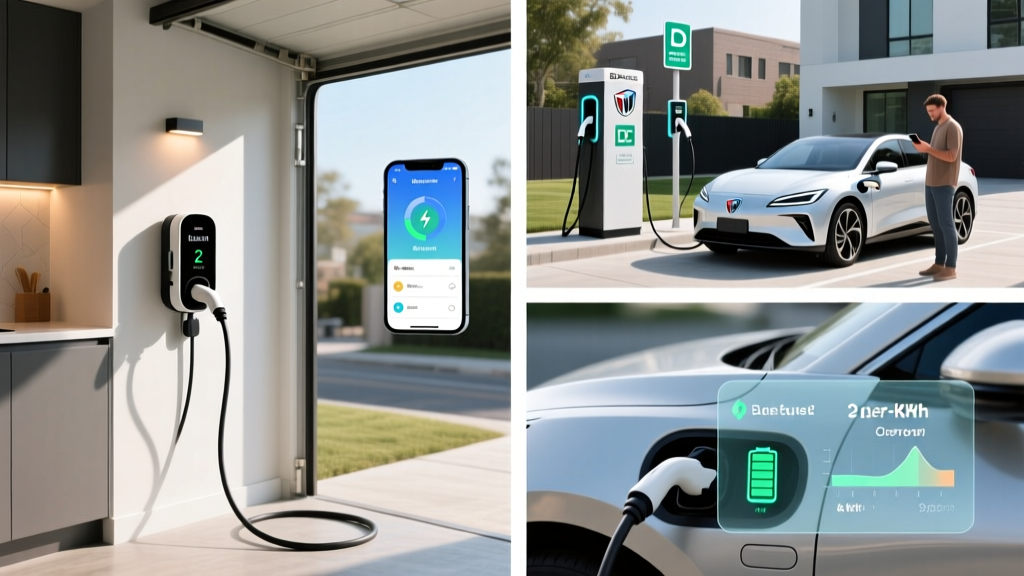
Pairing the right home charger with your Hyundai EV ensures you wake up to a full battery every morning. Here are three proven options, all using the J1772 connector (native to your Hyundai's AC charging port):
ChargePoint Home Flex
- Power output: Up to 12 kW (50A) on a 240V/50A circuit; configurable down to 16A for lower-capacity panels
- Connector: J1772 (plugs directly into any Hyundai EV)
- Cable length: 23 feet
- Smart features: Wi-Fi connected, ChargePoint app scheduling, Alexa integration, energy-use tracking
- Price: ~$549 (hardware only)
- Best for: Most Hyundai owners; flexible amperage works with older panels
Emporia Level 2 EV Charger
- Power output: Up to 11.5 kW (48A) on a 240V/60A circuit
- Connector: J1772
- Cable length: 24 feet
- Smart features: Wi-Fi, Emporia app with solar integration, real-time cost tracking, load management with Emporia energy monitor
- Price: ~$399 (hardware only)
- Best for: Budget-conscious buyers; solar-panel owners who want energy monitoring
Grizzl-E Smart
- Power output: Up to 10 kW (40A) on a 240V/50A circuit
- Connector: J1772
- Cable length: 24 feet
- Smart features: Bluetooth + Wi-Fi, adjustable amperage (16A–40A), OCPP compatible, built-in GFCI
- Price: ~$449 (hardware only)
- Best for: Outdoor installations (NEMA 4 rated, -40°C operating range); Canadian-built durability
Any of these chargers will fully replenish an Ioniq 5's 77.4 kWh battery in roughly 7–9 hours overnight — more than enough for daily driving. The Hyundai Ioniq 5's onboard charger maxes at 10.9 kW, so a 48A/11.5 kW charger like the Emporia extracts the vehicle's full AC charging capability.
Frequently Asked Questions
How do I get the Hyundai free NACS adapter?
Eligible Hyundai EV owners can request the adapter through the Hyundai Bluelink app or by visiting a participating Hyundai dealer. The adapter ships to your address at no cost. Program availability and eligibility windows may change, so check Hyundai's official electrified vehicle page for current terms.
Can I use the Hyundai NACS adapter at Tesla Destination Chargers?
Generally, no. Tesla Destination Chargers (the slower, wall-mounted Level 2 units at hotels and restaurants) output AC power and use a NACS connector that may not be compatible with the Hyundai adapter, which is designed primarily for DC fast charging at Supercharger stalls. For Level 2 public charging, use J1772-equipped stations — which remain the standard at non-Tesla locations.
Will using the NACS adapter reduce my charging speed?
In most cases, no. The adapter introduces negligible electrical resistance. Your vehicle's onboard charge controller — not the adapter — determines the maximum charge rate. The Ioniq 5 and Ioniq 6 will still peak at approximately 235 kW on a V3 Supercharger. The Kona Electric, limited to ~100 kW by its 400V architecture, will charge at its normal rate.
Do I need a special home charger to use with the NACS adapter?
No. The NACS adapter is for DC fast charging on the road. At home, you'll use a standard J1772 Level 2 charger (like the ChargePoint Home Flex or Emporia recommended above), which plugs directly into your Hyundai's CCS1 port without any adapter.
What happens to my Hyundai warranty if I use a third-party adapter?
The Hyundai-provided NACS adapter is an OEM-approved accessory and does not affect your vehicle's battery or powertrain warranty. Hyundai's EV battery warranty covers 10 years/100,000 miles with a capacity retention threshold (typically 70% of original capacity). Using non-OEM adapters from unknown manufacturers could theoretically complicate warranty claims — stick with the Hyundai-supplied unit.
Is a panel upgrade really necessary for home charging?
Not always. If your home has a 200-amp service panel with available capacity, a licensed electrician can typically add a 50-amp circuit without an upgrade. Homes with 100-amp panels, especially those running electric ranges, dryers, and HVAC, will likely need a service upgrade. Your electrician's load calculation is the definitive answer — expect this assessment to be part of any installation quote.