If you're researching Hyundai's electric vehicles, charging time is the single most practical spec to scrutinize. Hyundai has built its EV reputation on 800-volt architecture in the Ioniq family — a feature that dramatically cuts DC fast-charging times compared to the 400V systems found in most competitors. But how does that translate to real-world minutes at a plug, and what does it take to charge a Hyundai EV at home?
This guide evaluates Hyundai's 2026 EV lineup — the Ioniq 5, Ioniq 6, and Kona Electric — on charging time across all three charging levels. We'll break down exact kW rates, 10-80% session durations, home installation requirements, connector compatibility, and what you'll actually pay per mile. Whether you own a Hyundai EV or are comparing it against rivals, these numbers give you the full picture.
Hyundai's 2026 EV Lineup: Battery Sizes and Charging Architecture
Hyundai currently sells three battery-electric models in the U.S. market, spanning two distinct charging architectures. Understanding this split is essential before evaluating charging time.
| Model | Battery (usable kWh) | Chemistry | Architecture | Max DC Rate (kW) | EPA Range (mi) |
|---|---|---|---|---|---|
| Ioniq 5 (Standard Range) | 63.0 | NMC | 800V | ~150 | 290 |
| Ioniq 5 (Long Range AWD) | 84.0 | NMC | 800V | ~240 | 305 |
| Ioniq 6 (Long Range RWD) | 77.4 | NMC | 800V | ~240 | 361 |
| Kona Electric | 64.8 | NMC | 400V | ~100 | 261 |
The 800V architecture in the Ioniq 5 and Ioniq 6 allows these vehicles to accept higher power at DC fast chargers without overheating the battery pack. The Kona Electric, sharing its platform with older 400V designs, charges at roughly half the peak rate. This architectural difference is the single biggest factor in Hyundai charging-time evaluations.
Charging Levels Explained: Speeds in kW and Miles Per Hour
Before we evaluate Hyundai-specific charging times, you need to understand the three charging levels and the critical difference between kW (kilowatts — the rate of power delivery, like water pressure) and kWh (kilowatt-hours — the total energy stored, like gallons in a tank). A charger rated at 11.5 kW delivers energy at that rate; a 84 kWh battery holds that total amount. Confusing these two is the most common EV literacy mistake.
| Level | Voltage | Power (kW) | Miles Added/Hour | Typical Use |
|---|---|---|---|---|
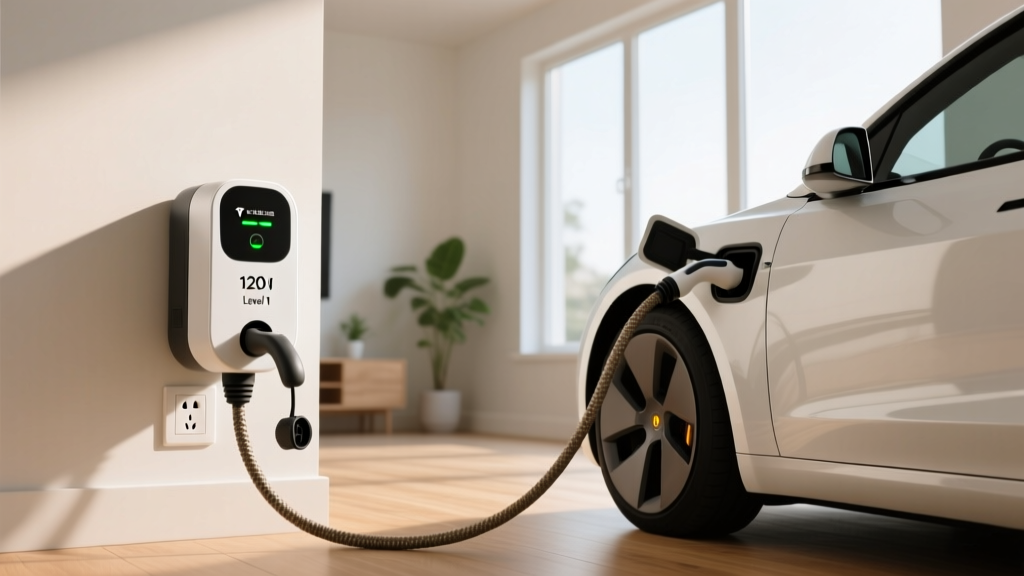
| Level 1 | 120V AC | 1.0–1.4 kW | 3–5 mi/hr | Emergency / overnight trickle |
| Level 2 | 240V AC | 7.2–11.5 kW | 25–45 mi/hr | Home daily charging / workplace |
| DC Fast (Level 3) | 400–800V DC | 50–350 kW | 150–700+ mi/hr (peak) | Road trips / quick top-ups |
For context, a Hyundai Ioniq 5 averaging 3.5 miles per kWh will add roughly 38 miles of range per hour on a 10.8 kW Level 2 home charger. On a 240 kW DC fast charger, that same vehicle can add over 200 miles in 18 minutes under ideal conditions.
Hyundai DC Fast-Charging Times: 10-80% Real-World Data
DC fast charging is where Hyundai's 800V Ioniq models distinguish themselves. Here's what the data shows when connected to appropriately rated chargers.
| Model | Peak DC Rate | Charger Required | 10-80% Time (claimed) | 10-80% Time (real-world) |
|---|---|---|---|---|
| Ioniq 5 LR AWD (84 kWh) | ~240 kW | 350 kW CCS/NACS station | ~18 min | 20–25 min |
| Ioniq 6 LR RWD (77.4 kWh) | ~240 kW | 350 kW CCS/NACS station | ~18 min | 20–24 min |
| Ioniq 5 Std Range (63 kWh) | ~150 kW | 150+ kW station | ~24 min | 26–32 min |
| Kona Electric (64.8 kWh) | ~100 kW | 100+ kW station | ~43 min | 45–55 min |
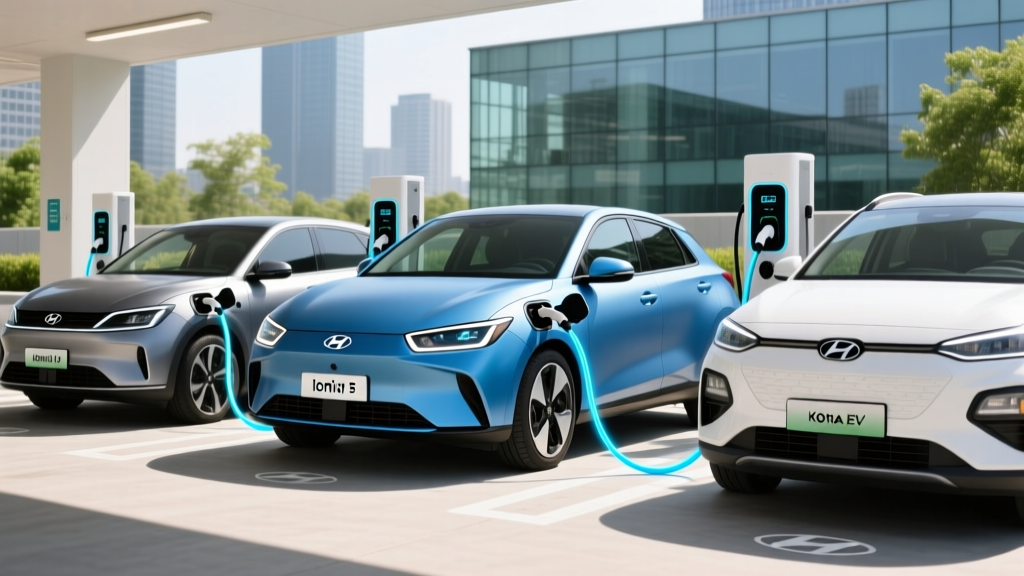
For road-trip planning, the Ioniq 5 and Ioniq 6 can realistically add 150-200 miles of range in a 20-minute stop at a 350 kW Electrify America or Tesla Supercharger (with NACS adapter). The Kona Electric requires longer stops — plan for 40-50 minutes to gain similar range.
Home Level 2 Charging for Hyundai EVs: Installation and Costs
Most Hyundai EV owners will do 80-90% of their charging at home on a Level 2 (240V) circuit. Here's what the installation involves and what it costs.
Electrical Requirements
A Level 2 home charger for a Hyundai EV requires:
- Voltage: 240V (same as a clothes dryer or electric oven)
- Amperage: 40A or 48A dedicated circuit (supporting 9.6 kW or 11.5 kW chargers respectively)
- Breaker: A dedicated double-pole breaker sized 125% above the charger's continuous draw (50A breaker for a 40A charger; 60A breaker for a 48A charger)
- Wiring: Typically 6 AWG copper (for 48A) or 8 AWG (for 40A), run in conduit
Panel Upgrade Considerations
This is where costs can escalate. Most modern homes have a 200A main electrical panel. If your panel is already near capacity (common with electric heat, electric water heaters, and EVSE), you may need a panel upgrade to 300A-400A, or a smart load-management device like the Span panel or a DCC (Demand Charge Controller) that throttles the charger when household demand spikes.
Homes with 100A service — common in older builds — will almost certainly need a panel upgrade before adding a 48A EV charger.
| Component | Low Estimate | High Estimate | Notes |
|---|---|---|---|
| Level 2 Charger (Equipment) | $350 | $750 | 32A–48A smart chargers |
| Electrician Labor | $500 | $2,000 | Depends on run length, wall type, attic/crawlspace access |
| Electrical Permit | $50 | $300 | Varies by municipality |
| Panel Upgrade (if needed) | $1,500 | $4,500 | 200A→300A/400A; not always required |
| Total (no panel upgrade) | $900 | $3,050 | Typical for newer homes with spare capacity |
| Total (with panel upgrade) | $2,400 | $7,550 | Older homes or high-load households |
The IRS residential clean energy credit (25C) covers 30% of home EVSE equipment and installation costs, up to $1,000 per year — confirm current-year eligibility with a tax professional, as income and census-tract restrictions may apply.
Level 2 Charging Times for Hyundai EVs at Home
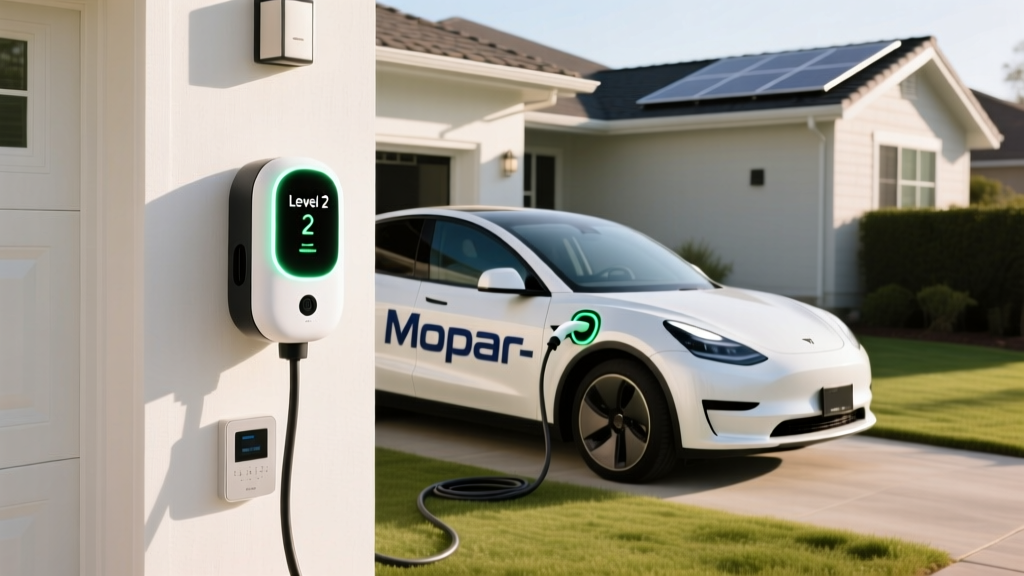
On a 48A (11.5 kW) Level 2 charger, here's how long a full charge (0-100%) takes for each Hyundai model:
- Ioniq 5 LR (84 kWh): ~7.5 hours
- Ioniq 6 LR (77.4 kWh): ~7 hours
- Kona Electric (64.8 kWh): ~6 hours
- Ioniq 5 Std Range (63 kWh): ~5.5 hours
Since most drivers charge from 20-80% daily (to preserve battery health), expect 4-5 hours on a Level 2 charger — easily accomplished overnight or during a workday.
Connector Compatibility: NACS, CCS, and Hyundai's Transition
Hyundai's connector situation in 2026 requires attention, as the industry is mid-transition from CCS1 to the North American Charging Standard (NACS, the Tesla connector).
| Model/Year | Built-In Connector | Tesla Supercharger Access | Adapter Needed? |
|---|---|---|---|
| 2025+ Ioniq 5 (refresh) | NACS (native) | Yes, direct | No |
| 2022-2024 Ioniq 5 | CCS1 | Yes, with adapter | CCS-to-NACS adapter (~$200-$250) |
| 2026 Ioniq 6 | NACS (native) | Yes, direct | No |
| 2023-2025 Ioniq 6 | CCS1 | Yes, with adapter | CCS-to-NACS adapter (~$200-$250) |
| 2024+ Kona Electric | CCS1 | Yes, with adapter | CCS-to-NACS adapter (~$200-$250) |
If you own a 2022-2024 Ioniq 5 or an older Ioniq 6, Hyundai has offered CCS-to-NACS adapters through dealerships. For non-Tesla DC fast-charging networks (Electrify America, EVgo, ChargePoint), CCS1 stations remain widely available but are declining in favor of NACS. Confirm adapter availability and compatibility with your specific VIN through your Hyundai dealer.
For Level 2 home charging, all Hyundai EVs use the J1772 connector (or NACS on newer models, which is backward-compatible with J1772 via a simple adapter included with most chargers). Any quality Level 2 home charger will work regardless of your Hyundai's DC fast-charge connector.
Cost to Charge a Hyundai EV: Home vs. Public vs. Gas
Charging economics vary enormously depending on where and when you plug in. Here's a realistic breakdown using Hyundai's efficiency figures.
| Scenario | Rate ($/kWh) | Cost for 84 kWh (Ioniq 5 LR) | Cost/Mile (3.3 mi/kWh avg) |
|---|---|---|---|
| Home off-peak (utility TOU) | $0.08–$0.12 | $6.72–$10.08 | $0.024–$0.036 |
| Home standard rate | $0.14–$0.18 | $11.76–$15.12 | $0.042–$0.055 |
| Public Level 2 (workplace/mall) | $0.20–$0.35 | $16.80–$29.40 | $0.061–$0.106 |
| DC Fast Charge (Electrify America) | $0.35–$0.55 | $29.40–$46.20 | $0.106–$0.167 |
| Gasoline comparison (28 MPG avg at $3.40/gal): $0.121/mile | |||
At home on off-peak utility rates, an Ioniq 5 costs roughly 3-4 cents per mile — about one-quarter the per-mile cost of a comparable gasoline SUV. Even on standard residential rates, you're paying 4-6 cents per mile. The economics only flip against EVs when you rely exclusively on expensive DC fast chargers at $0.45+/kWh, which is why home charging access remains the single biggest factor in EV satisfaction.
Hyundai's EPA-rated efficiency for the Ioniq 5 AWD is approximately 101 MPGe combined (33 kWh/100 mi), making it one of the more efficient electric SUVs in its class. The Ioniq 6, with its lower drag coefficient, achieves up to 140 MPGe (24 kWh/100 mi) in RWD form — translating to even lower per-mile costs.
Recommended Level 2 Chargers for Hyundai EVs
Based on power output, reliability, smart features, and Hyundai compatibility, these are our top Level 2 home charger picks for 2026.
ChargePoint Home Flex
Power: Up to 11.5 kW (48A, 240V)
Connector: J1772 (NACS adapter included)
Cable Length: 23 feet
Smart Features: Wi-Fi, app scheduling, Alexa integration, energy tracking
Price: ~$550–$650
Best For: Hyundai owners wanting flexible amperage settings (can be configured 16A-48A to match your circuit)
Emporia Vue Level 2 Charger
Power: Up to 11.5 kW (48A, 240V)
Connector: J1772
Cable Length: 24 feet
Smart Features: Wi-Fi, app control, solar integration, load management
Price: ~$400–$500
Best For: Budget-conscious Hyundai owners with solar panels; excellent load-management for older panels
Tesla Universal Wall Connector
Power: Up to 11.5 kW (48A, 240V)
Connector: NACS with integrated J1772 adapter
Cable Length: 24 feet
Smart Features: Wi-Fi, OTA updates, Power-Share for dual-charger setups
Price: ~$575–$650
Best For: Hyundai owners with native NACS (2025+ Ioniq 5, 2026 Ioniq 6) or those planning a future Tesla purchase
Grizzl-E Smart
Power: Up to 10 kW (40A, 240V)
Connector: J1772 (NACS version available)
Cable Length: 24 feet
Smart Features: Wi-Fi, OCPP-compatible, adjustable amperage
Price: ~$450–$550
Best For: Cold-climate Hyundai owners; rated to -40°F with a rugged aluminum enclosure
Safety and Electrical Code Considerations
Home EV charger installation is electrical work that must comply with the National Electrical Code (NEC) and your local jurisdiction. Key requirements:
- Dedicated circuit: Your EV charger must have its own dedicated breaker — it cannot share a circuit with other appliances.
- GFCI protection: NEC 2020 and later requires GFCI (Ground Fault Circuit Interrupter) protection for all EVSE installations. Most modern chargers have built-in GFCI; your electrician will verify compliance.
- Outdoor rating: If your charger is installed outdoors (garage exterior, carport, driveway), it must carry a NEMA 4 or NEMA 4X rating for weather resistance. All chargers listed above meet this standard.
- Permit and inspection: Most municipalities require an electrical permit for EVSE installation ($50-$300) and a post-installation inspection. Skipping this can void homeowner's insurance coverage for electrical fires.
- Hardwired vs. plug: Chargers above 40A typically must be hardwired (no plug). A 48A charger on a NEMA 14-50 receptacle is technically a code violation in many jurisdictions — hardwiring is safer and recommended.
Frequently Asked Questions
How much does it cost to install a home EV charger for a Hyundai?
Expect $900-$3,050 for a standard installation (charger + electrician + permit) if your electrical panel has spare capacity. If a panel upgrade is needed, add $1,500-$4,500. The IRS 25C credit may cover 30% of equipment and installation up to $1,000 — check current-year rules on irs.gov.
How fast will each charging level add range to my Hyundai EV?
Level 1 (120V): 3-5 miles per hour. Level 2 (240V, 48A): 30-40 miles per hour for an Ioniq 5. DC Fast (350 kW station): 150-200+ miles in 18-25 minutes for 800V Ioniq models; roughly half that speed for the 400V Kona Electric.
Which connector is compatible with my Hyundai EV?
2025+ Ioniq 5 and 2026 Ioniq 6 models have native NACS connectors. Earlier models (2022-2024 Ioniq 5, 2023-2025 Ioniq 6, Kona Electric) use CCS1 and require a CCS-to-NACS adapter (~$200-$250) for Tesla Supercharger access. For home Level 2 charging, all Hyundai EVs are compatible with standard J1772 chargers.
How much does charging a Hyundai EV cost per mile vs. gas?
Home charging at off-peak rates costs roughly 3-4 cents per mile in an Ioniq 5 — about 75% less than gasoline at $3.40/gallon in a 28 MPG vehicle (12 cents/mile). Even public DC fast charging at $0.45/kWh costs about 14-17 cents per mile, roughly on par with gas. The savings advantage is greatest when you charge at home.
What electrical upgrades might I need for a Hyundai home charger?
Most homes with a 200A panel and gas appliances can add a 48A EV circuit without upgrades. Homes with 100A service, all-electric appliances (heat pump, electric range, electric water heater), or an already-loaded panel may need a panel upgrade to 300A-400A ($1,500-$4,500) or a smart load-management device to avoid overloading the system. A licensed electrician's load calculation will determine this during the site assessment.
Does Hyundai's 800V architecture really make a difference in charging time?
Yes — measurably. The Ioniq 5 and Ioniq 6 can accept up to ~240 kW at a 350 kW charger, achieving 10-80% in roughly 20-25 minutes real-world. A comparable 400V vehicle (like the Kona Electric or most competitors) peaks around 100-135 kW and takes 35-50 minutes for the same session. On road trips, that's a meaningful difference — roughly 15-25 minutes saved per stop.