Hyundai's Charging Edge: What Sets the Ioniq Platform Apart
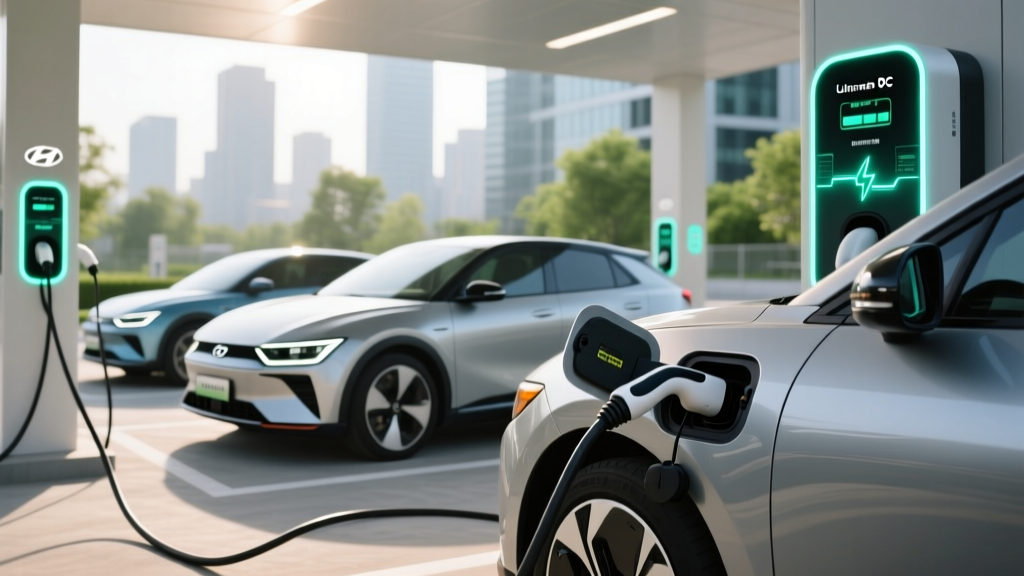
Hyundai's E-GMP (Electric-Global Modular Platform) has quietly become one of the most capable charging architectures in the mainstream EV market. While much of the industry's attention gravitates toward Tesla's Supercharger ecosystem, Hyundai's 800-volt battery system—standard on the Ioniq 5, Ioniq 6, and the larger Ioniq 9—delivers DC fast-charging speeds that rival or exceed vehicles costing significantly more. The practical result: a 10–80% charge in roughly 18 minutes on a sufficiently powerful charger, assuming ideal battery temperature and state of charge.
But fast public charging is only half the equation. To actually benefit from Hyundai's charging innovation, owners need a well-configured home Level 2 setup, an understanding of the evolving connector landscape (especially the industry-wide shift to NACS), and realistic expectations about what peak charge rates mean in practice. This guide breaks down every layer of charging a Hyundai EV in 2026—from the electrical panel in your garage to the nearest 350 kW DC fast charger.
kW (kilowatts) measures power—how fast energy flows into your battery, like water pressure from a hose. kWh (kilowatt-hours) measures energy—the total capacity of your battery, like the size of a water tank. A 77.4 kWh battery charged at 240 kW fills faster than one charged at 50 kW, but both store energy in kWh.
Charging Levels Explained: Speeds, Times, and Real-World Expectations
Every Hyundai EV owner will interact with three tiers of charging. Understanding the power output (kW) and approximate range added per hour at each level is essential for trip planning and daily logistics.
| Level | Voltage / Power | Typical kW Output | Miles of Range Added Per Hour | Best Use Case |
|---|---|---|---|---|
| Level 1 | 120V AC | 1.0–1.4 kW | 3–5 mi/hr | Overnight top-ups, emergency backup |
| Level 2 (Home/Public) | 240V AC | 7.2–11.5 kW | 22–40 mi/hr | Daily home charging, workplace, destinations |
| DC Fast Charging | 400–800V DC | 50–240+ kW | 180–650+ mi/hr (at peak) | Road trips, rapid replenishment |
Real-World Charging Times for Hyundai Models
Here's what 10–80% DC fast charging looks like across the current Ioniq lineup when connected to a charger capable of delivering the vehicle's peak rate:
- Ioniq 5 (77.4 kWh battery, 84 kW usable peak on 400V / up to ~240 kW on 800V chargers): 10–80% in approximately 18 minutes at a 350 kW station.
- Ioniq 6 (77.4 kWh, similar 800V architecture): 10–80% in approximately 18 minutes—slightly faster in practice due to the sedan's lower consumption (EPA-rated 140 MPGe combined on the Long Range RWD).
- Ioniq 9 (110.3 kWh battery, 800V): 10–80% in approximately 24 minutes at peak rate; larger battery absorbs energy longer but also requires more total energy to reach 80%.
Those 18-minute figures assume a preconditioned battery and a charger that can sustain high output. In practice, Hyundai's charge curve peaks around 230–240 kW between 10–40% SoC, then tapers progressively. From 60–80%, expect speeds closer to 80–100 kW. Cold weather (below 40°F) without preconditioning can add 5–10 minutes to the session. Always use the vehicle's navigation to route to a charger—this triggers battery preconditioning automatically.
Home Charging Setup: Electrical Requirements and Installation Costs
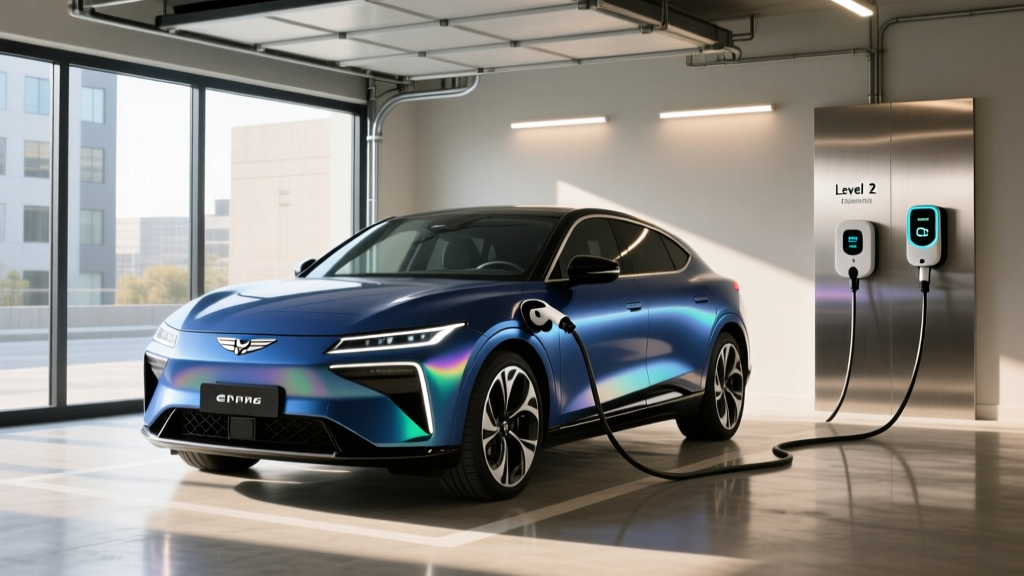
Hyundai's onboard charger accepts up to 10.9 kW on Level 2 (48 amps on a 60-amp circuit). To take full advantage, you need a 240V / 60A dedicated circuit with a hardwired EVSE or a NEMA 14-50 outlet on a 50A breaker (which caps delivery at 40A / 9.6 kW). Most Hyundai EV owners will find a 48A hardwired station delivers the best balance of speed and cost.
What Electrical Upgrades Might I Need?
Your home's electrical panel is the bottleneck that determines whether a simple charger install stays affordable or balloons into a major project. Here's what to evaluate:
- Panel capacity: A 200-amp service panel can typically accommodate a 60A EV circuit without issue. Older homes with 100A panels may require a panel upgrade to 200A, which is the single largest variable in installation cost.
- Available breaker slots: You need two adjacent slots for a 240V double-pole breaker. Full panels may require a sub-panel or tandem breakers.
- Wire run distance: Longer runs from the panel to the garage or driveway require thicker-gauge (and more expensive) copper wire. Runs over 50 feet can add $200–$600 in materials alone.
- Permit requirements: Most jurisdictions require an electrical permit and inspection for new 240V circuits. Permit fees typically range from $50 to $250 depending on your municipality.
| Cost Component | Typical Range | Notes |
|---|---|---|
| EVSE Equipment (Level 2 station) | $300–$750 | Varies by brand, power output, smart features |
| Electrician Labor (standard install) | $500–$1,500 | Short wire run, panel has capacity, no conduit issues |
| Electrical Permit | $50–$250 | Required in most jurisdictions; varies by municipality |
| Panel Upgrade (if needed) | $1,500–$3,500 | 100A → 200A service upgrade; not always required |
| Extended Wire Run (50+ ft) | $200–$600 | Thicker gauge wire for long distances |
| Total (no panel upgrade) | $850–$2,500 | Most common scenario for modern homes |
| Total (with panel upgrade) | $2,350–$6,000 | Older homes with 100A service |
Before committing to a charger purchase, hire a licensed electrician for a panel assessment. Many offer this evaluation for $100–$200, and it will determine whether you can install a 48A hardwired unit or should opt for a lower-amperage plug-in station.
Connector Compatibility: NACS, CCS, and the Adapter Landscape
The connector landscape has shifted dramatically. Hyundai's 2025 and 2026 Ioniq models built for the North American market are transitioning to the NACS (North American Charging Standard) port—the same connector Tesla uses. However, many 2022–2024 Ioniq 5 and Ioniq 6 vehicles on the road still have CCS1 ports. Here's what that means for charging access:
| Connector | Model Years | DC Fast Charging Access | Adapter Needed? |
|---|---|---|---|
| CCS1 | 2022–2024 Ioniq 5/6 | Electrify America, EVgo, ChargePoint (CCS stalls) | CCS-to-NACS adapter required for Tesla Superchargers |
| NACS (native) | 2025+ Ioniq 5, Ioniq 6, Ioniq 9 | Tesla Superchargers + growing NACS-equipped networks | NACS-to-CCS adapter needed for legacy CCS-only stations |
| CHAdeMO | Not used on Hyundai EVs | N/A | N/A |
Hyundai has confirmed that Ioniq vehicles with CCS1 ports can use Tesla Superchargers via a Hyundai-approved CCS-to-NACS adapter. When purchasing an adapter, verify it supports the full current your vehicle can accept—some cheap adapters are rated only to 150A, which bottlenecks the Ioniq 5's capability on high-power chargers. A quality adapter from a reputable manufacturer (such as the official Hyundai accessory or a Lectron/A2Z unit rated for 250A+) typically costs $150–$300.
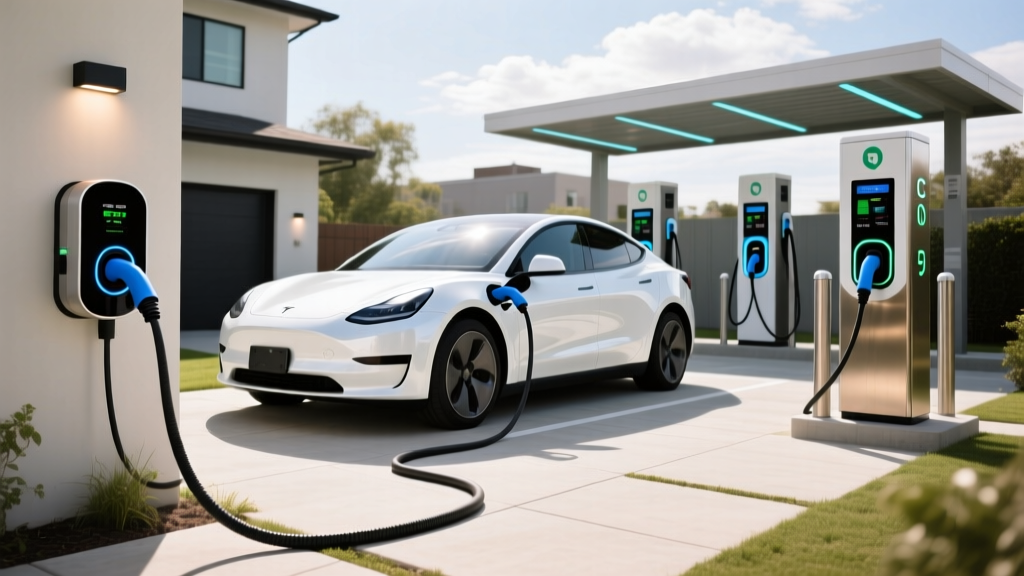
For Level 2 home charging, all Hyundai EVs use the standard J1772 connector (CCS vehicles) or can use a J1772-to-NACS adapter (NACS vehicles). Most home Level 2 stations ship with a J1772 plug, so NACS-equipped Ioniq owners should confirm adapter inclusion or purchase one separately ($40–$80).
Cost to Charge: Home vs. Public vs. Gas Comparison
One of the most compelling arguments for Hyundai's EV lineup is operating cost. But the actual savings depend heavily on where and when you charge. Let's break this down with real numbers using the Ioniq 5 Long Range AWD as our baseline (EPA efficiency: 3.5 miles/kWh, or approximately 98 MPGe combined per fueleconomy.gov).
| Charging Scenario | Cost per kWh | Cost per Mile (Ioniq 5) | Equivalent Gas Price at 28 MPG |
|---|---|---|---|
| Home (off-peak utility rate) | $0.08–$0.14 | $0.023–$0.040 | $0.64–$1.12/gal |
| Home (average US residential rate ~$0.17/kWh) | $0.17 | $0.049 | $1.36/gal |
| Public Level 2 (ChargePoint, EVgo L2) | $0.25–$0.49 | $0.071–$0.140 | $1.99–$3.92/gal |
| DC Fast (Electrify America, EVgo DC) | $0.35–$0.56 | $0.100–$0.160 | $2.80–$4.48/gal |
| Tesla Supercharger (where accessible) | $0.25–$0.40 | $0.071–$0.114 | $1.99–$3.20/gal |
At the US average gas price of approximately $3.30/gallon (early 2026), a 28 MPG compact SUV costs about $0.118/mile to fuel. Charging at home on an off-peak rate saves roughly 65–80% per mile. Even DC fast charging, the most expensive EV option, is often competitive with or cheaper than gasoline on a per-mile basis—though the gap narrows considerably on networks charging $0.50+/kWh.
For a driver covering 12,000 miles per year, home charging at $0.14/kWh costs approximately $570 annually. The same distance in a 28 MPG gas vehicle at $3.30/gallon costs about $1,414. That's an annual fuel savings of roughly $840—though this assumes consistent home charging access.
Recommended Home Level 2 Chargers for Hyundai EVs
Hyundai's 10.9 kW onboard charger means you benefit from a 48-amp station. Here are three proven units that pair well with the Ioniq lineup, each offering different trade-offs in price, smart features, and build quality:
ChargePoint Home Flex
- Power Output: Up to 12 kW (50A) — configurable down to 16A
- Connector: J1772 (NACS adapter available)
- Cable Length: 23 feet
- Smart Features: Wi-Fi, app scheduling, Alexa integration, energy tracking
- Price: ~$550–$650
- Best For: Owners who want app-based scheduling and utility rate optimization
Emporia Level 2 EV Charger
- Power Output: Up to 11.5 kW (48A)
- Connector: J1772
- Cable Length: 24 feet
- Smart Features: Wi-Fi, real-time energy monitoring, solar integration, load management
- Price: ~$350–$400
- Best For: Budget-conscious buyers with solar panels or who want granular energy data
Grizzl-E Smart
- Power Output: Up to 10 kW (40A)
- Connector: J1772
- Cable Length: 24 feet
- Smart Features: Wi-Fi, OCPP support, adjustable amperage
- Price: ~$450–$550
- Best For: Cold-climate durability (rated to -40°F), outdoor installations
All three units require a dedicated 240V circuit. The ChargePoint and Emporia support hardwired installation for maximum amperage; the Grizzl-E is available in both hardwired and NEMA 14-50 plug-in versions. For outdoor installations, verify the unit carries a NEMA 4 rating (weatherproof against splashing water and ice formation).
Safety, Code, and Installation Best Practices
EV charging draws sustained high current for hours—far longer than a dryer or oven cycle. This makes code compliance and safety-conscious installation non-negotiable:
- Dedicated circuit: Your EVSE must be on its own dedicated double-pole breaker. Sharing a circuit with other appliances risks tripped breakers and overheated wiring.
- Continuous load derating: The National Electrical Code (NEC) requires that continuous loads (defined as operating for 3+ hours) use only 80% of a circuit's rated capacity. A 60A breaker supports a continuous 48A draw; a 50A breaker supports 40A. This is why a "50A" EVSE actually requires a 60A circuit.
- GFCI protection: The 2020 NEC and later editions require GFCI protection for receptacles used for EV charging in garages. Hardwired EVSE units typically have built-in ground-fault protection, eliminating the need for a GFCI breaker (which can also reduce nuisance trips).
- Outdoor rating: If your charger is mounted outside or in an open carport, the enclosure must be rated NEMA 4 or higher. Indoor-only units (NEMA 2 or 3R) are not rated for direct water exposure.
- Cable management: Avoid letting the charging cable lie on the ground where it can be driven over, submerged in standing water, or tripped over. Wall-mounted cable organizers or retractors ($25–$60) protect both the cable and your household.
Always pull a permit and schedule the required inspection. An unpermitted EV charger install can void homeowner's insurance coverage in the event of an electrical fire and may cause issues during a future home sale.
Frequently Asked Questions
How much does it cost to install a home EV charger for my Hyundai?
A typical Level 2 home installation with an existing 200A panel and a short wire run costs between $850 and $2,500 all-in (equipment, electrician labor, and permit). If your home has an older 100A panel that needs upgrading to 200A, the total can reach $2,350 to $6,000. Always get a panel assessment from a licensed electrician before purchasing equipment.
How fast will each charging level add range to my Ioniq 5 or Ioniq 6?
Level 1 (120V) adds roughly 3–5 miles per hour—enough for overnight top-ups if you drive under 30 miles daily. Level 2 at 48A / 11.5 kW adds approximately 32–38 miles per hour, fully replenishing an Ioniq 5's 77.4 kWh battery in about 7–8 hours. DC fast charging at peak rate (240 kW on an 800V charger) can add over 200 miles in 15 minutes, though the charge curve tapers significantly above 60% SoC.
Which connector is compatible with my Hyundai EV?
Model years 2022–2024 use CCS1 for DC fast charging and J1772 for Level 2. The 2025+ Ioniq 5, Ioniq 6, and Ioniq 9 are transitioning to NACS (Tesla-style connector). Check your vehicle's charge port or owner's manual to confirm. CCS-equipped Hyundais can access Tesla Superchargers with an approved adapter (typically $150–$300). NACS-equipped models can use legacy CCS stations with a reverse adapter.
How much does charging cost per mile compared to gas?
Charging at home on an average residential rate (~$0.17/kWh) costs the Ioniq 5 approximately $0.049/mile. A comparable 28 MPG gas SUV at $3.30/gallon costs $0.118/mile. That's a 58% per-mile savings with home charging. DC fast charging at $0.48/kWh costs about $0.137/mile—slightly more than gas—so the biggest savings come from consistent home charging. See the DOE EV fuel economy data for model-specific efficiency figures.
What electrical upgrades might I need for a Level 2 charger?
The most common upgrade is a panel capacity increase from 100A to 200A service, which costs $1,500–$3,500 and is typically necessary in homes built before the 1990s. You'll also need two adjacent breaker slots, adequate wire gauge (typically 6 AWG copper for a 60A circuit), and a permit. If your panel is full, a sub-panel or tandem breakers may be needed. A licensed electrician can assess all of this in a pre-installation evaluation.
Does Hyundai's 800V system work on any DC fast charger?
Yes. Hyundai's 800V E-GMP architecture is backward-compatible with 400V chargers. On a 350 kW 800V station (like Electrify America's newest stalls), the Ioniq 5 can accept up to ~240 kW. On a 150 kW 400V station, it will charge at whatever that station can deliver—typically 70–100 kW for the Ioniq platform. The 800V system's advantage is fully realized only at high-power 800V-capable chargers.
Is there a federal tax credit for home charger installation?
The IRS Alternative Fuel Vehicle Refueling Property Credit covers 30% of home EVSE equipment and installation costs, up to a maximum of $1,000. Eligibility depends on your census tract meeting certain low-income or non-urban criteria. Check the IRS guidelines or consult a tax professional, as qualifying tract maps are updated periodically and the credit has specific sourcing and eligibility requirements.