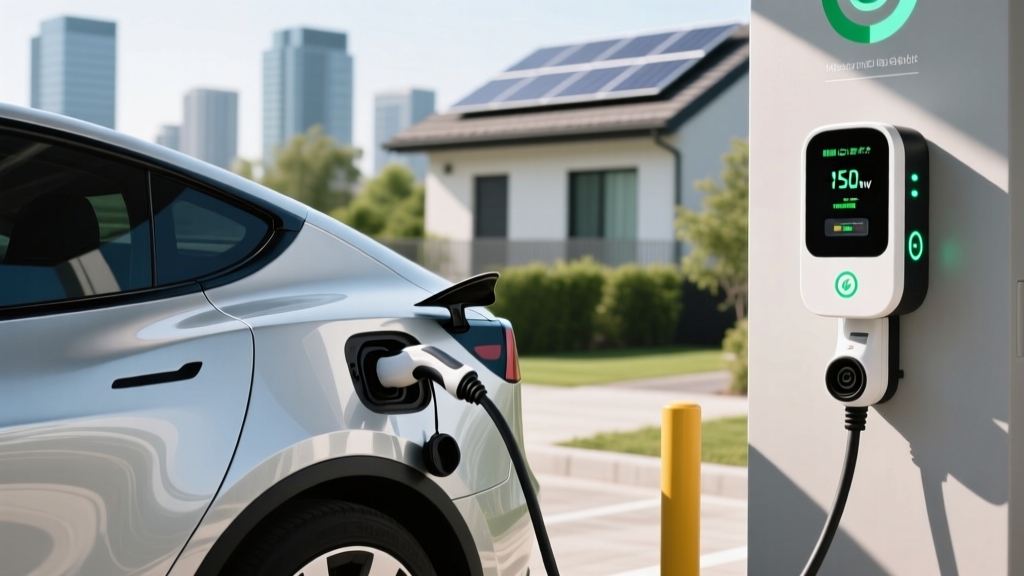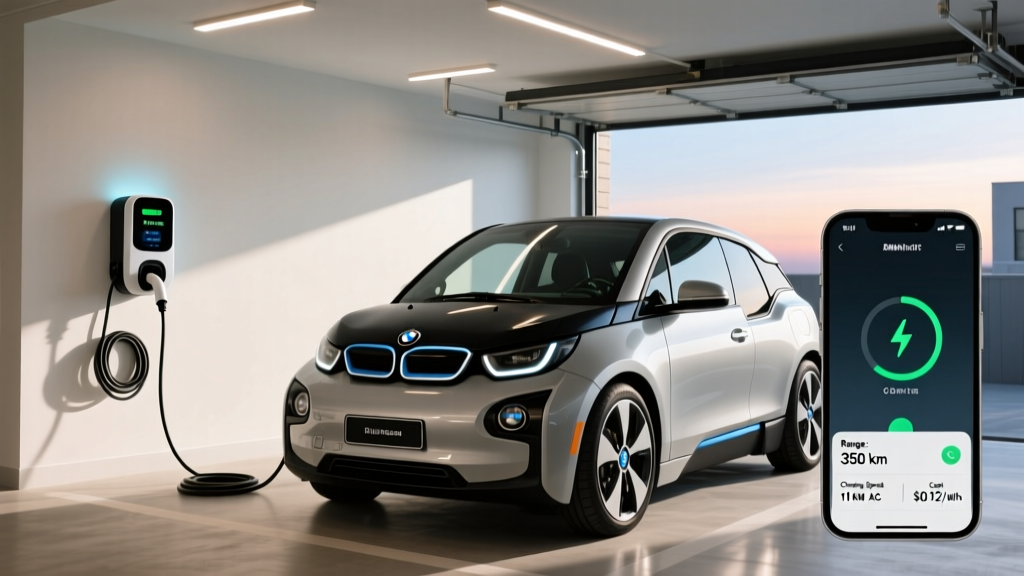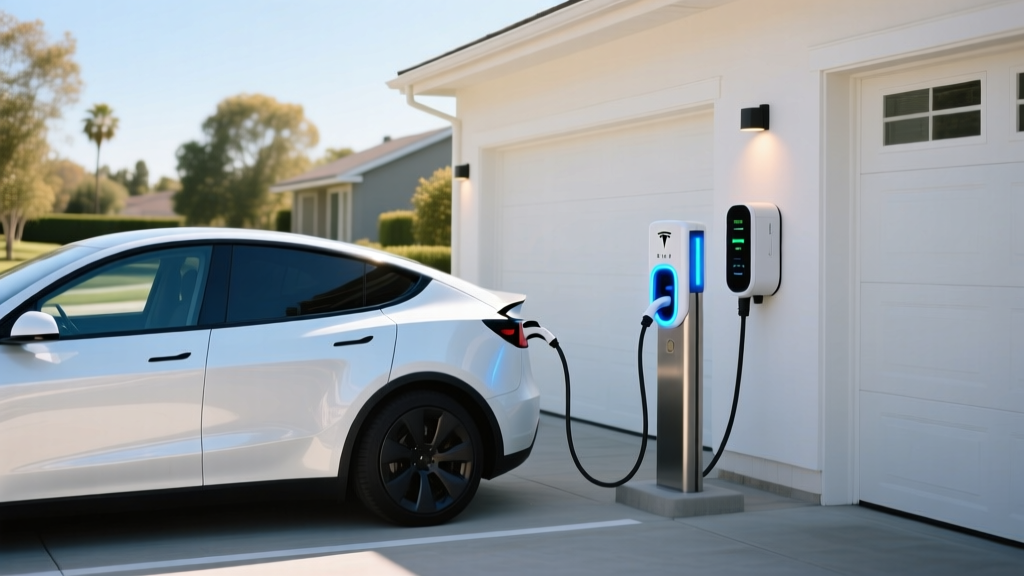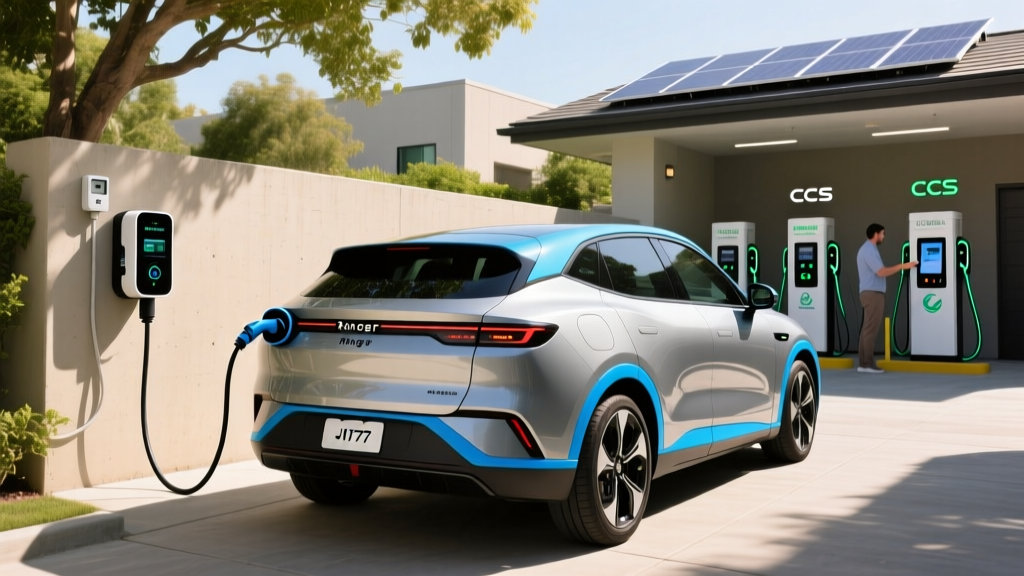
The Ford Ranger Hybrid (officially the Ranger PHEV, available in global markets and arriving for North American buyers as a plug-in hybrid variant of the midsize Ranger platform) pairs a turbocharged gasoline engine with an electric motor and a modest battery pack. That battery unlocks short electric-only commutes, but only if you can charge it efficiently. This guide walks through every charging scenario Ranger Hybrid owners and prospective buyers need to understand — from a standard 120V outlet in the garage to public DC fast-charging networks — with exact speeds, costs, and equipment picks.
How the Hybrid Ranger Charges: Understanding the Levels
Before plugging in, you need clarity on three charging tiers. Power is measured in kW (kilowatts — the rate of energy flow), while battery capacity and energy consumed are measured in kWh (kilowatt-hours — the total amount of energy stored or delivered). Think of kW as the width of a hose and kWh as the size of the bucket.
| Level | Voltage / Amperage | Power (kW) | Miles of Range Added per Hour | Best For |
|---|---|---|---|---|
| Level 1 (120V AC) | 120V / 12A | ~1.4 kW | ~4–6 miles/hr (EV-only range) | Overnight trickle; no install needed |
| Level 2 (240V AC) | 240V / 32–48A | 7.7–11.5 kW | ~25–40 miles/hr (EV-only range) | Home garage daily charging |
| DC Fast Charging | 400–800V DC | 50–150+ kW | ~150–400+ miles/hr | Road trips; PHEVs may not support DC |
Most plug-in hybrid trucks, including the Ranger PHEV architecture, accept Level 1 and Level 2 AC charging via an onboard charger typically rated around 3.3–7.2 kW. Many PHEVs do not support DC fast charging because the battery is small enough (often 10–18 kWh usable) that Level 2 fully replenishes it in 2–4 hours. Always verify your specific Ranger Hybrid trim's onboard charger rating in the owner's manual or Ford's official Ranger specs page.
Home Charger Installation: Electrical Requirements and Costs
A Level 2 home charger is the single best upgrade a Hybrid Ranger owner can make. It fully replenishes a PHEV battery overnight — often in under three hours — so you start every morning on electric power. Here's what the installation actually involves.
Electrical Requirements
A Level 2 charger requires a 240-volt dedicated circuit, the same voltage your electric dryer or oven uses. Most EV chargers draw between 32A and 48A, which means your electrician will install a 40A or 60A breaker respectively (the National Electrical Code requires circuits rated at 125% of continuous load). You'll need:
- A NEMA 14-50 outlet (for plug-in chargers) or a hardwired connection (for higher-amperage units)
- A dedicated breaker in your main or sub-panel
- Appropriate-gauge wiring (typically 6 AWG for 50A circuits, 4 AWG for 60A)
- A GFCI breaker if the charger is installed outdoors or in a garage, per NEC 2023+ code updates
Panel Upgrade Reality
Many homes built before 2000 have 100A or 150A main panels that may already be near capacity. Adding a 40–60A EV circuit could push you over. An electrician will perform a load calculation to determine if your panel can handle it. If not, a panel upgrade to 200A runs $1,500–$3,500 depending on your utility and region. This is the most common surprise cost for new EV owners in older homes.
| Component | Typical Cost Range | Notes |
|---|---|---|
| Level 2 Charger Unit | $350–$700 | Smart Wi-Fi chargers with NACS or J1772 connector |
| Electrician Labor | $500–$1,500 | Depends on panel distance, wall type, conduit run |
| Electrical Permit | $50–$250 | Required in most jurisdictions; varies by municipality |
| Panel Upgrade (if needed) | $1,500–$3,500 | Only if existing panel lacks capacity for a new 40–60A circuit |
| Total (no panel upgrade) | $900–$2,450 | Most homes with 200A service fall in this range |
| Total (with panel upgrade) | $2,400–$5,950 | Older homes with 100–150A panels |
Safety and Code Considerations
Do not skip permits. An unpermitted EV charger installation can void homeowner's insurance in the event of an electrical fire. Additional safety notes:
- Outdoor-rated equipment: If your charger mounts outside, ensure it carries a NEMA 4 or IP65 weather rating.
- Cable management: A 25-foot cable covers most garage layouts. Avoid extension cords entirely — they are a fire hazard and violate NEC for EV charging.
- Smart load management: Some chargers (e.g., Emporia Vue-integrated units) can dynamically adjust draw to avoid tripping your main breaker, potentially saving you a panel upgrade.
Connector Compatibility: What Plugs Into the Hybrid Ranger?
Connector standards have consolidated significantly by 2026, but PHEV owners still need to verify compatibility. Here's the current landscape:
| Connector | Also Known As | Used By | Adapter Needed for Ranger Hybrid? |
|---|---|---|---|
| J1772 | Type 1 / SAE J1772 | Most non-Tesla EVs/PHEVs (Level 1 & 2 AC) | Likely native — check your charge port |
| NACS | Tesla connector / SAE J3400 | Tesla vehicles; Ford, GM, Rivian, and others from 2025+ | May require J1772-to-NACS adapter for public Level 2 stations |
| CCS1 | Combined Charging System | Most non-Tesla DC fast charging (being phased out by many OEMs) | Only relevant if Ranger PHEV supports DC fast charging |
| CHAdeMO | — | Legacy Nissan Leaf, Mitsubishi Outlander PHEV | Not applicable; infrastructure declining |
By 2026, Ford has transitioned its North American EV lineup (F-150 Lightning, Mustang Mach-E) to the NACS connector for DC fast charging. However, the Ranger Hybrid's AC charging port may still use J1772 for Level 2, since NACS adoption for AC charging is still rolling out across public infrastructure. Confirm your specific model year's port type before buying a home charger. If your Ranger uses J1772 and you want access to Tesla destination chargers, a Tesla J1772-to-NACS adapter (~$250) solves this.
How Much Does Charging a Hybrid Ranger Cost Per Mile?
One of the strongest arguments for a PHEV truck is the ability to commute on electricity while retaining gas-engine range for towing and long hauls. Here's how the economics compare.
| Scenario | Energy Cost | Cost Per Mile (EV mode) | Cost Per Mile (Gas, 22 MPG combined) |
|---|---|---|---|
| Home charging — off-peak utility rate | $0.10/kWh | ~$0.03/mile | ~$0.15/mile (at $3.30/gal) |
| Home charging — standard rate | $0.16/kWh | ~$0.05/mile | ~$0.15/mile (at $3.30/gal) |
| Public Level 2 (network pricing) | $0.25–$0.39/kWh | ~$0.08–$0.12/mile | ~$0.15/mile (at $3.30/gal) |
| DC Fast Charging (if supported) | $0.35–$0.55/kWh | ~$0.11–$0.17/mile | ~$0.15/mile (at $3.30/gal) |
Assuming the Ranger Hybrid achieves approximately 3.0–3.5 kWh per mile in EV mode (typical for a midsize PHEV truck), home off-peak charging delivers fuel costs at roughly one-fifth the price of gasoline. Even at standard residential rates, electric-only commuting costs less than half what gas does. The savings are most dramatic for owners with short commutes (under 30 miles round-trip) who can stay in EV mode daily and only use the gas engine for longer trips or towing.
For the most accurate efficiency data on your specific model year, check the EPA's fuel economy comparison tool on fueleconomy.gov.
Charging Time Examples for the Hybrid Ranger Battery
PHEV batteries are small — typically 10–18 kWh usable — which makes them far quicker to charge than a full BEV. Here's what to expect at each level, using a representative 15 kWh usable battery as a baseline:
- Level 1 (120V, 1.4 kW): 0–100% in approximately 10–12 hours. Adequate for overnight if you drive fewer than 30 miles daily.
- Level 2 (240V, 7.2 kW onboard charger): 0–100% in approximately 2–2.5 hours. Ideal for home charging — plug in when you get home, full by dinner.
- Level 2 (240V, 3.3 kW onboard charger): 0–100% in approximately 4.5–5 hours. Slower; still viable for overnight.
- DC Fast Charging (if equipped, ~50 kW peak): 10–80% in approximately 15–20 minutes. Not all PHEVs support DC charging — verify before planning road-trip charging stops.
Real-world note: PHEV batteries rarely charge at their peak rate for the full session. The charge curve tapers significantly above 80% State of Charge (SoC) to protect battery longevity. For daily use, charging to 80–90% is both faster and gentler on the cells. If your Ranger Hybrid offers a programmable charge limit in its infotainment or companion app, use it.
Recommended Home Chargers for the Hybrid Ranger
Not all Level 2 chargers are equal. Below are three proven units suited to a PHEV truck owner's needs, selected for reliability, smart features, and value.
Emporia Vue Level 2 EV Charger
- Power Output: Up to 11.5 kW (48A) on a 60A circuit; configurable down to 32A
- Connector: J1772 (NACS adapter available)
- Cable Length: 24 feet
- Smart Features: Wi-Fi scheduling, solar integration, real-time energy monitoring via Emporia app, load management to avoid panel upgrades
- Price: ~$399
- Best For: Budget-conscious owners who want smart scheduling and solar pairing
ChargePoint Home Flex
- Power Output: Up to 12 kW (50A) on a 60A circuit; adjustable via DIP switch to 16–50A
- Connector: J1772 (NACS version available for 2025+ Ford models)
- Cable Length: 23 feet
- Smart Features: Wi-Fi, ChargePoint app with scheduling and cost tracking, Alexa integration, UL-listed for indoor/outdoor
- Price: ~$549–$599
- Best For: Owners who want the widest amperage flexibility and proven network ecosystem
Tesla Wall Connector (Universal)
- Power Output: Up to 11.5 kW (48A) on a 60A circuit
- Connector: NACS with built-in J1772 adapter (Universal version)
- Cable Length: 24 feet
- Smart Features: Wi-Fi, over-the-air updates, power sharing between two units on one circuit, Tesla app integration
- Price: ~$599 (Universal version)
- Best For: Multi-EV households with both Tesla and non-Tesla vehicles; future-proof NACS compatibility
For the Hybrid Ranger's PHEV battery, even the 32A / 7.7 kW setting on any of these chargers will deliver a full charge in roughly two hours. There's no need to overspend on a 80A circuit for a PHEV — save that budget for a potential panel upgrade if your electrician recommends one.
Public Charging: What Hybrid Ranger Owners Need to Know
Public charging for a PHEV truck is a different calculus than for a full BEV. Because your Ranger Hybrid carries a gas engine, you're never stranded without a charging option. That said, strategic public charging can maximize your electric-only miles and reduce fuel spend.
When Public Charging Makes Sense for a PHEV
- Destination charging: Hotels, shopping centers, and workplaces with free or low-cost Level 2 chargers let you top up while parked.
- Commute extension: A mid-day Level 2 session at work can double your daily electric-only miles.
- Preconditioning: Some PHEVs allow cabin preconditioning while plugged in, using grid power instead of battery — valuable in extreme cold.
When to Skip Public Charging
- DC fast chargers priced above $0.35/kWh: At that rate, your per-mile cost approaches or exceeds gasoline. Just use the hybrid engine.
- CHAdeMO-only stations: This legacy standard is being retired across North America. Don't rely on it.
- Stations with poor reliability records: Apps like PlugShare and the DOE's Alternative Fuels Data Center show user-reported outage data. Check before you detour.
Frequently Asked Questions
How much does it cost to install a home EV charger for the Hybrid Ranger?
Expect $900–$2,450 for a standard Level 2 installation in a home with adequate 200A panel capacity. This includes the charger ($350–$700), electrician labor ($500–$1,500), and permit fees ($50–$250). Homes needing a panel upgrade to 200A should budget an additional $1,500–$3,500.
How fast will each charging level add range to the Hybrid Ranger?
Level 1 (120V) adds roughly 4–6 miles of EV range per hour. Level 2 (240V) adds 25–40 miles per hour depending on the onboard charger rating. DC fast charging (if your trim supports it) can add 150+ miles per hour, though the Ranger's small PHEV battery means a 10–80% session takes only 15–20 minutes.
Which connector and charger is compatible with my Hybrid Ranger?
Check your charge port. Most 2025–2026 Ford PHEVs use a J1772 connector for AC Level 2 charging. Ford's newer BEVs have moved to NACS, and some Ranger Hybrid trims may follow. A J1772-compatible home charger like the ChargePoint Home Flex or Emporia Vue will work with most PHEV configurations. If your port is NACS, the Tesla Universal Wall Connector is the top pick.
How much does charging cost per mile vs. gas?
At home off-peak rates (~$0.10/kWh), expect roughly $0.03 per mile in EV mode. Standard residential rates (~$0.16/kWh) bring that to ~$0.05/mile. Gasoline at $3.30/gallon and 22 MPG combined works out to ~$0.15/mile. Electric commuting at home costs 65–80% less per mile than gas.
What electrical upgrades might I need?
The most common upgrade is a panel capacity increase from 100A or 150A to 200A, needed when your existing panel can't accommodate a new 40–60A dedicated circuit. Your electrician will run a load calculation. Other potential upgrades include adding a sub-panel closer to the garage (to reduce wire-run costs) or upgrading your utility service drop if your home's total supply is insufficient.
Can I charge the Hybrid Ranger with a standard 120V outlet?
Yes. Level 1 charging at 120V delivers about 1.4 kW and will fully replenish a typical PHEV battery in 10–12 hours. If your daily EV-mode driving is under 30 miles, Level 1 alone may suffice. However, Level 2 is strongly recommended for convenience and to ensure you always start with a full battery.